Most travelers assume that once a flight gets delayed or canceled, everyone gets tossed into the same chaotic scramble – first come, first served, no exceptions, no favorites. That is not actually how it works for a huge slice of passengers over 60, and ground teams almost never announce why out loud.
Behind the counter, gate agents, ramp crews, and rebooking desks follow a quiet set of adjustments that shift depending on age, mobility flags, and how bad the meltdown gets. None of it shows up on your boarding pass, and most of it only surfaces if you know exactly what to ask for.
#16 – The “Sensitive Traveler” Flag Quietly Jumps You To The Front Of The Rebooking Line
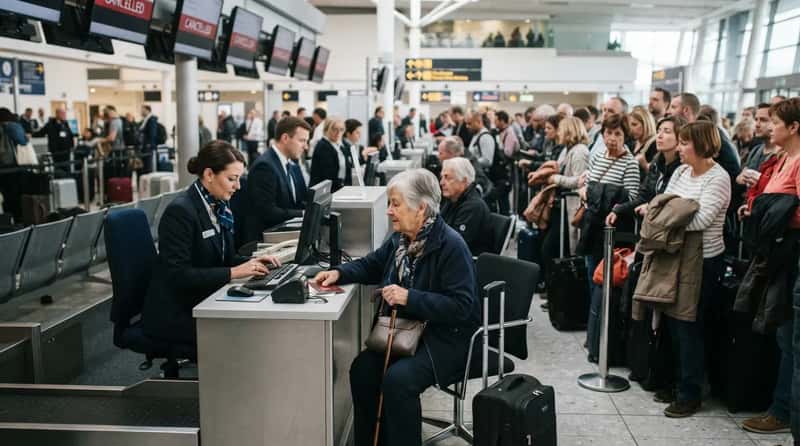
When a flight cancels and hundreds of passengers flood the rebooking system at once, not everyone lands in the same queue. Airlines internally flag certain travelers as “sensitive,” a category that includes seniors who have requested special assistance somewhere in their booking history. Those passengers often get pulled and rebooked first, quietly, while the rest of the terminal keeps waiting.
The catch is that the flag typically only activates if a passenger already requested mobility or medical assistance at some earlier point. It is never advertised at the gate, and agents rarely volunteer it. Travelers who never ask never get flagged – which means the safety net exists, but only for the people who already know it is there.
#15 – Wheelchair Codes Silently Follow You Onto Every Rebooked Flight
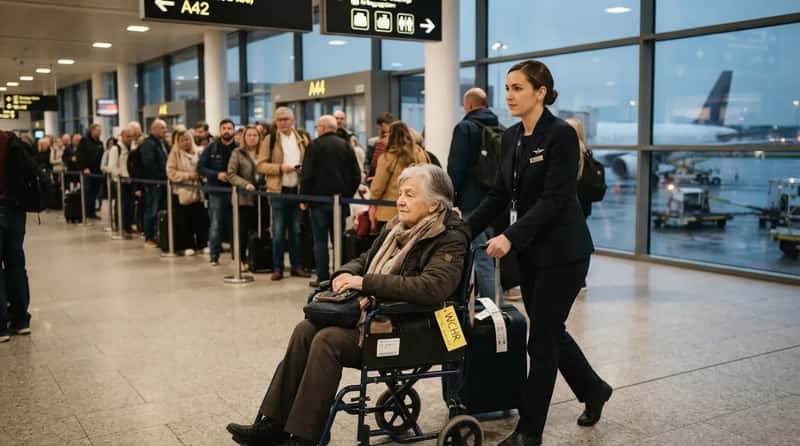
Ground teams use a shorthand system most passengers have never heard of, and it carries enormous weight during a meltdown. Codes like WCHR, WCHS, and WCHC tell every agent exactly what kind of help a traveler needs, from a wheelchair for long terminal walks to full assistance with the seat transfer itself. The surprising part is that this code does not reset when your itinerary blows up.
Once entered into a reservation, the code automatically follows the passenger across every connecting flight on the new route. That means a rebooked 6 a.m. departure three days later still triggers the same wheelchair request without anyone calling it in twice. Most travelers assume they would have to re-explain their situation from scratch at every new gate – they would not.
Quick Compare
- WCHR – Passenger can walk short distances but needs a wheelchair for longer terminal stretches.
- WCHS – Passenger cannot manage stairs and needs a wheelchair to and from the aircraft door.
- WCHC – Passenger needs full assistance, including help transferring into the actual seat.
#14 – Reissue Fees Quietly Disappear For Flagged Passengers During A Meltdown
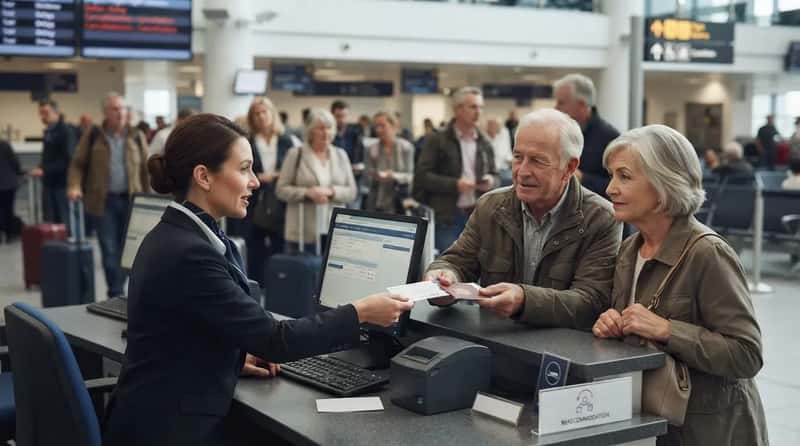
Rebooking after a schedule blowup normally comes loaded with change fees and fare differences, but that friction disappears fast for certain travelers. Reaccommodations and ticket reissues during an irregular operation are made without penalty or administrative charges on most major carriers, and it is one of the more consistently applied policies, even though nobody says it out loud at the counter.
The most overlooked part is how permanent this actually is. It is not a temporary courtesy tied to one bad storm – it is baked into daily airline operations. Passengers over 60 flagged for medical or mobility needs frequently get the fee waived automatically, without ever having to argue for it at the podium.
#13 – Dispatch Teams Secretly Flag Your Record For The Phone Rebooking Desk

When a flight diverts or cancels en masse, people working behind the scenes can do something passengers never see happen. Dispatch and operations teams sometimes flag specific passenger records so phone reps can identify and prioritize an older caller instead of leaving them stuck in a generic hold queue. It is essentially a digital handshake between departments that nobody bothers to explain to the traveler.
This matters most for someone who physically cannot stand in a two-hour rebooking line at a chaotic gate. Getting a live human on the phone quickly is often the only real lifeline a stranded senior has, since gate staff cannot provide ongoing personal care once a trip falls apart. It is a quiet workaround, not an official service tier, so results vary wildly by airline and by how slammed the call center happens to be that day.
#12 – Diverted Flights Get Steered To The Gate With The Shortest Walk
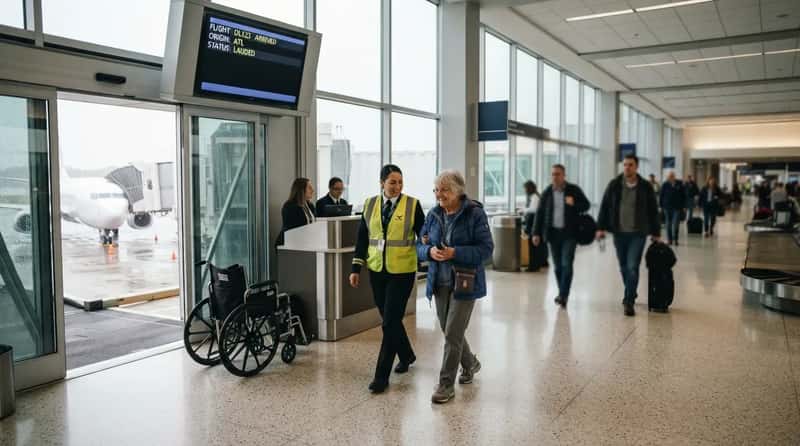
Not every gate at a diversion airport gets treated equally, and that is not always an accident. Dispatchers coordinating with ground control sometimes have input into which gate a diverted flight actually parks at. For a passenger with a mobility flag on file, that decision can mean the difference between a five-minute walk and a fifteen-minute trek through an unfamiliar terminal.
This adjustment rarely gets attributed publicly to age or mobility – it usually gets framed as a purely operational choice. But insiders confirm the passenger manifest genuinely factors into that calculation, especially at an airport the airline does not normally use. It is one of those invisible decisions nobody thanks anyone for, because almost nobody ever finds out it happened.
#11 – Documented Medical Needs Trigger Federal Priority During Long Delays
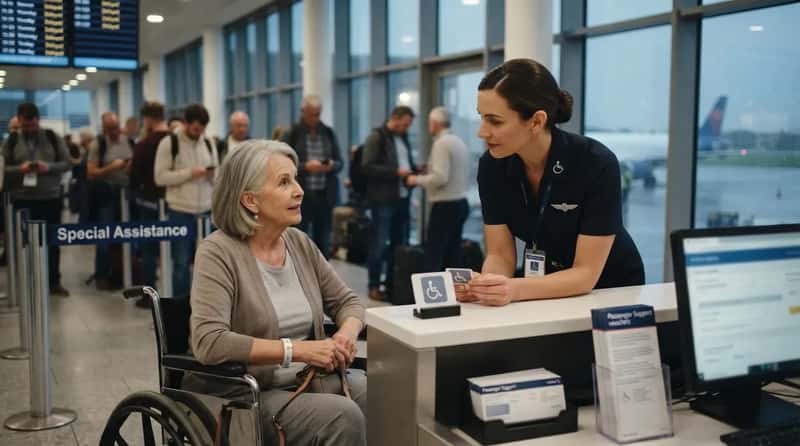
This one is not discretionary – it is written into federal consumer protection rules. Under the Air Carrier Access Act and DOT consumer rules, airlines must give travelers with documented medical needs priority during long delays and cancellations, including earlier rebooking, hotel vouchers during airline-caused overnight delays, and help arranging meals or transportation.
The frustrating part is that almost nobody knows to ask for it in the moment. This protection exists for anyone who cannot stand in long lines or wait for hours without support, and simply stating the need out loud – clearly and calmly – is usually enough to trigger it. Gate agents rarely announce this option to a packed terminal. It exists, but only for those who speak up first.
#10 – Deplaning Order Quietly Reverses For Wheelchair Passengers
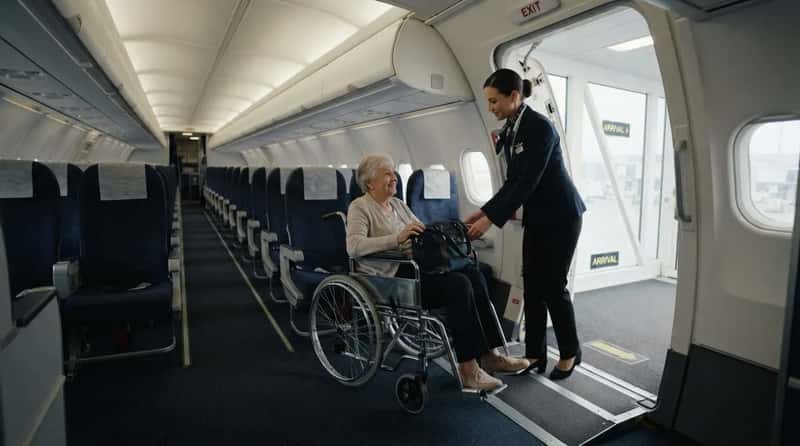
Most people assume the plane empties in one continuous line, but that is not how it works for wheelchair users, and the timing is federally defined. “Prompt” deplaning assistance legally means airline personnel and a boarding wheelchair must be ready the moment the last passenger who did not request assistance has left the cabin.
Newer regulations pushed this further by requiring the passenger’s own wheelchair to meet them at the aircraft door instead of somewhere down the jet bridge. Airlines pushed back hard on the logistics of making that happen consistently, but the rule stood anyway – a rare case of a disruption-era policy actually favoring the passenger over the schedule.
#9 – Bumped And Cancelled Passengers Now Share The Same Rebooking Playbook
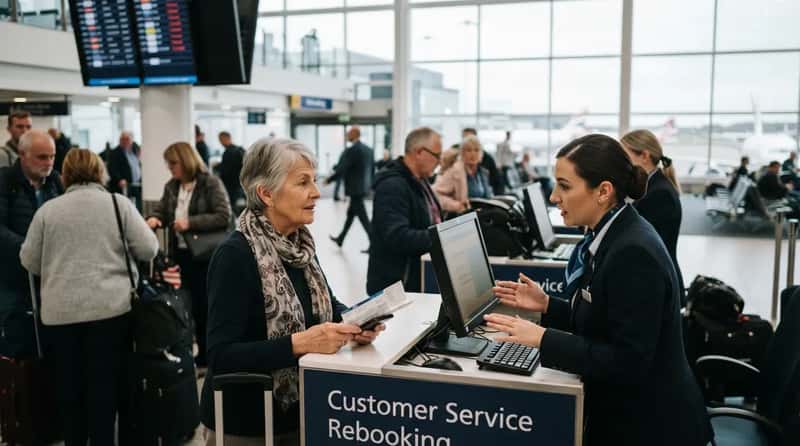
Here is something almost nobody realizes connects: overbooking protections and disruption protections quietly overlap. An irregular operation can technically include an oversold flight or boarding delay, which means passengers bumped involuntarily can access the same rebooking priority as those affected by weather or a mechanical issue.
Few travelers ever connect these dots. If you are bumped, you are not automatically limited to whatever a gate agent offers on the spot – you may qualify for the full suite of rebooking options most people assume only apply during storms. For a 60-plus passenger with a documented mobility need who gets bumped off an oversold flight, this overlap can mean immediate rebooking priority instead of a travel voucher and a shrug.
#8 – Loaner Wheelchairs And Fare-Difference Refunds Nobody Mentions At The Counter
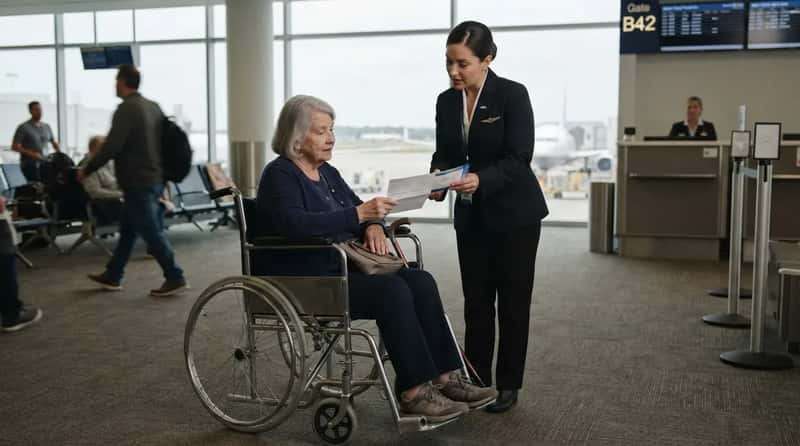
When a flight swap forces a passenger onto a smaller plane with no cargo room for a mobility device, most people assume that is simply bad luck. It is not supposed to be. Airlines are required to quickly return lost or damaged wheelchairs, provide speedy repair or replacement, supply an appropriate loaner in the meantime, and reimburse fare differences if a passenger has to pay more to fly on a bigger aircraft with enough cargo space.
This is one of the least-known protections in all of disruption travel. Passengers routinely accept a downgraded seat or a delayed connection because nobody at the counter ever mentions that a fare-difference reimbursement exists. It is buried deep in federal rulemaking, never printed on a receipt, and airlines are in no hurry to bring it up first.
#7 – Aisle Chair Transfers Get Bumped Up The Priority List When Jet Bridges Fail
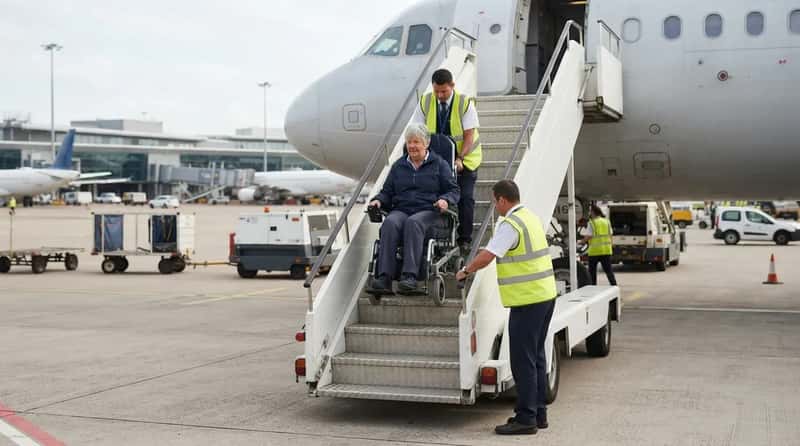
During diversions and last-minute aircraft swaps, sometimes the jet bridge simply does not line up with the aircraft door, forcing a manual boarding process. Carriers are required to provide assistance with enplaning and deplaning, including ground wheelchairs, accessible motorized carts, boarding wheelchairs, and mechanical lifts when a jet bridge cannot do the job.
What surprises most travelers is how much of this depends on contracted ground staff rather than airline employees. The wheelchair and the person pushing it usually come from a ground handling contractor, not the airline itself. During a disruption, that contractor is often stretched thin across multiple delayed flights at once, which is exactly why passengers who ask early tend to fare far better than those who wait until boarding is already underway.
At a Glance
- Ground wheelchair – rolls a passenger directly to the aircraft door when a jet bridge fails.
- Accessible motorized cart – covers long terminal distances during a sudden gate change.
- Boarding wheelchair – a narrow chair built to fit down the cabin aisle.
- Mechanical lift – raises a passenger to door level when stairs are the only option.
#6 – The Extra Minutes Nobody Rushes, Even When The Gate Is Behind Schedule
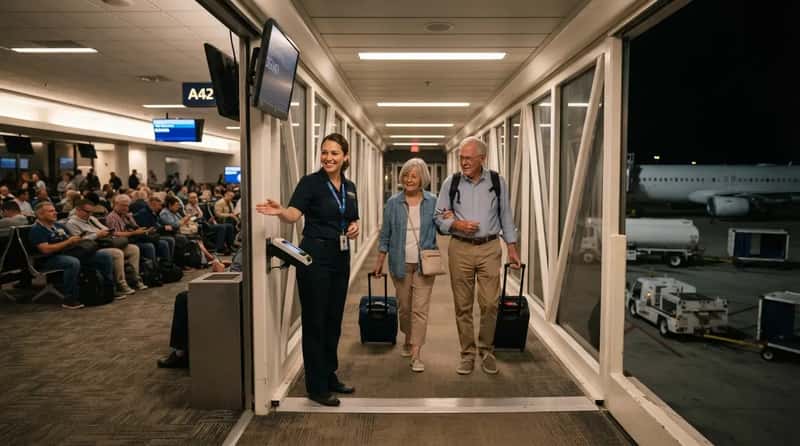
Even when a flight is running late and every minute counts against the schedule, ground crews rarely compress this part. The single most consistent courtesy has nothing to do with equipment or paperwork – it is simply time, and airlines actively encourage older passengers to pre-board so the aisle does not turn into a bottleneck later.
This is one of the more controversial patterns among frequent flyers, some of whom feel penalized when a delayed flight still burns clock on unhurried pre-boarding. Ground teams see it differently. You do not need a wheelchair, a diagnosis, or a doctor’s note to board before the crowd – most major airlines let anyone who needs a little extra time board ahead of general boarding, and gate staff rarely make anyone explain themselves.
#5 – Security Escorts Get Rearranged When A Disrupted Flight Changes Terminals
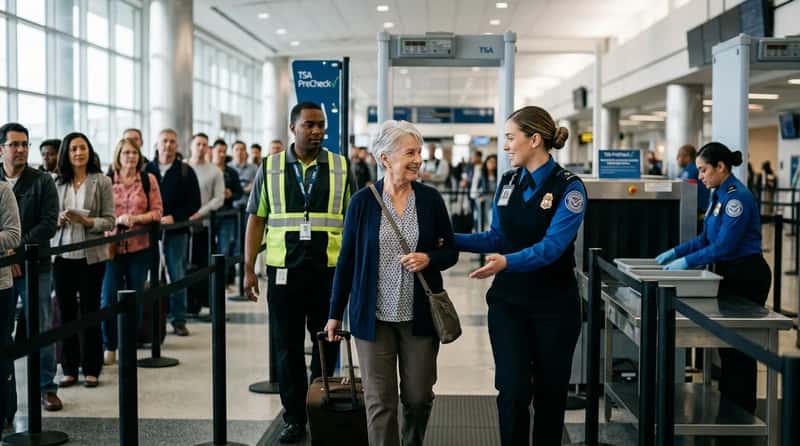
A canceled flight that gets rebooked on a different airline or in a different terminal often means clearing security all over again, and that is where a little-known program kicks in. TSA’s free assistance program assigns a personal guide through screening, letting travelers skip the main line and move through with less stress, though it is normally best requested at least 72 hours ahead of travel.
During same-day disruptions, that window obviously is not realistic, which is exactly when ground staff quietly step in to request an expedited escort anyway. TSA also runs a toll-free hotline to assist travelers with disabilities and medical conditions and answer screening questions on the spot. Most passengers over 60 have never heard of it, let alone that it can be triggered mid-disruption instead of only during advance planning.
#4 – Seat Reassignments Move Quietly To Bulkhead Or Exit Row When Aircraft Swap
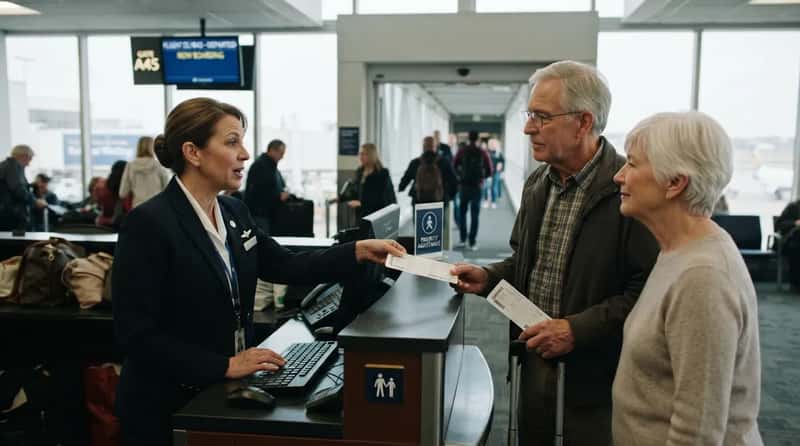
Mechanical issues often force an airline to swap aircraft types entirely, scrambling every seat assignment on the flight. Under federal rules, airlines that offer advance seat assignments must block an adequate number of bulkhead or priority seats for passengers with a mobility limitation, and those blocked seats have to be re-designated all over again on the replacement plane.
Here is the friction point: agents will not always volunteer this. Gate agents can quietly move senior passengers to exit rows, aisle seats, or even premium economy at no charge, but the catch is that it usually has to be framed as a comfort or mobility need rather than a simple preference. Ask the wrong way, and the answer is often just no.
Worth Knowing
- Airlines that offer advance seat selection must set aside a defined number of bulkhead and priority seats for passengers with mobility limitations.
- Those reserved seats have to be re-blocked from scratch whenever a mechanical issue forces an aircraft swap.
- Framing the request as a mobility or comfort need, rather than a general preference, tends to get a faster yes at the podium.
#3 – A Companion Can Slip Through Security With You During The Chaos
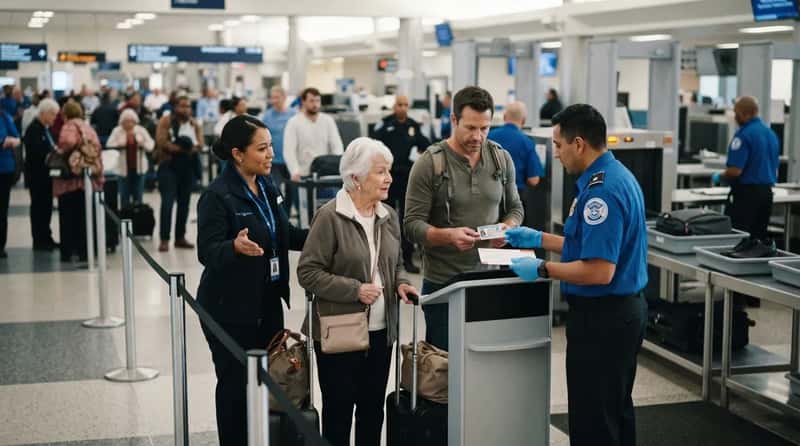
During a disruption, having a second set of hands matters more than almost anything else, and airlines have quietly built that into policy for decades. Most carriers allow an elderly traveler to be escorted by one caretaker through security and all the way to the gate, as long as the escort provides a full name, birth date, and government-issued ID.
This becomes far more valuable during a chaotic rebooking scramble than on a normal travel day, since a companion can hold a place in line, track gate changes, or talk to staff while the passenger rests. Most travelers only discover this option exists when they are already standing at a checkpoint asking a supervisor, rather than knowing to request it in advance.
#2 – Call Centers Quietly Route Older Callers To Faster Queues During Mass Cancellations
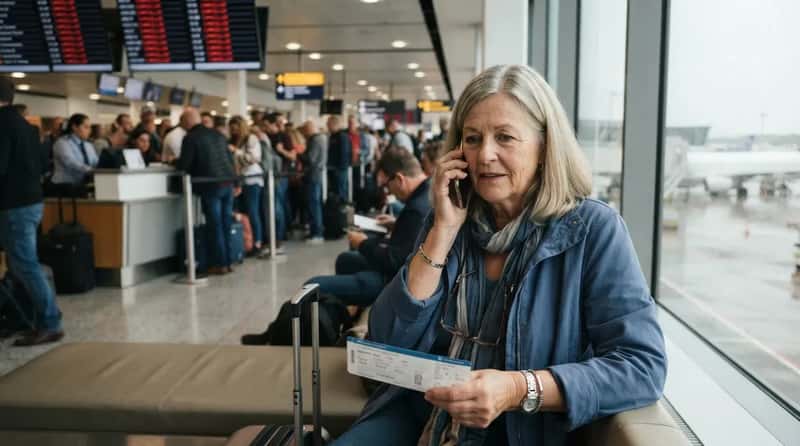
When hundreds of flights cancel at once, hold times can stretch past two hours – but not for every caller. The same sensitive-traveler flag that speeds up in-person rebooking also applies to phone routing, letting flagged callers skip ahead in a queue that everyone else has to sit through in full.
The friction here is real: this system rewards passengers who already built an assistance flag into their profile long before disruption ever hit, and it quietly disadvantages first-timers who never had a reason to ask before. A newly flagged 62-year-old calling in the middle of a meltdown may get the exact same treatment as a decade-long flyer, or may not, depending entirely on how the request gets phrased and documented that day.
#1 – Mishandled Mobility Devices Trigger Mandatory Compensation, No Matter How Bad The Meltdown Gets
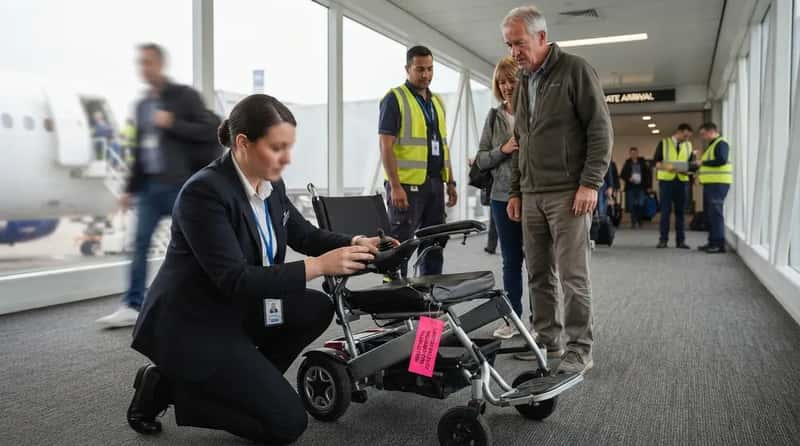
This is the adjustment with the highest stakes, and regulators have made it nearly impossible for airlines to quietly wriggle out of it. If an airline damages a mobility device, it must repair or replace the wheelchair or scooter up to its full original purchase price, and every assistive device must be returned in the same condition it was received.
The scale of the problem is what makes this rule so significant. Airlines damaged or lost more than 11,000 passenger wheelchairs in a single recent year. Regulators eventually took direct action: in October 2024, the Department of Transportation fined American Airlines $50 million over repeated cases of unsafe physical assistance that resulted in injuries and undignified treatment of wheelchair users between 2019 and 2023. Half of that penalty went straight into airport equipment upgrades meant to keep it from happening again. Even on the worst disruption day imaginable, this is the one protection ground teams cannot legally skip.
“The era of tolerating poor treatment of airline passengers with disabilities is over.”
Pete Buttigieg, U.S. Transportation Secretary
Put together, these sixteen adjustments reveal something most travelers never piece together on their own: disruption does not hit every passenger the same way. Age combined with a documented mobility or medical need quietly reshuffles almost every part of the process – rebooking order, deplaning sequence, seat assignments, even phone queues – and none of it gets announced over the intercom.
The rules are real, the protections are federal, and the gap between what exists and what gets said out loud is simply information. Most of these adjustments cost an airline nothing extra to apply. They are policy, not charity – which makes it all the stranger that so few passengers ever hear about them until the day they need one.