Most first-timers drop their bags, grab a drink and sprint to the buffet. Repeat cruisers walk past the crowd and head for a tiny room most people ignore. They treat the first few hours in the cabin like a quick setup job, and it’s usually done before the ship even sails.
It can look a little obsessive from the hallway. Then day three arrives, and one cabin is a tidy, quiet little hideaway while the one next door is buried in suitcases and damp towels. Some of these habits cost nothing, one fixes the most common dawn wake-up, and the last one is what all the others quietly depend on.
#16 – They Stick Magnetic Hooks on the Walls Before Anything Else
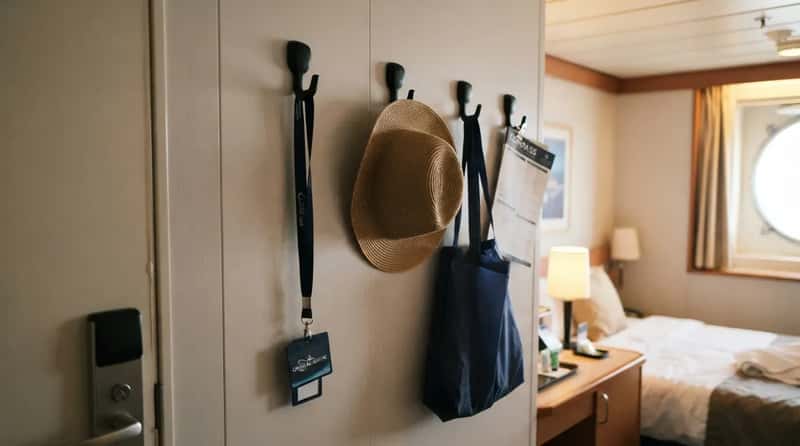
Repeat cruisers know the cabin walls aren’t what they look like. On most ships, the walls and ceilings are steel under the paint or laminate. That means a few magnetic hooks can turn a blank wall into storage. Lanyards, hats, tote bags and the daily schedule all get a spot.
The payoff is floor and counter space you didn’t have an hour ago. A small cabin gets cluttered fast, and clutter is the real reason it feels cramped by day three. But that’s nothing compared to what seasoned cruisers do with the dead space under the bed.
#15 – They Slide the Suitcases Under the Bed Right Away
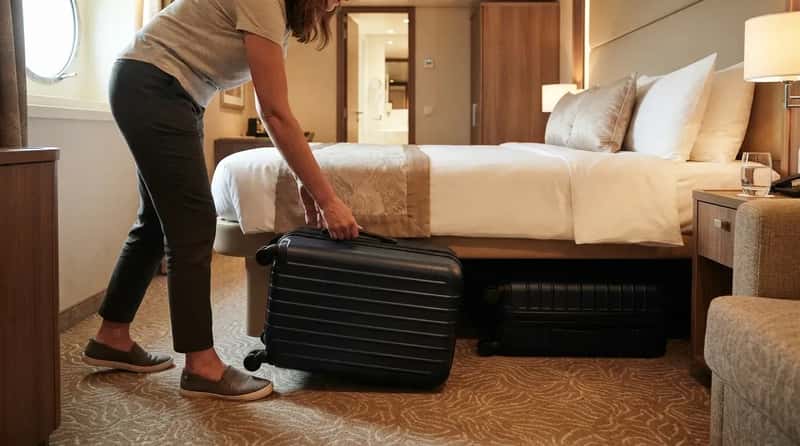
Luggage is the biggest space-eater in any cabin. Many standard cabins have a gap under the bed, and repeat cruisers claim it before the room fills up. Once the bags are empty, they vanish for the whole trip. Nobody is climbing over a suitcase at 2 a.m.
Not every bed frame leaves enough clearance, so they check early. If it’s too tight, they ask the cabin steward whether the bed can be raised on its frame. That’s a normal request, and it can turn a cluttered floor into open space. The next habit splits cruisers right down the middle.
#14 – They Fully Unpack on Day One, and Call Living Out of a Suitcase a Mistake

Here’s the opinion that starts arguments. Plenty of people say unpacking is a waste of vacation time. Many repeat cruisers say living out of a suitcase is the bigger mistake. Their math is simple: it often takes about 15 minutes, and you never dig for anything again.
Clothes on hangers also let wrinkles fall out over a few days. Formal-night outfits get hung first so they’re ready when the invitation says dress up. Whichever side you’re on, the next habit is one almost nobody skips once they’ve been burned.
#13 – They Set the Safe Code and Test It Before Leaving the Cabin

The cabin safe is a small box with a big downside. Set it wrong, and your passport or cash can end up locked inside while the ship is leaving port. Repeat cruisers open and close it twice before they trust it. The system differs by ship, so they read the instructions on the door.
Worth Knowing
- Safes differ by ship. Some use a code you choose, and others use a card swipe.
- Most are sized for small valuables like passports, wallets and phones, not bulky bags.
- Test it with the door open, then closed, before anything important goes in.
- Keep a note of the code somewhere other than inside the safe.
They also decide what goes in it, and it’s usually the same short list: passports, spare cards, medication they don’t need daily and jewelry. Keeping the code simple but personal helps. Cruisers who skip the test run sometimes end up in line at guest services with a very long face. The next habit is less about security and more about whether you sleep.
#12 – They Test the Thermostat Before the Room Tests Them

Cabin air conditioning can feel like a guessing game. Some rooms run cold, some run stuffy, and the dial doesn’t always do what you expect. Repeat cruisers adjust it on day one and give it a few hours to settle. If it still feels off, they report it right away.
Waiting until midnight to complain is how people lose a night of sleep. Problems tend to get fixed faster when they’re reported in the afternoon. And speaking of the crew, the next habit may be the most valuable one on this list.
#11 – They Introduce Themselves to the Cabin Steward

Most first-timers never learn their steward’s name. Repeat cruisers usually do it within the first day. A quick hello at the door sets the tone for the whole week.
It’s also the moment they mention small preferences, such as extra towels, pillows or a certain time for service. Stewards handle a lot of rooms, and a friendly heads-up helps them help you. It’s not about special treatment. It’s about getting the room set up the way you actually live in it. And one of the first things a steward can change is the very thing you’ll lie on.
#10 – They Split or Join the Beds Immediately

Many cabins come with two twin beds pushed together as one king. Some travelers love that, and some hate the seam. Repeat cruisers don’t wait to find out which camp they’re in. They ask the steward on day one, and it’s usually a quick change.
Splitting the beds can also open up floor space for suitcases or a chair. Joining them stops the dreaded gap in the middle of the mattress. Either way, one short request can change how you sleep all week. The next habit is about something most people only notice when their phone hits 3%.
#9 – They Count the Outlets Before the Chargers Come Out
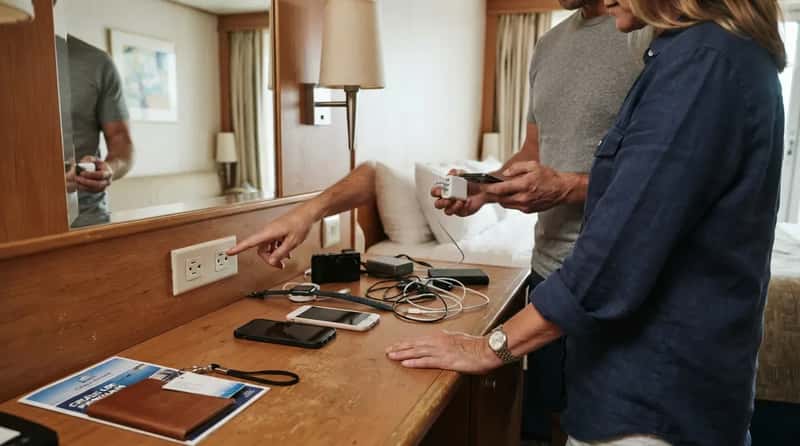
Cabins have far fewer outlets than people expect. A couple traveling with phones, watches, cameras and a tablet can run out fast. Repeat cruisers count outlets before they plan their charging, not after.
Quick Compare
- Surge-protected strip: Often banned by cruise lines and may be taken at the terminal.
- Plain power strip: Commonly allowed, but the rules vary by line.
- Multi-port USB charger: Compact, simple and usually the safest bet.
Many bring a power strip, but they check the cruise line’s rules first. Policies on surge protectors and extension cords vary, and many lines restrict surge-protected strips because of fire risk. Some travelers skip the whole debate with a USB-only charger. The next habit solves a problem that gets worse by the day.
#8 – They Hang a Swimsuit Line Before the First Pool Day
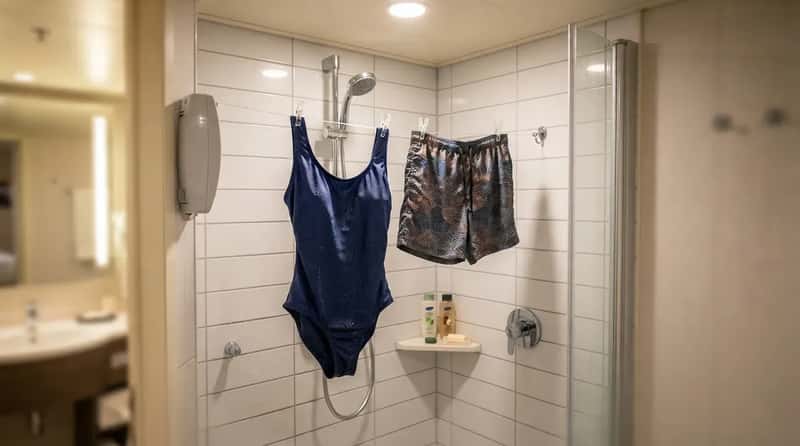
Wet swimwear is the quiet villain of cruise cabins. It drips, it smells and it never dries in a closed room. Repeat cruisers set up a drying plan on day one. That often means the retractable shower line or an over-door hook.
Some also set aside a bag for damp clothes so nothing touches the dry ones. It’s a tiny system, but it can save you from a cabin that smells like pool water by Wednesday. Now for a habit most people treat as a chore.
#7 – They Do the Safety Briefing Early, Not Last Minute

Some travelers see the safety drill as a chore to put off. Repeat cruisers do it as soon as it opens. On many major lines, the process now involves an app or a self-guided video, and you still have to check in at your muster station.
Fast Facts
- International maritime safety rules require passengers to be briefed before or as the ship leaves port.
- Your assigned muster station is often shown on the cabin door, the key card or both.
- Life jackets are usually kept in the cabin, commonly in the closet or under the bed.
- Many lines now split the drill into a short digital briefing and a quick in-person check-in.
Doing it early means it’s done and forgotten before the sail-away party. It also means you learn where your station is while the corridors are still quiet. Ships can track who hasn’t finished it and chase those passengers down, which is an awkward way to meet the crew. Next up is a habit that sounds extra, but light sleepers swear by it.
#6 – They Seal the Curtain Gap With a Clip
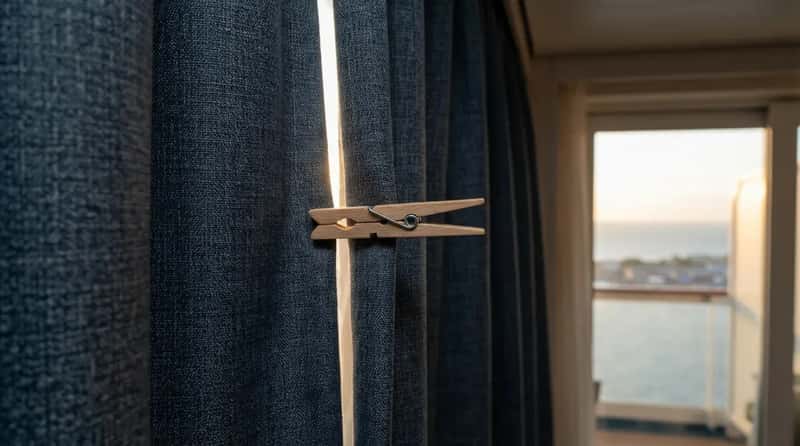
Cabin curtains rarely close completely. That thin strip of light can wake you at dawn, especially in a balcony or window cabin. Repeat cruisers pack a few clips or clothespins to close the gap. It costs almost nothing and weighs even less.
Interior cabins avoid this problem, but they have the opposite one. With no window, you can lose all sense of time. Many cruisers set a phone alarm so they don’t sleep through a port day. And the next habit is about the sleep you can’t fix with a clip.
#5 – They Check What’s Above and Below Their Cabin

Most people don’t realize the deck plan shows what’s over and under your room. A theater, nightclub or gym can sit a few steps from where you sleep. Repeat cruisers check the plan before they book, and again once they’re aboard.
If the room is noisy, they ask guest services about moving, and they ask early. Many also pack earplugs or use a white-noise app. It’s not complaining. It’s a plan. The next habit has nothing to do with sleep and everything to do with a small piece of plastic.
#4 – They Put the Key Card on a Lanyard and Keep It There
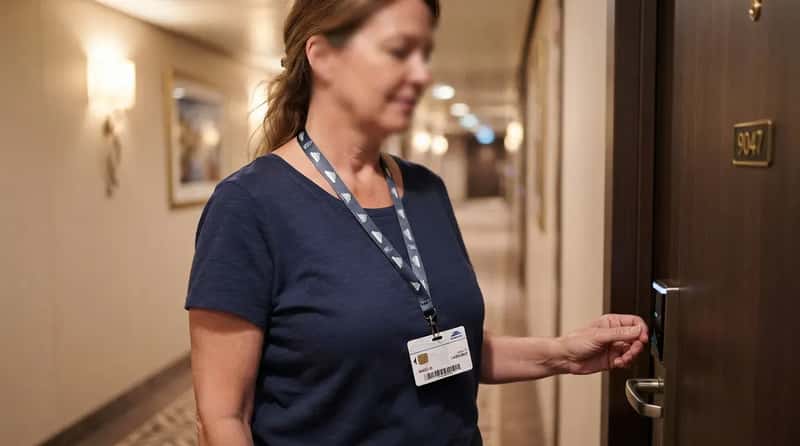
The cabin key card is also your ID, your payment card and your ticket on and off the ship. Losing it is a bigger hassle than most people expect. Repeat cruisers put it on a lanyard or a wrist strap immediately.
Why It Stands Out
- It opens your cabin door.
- On most ships, it works as your onboard charge card for drinks, shops and spa visits.
- It’s scanned when you leave and return at the gangway.
- A replacement usually means a trip to guest services.
Some keep a photo of the cabin number on their phone, since corridors all look alike. Others tuck a backup note in the safe. It’s a boring habit, but it can spare you a trip to guest services and a replacement card. The next one is about the cabin’s hidden extra, and it’s sitting on the wall.
#3 – They Scroll the Cabin TV and Ship App Before Dinner

Most first-timers ignore the TV. Repeat cruisers use it as the ship’s information board. Many ships show port guides, onboard programming, deck plans and even ship cameras.
They also use the app to book what needs booking, from dining to shows. They don’t wait for the first sea day, when everyone else does the same thing. It’s a ten-minute habit with a real payoff. The last two are the ones veteran cruisers bring up first.
#2 – They Ask for the Little Extras Before They Need Them

Cabin stewards can often supply things you didn’t know were available. Extra hangers, ice, additional pillows and towels are common requests. Repeat cruisers ask on day one rather than when they’re already frustrated. It usually takes one short message.
If someone needs refrigerator space for medication, they ask about clearing the minibar or getting a fridge. Policies vary by line, so it helps to check. The point is to ask early, while the crew isn’t swamped. The final habit is the one repeat cruisers call the real secret.
#1 – They Pick a "Landing Zone" and Never Break the Rule
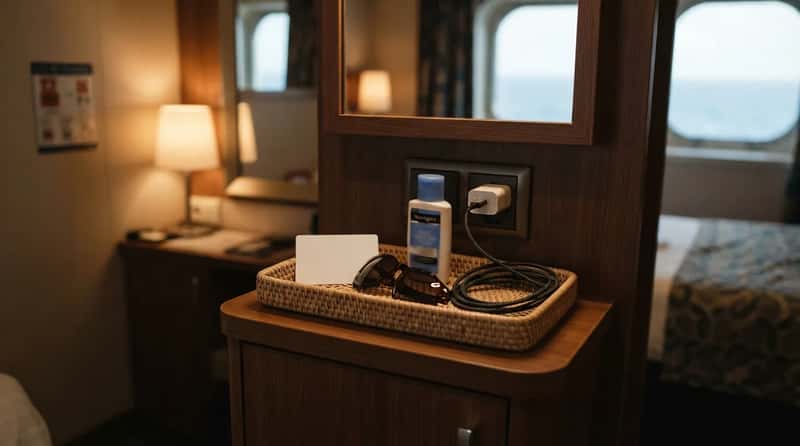
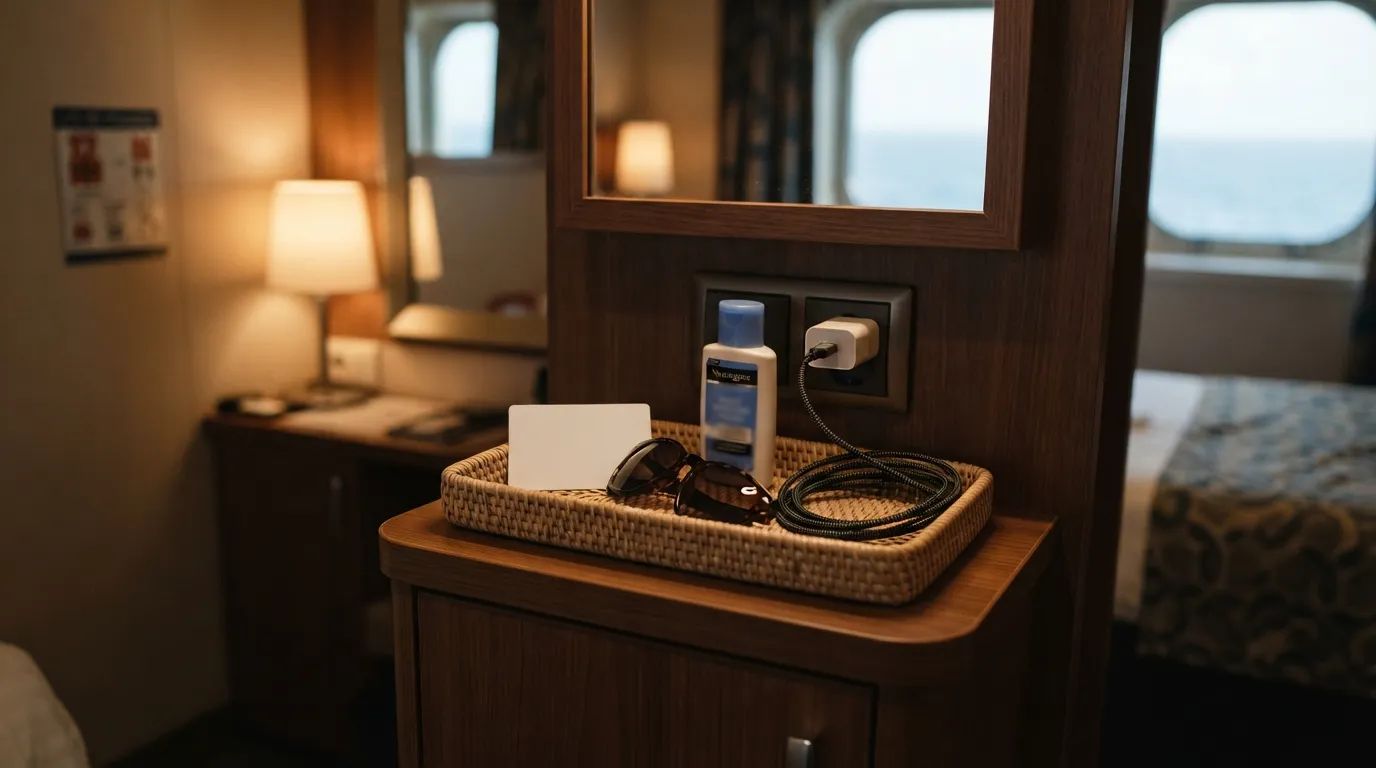
This is the habit that sounds too simple to matter. Repeat cruisers choose one spot for the essentials and return everything there. Key card, sunglasses, sunscreen and phone charger all live in the same place. That’s it.
It matters most when you’re rushing to get ready for dinner or a shore excursion. Nothing gets lost, and nothing gets left behind. In a room this small, a fixed home for every item beats any gadget you could buy. It’s the habit the other fifteen are built on.
Every habit here is small, but together they change how a cabin works. Seasoned cruisers magnet the walls, empty the suitcases, meet the steward and fix the noise before it turns into a complaint.
The cabin is the one place on the ship that’s yours for the whole trip. Spend one good afternoon making it work, and it quietly pays you back every morning, every night and every time you come back from shore tired.