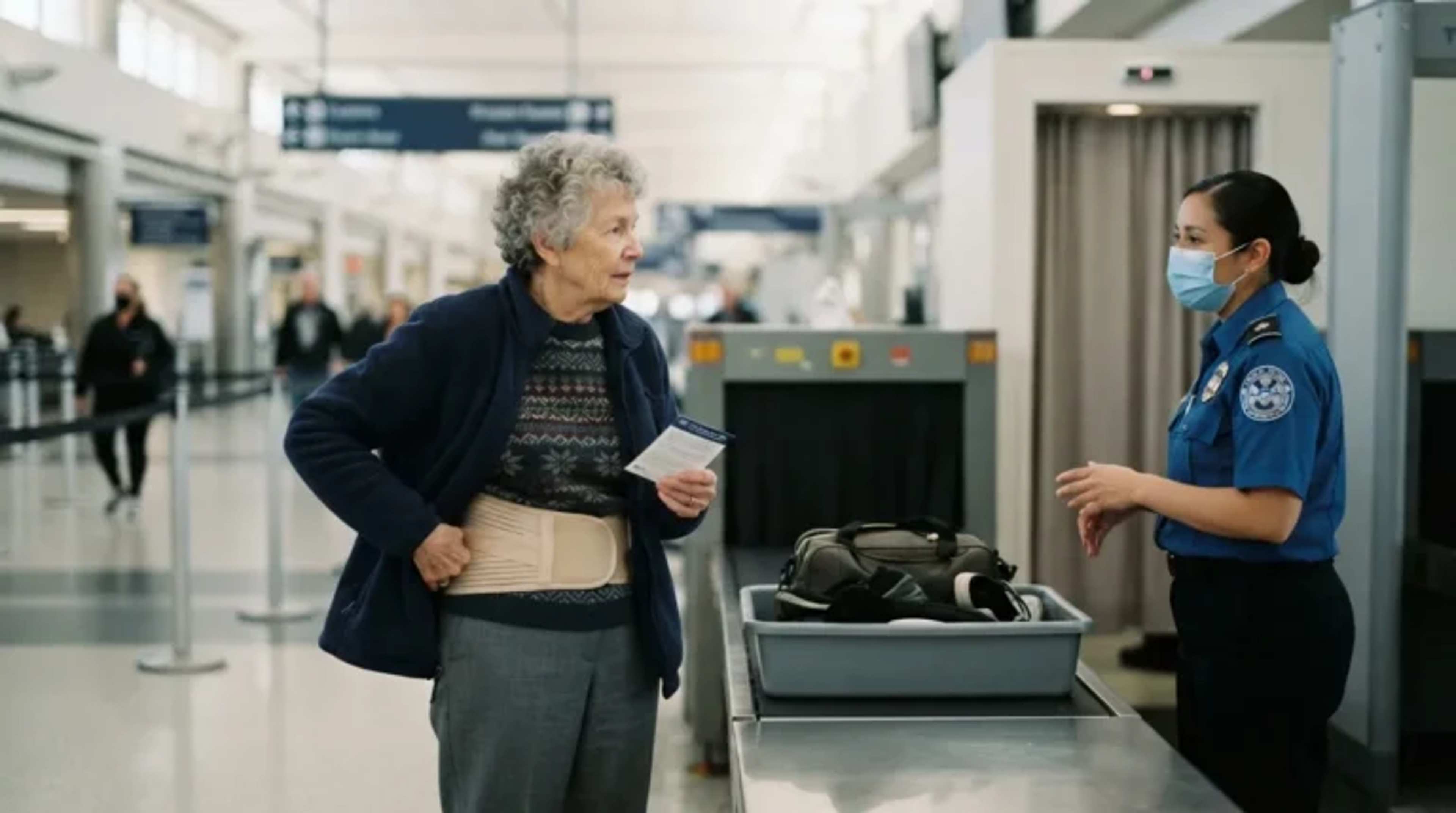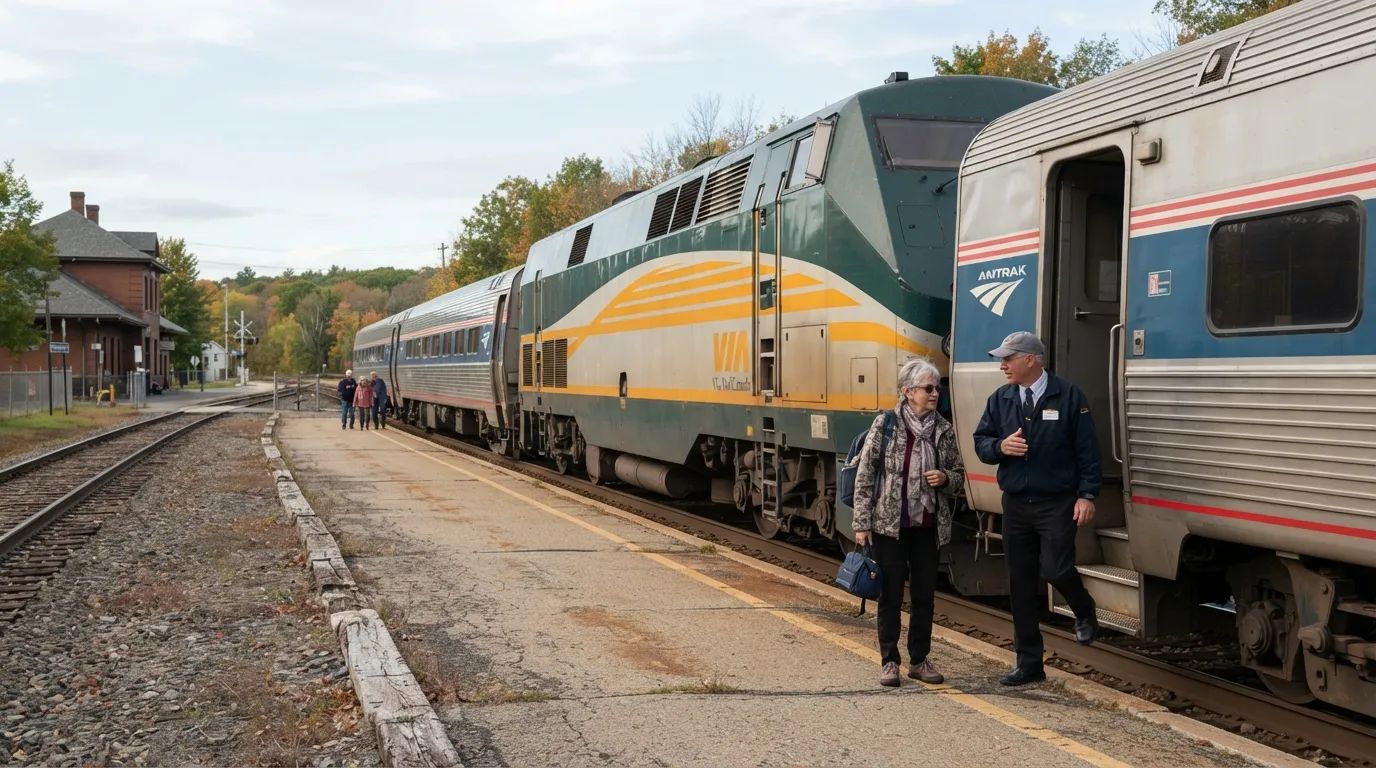
Most passengers over 60 walk up to the counter, pay every fee on the screen, and never once ask if any of it can vanish. It turns out that silence is exactly what the rail industry is counting on.
Across the U.S., Canada, the UK, and Europe, ticket offices are sitting on a quiet roster of fees they’re fully authorized to erase for older riders – the second those riders speak up. No form, no application – just your age, the right question, and a little nerve.
Here’s what the data and the operators themselves actually say – starting with the fee almost everyone pays without a fight.
#16 – The Ticket Window In-Person Booking Fee
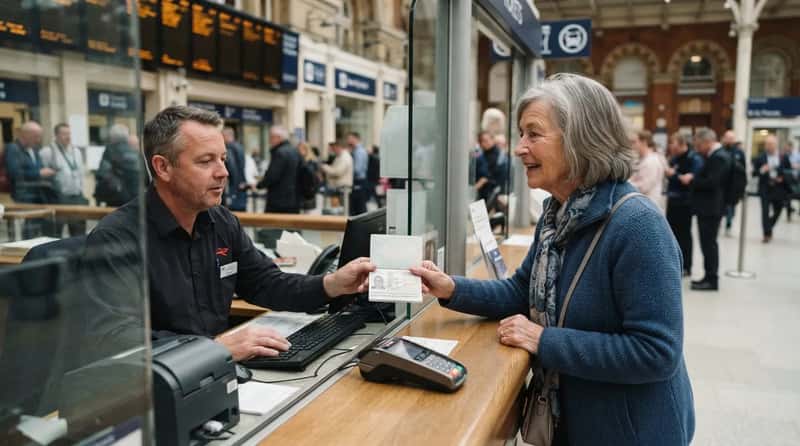
Buying your ticket at the counter often costs more than buying it online – a quiet penalty for anyone who isn’t comfortable with apps.
Seniors who ask at the counter and show a passport or other ID typically get that fee dropped completely.
The catch: agents never offer it first. A busy ticket window has zero incentive to volunteer savings, so keep your ID out and ask plainly, “Is any part of this fee waived for seniors?”
That’s nothing compared to what happens the moment you board without a ticket – and admit your age before you pay the penalty.
#15 – The On-Board Purchase Surcharge (LIRR & Metro-North)

Buy your ticket from the conductor after boarding, and you’ll eat a $7.75-$8.50 surcharge – one of the costliest quiet charges in commuter rail.
That surcharge disappears if you boarded at a station with no ticket machines, or if you’re a senior citizen, a Medicare recipient, a passenger with a disability, or active-duty military.
Fast Facts
- Surcharge for on-board purchases: $7.75-$8.50
- Waived for seniors, Medicare recipients, disabled riders, and active-duty military
- Also waived automatically if your station has no ticket machine
- You must speak up – agents won’t apply it without being asked
Most riders just hand over cash and say nothing. The waiver only kicks in the second you identify yourself – agents aren’t going to dig for it on your behalf.
But the fee for printing your ticket in the first place? That one catches almost everyone off guard.
#14 – The Paper Ticket Printing Fee
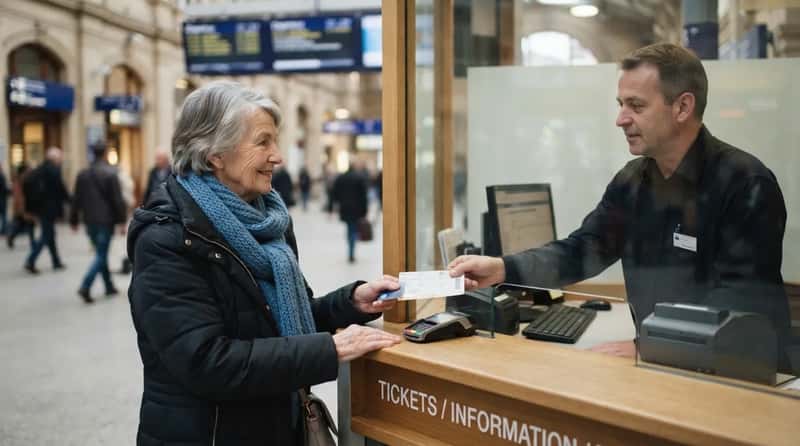
As rail lines push everyone toward mobile tickets, a printed paper ticket increasingly costs extra – a small tax on anyone who simply prefers paper.
Seniors who cite accessibility needs or unfamiliarity with mobile ticketing are frequently granted a waiver at a staffed window.
Here’s the leverage: rail operators market themselves hard to seniors on comfort and accessibility. It’s tough to sell that promise while charging extra for the one ticket format that feels familiar.
Walk in with that argument – it works. And the next fee involves a phone call you’re probably already planning to make.
#13 – The Phone Booking Agent Assistance Fee

Book by phone instead of online, and many rail lines quietly tack on an agent-assisted charge – the cost of a human answering your call.
Senior passengers have a strong case for getting it waived, but only if they mention their status early. Calling Amtrak’s reservation line? Say your senior fare status the moment the call connects.
Timing is everything here. Most callers only bring it up after the charge is already applied, and by then it’s too late.
Lead with your age, not your itinerary. What comes next is a fee tied to something as simple as picking your seat.
#12 – The Seat Reservation Upgrade Fee

The base fare gets you on the train – but a specific seat, especially near accessibility features or restrooms, often costs extra.
Senior passengers who ask can frequently get these fees reduced or removed entirely, particularly on European high-speed routes where seat reservation is mandatory and stacked on top of the pass fare.
European rail programs often tie senior qualification thresholds directly to fee waivers, not just fares. Ask for a complimentary accessible seat assignment at any staffed window.
The worst answer is no – but the yes rate is higher than most passengers expect. Coming up next: the fee most people don’t realize they can undo after the fact.
#11 – The Ticket Exchange / Change Fee

Need to shift your travel date after buying? Most tickets carry a change fee – and most passengers over 60 pay it without realizing they don’t have to.
Senior passengers who call the ticket office and explain a medical or health-related reason have a track record of getting that fee waived. You don’t need extensive proof, just the reason stated alongside your senior status.
That combination – health flexibility plus age – is more powerful than either one alone. Rail operators’ internal policies often let agents waive exchange fees specifically for this pairing.
This is one of the highest-value waivers on the list in dollar terms, especially on routes where standard change fees run $20-$35 per ticket. What follows benefits international travelers more than anything else here.
#10 – The Interrail / Eurail Reservation Fee Surcharge

This is the one most international travelers leave on the table completely. The senior pass discount is well known – the reservation fee waiver that can ride alongside it is not.
Travelers aged 60 or over already qualify for a 10% discount on the Interrail senior pass across 33 countries. That part everyone finds eventually.
What most people miss: individual country rail operators inside the Interrail network have discretion over reservation surcharges for senior passholders. Asking at the local ticket office – not just online – frequently unlocks a waiver on mandatory seat reservation fees.
Across a multi-country trip, those small waivers add up fast. Next: a fee that quietly eats into every other discount on this list.
#9 – The Credit Card Processing / Payment Fee
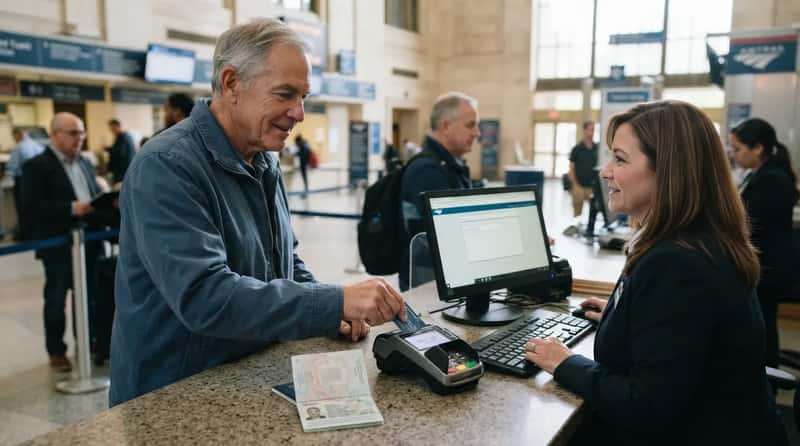
Some rail offices and booking platforms tack on a credit card processing fee at checkout. It looks small – multiplied across a round trip for two, it isn’t.
For most American rail services, senior discounts themselves are free to claim; you just need a passport or other ID to prove your age.
The payment surcharge sits just underneath that discount, and passengers who ask whether it can be waived – or whether another payment method avoids it – regularly walk away having saved it entirely. Agents have latitude here the booking website simply doesn’t show you.
The key is asking before the transaction finalizes, not after. Coming up is the waiver that rewards passengers who ask before peak pricing locks in.
#8 – The Peak-Hour Fare Surcharge
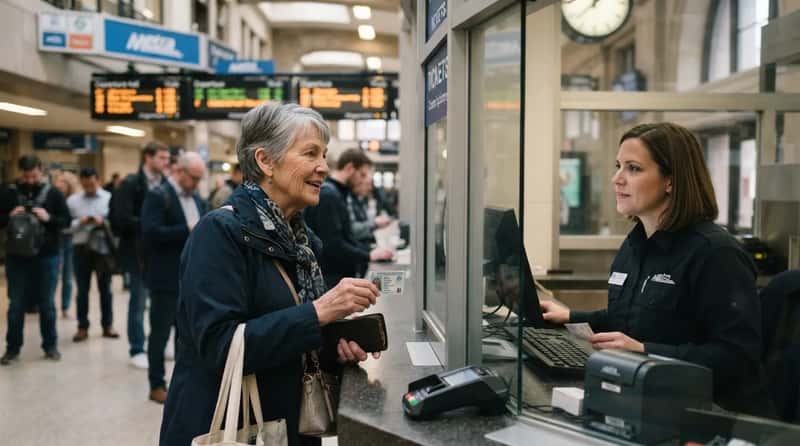
Off-peak discounts for seniors exist at many rail operators – but the door closes the moment you buy without asking.
Systems like Metra in Chicago and the light rail networks in Minneapolis and St. Louis all offer senior discounts. Most start deepest savings at 65, though some begin as early as 60 or 62, and a few offer free or nearly-free off-peak rides.
Quick Compare
- Metra (Chicago): senior discount applied at the ticket counter
- Minneapolis light rail: reduced fares starting as early as 60-62
- St. Louis light rail: senior discount, some near-free off-peak rides
- The common thread: staffed windows apply the correct tier – machines and apps often don’t
Here’s the catch: the surcharge waiver and off-peak rate don’t always appear automatically in the booking flow. Asking at the staffed window – not the machine, not the app – is where an agent can manually apply the correct fare tier.
Plenty of seniors get charged peak rates simply because they bought digitally and the system defaulted wrong. Next up is a fee virtually no one knows exists – hiding inside every Amtrak cross-border ticket.
#7 – The VIA Rail Cross-Border Age Threshold Advantage
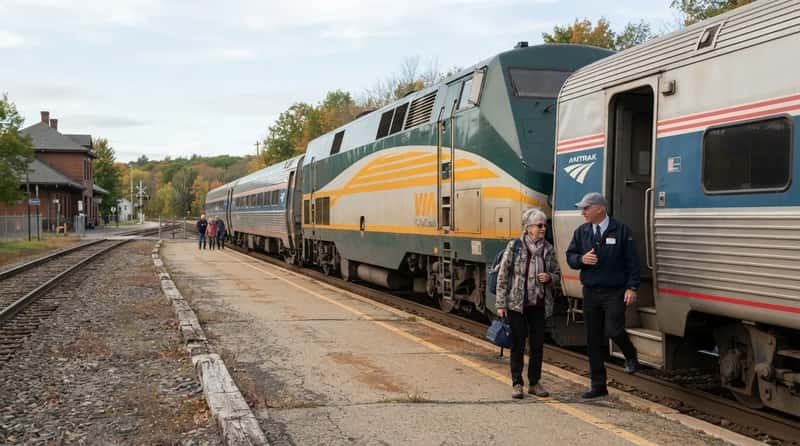
Most passengers assume the Amtrak senior discount starts at 65. On cross-border routes, the threshold quietly drops.
Amtrak travelers 65 and over get a 10% discount on most fares. But on services jointly operated with VIA Rail Canada, that same 10% discount applies starting at age 60.
Passengers aged 60-64 who don’t ask specifically about the cross-border discount miss it entirely – it isn’t automatic. VIA Rail itself also offers a 10% discount for riders 60 and older with valid ID.
Ask directly: “Does the VIA Rail senior threshold apply to this route?” before you pay. What’s next has been quietly waivable since the 1970s.
#6 – The Reduced-Fare ID Replacement Fee

Lost or outdated your reduced-fare transit ID? Most seniors just pay the replacement fee – when they often don’t have to.
Starting January 1, 2026, non-photo Reduced Fare IDs won’t be accepted for discounted travel, so older cardholders need to upgrade. Acceptable proof includes a Medicare card, driver’s license, passport, or birth certificate.
The upshot: if you already carry standard ID, you may not need a separate transit card at all. Asking the agent whether your Medicare card or passport qualifies in place of a replacement card can eliminate the fee completely.
The answer is yes more often than agents ever volunteer. What comes next is one of the most underused waivers in European rail – and it spans dozens of countries at once.
#5 – The Mandatory Supplement on High-Speed Trains (European Senior Pass)
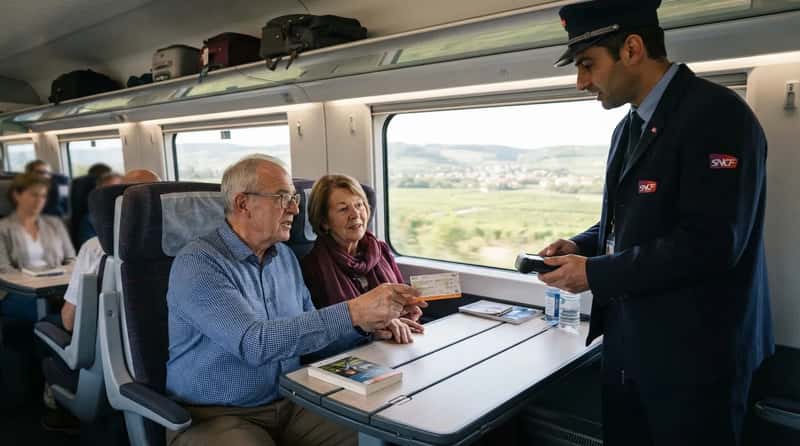
Eurail and Interrail senior passholders often assume their pass covers everything. It doesn’t – and the supplement is where the money quietly disappears.
On high-speed routes across France, Spain, and Italy, a mandatory supplement is charged on top of any pass. Senior discount ages across Europe range from 60 to 67 depending on the country, with France, Italy, Spain, Britain, the Netherlands, Poland, and Turkey all qualifying at 60.
Worth Knowing
- France, Italy, Spain, Britain, the Netherlands, Poland, and Turkey: senior status kicks in at 60
- Other European countries: thresholds run as high as 67
- The high-speed supplement is charged separately from the pass itself
- Best odds of a waiver: ask at the station window, not through online booking
Passengers who present their senior pass at the station ticket window – instead of booking the supplement online – have reported success getting it reduced or waived, especially when the train isn’t fully booked. The station agent has discretion the website simply doesn’t.
Up next: a waiver that activates the moment a medical word is spoken.
#4 – The Sleeper Car Upgrade Surcharge (with Medical Context)

Sleeper accommodation on overnight trains carries a hefty surcharge, and most operators officially exclude it from senior discounts.
Amtrak’s senior discount does extend to ticket fares, upgrades, private rooms, and sleeper cars in some cases – but standard booking rules exclude sleeping accommodation charges by default.
Here’s the workaround that actually gets results: mention a documented mobility or health need alongside your age at the ticket window. Agents have the authority to reclassify the charge, though not every agent will act on it unprompted.
The right conversation at the right window produces results far more often than silence. The next one is almost insultingly simple to claim.
#3 – The Grand Canyon Railway Senior Discount on Fees

Regional heritage railways get overlooked constantly – and they carry some of the most generous senior waivers per dollar of any operator in the country.
The Grand Canyon Railway offers riders 62 and older a 15% discount on tickets. Most passengers don’t realize that discount also applies to related booking and handling fees, but only when you ask at the counter instead of booking through third-party platforms.
Passengers 65 and older can save up to $7 off a ticket by booking online or calling directly – a saving third-party sites strip away entirely.
Calling or walking up to the window and stating your age is the entire strategy. What’s at #2 rewrites how most seniors think about UK rail completely.
#2 – The UK Senior Railcard First Class Booking Fee Reduction
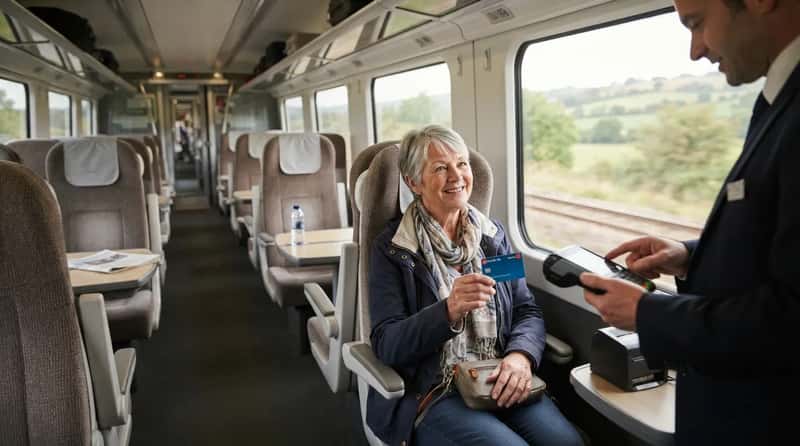
Most people know the UK Senior Railcard exists. Almost no one realizes its full scope when you ask at a staffed window instead of the app.
The Senior Railcard is available to anyone 60 and over, offering discounts on eligible train fares across Britain. It’s also known as the over-60s Railcard.
At a Glance
- Eligibility: age 60 and over, no other qualification needed
- Discount: about a third off most eligible fares, including First Class
- Covers Standard Anytime, Off-Peak, Advance, and First Class Advance and Anytime
- Ask specifically about First Class fee waivers – online defaults often skip them
What most cardholders don’t know: First Class tickets are included, saving a third off the price with most Railcards. At a staffed window, holders who ask specifically about First Class fee waivers – including booking supplements and peak-travel add-ons – regularly find agents can apply discounts the online platform’s defaults don’t allow.
The Railcard already covers Standard Anytime, Off-Peak, Advance, and First Class Advance and Anytime fares. Stack that against the booking fee by simply asking – because what comes in at #1 has the widest reach of anything on this list: 33 countries, one conversation.
#1 – The Interrail Senior Pass Reservation Fee Across 33 Countries

This is the single most valuable fee-related senior waiver in global rail – and it starts and ends with asking at a station window instead of booking online.
The Interrail senior pass covers travel across 33 countries with a 10% discount for travelers 60 or over on the date their trip starts. That base discount is the part everyone already knows.
What most travelers miss is the seat reservation fee layered on top – charged country by country, train by train. Station ticket offices across multiple European countries maintain internal senior-courtesy policies that reduce or waive these mandatory fees for passholders who ask directly.
None of this is advertised on the Interrail website – it’s discretionary, which means it only happens when you start the conversation. Across 33 countries, that single habit of asking compounds into an extraordinary amount saved.
The Bottom Line

Rail operators across the U.S., Canada, and Europe are sitting on a list of fee waivers that activate the instant a passenger over 60 identifies themselves and asks. The on-board surcharge, the paper ticket fee, the phone booking charge, the seat reservation fee, the exchange fee – none of it gets volunteered.
Agents aren’t hiding anything; they simply have no incentive to go looking. You do.
Carry your ID, lead with your age, and ask before the transaction closes – not after. The worst response you’ll ever get is a polite no.
Did we miss a waiver you’ve successfully claimed? Drop it in the comments.