The captain’s voice crackles over the PA: “We’re just waiting on fuel.” Cue the collective groan, the phone-checking, the quiet math everyone does about missed connections. Most passengers assume it’s a stalling excuse, something airlines toss out when they don’t want to admit the real problem. It isn’t.
Behind that one vague sentence sits a tangle of federal rules, static-electricity physics, and cold cost calculations that most flyers never see explained. Once you know what’s actually happening under the wing while you’re stuck in seat 14C, you’ll never hear “fuelling delay” the same way again.
#16 – The Hose Can Only Move So Fast, Period
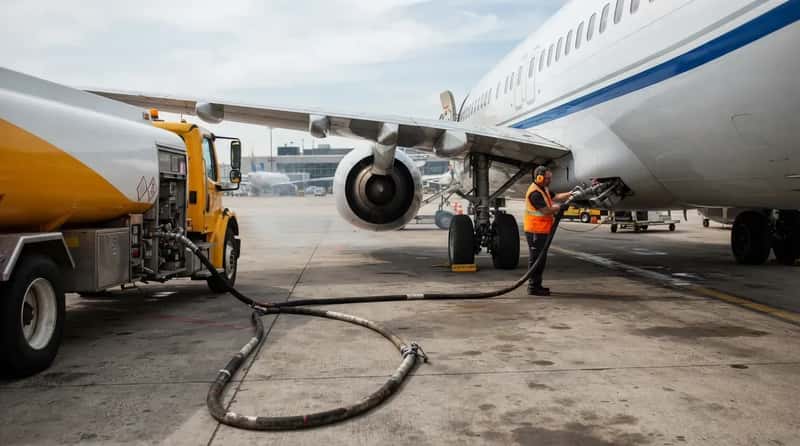
No amount of foot-tapping at the gate speeds up the laws of fluid dynamics. Ground crews hook the hose to the wing and pump kerosene at a fixed, non-negotiable rate: roughly 634 gallons per minute on a standard truck.
That sounds fast until you remember how much fuel a jet actually needs. A normal fill-up takes 15 to 20 minutes under ideal conditions, and that’s the best case. Add a lineup of other planes fighting for the same truck, and that window stretches fast.
Fast Facts
- Standard fuel trucks pump at a fixed rate near 634 gallons per minute
- Even a routine fill-up takes 15 to 20 minutes under ideal conditions
- The rate is locked in by equipment design, not by any airline’s schedule
- A queue of other aircraft waiting on the same truck adds real time on top
#15 – Two Trucks Don’t Cut The Wait In Half
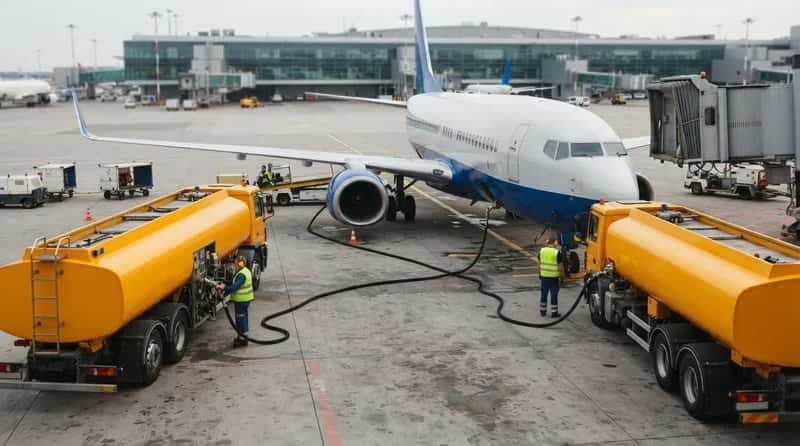
It seems logical: double the trucks, halve the time. Ground operations don’t work that way, and it’s one of the most misunderstood “easy fixes” passengers assume airlines just haven’t bothered to try.
Positioning a second truck, syncing the flow rates, and keeping fuel balanced evenly across both wings takes real coordination between crews. You might think two fuel trucks would slash refuelling time in half, but the math simply doesn’t scale the way most people expect.
#14 – Some Jets Drink More Fuel Than A Swimming Pool Holds
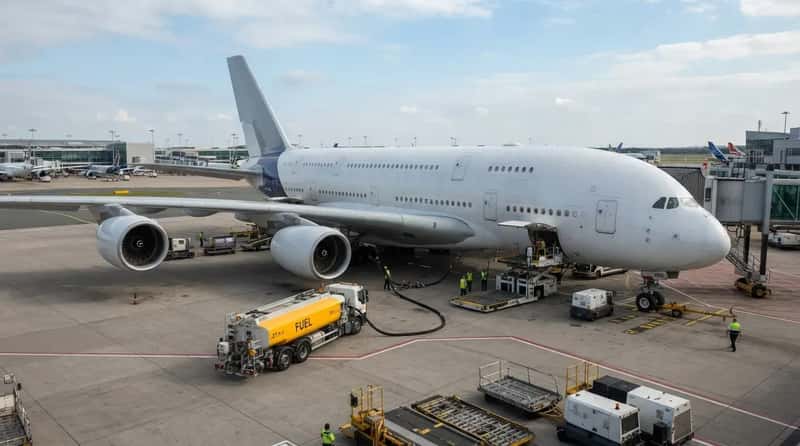
When you’re annoyed about a 25-minute wait, remember that some aircraft are being filled with more liquid than most backyard pools contain. Size changes everything about how long fuelling realistically takes.
The gargantuan Airbus A380-800, which can carry over 500 passengers, can drink up more than 85,000 gallons of fuel before a single wheel leaves the ground. A narrow-body jet gets away with a fraction of that. The bigger the plane, the longer that gate-side wait is legitimately going to take, no matter which airline you’re flying.
#13 – Not All Jet Fuel Is The Same Fuel
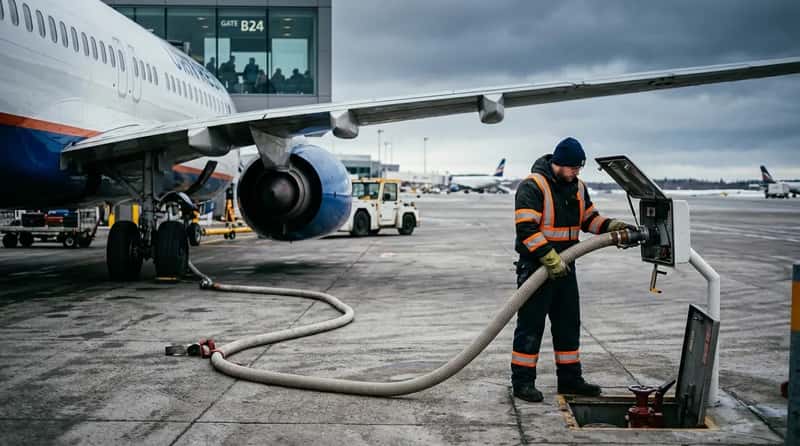
Most travelers assume jet fuel is one universal liquid pumped into every plane on Earth. It isn’t, and the difference actually matters for where and when your flight can safely fuel up.
There are two main types in wide use, Jet A and Jet B, and they’re chemically distinct from each other. The biggest difference is freezing point: Jet B stays liquid at much colder temperatures, which is why planes in icy regions rely on it. That’s part of why cold-weather airports sometimes handle fuelling very differently than sunny hubs do.
#12 – One Missing Wire Could Spark A Fire
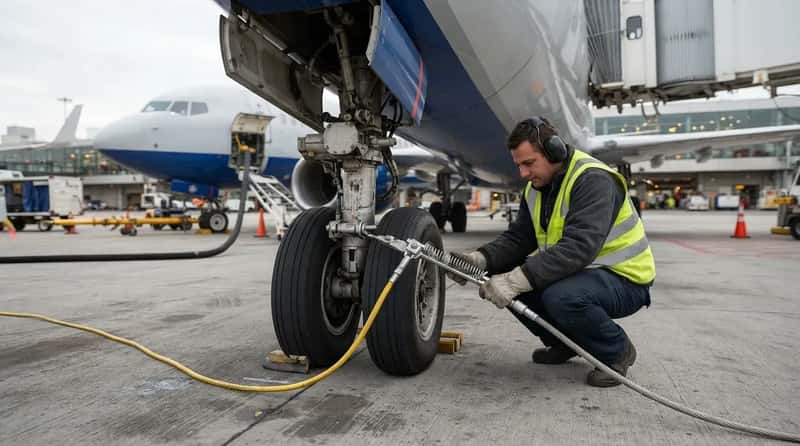
Before a single drop of fuel flows, ground crews perform a step passengers never see: grounding the aircraft, literally. It isn’t optional, and skipping it isn’t a risk anyone in aviation is willing to take.
Every aircraft type has a specific spot where the fuel agent must clip on a ground wire, preventing static electricity from sparking a fire. Crews also use anti-static devices as a second layer of protection. That single connection, done wrong, could turn a routine fill-up into a catastrophe, which is exactly why nobody rushes it.
#11 – The “Deadman Switch” Is A Real Thing
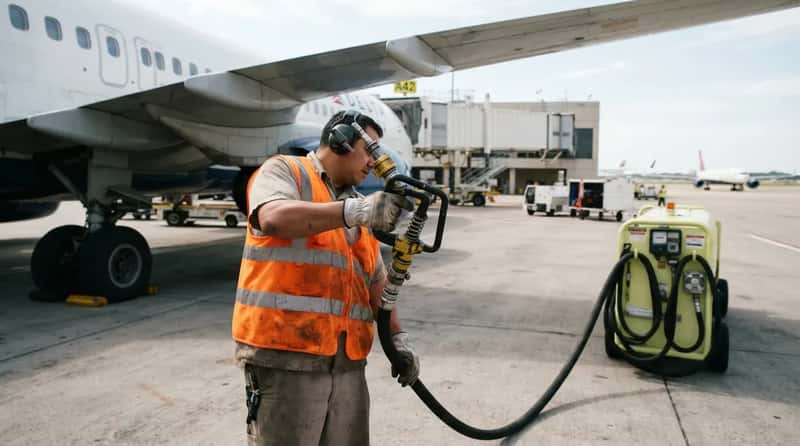
It sounds like something out of an action movie, but it’s standard equipment on every fuel truck at every major U.S. airport. The name is morbid, but the purpose is pure safety engineering.
The fuel agent grips a deadman switch, so named because if a worker suddenly collapsed and lost their grip, fuelling would automatically stop. The operator has to hold this trigger the entire time, so the flow can be cut instantly if a leak ever starts. It’s a small detail most flyers will never know exists.
#10 – Passengers Usually Aren’t Supposed To Be Onboard For This
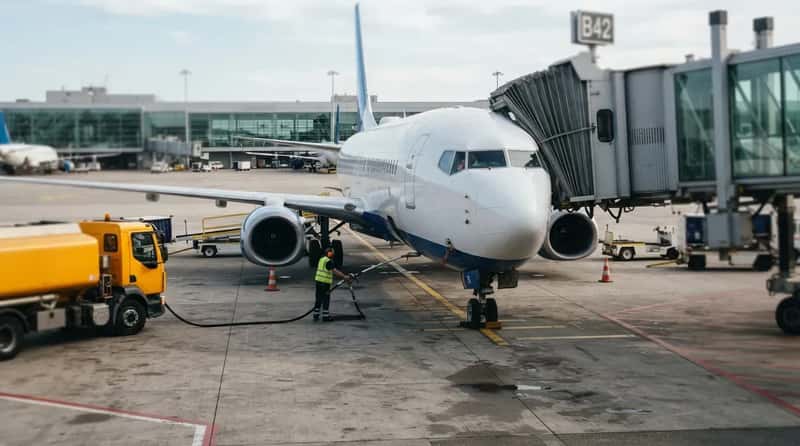
If you’ve ever wondered why boarding sometimes stalls right when the plane is being fuelled, this is why. It’s a deliberate safety buffer, not a scheduling accident, though airlines don’t always follow it perfectly.
Standard procedure calls for refuelling to happen without passengers on board, but some airlines do it anyway when the turnaround clock is tight. The reason is simple: fire risk. Fuelling with passengers seated inside is avoided whenever possible because of what could happen if something went wrong.
#9 – Your Plane Was Never Actually Empty
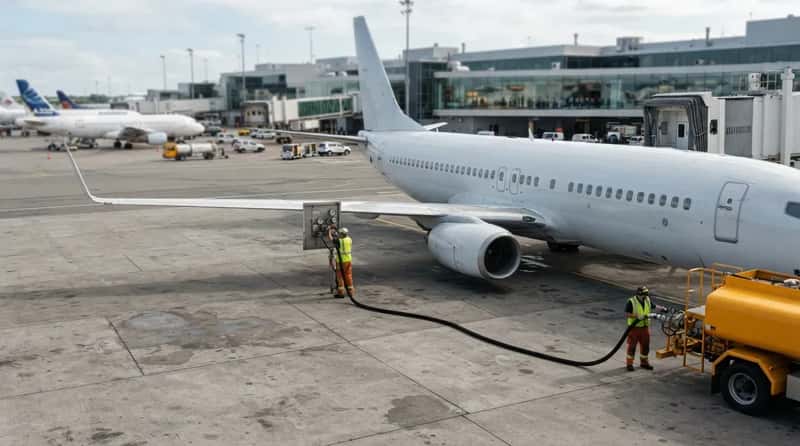
Here’s a detail that surprises even frequent flyers: the aircraft you boarded almost certainly still had fuel left in its tanks before ground crews even started pumping more in.
Most aircraft land with reserve fuel remaining from the previous flight, typically around 15% of total capacity. Airlines rarely, if ever, let a plane run genuinely dry between flights. That leftover cushion is intentional, built into every flight plan long before the aircraft ever reaches your departure gate.
#8 – Sometimes Fuel Actually Spills, And Everything Stops
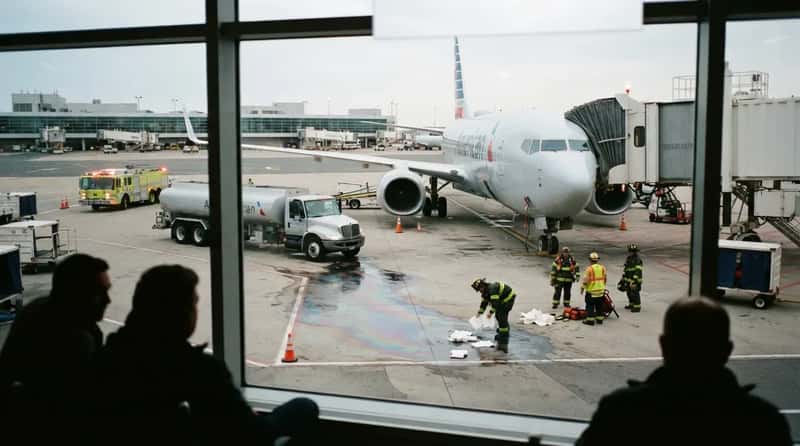
Every so often, the delay isn’t about timing at all. It’s about a mess nobody saw coming, with the whole terminal watching it unfold through the windows in real time.
An American Airlines flight was once delayed after fuel was spotted leaking from the wing while parked at a gate in Philadelphia. A mechanical issue during fuelling caused a minor spill right at the gate, and emergency responders arrived on scene, at one point using paper towels to help contain it. Rare, but when it happens, it stops everything cold.
#7 – “Minimum Fuel” Isn’t An Emergency, But It’s Close
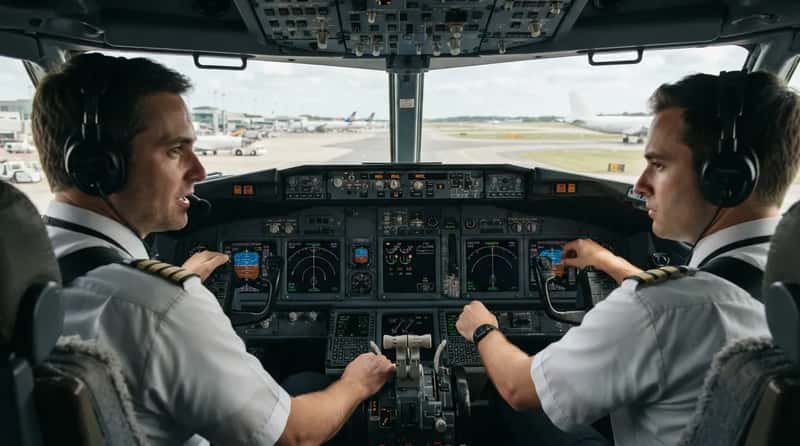
Pilots have a specific radio phrase they use when fuel is getting tight, and it’s designed to quietly get controllers’ attention without triggering panic in the cabin.
The phrase “minimum fuel” is often misunderstood by passengers, but despite how it sounds, it isn’t an emergency call. It simply tells air traffic control that the aircraft has little flexibility left and that further delays will become a real problem. If the crew risks dipping into their final reserve, they’ll declare an actual fuel emergency instead, which gets the aircraft priority to land immediately.
Quick Compare
- “Minimum Fuel”: An advisory heads-up to controllers, not a distress call, and it doesn’t guarantee priority handling
- Fuel Emergency: A formal declaration that puts the aircraft first in line for an immediate landing
- Trigger point: “Minimum fuel” flags tightening margins; an emergency call means final reserves are actually at risk
- Frequency: “Minimum fuel” calls happen far more often and rarely make the news
#6 – Federal Rules Force Every Flight To Carry Fuel It May Never Use
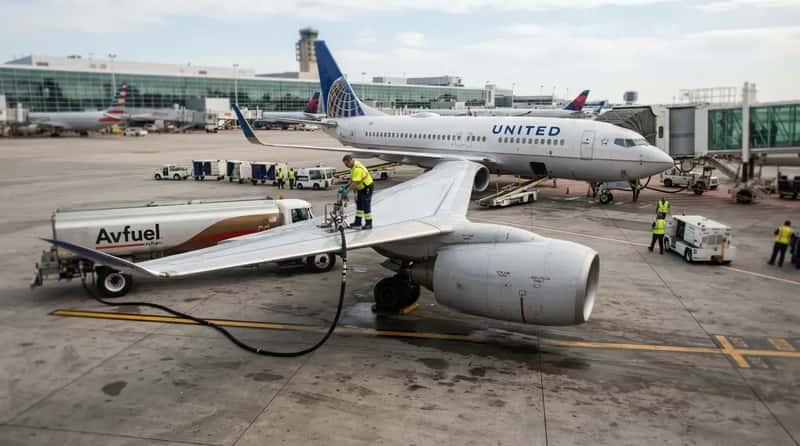
That “extra” fuel weighing the plane down isn’t wasteful padding. It’s federal law, and it exists specifically so a flight never gets caught with nothing left in the tank over open sky.
The FAA’s domestic rules require airlines to dispatch with enough fuel to reach the destination plus 45 more minutes at normal cruising consumption. For international flights without a designated alternate airport, the plane must carry enough fuel to reach the destination and then keep flying for two more hours. Those minimums quietly explain a surprising amount of gate-side math.
#5 – Airlines Quietly Load Extra Fuel To Dodge High Prices Elsewhere
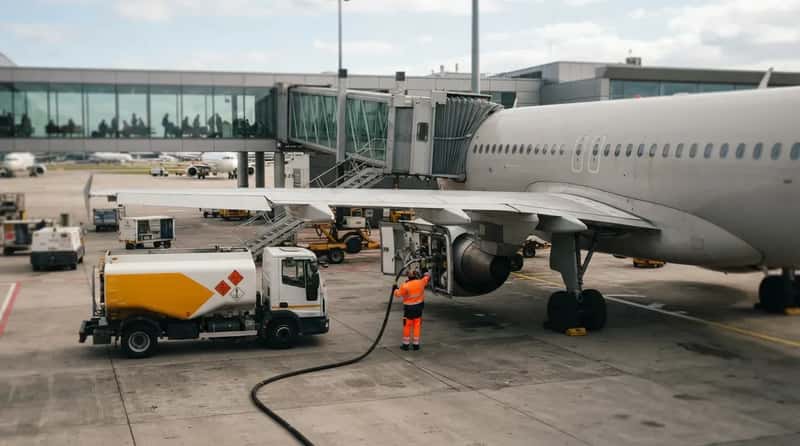
This one genuinely surprises people: some of that time at the gate isn’t about safety at all. It’s about accounting, and it happens more than most travelers would ever guess.
“Fuel tankering” is the industry name for loading extra fuel at one airport specifically to avoid paying a steep price premium at the destination. Airlines run the math and top off wherever it’s cheaper. Around 30% of all flights within Europe use partial or full fuel tankering, which means a financial decision is quietly hiding inside what looks like a routine operational one.
At a Glance: Fuel Tankering
- Extra fuel is loaded where prices are lower, then burned or saved at the pricier destination
- Roughly 30% of intra-European flights use partial or full tankering
- Carrying extra weight burns some additional fuel of its own, so airlines only do it when the math still wins
- It’s a purely financial call, with no impact on the plane’s safety margins
#4 – Budget Airlines Built Their Entire Business Around This 25-Minute Window
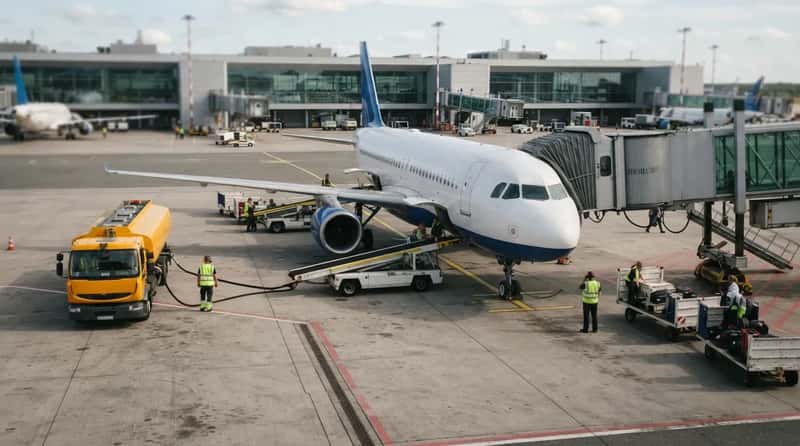
Ever notice how the cheapest airlines seem to be in a bigger hurry at the gate? That’s not an accident. It’s the entire foundation of their profit model, engineered down to the minute.
Efficient refuelling is a cornerstone of the low-cost carrier playbook, with many airlines chasing 25-minute turnarounds. In aviation, a plane only makes money while it’s in the air, so every extra minute at the gate is a minute of lost revenue. Slower fuelling directly threatens that entire model.
#3 – Perfect Balance Matters More Than Raw Speed
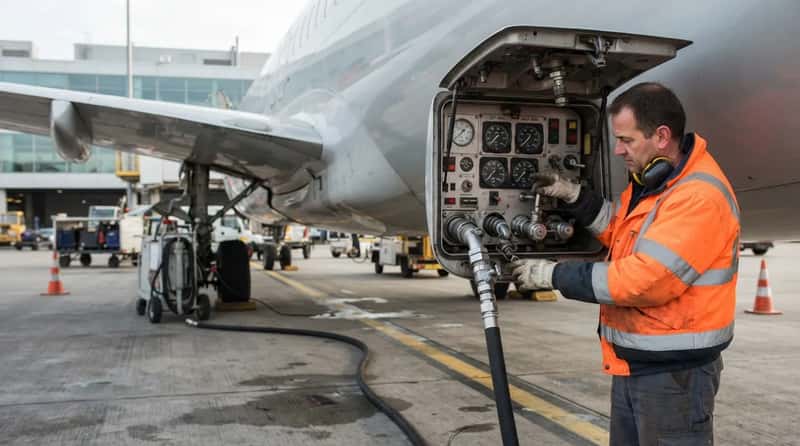
Fuel isn’t just poured in until the tank is full. It has to be distributed with surgical precision, because an unbalanced aircraft is a genuinely dangerous aircraft, even sitting still on the tarmac.
The fuel panel operator carefully monitors pressure to keep fuel spreading evenly across every tank, protecting the aircraft’s center of gravity while it rests on its landing gear. That balancing act, done manually and watched constantly, is one more reason “just fill it up fast” was never realistic to begin with.
#2 – Some Airports Are Simply Built To Fuel Planes Faster
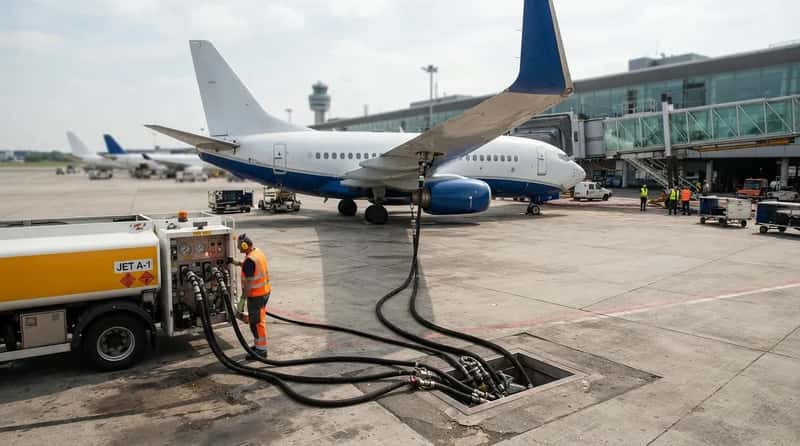
Not every airport handles fuelling the same way, and that difference alone can decide whether your flight sits an extra ten minutes or rolls out right on schedule.
Hydrant systems are the gold standard for speed, delivering constant pressure that tanker trucks struggle to match over a long stretch. Smaller regional airports often rely on trucks instead, and those vehicles carry limited capacity, sometimes as little as 10,000 gallons per load. That single infrastructure gap explains why identical planes fuel up at wildly different speeds depending on which airport they happen to be sitting in.
#1 – Sitting At The Gate Is Cheaper Than Burning Fuel In The Sky
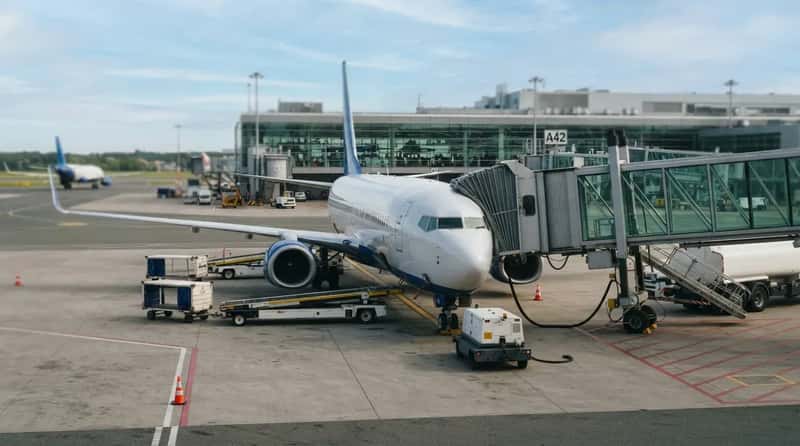
Here’s the twist that reframes almost every gate delay you’ve ever sat through: airlines and air traffic control often keep you parked on purpose, and it’s deliberately about fuel, not incompetence.
Holding an aircraft at the gate is far cheaper, safer, and more comfortable than holding it airborne. A plane burning fuel in a holding pattern at 10,000 feet can cost several thousand dollars more per hour than one sitting quietly at a gate, and it adds workload to already stretched controllers. That “unexplained” wait is often the system quietly saving fuel, money, and airspace all at once.
Worth Knowing
- Airborne holding burns fuel continuously while the plane goes nowhere
- A holding pattern can cost several thousand dollars more per hour than gate parking
- Every aircraft circling adds coordination workload for air traffic controllers
- Gate delays are often the system’s cheaper, safer default, not a failure to plan ahead
None of these delays are random, and almost none of them are the airline simply dragging its feet. Every extra minute traces back to a rule, a safety switch, a price difference, or a physics limit that nobody bothers explaining over the PA.
The next time your flight sits at the gate with the seatbelt sign still off, know that it’s rarely laziness. It’s kerosene, math, and a system built to keep everyone on the ground a little longer than anyone wants, for reasons that actually make sense once someone finally says them out loud.