Most people picture an overnight train the way old movies sell it: champagne glasses clinking, silk pajamas, the gentle rock of the rails lulling everyone into a perfect sleep. Ask a conductor or a longtime sleeper-car regular what actually happens after lights-out, and you’ll hear a very different story – cramped bunks, middle-of-the-night compartment shuffles, and one exhausted attendant keeping an entire car running smoothly while everyone else sleeps.
What separates the veterans from the first-timers isn’t luck or money. It’s a short list of small, almost invisible habits that crew members say they can spot within minutes of boarding – and the passengers who skip them almost always find out why the hard way.
#16 – They Tip the Attendant Before the Trip Even Starts
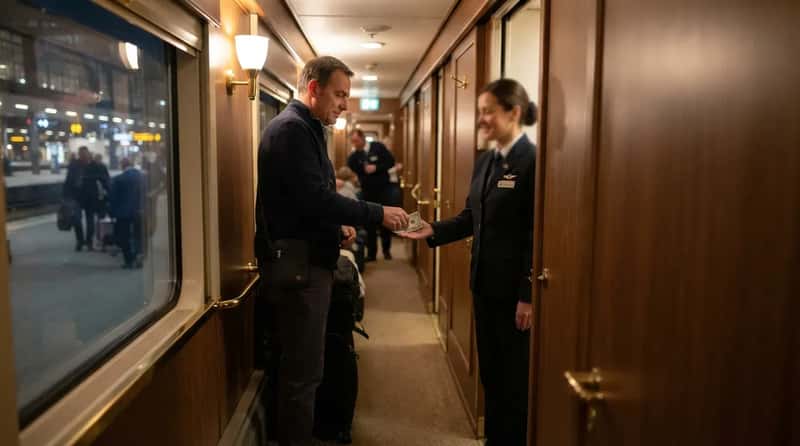
Frequent riders don’t wait until the final morning to show appreciation for the person running their entire car overnight. A quiet gesture at the very start of the trip tends to set the tone for everything that follows, and attendants notice who bothered and who didn’t.
It’s not about buying favors. It’s about acknowledging that one person is managing bedding, meal timing, and dozens of requests through the night with almost no downtime of their own, and regulars treat that reality with respect from minute one instead of as an afterthought once the trip is already over.
#15 – They Confirm Which Dining Service Is Actually Running Before They Board
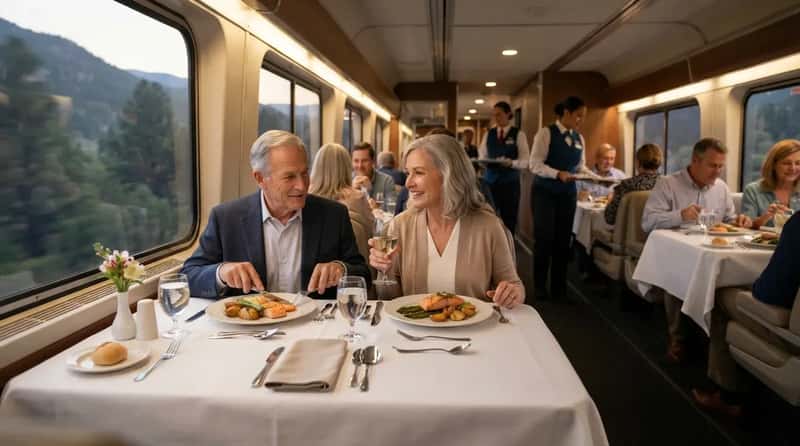
Veteran sleeper passengers never assume they know what dinner looks like. Amtrak actually runs two very different dining styles depending on the route – Traditional service means chef-prepared meals in a full dining car, while Flexible service means a smaller menu of hot and cold prepackaged food.
Guessing wrong about which one is running can mean missing the one seating window that mattered to your whole day. Experienced travelers check the route ahead of time so they’re not caught off guard when the announcement comes over the intercom, saving themselves a genuinely disappointing dinner.
Quick Compare
- Traditional service: Full dining car, chef-prepared plates, and set seating times announced over the intercom.
- Flexible service: Smaller menu of hot and cold prepackaged meals, usually with more flexible timing.
- The catch: Which one you get depends entirely on the route, not the fare class you booked.
#14 – They Screenshot Their Reservation Before the Signal Disappears
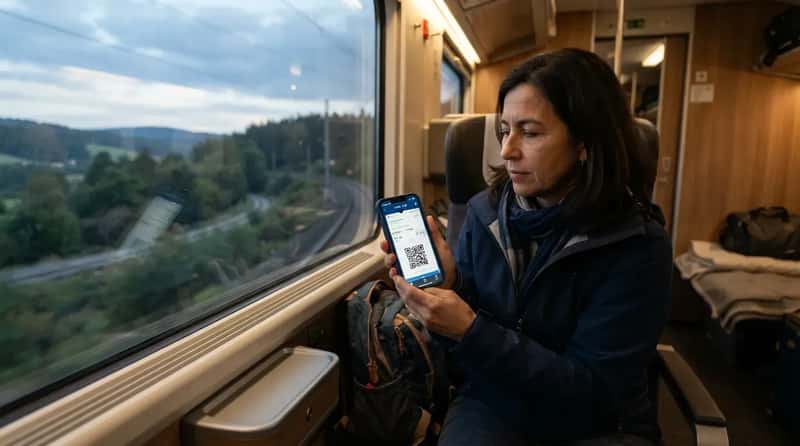
Long stretches of overnight rail travel run through dead zones where cell service simply vanishes. Seasoned riders never trust an app to load correctly the exact moment an attendant asks for proof of booking.
So they screenshot it the moment they get a signal, well before boarding, instead of fumbling with a spinning loading wheel in front of a line of impatient passengers. It sounds obvious once someone points it out, but it’s the kind of habit that only shows up after one stressful boarding experience.
#13 – They Pack Flip-Flops for More Than Just the Room
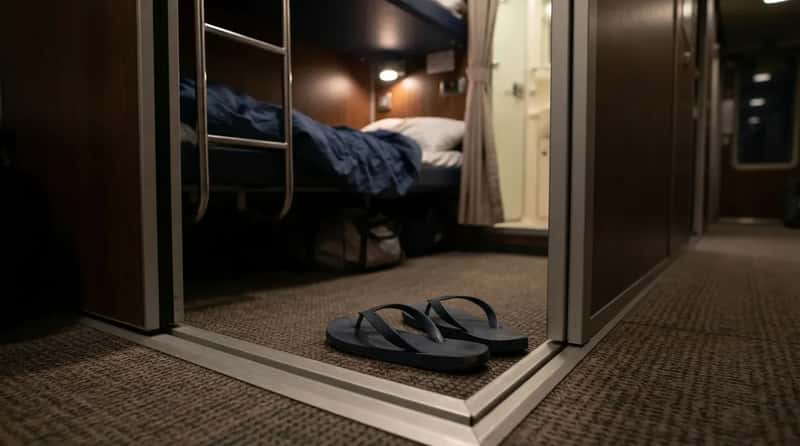
Shared shower cars are not exactly spa-quality, and regulars plan for that reality. Whether it’s the public bathroom down the hall or the tiny en suite in a bedroom compartment, an inexpensive pair of flip-flops is one of the smallest, smartest things a passenger can pack.
Many even wear them around their own private room, leaving them right at the sliding door for late-night bathroom trips. It’s a tiny habit, but it removes one more thing to fumble with in the dark at 2 a.m.
#12 – They Bring a Small Cooler and Let the Attendant Handle the Ice
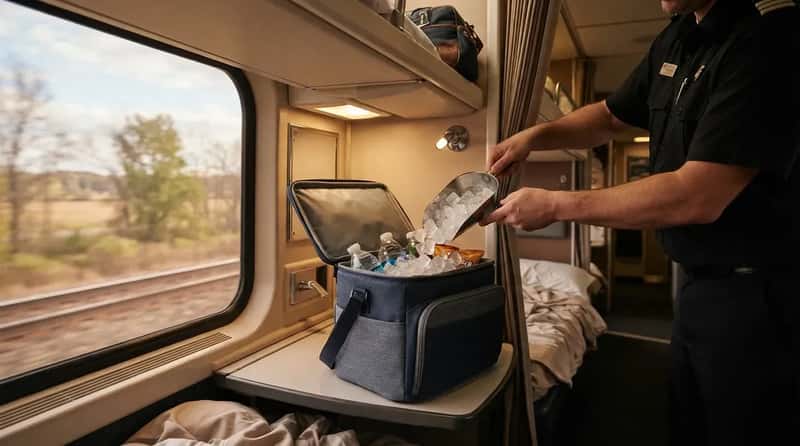
Overnight sleeper cars are not stocked like a kitchen, and experienced travelers plan their snacks accordingly. They bring a small cooler of their own, knowing the room attendant can restock ice along the way to keep everything cold.
If freezer packs start defrosting mid-trip, the attendant can top off ice on request instead of the passenger having to solve the problem alone. It’s a detail that rarely gets mentioned in booking confirmations, but regulars treat it as common knowledge.
#11 – They Never Assume the Boarding Line Works Like Coach
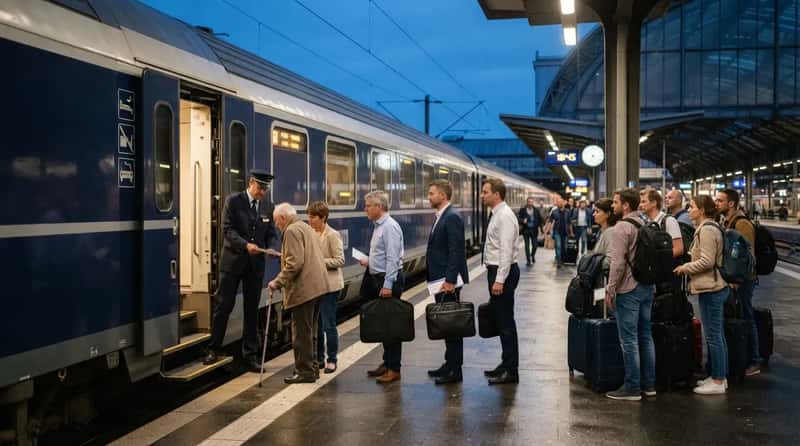
There’s an unofficial pecking order at the platform, and skipping it causes more delays than it solves. Passengers requiring assistance board first, followed by Business Class and sleeper passengers, with coach boarding last.
Nobody announces this loudly, but staff enforce it consistently on busy platforms. Passengers who show up expecting a free-for-all quickly learn that cutting the informal line just slows everyone down, themselves included.
At a Glance
- Passengers needing assistance board first.
- Business Class and sleeper passengers board next.
- Coach passengers board last, even if they arrive early.
- Staff enforce the order quietly, without a formal announcement.
#10 – They Set Their Phone’s Time Zone Manually the Night Before
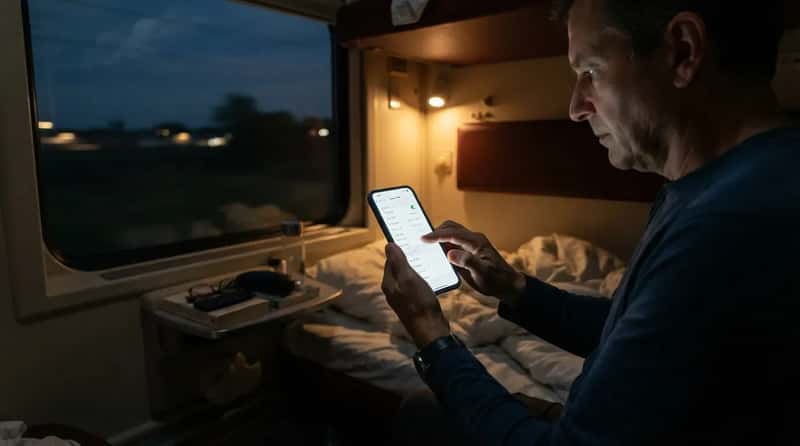
An overnight route that crosses a time zone can quietly wreck an unprepared traveler’s whole next morning. Experienced riders manually set their phone’s time zone the night before rather than trusting an auto-update to sort itself out somewhere in the dark between states.
Phones don’t always update instantly on a moving train, especially crossing borders or remote stretches with weak signal. Regulars would rather double-check the time themselves than wake up an hour off and miss a connection or a wake-up call.
#9 – They Skip the Seafood and Anything Heavily Spiced After Dark
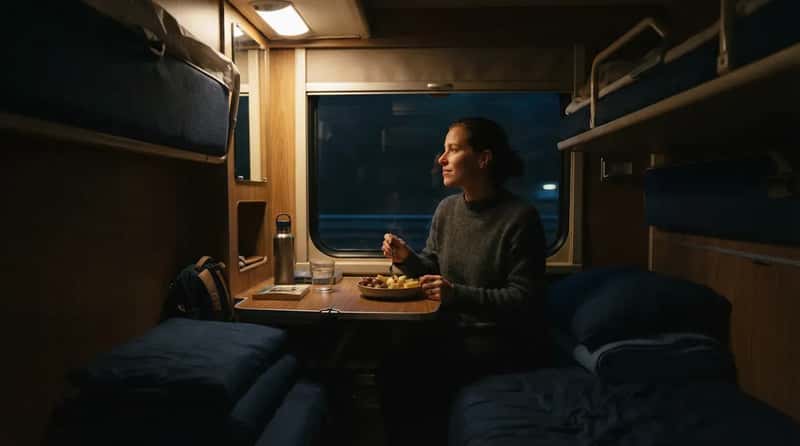
Bringing outside food onboard is allowed, but experienced passengers are careful about what they actually open. Strong-smelling meals like seafood or heavily spiced dishes can disturb everyone nearby, which is why mild snacks are generally the safer call after dark.
The smell lingers for hours in a sealed compartment, long after the food itself is gone. Nobody means to ruin a neighbor’s night – it’s simply that a private roomette traps odor far longer than most people expect until they’ve experienced it firsthand.
#8 – They Wait to Be Seated in the Dining Car, Never Walk In and Grab a Spot
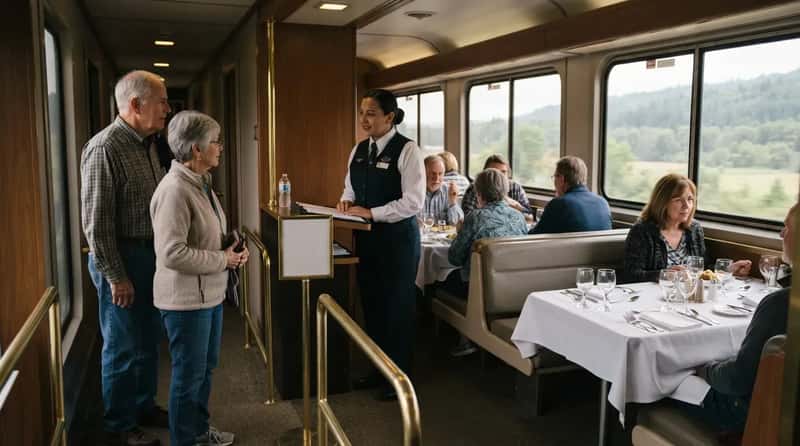
Sleeper dining still runs on a system, even when it feels casual. Once your seating time is announced over the P.A., you head down and wait at the entrance to be seated instead of walking in and picking your own table.
On Amtrak, it’s community seating, meaning you’ll likely be placed at a booth with three strangers. Regulars know this upfront, so they’re never surprised when they end up sharing a table instead of getting a private booth to themselves.
#7 – They Pack a Washcloth and a Strip of Duct Tape for the Rattling
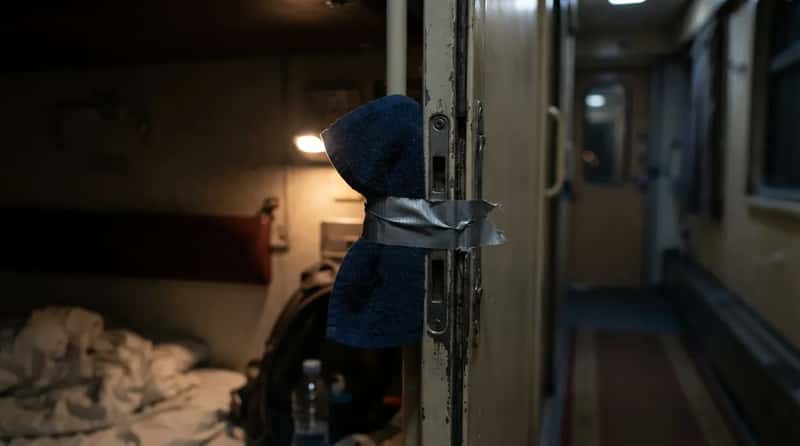
Older rail cars running on freight-maintained tracks make noise, and experienced riders come prepared for it. Old equipment on freight-line track can mean sliding doors and in-room mechanics clanking loudly through the night, especially on mountain grades.
A washcloth or towel plus a strip of tearable duct tape can muffle the rattling and redirect a steady blast of cold air. It sounds like an odd item to pack for a train, but anyone who’s spent a night listening to a rattling door understands immediately why it works.
#6 – They Only Handle Contacts and Personal Care During a Station Stop
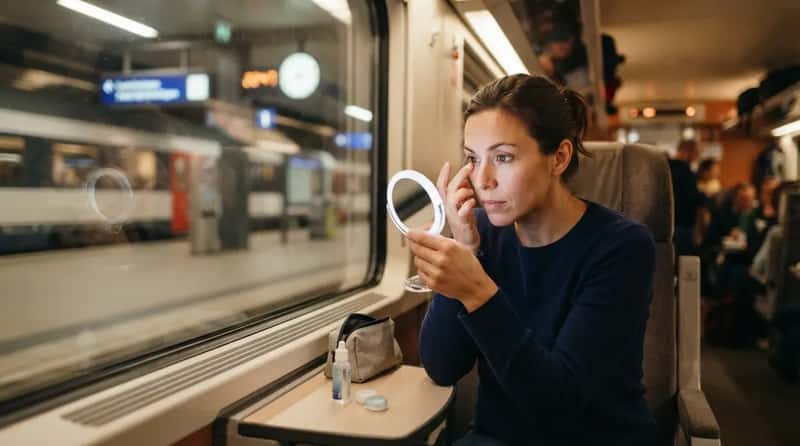
A train rocking at speed is a bad time to be anywhere near your eyes. Anyone who wears contact lenses is better off inserting or removing them only during a station stop, and regulars build this into their nightly rhythm without thinking twice.
It’s a small rule, but it’s the kind of thing you only learn the hard way once. The same logic applies to shaving or makeup – veterans save anything requiring a steady hand for the brief window when the train actually isn’t moving.
#5 – They Let the Attendant Flip the Room From Day Mode to Night Mode
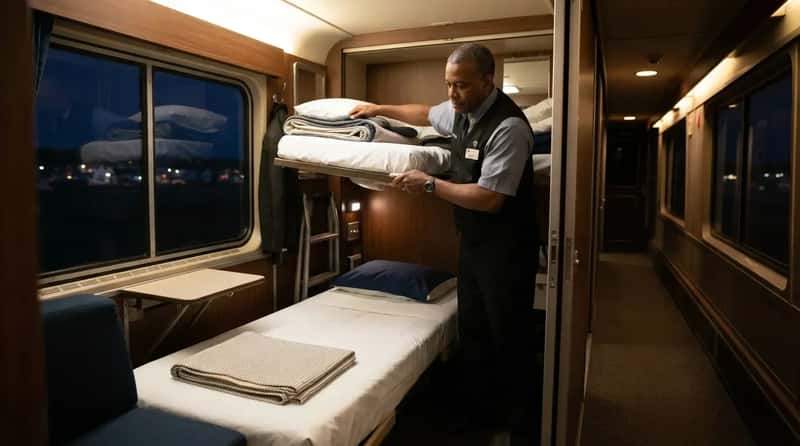
Nobody wrestles with converting their own bed on a well-run sleeper car. Attendants typically convert accommodations from “day” mode to “night” mode themselves, quietly, before most passengers even stir.
Experienced riders simply step out for a few minutes, let the attendant handle it, and come back to a bed that’s already made. Trying to do it yourself in a tight roomette usually just means banging your knees against the wall for no reason.
#4 – They Request a Personal Wake-Up Instead of Trusting a Phone Alarm
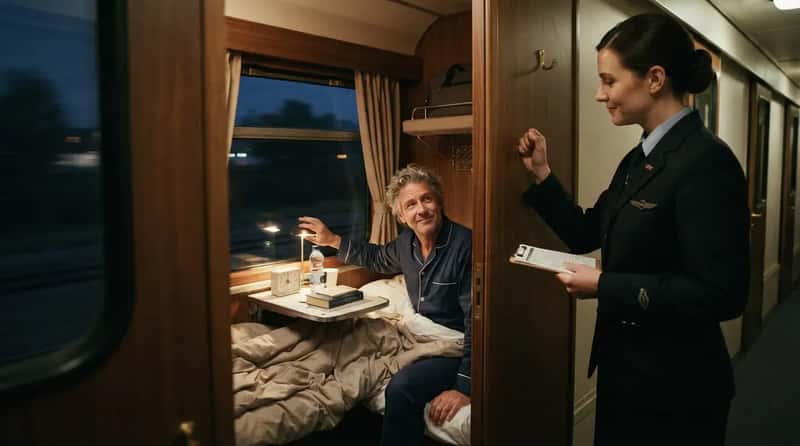
Phone alarms fail more often than people admit, especially overnight on a train. Time zones confuse, hearing aids come out, and phones die at exactly the wrong moment.
That’s exactly why attendants are expected to explain procedures, replenish supplies, and deliver wake-up calls rather than leave passengers to manage everything themselves. Regulars simply ask for a knock at a specific time rather than gambling on technology working perfectly in a moving compartment.
#3 – They Never Sneak a Coach-Ticket Friend Into the Sleeper Car
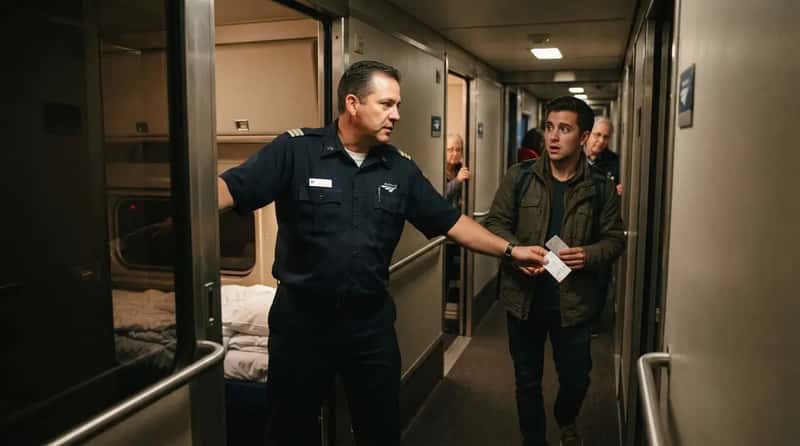
It sounds like a harmless favor between friends, but crew members do not treat it that way at all. Long-time Amtrak riders confirm that coach passengers generally aren’t allowed into sleeper rooms, full stop.
Attendants enforce that rule no matter how confused travelers seem about why it exists, and regulars know better than to even ask. It’s one of the fastest ways to turn a relaxing overnight trip into an awkward conversation with staff.
#2 – They Ask for Extra Pillows and Blankets Without Hesitation
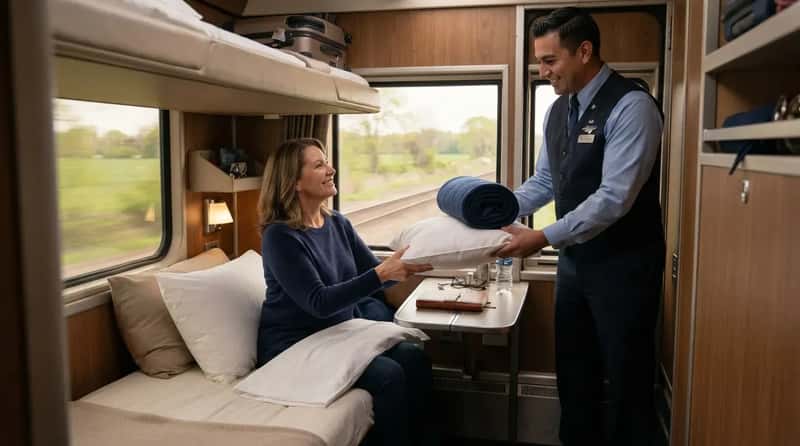
New passengers often assume what’s in the room is all they get. Veterans know extra pillows and blankets are simply theirs for the asking, and they make that request the moment they settle in.
It’s a small thing, but comfort compounds over a 12 or 15-hour overnight ride. Regulars would rather ask once at the start than lie awake at midnight wishing they had.
#1 – They Never Touch the Overhead Light After Dark
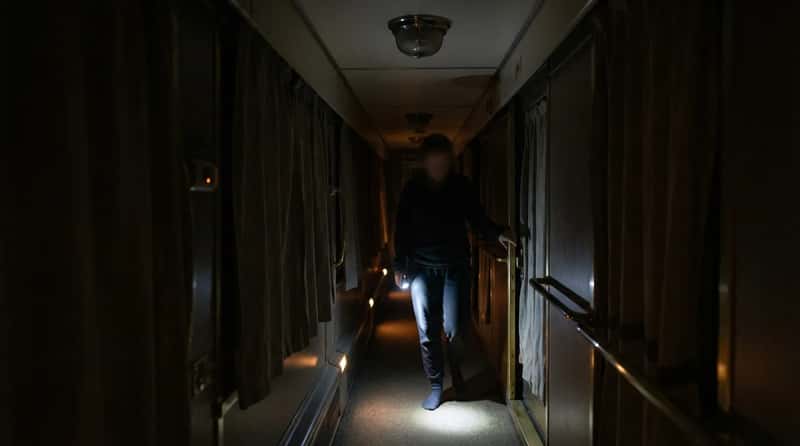
If there’s one rule every experienced overnight passenger treats as sacred, it’s this one. Nothing wakes an entire sleeper car faster than one passenger deciding the main light is the only way to find a phone charger, and crew members say it’s one of the most common complaints they field the next morning.
Sleeper etiquette is simple – no overhead light after dark, no music through speakers, no smelly food – and almost every one of those light-flicking moments could be solved in seconds with a phone’s flashlight instead. Regulars reach for it without even thinking, because they’ve either made the mistake once or watched someone else make it for the whole car to suffer through.
Worth Knowing
- No overhead lights after dark – a phone flashlight does the job just as well.
- No music or video played out loud; headphones only, always.
- No strong-smelling food that can drift through a sealed compartment.
- Keep voices low near shared walls once the car settles down for the night.
None of these habits show up in a booking confirmation email, and no conductor reads them off before departure. They’re passed along the quiet way most travel wisdom is – by making the mistake once, or by watching someone else make it and vowing never to repeat it.
The next time the platform announcement calls your row, you’ll already be one step ahead of everyone still fumbling with their bags. Which one of these did you learn the hard way? Tell us in the comments.