You probably think the person who slips into your room at dusk is just there to fold a blanket and toss a mint on your pillow. In reality, a trained turndown attendant reads an occupied room the way a detective reads a crime scene, clocking a dozen tiny details in the time it takes you to kick off your shoes.
Most of what they notice never gets said out loud, and that’s exactly the point. Here’s what the people who actually do this job every night actually pick up on before they’ve said a single word to you.
#16 – The Knock-Wait-Knock Ritual That Decides Everything
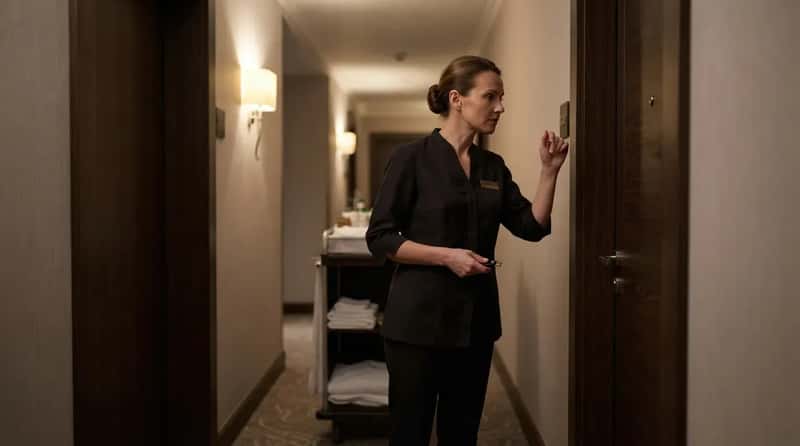
Before an attendant ever touches your bed, they’re running a silent protocol that most guests never notice. The attendant knocks, announces housekeeping, waits, knocks again, and enters only into silence. That second knock isn’t a formality – it’s the moment the entire service either happens or gets skipped.
The pause after the second knock is the single most important second of the whole visit. If there’s any sound, any movement, any hint that you’re inside, trained staff back off immediately. This isn’t politeness for its own sake – it’s a system built specifically to avoid catching guests off guard.
Fast Facts
- Turndown service is most common at four- and five-star hotels, usually offered free to guests in that tier.
- The visit typically happens in the early evening, often before 9 p.m., after housekeeping’s main daytime pass.
- Most rooms take well under five minutes to service unless something unusual needs attention.
- The double-knock-and-wait sequence is standard training at nearly every major hotel brand.
#15 – Do Not Disturb Signs That Aren’t Really About the Bed
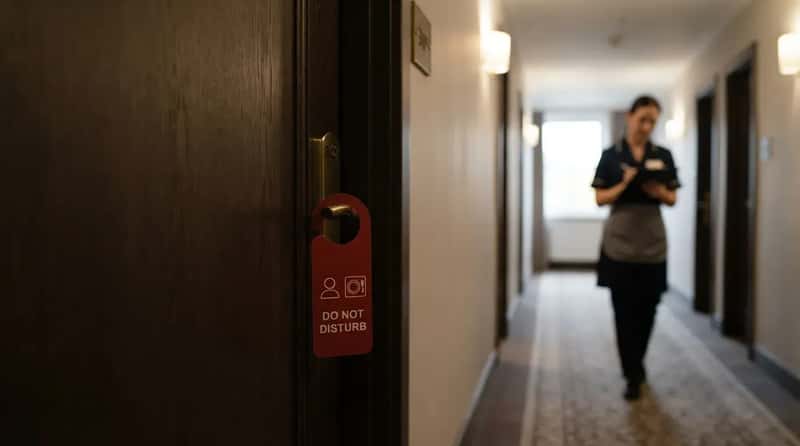
A hanging sign on your door handle carries more weight than you’d think. If a Do Not Disturb sign is hung on the door knob, staff take note of those DND rooms and return to them before going off duty. It’s not a suggestion – it’s logged and tracked like a to-do item for later in the shift.
Here’s the part guests miss: refusing service isn’t just skipped and forgotten. Attendants take note and report refused service rooms to their supervisor. Your closed door is quietly becoming a data point in someone else’s paperwork. Turns out that little plastic sign travels further than your doorknob.
#14 – The Glass Count That Blows Your Cover

Trying to sneak extra guests into a room booked for two? The glassware gives you away instantly. Attendants swap out used cups every single visit as part of standard procedure, and counting how many were actually used is second nature by the second night.
A room registered for a couple that suddenly has four used glasses tells its own story without anyone saying a word. They won’t confront you about it, but the math doesn’t lie. This is one of the quietest ways a room reveals more people are staying than the front desk knows about – and it happens more than guests realize.
#13 – Room Service Trays Tell a Story Before You Say a Word
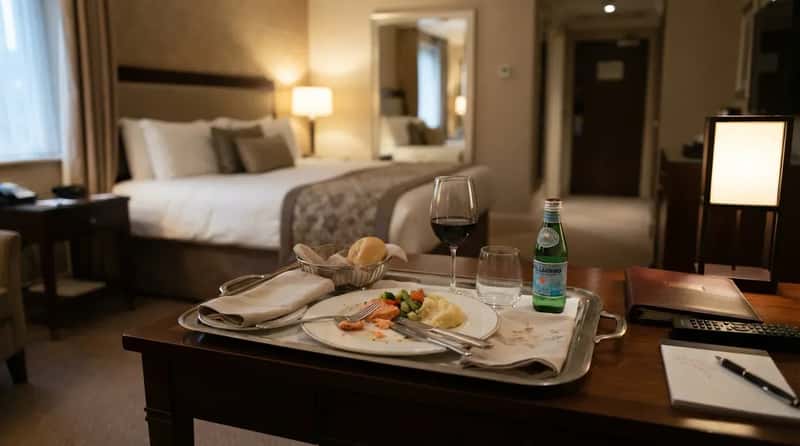
An abandoned tray in the hallway or on the desk isn’t just clutter to clear – it’s a timestamp. Removing loose items such as trays and empty bottles from the room is one of the first things an attendant does, and the state of that tray tells them whether you ate in, ordered late, or barely touched dinner.
A full, cold plate at 9 p.m. reads very differently than an empty one at 6. Staff can often guess your entire evening schedule just from what’s left on that tray. It’s a small clue, but in a job built on reading rooms fast, small clues add up quickly.
#12 – Untouched Chocolate = a Silent Note
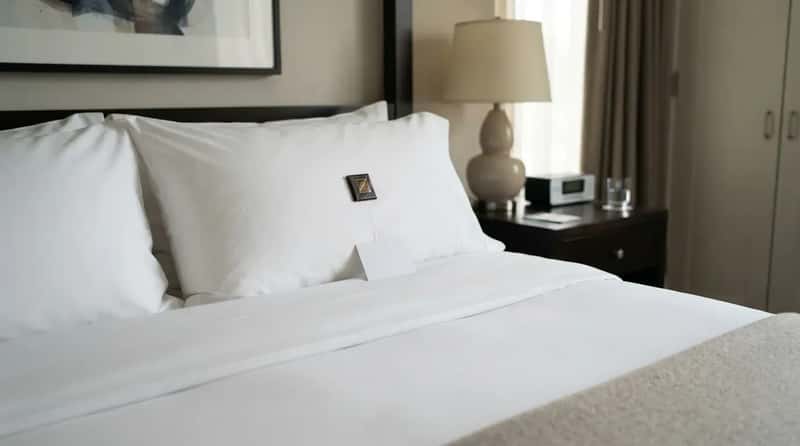
That little pillow chocolate isn’t just decoration – it’s a feedback loop. A common part of the job is placing a complimentary chocolate or candy mint on the pillow, sometimes with a card wishing the guest a pleasant night’s sleep. If it’s still sitting there untouched from the night before, that’s noticed.
A stack of uneaten amenities across multiple nights quietly signals a guest who barely uses the room at all – someone working late, traveling for a funeral, or simply not sleeping there much. Attendants rarely mention it, but repeated patterns like this shape how much effort goes into personalizing later visits, especially at properties chasing loyalty points and reviews.
#11 – Extra Pillows Pulled Reveal Who’s Really Sleeping Where
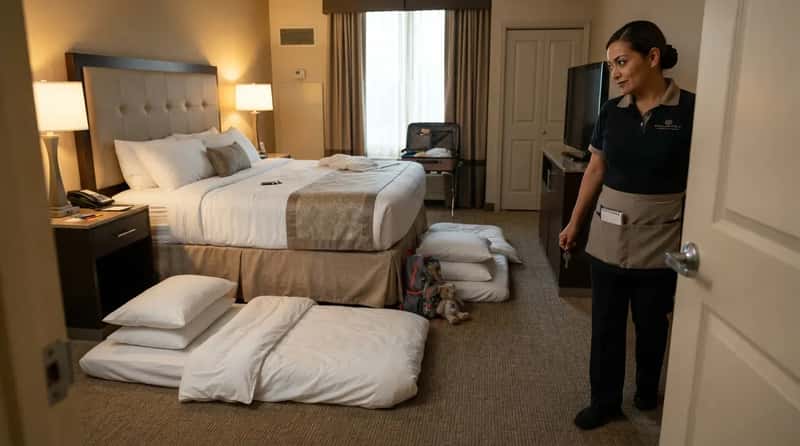
Closets get raided more than guests think, and attendants notice exactly what’s missing. Extra pillows, blankets, or a rollaway mattress pulled out overnight signal something beyond “guest got cold” – it often means more people are sleeping in that room than the reservation states.
A king room with two sets of pillows arranged on the floor side tells its own story without a single word exchanged. Families sneaking a third kid onto a “two adult” booking are one of the most common patterns, and it directly affects how the room gets serviced the rest of the stay.
#10 – Curtains Already Closed Signal “Skip Me”
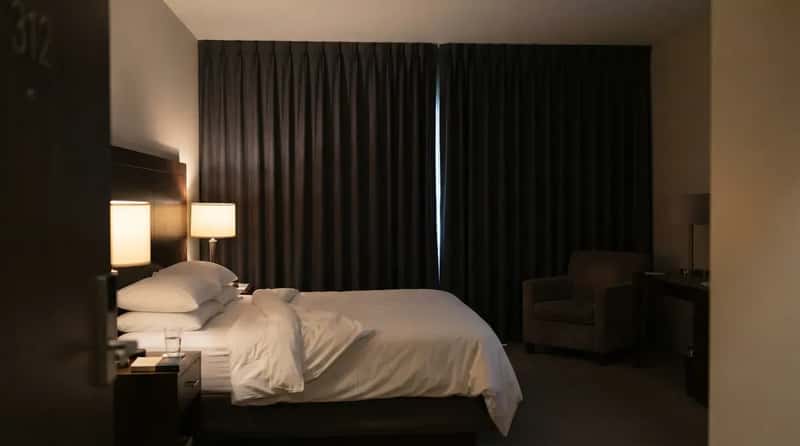
Part of the job is reading the room before even opening the door. The purpose of turndown is to create a sleep-ready environment that signals “the day is done,” with the folded corner of the duvet acting as a visual cue and dimmed lights and closed curtains easing the transition to sleep. If you’ve already done that yourself, there’s often nothing left to do.
Guests who close their own curtains and dim their own lights are unknowingly performing half the service themselves. Attendants notice this immediately and adjust – sometimes finishing in under a minute instead of the usual five. It’s one of the fastest ways a room signals “low-maintenance guest” without you saying anything.
#9 – Kids’ Shoes by the Door Change the Whole Checklist
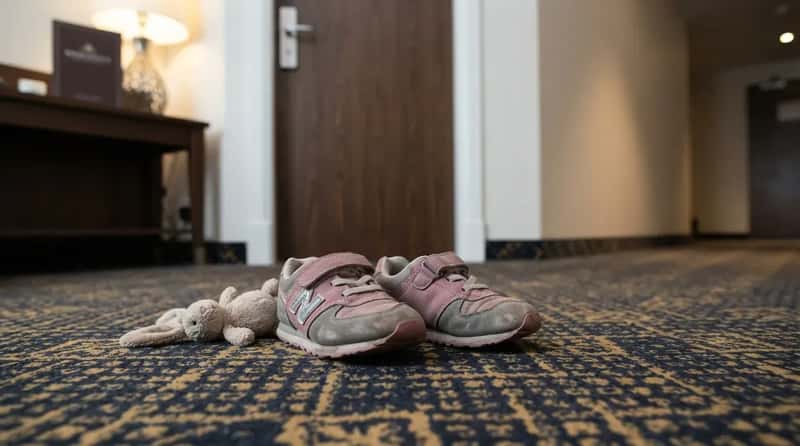
The presence of small shoes, a stuffed animal, or a tiny toothbrush completely resets what an attendant grabs off the cart. A children’s doorknob menu is placed on top of the regular breakfast menu whenever there’s a child staying in the guest room. That single detail triggers a different set of amenities entirely.
Family rooms genuinely generate more work, and the industry has quietly built that reality into its own tipping guidance. A family of four generates a different turndown workload than a solo business traveler, and one etiquette expert advises adding roughly an extra dollar per person when a stay involves children or extra guests. It’s a detail most travelers never think about – but staff absolutely do.
Quick Compare
- Solo or couple’s stay: standard turndown tip, no extra adjustment expected.
- Family with kids: etiquette guidance suggests tacking on roughly a dollar more per child.
- Multiple connecting rooms: tip each room separately rather than lumping it into one envelope.
#8 – The Smell in the Room They Never Mention Out Loud
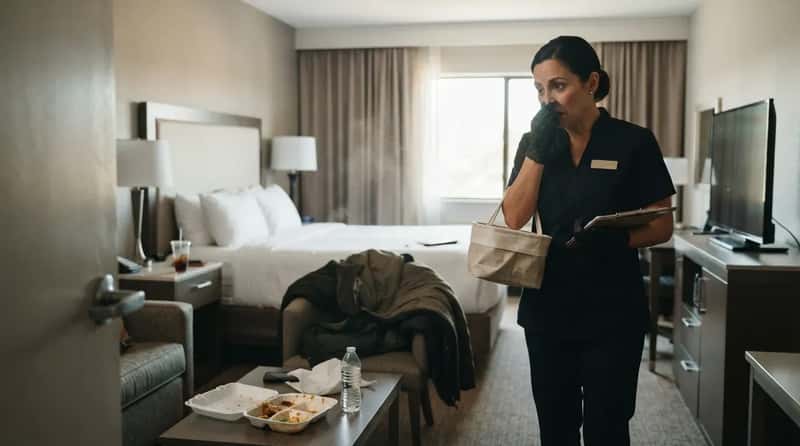
Scent is one of the fastest signals a trained attendant clocks the moment the door opens. Smoke, strong food odors, or heavy perfume tell a story about what happened in that room while you were out, and none of it gets said to your face.
A smoke smell in a non-smoking room almost always gets flagged to a supervisor before the shift ends. It’s rarely confronted directly with the guest, but it changes how the room gets treated going forward – sometimes triggering a deeper clean or a note on the file for the next stay.
#7 – A Bed That’s Already Mussed Before They Arrive
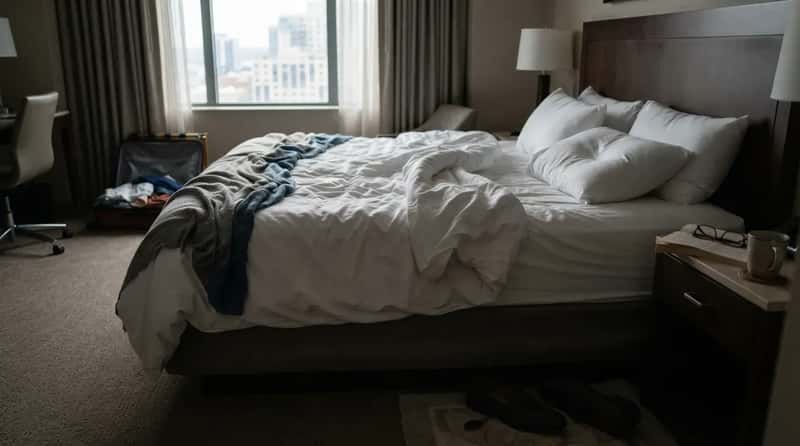
Napping guests leave a very specific fingerprint: a bedspread pulled crooked, one pillow dented, shoes kicked off mid-afternoon. Attendants can usually tell the difference between a bed that was slept in overnight and one that got fifteen minutes of afternoon use.
This is exactly the kind of detail the job’s core etiquette exists to protect – belongings are never rearranged, judged, or commented on. The whole visit follows a fixed order, and guest belongings are never moved beyond the minimum, never organized, never judged by the attendant. Whatever they notice about your nap schedule stays with them.
#6 – Thermostat Extremes Hint at More Than Comfort
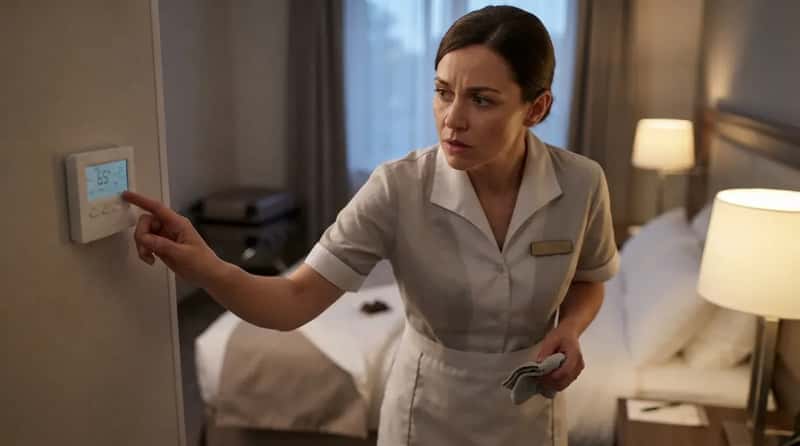
A room cranked to 65 degrees or pushing 80 tells an attendant something beyond “this guest runs hot.” Adjusting the temperature is a standard part of the routine, and extreme settings often prompt a quiet double-check of the room for anything else out of place – an open window, a sick guest, or equipment left running.
Most guests assume the thermostat is invisible to anyone but themselves. In reality, it’s one of the first things scanned on entry, right alongside the lighting and curtains, because it instantly signals whether the guest is comfortable, unwell, or simply forgot to adjust it before leaving for dinner.
At a Glance
- Thermostat setting – hints at comfort, illness, or a window left open.
- Lighting and curtains – shows whether the guest already “pre-turned down” the room.
- Sound from inside – decides in half a second whether the visit happens at all.
- Scent in the air – flags smoke, food, or anything worth noting for later.
#5 – Personal Items Positioned as an Invisible “Do Not Touch” Line
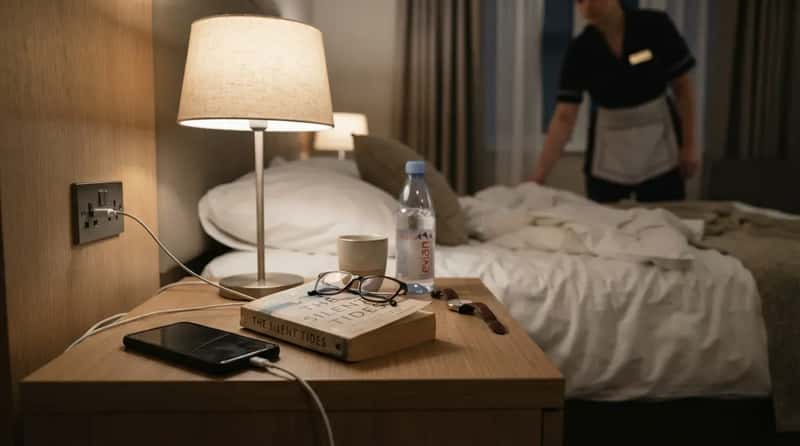
Where you leave your phone charger, book, or glasses matters more than you’d expect. Trained staff read scattered personal items as a boundary line they’re not supposed to cross, and the entire choreography of the visit is built around working around that clutter rather than through it.
This is precisely why the job’s unwritten rule is so strict about touching nothing beyond the essentials. A messy nightstand isn’t judged – it’s simply avoided, because the goal has always been comfort without intrusion, not a tidier room than the one you left behind.
#4 – The Rearranged Pillow Trick That Doesn’t Fool Anyone
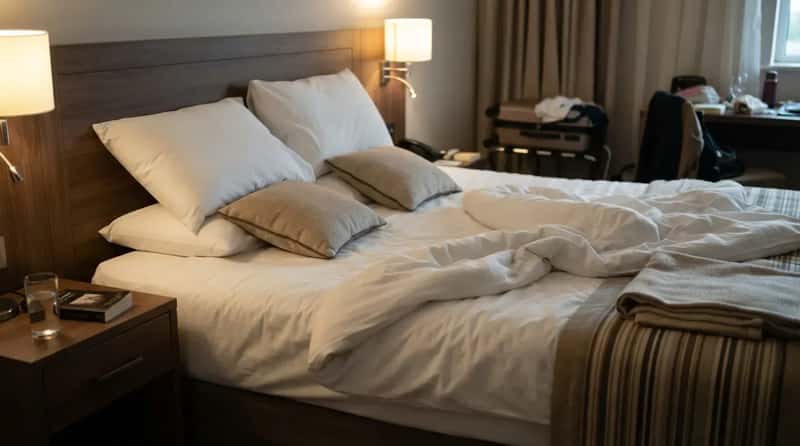
Some guests try to straighten up before the attendant arrives, thinking it helps. It doesn’t – and it actually creates more confusion than leaving things alone. Guests who try to “tidy up” before turndown think they’re being considerate, but it usually backfires.
A room that looks “too perfect” can actually make it harder for staff to tell what still needs doing. The fixed order of the visit assumes a normal, lived-in room. When a guest disrupts that expectation with a pre-cleaned nightstand or oddly arranged pillows, it can throw off the very system designed to make the visit fast and unobtrusive.
#3 – Extra Occupants Nobody Registered
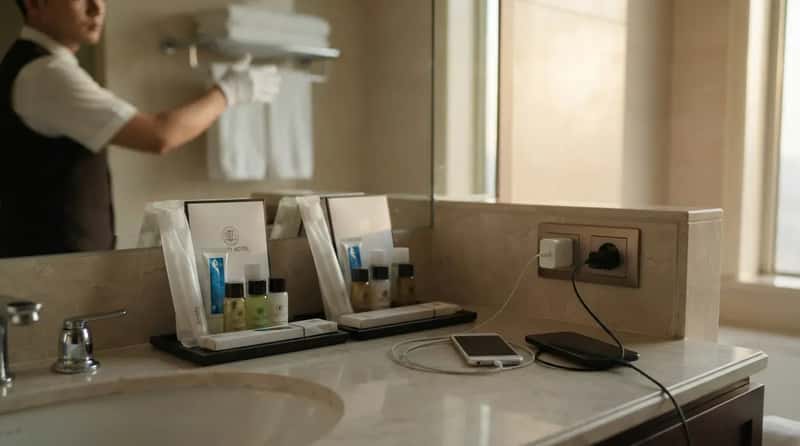
Beyond glass counts, there’s a whole pattern of clues that add up to “more people are here than the room says.” Extra toiletry kits in the bathroom, a second phone charger, or duplicate slippers pulled from the closet all point the same direction.
Turndown attendants rarely confront guests about this directly – they just quietly adjust the workload and move on. Teams notice which rooms make their job easier or harder, even if they never say so out loud, and attendants rarely say anything when they notice mistakes – they just quietly work around them, night after night, room after room. It’s one of the most common unspoken tensions of the entire job.
#2 – The Silence Behind the Door
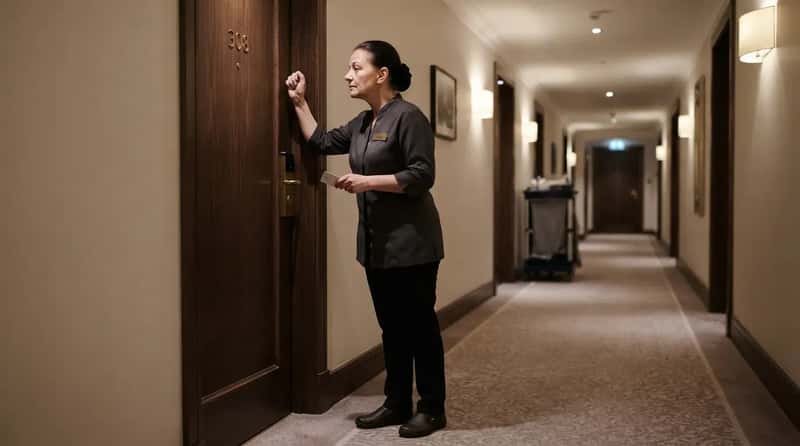
Sound – or the complete absence of it – is one of the sharpest tools an attendant has. A room with the TV murmuring low, the shower running, or hushed voices tells staff to skip it entirely, no matter what the assignment sheet says.
Total silence is actually the trickiest signal of all, because it could mean an empty room or a guest who’s already asleep. This is exactly why the knock-wait-knock rule exists – silence alone was never treated as proof that a room was safe to enter, and experienced attendants know that guessing wrong here is the single fastest way to upset a guest.
Worth Knowing
- Attendants are trained never to confront guests directly about anything they notice.
- Anything unusual gets quietly reported up the chain to a supervisor, not brought up at the door.
- Guest belongings are never rearranged or tidied beyond the essentials, no matter how messy.
- When in doubt about whether a room is occupied, staff default to skipping it rather than guessing.
#1 – The Tip Left Behind Says the Most
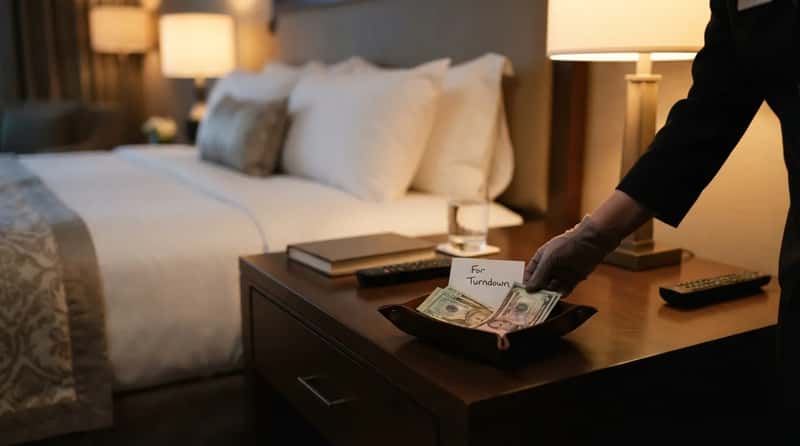
Of everything read in a room each night, nothing communicates more clearly than what’s left on the nightstand. Because turndown is done in the guest’s absence, attendants rarely have direct contact with guests, so they should not expect tips for the service – which is exactly why a tip left specifically for the evening visit stands out so sharply from the usual morning housekeeping envelope.
A cash tip earmarked for turndown, separate from the morning housekeeping tip, is one of the rarest and most noticed gestures a guest can make. It signals that a guest actually understood there were two different people, two different shifts, and two different jobs happening in that same room – something most travelers never realize until they’ve read a list exactly like this one.
None of these signals get discussed at check-in, and most guests will never know their room was being read this closely every single evening. But the next time you kick off your shoes, close the curtains yourself, or leave a chocolate untouched on the pillow, remember: someone quietly clocked it, filed it away, and moved on to the next door without saying a word.
Which of these sixteen surprised you the most? Tell us in the comments – and if you’ve ever left a tip specifically for turndown, we want to hear how it went.