Most travelers believe a “FRAGILE” sticker is basically a force field for their checked bag. People who’ve loaded thousands of suitcases in brutal conditions will tell you that’s mostly wishful thinking.
The gap between what passengers assume happens on the tarmac and what actually happens is bigger than you’d guess. Here’s the truth handlers wish they could tell every passenger at check-in.
#16 – Volume Is the Enemy of Every Label
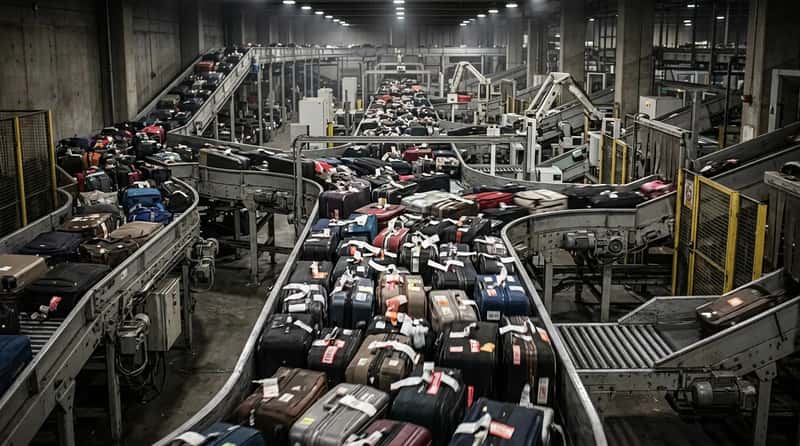
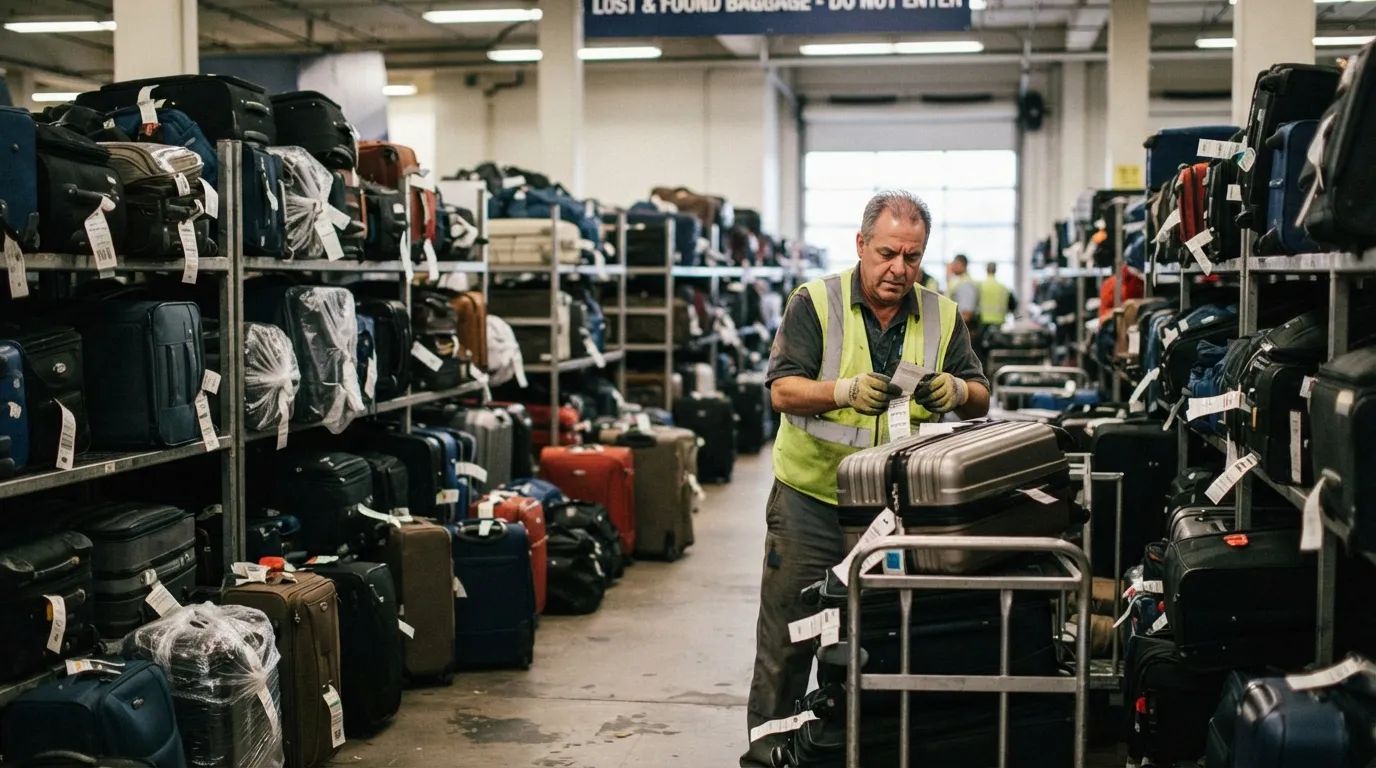
Handlers in large facilities process hundreds – sometimes thousands – of bags per shift. At that pace, your sticker is one of countless visual signals competing for a split second of attention.
There are simply too many bags and too little time to sort by sticker. Animals, dangerous goods, and sometimes instruments get extra care.
Everything else rides the exact same system as everyone else’s luggage. Handlers moving hundreds of bags an hour don’t have time to hand-sort by a small sticker.
The math simply doesn’t favor your label. This is the baseline truth that shapes every item on this list.
Fast Facts
- U.S. airlines handled roughly 45.7 million checked bags in a single month at the end of 2024.
- The full-year 2024 mishandled-bag rate came in at 0.55%, only slightly better than 0.58% the year before.
- Transfer connections – not rough handling – are the single biggest cause of mishandled bags, responsible for about 41% of cases worldwide.
- Every minute a flight sits delayed costs U.S. airlines close to $98, industry-wide.
But the volume problem is only the beginning – what happens to your bag before a human even touches it is far more alarming.
#15 – Machines Don’t Read Labels
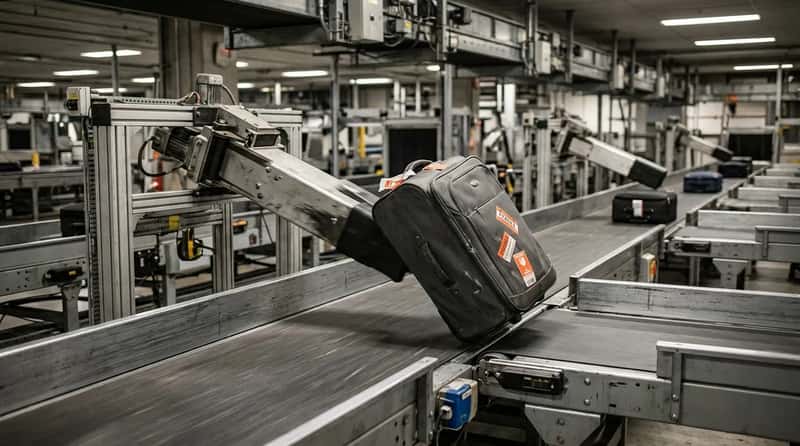
Here’s the thing most passengers never consider: a huge portion of your bag’s journey happens without a single human involved.
There are machines called “luggage kickers” that literally kick bags from one moving belt to another. Since these machines are mindless, they kick every bag the same way, fragile sticker or not.
Most of the real damage actually happens inside the terminal’s automated sorting system, not out on the ramp with the handlers. Your sticker has zero influence over any automated system.
No sensor reads “fragile.” No machine slows down for it.
That means even the most careful handler on the planet can’t undo what the conveyor system already did to your bag before it ever reached them.
#14 – Handlers Are Legally Bound by Speed, Not by Your Sticker
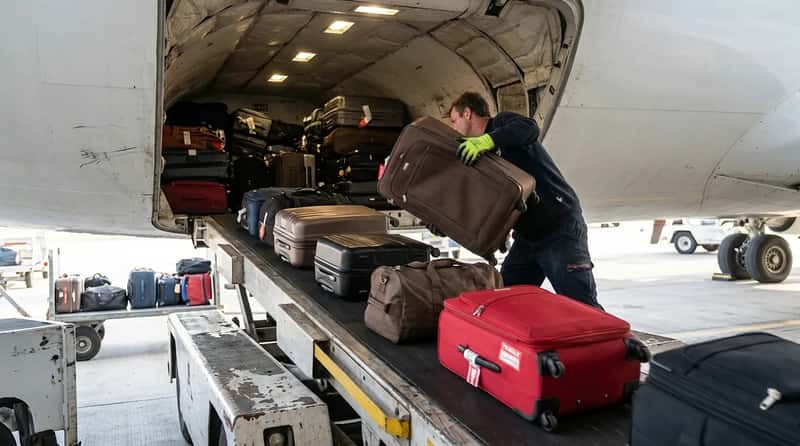
Baggage handlers aren’t reckless by nature. They’re operating under brutal time constraints with real professional consequences for delays.
Bags get moved fast across conveyor belts, stacked high in cargo holds, and sometimes tossed harder than any of us would like. When loading an aircraft, handlers follow strict rules about weight, size, and shape – not sticker text.
A bag that doesn’t fit cleanly slows the whole process down. During a short turnaround, efficiency wins every time.
A flight delay costs airlines thousands of dollars per minute. Your fragile sticker costs nothing and promises nothing in return.
That imbalance tells you everything about the priority order inside the cargo hold.
#13 – Old Stickers Are Silently Working Against You
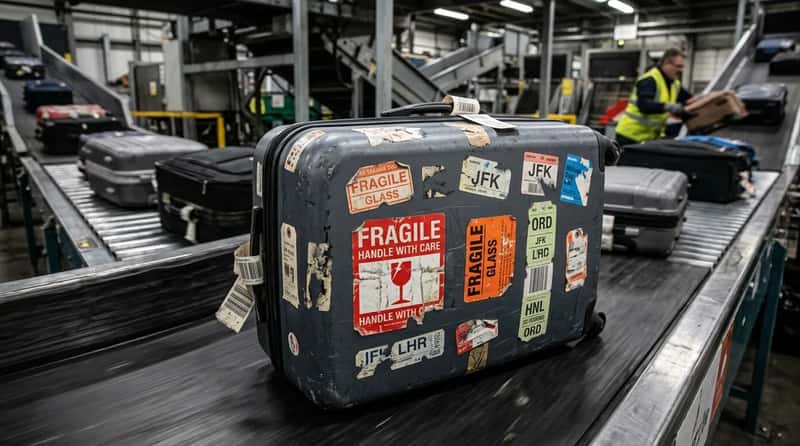
Travelers who reuse suitcases and leave old stickers attached are quietly sabotaging themselves. Most have no idea they’re doing it.
Plenty of suitcases roll through with stickers from three trips ago, which makes yours blend right into the crowd. When everything looks urgent, nothing does.
Strip off old tags before you even leave for the airport. Leaving them on invites confusion the moment your bag reaches a handler.
A bag covered in three different “fragile” labels from three different trips signals habit, not urgency. Clean it off before every flight.
That one small detail could be the difference between a handler noticing your label and ignoring it completely.
#12 – Where You Stick the Label Matters More Than the Label Itself
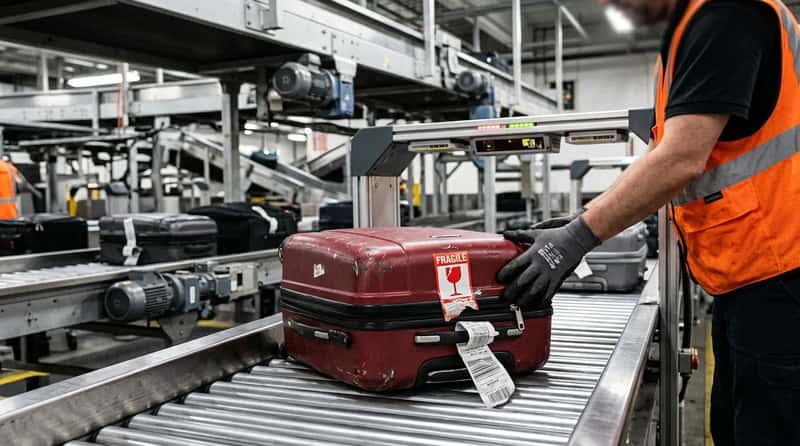
Placement is something almost no travel guide mentions, but handlers notice it constantly.
A label hidden by tape or tucked into a seam can throw off automated routing entirely. A label facing the truck floor might as well not exist.
Some carriers deny damage claims outright over non-compliant labeling. Most people only discover this after their claim already gets rejected.
So a poorly placed label doesn’t just fail to protect your bag in transit – it can literally disqualify your damage claim after the fact. That’s the double penalty nobody warns you about at check-in.
#11 – Most Airlines Don’t Guarantee Fragile Item Coverage
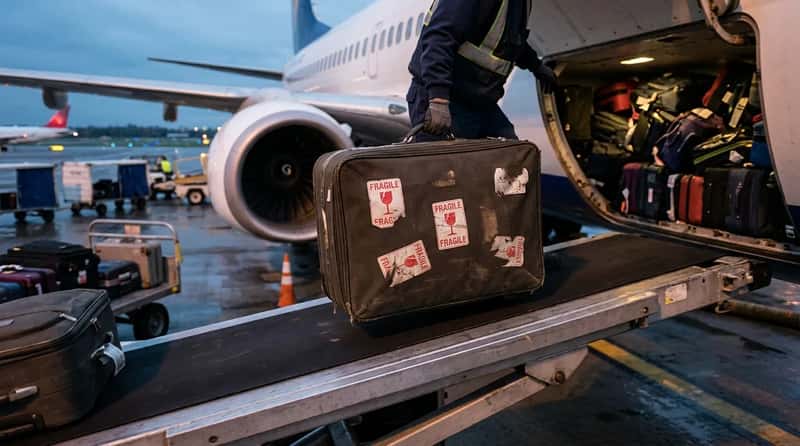
Many passengers assume a fragile sticker gives them extra legal protection if something breaks. Handlers know that assumption is almost always backwards.
Most airlines actively discourage passengers from checking fragile items in the first place. That discouragement isn’t accidental – it’s buried right in their liability fine print.
Handlers see your fragile label, but they’re not legally bound by it in any way. Writing “fragile” on a bag, in most cases, does not force special handling.
Paid special-handling services exist, but a self-applied sticker won’t trigger them. Think of it as a polite note, not a contract.
Quick Compare
- DIY fragile sticker: No legal weight, no guaranteed handling, works only as a personal note.
- Paid special-handling fee: Triggers real priority treatment, but costs extra at booking or check-in.
- Free airline-issued fragile tag: Costs nothing, and can change where your bag sits in the hold – more on that below.
If your item breaks and you never filed a paid handling request, you may have almost no recourse.
#10 – Your Label Can Actually Be Used as Evidence – If Done Right
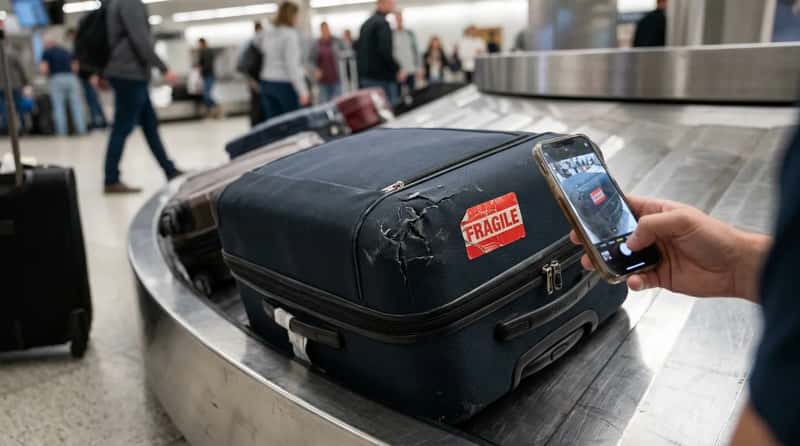
Here’s the flip side that genuinely surprises people. A fragile label won’t protect your bag in transit, but a properly applied one can protect your wallet afterward.
Handlers know something insurers never advertise: your fragile label is documentation. Compliant labeling counts as evidence of “shipper diligence” if a claim ever gets challenged.
Document the damage immediately and file your claim before you even leave the airport. Photos of your bag before check-in, paired with a visible label, build a real paper trail.
Your sticker’s real power isn’t on the tarmac – it’s in the claims office. Most travelers never realize this until it’s too late.
#9 – Throwing Bags Is a Real, Documented Reality
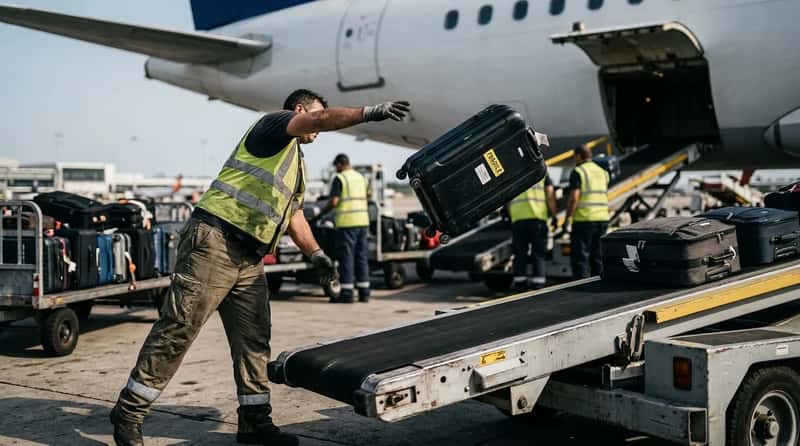
This isn’t traveler paranoia. Handlers themselves admit it happens, and viral videos keep proving it.
“Do bags get thrown? Yes, they have to.” A bag has to travel from the cargo door all the way to whoever’s stacking it, and there’s no time to walk each one down by hand.
Air India staffers were once filmed tossing a passenger’s musical instrument case into a luggage truck despite a visible “fragile” label. It wasn’t isolated – similar clips have surfaced across multiple airlines and airports worldwide.
The label on that instrument case was completely visible. It made zero difference.
That’s the reality your sticker is up against every single time you check a bag.
#8 – Instrument Cases Get More Respect – But Only Sometimes
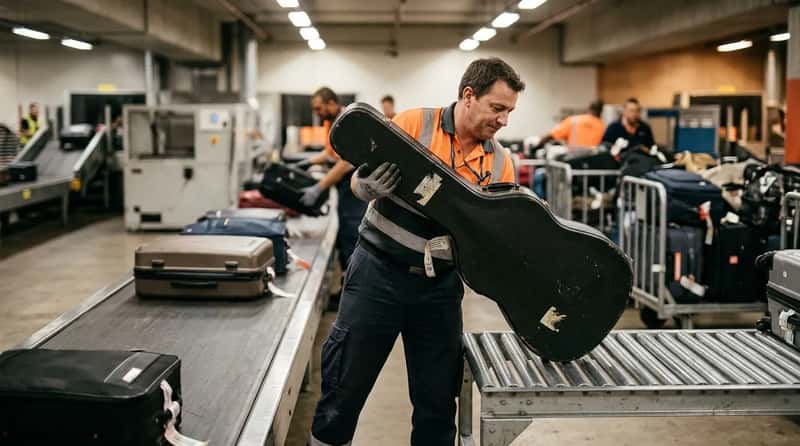
One category of luggage does tend to get slightly gentler treatment: obvious instrument cases. But even this comes with serious caveats.
“If we get a guitar case, we are often more gentle.” That’s driven by the shape handlers recognize on sight, not by any sticker.
“I am a musician so I take special care of those, but not everyone is a musician.” Fragile stickers barely register in the rush unless the shape itself screams caution.
Why It Stands Out
- Odd, recognizable shapes like guitar cases get noticed before any sticker does.
- Handlers who play an instrument themselves often extend that same courtesy without thinking twice.
- Standard rectangular suitcases blend into the belt, sticker or not.
- Which crew loads your specific flight that day still decides more than anything printed on your bag.
Whether your fragile item gets careful treatment depends largely on who happens to be loading your specific flight that day. That’s the uncomfortable randomness at the heart of the whole system.
#7 – Oversaturation Has Made “Fragile” Meaningless
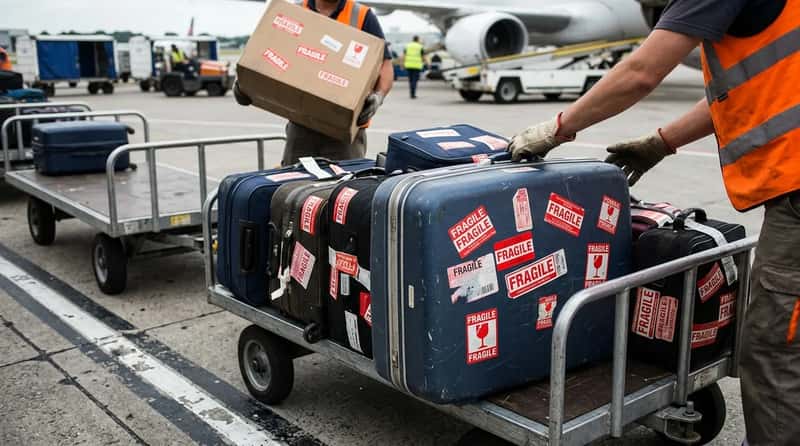
Here’s a dirty secret: passengers have effectively ruined the fragile label by slapping it on things that aren’t remotely fragile.
A fragile sticker on your bag often does nothing at all. Too many travelers use them for ordinary items, which trains handlers to tune the label out entirely.
I constantly see checked bags with fragile stickers. I think passengers believe that if they put a fragile sticker on their checked bags that will somehow make a difference in how the bag is treated. Trust me, it won’t. No matter how big you write it or how big your sticker is, in most cases, it will not help.
An 11-year baggage handler
The label has been diluted by its own popularity. It’s now just visual noise on a chaotic tarmac.
#6 – Luxury Bags Get Zero Special Treatment
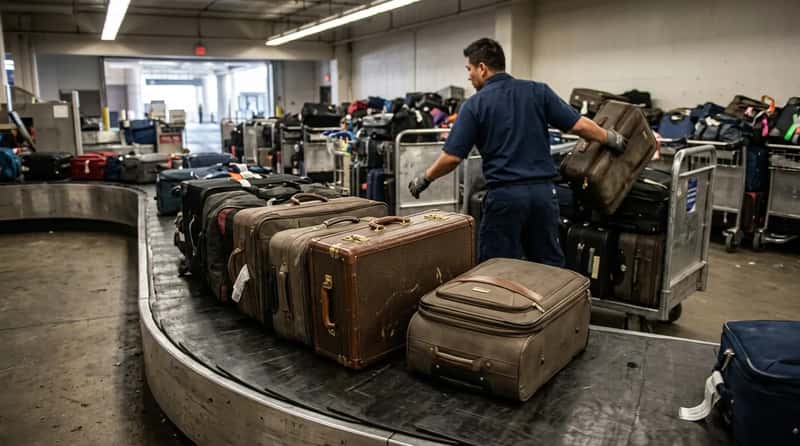
If you think your $1,500 designer suitcase earns extra care, think again.
It doesn’t matter if your bag costs $200 or $2,000 – nobody’s checking the label. Luggage moves fast, gets stacked hard, and takes the same hits on the belt regardless of price.
Handlers are working under extreme time pressure to keep flights on schedule. Bags get moved quickly, stacked high, and sometimes tossed harder than anyone would like.
The only thing that matters to the system is your bag’s size, weight, and destination code – not its retail price, not its brand logo, and certainly not its fragile sticker.
#5 – Hard-Shell Cases Protect More Than Any Label Ever Could
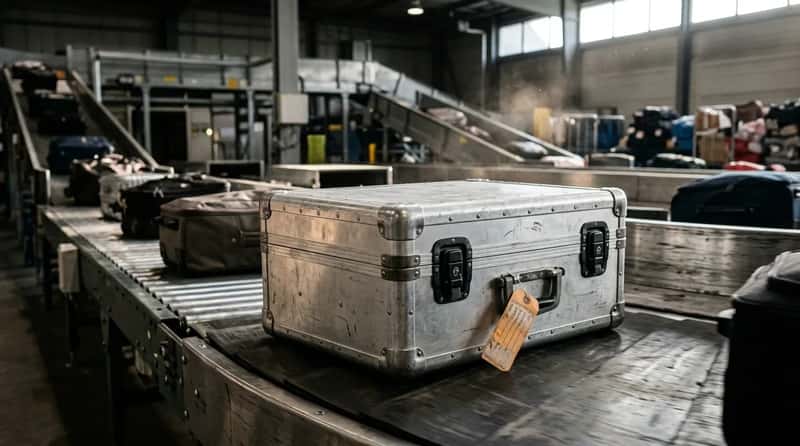
If you’re serious about protecting what’s inside, the container is your real first line of defense. The sticker on the outside is just decoration.
Choose a hard-shell suitcase made from polycarbonate or aluminum. These materials handle shocks and crushing far better than soft fabric.
Wrap fragile items carefully in bubble wrap or clothing. Place them dead center in the suitcase, away from every wall.
The best protection for a fragile item is a hard outer shell surrounding a well-padded interior. That packaging strategy does more in one flight than a thousand stickers ever could.
#4 – Loose Straps and Extended Handles Are Invisible Threats
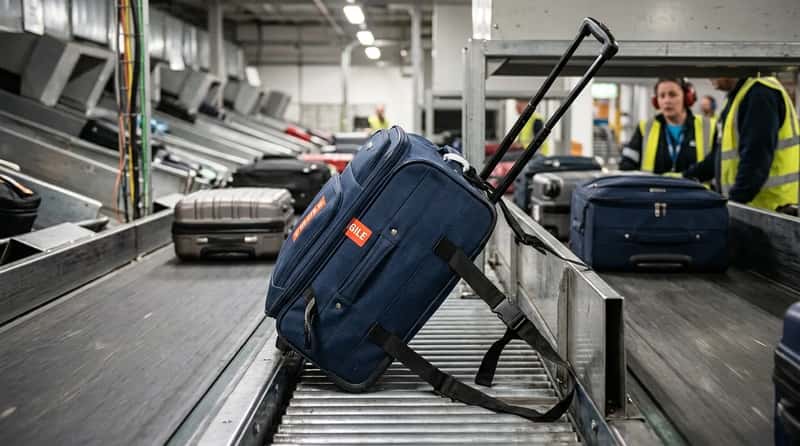
Handlers will tell you the sticker isn’t your bag’s biggest enemy. Your bag’s own design features often are.
Fold in or secure any dangling straps or handles. They act like bait for airport conveyor belts.
Always retract and lock the handle fully before checking in. A loose one can be used as a lever, bending the internal metal rods.
A single loose strap can jam an entire conveyor system, get yanked hard, and come out the other end visibly destroyed. No fragile label prevents that – but one small habit does.
#3 – An Airline-Issued Fragile Tag at Check-In Actually Does Something
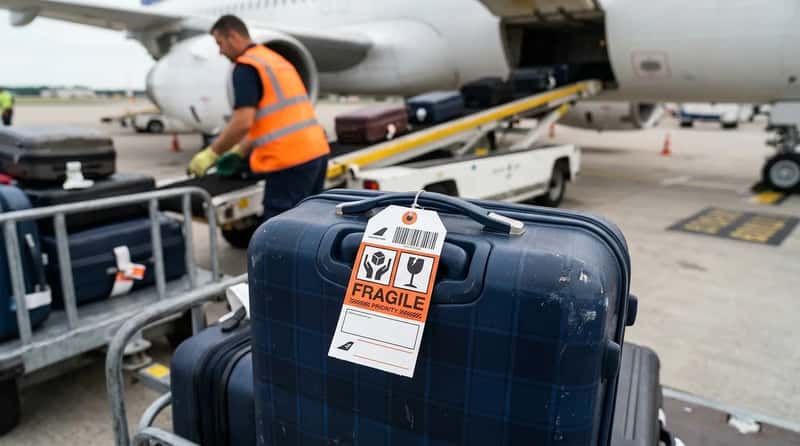
Here’s where it gets interesting. Not all fragile labels are equal, and the difference is bigger than most travelers realize.
Ask for an official fragile or priority label when checking your luggage. These influence where your bag sits in the cargo hold and when it’s pulled after landing.
Handlers often load fragile or priority items last to avoid crushing them, which makes those bags first off the plane too. Fake handle-with-care stickers bought online won’t do any of this.
An official airline-issued fragile tag carries actual weight in how and where your bag gets loaded. Ask for it at the counter – it’s usually free.
#2 – U.S. Airlines Are Legally Required to Pay for Damage – Most Travelers Don’t Know This
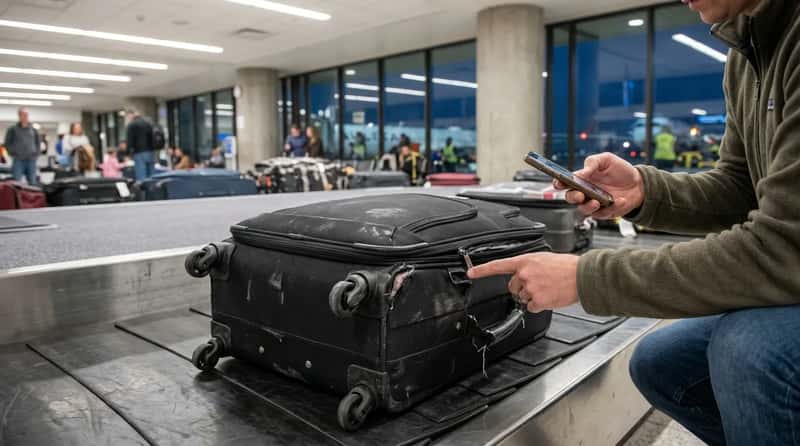
This might be the single most financially important thing on this entire list, and almost nobody knows it before they need it.
Airlines in the U.S. are legally required to take responsibility for damage to your luggage, including wheels, straps, zippers, and handles. This comes straight from the Department of Transportation, which can fine airlines for refusing to process valid claims.
Document the damage thoroughly and file your claim before you even leave the airport. Photos and a written report matter far more than a phone call.
At a Glance
- The DOT’s domestic baggage liability limit rose from $3,800 to $4,700 per passenger, effective January 2025.
- International flights fall under the Montreal Convention instead, which typically caps liability around $1,700 to $1,800.
- Only about 8% of mishandled bags in 2024 were ever classified as lost or stolen – the rest turned up.
- The truly permanent loss rate sits below 0.5% of all checked luggage worldwide.
If your bag comes out damaged, don’t leave that airport without filing a written report. Verbal complaints disappear, but written claims with photo evidence create real pressure.
#1 – The Only Truly Fragile Things Should Never Be Checked
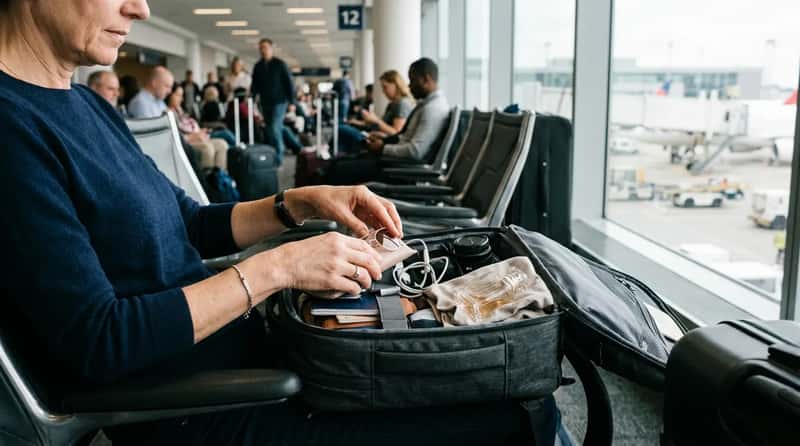
Every baggage handler, across every airline, agrees on this one point without exception. It’s the hardest truth to hear, but it’s the most important one.
Avoid putting anything genuinely fragile in your checked baggage. Stow breakable items in your carry-on or personal item so they never leave your hands.
Keep valuables, important documents, and electronics with you at all times. It’s the simplest way to cut the risk of loss, theft, or breakage down to nearly zero.
If it can shatter, crack, or break with one hard impact, it should never leave your hands at the boarding gate. No label, no padding system, and no airline liability policy fully replaces the protection of physical custody.
That’s not pessimism. That’s what every experienced handler quietly tells their own family before they travel.
The Bottom Line
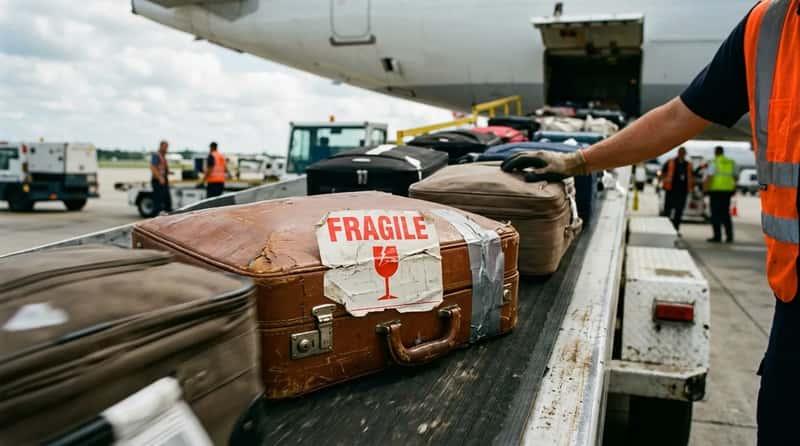
Fragile labels aren’t worthless, but they’re nowhere near as powerful as passengers believe. Automated systems ignore them entirely, human handlers rarely have time to honor them, and oversaturation has diluted whatever weight they once carried.
Your best moves are packing smarter, requesting an official airline-issued tag at check-in, stripping old stickers before every flight, and always carrying your truly irreplaceable items on board with you. If something does get damaged, file that written claim before you leave the airport.
The system isn’t designed in your favor, but knowing these 16 things puts you miles ahead of the average passenger. Ever had a fragile item destroyed despite a sticker? Drop your story in the comments.
Bonus – The One Counter Request That Beats Every Sticker
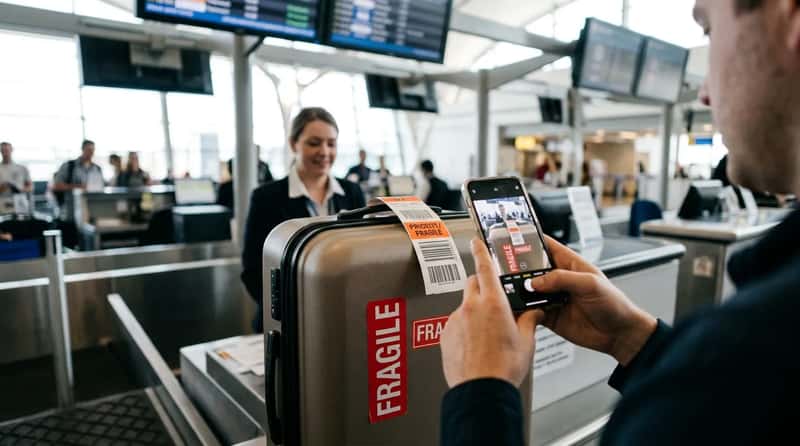
Skip the sticker game entirely and use the move handlers themselves respect: request the tag, document the bag, and know the exact report to file if it fails.
- At the check-in counter, ask by name for a “priority” or “fragile” tag – a printed, barcoded label the agent attaches, not the sticker you brought from home.
- Before you hand the bag over, photograph all four sides plus the new barcode tag with your phone, timestamped, right at the counter.
- If the bag comes back damaged, go straight to the airline’s baggage service desk before leaving the airport and file a Property Irregularity Report (PIR) – ask for a copy with a report number.
- Follow up in writing within 24 hours referencing that PIR number; a paper trail with a report number moves far faster than a phone call later.
This single sequence – real tag, timestamped photos, PIR on the spot – does more for your bag and your wallet than any sticker ever will.