Most travelers assume the front desk clerk forms the first real impression of who they are. In reality, that judgment call happens earlier, faster, and with far more accuracy – from the person holding the luggage cart. Veteran bell staff say the walk from the curb to the elevator is enough to size someone up completely, long before a single word gets exchanged at check-in.
What’s stranger is how consistent these tells are, hotel to hotel, city to city, decade after decade. A stiff grip on a suitcase handle, a phone that never gets put down, the way someone answers “how was the flight” – bellhops read all of it instantly, and most guests have no idea they’re broadcasting so much information. Here’s what insiders actually pick up on, starting with the small stuff and working up to the moments that stick with them for years.
#16 – The Death Grip on the Suitcase Handle
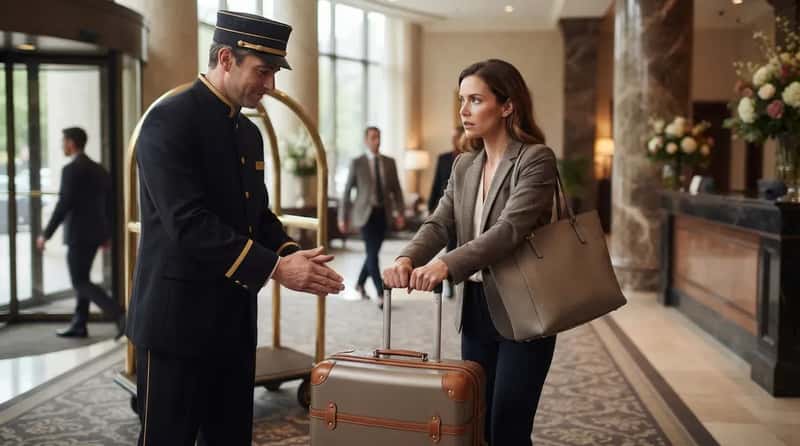
A guest who won’t let go of their own bag, even after the bellhop offers twice, is telling on themselves immediately. It usually means one of two things: they’ve had a bad experience with lost or mishandled luggage before, or hotel routines like this are still new to them. Either way, bell staff clock it instantly and adjust their approach.
Some guests eventually loosen up once they see the cart handled carefully. Others never let go the entire walk to the elevator, and that’s fine too. Bell staff say the tightness of that grip is one of the most reliable first-impression signals in the entire job. But that hesitation is nothing compared to what the shoes on a guest’s feet give away next.
#15 – The Sneaker vs. Dress Shoe Divide
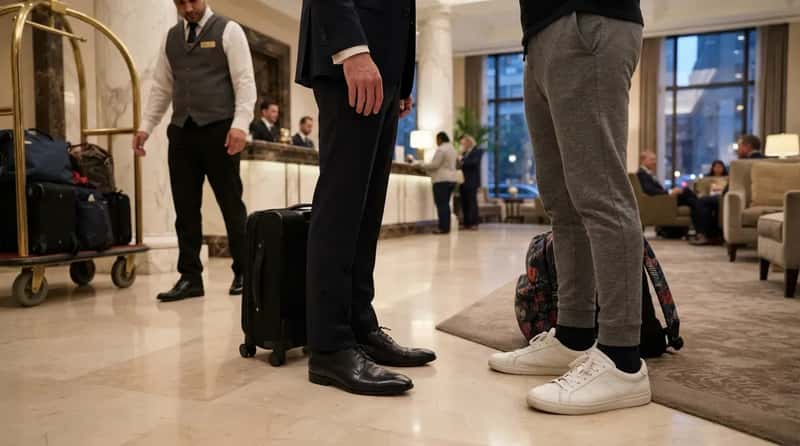
Footwear is one of the fastest ways bellhops sort business travelers from vacationers, often before the guest says a single word. Crisp dress shoes paired with a wheeled carry-on almost always means a quick, transactional interaction is coming. Sneakers, sandals, or flip-flops usually signal someone who wants to chat, ask about restaurants, or linger by the lobby art.
This isn’t guesswork dressed up as intuition – it lines up with how bell staff describe reading a lobby crowd in real time before anyone reaches the desk. Shoes even predict tipping style almost as reliably as luggage does, since rushed business guests tend to tip fast and leave fast. Kids’ backpacks riding on top of the cart tell an entirely different story, though.
Quick Compare
- Dress shoes + rolling carry-on: fast check-in, minimal small talk
- Sneakers or sandals: more likely to ask about restaurants or the pool
- Backpack only, no wheels: usually a short stay or budget trip
- Dress shoes + garment bag: often signals a wedding or business event
#14 – Kids’ Backpacks Riding Shotgun on the Cart
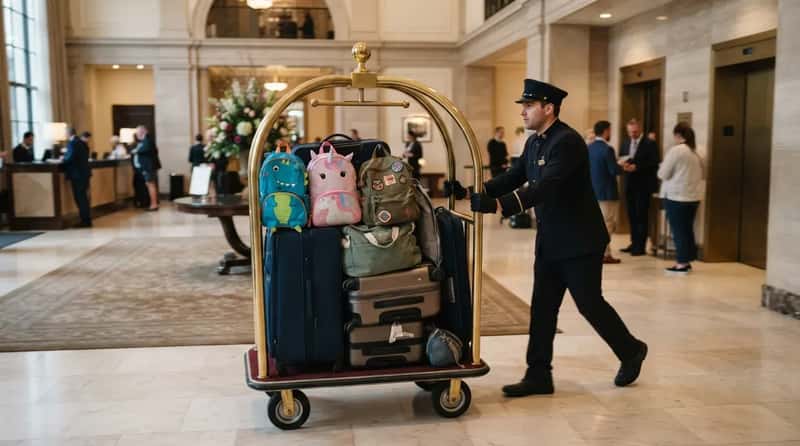
Family trips announce themselves before the parents even open their mouths. A cart stacked with an adult suitcase, a diaper bag, and three mismatched kid backpacks means the bellhop is about to become an unofficial tour guide, pool-schedule expert, and stroller-parking consultant all at once. Experienced staff say they shift into a faster, more efficient gear the moment they spot it.
Families are also the guests most likely to need a second cart trip, since one load rarely fits everything a week-long vacation requires. Bell staff say they start mentally planning the elevator run before the parents even ask. The guest glued to their phone the entire ride up, though, gives off a completely different energy.
#13 – The Phone Never Leaves Their Hand
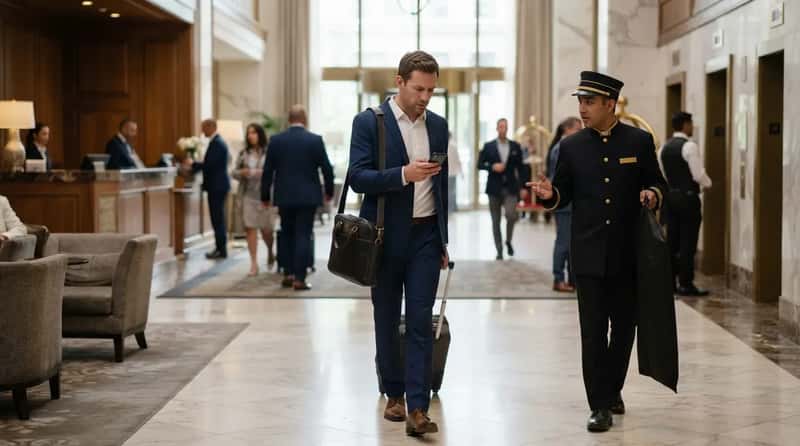
A guest scrolling or typing through the entire lobby walk, elevator ride, and room tour is almost always flagged internally as a business traveler on a tight schedule. Bell staff say these guests rarely make eye contact, answer questions in single words, and want the room orientation finished in under sixty seconds.
It’s not rudeness – it’s just a different kind of trip. Hotel workers say the greeting, the eye contact, and the speed of the interaction all get read and remembered within the opening thirty seconds, which is often why the guest never even notices how much got noticed. That phone-locked guest is a stark contrast to the one still wearing sunglasses indoors.
#12 – The Luggage Tag From a Frequent-Flyer Program
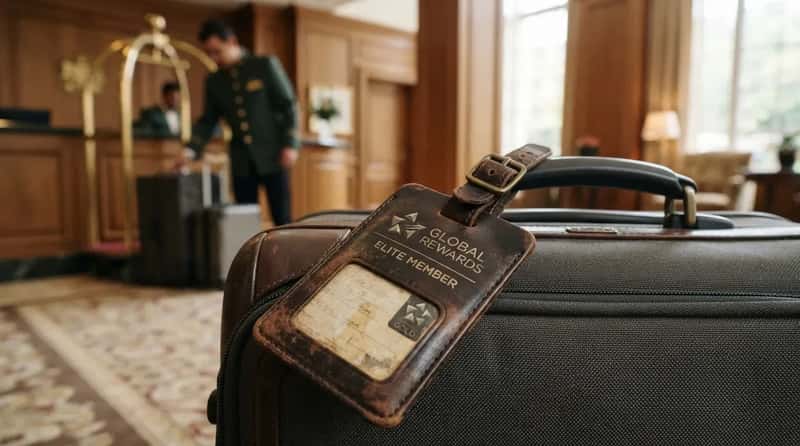
A worn leather tag from an airline elite program or a hotel loyalty brand is basically a resume clipped to the handle. Bellhops notice these instantly because they usually predict how the rest of the stay will go – these guests know the drill, ask sharper questions, and rarely need the basics explained twice.
Loyalty tags also tend to correlate with better tipping habits, since frequent travelers already understand the unwritten rules of the road. Staff say they’ll often skip the beginner-level room tour entirely for these guests and jump straight to what’s actually useful, like restaurant recommendations. Sunglasses staying on through the entire lobby, though, sends a completely different signal.
#11 – Sunglasses Still On Indoors
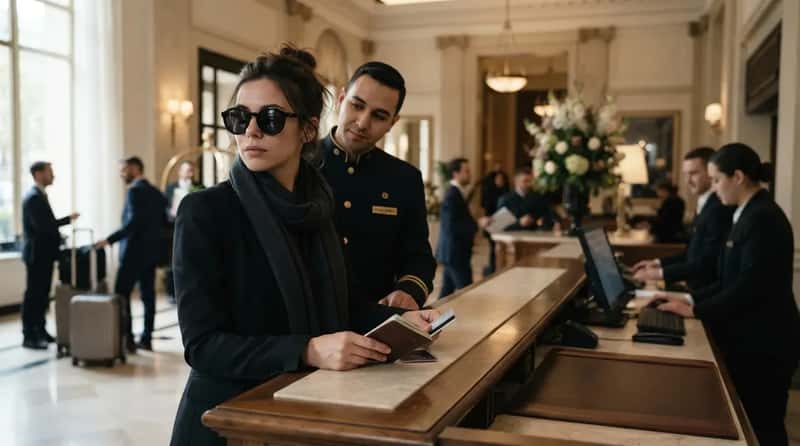
Keeping sunglasses on well past the revolving door usually means one of two things to a trained eye: the guest wants to avoid recognition, or they’re simply exhausted from a red-eye flight and haven’t clocked that they’re inside yet. Bellhops say they can usually tell which one it is by how quickly the guest scans the lobby.
A slow, deliberate sweep of the room before removing the glasses often points to someone who values privacy more than most. Hotels in cities with heavy entertainment or convention traffic report this happening far more often than smaller markets do. Either way, it’s a cue that changes how much small talk a bellhop attempts next – which matters a lot less than the suitcase that won’t zip shut.
#10 – The Overpacked Suitcase That Won’t Quite Zip
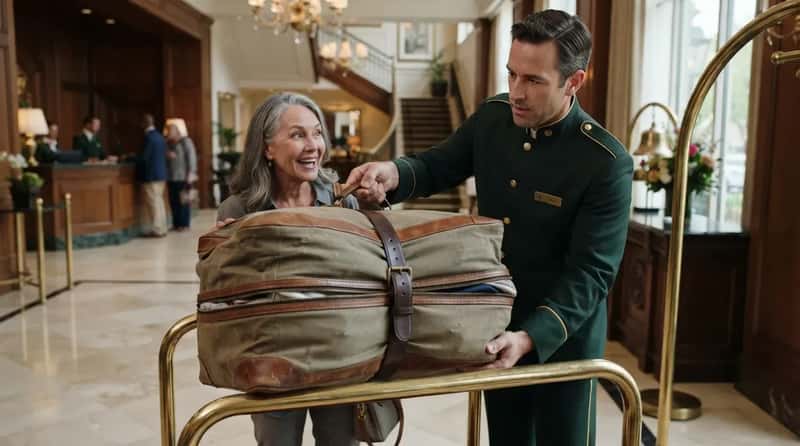
A bulging bag straining at the zipper, sometimes held together with an extra belt, tells bell staff a story before the guest ever explains it. It’s often a sign of a first big trip in years, a once-in-a-lifetime occasion, or simply someone who packed out of nervous excitement rather than experience.
Veteran bellhops say these guests are almost always the most appreciative of the entire stay, treating something as small as a room upgrade explanation like genuinely exciting news. It’s a refreshing contrast to travelers who’ve done this a hundred times and barely notice the room at all. Compare that to the guest who’s already learned the bellhop’s first name before reaching the room.
#9 – Asking for the Bellhop’s Name Right Away
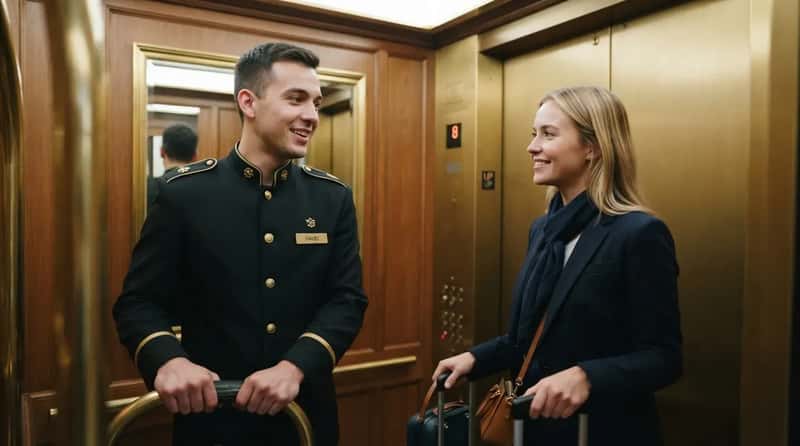
It’s a short elevator ride, sometimes under a minute, but plenty of guests manage to learn – and immediately use – the bellhop’s first name before the door even opens on their floor. It’s a small courtesy, and staff say younger guests rarely think to extend it.
Bell staff describe this as one of the more genuinely appreciated habits they encounter during a shift, because it treats them as a person rather than furniture with legs. Many say it’s less about manners and more of a generational instinct toward acknowledging service workers as people – and it’s often the detail that sticks with them longest after a guest checks out. That instinct usually shows up alongside another habit: cash already folded and ready before the cart even stops.
#8 – Cash Already Folded in Their Palm
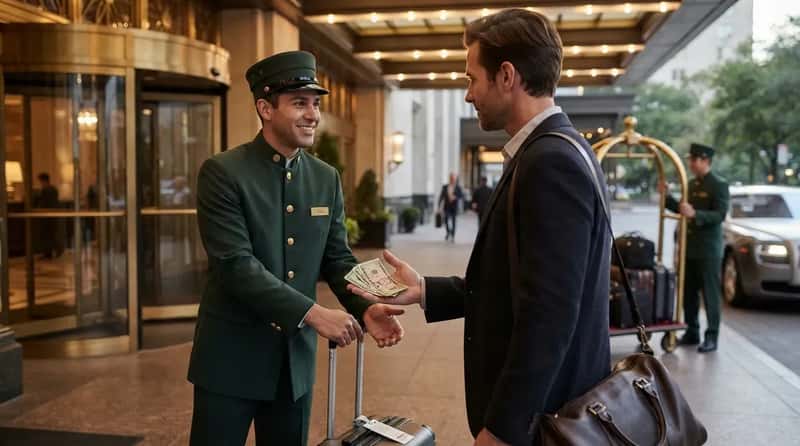
Some guests have the tip ready before the luggage cart fully comes to a stop, bills folded and tucked into a palm well before anyone asks. Bellhops say this single habit instantly changes the energy of the interaction.
It’s not really about the money itself – it’s the signal that the guest already understands the unwritten economy of hotel service. Most travelers agree that one to two dollars per bag, or five if the luggage is especially heavy, is a reasonable starting point, and guests who show up with that math already done tend to get remembered fondly. That kind of quiet preparation looks nothing like the guest whose rental car is still running out front.
Fast Facts
- $1 to $2 per bag is the standard baseline tip
- $5 or more is common for oversized or unusually heavy bags
- Business travelers at upscale hotels often round up to $5-$10 total
- Handing cash directly, rather than adding it to the room bill, remains the norm
#7 – The Rental Car Still Idling at the Curb
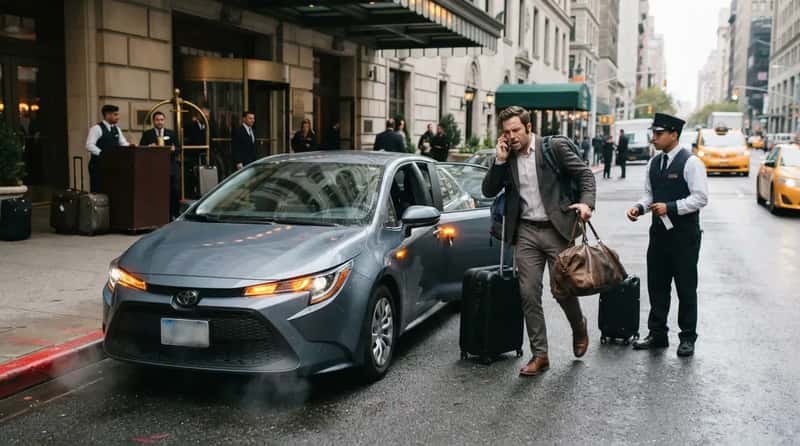
A car left running with the hazards blinking is an instant tell that a guest is stressed, running late, or juggling something that has nothing to do with the hotel at all. Bellhops say these check-ins move fast, with clipped instructions and guests who barely look up from their phone while giving directions.
These are also the guests most likely to forget something in the car entirely, according to staff who’ve made more than a few trips back down to a valet stand mid-shift. It’s a chaotic energy that’s the polar opposite of the guest arriving with color-coordinated luggage for a special occasion.
#6 – Matching Luggage Sets
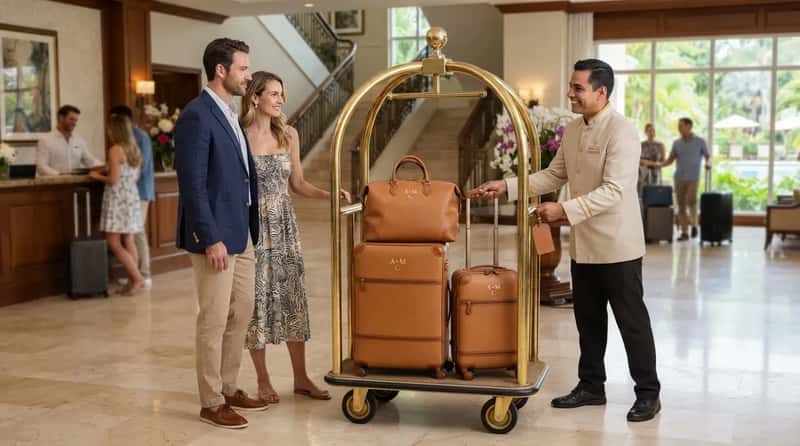
A perfectly coordinated set of suitcases, sometimes monogrammed, almost always signals a milestone trip – an anniversary, a honeymoon, or a destination wedding. Bell staff say these guests tend to arrive a little more dressed up than average and ask more questions about the property’s photo spots and restaurant reservations.
Hotels in resort towns report this pattern spikes hard on weekends, turning an ordinary Friday check-in shift into a parade of Pinterest-ready luggage. It’s a sharp contrast to the guest who insists on hauling every bag themselves without any help at all.
#5 – The Guest Who Refuses All Help
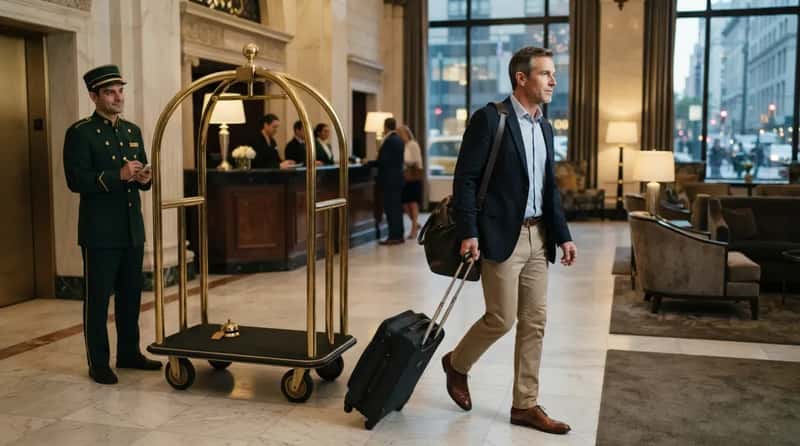
Some travelers wave off the cart entirely and haul their own bags to the room, and bellhops say this group splits cleanly into two types: seasoned road warriors who just don’t want the interaction, and guests trying to avoid a tip altogether. Either way, once a guest opts to handle their own luggage, there’s generally no expectation of a tip at all.
Bell staff say they can usually tell the difference within seconds by body language alone – confident and brisk versus avoidant and quick to look away. Neither reaction bothers most bellhops much, since the unwritten rule is simple: the bellhop and cart are a package deal, and guests either use the service or carry their own bags. What happens next, though, is far more revealing than any luggage decision.
#4 – Scanning the Lobby Before Anything Else
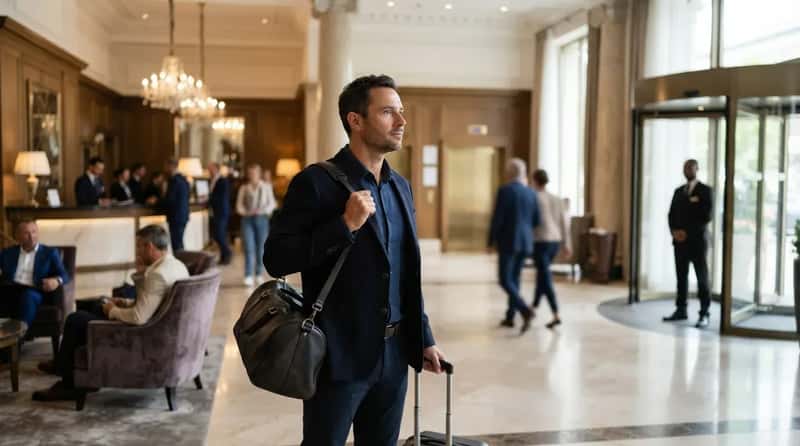
Before saying a word to anyone, some guests do a slow, deliberate sweep of the entire lobby – exits, seating areas, other guests – before ever making eye contact with staff. Bellhops say this habit shows up most in frequent solo travelers and guests who simply value knowing their surroundings.
It’s one of the fastest ways experienced bell staff identify a “no small talk, please” guest without a single word being exchanged. That quiet vigilance is nothing compared to the emotional weight carried by the next guest on this list.
#3 – A Tan Line Where a Ring Used to Be
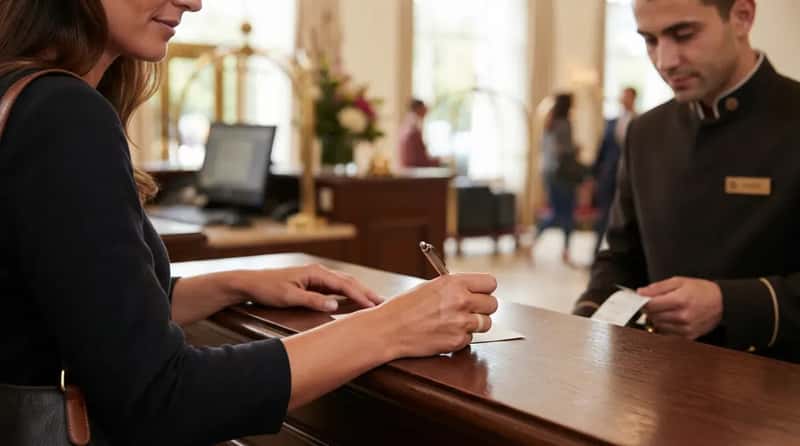
It’s a detail most people would never think to notice, but bellhops who’ve worked the job for years say they catch it constantly: a faint pale band on a ring finger, with no ring in sight. It rarely comes up in conversation, but staff say it changes the tone of the interaction almost instinctively – a little softer, a little less small talk about who’s joining them on the trip.
Long-time bell staff describe this as one of the quietest, most private stories they encounter on the job, one that guests never explain and staff never ask about. It’s a small human moment buried inside a routine that most people assume is purely transactional. The next item on this list, though, is about a need bellhops have to catch before anyone even asks for help.
#2 – Mobility Cues Before the Guest Ever Requests Help
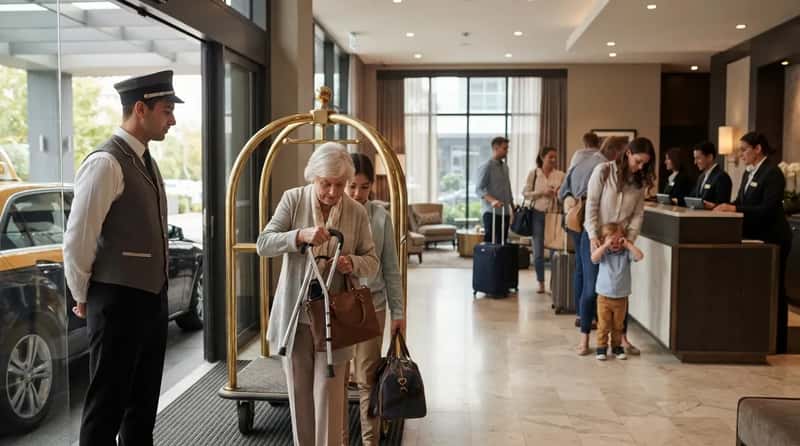
Reading who needs extra assistance – a cane left in the car, a slight limp, a hand braced against the wall – happens instantly and often before the front desk even knows a guest has arrived. Bellhops say they read who needs a wheelchair, who’s masking exhaustion or anxiety, and who wants the small talk to stop, then coordinate silently with the front desk in real time.
On a busy morning, this triage happens in a strict order that has nothing to do with who checked in first: the wheelchair guest goes first, then the family with the exhausted toddler, then everyone else. That split-second sorting decision, made almost entirely without words, is one of the most quietly important parts of the entire job. But nothing on this list compares to the moment a bellhop notices tears at the door.
Worth Knowing
- Wheelchair or cane requests typically get handled first, no exceptions
- Families with an exhausted or overwhelmed toddler are usually next in line
- Silent hand signals between bell staff and the front desk keep the process discreet
- None of this sorting depends on room type or loyalty status – it’s based purely on visible need
#1 – Tears Held Back Right at the Entrance
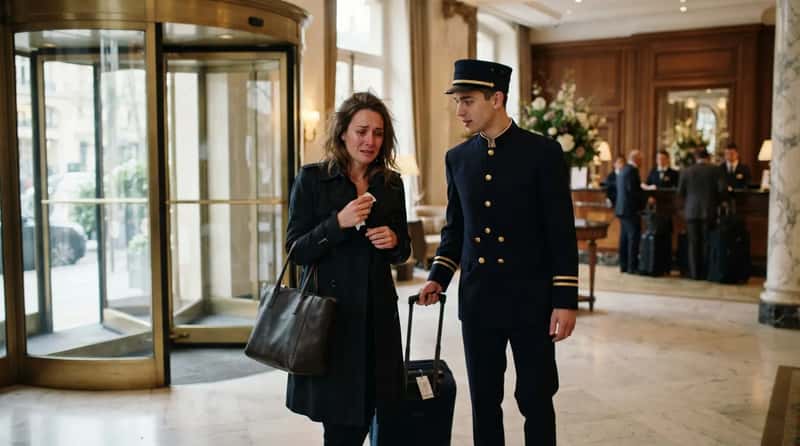
Every bellhop who’s worked the job long enough has a story about the guest who arrived fighting back tears before the front door even fully closed behind them – a funeral trip, a reunion after years apart, a homecoming nobody saw coming. It’s the one moment staff say training never fully prepares you for.
Longtime bell staff describe this as the single most memorable category of guest they encounter over an entire career, far outranking any luggage brand, tipping habit, or lobby scan. There’s no script for it – just a slower pace, a quieter voice, and a little extra patience on the walk to the room. It’s the moment that turns a transactional thirty seconds into something bellhops genuinely remember years later.
None of these sixteen signals show up on a room bill, and almost none of them get noticed by the guest in the moment. What ties them together is that bellhops aren’t judging – they’re reading, fast, so the next few minutes of a stranger’s day go a little smoother. The best ones in the business have simply decided that thirty seconds is more than enough time to treat a guest like a person instead of a room number.
Have you ever had a bellhop notice something about you before you said a word? Tell us about it in the comments.