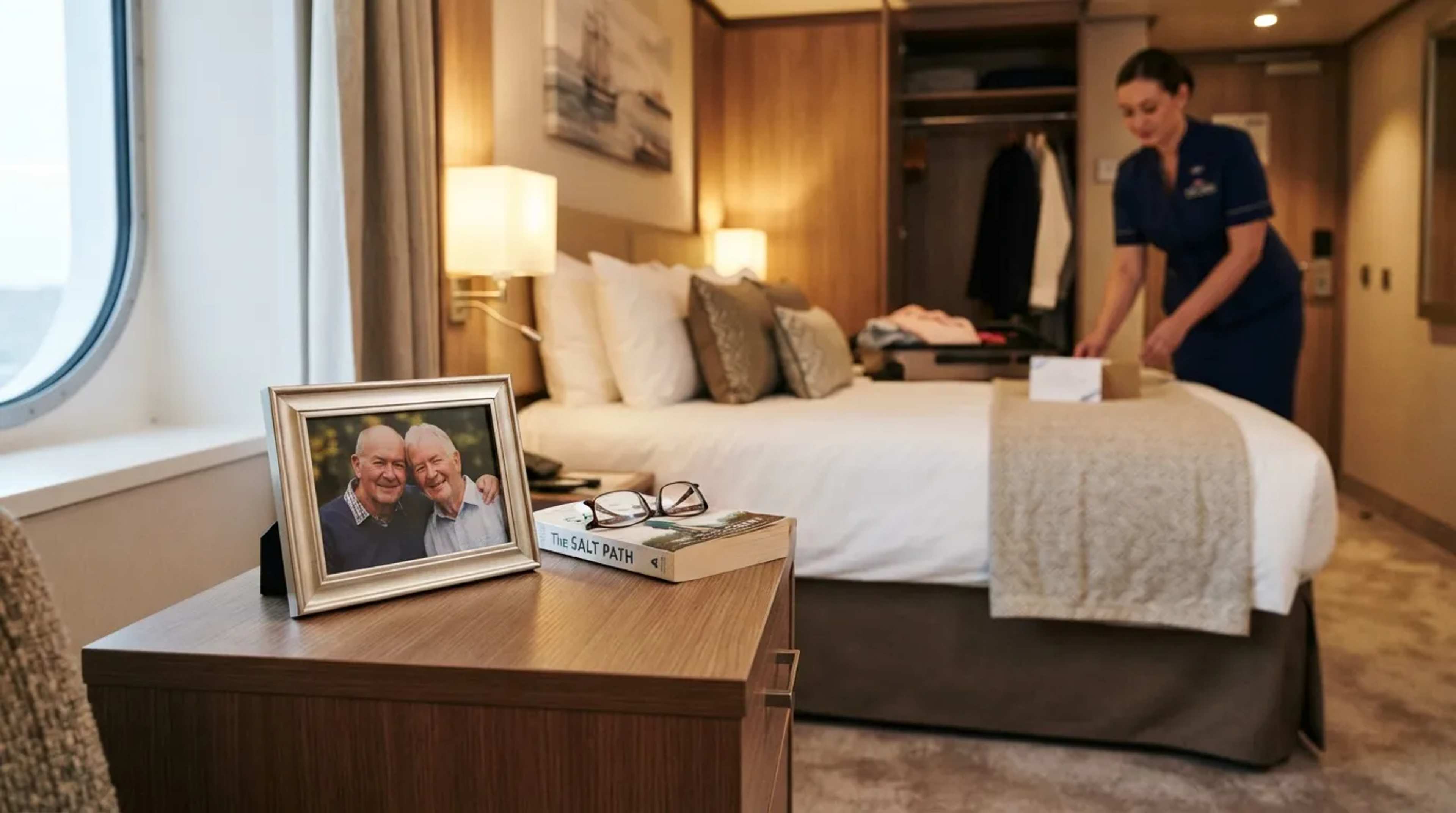
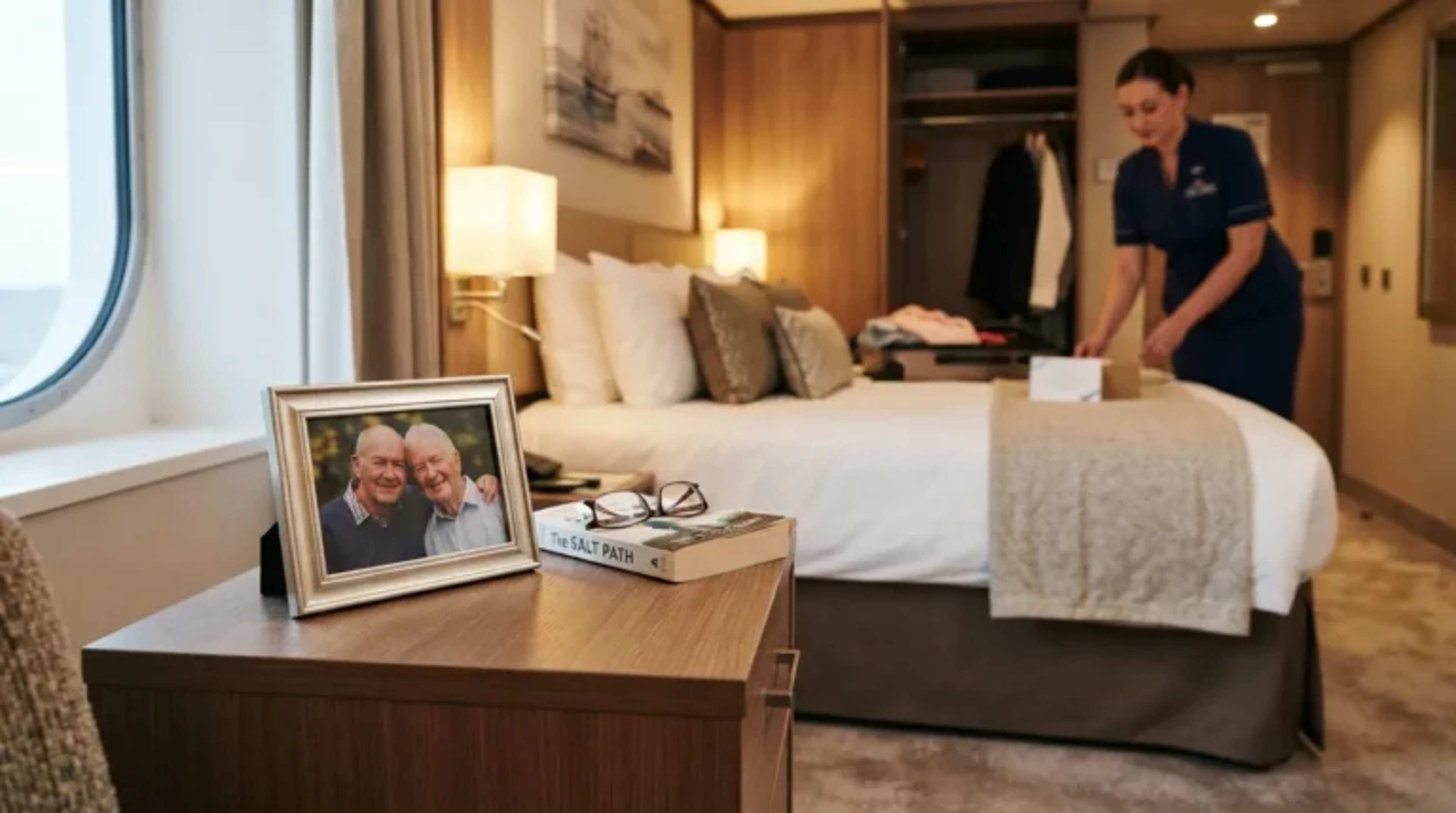
Most guests think breakfast service is just eggs, coffee, and small talk. In reality, breakfast managers are running a quiet, split-second read on every single person who walks in – and they’re usually right. Long before the first refill, they’ve already clocked how the night went, what kind of trip this is, and whether the day ahead is going to be smooth or stressful.
The wild part is how little of this comes from anything guests actually say out loud. It’s the posture, the order, the napkin, even the way someone grips a mug. By the time that second coffee gets poured, staff already have a working theory on who you are – and it’s rarely wrong.
#16 – The Way You Walk In Says More Than Your Reservation Does
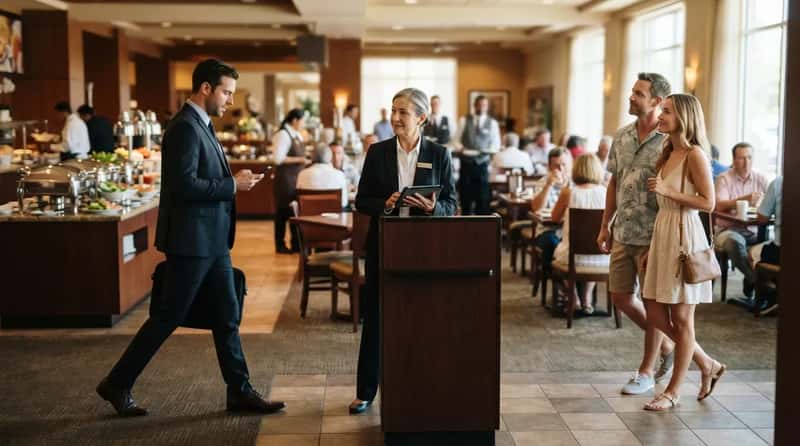
Breakfast managers say the walk-in tells them almost everything before a word is spoken. A slow shuffle with sunglasses indoors usually signals a rough night, while a brisk, upright stride means business travelers ready to eat fast and leave. Veteran hosts can often guess whether someone is on vacation or working within seconds.
What surprises new staff is how consistent this is. Regulars who travel for work develop an almost identical gait every single morning, checking phones before they even sit. Guests on vacation, by contrast, tend to linger at the entrance, scanning the room like they’re deciding whether to relax or rush.
#15 – The Coffee Order Reveals the Real Mood, Not the Words
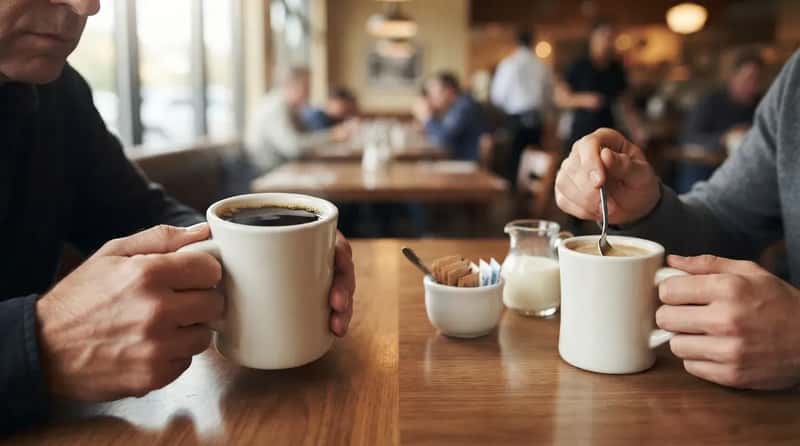
Managers say the drink order is a more honest mood report than any “good morning” ever could be. A guest asking for their cup filled to the very top, no room for cream, is almost always signaling exhaustion or urgency. Someone who takes their time describing a specific ratio of cream to sugar is usually in a calmer, more social headspace.
Staff quietly track these patterns because they predict the rest of the interaction. Guests who want coffee “immediately, black” rarely want conversation. Guests who ask questions about the roast or origin almost always want a longer, friendlier exchange, and smart staff adjust their pace accordingly.
Quick Compare
- Cup filled to the top, no room for cream: urgency or exhaustion
- Detailed cream-to-sugar request: calm, social mood
- “Black, immediately”: little interest in chatting
- Questions about roast or origin: open to a longer exchange
#14 – Solo Diners Get Read Differently Than Couples or Families
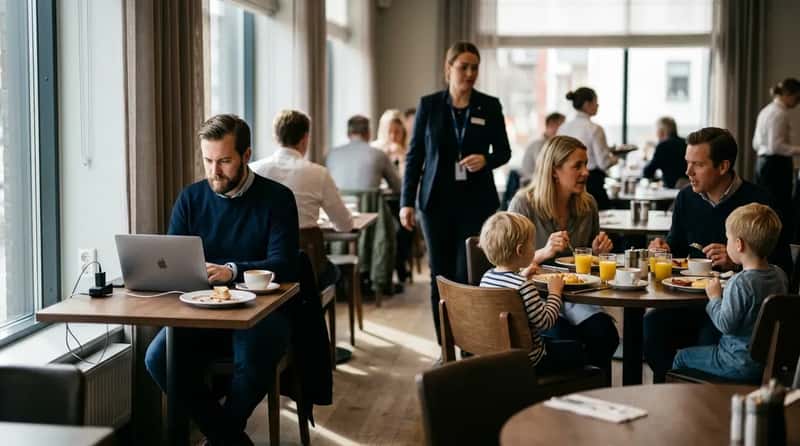
Breakfast managers say solo travelers are often the most closely watched guests in the room, not out of suspicion but out of habit. A solo diner sitting near an outlet with a laptop open is almost certainly working, while one facing the window with nothing in hand usually wants to be left completely alone. These are two very different service styles, and good staff switch instantly.
Families and couples, on the other hand, get read as a unit rather than as individuals. Managers watch who orders first, since that person is almost always the one setting the pace for the whole table. It’s a small detail, but it changes how fast plates come out and how often the table gets checked on.
#13 – The Napkin Placement Predicts How the Meal Will Go
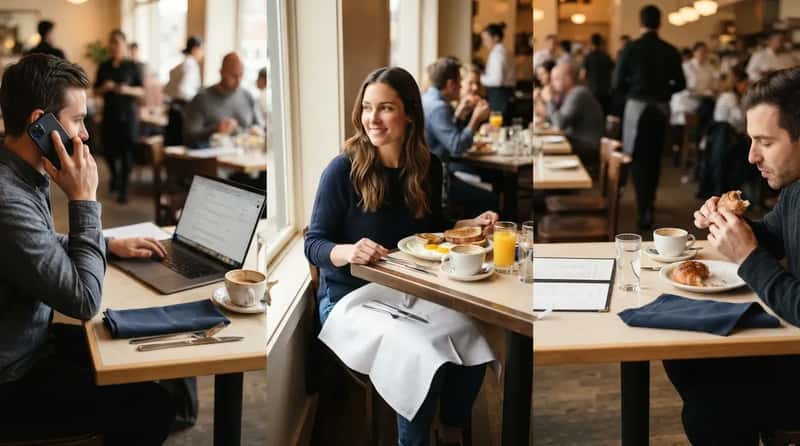
This one sounds oddly specific, but breakfast staff swear by it: where a guest puts their napkin in the first thirty seconds predicts the whole meal. A napkin immediately unfolded onto the lap signals someone settling in for a full, unhurried breakfast. A napkin left folded on the table usually means the guest plans to eat quickly and leave.
Managers say this tiny cue helps them time everything from the coffee refill to when they clear plates. Guests who never touch the napkin at all are frequently the ones already halfway through a phone call or work email, and staff learn to approach quietly rather than interrupt.
#12 – Repeat Guests Get “Silently Remembered” Faster Than You’d Think
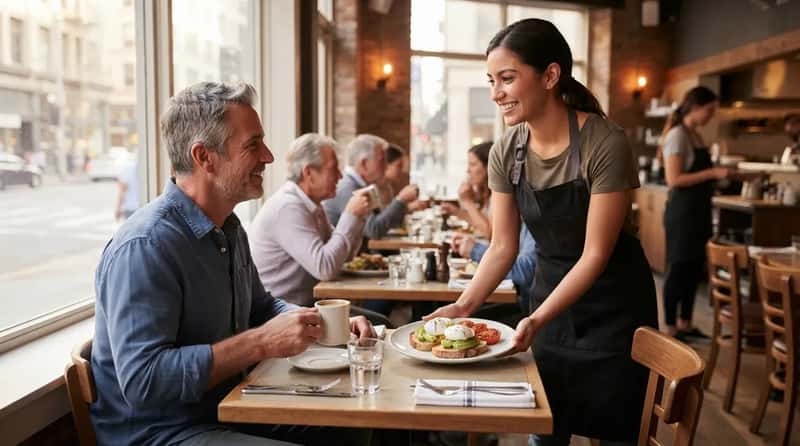
Hotel and diner breakfast staff often build a mental file on regulars within just two or three visits, long before any loyalty program kicks in. They remember the seat someone prefers, whether they like their eggs a certain way, and even what time they typically show up. This recognition, more than any punch card, is what actually builds loyalty.
What guests rarely realize is how much staff talk to each other about this. A server will mention a regular’s preferences to the next shift so the pattern continues seamlessly. It’s part of why some guests feel instantly “known” at a place they’ve only visited a handful of times.
Fast Facts
- Regulars are often remembered after just two or three visits
- Seat preference, egg style, and usual arrival time are the details staff track most
- Servers pass notes to the next shift so recognition carries over seamlessly
- This informal memory often builds loyalty faster than an official rewards card
#11 – The First Bite Tells Staff Whether the Food Actually Worked
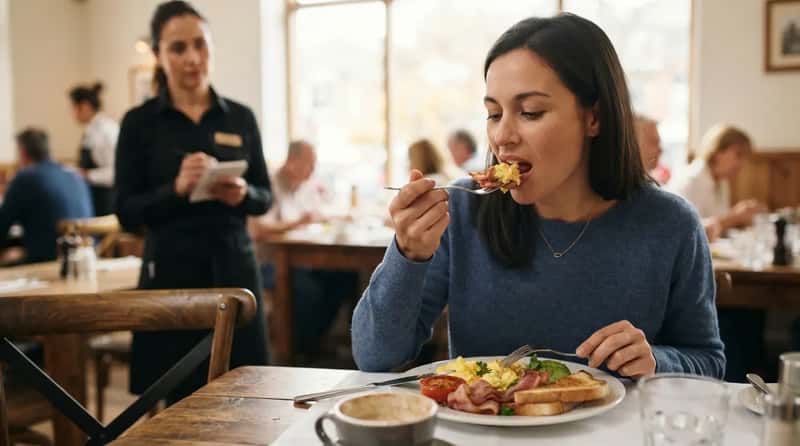
Managers say they watch the first bite far more closely than guests realize, because it’s the most honest reaction in the entire meal. A slight pause or raised eyebrow after the first forkful almost always means something is off, even if the guest says nothing. A quick second bite, taken almost immediately, is the clearest sign of approval there is.
This is why experienced staff often hover briefly after delivering a plate instead of walking away immediately. That short window right after the first bite is when most silent complaints actually surface, long before a guest would ever flag down a server to say something is wrong.
#10 – Guests Traveling for Grief or Big Life Events Have a Distinct Pattern
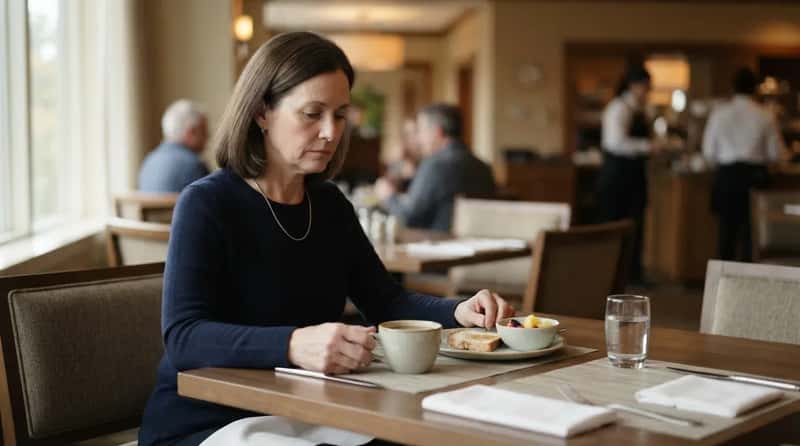
This is one of the more emotionally loaded reads breakfast managers describe. Guests traveling for funerals, hospital visits, or major life transitions tend to order very simply, avoid eye contact, and eat slower than everyone else in the room. Staff say they’ve learned to soften their tone automatically with these guests, even without knowing the reason.
It’s a pattern many longtime staff describe as unmistakable once you’ve seen it enough times. There’s a stillness to these guests that’s different from tiredness or stress. Many managers say this is the moment where extra kindness, not extra efficiency, matters most.
#9 – The “Overpacked Plate” Guest Almost Always Eats the Least
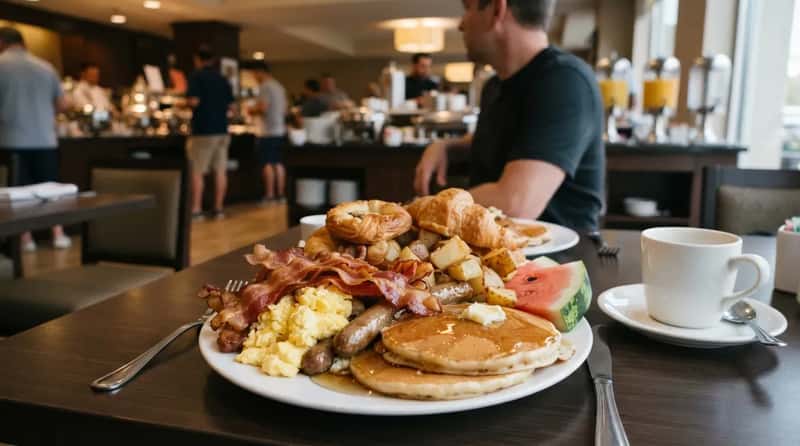
Buffet-heavy breakfast spots see this pattern constantly: the guest who piles the plate highest often eats the smallest percentage of it. Managers say this typically comes from excitement or anxiety about “getting your money’s worth,” not actual hunger. It’s one of the most consistent contradictions in breakfast service.
Waste tracking at many hotel breakfasts backs this up – buffets with unlimited refills tend to see higher plate waste than à la carte service. Staff have learned not to read an overloaded plate as a sign of a big appetite. If anything, it’s often the opposite.
Worth Knowing
- Overloaded buffet plates are usually driven by excitement, not real hunger
- Unlimited-refill buffets tend to see more plate waste than à la carte service
- Plate size rarely predicts how much a guest will actually finish
#8 – Guests Who Ask About Ingredients Are Rarely the Ones With Allergies

This one surprises new hires the most. Managers say the guests who ask the most detailed questions about ingredients are usually just curious or health-conscious, not actually managing a serious allergy. Guests with genuine, dangerous allergies tend to ask fewer, sharper questions and often bring their own information rather than asking staff to guess.
This distinction matters more than it sounds. Staff are trained to take every allergy question seriously, but they privately note that the tone changes completely when it’s a real medical concern. It’s quieter, more direct, and far less conversational than casual curiosity.
#7 – The Person Who Orders for the Whole Table Reveals the Real Dynamic
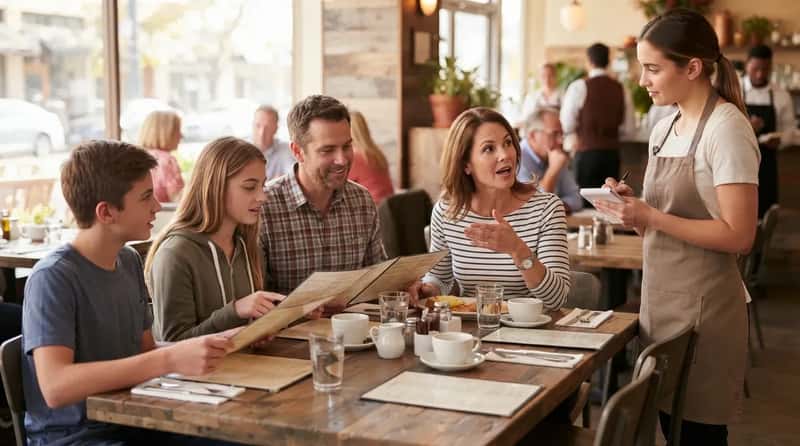
At tables with couples or families, managers say the person who takes over ordering for everyone else is almost never random. It’s frequently the same person who handles logistics for the whole trip – the one who booked the room, planned the day, or made the reservation. Watching who orders often tells staff who’s actually “running” the visit.
This becomes especially clear with teenagers and young adults at the table. When a teenager orders for themselves without being prompted, staff say it’s often the clearest sign of a more relaxed, low-friction family dynamic, while a parent ordering for an older teen usually signals the opposite.
#6 – Guests Who Skip Coffee Entirely Get Watched More Closely
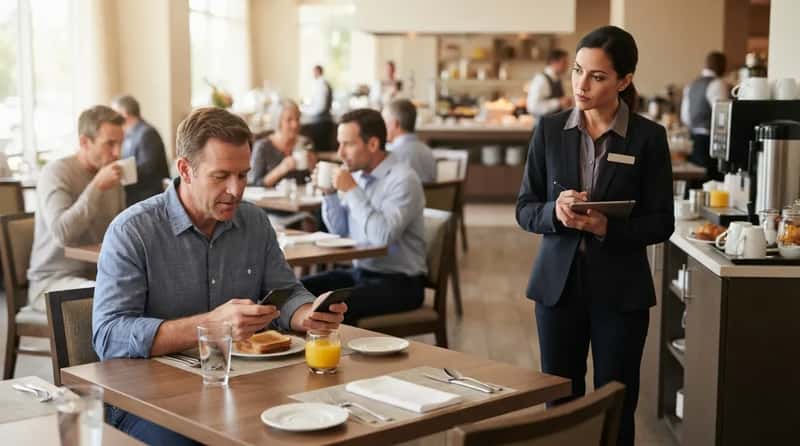
This one seems backwards at first, but breakfast managers say guests who skip coffee altogether often get more attention, not less. It’s unusual enough that staff quietly wonder if something is off – illness, a rough night, or simply an unfamiliar routine in an unfamiliar place. It breaks the expected rhythm of the meal.
Staff say these guests are more likely to be asked “how’s everything going” simply because their behavior doesn’t match the pattern everyone else follows. It’s not suspicion exactly, more like the human instinct to notice when something breaks the usual script.
#5 – The Way Guests Handle a Mistake Predicts the Whole Stay
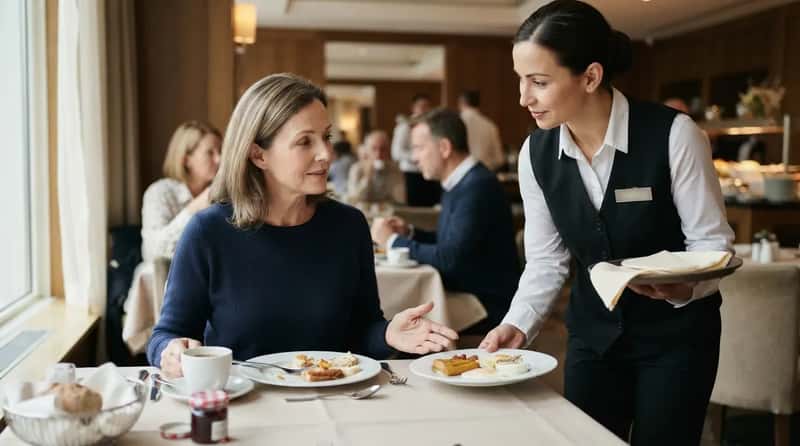
Every breakfast service has small hiccups – a wrong order, a slow refill, a cold plate. Managers say how a guest reacts to that first small mistake is one of the strongest predictors of how the rest of the stay will go. Guests who stay calm and mention it simply tend to be easy for the rest of the visit.
Guests who escalate quickly over a minor breakfast issue are frequently flagged, quietly, as needing extra attention throughout the stay. This isn’t judgment so much as pattern recognition. Staff have learned that breakfast is often the first real “test” of a guest’s temperament for the whole visit.
#4 – The Quiet Regulars Are Often the Most Loyal Guests of All
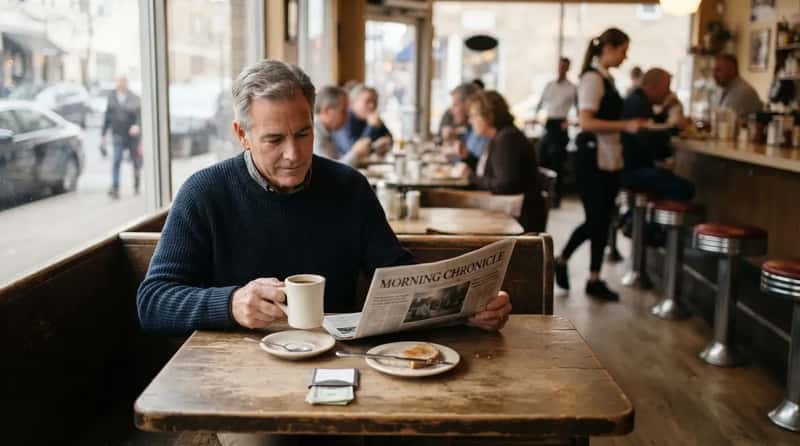
Managers consistently say the guests who talk the least are frequently the most loyal, not the least engaged. These are the people who come back year after year, tip consistently, and never complain, even when something small goes wrong. Their loyalty shows up in behavior and repetition, not in conversation.
This runs counter to the assumption that chatty guests are automatically the “best” customers. Staff say the quiet regulars are often the ones who quietly recommend the place to friends and family, without ever mentioning it to staff directly. Their loyalty is real – it’s just invisible until you notice the pattern.
#3 – Guests Traveling With Kids Get Judged on Patience, Not Noise
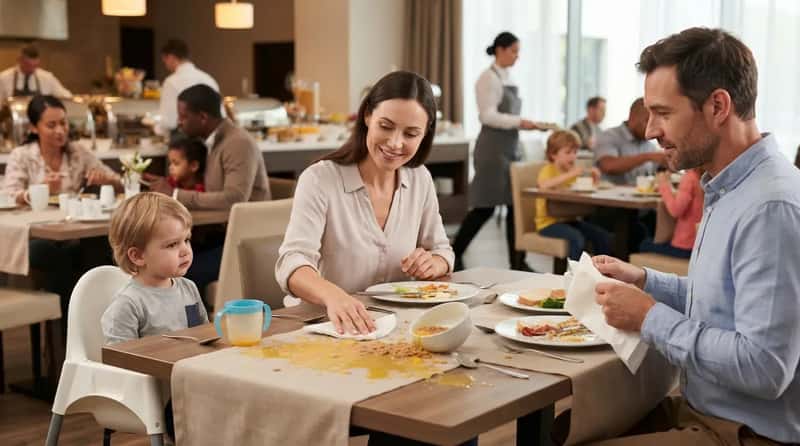
Contrary to what many parents assume, breakfast managers say noise from kids is rarely what shapes their impression of a family. What actually gets noticed is how patiently parents handle spills, meltdowns, or slow service, not whether the kids are loud. A calm parent during a genuine mess earns far more goodwill than a quiet table ever would.
This shifts how staff treat families throughout the stay. A family that handles a rough breakfast morning gracefully is often given more flexibility later – a late checkout nudge, an extra amenity, a little more patience in return. It’s an unspoken exchange most guests never realize is happening.
At a Glance
- Noise from kids rarely changes how staff see a family
- Patience during a spill or meltdown matters far more than volume
- Families who handle rough mornings gracefully sometimes get quiet extra perks later
#2 – The Way You Say Thank You Changes How You’re Remembered
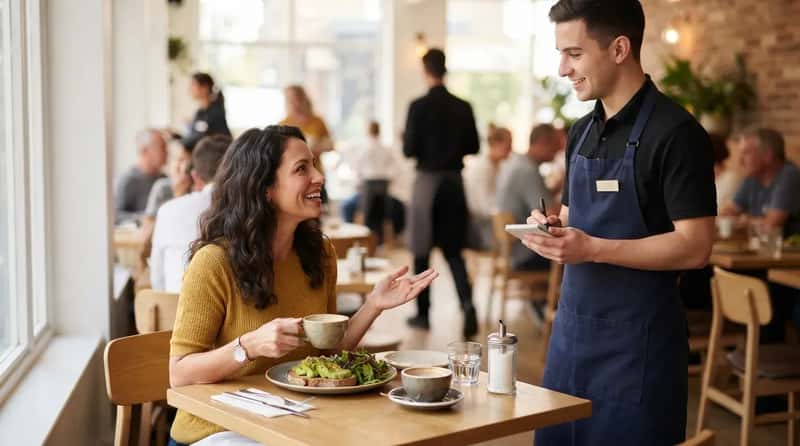
Of everything breakfast managers track, this might be the most human. A specific, genuine thank you – naming the dish or mentioning something particular – sticks with staff far longer than a generic one ever does. It’s a small moment, but it’s frequently the detail staff repeat to each other after a shift.
Guests who do this consistently often become the ones staff go out of their way for on future visits, even without realizing why. It’s not transactional. It’s simply human nature responding to being genuinely seen, and breakfast staff remember it longer than almost anything else that happens during service.
#1 – The First Ten Minutes Set the Tone for the Entire Stay
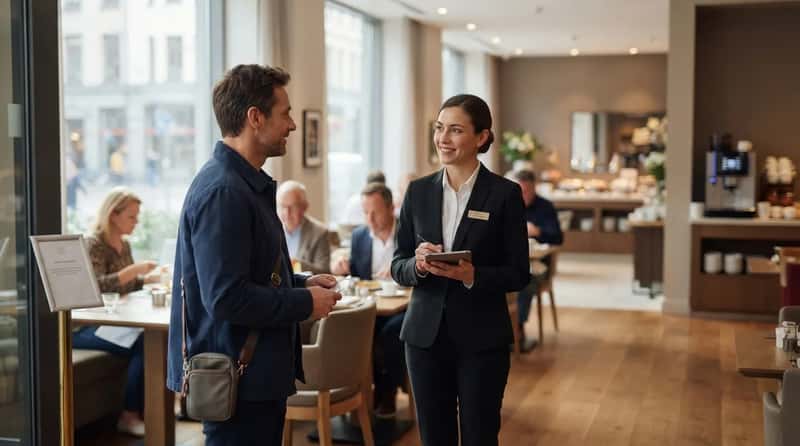
After everything else, breakfast managers agree on one thing above all: the first ten minutes of that first breakfast shape the entire relationship between guest and staff for the rest of the visit. It’s not about being demanding or easy – it’s about the overall energy a guest brings into the room in those opening moments. Staff say this initial impression is remarkably hard to shake, for better or worse.
This is why breakfast, more than any other meal, tends to define a guest’s reputation among staff for the whole stay. A rough first morning can follow a guest around, quietly, for days. A warm one does the same – just in the opposite direction. It’s the most consequential ten minutes most guests never think twice about.
None of this is about judgment. It’s pattern recognition built from thousands of mornings, hundreds of tables, and the same small human behaviors repeating themselves in slightly different forms every single day. Breakfast managers aren’t trying to psychoanalyze anyone – they’re just paying closer attention than most guests ever expect.
The next time you sit down for that first cup of coffee, remember someone across the room already has a pretty good read on your morning. It might be the most honest audience you didn’t know you had.