Most passengers assume a coach seat is just a seat – first come, first served, no different from any other spot on the bus. But regular riders know that’s not quite true. The seats right behind the driver come with a quiet, unofficial relationship that nobody in row twenty ever gets to experience.
It’s not written in any company handbook, and no driver will announce it over the intercom. Yet ask anyone who’s spent years behind the wheel of a Greyhound, Megabus, or charter coach, and they’ll admit there’s an entire unspoken code reserved for the people who sit up front. Here’s what actually happens between mile marker one and the final stop.
1. They Give You the Real-Time Play-by-Play
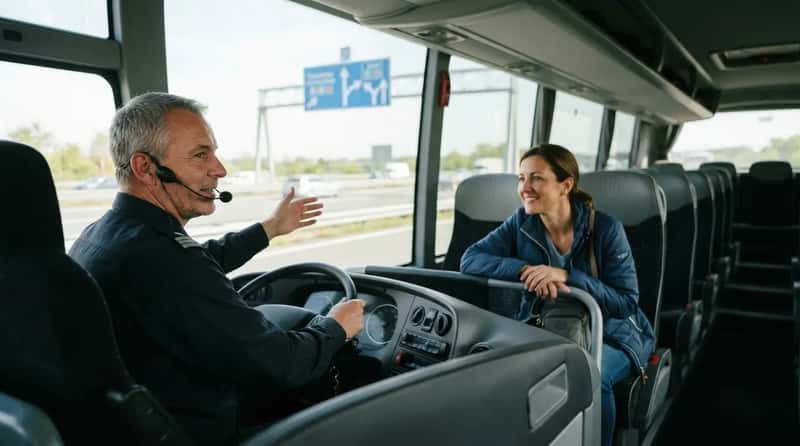
Front-row passengers get a version of the trip nobody in the back experiences: a running, low-key narration of what’s coming up. A driver will casually mention an upcoming construction zone, a weigh station, or a stretch of highway known for slowdowns, often minutes before it ever shows up on a phone app. It’s not a formal announcement – it’s a quiet heads-up meant just for the people close enough to catch it.
This habit isn’t policy; it’s just what happens when someone stares at the same 200 miles of asphalt five days a week. Drivers say they can often predict traffic patterns better than GPS, simply because they’ve physically driven the route hundreds of times and know exactly where things bottleneck. That’s a level of insight the back of the bus never gets access to.
2. They Explain Delays Before the Intercom Does
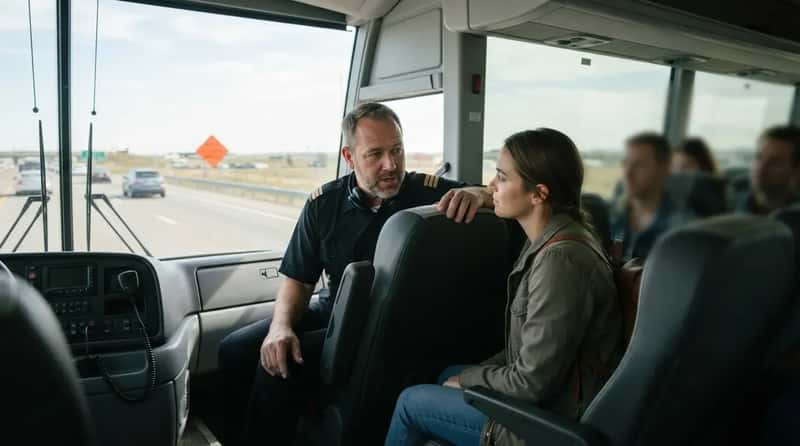
When a coach falls behind schedule, front-seat riders usually hear the real reason first – quietly, directly, without the vague corporate phrasing. A driver might mention a late connecting shuttle, a mechanical check, or a scheduling snag at the last stop long before it’s ever announced to the whole bus. It’s a small courtesy, but it completely changes how the wait feels.
Back-row passengers often get a flat “slight delay” over the speaker, while front-row riders get the unfiltered version, sometimes with a joke or an eye-roll thrown in. Drivers say it’s simply easier to explain things to someone sitting three feet away than to shout down a center aisle. That means front-seat passengers are almost always the first to know when a trip is running behind, sometimes by a good ten or fifteen minutes.
Fast Facts
- Late connecting shuttles are one of the most common causes of coach delays
- Pre-departure mechanical checks can add several minutes without ever reaching the intercom
- Weigh station stops are routine on interstate routes but rarely explained to the whole bus
- Front-row riders typically hear the real reason for a delay well before anyone else does
3. They Point Out Landmarks Nobody Else Notices
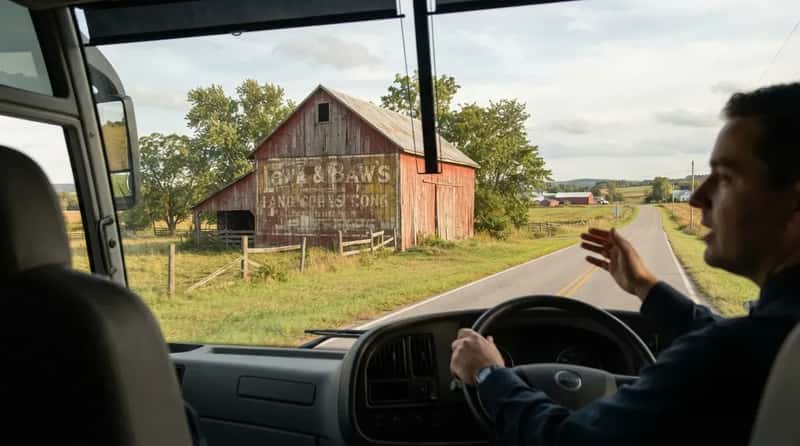
Veteran drivers build a mental catalog of strange roadside spots over the years – an old diner that’s survived since the 1960s, a bridge with a local ghost legend, or a barn with a faded advertisement painted decades before anyone in the seats was born. Passengers near the front are the ones who get nudged toward these details, almost like an accidental private tour tucked into an otherwise routine drive.
It’s rarely planned. It happens simply because the driver is already looking in that direction, and the front-row rider is right there to hear the offhand comment. Longtime riders say this small habit turns an ordinary commute into something worth remembering, especially on long, flat interstate stretches where nothing else breaks up the monotony for hours at a stretch.
4. They Remember Your Face Faster Than You’d Expect
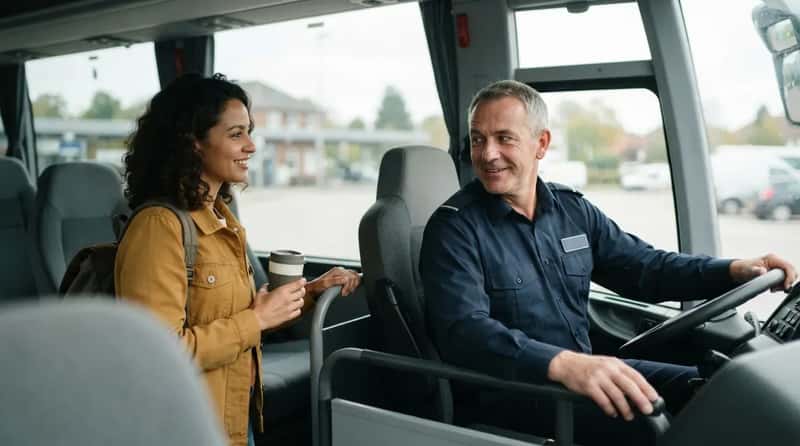
Drivers on regional routes often develop sharp recall for regular riders, especially the ones who consistently choose seats close to the front. It’s not unusual for a driver to recognize a face after just two or three trips and greet that passenger by describing where they usually sit, rather than fumbling for a name they never learned.
That recognition builds a strange but real sense of familiarity on a form of travel that otherwise feels completely anonymous. Passengers describe it as oddly comforting – being remembered by someone who sees hundreds of strangers pass through every single week. Drivers say front-row riders are simply easier to remember because they’re in direct line of sight on every trip, every time, without fail.
5. They Give an Honest Reason for Slow Starts
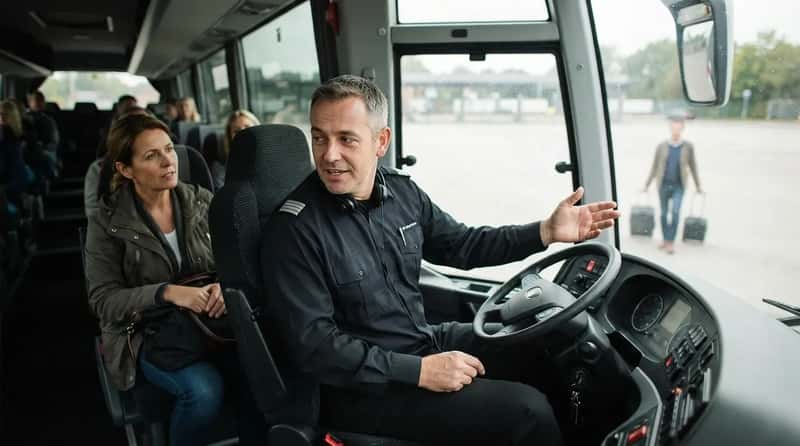
When a coach idles a few extra minutes before pulling out, front-seat passengers often get the real explanation – a late passenger sprinting across the lot, a paperwork issue, or an air-brake check that drags longer some days than others. It’s the kind of detail that rarely reaches the back rows unless someone actually gets up and asks.
Drivers naturally talk to the people nearest them while running through pre-departure routines, since those riders are already sitting in their sightline anyway. That means front-row regulars often get real-time explanations for delays that everyone else just chalks up to “normal bus stuff” and forgets about by the next stop.
6. They Quietly Keep an Eye Out at Rest Stops
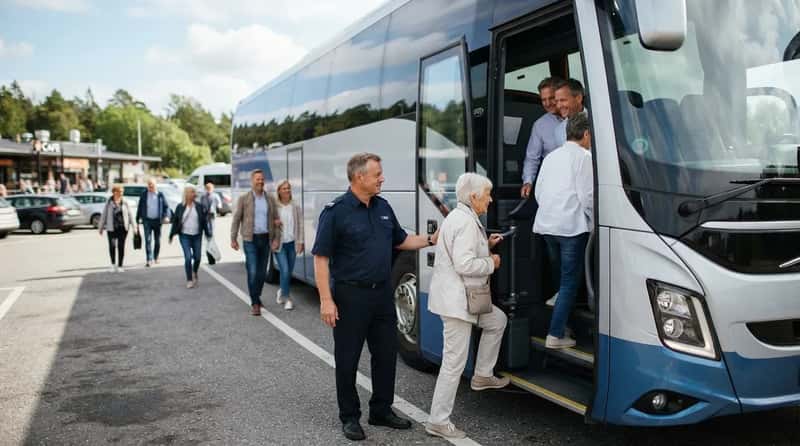
At rest stops, drivers are legally responsible for headcounts, but many admit they unconsciously track the passengers who sit near the front more closely, simply because they’re used to seeing those faces constantly. It’s not favoritism – it’s familiarity, built from hours of shared proximity that back-row riders never accumulate.
This often means front-row riders get a subtle nod or a quick “you’re good” before reboarding, even before the driver has formally started checking seats. Some passengers say it feels like being quietly watched out for without ever having asked for it. Drivers say the habit forms almost automatically after a few hours on the same road with the same faces.
7. They Tell You Which Seat Actually Rides Smoother
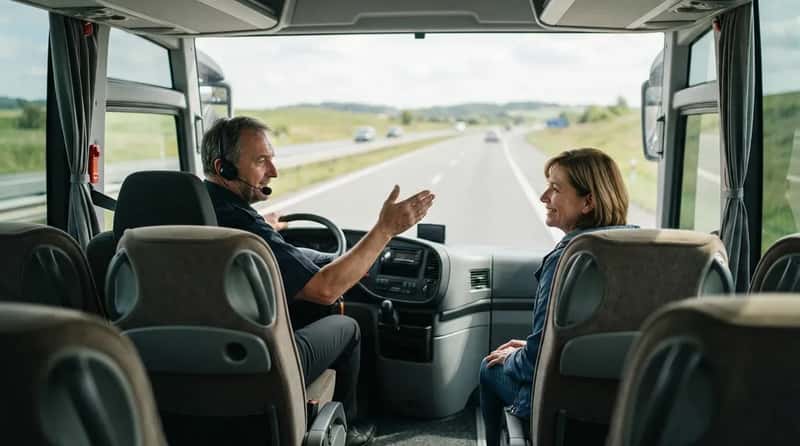
Ask a driver which seats handle bumps best, and many will point straight to the front – closer to the axle, away from the rear suspension sway that hits harder over long stretches of highway. It’s a detail rarely advertised by bus companies but well known among the people who drive these vehicles for a living.
Front-seat riders sometimes get this tip completely unprompted, especially on older coach models where the rear ride quality noticeably falls apart. Some drivers openly admit the back rows feel like “a different vehicle entirely” on rough highway sections, which quietly reinforces why regulars keep gravitating toward the same front seats trip after trip.
Quick Compare
- Front seats: closer to the axle, steadier ride over bumps and expansion joints
- Back seats: closer to the rear suspension, more sway on rough highway stretches
- Front seats: easier to hear driver updates and rest-stop timing
- Back seats: often quieter overall, but further from any heads-up before a jolt
8. They Treat You Like an Unofficial Co-Pilot
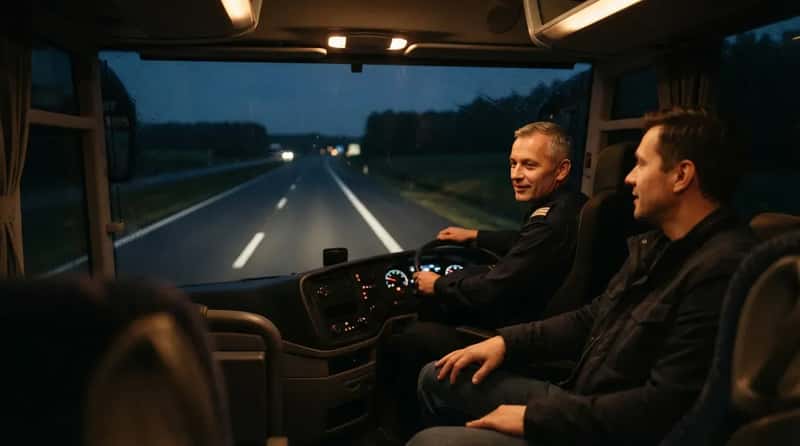
There’s a running joke among coach drivers that the front-row passenger becomes an accidental co-pilot – someone to talk to during long, empty stretches of highway where conversation helps keep focus sharp. It’s never official, but it happens constantly on overnight or multi-hour routes when the highway turns quiet and dark.
Drivers will sometimes ask front-seat riders to glance at a mirror, confirm a sign, or simply chat to break the silence somewhere around hour six. It’s a small dynamic that never happens with riders further back. Many drivers say the front seat is the closest thing they have to company during isolating overnight routes with nothing but headlights and white lines.
9. They Warn You Before the Rough Patch Hits
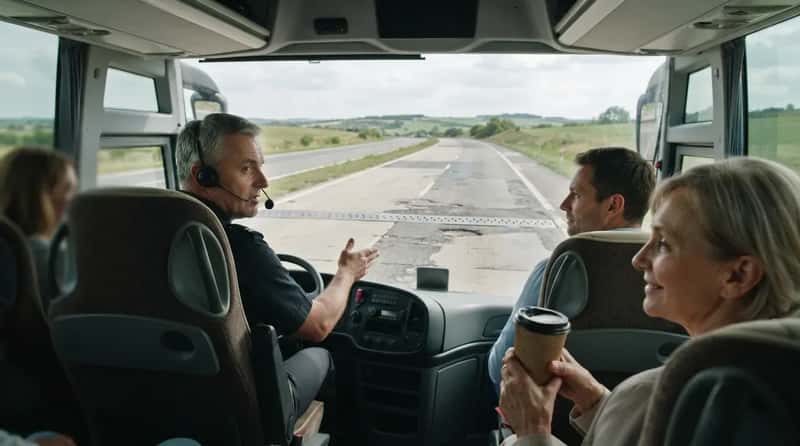
Certain stretches of highway are notorious for potholes, expansion joints, or sudden dips, and drivers who know their route by heart will often give a quick verbal heads-up to the people sitting closest. It’s a courtesy that simply doesn’t reach the back of the bus until the bump has already happened.
This habit isn’t about safety regulations – it’s pure instinct built from repetition, the kind that comes from driving the same 300 miles hundreds of times. Regular riders say this kind of warning is one of the most appreciated, least talked-about parts of sitting up front, especially for anyone holding a full cup of gas-station coffee.
10. They Notice When You Always Choose the Same Seat
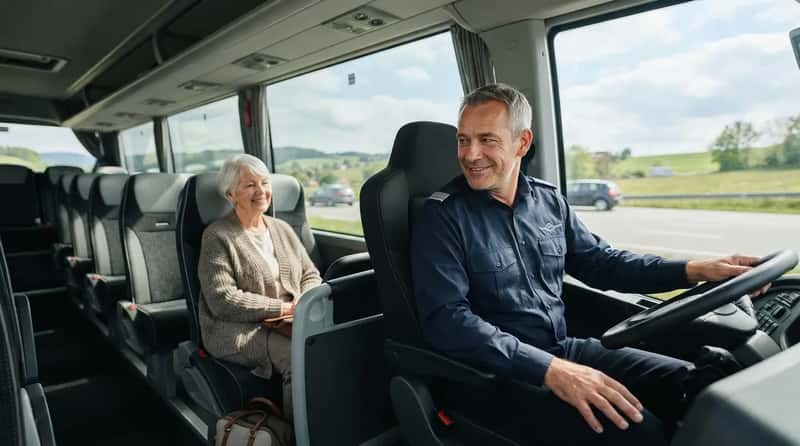
Loyalty isn’t just a customer-service buzzword on coach lines – drivers genuinely notice pattern behavior. A rider who consistently picks the same front seat becomes a small, familiar fixture of the route, and drivers often mention it casually, almost like a running inside joke between the two of them.
Some drivers say they subconsciously expect certain regulars to be sitting in “their spot” and actually feel the absence when they’re not there one week. It’s an oddly personal detail on an otherwise impersonal form of travel. Drivers describe this recognition as one of the few genuinely human parts of an often repetitive, grinding job.
11. They Share Local History Most Riders Never Hear
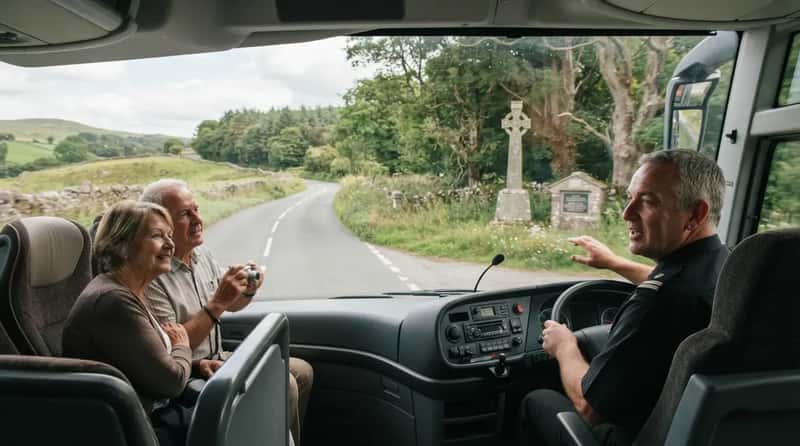
Longtime coach drivers often pick up decades of regional trivia simply from driving the same roads year after year – old railway crossings, forgotten town names, or the real story behind a strange roadside monument nobody bothers to look up. Front-row passengers are usually the ones who get these unscripted history lessons for free.
It’s rarely formal, more like a passing comment shared with whoever happens to be sitting close enough to hear it that day. Riders say these small moments often become the most memorable part of an otherwise uneventful trip. Many drivers, without ever meaning to, end up knowing more local history than the town’s own visitor center.
12. They Give Early Weather Warnings
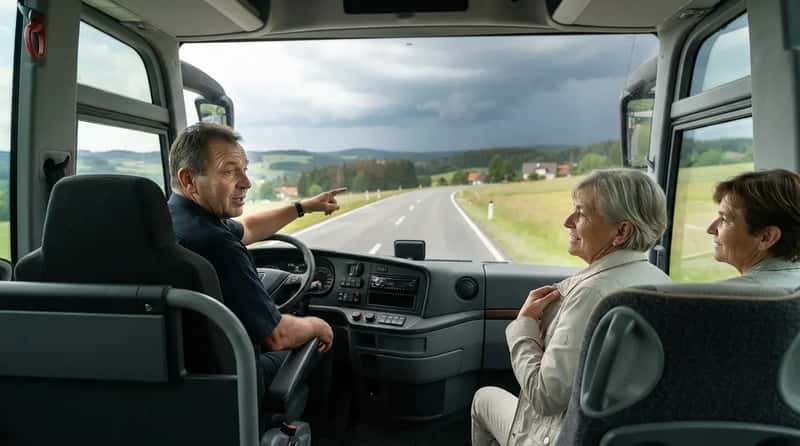
Drivers who’ve spent years on a route develop an almost intuitive sense for weather shifts – a darkening sky ahead, a sudden temperature drop, or a wind pattern that hints at trouble before any forecast has caught up. Front-seat passengers often hear about this first, simply because they’re within earshot when the driver reacts to it.
This isn’t a formal safety briefing; it’s usually just a passing comment meant to prepare the nearby riders for what’s coming. Some drivers say they can predict rain fifteen to twenty minutes before it actually hits, purely from watching how the sky changes along a route they’ve driven a thousand times.
Worth Knowing
- A darkening horizon ahead often means rain within fifteen to twenty minutes
- Sudden temperature drops can be an early sign of an approaching storm front
- Shifting wind patterns sometimes show up before a phone forecast updates
- Front-row riders are usually the first to hear the “heads up” before weather hits
13. They Signal When It’s Safe to Grab Your Bag Early
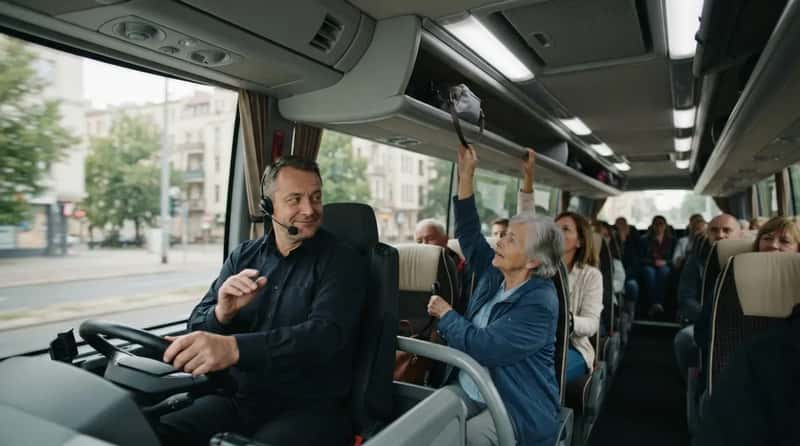
As a coach nears its final stop, drivers often give a quiet nod or a quick comment to front-row passengers, letting them know it’s fine to grab their bag from the overhead rack a few minutes early. It’s a small convenience that saves front-seat riders from the scramble that always erupts near the exit door.
Back-row passengers rarely get this heads-up unless they lean forward and ask directly. Front-seat riders often end up disembarking first simply because they were quietly given permission to prepare earlier than everyone else fighting for the aisle.
14. They Recommend the Actual Good Rest-Stop Spots

Drivers know exactly which rest-stop restaurants are worth the ten-minute break and which ones are a total waste of time, and front-row passengers are usually the first to hear these off-the-record recommendations. It’s the kind of insider tip that never appears on any official company itinerary.
Some drivers have favorite coffee counters or diners they’ll casually mention to nearby riders, almost like a local giving directions to a friend passing through town. Regular passengers say these tips are often more reliable than any online review, since drivers eat at these exact stops dozens of times a year and know within a bite whether it’s still good.
15. They Notice When Something Feels Off With You
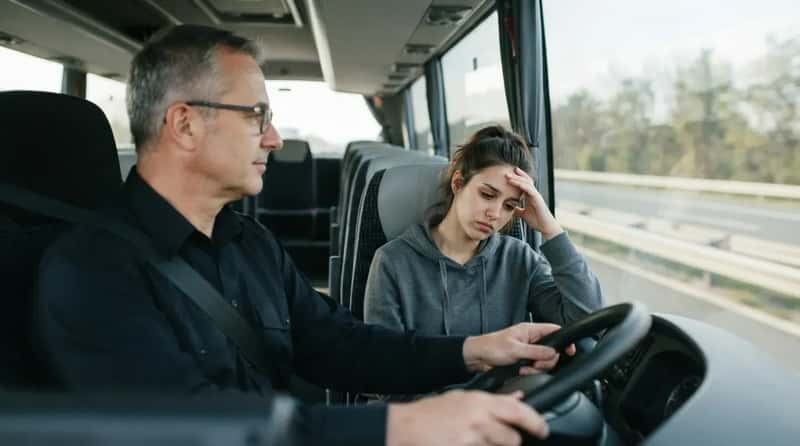
Because front-row passengers sit in direct line of sight for hours at a time, drivers often notice subtle changes – someone looking unusually pale, unusually quiet, or visibly uncomfortable in ways that would go completely unnoticed twenty rows back. It’s not a formal wellness check, but experienced drivers say they pick up on these cues almost without trying.
Several drivers have described pulling over early or offering help simply because they noticed something seemed wrong with a front-seat rider before anyone else on the bus did. This kind of quiet attentiveness almost never happens for passengers sitting further back, simply because of distance, angle, and the sheer number of seats in between.
Why It Stands Out
- Direct eye contact for hours makes subtle changes far easier to catch
- Pale skin, silence, or visible discomfort often gets noticed first up front
- Some drivers have pulled over early based on nothing more than a gut feeling
- Distance and angle mean this kind of attentiveness rarely reaches the back rows
16. They Remember the Stories Regulars Tell Them
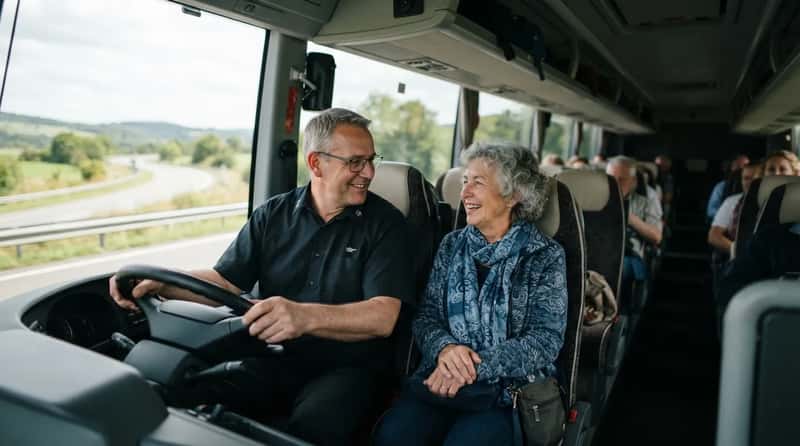
The strongest, most human part of this entire dynamic is memory. Drivers on routes with loyal regulars often recall small details – a new job, a move across the state, a grandchild born last spring – shared during quiet front-seat conversations weeks or even months earlier.
These moments rarely feel transactional. They build slowly, trip after trip, until a front-row seat becomes less about location and more about a small, recurring relationship that neither person ever planned on. Many riders admit their coach driver knows more about their recent life updates than some of their own coworkers do.
I’ve had passengers I’ve watched grow up over ten years of rides – new jobs, new babies, whole new lives. You don’t get that sitting in the back.
Anonymous Greyhound driver, quoted in an industry retrospective on long-haul bus culture
None of this is official policy. It’s not printed on a ticket or buried in some onboarding manual. It’s simply what happens when two people share a windshield view for hours at a time, trip after trip, season after season, until the front seat stops feeling like just another seat.
The front row was never really about legroom. It’s the one place on a coach where the distance between stranger and stranger quietly disappears – and where a driver, whether they mean to or not, ends up seeing you more clearly than anyone else on the bus ever will.