You step onto a coach thinking you’re just another face in row 12. But the driver has already sorted you by a handful of tiny signals before the doors even hiss shut. Within the first hour, a buckle, a bag, and a single hello can say more about you than your ticket ever could.
Some of what drivers notice is funny. Some of it is genuinely risky. And one habit near the end of this list has nothing to do with rules at all, yet it’s the one that tends to stick. We’ll start with a surprise hiding right in the seat belt.
#16 – The Seat Belt Click Is a Choice Nobody Talks About
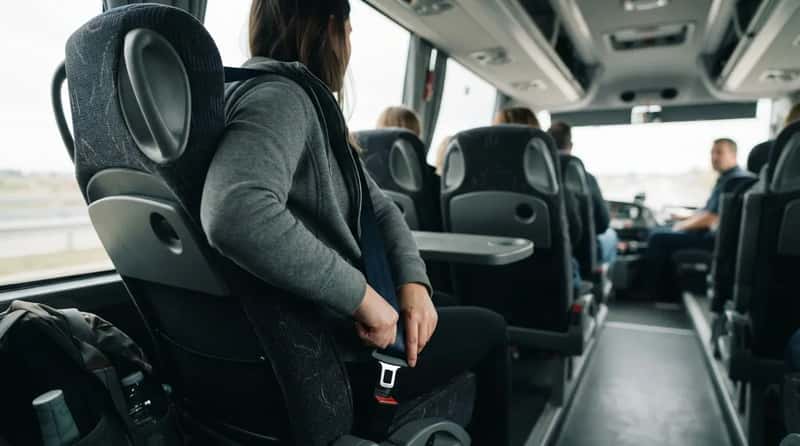
The first sound a driver listens for is a small metal click. A 2013 federal rule requires lap/shoulder belts at every passenger seating position in new over-the-road buses, so on newer coaches the belts are usually there waiting. Whether anyone uses them is another story.
Here’s the twist: when asked whether motorcoach passengers are required to wear seat belts, federal guidance answers simply, “No.” Even so, official pre-trip guidance recommends belts whenever someone occupies a seat on a coach that has them. That leaves the decision to each rider, and the driver can see exactly who makes it.
But that’s nothing compared to what happens during the safety briefing in #15…
#15 – Half the Coach Tunes Out the Safety Briefing
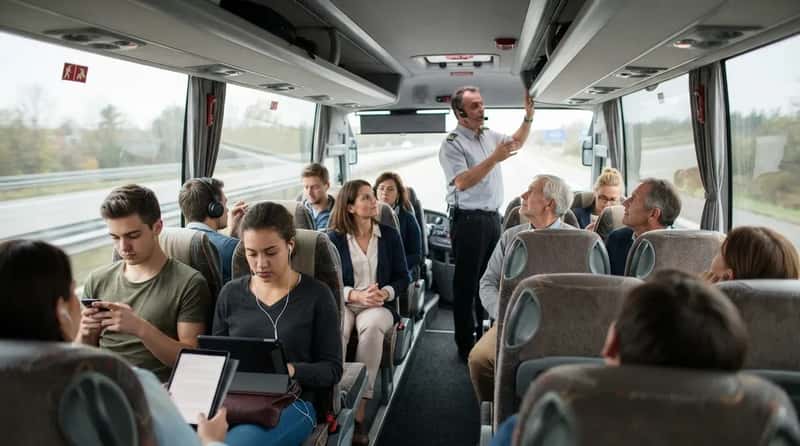
Within seconds of the briefing starting, a driver can tell who is listening. Some riders look up. Others keep scrolling as if a flight attendant had never been invented.
Federal pre-trip guidance suggests pointing out the emergency exits, including push-out windows and the roof vent, and explaining how to use them. It stresses that the door should be the first choice whenever possible. The same guidance covers:
- The location of the fire extinguisher
- An emergency signal device in the restroom
The mistake is assuming you’ve heard it all before. Every coach layout is a little different, and the whole briefing takes about a minute.
And the next thing drivers see happens before anyone even sits down…
#14 – The Boarding Step Shows Who’s Rushing
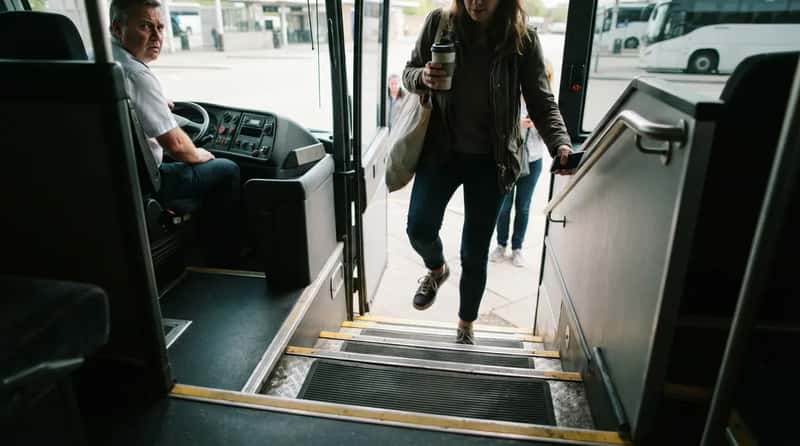
The steps of a coach are steeper than most people expect. Drivers watch every foot that lands on them, because that’s where the trip’s first accident could happen.
That’s why the official guidance tells passengers to take care boarding and exiting, and to use the handrail on the steps. The riders who struggle are usually juggling a coffee, a phone, and a bag all at once. Slips and falls on the steps are a named safety topic in federal guidance. It’s not a throwaway warning.
But what people carry onto the coach causes an even bigger headache, as #13 shows…
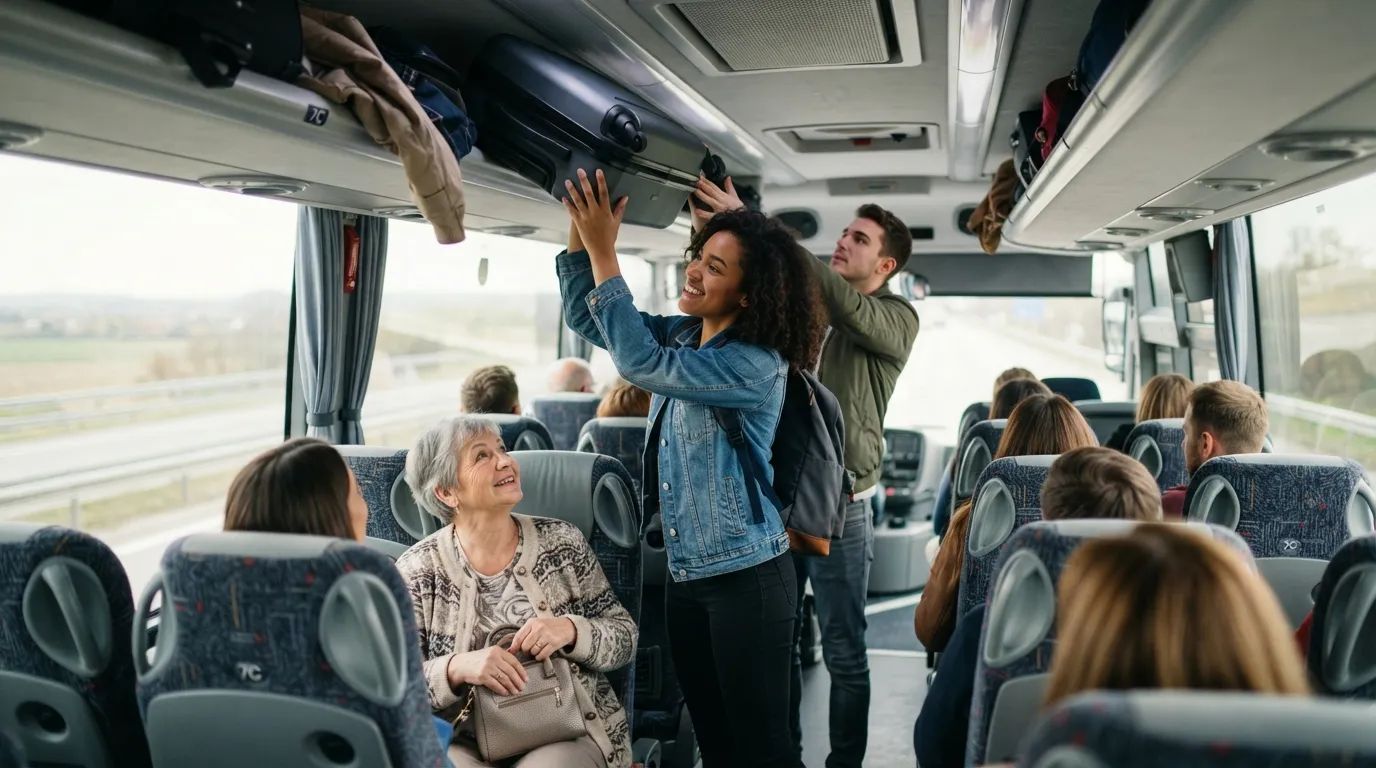
#13 – The Bag in the Aisle Is the First Red Flag
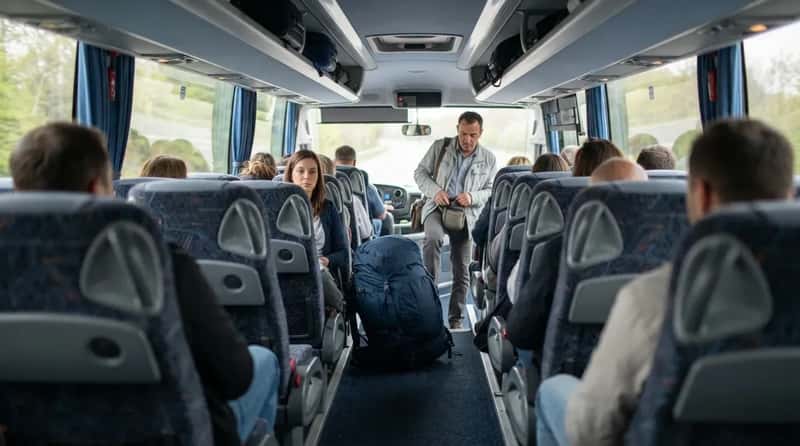
Nothing frustrates a crew faster than a bag that won’t fit anywhere. So it ends up in the walkway, and everyone behind it has to climb over.
Federal travel tips say never to block the center aisle, and to stow carry-ons in the overhead space or seat pocket. The aisle isn’t just a hallway. It’s the route everyone would use if they had to leave quickly.
The “big backpack on the empty seat” habit gets noticed too. One sightseeing operator advises against putting a large backpack on the neighboring seat or in the aisle, and recommends approved storage or the space under your own seat.
Speaking of seats, the next debate starts the moment people choose where to sit…
#12 – The Front Row Is Prized, and Also Secretly Awkward
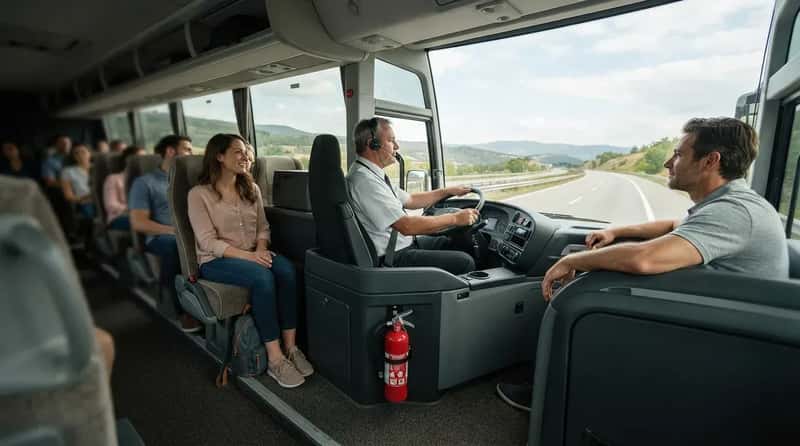
Some riders race for the front seat. Others avoid it like a classroom’s first row, where the teacher can see everything.
The front has a real appeal: the biggest windshield view and the easiest chat with the driver. It also comes with a quirk. Federal tips say the fire extinguisher may be behind the driver’s seat, beneath the front row. The “best seat” can double as the safety-equipment seat.
Many riders swear the back is the bumpiest part of the ride. Others love the quiet and the extra space. Seat choice says plenty about what someone expects from the trip, and drivers see that on day one.
Quick Compare
- Front row: Widest windshield view, easy conversation with the driver, and possibly the fire extinguisher under the seat.
- Back rows: More quiet and elbow room, though many riders say the ride feels bumpier.
- What drivers read into it: Front-seaters usually want the view. Back-seaters usually want to be left alone.
The next habit has nothing to do with seats. It’s about timing, and it starts before the sun is up…
#11 – The Dawn Departure Has a Hidden Cost
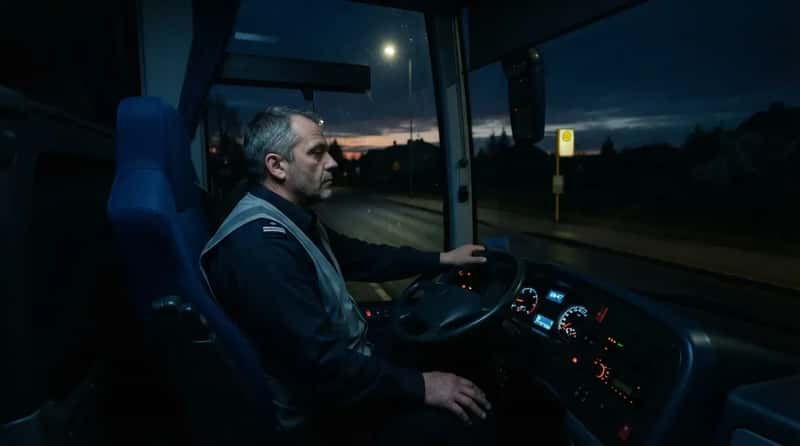
When the coach leaves at 5 a.m., the driver’s day started long before the passengers’ did. Late arrivals feel very different at that hour, because the person waiting for you has been awake for ages.
A driver may need to wake 2 to 3 hours before departure to get ready, reach the garage, complete the safety inspection, and drive to the pickup point. A 5 a.m. departure might mean the driver isn’t fully rested. Drivers also must follow federal and state rules on hours of service, driver qualifications, and drug and alcohol testing, so the clock is always running.
Still, even a groggy morning has one small moment that tells a driver a lot, and it happens at the door…
#10 – A Simple “Good Morning” Gets Remembered
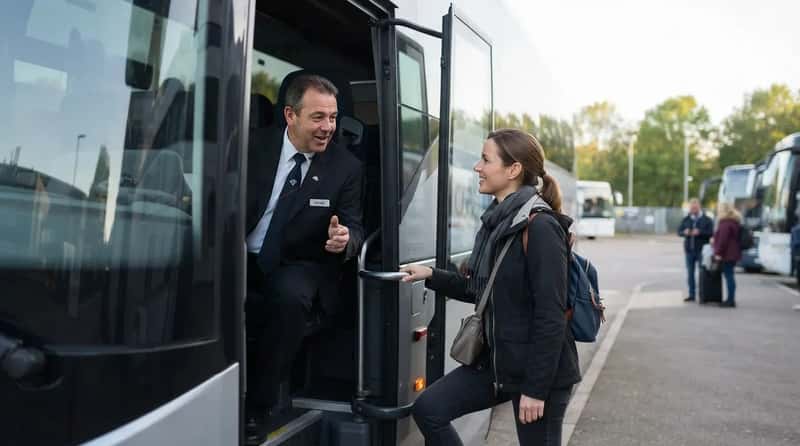
Every driver can tell the riders who greet them from the riders who walk straight past. It sounds minor, but it sets the tone for the whole trip.
Official guidance tells passengers to look to the driver for direction and follow their instructions. That’s a lot easier when the two people have already made eye contact. A rider who has said hello is more likely to ask a question before a problem grows.
Most people don’t realize the driver also knows the stop times, the restroom plan, and the schedule. The person you ignored at the door is the one holding every answer you’ll need.
But the next fight has nothing to do with manners at the door, only with the angle of a seat…
#9 – Recline Wars Start Before Mile Five
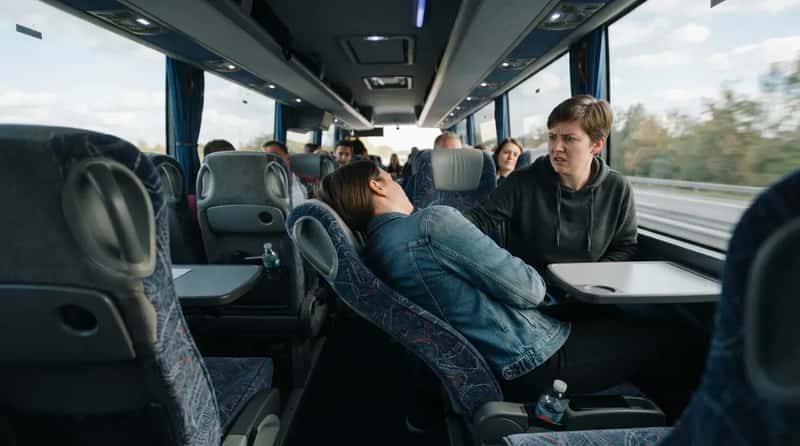
Some passengers drop their seat all the way back the moment the coach moves. The person behind them notices instantly, and the driver often hears about it a minute later.
The debate is real. Some riders insist reclining is part of the ticket. Others say a full recline in the first hour is the rudest move on board. One tour operator reminds riders that the seat is personal space but the area around it is shared, and suggests sharing the armrest and minding the recline.
Meanwhile, another sound fills the cabin, and it has nothing to do with seats…
#8 – The Speakerphone Gets Everyone’s Attention
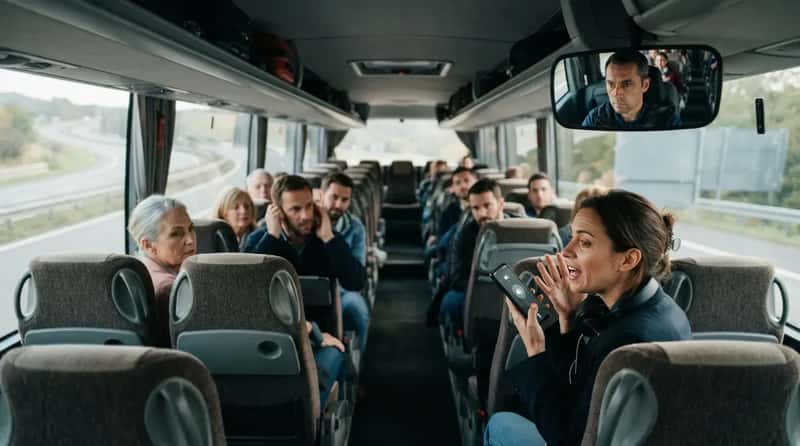
On a quiet coach, one loud video call carries from the front to the back. To a driver trying to concentrate, it’s more than an annoyance.
Safety training stresses that good all-round observation, both inside the vehicle and outside it, helps prevent incidents. That means drivers keep one ear on the cabin as well as one eye on the road. Many also check the mirror to see what’s happening behind them.
The truth is that headphones solve the whole problem. The loudest passenger on a coach usually has no idea how far the sound travels. Everyone else just quietly suffers.
Worth Knowing
- A single speakerphone call can be heard from the first row to the last.
- Drivers use the interior mirror to keep an eye on the cabin.
- Cabin noise competes with the driver’s own focus on the road.
- Headphones are the one fix that costs nobody anything.
Next up is a habit that looks harmless but sets off a driver’s alarm bells…
#7 – The Walker in the Aisle Worries Drivers Most
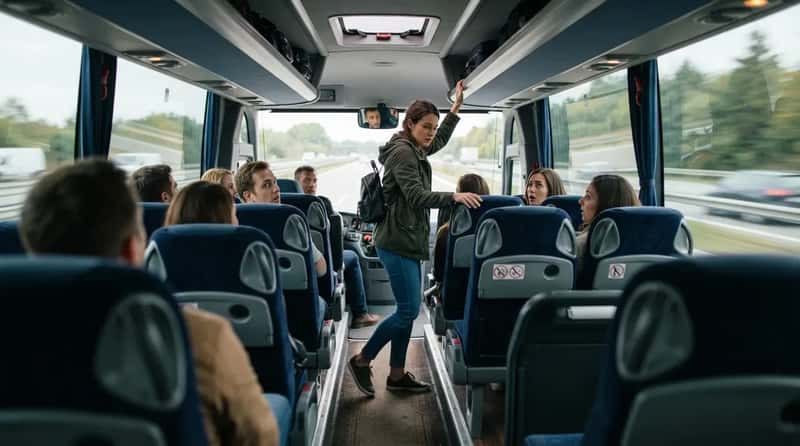
A passenger standing up while the coach is moving can make a driver tense instantly. It’s one of the oldest rules in the book.
Federal tips say to stay seated while the bus is moving, since a quick swerve or stop could cause a fall. Guidance also encourages riders to remain seated as much as possible, and to use the handrails if they must walk.
Braking matters too. A UK driver-training group notes that gentle braking is especially important for vehicles with standing passengers, and that studies link emergency braking to casualties. The driver controls the brakes, but not who’s standing up.
The next habit isn’t about standing at all, but about wandering off once the coach stops…
#6 – The One Who Vanishes at the First Stop
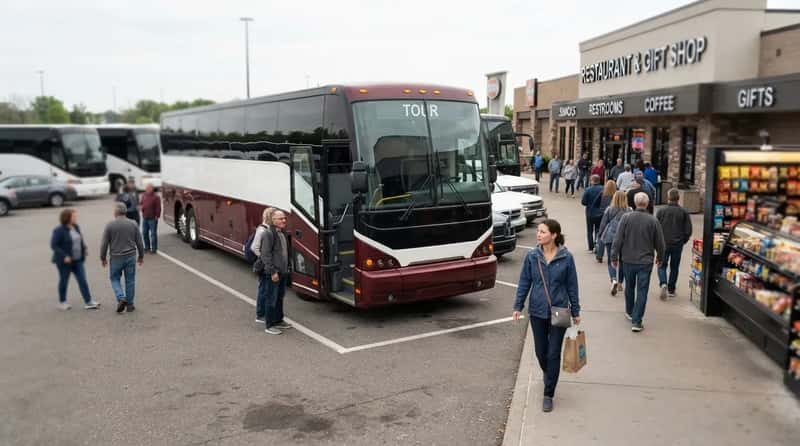
Every group has someone who disappears at the first rest stop. Drivers and guides learn to spot this person early, usually by the way they glance at the nearest snack counter.
It matters because a single late return can delay the entire coach. Tour operators also advise carrying essentials in a simple way: keep your phone, medication, ID, and charger in a compact zippered bag, and take it with you at every stop.
It’s surprisingly easy to lose track of time. A gift shop, a long restroom line, and a wrong turn can add up quickly. The coach is never as easy to find as you think it’ll be.
But a different issue surfaces long before the first stop, and you can smell it…
#5 – The Hot Lunch Debate Begins in a Sealed Cabin
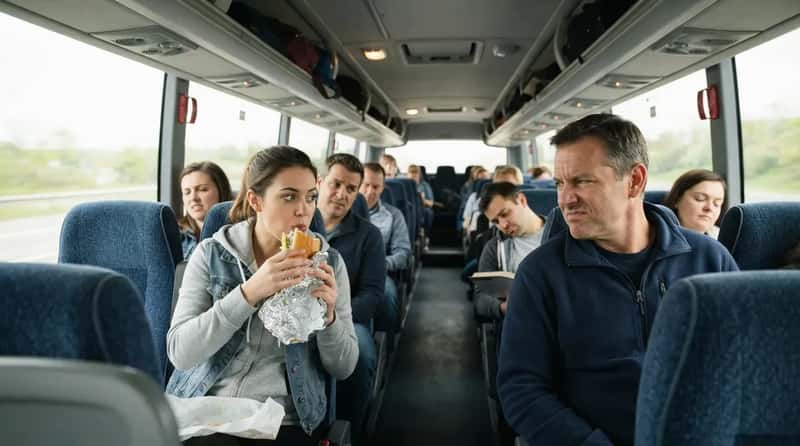
A coach is a closed space, so strong food smells travel fast. Drivers catch them well before anyone complains.
The real argument is over what counts as acceptable. Some riders say a tuna sandwich on a coach is a crime. Others say they paid for the seat and will eat what they like. Many operators have their own food rules, and policies differ from company to company.
The simple fact is that you share air with everyone aboard. A snack that seems harmless to you can linger for hours for everyone else. Drivers see the glances between seats long before anyone says a word.
At a Glance
- The cabin is a sealed space, so smells stay put.
- Fish, eggs, and reheated leftovers tend to draw the most side-eye.
- Food rules vary by operator, so it pays to check before you pack.
- Drivers notice the glances well before anyone speaks up.
But the quiet glares are nothing next to the backseat commentary in #4…
#4 – The Backseat Driver Has Opinions About the Route
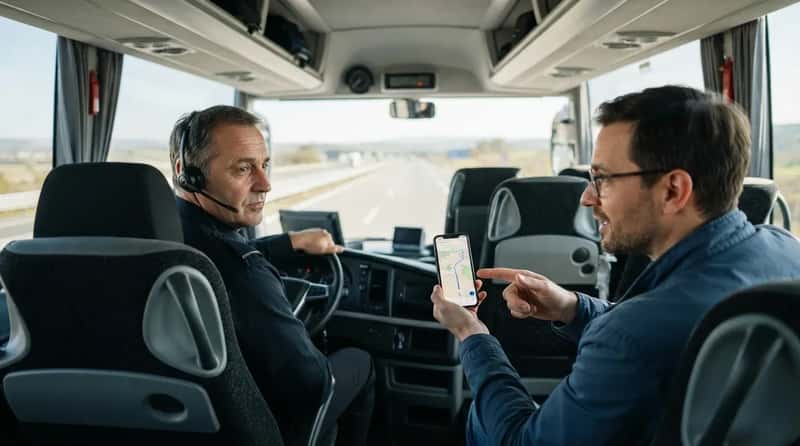
Some passengers follow their own map app the entire time. Then they tell the driver what they think of the route, usually with total confidence.
Here’s the part they don’t see. Drivers work within legal limits on driving time, and they must follow federal and state hours-of-service rules. A route that looks slow on a phone may be built around those limits, planned stops, or road restrictions for large vehicles.
Plenty of riders believe the app always knows best. Many experienced drivers would argue the opposite. A phone doesn’t know your coach’s size, schedule, or required break times.
Yet the most useful passengers do something very different, and it shows in #3…
#3 – The Passenger Who Reports a Broken Belt Right Away
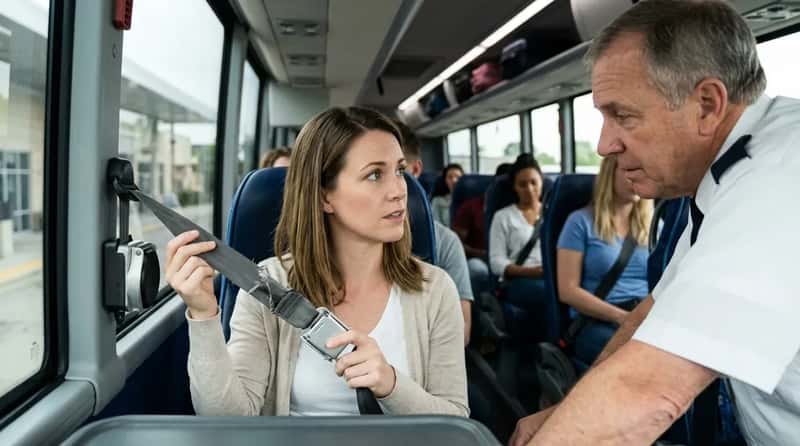
Some passengers notice a problem and say something at once. Drivers and guides love this type, because they get to fix things while the coach is still parked.
The advice is simple. If a belt sticks, retracts too slowly, or looks damaged, tell the guide before departure. It takes ten seconds, and it may avoid a bigger headache later.
The usual mistake is staying quiet to avoid fuss. A broken belt reported at the curb is a minor fix, while the same belt ignored at highway speed is a real problem. Drivers remember the riders who speak up early, because those riders make the whole trip smoother.
Fast Facts
- A 2013 federal rule requires lap/shoulder belts at every seat in new over-the-road buses.
- Because it covers new buses, older coaches may have fewer belts.
- Federal guidance says passengers aren’t required to buckle up, but it recommends it.
- Reporting a faulty belt before departure takes about ten seconds.
Now for the quirk that hits closest to home, and it involves the thermostat…
#2 – The Thermostat Complaint Arrives Before Mile Ten
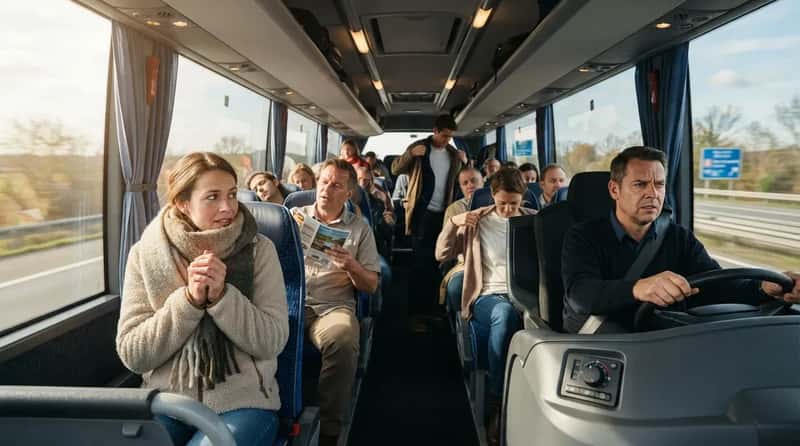
Nothing divides a coach faster than the temperature. One passenger is freezing, the next is roasting, and both look at the driver as if there’s a secret dial.
The driver can’t please everyone, and there’s a good reason. A full coach holds dozens of people with different comfort levels, and everyone also gives off heat. The front often feels different from the back, and the windows add sun on one side.
Seasoned travelers solve this before the trip starts. The simplest fix is a light layer you can add or remove, not a request to change the whole cabin. Drivers can spot the layered riders in the first boarding line.
But the thing drivers remember most has nothing to do with comfort at all…
#1 – The Stranger Who Quietly Helps Someone Else
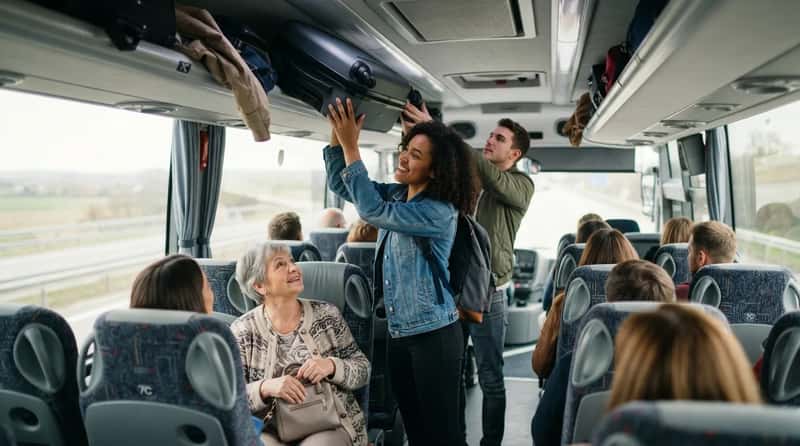
The passengers drivers remember are often the kindest ones. They lift a bag for a stranger or give up an aisle seat without being asked.
Even the official guidance leans on this instinct. It encourages able-bodied passengers to help injured or mobility-impaired riders during an emergency evacuation. The idea is that a coach full of strangers works best when people look out for one another.
In the first hour, one small kindness can change the mood of the entire coach. A driver can watch it spread from row to row. It’s the one habit no briefing can teach.
And that’s the quiet secret behind everything on this list.
A coach driver doesn’t need your name to know who you are by mile ten. They read it in a buckle, a bag, a greeting, and a seat that stays politely upright. Most of the habits they value cost nothing at all.
The rules keep everyone safe. But on a long road full of strangers, it’s the small kindnesses that make the miles feel shorter.