Most people assume you can spot a cruise veteran by the loyalty badge, the fancy luggage or the confident stride up the gangway. Crew members and longtime cruisers describe something quieter: small habits that show up within minutes of boarding. And veterans are on nearly every sailing, since close to 90% of cruisers say they plan to sail again, according to CLIA.
The strange part is that the biggest giveaway has nothing to do with money, status or even experience. Crews say it’s something you can’t buy at the gift shop, and it’s hiding near the end of this list. Start at #16, because the early clues are sneakier than you’d think.
#16 – They Move Around the Ship Like They Own the Floor Plan
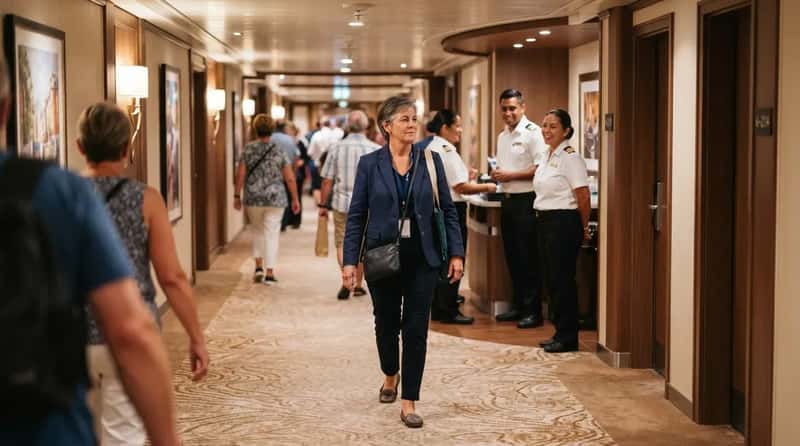
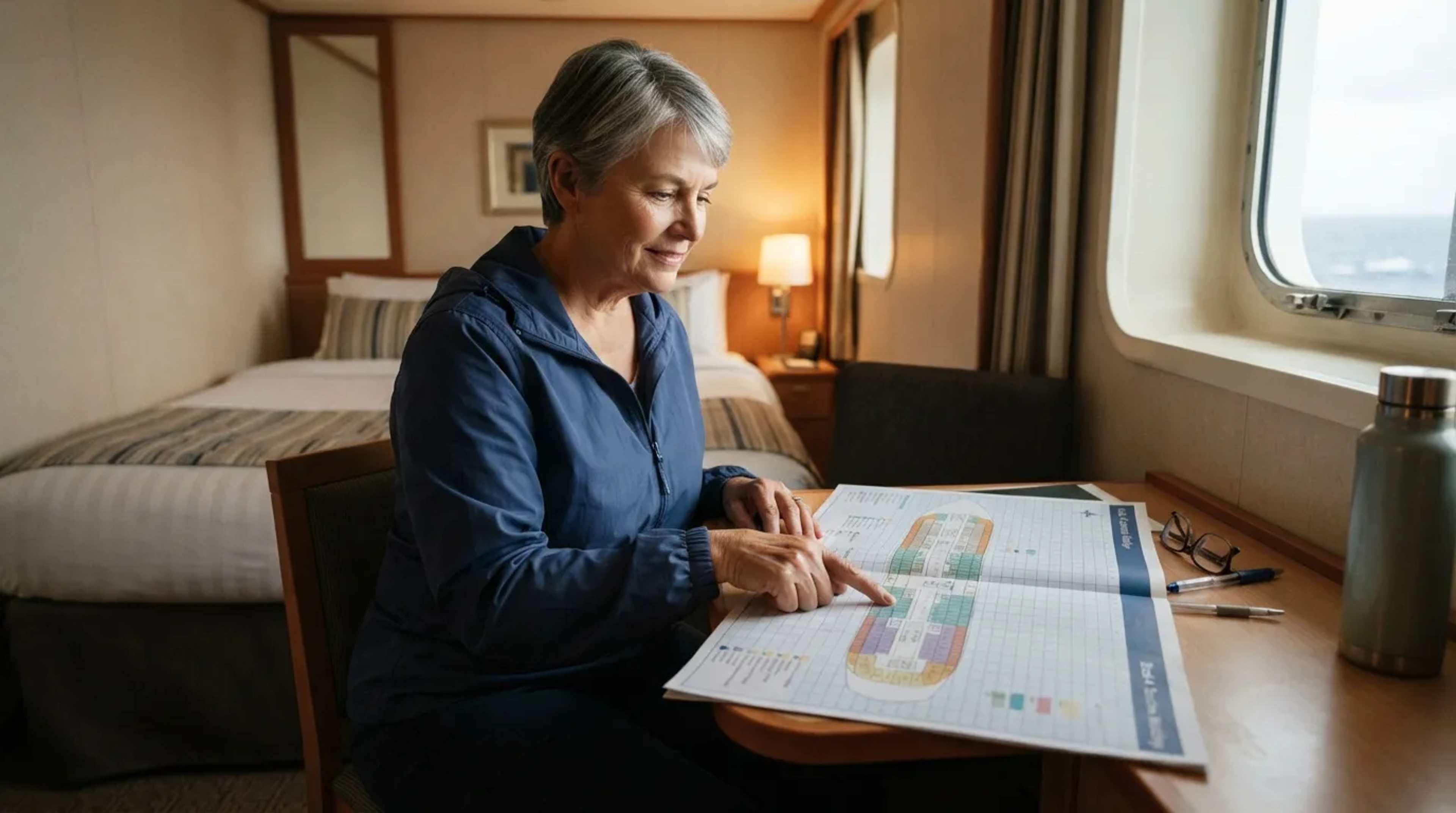
The first tell shows up before anyone reaches a cabin. First-timers study the deck map, scan the signs and ask which way is forward. Veterans just walk, and they walk like they’ve already been here.
Crew members pick up on this fast, often within minutes of a guest stepping aboard. The veteran isn’t speeding through the corridors, just calm. You’ll almost never catch one turning a map sideways in a hallway. But the next clue starts well before the gangway…
#15 – Online Check-In Was Done the Moment It Opened

Seasoned cruisers treat check-in like a ticket drop. One roundup says veterans do it the moment it opens and grab the earliest arrival window they can. By the time a first-timer gets around to it, the good slots are often gone.
One veteran blogger likes early slots, roughly 10:30 to 11:30 am. That’s a personal preference, not a rule. But the pattern is real: veterans choose their window instead of accepting whatever is left.
But here’s the twist: grabbing an early slot is not the same as showing up early…
#14 – They Refuse to Arrive Hours Before Their Time
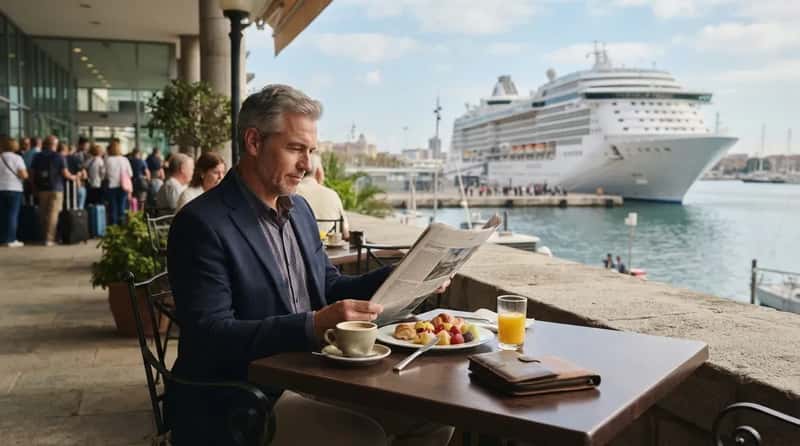
You’d expect a veteran to be first in line. Often it’s the opposite. One roundup of embarkation habits lists refusing to show up hours early as a classic veteran trait. They pick a window and arrive inside it.
The logic is simple. Many ships don’t sail until late afternoon or evening, so arriving at dawn mostly buys a longer wait. Veterans would rather linger over a calm breakfast than stand in a packed terminal. Crews see those crowded lobbies every embarkation day, and they know who skipped them.
Quick Compare
- Dawn arrival: a crowded terminal, a long wait and not much to do.
- Arrival inside your window: shorter lines and a smoother walk aboard.
- The veteran move: a slow breakfast ashore, then show up right on time.
The next giveaway is hanging off the bag they carry aboard…
#13 – The Water Bottle Is Already in Their Bag

Veterans don’t pay for water. One cruise tip roundup calls a refillable bottle one of the best packing hacks, since it can be filled at the ship’s water stations. To a crew member, a reusable bottle clipped to a day bag says this person has done this before.
The same source says seasoned cruisers know the water is safe to drink and free. Bartenders and stewards see the other side of it, where the beverage tab climbs for people who buy bottle after bottle. It’s a small saving, but it shows how veterans think about every onboard dollar.
And what veterans do the minute they reach the cabin is even more telling…
#12 – They Test Everything in the Cabin Before the Ship Leaves
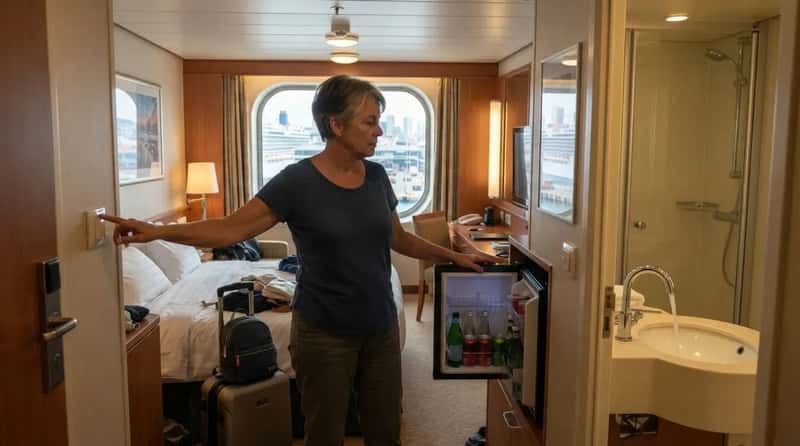
New cruisers drop their bags and head straight for the buffet. Veterans do a quick inspection first. One cruise guide advises flicking the light switches, running the faucets and shower, flushing the toilet and checking that the minibar works.
If something is broken, they report it before the ship leaves. That timing matters, because a fix requested at the dock is far easier than one requested at sea on a full ship. Stewards say the guests who report problems early are usually the ones who stay relaxed all week.
But the real giveaway isn’t something they test. It’s something they stick on the wall…
#11 – Little Magnets Are Quietly Doing Big Jobs
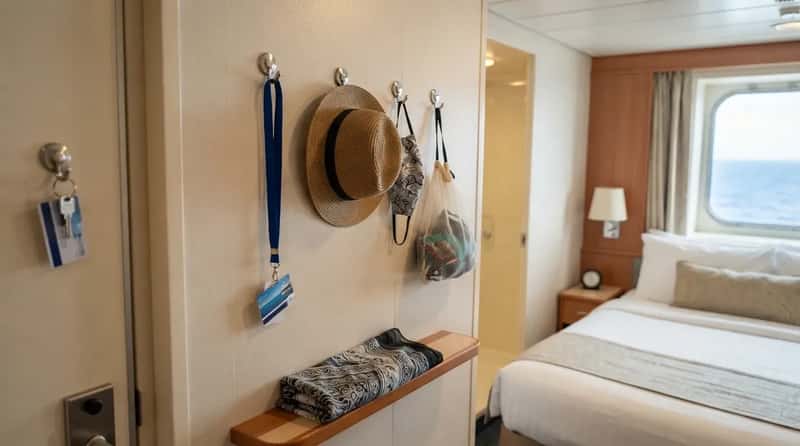
Look inside a veteran’s cabin and you’ll often see small magnetic hooks holding towels, lanyards and hats. Many ship cabins have metal walls and doors, so magnets add storage without a drill or a strip of tape. First-timers usually learn how tight cabin space is on night one.
Stewards often notice these tidy cabins during turndown. One glance tells them who’s sailed before. The veteran has already figured out where the wet swimsuit goes.
Next comes the moment of the voyage that most newcomers dread…
#10 – They Actually Listen at the Safety Drill
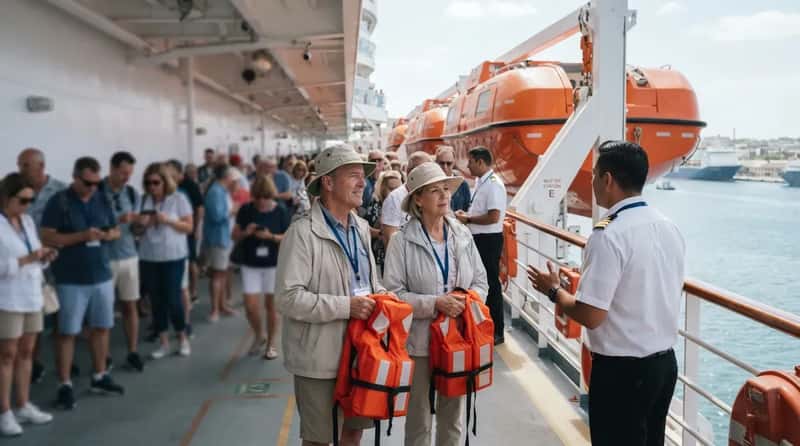
Every ship runs an emergency briefing for all passengers before or soon after it sails. Crew members describe a room that splits in two. Some people scroll their phones and chat through the instructions, while others stand quietly and look at where the lifeboats are.
Veterans often fall in the second group. They’ve heard it before, and they still glance at the exit signs on the way to their muster station. It’s an odd kind of respect: the person who knows the routine best is the one who doesn’t treat it as a formality.
Fast Facts
- International maritime safety rules (SOLAS) require passengers to be briefed on emergency procedures at or before departure.
- The ship’s general alarm is seven short blasts followed by one long blast.
- Your muster station assignment is usually posted in your cabin, so check it early.
Still, the next tell has nothing to do with safety. It’s about a single word…
#9 – They Greet the Crew by Name
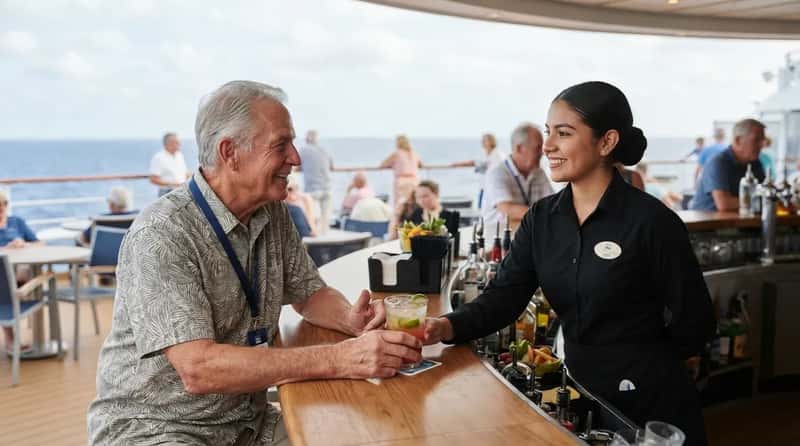
A simple “please” and “thank you” gets noticed. Veterans go one step further. Crew badges on most ships show a first name and a home country, and repeat cruisers actually read them.
Crew members deal with hundreds of guests a day, so passengers who show real respect can stand out. A name takes a second to say, and it turns a transaction into a short conversation. It also makes the person behind the bar or the tray look up instead of down at the next order.
Of course, some passengers do the exact opposite, and crews say it’s easy to spot…
#8 – They’d Never Snap Their Fingers at a Waiter
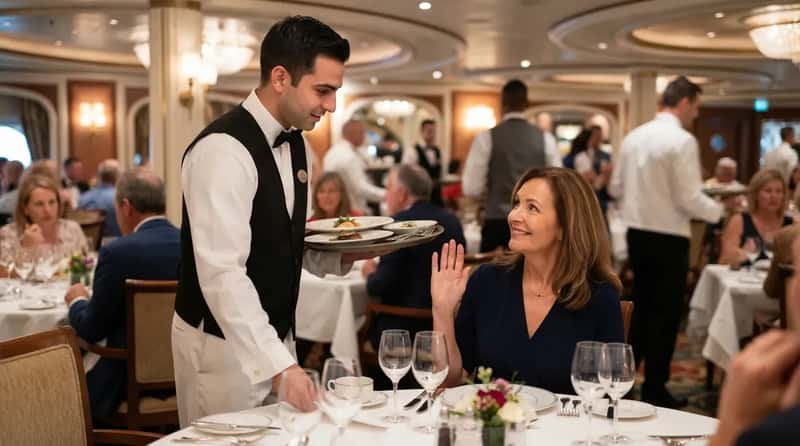
Crew members call this one a deal-breaker. A Royal Caribbean crew member who posts on social media says waiters immediately notice someone snapping their fingers to get attention. She says that kind of behavior can get a guest slower service.
Veteran cruisers say finger snapping is just the tip of the iceberg when it comes to entitled behavior. Seasoned passengers know the dining room runs on teamwork. A smile, eye contact and a patient wave are all it takes, and the server almost always notices.
Then there’s the status symbol everyone thinks is the biggest tell, and crews say it isn’t…
#7 – The Loyalty Tier on the Card Says Less Than You’d Think
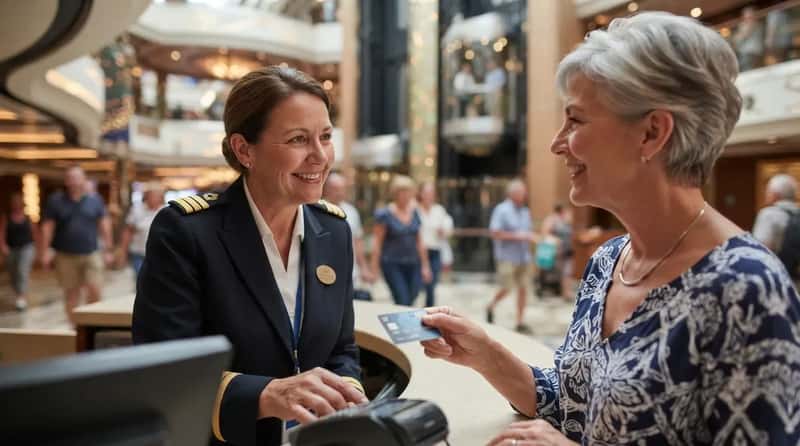
Cruise lines do make veterans easy to spot. On Royal Caribbean, a guest’s Crown & Anchor Society status is labeled on the SeaPass card, so crew can see it at a glance. Other lines run similar programs. But experienced crew say the card is only half the story.
Many argue that behavior tells them more than a tier does. Someone can reach a status level by stacking long sailings, while another veteran sails often and stays low-key. In the crew’s eyes, the person who treats everyone well wins, whatever is printed on the card.
The next habit is the one that spares veterans the day-one mess…
#6 – They Skip the Day-One Booking Scramble
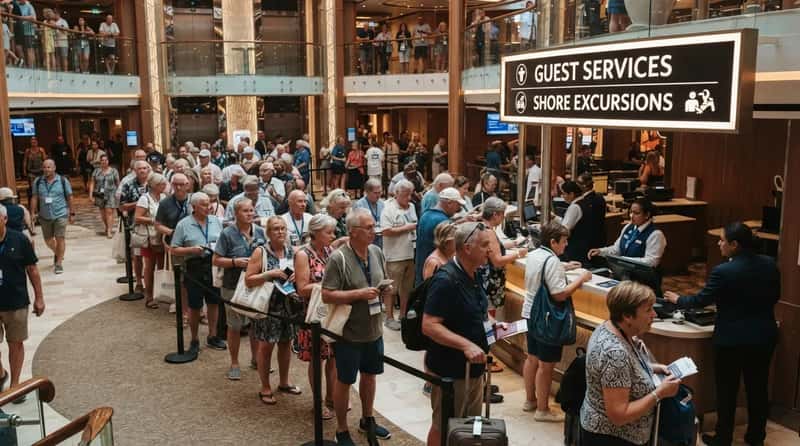
Walk past guest services on embarkation afternoon and you’ll see a line. One roundup lists refusing to panic-book everything on day one as a veteran habit. Veterans have usually planned their dinners, shows and excursions long before.
Many lines let passengers reserve specialty restaurants, shore excursions and entertainment ahead of time through a website or app. Veterans know popular slots can fill up. They’d rather sort it out from their couch than from a crowded desk, which is why crew rarely see them in that line.
With the plans done, veterans spend their first hours on something far more useful…
#5 – They Scout the Quiet Corners Before the Crowds Do

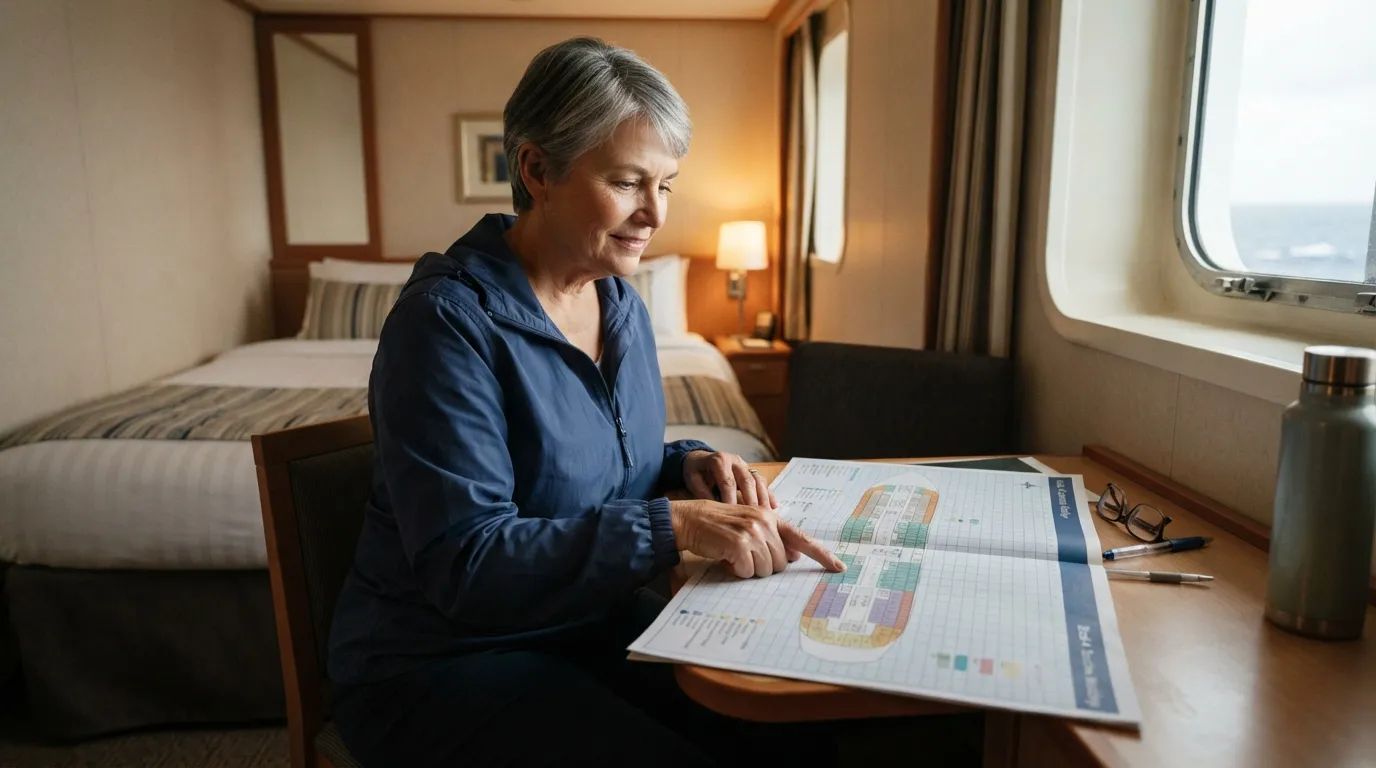
Veterans use the first hours to scout. They grab the folding deck map and walk the whole top deck, from the sports deck and walking track to the pools. It looks like a casual stroll, but it has a purpose.
They’re finding the quiet corners before the crowds do. By the first sea day, the pool deck is packed and the best loungers are gone. The veteran already knows the shady nook at the back, the lounge nobody uses and the stairwell that skips the elevator queue.
But here’s where veterans plan around something no brochure advertises…
#4 – Their Cabin Was Chosen for the Motion, Not the Photo
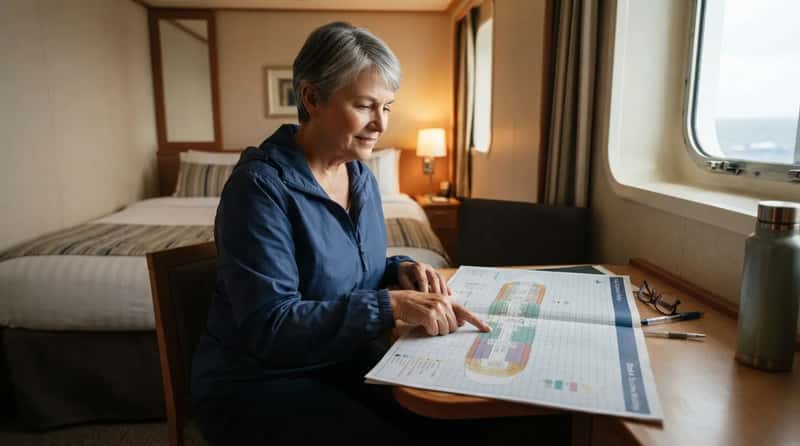
A first-timer often picks a cabin by the view. Veterans think about movement. A common piece of travel advice is that cabins low and toward the middle of the ship tend to feel less motion in rough water.
Here’s the opinion that starts arguments. Some veterans insist a balcony is the most overrated upgrade for people who spend little time in the cabin. Others won’t sail without one. Either way, crews say experienced guests choose a location on purpose rather than because it looked good in the brochure.
The next tell shows up on the last night, and it catches first-timers off guard every time…
#3 – The Final Bill Never Catches Them Off Guard
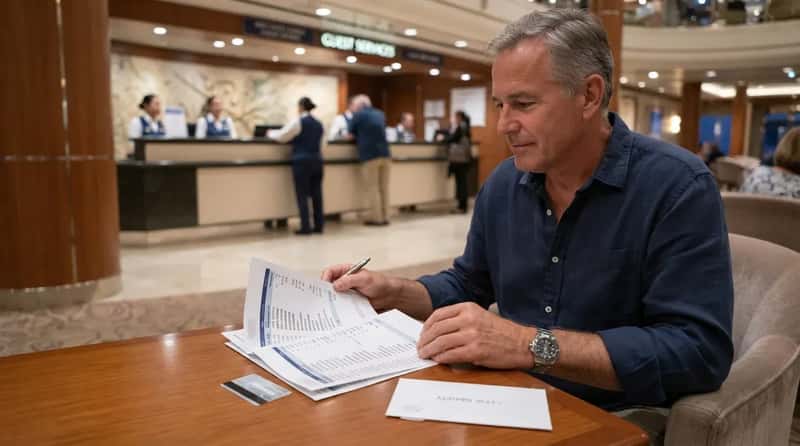
Many mainstream cruise lines add daily gratuities to the onboard account automatically. First-timers sometimes spot the charge on the last night and ask what it is. Veterans already know and have budgeted for it.
They also look over their statement before it’s final. If something is wrong, they raise it at guest services right away. Some also hand a personal thank-you to the crew who looked after them most. Whether that’s expected or optional is a debate among cruisers, and policies vary by line, so veterans read the fine print in advance.
Worth Knowing
- Royal Caribbean lists $18.50 per guest per day for standard staterooms.
- Carnival moved to $17 per guest per day after its April 2026 increase.
- Norwegian sits at $20 per guest per day for standard cabins, though some promotions include it.
- Two adults on a seven-night Royal Caribbean sailing: $18.50 x 2 x 7 = $259 before any drinks.
- Royal Caribbean also adds 18% to drinks and specialty dining. Rates change, so check your own line.
Now for the question crews hear all the time, and why it separates the pros…
#2 – They’ve Heard the “Silly Questions,” and They Don’t Ask Them
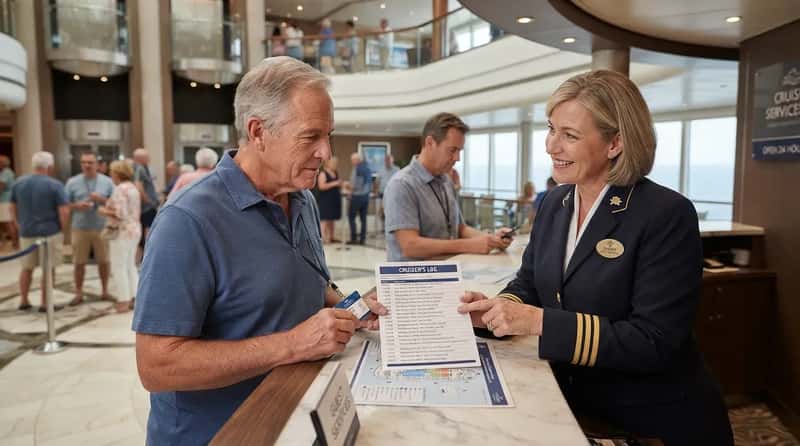
Every ship has a list of classics. Experienced cruisers have heard the same questions so many times they could recite them, like “Does the crew sleep onboard?” and “What is our elevation?” Veterans ask narrower questions, such as when a specific venue opens or where a tour meets.
It’s worth being fair. Many so-called silly questions are really logical concerns, just phrased a little clumsily. The crew doesn’t judge the curious, and veterans were beginners once. The real difference is that they’ve learned which questions the daily schedule already answers.
But that’s nothing compared to the one habit crews say matters most of all…
#1 – Their Kindness Is the Thing the Crew Remembers
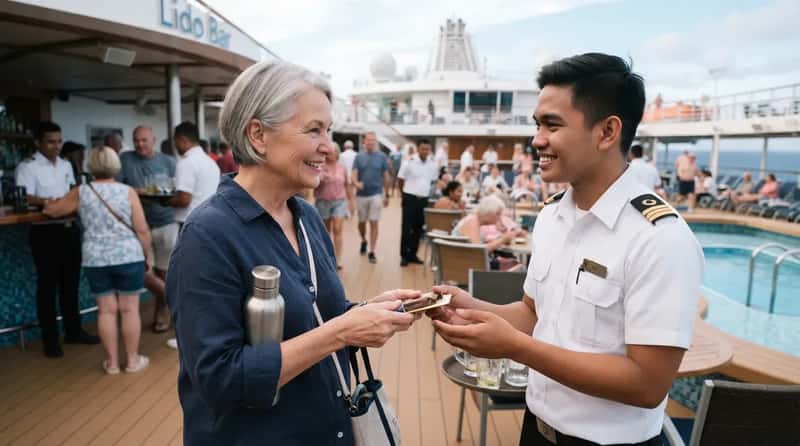
This is the one crew members keep coming back to. They remember how a passenger treated someone who couldn’t really talk back. Experienced cruisers often say kindness is remembered, and so is obnoxious behavior.
Crews stay polite even when they’re treated badly. Some passengers have noticed that crew members tend to let bad behavior slide because of concerns about guest satisfaction, which frustrates other guests. That makes the veteran’s quiet courtesy stand out even more. It’s easy to spot, and it costs nothing.
The tells crews describe aren’t really about status. They’re about calm confidence: a full water bottle, a tested cabin, a name used with a smile, a plan made weeks ago.
The loudest sign of a veteran is that they never announce it, and the crew picks up on it within minutes. Which of these gives you away on every sailing?