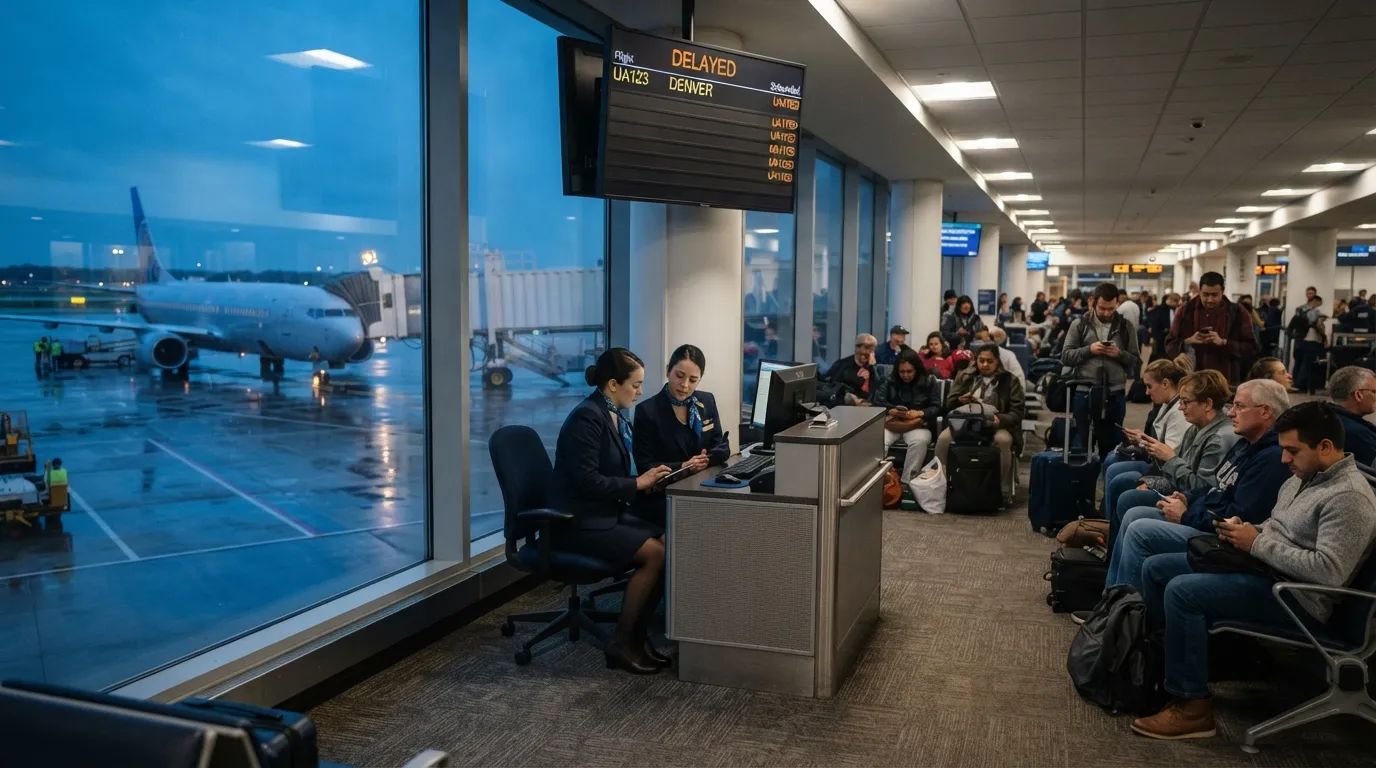
The cabin is warm, the pilot has said “shortly” three times, and a flight attendant keeps walking past with a calm smile and no real answers. It feels like the crew knows something and has decided not to share it. In a way, they do. But the reasons behind the silence are stranger, and far less sinister, than most passengers imagine.
Some topics stay off the table because the crew doesn’t control them. Others stay quiet because saying them out loud would turn a bad afternoon into a worse one. And a few involve rules and clocks most passengers never see, including one that may be ticking against the person handing you a cup of water.
#16 – Their Paycheck Clock Isn’t Always Running Either

Most people assume the crew is being paid the whole time they’re stuck at the gate. That isn’t always true. Traditionally, many US flight attendants were paid only from the moment the aircraft door closed. Some newer union contracts have added pay for boarding time, but the details differ by airline.
So a long gate hold can be unpaid time for the person refilling your water. You’ll never hear that on the PA. Payroll isn’t the passenger’s problem, and bringing it up wouldn’t help anyone’s mood.
But the clock that really limits them is a different one, and it’s next.
#15 – The Legal Limit on Their Workday Is Quietly Ticking
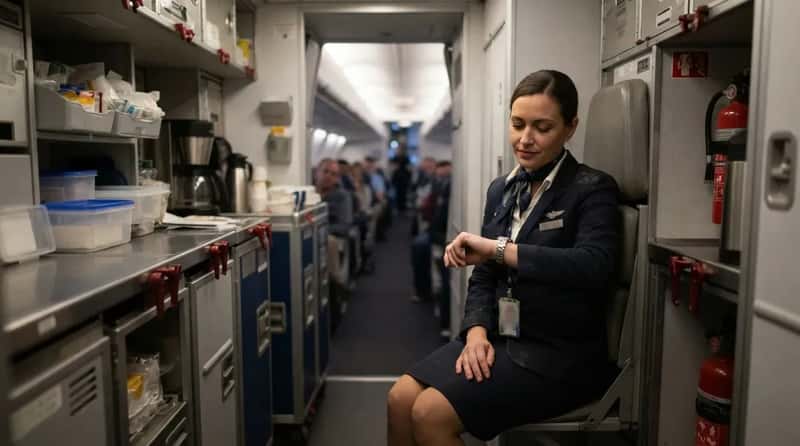
A delay doesn’t just stretch your day. It eats into theirs. Federal rules cap how long flight attendants can be on duty and require rest between duty periods. A plane can be fully fixed and fueled and still be unable to leave because the crew has run out of legal hours.
Industry people call this “timing out.” Crews rarely announce it, partly because a replacement crew may still be on the way. Some frequent flyers say airlines should just say so. Others argue that the announcement could sound like a cancellation before one has actually been decided.
Fast Facts
- A flight attendant’s duty period runs from reporting for work to being released, not just the minutes the wheels are turning.
- For a scheduled duty day of 14 hours or less, the FAA requires at least 10 consecutive hours of rest afterward.
- That rest minimum used to be 9 hours. Airlines had to comply with the 10-hour rule starting January 10, 2023.
- The rest period can’t be shortened, which is why a late-night delay can end with a crew that simply has to stop.
And that raises a question crews almost never answer: whose fault is this delay?
#14 – Whose Fault the Delay Is, and Why It Quietly Matters

Ask a crew member who caused the delay and you’ll usually get a shrug. Often they honestly don’t know. The cause matters, though. Many major airlines promise a meal after a three-hour wait, and a hotel and ground transport for an overnight delay, when the cause was within the airline’s control.
That gives everyone a reason to keep the explanation vague. Plenty of travelers suspect “weather” gets used as a catch-all, and a crew member standing in the aisle is the last person who can settle that argument.
Then there’s the money question nobody volunteers.
#13 – The Refund Right They Won’t Mention

Crews are busy keeping the cabin calm. They’re not going to start a conversation about refunds. Yet under US rules that took effect in 2024, airlines must automatically refund passengers on significantly delayed or canceled flights who choose not to travel. “Significant” means 3 hours or more on domestic flights and 6 hours or more on international ones.
There’s a catch. The refund applies when you decline the alternative the airline offers. If you accept the delayed flight or a rebooking, you’re generally not entitled to your money back. Most people don’t realize that choice is theirs to make.
The next rule is the one that really does force a crew’s hand.
#12 – The Tarmac Rule They Hope You Never Need
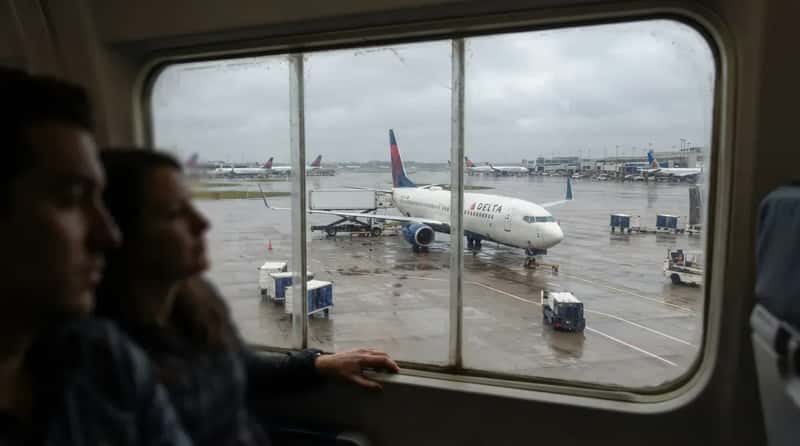
There’s a hard limit on how long you can be stuck on a plane on the ground. On a domestic flight, the airline has to give you the chance to get off before the delay passes three hours. On an international flight the limit is four hours. Exceptions exist for safety, security, or air traffic control reasons.
Along the way, food and water are due within two hours, lavatories have to work, medical help has to be available, and you’re owed status updates every 30 minutes. Crews rarely recite these numbers. Violations can bring heavy federal fines, which is one reason airlines tend to move before the clock runs out.
Still, there’s one thing many passengers assume the law gives them, and it doesn’t.
#11 – The Cash Compensation Most Passengers Assume They’re Owed
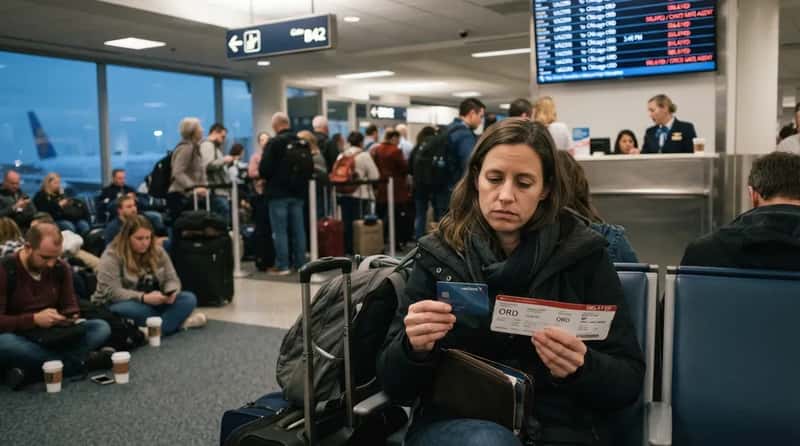
Plenty of travelers believe a three-hour delay means a check in the mail. In the US, that’s a myth. US airlines are not required to compensate passengers for delays or cancellations. Refunds are a separate matter.
Crews steer clear of the subject because it’s a legal and customer-service question, not a cabin question. Flights covered by EU or UK rules are the exception, which means Americans flying to Europe may get a very different answer than Americans flying to Chicago.
What crews can’t do for you may be an even bigger letdown.
#10 – They Usually Can’t Rebook You, and They Won’t Say So

You ask the flight attendant about your connection. They look sympathetic and say they’ll “see what they can find out.” Most people don’t realize flight attendants generally have no power to rebook anyone. That job belongs to gate agents, airline apps, and reservation lines.
The crew isn’t being cold. They’re just being careful about their role, even if it doesn’t sound that way. Savvy travelers don’t wait for an answer from the aisle. They open the airline app or call while still in their seat, because the line grows the moment the plane reaches the gate.
Quick Compare
- Flight attendant: cabin safety, comfort, and passing along whatever the cockpit shares.
- Airline app: the fastest do-it-yourself rebooking, often before the door even opens.
- Reservation line: a solid backup when the gate line is already out the door.
- Gate agent: in-person fixes, including vouchers and tricky connections.
The crew’s silence often has a much simpler explanation.
#9 – Sometimes “We’re Waiting for an Update” Is the Whole Truth

It sounds like a stall tactic. Often it’s literal. Information typically flows from the cockpit, dispatchers, and operations staff to the cabin. The person serving your drink may know no more than you do.
Many frequent flyers consider “we’ll update you soon” the least helpful sentence in aviation, and they have a point. A plain “we don’t know yet” would often land better than vague optimism. But crews usually aren’t supposed to guess, so they say little instead.
Then there’s the topic crews dodge harder than any other.
#8 – What’s Really Wrong With the Plane
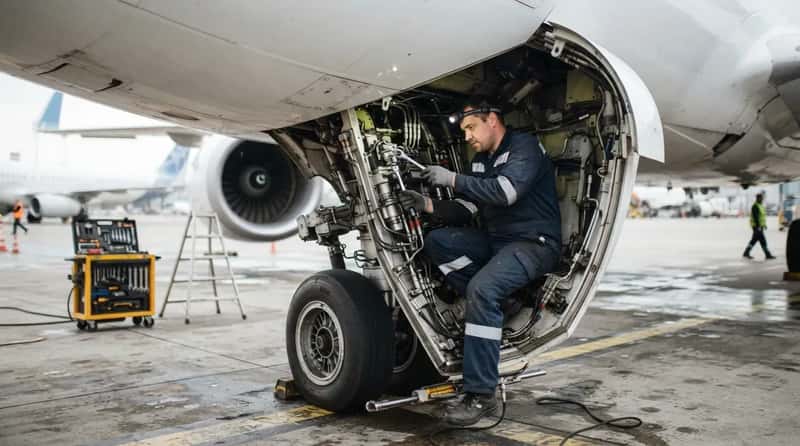
“Maintenance issue” is about as detailed as you’ll get. Crews are careful here, and with good reason. A guess about an aircraft problem can alarm a full cabin, and the guess may be wrong. Even a small fix can take a long time.
It can involve parts, paperwork, and a mechanic’s sign-off before the pilots will accept the aircraft. That’s how a delay jumps from 20 minutes to two hours. Some passengers want specifics, but a crew that says nothing usually beats one that speculates and gets it wrong.
What happens when the delay drags on lands right in your wallet.
#7 – The Meal and Hotel Perks They Won’t Hand Out
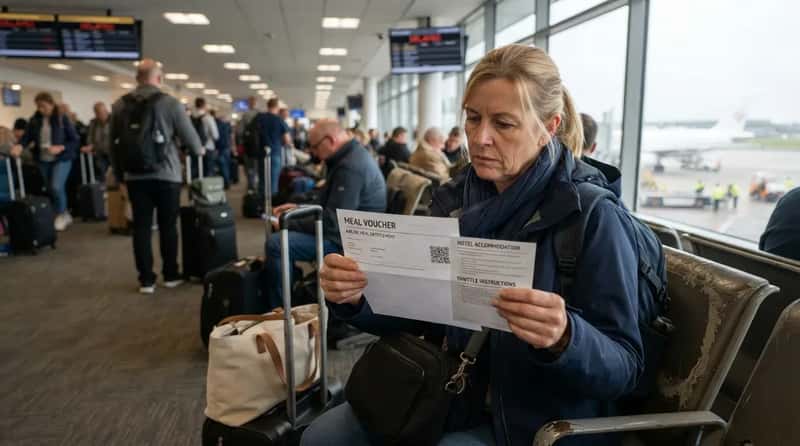
Crews usually don’t carry vouchers, and they don’t decide who gets what. You may be entitled to meals or other help if the delay was in the airline’s control and long enough to count. The actual paperwork happens at the gate or with customer service.
Most passengers assume they have to be stuck all night to qualify. At many major airlines, the meal commitment for controllable delays kicks in at about three hours. Your best move is to ask the right department, in writing if you can.
Meanwhile, there’s personal fallout the crew keeps to themselves.
#6 – Their Own Trip Home Might Be Falling Apart Too

Your delay is a headache. For the crew, it can be a chain reaction. Many flight attendants commute to their base by air, sometimes flying standby. A long delay can leave them missing their own flight home or starting their next trip late.
Their next flight may also depend on this one arriving. A late landing can cut into rest or push a scheduled trip into trouble. You’ll rarely hear about it, because the cabin isn’t the place for it. The smile you see may be covering a lot.
Sometimes the real strain comes from the passengers.
#5 – How Quickly a Delay Can Turn Passengers Hostile

Crews are trained to handle tension, and they almost never discuss how close a long delay can get to a flashpoint. The FAA recorded a record 5,973 unruly passenger reports in 2021, and delays are a classic trigger. Numbers have fallen since, but crews still manage the temperature of the cabin every day.
They won’t point out who’s being difficult. They’ll quietly move someone, offer water, or call for help without any announcement. The best thing anyone can do is stay calm and keep questions short. Polite gets you further than loud.
Then there’s the problem you can feel on your skin.
#4 – How Little Food and Water Is Actually on Board
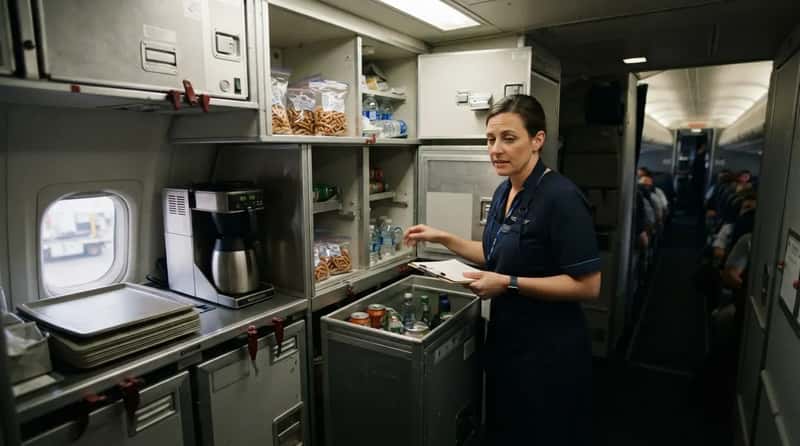
A galley is stocked for the flight you booked. It isn’t stocked for a three-hour wait at the gate. Supplies loaded for a short hop can run thin in a hurry. That’s why crews sometimes ration, and why they don’t announce the inventory.
The rules still set a floor. After two hours on the tarmac, airlines must provide food, water, and working lavatories. If nothing appears, ask. Something specific like “Could I get water and a snack?” tends to work better than a vague complaint.
And there’s an exit option crews rarely explain.
#3 – Why Getting Off the Plane Isn’t as Simple as It Sounds
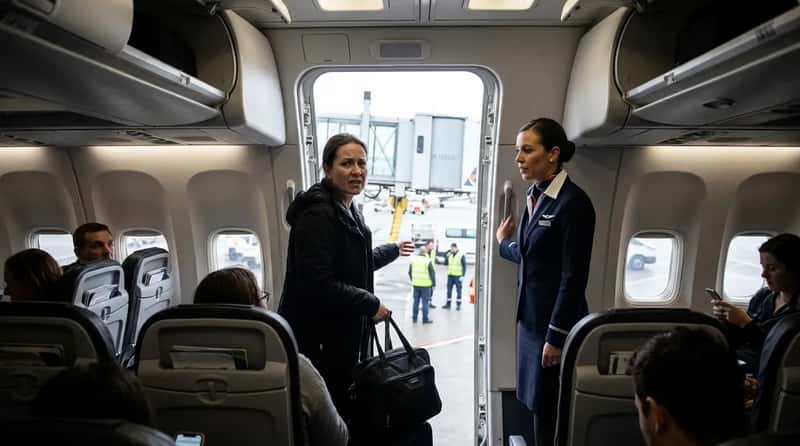
Yes, you may have the right to get off. On domestic flights, airlines must offer the chance before a tarmac delay hits three hours. But crews almost never explain the tradeoffs. Walking off can mean losing your place in line for takeoff.
A gate has to be available, and the plane may need to return to it. Once you leave, you may not be able to re-board, and your checked bag may still be on the plane. Crews skip all this because the answer depends on the airport and the airline. Know the trade before you ask.
Worth Knowing
- The offer to deplane has exceptions for safety, security, and air traffic control reasons.
- Getting off usually needs an open gate or a way to bring stairs or a jet bridge to the plane.
- Leaving the aircraft can mean giving up your seat if the plane gets cleared to go.
- A smart question to ask: “If I get off, what happens to my seat and my bag?”
One subject, though, crews are almost forbidden to touch.
#2 – What They Really Think of the Airline Running the Show

Flight attendants are professionals, and most airlines have strict expectations about public comments on the company. That’s why even a friendly crew member won’t blame management for a bad day. They stay neutral, even when the cause is plainly the airline’s.
Some passengers wish crews would be more honest. Others see the neutrality as part of the job. Either way, you’ll almost never hear criticism of the airline from the person in uniform. The few who speak candidly tend to do it off the clock.
But nothing tops the word they hold back until the last second.
#1 – The Word “Canceled” Doesn’t Come Until It’s Official
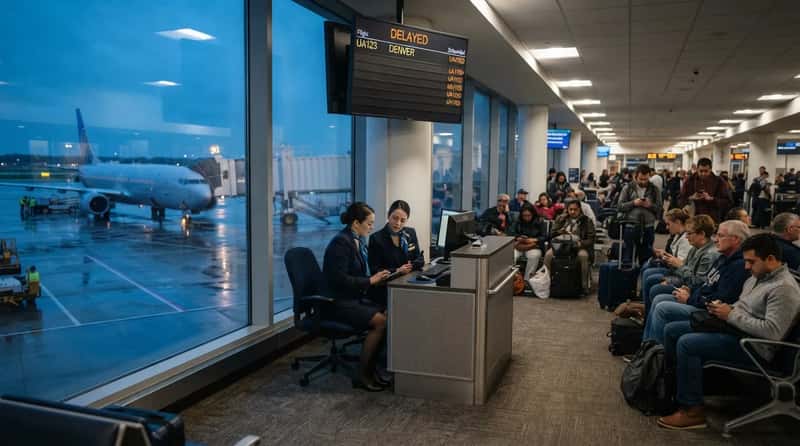
Every crew member knows a long delay can end in a cancellation. They won’t say so until the airline decides. Floating the word early would spark a stampede to the gate. That’s why a delay can roll forward in 30-minute chunks for hours.
When the word does come, the rules matter. A cancellation gives you a right to a refund if you decline the alternative, and weather doesn’t change that. Most people don’t realize it. A storm can ground your plane, but it can’t cancel your right to your money.
That’s the real reason the cabin goes quiet. It isn’t a cover-up. It’s limited information, legal limits, company rules, and a crew with its own clock running out.
The surprising part is how much of your power sits outside the aircraft. Refunds, food, water, and a way off the plane are yours in specific situations, and the person in the aisle isn’t the one who can deliver them. Next time the cabin goes quiet, you’ll know who to ask, and what the silence actually means.