Most passengers assume the safety work happens after the seatbelt sign switches off, handled quietly by someone in the cockpit. They’re only half right – and the missing half is far more dramatic than most flyers realize.
Before a single passenger crosses the jet bridge, a small army of trained eyes has already swept every inch of that aircraft, catching problems that could ground a flight, save a life, or prevent a catastrophe mid-ocean. Here’s what aviation insiders actually find – and what they’re quietly checking while you’re still waiting at the gate.
#16 – The Full Walk-Around Before Anyone Else Arrives
Ground crew don’t wait for the pilots. A pre-flight inspection typically begins with a full “once over” of the entire aircraft, actively looking for visible problems such as flat or damaged tires, bent or damaged wings, fuselage issues, or damaged gear struts.
This first pass is deliberately broad – it’s about spotting anything obviously wrong before the detailed checks begin.
What most passengers don’t realize is that this sweep happens on a tight clock. A methodical walk-around catches mechanical issues on the ground – where they’re an inconvenience, not an emergency.
Miss something here and it doesn’t get a second chance.
But the walk-around is just the starting gun. The real scrutiny begins zone by zone – and the first detailed target is something most flyers never think about.
#15 – Tires and Landing Gear Under the Microscope
Landing gear struts, tires, brakes, and wheel wells are inspected for wear, cracks, leaks, and proper inflation. A tire that looks fine from a distance can hide internal structural damage that only shows under close inspection.
Ground crew also physically roll the plane slightly to check all sides of each tire. Tires are checked for wear and flats by rolling the plane forward and backward, and oleo struts are checked for proper inflation.
An underinflated strut absorbs landing energy differently – and that difference matters.
The landing gear is responsible for supporting the full weight of the aircraft during takeoff, landing, and ground operations – which means every imperfection counts. And once the gear is cleared, eyes move upward to where the real structural secrets hide.
#14 – The Fuselage Skin: Dents, Rivets, and Hidden Stress
The fuselage looks like a solid tube from the terminal window. Up close, it’s a different story.
Inspectors check the fuselage for dents, cracks, corrosion, and loose rivets. A popped rivet or a small buckle in the skin can signal serious underlying stress on the airframe.
Even a small area of skin buckling is enough to ground a flight immediately. The fuselage, hull, tail, empennage, and wings are checked for structural damage, deterioration, corrosion, leaks, and signs of stress.
Nothing on the exterior gets a pass.
Doors and windows are also inspected for proper sealing and operation. A door seal that isn’t fully seated is a pressurization problem waiting to happen at altitude.
Speaking of doors – what ground crew check around them might genuinely surprise you.
#13 – Access Panels and Service Doors: Every Latch, Every Lock
Cargo and servicing access doors are among the first areas examined, along with any evidence of leaks of hydraulic fluid, fuel, oil, or water/waste. These panels are opened and closed dozens of times between flights.
Every single one must be properly latched before pushback.
Inspectors also look for missing service doors, access panels, or static wicks. A missing static wick – those small pointed rods on wing trailing edges – can cause dangerous static electricity buildup in flight.
The consequences of a missed access panel aren’t abstract – they’re documented in accident records. Unsecured panels have caused pressurization failures and in-flight emergencies.
The next check item is something that causes far more crashes than people want to admit.
#12 – Pitot Tube Covers: The “Remove Before Flight” Tag That Saves Lives
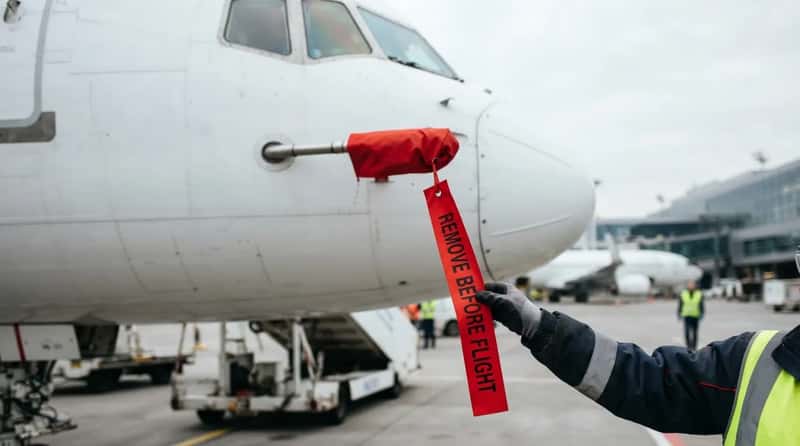
Pitot tube covers block insects, dirt, moisture, and other foreign objects from entering the pitot tube opening and obstructing the pressure sensors. These are the sensors that tell the pilots how fast the plane is going – get them wrong and the crew is flying essentially blind on airspeed.
Forgetting to remove a pitot cover has directly caused fatal crashes. Non-removal of labelled “remove before flight” parts has caused airplane crashes, including Aeroperu Flight 603.
In that disaster, taped-over static ports gave the crew completely false instrument readings.
Fast Facts
- Aeroperu Flight 603 crashed on October 2, 1996, killing all 70 people aboard the Boeing 757.
- Masking tape applied over the static ports during a pre-flight cleaning was never removed before departure.
- Flying at night over open ocean with no visual horizon, the crew had no reliable backup to cross-check the false readings.
- The accident led investigators to push for brightly colored, flagged covers that are far harder to miss during inspection.
A blocked pitot tube that goes undetected before departure can put the crew in the position of managing an in-flight emergency rather than a simple preflight discrepancy. The bright red “remove before flight” tag is not decorative.
Next up: what ground crew smell and feel around the engines – before they ever look inside.
#11 – Engine Nacelles and Cowlings: The Sniff Test Is Real
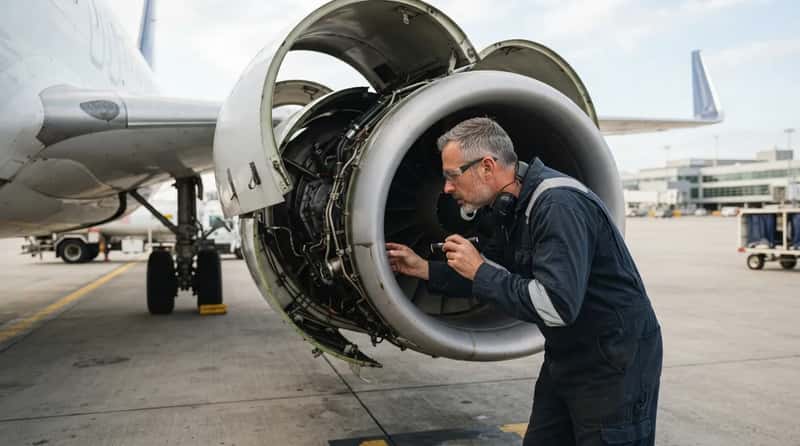
The engine cowling is checked for secure latches, cracks, or damage, while the exhaust system is examined for cracks, leaks, or loose connections. An experienced mechanic will literally lean in and use their nose – the smell of burning fuel or oil that shouldn’t be there is one of the earliest warning signs available.
The engine and propulsion system are inspected for leaks, damage, or abnormal wear. A small streak of dark oil below a cowling panel isn’t always trivial – it can indicate a seal failure that will worsen rapidly under takeoff power.
What’s inside the engine inlet is arguably the most dangerous thing ground crew check. And the reason why is something almost no passenger has ever thought about.
#10 – Engine Fan Blades and Bird Strike Evidence
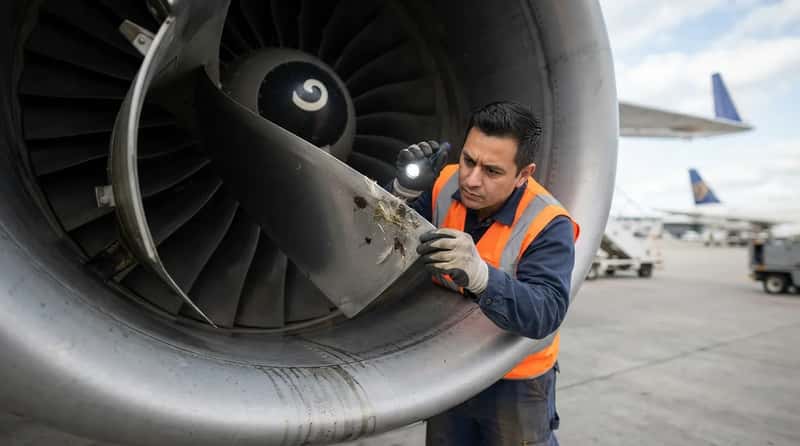
Ground crew check for foreign object debris, bird strikes, or visible damage to fan blades. A single bird ingested at high speed can bend or crack turbine blades, causing an imbalance that shakes the entire engine apart over time.
The leading fan blades of a jet engine spin at thousands of RPM – even a tiny nick changes their aerodynamics. Inspectors visually check turbine blades for nicks and damage, and look for fluid leaks including oil, hydraulic fluid, and fuel, as well as cracks in the engine casing.
During post-flight checks, differences noted can include blood from wildlife strikes – a telltale sign that requires a full engine inspection before the aircraft goes anywhere. The next item moves to the wings, where there’s a check that most people would never guess exists.
#9 – Wing Leading Edges and Fuel Vents
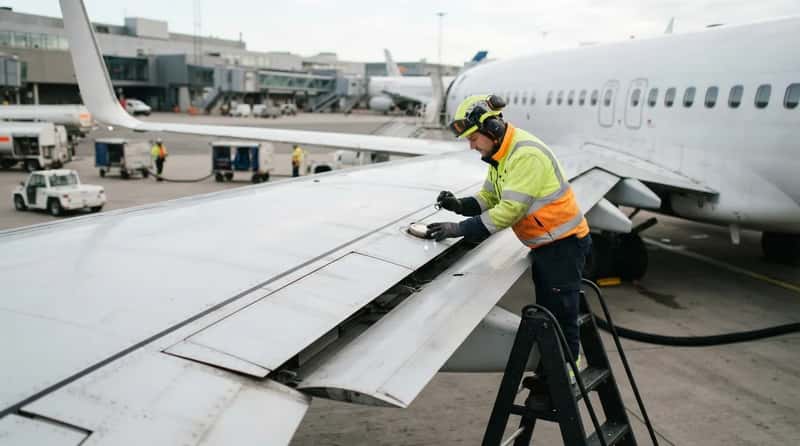
The leading and trailing edges of wings, wingtips, and control surfaces – including ailerons, flaps, elevators, and rudder – are examined for damage, deformation, or excessive play. Wing leading edges take the brunt of hail, rain, bird strikes, and ground equipment impacts.
The fuel system is also checked by comparing fuel quantity to cockpit gauges, checking for the correct fuel grade, looking for debris, and ensuring fuel vents aren’t obstructed. A blocked fuel vent can create a vacuum that stops fuel from flowing to the engines entirely – with catastrophic results.
Inspectors also verify the integrity of fuel caps and drain any water or contaminants from fuel tanks. Water in the fuel doesn’t just dilute it – at altitude, it freezes and blocks fuel lines.
Wait until you see what ground crew actually do to check the control surfaces.
#8 – Control Surface Movement: Does the Rudder Actually Work?
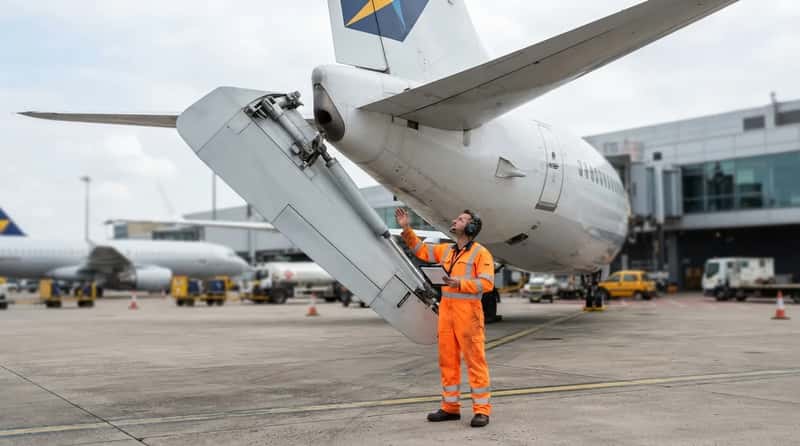
This one is hands-on in a way most people don’t expect. Rigged controls are tested for free movement with no chafing – and the control lock must not be forgotten before this test.
A control lock left in place means the pilots have zero ability to steer the aircraft once airborne.
Control surfaces – ailerons, elevators, and rudder – must demonstrate full movement during final checks. Ground crew physically watch the surfaces move as part of their confirmation.
A control surface with “excessive play” can detach partially under aerodynamic loads at speed.
Control hinge fasteners are individually checked to ensure they are secure. It’s methodical, physical, and non-negotiable.
The next check involves something invisible – and that’s exactly what makes it so dangerous.
#7 – Hydraulic Fluid Leaks Around the Wheel Wells
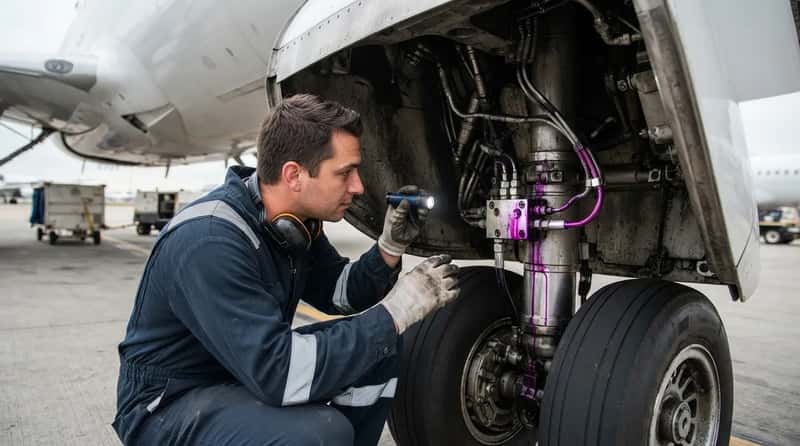
Inspectors check for signs of wear or hydraulic fluid leaks around the wheel wells and undercarriage. Hydraulic fluid is what powers the brakes, landing gear retraction, and flight control surfaces on most commercial aircraft – lose enough of it and multiple systems fail simultaneously.
The tricky part: a small hydraulic leak leaves a stain that can look like normal grime to an untrained eye. An experienced ground crew member knows exactly what a fresh hydraulic fluid drip looks like – and it’s bright purple or bright red, not brown.
Worth Knowing
- Aviation hydraulic fluid is intentionally dyed bright purple or red so a fresh leak stands out instantly against oil, grease, and runway grime.
- Most commercial jets run on two or three independent hydraulic systems, built so a single failure doesn’t wipe out brakes, gear, and flight controls at once.
- Redundancy is a safety net, not a shortcut – ground crew still trace every leak to its source before the aircraft is cleared.
Evidence of leaks of hydraulic fluid, fuel, oil, or water/waste is one of the primary targets during the exterior walk-around. Finding a leak on the ground is a minor delay.
Discovering it at 35,000 feet is an emergency. What comes next is a check ground crew do that passengers often mistake for routine baggage work.
#6 – Cargo Door Seals and Belly Compartment Integrity
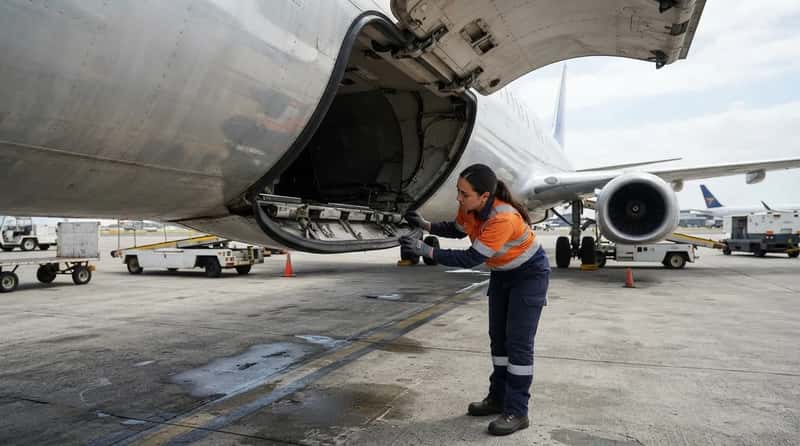
The cargo hold sits directly beneath passengers’ feet, and its doors are among the most mechanically stressed components on the aircraft. Vent obstructions and missing placards are specifically checked alongside structural anomalies.
A cargo door that isn’t properly sealed doesn’t just mean luggage shifts – it means the pressurization of the entire cabin can be compromised.
The condition and functionality of seats, seat belts, and emergency exits are also verified as part of the ground inspection process. Ground crew cross-check the cargo compartment from the outside, looking for any gap in the door seal that shouldn’t be there.
Cargo door failures have been the direct cause of multiple hull-loss accidents in aviation history. This makes the belly check one of the most consequential stops on the walk-around.
And what ground crew find on the tail section is something most frequent flyers have never noticed exists.
#5 – Static Wicks and the Tail Section
Leading edges, surfaces, fuel tank areas, lights, and static dischargers are all part of the wing and tail check. Those thin, pointed rods mounted to wing and tail trailing edges are static dischargers – they bleed off built-up electrical charge that otherwise creates radio interference and, in rare cases, ignition risk.
Most airlines have over a dozen static wicks per aircraft, and a missing one triggers an inspection requirement before the next flight. Missing static wicks are explicitly listed as a red flag during the exterior walk-around.
The tail section also contains the APU – the Auxiliary Power Unit – which ground crew check for proper shutdown and no signs of overheating or leakage. Drains, engines, and the APU are all included in the walk-around inspection sequence.
Now things get into territory that’s practically invisible unless you know exactly where to look.
#4 – FOD on the Ramp: The Silent Engine Killer
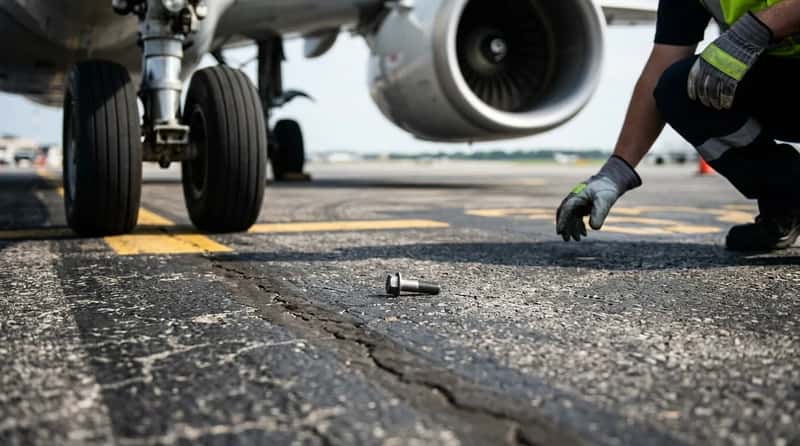
One of the most important items in any preflight check is searching for FOD – foreign object debris such as nuts, bolts, and rivets – that may be on the runway, under tires, or in areas located near the aircraft. A single bolt sucked into a running engine can destroy it within seconds.
FOD is responsible for roughly $4 billion in damage to military and commercial aircraft globally each year. Once found, FOD must be safely and completely removed – because this debris can cause major damage to aircraft and personnel when projected off the ground or into engines.
At a Glance
- FOD costs the global aviation industry an estimated $4 billion every year in repairs, delays, and grounded aircraft.
- A single ingested bolt, rock, or bird can destroy an engine that costs millions of dollars to replace.
- “FOD walks” – staff walking the ramp shoulder-to-shoulder scanning the pavement – remain one of the most effective prevention methods used today.
Ground crew sweep the immediate ramp area around the aircraft, not just the aircraft itself. FOD walks and securing personal items are standard protocols before any aircraft departure.
The next check is one that happens specifically after a plane has been sitting overnight – and what they find in those cases would genuinely disturb you.
#3 – Overnight Parking: Nests, Ice, and Contamination
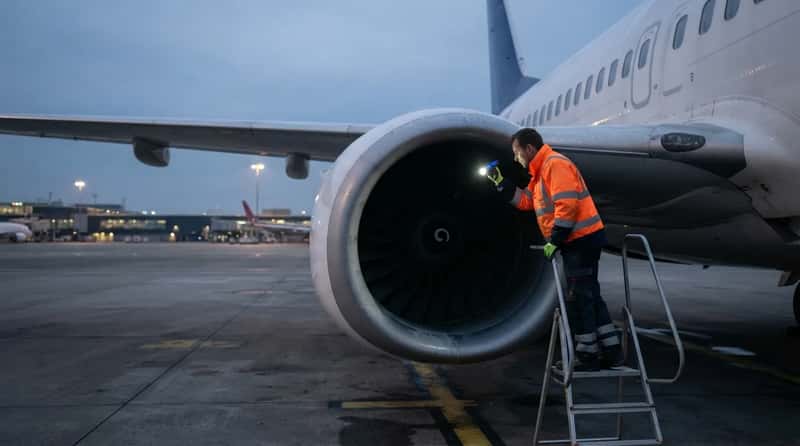
A plane that sat outside overnight is a very different animal from one that just turned around from a short hop. Inspectors specifically ensure foreign objects such as bird nests are not lodged inside the aircraft, especially if it has not flown recently – particularly if it was parked outside.
Birds have nested inside engine intakes in as little as a few hours.
After operating through wildfire smoke, ash, dust, blowing sand, or other contaminated air, inspectors note the exposure and look for visible deposits, with further inspection by maintenance personnel required. Ice or frost on wings isn’t just unpleasant – it fundamentally changes the aerodynamics and can prevent the plane from reaching rotation speed on takeoff.
Overnight checks are substantially longer and more detailed than transit checks. The differences found can be the difference between a delayed departure and a catastrophic one.
The next check is one that reveals a hidden truth about how close every flight comes to being cancelled before you even know.
#2 – Oil Levels and Fluid Systems: The Numbers That Ground Flights
During inspections, maintenance personnel perform a visual inspection of the aircraft’s exterior looking for fluid leaks or loose components, and also check engine oil levels, tire condition, and brake systems. Oil levels are checked against specific minimum thresholds – not “roughly full” but exact measurements.
An engine that departs with marginal oil may not fail immediately – but under the heat and stress of climb, it will. The engine check includes verifying oil levels and ensuring air intakes are free of debris, and the exhaust pipe is checked to ensure it’s free of oil and black buildup.
Any discrepancies or findings during inspection are documented and addressed before the aircraft is cleared for the next flight. Ground crew don’t just look – they sign off.
Their name is on the record if something is missed. Which brings us to the single most important thing ground crew check, and the one that most passengers have never once considered.
#1 – The Logbook and Maintenance Records: The Paper Trail That Grounds Planes
Everything the ground crew finds – every check, every discrepancy, every “squawk” – feeds into one critical document: the aircraft’s maintenance logbook. Any discrepancies are detailed and provided to the appropriate maintenance personnel for them to address before departure.
If a fault is logged and not signed off, the aircraft legally cannot fly.
A pre-flight checklist can also be used for documentation purposes to show trends and common issues. A pattern of repeated minor squawks on the same system is often the early warning sign of a major failure – and experienced maintenance crews are trained to read that pattern before it becomes a headline.
Any discrepancies or findings during the daily inspection are documented and addressed before the aircraft is cleared for the next flight. The physical checks are thorough.
But it’s this paper trail – the accumulated record of every finding, every repair, every sign-off – that is the true last line of defense before you board.
The walk-around finds problems. The logbook decides whether the plane flies at all.
The Bottom Line
Ground crew quietly stand between passengers and a staggering number of potential failures before every departure. From visible fuselage cracks and fluid leaks to invisible hazards like blocked pitot tubes and FOD scattered across the ramp, nothing gets a free pass.
The most critical truth is this: the checks are only as good as the people doing them. Even on the thousandth flight, every inspection has to be treated like the first, because the smallest oversight can carry the biggest consequences.
Next time you’re waiting to board, glance out the window. The people in the high-vis vests aren’t just loading bags – they’re the last line of defense before thirty tons of metal leaves the ground.