You’d think that after 40 or 50 years of paying bills, most people over 60 would have their finances dialed in. Instead, financial counselors who specialize in retirement-age clients see the opposite almost every week: the longer someone has had a charge on their statement, the less likely they are to ever question it. Habits quietly turn into bills, and bills quietly turn invisible.
The same handful of charges show up again and again in these reviews, some costing a few dollars a month and others draining thousands a year, for protection that either duplicates something else or was never going to pay out in the first place. Here’s what actually gets flagged first, and why so many people never notice until someone points it out.
#16 – The Extended Car Warranty Sold in the Finance Office

Almost everyone over 60 who’s bought a new car has sat in that finance office chair and heard the pitch about “protecting your investment.” Extended warranties are one of the most misunderstood corners of the car-buying process, and dealerships know exactly who’s least likely to push back or walk away from the desk.
The markup on these contracts can run 30% to 70% or more, so a $2,500 warranty can hand the dealership over $1,000 in pure profit before a single repair is ever covered. The same coverage bought separately from a third-party provider usually costs a fraction of that. Still, that markup is nothing compared to what shows up in the very next section.
#15 – The Home Warranty Quietly Duplicating Insurance You Already Bought

Homeowners who’ve lived in the same place for decades tend to renew their home warranty on autopilot, year after year, without ever checking what their homeowners insurance policy already covers. The overlap between the two is bigger, and more expensive, than most people realize.
Home warranties are marketed as a shield for aging appliances and systems, but the fine print is packed with wear-and-tear exclusions that get claims denied anyway. The real shocker is how many retirees are paying for both a warranty and an insurance rider covering the exact same water heater or HVAC unit, effectively paying twice for one broken appliance. That’s a quiet leak in the budget, but the next one on this list rings out loud, every single day.
#14 – The Landline Nobody Else in the House Even Dials

Landlines have become something of a generational badge of honor, and that loyalty is costing real money every month. Older households remain far more likely than any other age group to keep a home phone line running, long after everyone who might call has already saved a cell number instead.
Paying $30 to $50 a month for a line that mostly rings with scam calls and telemarketers adds up fast, especially when most bundled internet plans already throw in a phone line for free. That means plenty of seniors are paying twice for a dial tone they rarely even pick up. But that’s nothing compared to what turned up in the next section.
#13 – The Credit Monitoring Subscription That Does Less Than a Free Freeze

Identity protection commercials love to scare older adults into a monthly subscription, but the single strongest defense against fraud has always been completely free. A credit freeze locks new accounts out entirely, and once it’s in place, nobody can open a card or a loan in your name until you lift it yourself.
Meanwhile, paid credit monitoring plans can run up to $350 a year for individuals and $300 to $600 for families, watching for problems instead of blocking them outright. Many people already qualify for equivalent protection through AAA, AARP, their bank, or a past data-breach settlement, which makes the paid subscription pure redundancy sitting on the statement.
#12 – The Brand-Name Pills Costing Four Times More for the Same Ingredient

Nothing on this list drains retirement income more quietly, month after month, than refusing to swap a prescription label. Generic drugs share the same active ingredients as their brand-name counterparts, yet routinely cost 80% or more less at the register.
Switching from brand-name Lipitor at roughly $350 a month to generic atorvastatin at a warehouse pharmacy can put thousands of dollars back in someone’s pocket over a single year. The hardest part to shake is the belief that the brand version simply “works better,” a belief pharmacists say is almost never backed by anything beyond decades of marketing. But that’s nothing compared to what showed up next.
Fast Facts
- An estimated 91% of all prescriptions in the United States are filled as generic drugs, so odds are good a cheaper version already exists on the shelf.
- Ninety-three percent of generic drugs have copays under $20, with an average copay of $6.16 compared to $56.12 for brand-name equivalents.
- Generic and biosimilar drugs saved the U.S. health care system $373 billion in 2021 alone.
- A five-minute conversation with a pharmacist is often the only step standing between a retiree and hundreds of dollars a year.
#11 – The Print Subscription Piling Up Unread on the Porch

Print newspaper and magazine subscriptions are one of the last true “set it and forget it” charges left on a retiree’s credit card. Many were started years or even decades ago, quietly auto-renewing at a rate that creeps up a little more with every cycle.
The frustrating part is that most of these same publications now include a digital version, sometimes bundled in free with the print price, that never gets activated because nobody ever set up the online login. A stack of unread papers on the porch is often the first visible clue that a subscription has outlived its purpose by years.
#10 – The “Overdraft Protection” That’s Really a Toll Booth
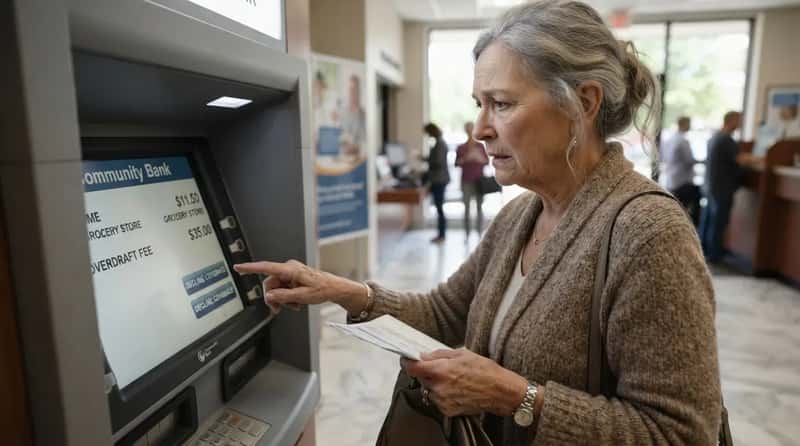
Banks like to frame overdraft coverage as a safety net, but for retirees living on a fixed monthly check, it functions more like a toll booth than a favor. Every time a small purchase dips an account below zero, the bank quietly covers it, then charges a flat fee that can dwarf the original transaction several times over.
Plenty of older customers never realize they can opt out of this “courtesy” coverage entirely and simply have the card declined instead, at zero cost to them. Some households only discover after years of small fees stacking up that switching to a fee-free checking account would have saved hundreds. But that’s nothing compared to what came up next.
#9 – The Extra Data Plan for a Phone That Never Leaves the Kitchen Counter

Wireless carriers routinely upsell unlimited premium data to customers whose actual usage barely leaves the living room Wi-Fi. Plenty of people over 60 pay for a full 5G unlimited tier while their phone sits on the counter connected to home internet for most of the day and night.
The easiest fix hiding in plain sight is downgrading to a basic data tier, since most carriers now quietly offer senior-specific plans with the same calls and texts for a fraction of the cost. Few customers ever call to ask, so the higher bill just keeps rolling over month after month, unchallenged.
#8 – The Roadside Assistance Membership Paid for Twice
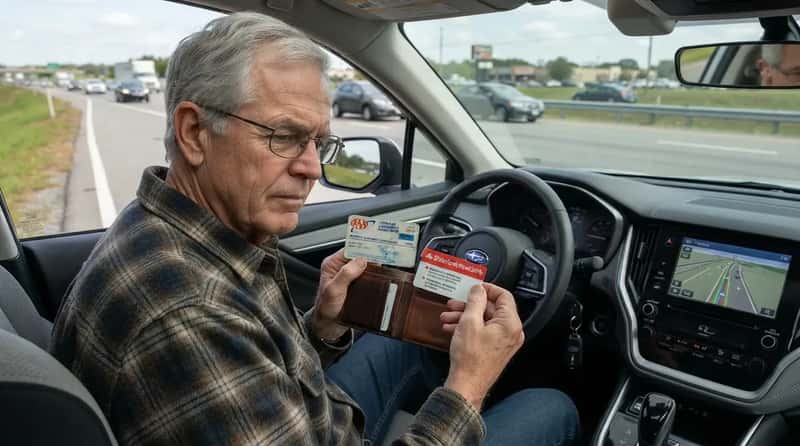
Auto club memberships once felt essential, but today they frequently overlap with coverage that’s already bundled somewhere else entirely. Many auto insurance policies include roadside assistance as a cheap add-on, and newer vehicles often come with a manufacturer roadside program built in for the first several years of ownership.
Retirees who’ve kept a decades-old auto club card out of pure habit are often paying full price for towing and lockout service they’d already get free through their insurer. The overlooked detail is that canceling the redundant membership changes absolutely nothing about how quickly help actually shows up. But that’s nothing compared to what came up next.
Quick Compare
- Auto insurance add-on: Often $10 to $25 a year, sometimes bundled free with full coverage.
- Manufacturer roadside program: Frequently included free for 3 to 5 years on newer vehicles.
- Standalone auto club membership: Typically $60 to $130 a year, often duplicating one of the above.
- Smart move: Check the declarations page before renewing a separate club card.
#7 – The Life Insurance Policy That Already Finished Its Job

Life insurance made complete sense at 35, with a mortgage, young kids, and decades of income still ahead. At 65 or 75, once the mortgage is paid off and the kids are grown, the math often looks nothing like it used to.
Plenty of retirees keep paying premiums on a policy bought decades ago simply because canceling feels wrong, even after the original reason for owning it has quietly disappeared. That premium money could be working harder in savings than sitting in a payout nobody in the family still needs. It’s one of the most emotionally loaded decisions on this entire list, which is exactly why so many people avoid making it at all.
#6 – The Gym Membership Nobody’s Seen Used Since 2021

Gym memberships are famous for outliving actual attendance, and retirees are far from immune to that pattern. Someone signs a contract with good intentions, then quietly stops going after an injury, a move, or simply losing the routine, while the monthly charge keeps processing without a single interruption.
The quietly expensive part is that some gyms make cancellation deliberately painful, requiring an in-person visit or even a certified letter, which is exactly why so many dead memberships survive year after year. A five-minute statement review is often the only thing standing between a retiree and a few hundred dollars back in their own pocket.
#5 – The Cable Bundle Costing More Than Three Streaming Services Combined

Cable bills have crept upward for years, often without any noticeable change in the channels a household actually watches. Plenty of retirees stay locked into a full cable bundle simply because switching feels complicated, even though their favorite handful of shows is often available through one or two much cheaper streaming apps.
The biggest surprise for most families is realizing they can trade a $150-a-month bundle for two or three streaming subscriptions and still have money left over. But that’s nothing compared to the one that showed up next.
#4 – The “Senior” Insurance Add-On That Almost Never Pays Out

Insurance riders marketed straight at older adults, extra accident coverage, hospital cash add-ons, dismemberment riders, get pushed hard through daytime television and glossy mail campaigns. These pitches lean on emotional urgency, implying that without the add-on a single hospital stay could be financially devastating, even when existing health coverage already handles the bulk of the cost.
The uncomfortable truth worth saying out loud is that many of these policies are built around premiums collected, not claims paid, which is exactly why payout rates on some of them stay low year after year. Reading the actual claims history before renewing is one of the simplest ways to stop funding a policy designed to rarely pay a dime back.
#3 – The Financial Advisor Charging 1% for What an Index Fund Does for Free

A 1% annual advisory fee sounds small until you calculate what it actually costs over a 20-year retirement. Plenty of retirees have stayed loyal to the same advisor for decades, paying a percentage of their entire portfolio every single year regardless of performance, without ever comparing that cost to a low-fee index fund doing something remarkably similar.
Over two decades, that 1% fee can quietly erode a meaningful chunk of total retirement savings, money that never shows up as one clear line-item bill, which is exactly why it goes unquestioned for so long. This might be the most controversial entry on the whole list, because loyalty to a longtime advisor often runs a lot deeper than the math ever does.
At a Glance: What 1% a Year Really Costs
- On a $500,000 portfolio, a 1% fee is $5,000 that leaves the account every single year.
- A comparable low-cost index fund often charges closer to 0.03% to 0.10%, a difference of thousands annually.
- Stretched across a 20-year retirement, that gap compounds instead of just repeating.
- The fee never appears as a single bill, which is exactly why it’s so easy to overlook.
#2 – The Funeral Pre-Payment Plan With Fine Print Nobody Reads

Pre-need funeral plans get pitched as a gift to the family, no decisions to make, no scrambling later, everything paid in advance and settled. What rarely gets explained at that kitchen table sales pitch is that many of these plans are non-transferable if the family later moves or the funeral home changes ownership, and some contracts hide fees that quietly shrink what was actually promised.
Families who try to transfer or refund a decades-old pre-payment plan are often floored by how little flexibility the fine print actually allows them. The quiet regret so many describe is discovering that the “guaranteed” price was never as guaranteed as it sounded. But that’s nothing compared to the one that closes out this list.
#1 – The Medicare Supplement Rider Sold Over the Phone

Of everything on this list, the one costing retirees the most in silent, ongoing premiums is the add-on rider sold through an unsolicited phone call. Every fall, open enrollment season brings a wave of calls promising extra dental, vision, or “enhanced” coverage stacked right on top of an existing Medicare Supplement or Advantage plan.
Many of these riders duplicate benefits already baked into the base plan, or cover such a narrow sliver of care that a full year of premiums exceeds what the benefit would ever pay out in a real claim. The hardest lesson retirees learn is that the friendliest voice on the phone is rarely the one with their best financial interest in mind, and one simple comparison call can free up real money every single month going forward.
Worth Knowing
- During the 2024 Open Enrollment period, the Federal Trade Commission reported over 45,000 Medicare-related fraud complaints, with losses exceeding $100 million.
- Scammers often take advantage of the Medicare Open Enrollment period to pose as insurance agents, using high-pressure tactics that claim a current plan is being discontinued.
- Real Medicare cards are free and mailed automatically, a detail that trips up many phone-based pitches.
- The safest move is always to hang up and call the number on the back of your card directly.
Add all sixteen of these up and the numbers get uncomfortable fast, a few dollars here, a subscription there, a “just in case” policy nobody ever actually needed. None of it feels like a mistake in the moment. It feels like responsibility, caution, even love for the people left behind.
But the biggest truth hiding in this whole list is that most of these bills survive not because they’re necessary, but because canceling them means admitting the original reason for paying disappeared a long time ago. Which one hit closest to home? If you’re still paying for something on this list out of pure habit, you’re far from alone, and there’s a good chance the person reading this comment section right after you is paying it too.