Most cruisers pack sunscreen, a swimsuit, and a nice outfit for the captain’s dinner – and completely forget the one bag that actually decides how their vacation goes. Ship medical staff say the same overlooked items show up in their infirmaries week after week, long after the buffet line has closed and the ship is hours from the nearest port.
The strange part is that none of these items are exotic or expensive. They’re small, boring, and probably sitting in a drawer at home right now. Here’s what cruise ship doctors actually wish every passenger brought aboard – starting with the paperwork almost nobody thinks to grab on the way out the door.
#16 – A Doctor’s Letter That Could Save Hours in an Emergency
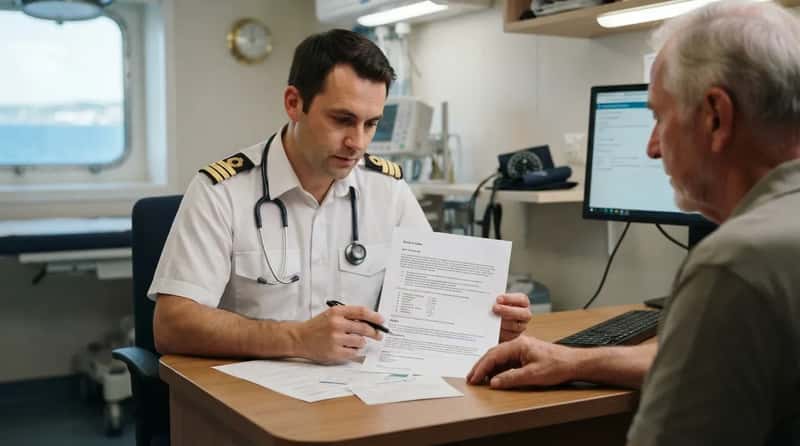
Ship physicians say the single most useful item a passenger can hand them isn’t medication at all – it’s paperwork. A written summary from a home doctor listing conditions, allergies, and current prescriptions lets the ship’s medical team act immediately instead of guessing. Passengers are encouraged to bring documentation on medical history, allergies, immunizations, and medications, and to pre-arrange any special requirements with the cruise line ahead of time.
Without that letter, treatment can stall while staff try to figure out what a passenger takes and why. Travelers with chronic conditions are especially exposed here, since a vague “I take a blood pressure pill” doesn’t help a doctor treating someone hundreds of miles from the nearest hospital. It’s a five-minute request before departure that can shave real time off emergency care.
#15 – An Extra 10 Days of Every Prescription, Not Just a Few Spares
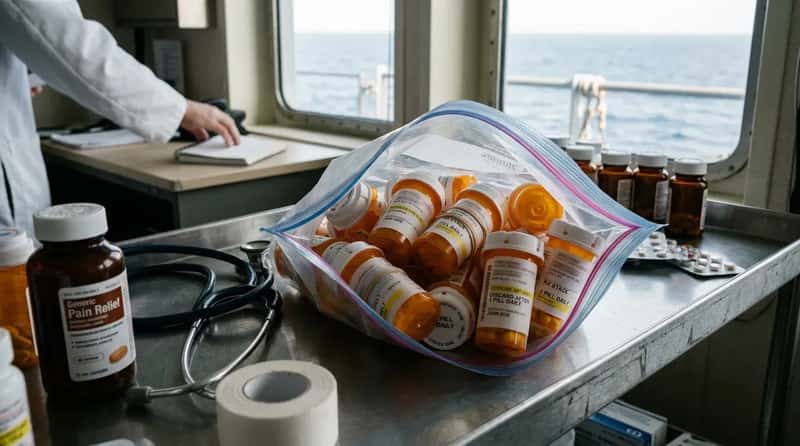
Most people toss in one or two backup pills and call it prepared. Ship doctors say that’s nowhere near enough – the standard advice from major cruise lines is to bring enough medication for the entire trip, plus an extra 10 days’ supply in case of delays or emergencies.
That buffer matters because your exact medication and dosage might not exist anywhere on the ship, and getting a refill means waiting for a pharmacy at the next port – if there even is one nearby. A canceled stop or a missed connection can turn a two-day supply gap into a genuine crisis. Doctors also recommend keeping medication in its original labeled bottles rather than a pill organizer, since customs officials in some ports still ask to see the label.
Fast Facts
- Pack enough medication to cover the full trip length
- Add a 10-day buffer for delays, missed ports, or emergencies
- Keep pills in original labeled bottles, not a travel organizer
- Some ports still require visible labels during customs checks
#14 – A Backup Motion-Sickness Medication the Ship Doesn’t Hand Out for Free
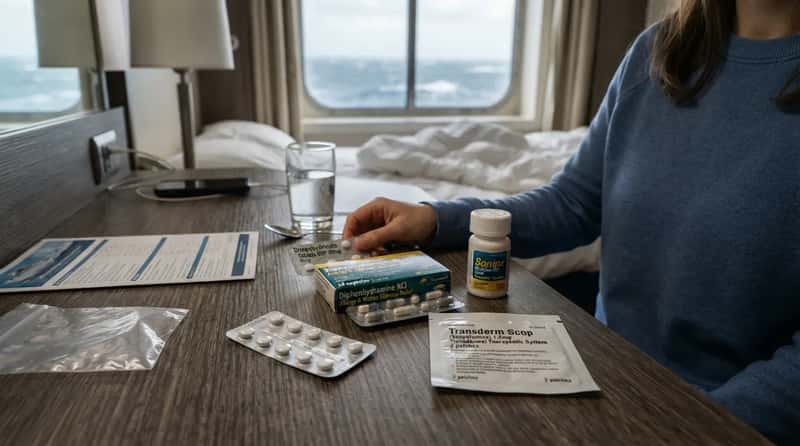
The free seasickness pills at the front desk aren’t the only option, and doctors say relying on them alone is a mistake. For anyone prone to seasickness, it helps to carry a personal supply of over-the-counter options like diphenhydramine, dimenhydrinate, or scopolamine.
Rough seas hit unevenly – calm one night, brutal the next – and infirmary lines get long fast when a whole deck feels queasy at once. Having a personal stash means skipping the wait entirely. Many nurses quietly suggest testing whichever pill you choose at home first, since some cause drowsiness that catches first-time users off guard mid-cruise.
#13 – Ginger Chews for the Nausea Pills Won’t Touch
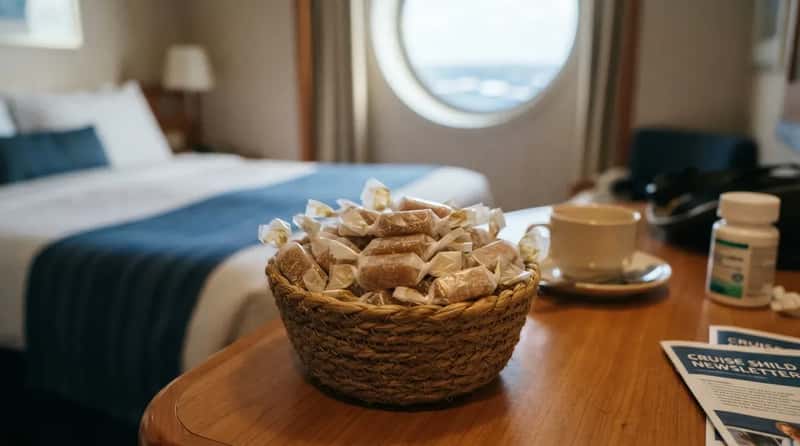
Not every wave of nausea responds to medication, and that’s where a low-tech backup earns its keep. Ginger has long been used to settle stomachs, and cruise medical staff regularly point travelers toward ginger candy as a gentle, non-drowsy option between doses.
It sounds almost too simple to matter, but doctors say pairing a pill with ginger candy covers the in-between moments – after the medication wears off but before the next dose is due. It’s also one of the only remedies that works for kids and pregnant passengers who can’t take most motion-sickness drugs. Some cabin stewards keep a stash behind the desk purely because so many guests end up asking for it.
#12 – Electrolyte Powder Packets for the Dehydration Nobody Expects
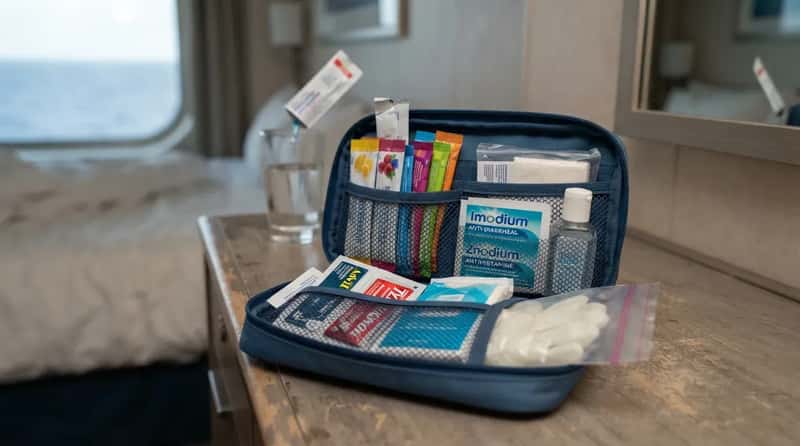
Sun, alcohol, and a stray stomach bug are a brutal combination at sea, and it’s far more common than most travelers assume. Cruise medical guidance regularly lists electrolyte packets alongside resealable bags, tissues, disposable gloves, and disinfecting wipes as core sick-day supplies.
Doctors call out electrolyte powder specifically because dehydration makes everything else worse – it deepens seasickness, extends hangovers, and slows recovery from a stomach virus. A basic first-aid kit built around ibuprofen, acetaminophen, decongestants, antihistamines, an anti-diarrheal, and electrolyte powder covers most of what actually goes wrong onboard. A few packets weigh almost nothing and solve a problem that can quietly ruin an entire sea day.
#11 – A Basic Thermometer, Because Guessing Costs You Your Cabin
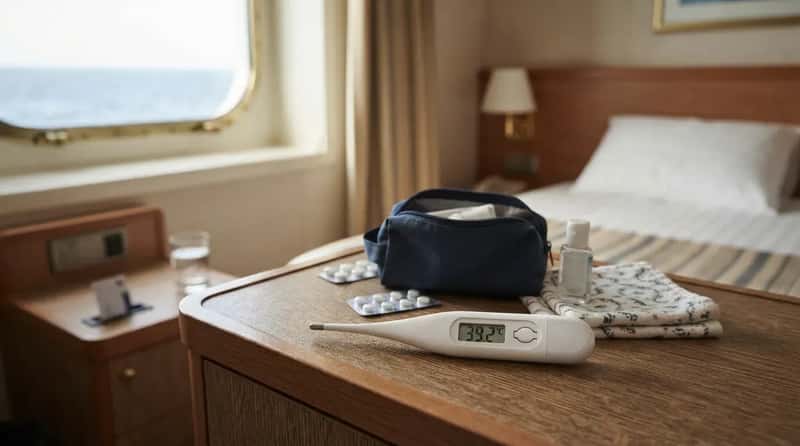
Most travelers assume a fever is obvious. It isn’t always, and at sea, that guesswork has real consequences. A thermometer makes almost every doctor’s suggested list because it’s the fastest way to tell whether a headache is just a headache or something that needs to be reported.
This matters more on a ship than it does at home. If a child is vomiting or has diarrhea, medical staff need an actual evaluation, because assuming it’s just seasickness risks spreading a contagious illness to everyone else on the deck. A real number, not a guess, is often what determines whether someone gets sent to the infirmary or told to rest in the cabin – and catching it early can stop an outbreak before it starts.
#10 – Both Imodium and Pepto Bismol, Not Just One or the Other
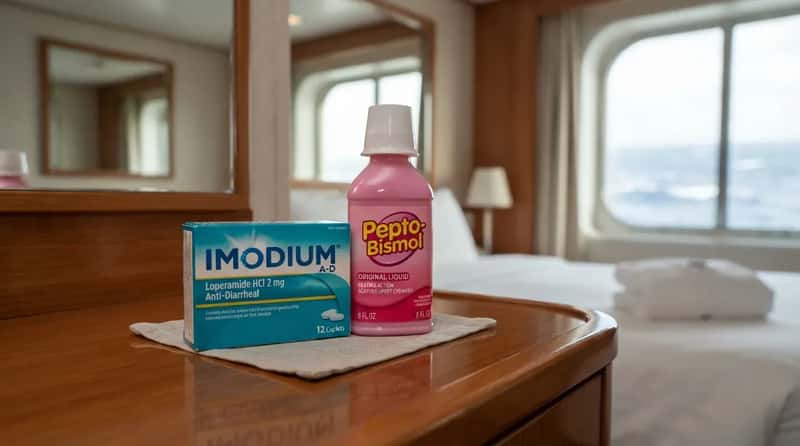
Doctors say passengers consistently pack one anti-diarrheal and assume it covers everything, but the two go-to options actually treat different symptoms. Imodium is built for sudden stomach issues that hit onboard, while Pepto Bismol handles a wider range of digestive discomfort, including heartburn, nausea, and general stomach upset.
Cruise buffets and rich onboard menus push digestive systems that aren’t used to that much variety in one sitting. Carrying both means covering the sudden urgency Imodium handles and the general queasiness Pepto Bismol calms. Skipping this step is one of the more common regrets passengers mention after a rough first sea day.
Quick Compare
- Imodium: best for sudden, urgent diarrhea
- Pepto Bismol: best for nausea, heartburn, and general upset
- Pack both: covers nearly every digestive complaint onboard
#9 – Pain Relievers Strong Enough for More Than a Headache

A basic pain reliever does more work on a cruise than people expect – it covers sunburn discomfort, sore muscles from shore excursions, and the low-grade fever that often signals something contagious is starting. Acetaminophen and ibuprofen sit at the core of almost every cruise-ready first-aid recommendation.
Ship doctors flag this one because infirmary visits for minor pain relief are avoidable, yet they happen constantly – and they cost real money once you’re onboard. Carrying a full bottle instead of a travel packet of two pills means not rationing relief during a multi-day illness. It’s an unglamorous item, but it’s requested at the front desk more than almost anything else.
#8 – An Antihistamine for the Allergies Nobody Planned Around

New environments mean new allergens – different pollen, different bedding, different pool chemicals – and doctors say antihistamines get requested constantly by passengers who “never” have allergy issues at home. They’re recommended for anyone whose allergies tend to flare up during travel, even mild ones.
The bigger issue is timing. Allergy symptoms can look almost identical to the start of a respiratory illness, which means untreated sniffles sometimes trigger unnecessary isolation protocols. A stocked antihistamine lets a passenger treat the problem immediately instead of waiting in a medical center line just to find out it was nothing.
#7 – A Decongestant for the Air Conditioning Nobody Warns You About
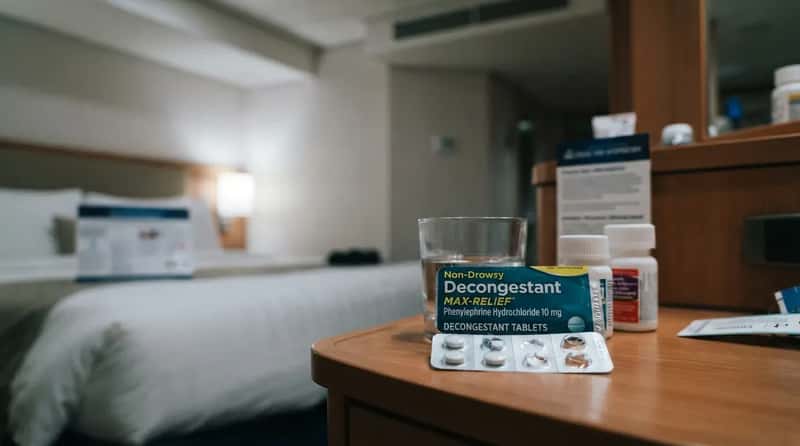
Cruise ship air systems run cold and dry around the clock, and the sinus irritation that follows catches a lot of first-time cruisers off guard. Decongestants sit right alongside pain relievers and antihistamines on the standard cruise first-aid list for exactly this reason.
Doctors say the complaint pattern is predictable: passengers wake up on day two or three with a stuffy nose they assume is a cold coming on, when it’s often just dry recycled air combined with sudden climate swings between ports. A decongestant clears it fast enough that it never becomes the illness passengers feared it was.
#6 – A Real First-Aid Kit, Not Just a Handful of Bandages
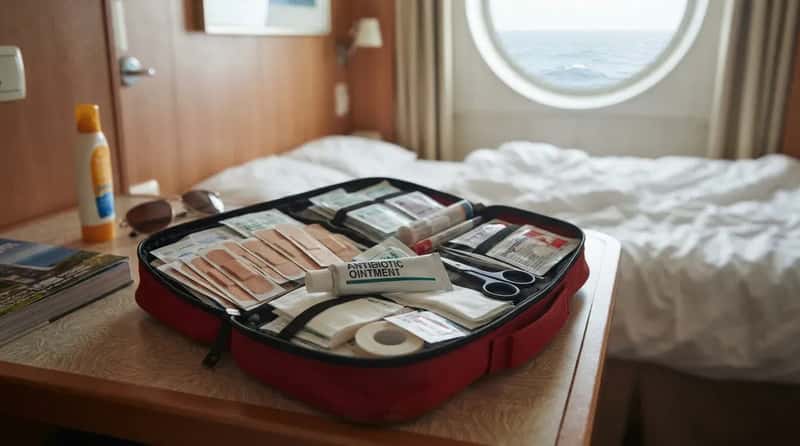
Wet decks, pool areas, and uneven gangways make minor cuts and scrapes far more common on a cruise than most people expect. A topical antibiotic ointment like Neosporin treats those small wounds and helps prevent skin infections – and doctors say it’s one of the most requested items at the medical desk.
The mistake most passengers make is packing three bandages and calling it done. A proper kit means enough supplies to treat a scrape without a trip to the infirmary, where a simple wound cleaning can come with a surprisingly high onboard charge. It’s the cheapest insurance a passenger can pack.
#5 – Hand Sanitizer and Disinfecting Wipes, Used More Than People Admit
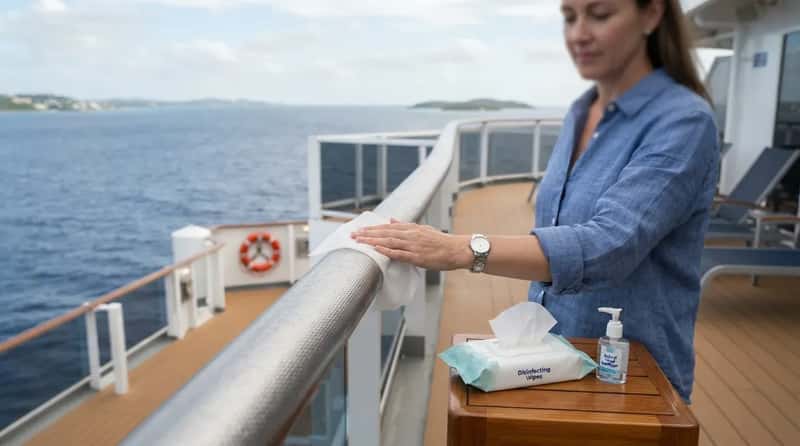
This is the item ship doctors mention most often, and for good reason. Dining rooms, elevators, handrails, theaters, pools, and shared excursion buses put strangers in close, repeated contact with the same surfaces all day long.
Crew members already sanitize constantly, but doctors say personal habits still matter enormously. Norovirus outbreaks on cruise ships actually make up only about 1% of all reported norovirus outbreaks in the U.S. – a number that stays low largely because passengers who wipe down their own cabin surfaces and railings interrupt transmission before it starts. Skipping this step is a personal choice with shared consequences for everyone on the deck.
Worth Knowing
- Cruise ships account for only about 1% of all reported U.S. norovirus outbreaks
- Handrails, elevator buttons, and buffet stations are frequent transmission points
- Crew sanitize constantly, but personal wiping habits still make a measurable difference
#4 – Disposable Gloves and a Few Spare Masks for the Just-In-Case
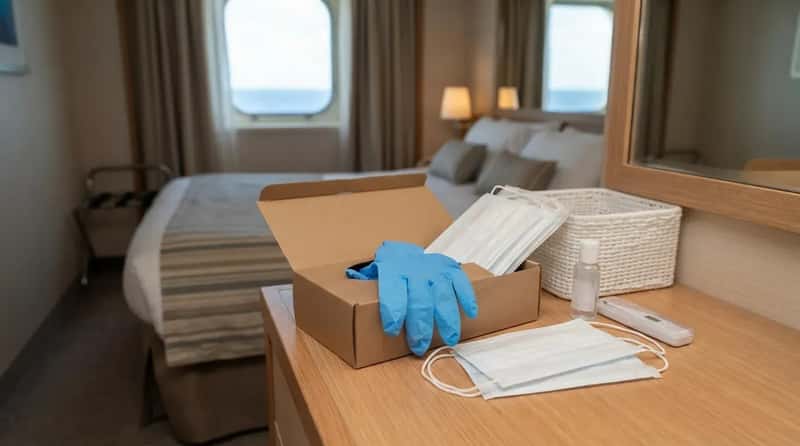
Nobody packs these expecting to need them, which is exactly why doctors say to bring them anyway. Gloves and masks show up on nearly every cruise medical sick-day list because they let a cabin stay functional even when someone in it isn’t feeling well.
If a cabin mate gets sick first, these items let the healthy passenger keep going – eating in the dining room, using shared bathrooms, cleaning up after a sick companion – without becoming the next case. If the medical center does recommend isolation, it’s usually short and tied to specific symptoms, and having supplies ready on hand makes that stretch far less miserable.
#3 – Compression Socks for the Swelling Doctors See Constantly

Long flights to the embarkation port, hours standing in boarding lines, and full days of walking excursions add up to a swelling problem doctors treat far more than passengers expect. Compression socks aren’t glamorous, but medical staff say they prevent a surprising number of circulation complaints, especially on longer itineraries.
The people who benefit most are exactly the ones who skip this item – travelers with long connecting flights before boarding, or anyone spending a full port day on their feet. It’s a small, cheap accessory that quietly prevents one of the more common “why does my leg feel like this” infirmary visits.
#2 – A Spare Pair of Glasses and a Copy of Every Prescription
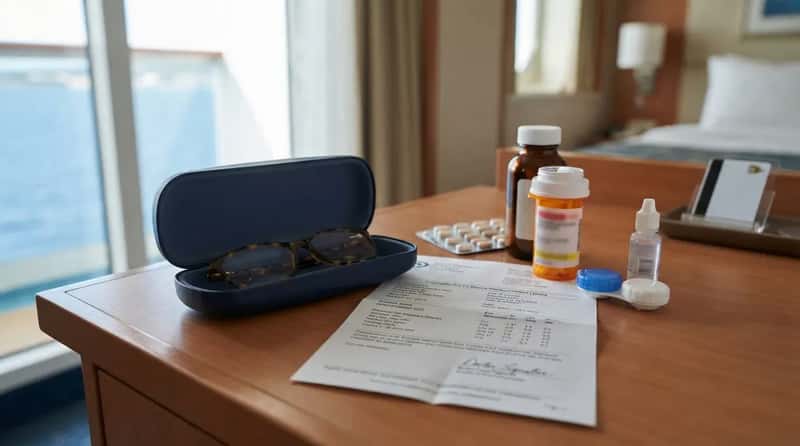
Losing glasses or contacts overboard, in a pool, or on a shore excursion happens constantly, and replacing them at sea is rarely simple. Keeping prescriptions in their original packaging, along with a written copy of dosages, is a core part of cruise medical packing advice for exactly this reason.
Doctors extend that same “bring a copy” logic to vision needs. A spare pair of glasses, plus a written copy of a contact lens or glasses prescription, means a lost pair doesn’t turn into days of squinting through a photo-heavy shore excursion. It’s a minor item that causes an outsized amount of frustration when forgotten.
#1 – Proof of Travel Insurance, Because This Is the Item That Actually Saves a Trip
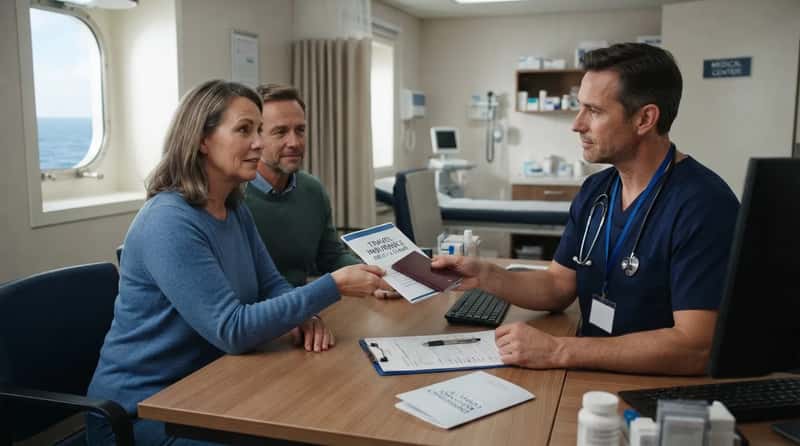
This is the one ship doctors bring up unprompted, because it’s the item that determines what happens if things go seriously wrong. Passengers who need care beyond what the infirmary can provide often face temporary or permanent disembarkation for shore-side treatment before the cruise is even over.
Standard health insurance often doesn’t cover care outside U.S. borders, and emergency evacuation from a ship at sea can cost far more than most travelers assume. Doctors say the passengers who handle a real medical event calmly are almost always the ones who packed proof of travel insurance and a claims phone number – not the ones who assumed it wouldn’t happen to them. It’s the single document that turns a crisis into a manageable inconvenience.
At a Glance
- Standard U.S. health insurance often excludes care outside the country
- Serious medical events can mean disembarkation for shore-side treatment
- Evacuation from a ship at sea costs far more than most travelers assume
- Proof of coverage and a claims number are the two must-carry documents
None of these items are dramatic, and that’s exactly the point. Ship doctors aren’t asking passengers to prepare for disaster – they’re asking them to close the small gaps that turn a minor inconvenience into a ruined vacation, or worse, a disembarkation at the next port. The pattern across every conversation with cruise medical staff is the same: the passengers who sail smoothest aren’t the luckiest ones. They’re the ones who packed boring.
Which one of these have you forgotten before? Drop it in the comments.