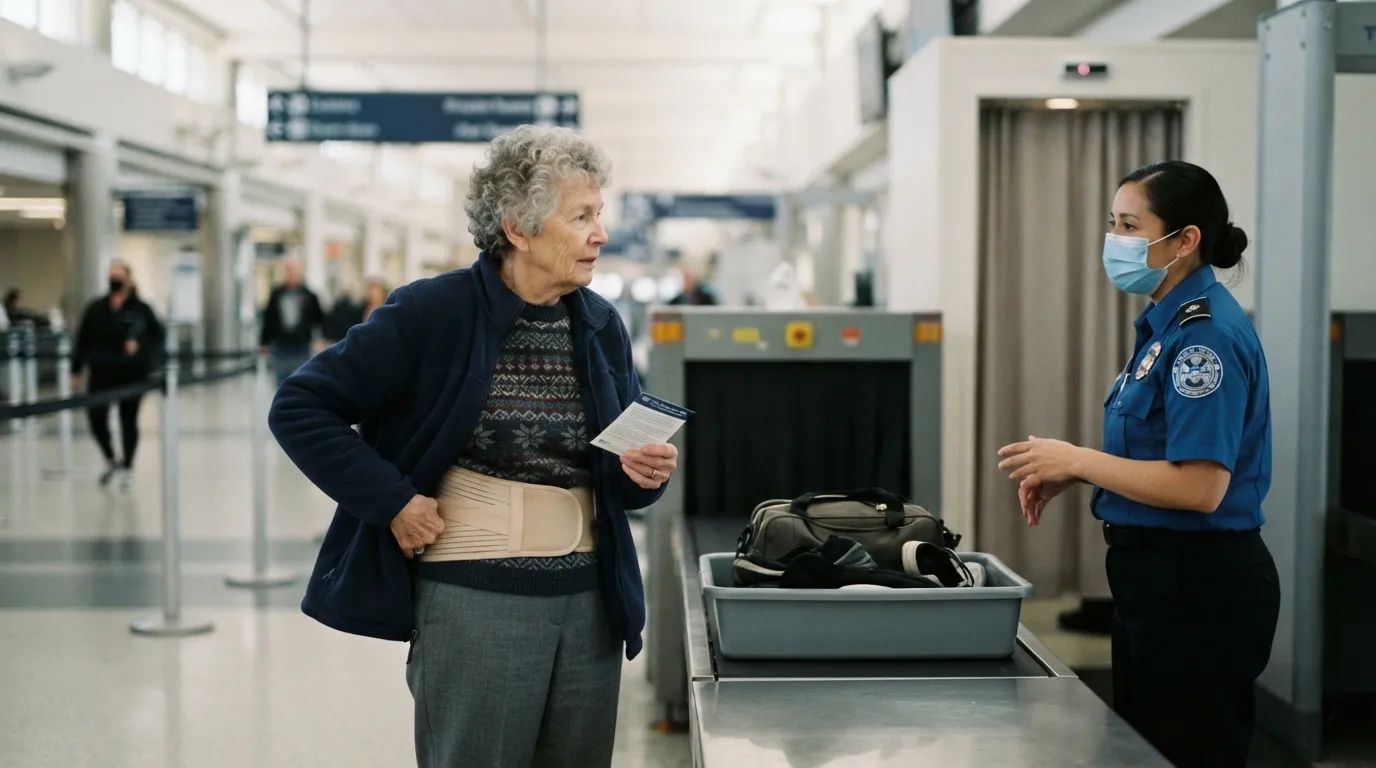
Picture a traveler in their 70s walking up to security, fully confident that every senior perk they’ve ever heard about is still in play. Then the checkpoint tells a different story. One perk has quietly vanished, one “perk” was never real, and a few of the most useful options are almost never said out loud.
That gap between what people assume and what actually happens is exactly what this list covers. The officers aren’t hiding anything on purpose. They’re just moving fast, and nobody has time to narrate the fine print. Stick around, because the item that cost some travelers real money is coming, and so is the surprising story that shaped how TSA treats older passengers.
#16 – The Famous “75 and Older” Shoe Perk Just Became Pointless
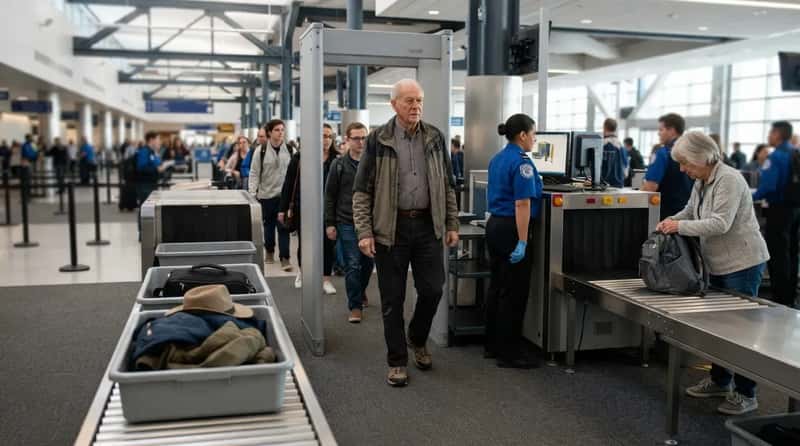
For years, passengers 75 and older, along with children 12 and under, could keep their shoes on. It was one of the best-known senior breaks at the airport. Then TSA ended the shoe-removal mandate for everyone on July 8, 2025.
So the perk didn’t get stricter. It simply stopped mattering, because everybody can now leave their shoes on. And if you’re 65 to 74, the age break never applied to you in the first place.
One catch remains. Officers can still ask anyone to take shoes off if an alarm goes off or if you’re picked for enhanced screening. Age doesn’t decide that. The alarm does.
The age-based rules that survived are far more useful than most travelers realize, starting with #15…
#15 – An Alarm Doesn’t Have to Mean a Pat-Down for Travelers 75+
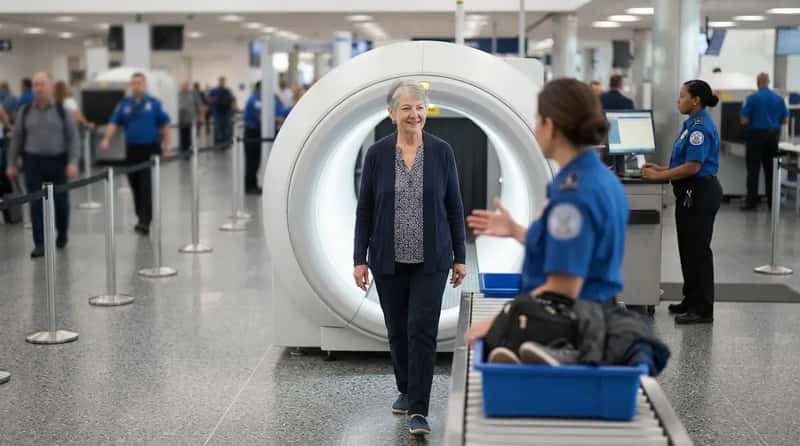
Many people assume a beep from the scanner leads straight to a hands-on search. For travelers 75 and older, TSA guidance has long offered a gentler path. They can go through the advanced imaging scanner again to clear the alert before anyone reaches for gloves.
The approach goes back to a 2012 change. Screeners were told to run older travelers and children through the scanner more than once to reduce pat-downs. They were also told to lean more on explosive trace swabs.
- The perk is aimed at travelers 75 and older.
- If you’re younger, it never hurts to politely ask.
Most officers won’t announce it. They’ll just wave you back through, and you may never know a second chance was on offer. What you’re allowed to ask for next surprises almost everyone in #14…
#14 – You Can Ask to Sit Down During Extra Screening
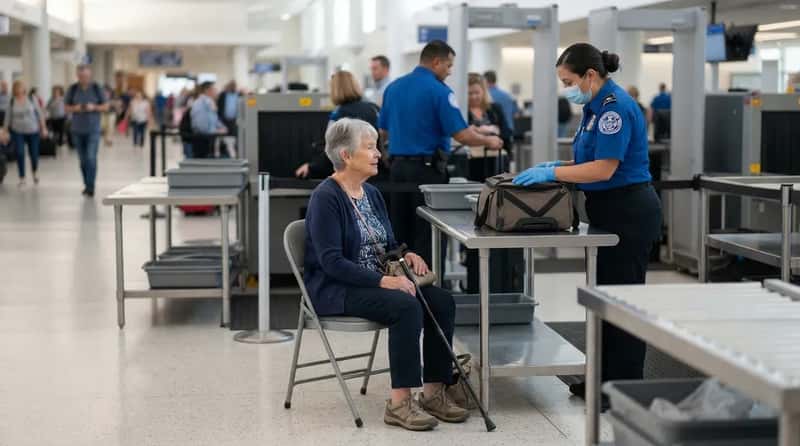
If you’re pulled aside for additional screening, nothing says you have to stand there on tired knees. Senior travel guides, including one from Lifeline, advise passengers not to be afraid to ask for a seat. Summaries of TSA guidance say the same thing.
That matters more than it sounds. A pat-down can take a few minutes, and balance isn’t always what it was at 40. Add a long travel day, and a chair stops being a luxury.
Officers are busy and often won’t offer one. You have to be the one to raise it.
Even better, there’s someone at the checkpoint whose whole job is to help, and you probably haven’t met them yet. That’s #13…
#13 – A “Passenger Support Specialist” Is Waiting for You to Ask
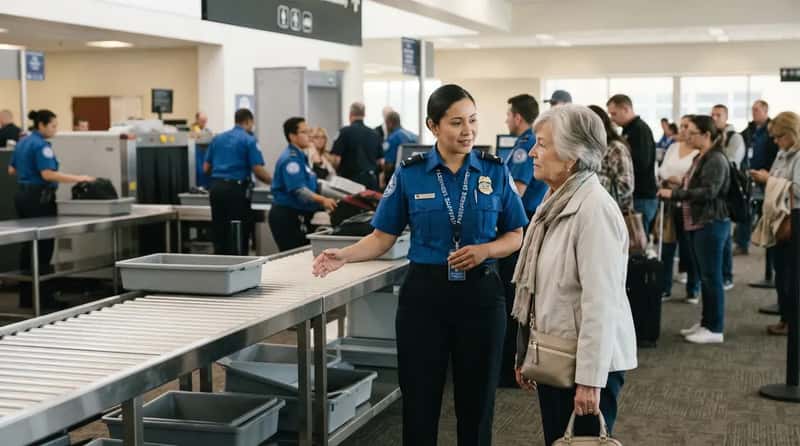
Travelers who need accommodations, or who are simply worried about screening, can ask any TSA officer or supervisor for a passenger support specialist. These are officers with extra training who give on-the-spot help. No appointment is needed.
Think of them as your checkpoint translator. They can explain what’s about to happen, what to expect with your device or condition, and why. They answer questions, calm nerves and get you moving again.
The exact phrase matters. Saying “I need help” can leave you stuck in the regular line, while “passenger support specialist” points the officer to a specific resource.
You can even arrange help before you leave the house, which brings us to #12…
#12 – There’s a Helpline Built for Exactly Your Situation

The helpline is called TSA Cares, and it’s rarely mentioned at the airport. It helps travelers with disabilities, medical conditions and other special circumstances understand screening ahead of time. Contact them at least 72 hours before you travel by calling (855) 787-2227 or submitting an online form.
The idea is that you arrive already knowing the process. TSA says asking questions up front cuts down the anxiety of the unknown. Companions and family members can call too.
- It’s meant for questions about policies, procedures and what to expect.
- You can plan around your medications, devices or mobility needs.
And if you’d rather not explain your medical history out loud at a crowded checkpoint, #11 is for you…
#11 – A Small Card Can Say It All for You
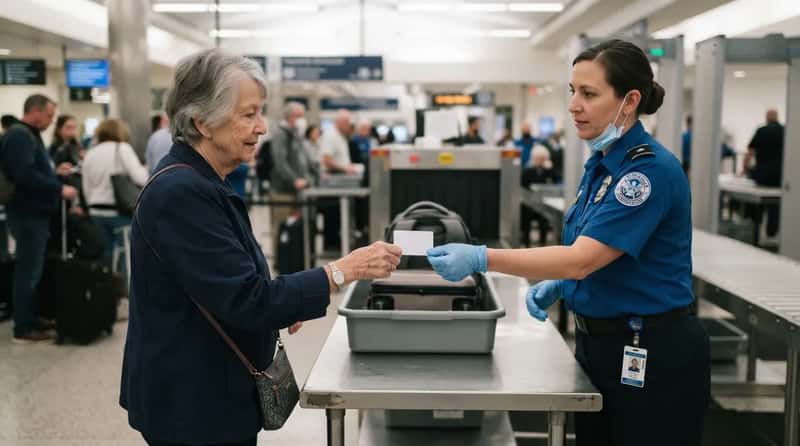
You don’t have to announce private health details to a line of strangers. Travelers can hand an officer a TSA notification card or other medical documentation that describes a condition discreetly. It skips the awkward moment completely.
It also helps with communication. The CDC notes that people with disabilities or conditions that affect screening can use the card to talk with officers. Instead of whispering or repeating yourself, you simply hand it over.
Keep in mind that the card doesn’t exempt you from screening. Every traveler still goes through the checkpoint. It just makes the conversation smoother.
Worth Knowing
- The card is a communication tool, not a screening waiver.
- Other medical documentation, such as a doctor’s letter, can serve the same purpose.
- Handing it over early means fewer repeated explanations at the bins.
- TSA Cares (#12) can walk you through how to use it before you fly.
Next comes the item that trips up the most people carrying daily medications, in #10…
#10 – Your Medications Get a Special Exception Nobody Posts
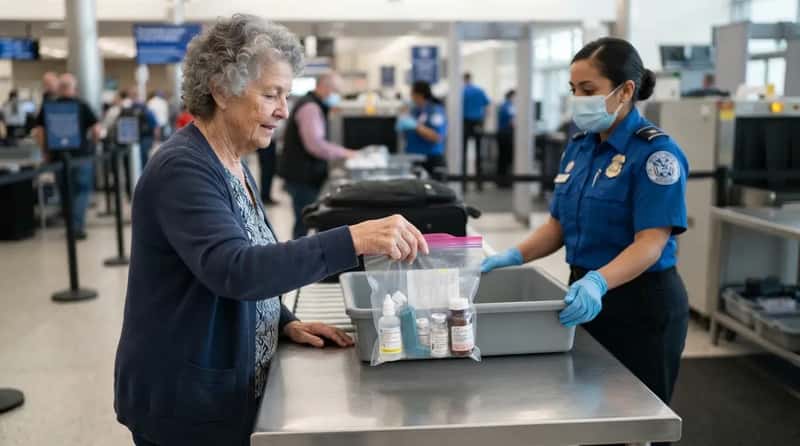
The famous liquids limit has a quiet exception for medicine. The 3-1-1 rule remains the nationwide baseline for everyone. But TSA permits prescription liquid medications and other liquids needed by people with disabilities and medical conditions.
The surprise is what officers rarely tell you. TSA’s guidance is to let the officer know at the start that you’re carrying medically necessary liquids and to keep them separate from your other items. Skip that step and you may find yourself stopped for a closer look.
There’s a practical catch that makes #9 worth knowing before you pack…
#9 – A Loose Pill Organizer Can Turn Minutes Into a Conversation
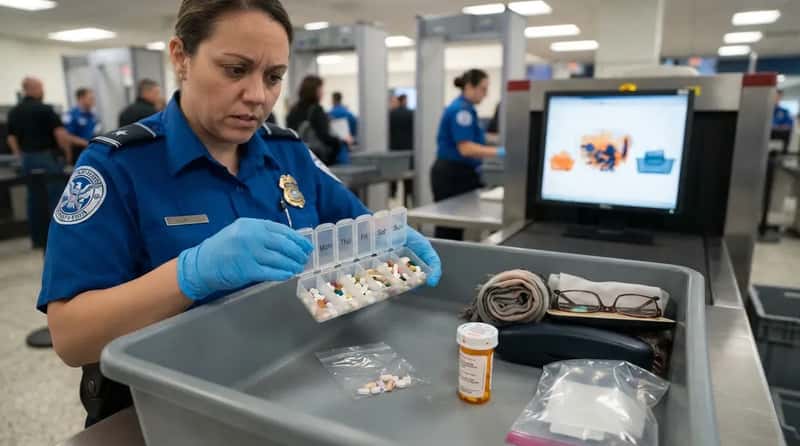
Travel guides for 2026 suggest keeping prescription labels where possible. They also say to plan extra time if you carry medical liquids. That’s not a formal rule. It’s simply how checkpoints tend to run when officers can see what they’re looking at.
Think about how a bag of unmarked pills looks on an X-ray screen. Original packaging answers questions before anyone asks them.
It’s a small habit, yet it’s one of the most common ways a smooth trip becomes a stressful one.
Quick Compare
- Original labeled bottle: answers questions before they’re asked.
- Loose or unmarked pills: more likely to prompt a closer look.
- Medical liquids: declare them at the start and keep them separate.
And if you travel with a cane or walker, #8 has a twist…
#8 – Your Walker or Cane Gets Screened Too
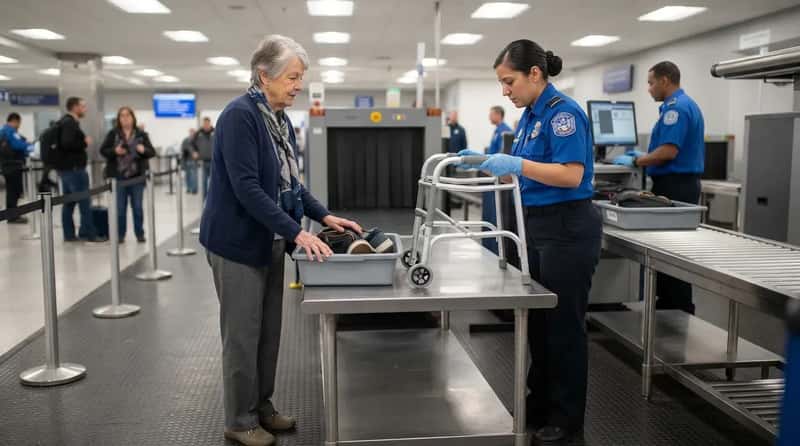
Mobility aids don’t get a free pass, and they don’t just glide past the officers. Walkers, canes and crutches are X-rayed or hand-inspected. That can mean your support is taken from you for a moment, so plan how you’ll stay steady.
If standing isn’t possible, there’s a separate path. Travelers who can’t stand or walk through the scanner are screened through other methods, including a manual inspection. Passengers 75 and older who can’t stand for screening are handled the same way.
Another group of travelers has its own guidance that almost no one hears about, and it’s in #7…
#7 – Hearing Loss Has Its Own Checkpoint Playbook
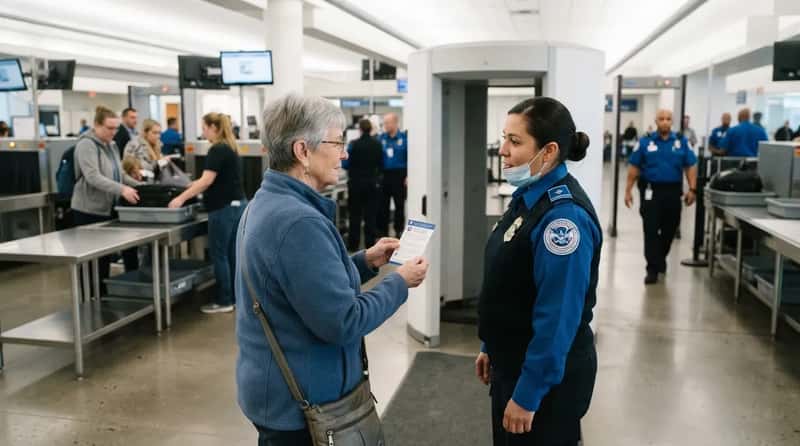
A missed instruction at a noisy checkpoint can look a lot like refusing to follow directions. That’s a real risk. Officers give quick commands all day, and the background noise doesn’t help.
The CDC notes that travelers with hearing loss can hand an officer a notification card or other medical documentation describing their condition and the help they need. It works the same way as the card in #11. It just removes the guessing for both sides.
- Show your card before you step into the scanner.
- Ask the officer to face you when giving directions.
Now for a myth that splits older travelers right down the middle, in #6…
#6 – Turning 75 Does Not Get You PreCheck
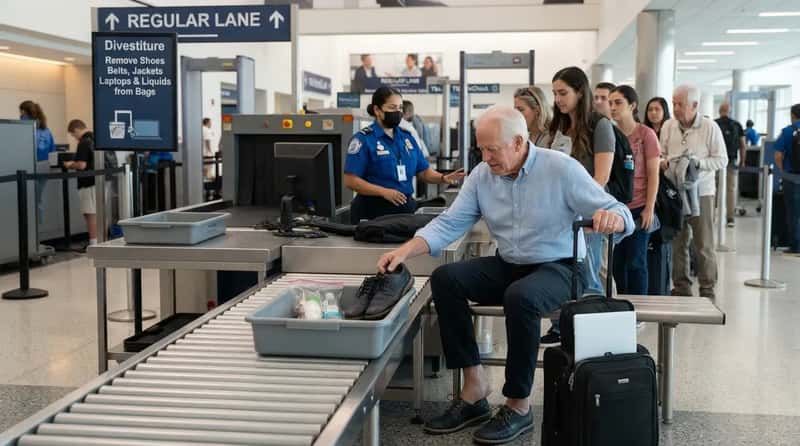
This is the myth that catches the most people off guard. Age alone doesn’t earn you the fast lane. Seniors don’t automatically get PreCheck, and anyone who wants it has to apply.
Is it worth the money? That’s debatable. PreCheck members keep shoes, belts and light jackets on, and can leave laptops and 3-1-1 liquids in their bags. One frequent flyer argued it’s still worthwhile because it guarantees the dedicated line, while any age-based leniency in regular lanes is hit or miss.
Meanwhile, the shoes-on rule that’s supposed to make all this easier is more contested than you’d think, as #5 shows…
#5 – The Shoes-On Rule Has Plenty of Critics
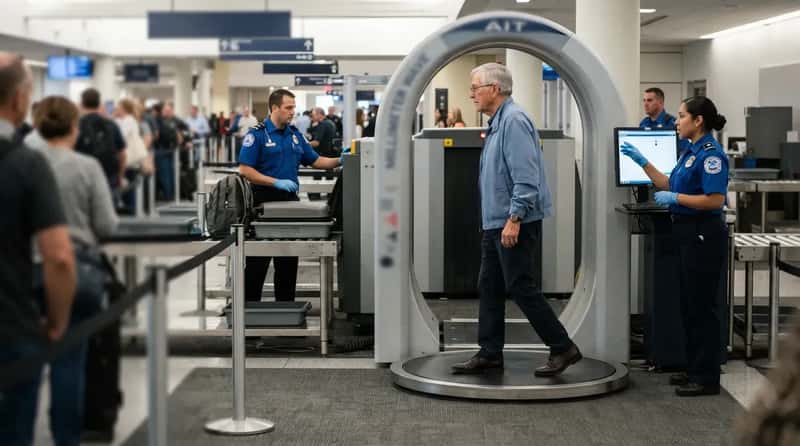
The change that made checkpoints easier didn’t make everyone happy. Supporters say better technology made it possible. Then-Homeland Security Secretary Kristi Noem pointed to screening improvements, along with big events like the 2026 World Cup.
Critics see risk. Their concerns center on the limits of screening technology, uneven equipment across airports and the chance that concealed items in footwear could be missed. The argument has carried onto Capitol Hill.
At a Glance
- Supporters: improved technology makes shoes-on screening workable.
- Critics: equipment varies by airport, and footwear can hide items.
- Effective date: July 8, 2025, for all travelers.
- Still possible: an officer can ask for shoes off after an alarm.
So the rule may change again. Check TSA’s current guidance before your next trip rather than assuming. Another surprise is waiting on the other side of the scanner, and it has to do with your own body, in #4…
#4 – Your Pacemaker or New Hip Can Set Off the Alarm, and That’s Normal
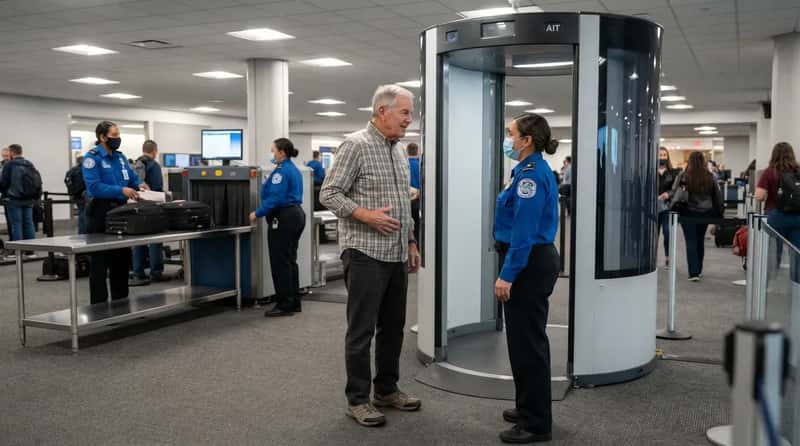
A beep doesn’t mean you did anything wrong. Metal in the body, along with belts and watches, can trigger alarms. TSA guidance advises removing metal items and emptying your pockets before screening.
If you do alarm, you may be asked to remove your shoes for further screening or get a pat-down. Also, the full-body scanner has long been described as optional. It’s available to passengers who can stand still for about five seconds, and many travelers don’t realize they can ask what the alternative is.
Before any of that matters, though, you need the right ID, and the rules got stricter in #3…
#3 – That Little Star on Your License Is Now Required
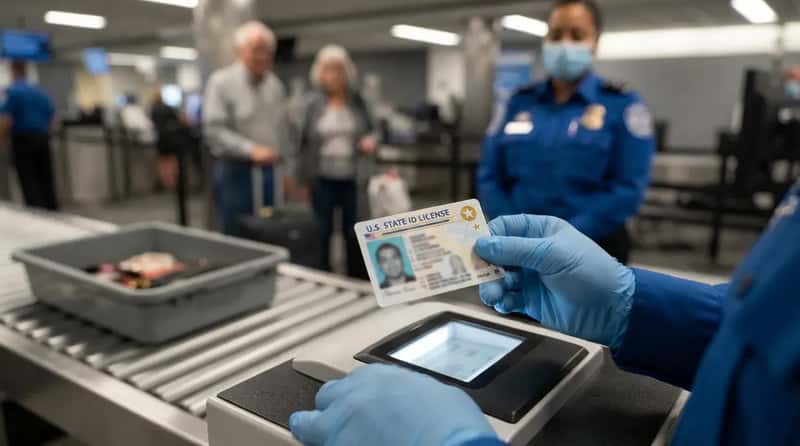
If your ID lacks it, your plans can fall apart right at the checkpoint. Starting May 7, 2025, travelers need a REAL ID or another acceptable document, such as a U.S. passport, to board domestic flights. REAL ID-compliant cards carry a star near the top.
Many older travelers have licenses they’ve renewed by mail or held for decades. That’s exactly how people get caught. A card can look perfectly official and still lack the star.
- A U.S. passport or passport card is also accepted, as are DHS trusted traveler cards like Global Entry.
- TSA also takes digital IDs from Apple, Google and Samsung wallets at more than 250 airports.
And if you’re one of those few, the cost is steeper than you’d guess, as #2 reveals…
#2 – Forgetting Your ID Now Costs $45, With No Guarantee
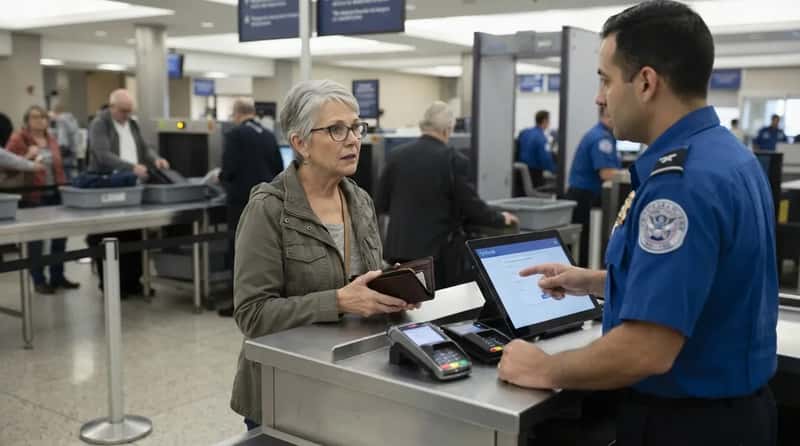
Last-minute ID problems used to be free to sort out. Not anymore. On February 1, 2026, TSA introduced ConfirmID, and travelers without acceptable ID now complete an online form and pay $45 to try to verify their identity.
That fee is nonrefundable, and it doesn’t guarantee you’ll be cleared. TSA’s first estimate in November was just $18, less than half the final rate. Imagine paying $45 and still not making your flight.
But the real reason any of these protections exist comes down to one ugly news story from 2011, in #1…
#1 – Two Women in Their 80s Changed How TSA Treats Older Travelers
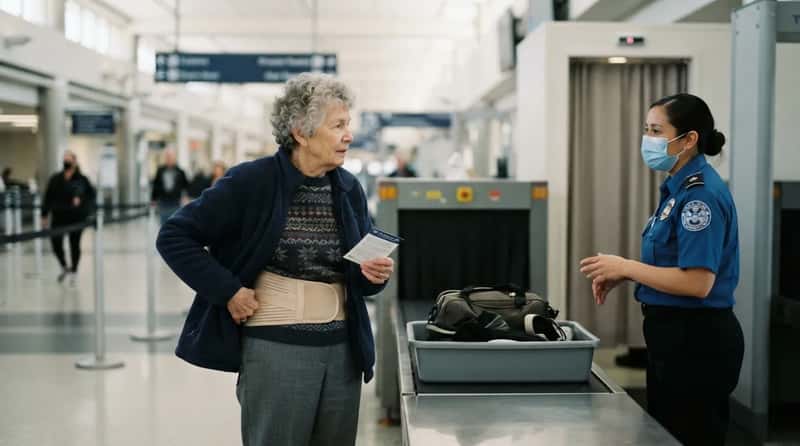
The senior-friendly rules didn’t begin as a kindness. They began as a controversy. In November 2011, two women in their 80s complained that they were essentially strip-searched at New York’s JFK airport.
One said she had to remove a back brace for an X-ray scan, and the other said she lowered her sweat pants so screeners could examine her colostomy bag. TSA officials denied asking anyone to remove clothing. Even so, the public reaction was fierce.
What followed was real change. A TSA assistant secretary apologized in writing, and officers were to receive refresher training on respectfully screening passengers with disabilities or medical conditions. The agency also launched the TSA Cares hotline that December.
Fast Facts
- November 2011: the JFK complaints make headlines.
- December 2011: the TSA Cares hotline launches.
- 2012: screeners are told to rescan travelers 75+ before resorting to pat-downs.
- July 8, 2025: shoes-off screening ends for everyone.
- February 1, 2026: the $45 ConfirmID option begins.
The helpline, the cards and the older-traveler adjustments you can use today all trace back to that one public complaint.
The biggest surprise isn’t any single rule. It’s how much the checkpoint has changed without a big announcement. The shoe exemption for older travelers is gone because everyone can keep shoes on, and a $45 fee now awaits anyone who shows up without proper ID.
Meanwhile, the best tools, like TSA Cares, notification cards and passenger support specialists, sit there quietly until someone asks. Sometimes the most valuable thing at the airport is simply knowing what to say.