

Most travelers assume a concierge desk is just for restaurant reservations and theater tickets. But ask any veteran hotel employee off the record, and they’ll tell you the real work happens in the details nobody notices – a bed board slipped in before check-in, a direct phone line handed over instead of the main switchboard, a route quietly scouted so an older guest never hits a surprise step.
None of this is written into any employee handbook, and it almost never shows up on a hotel’s website. Here’s what insiders actually say happens behind the scenes for guests over 60.
#16 – They Pre-Stock the Room Before You Even Check In

A surprising number of “spontaneous” comfort touches in a hotel room were never spontaneous at all. Extra pillows, a bed board for firmer support, or a kettle instead of a fussy drip coffeemaker often get placed in the room hours before arrival, based on nothing more than a birth year on a reservation.
Most hotels keep a dedicated accessibility closet stocked with these items, but almost never advertise it. Guests who don’t know to ask rarely get them – they only appear because a concierge flagged the request in advance. That single phone call before arrival is often the difference between a room that feels generic and one that feels tailored.
Fast Facts
- AARP surveys show 70% of Americans age 50-plus planned to travel in 2025, up from 65% the year before.
- Roughly 17% of travelers 50-plus expect to need accommodations for a disability or health condition, and mobility issues are the most common reason cited.
- Accessibility guidance recommends hotel beds sit between 20 and 23 inches high, since anything much taller can make a simple transfer into bed surprisingly difficult.
#15 – They Hand Over a Direct Line, Not the Main Switchboard
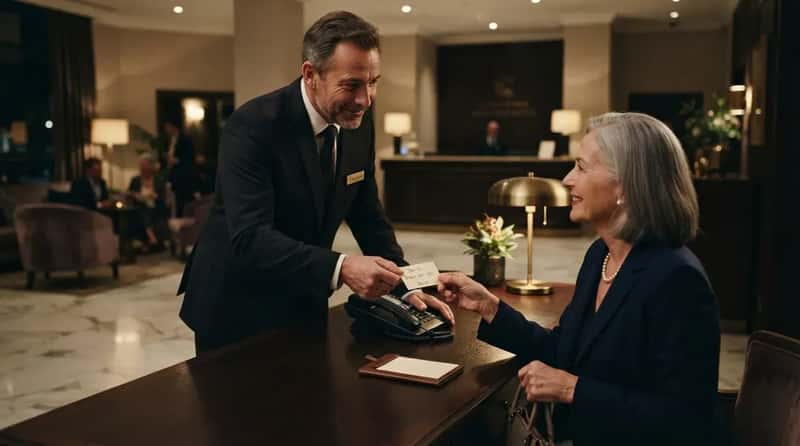
A general hotel switchboard can feel like a maze at 11 p.m. when something’s wrong. Experienced concierges know this, so they quietly slip older guests a direct extension or a personal cell number instead.
It sounds small, but it changes everything about how a stay feels. When a guest needs an extra blanket, has a question about the thermostat, or just wants reassurance, calling one specific person who already knows their name and room number removes the anxiety of starting from zero every time. This kind of access never appears in any amenities brochure. It’s extended person to person, only to guests staff have quietly decided to look out for.
#14 – They Grab the Luggage Before Anyone Has to Ask

Dragging a suitcase across a long lobby or up a ramp is one of the most avoidable stress points of any hotel stay. For many travelers over 60, it’s also the moment that colors everything that follows.
A well-trained concierge doesn’t wait to be flagged down. They watch body language at the entrance and intervene before a guest has to ask for help – a small act that costs staff only a few minutes but can save a guest an entire evening of soreness or embarrassment. Most guests never realize this is a deliberate habit, not luck. It’s simply what good concierges do when they’ve seen the alternative play out badly too many times.
#13 – They Walk the Accessible Route Before You Need It

Knowing a hotel technically has ramps and elevators is very different from knowing how to actually get around the building without hitting a snag. Sharp concierges personally walk the path between a guest’s room, the restaurant, and the pool ahead of time.
That means knowing which elevator is temporarily down, which hallway has an uneven transition strip, and which “accessible” bathroom is compliant on paper but awkward in practice. This kind of scouting almost never gets mentioned to the guest at all. It just quietly prevents a problem from ever happening, which is exactly the point – the best service is the kind you never notice was necessary.
#12 – They Push Guests Toward Lower Floors Near the Elevator
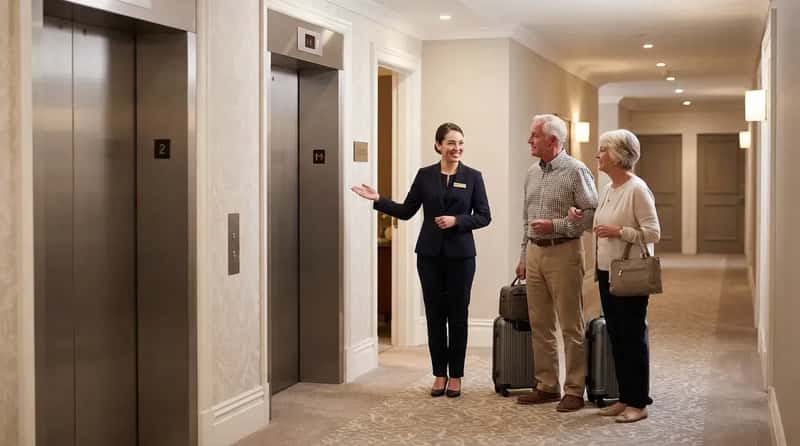
Room assignment might seem like a random shuffle, but for guests flagged as needing extra consideration, it often isn’t. Concierges frequently steer bookings toward rooms close to elevators and away from long, disorienting corridors.
Federal accessibility rules actually require hotels to spread accessible rooms across floors and room types, so guests aren’t boxed into one corner of the building – accessible rooms are supposed to be offered across different bed sizes, views, and price points, just like any other room class. Very few guests realize this dispersal is a legal requirement, not a courtesy. Concierges just make sure it actually happens at check-in instead of getting lost in a busy front-desk shuffle.
Worth Knowing
- Federal design standards set accessible-room minimums based on hotel size – a 100-room property must offer at least four rooms with mobility features.
- By law, an accessible room can’t cost more than a standard room of the same type, so guests never pay extra for the accommodation.
- The same rules require those rooms to be spread across floor levels, views, and price tiers instead of clustered in one corner of the building.
#11 – They Quietly Flag Dietary and Mobility Needs to the Restaurant

Nobody wants to repeat their allergy list or mobility limitations to a new server at every single meal. Attentive concierges pass that information along before a guest ever sits down, so the table is already set up right.
That might mean a chair without arms is waiting, a large-print menu is already at the place setting, or the kitchen already knows to hold the shellfish. This kind of quiet coordination happens entirely behind the scenes – guests just experience it as good luck. It’s one of the clearest examples of care that’s designed to be invisible rather than announced.
#10 – They Remember Names, Room Numbers, and Small Preferences

Some hotels keep informal notes – a favorite newspaper, a preference for extra towels, a spouse’s name – and quietly reference them on a guest’s next stay, years later. It feels like magic. It’s actually just diligent note-taking.
This kind of continuity matters more to older repeat guests than almost any other perk, because it signals they’re recognized as a person rather than a transaction. Many longtime hotel loyalists say this recognition is worth more to them than a room upgrade. It’s a controversial opinion among younger travelers focused on price, but for older guests, being remembered often outweighs a discount.
#9 – They Arrange Large-Print and High-Contrast Materials in Advance
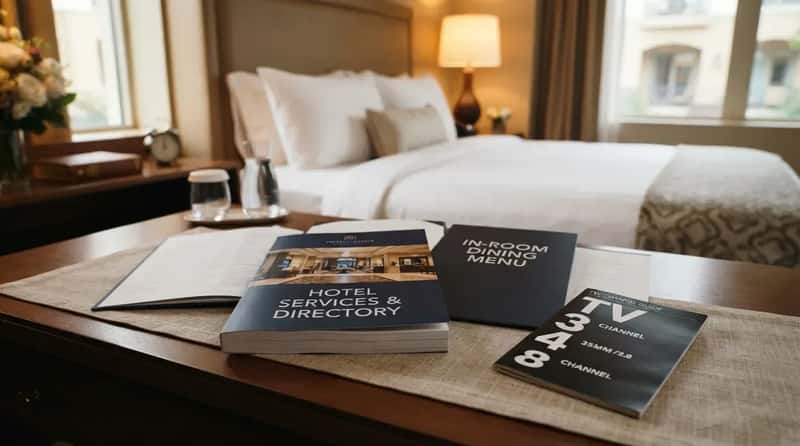
Standard hotel directories, room service menus, and TV guides are often printed in tiny type nobody bothers to test for readability. Concierges who pay attention swap these out before an older guest even unpacks.
Federal accessibility guidance specifically calls for hotels to offer the room service menu, hotel directory, and TV channel guide in accessible formats, and the better properties apply that standard well beyond guests who formally request it. Most guests assume this is standard hotel print stock – it isn’t. It’s a small, deliberate substitution made specifically because someone noticed a birthdate on a reservation form.
#8 – They Simplify the Tech Instead of Explaining It

Modern hotel rooms are packed with keyless entry apps, voice assistants, and touchscreen thermostats that can overwhelm anyone who didn’t grow up with a smartphone in hand. Rather than handing over a manual, savvy concierges pre-set the basics.
Some properties, including large chains, now use voice-activated devices so guests can order room service, request housekeeping, and get concierge advice out loud, without touching a single app. The quiet trick isn’t teaching the technology – it’s removing the need to learn it at all. A pre-programmed thermostat and a paper backup for the TV remote solve more problems than any tutorial ever could.
At a Glance
- About 94% of adults 50-plus say they’re at least somewhat comfortable with technology, according to AARP research.
- Yet only around 8% of that same group has actually used AI tools for trip planning, even though most have heard of them.
- That gap is exactly why a pre-set thermostat and a voice-activated device tend to land better than a tutorial ever would.
#7 – They Coordinate Mobility Equipment Without Making It a Production

Arranging a wheelchair, walker, or shower bench used to mean an awkward negotiation at the front desk in front of a line of other guests. Now, the best concierges handle it entirely by phone before arrival.
Accessibility guidance for lodging specifically instructs staff to know the location of adapted equipment and how to operate the devices, so there’s no scrambling once a guest is standing in the lobby. The equipment often shows up in the room already in place, with no conversation required. It’s one of the more expensive quiet gestures a hotel makes, and almost none of them mention it costs them anything at all.
#6 – They Push Back Against “Accessible” Rooms That Aren’t Really

Here’s an uncomfortable truth some hospitality insiders will admit privately: not every room labeled “accessible” is actually usable. Grab bars get installed at the wrong height, doorways get measured generously, and roll-in showers sometimes have a lip nobody accounted for.
The better concierges know exactly which rooms in their building genuinely work and steer bookings there directly, sometimes overriding what a booking engine assigns automatically. This is a controversial admission most hotels would rather not make publicly. But guests who’ve been quietly redirected away from a “technically compliant” room say it’s one of the most meaningful things staff ever did for them.
#5 – They Extend Grace on Check-In and Check-Out Times

Rigid check-in and check-out windows assume every guest can pack, unpack, and move at the same pace. Many concierges quietly override that assumption for older travelers without ever framing it as a special favor.
A slower morning after a long travel day, or extra time to organize medications and mobility aids before checkout, can be the difference between a stressful departure and a calm one. This flexibility rarely appears on any rate sheet or loyalty tier chart. It’s granted at a concierge’s discretion, guest by guest, based on nothing more than a read of the room.
#4 – They Keep a Quiet Eye on Solo Older Travelers
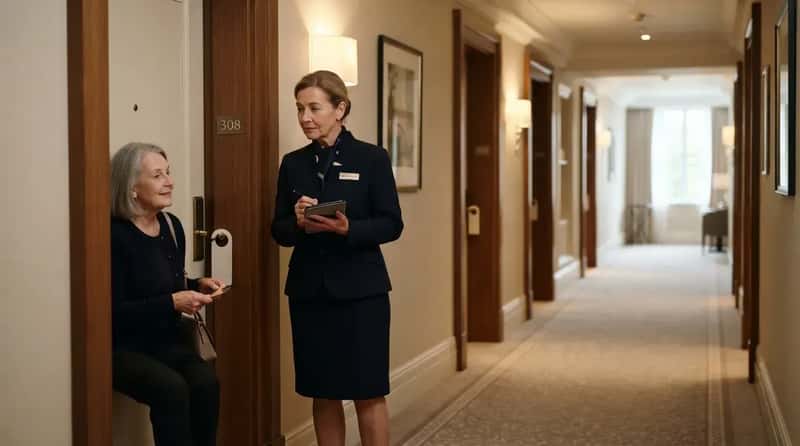
Solo travel among older adults is more common than most people assume, and it shows up constantly in senior-focused tour groups, cruise rosters, and long hotel stays. Concierges at attentive properties notice patterns – a guest who hasn’t come down for breakfast, or hasn’t answered a routine housekeeping knock.
Staff rarely intervene directly, but a courtesy call or a knock “just to check on the room” is often more than routine housekeeping. Most guests never realize how closely this is being tracked. It’s discretion dressed up as ordinary hotel procedure.
#3 – They Quietly Prioritize Accessibility Requests Ahead of Everyone Else’s
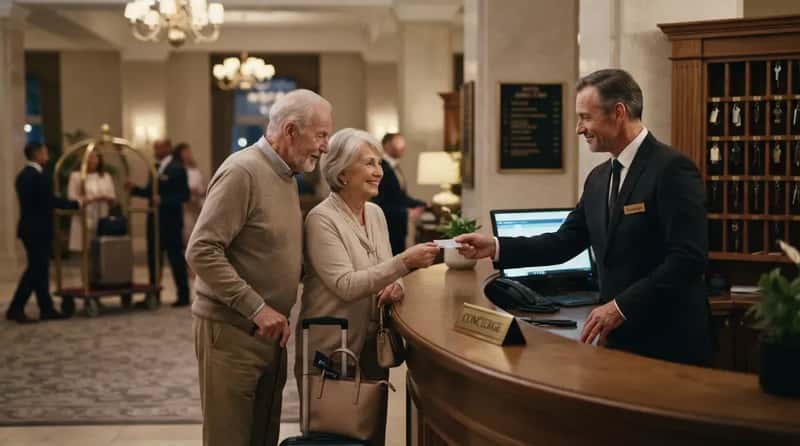
Federal lodging rules require accessible rooms to be locked in for guests who need them, even when the hotel is otherwise sold out. Those rooms have to be held back until every other room of that type is booked, and once reserved, they’re pulled from the system entirely so nobody can accidentally double-book them.
In practice, this means a good concierge treats these bookings as untouchable, even under pressure to squeeze in more reservations during a sold-out weekend. Very few travelers know this protection exists at all, let alone that it’s federally mandated. When it’s honored properly, it’s invisible. When it’s violated, guests find out the hard way – often at 11 p.m. with luggage in hand.
Why It Stands Out
- Once a guest books an accessible room, federal lodging rules require that exact room be pulled from the reservation system entirely.
- That protection holds even during a sold-out weekend, when hotels are under the most pressure to squeeze in extra bookings.
- It’s one of the few travel guarantees that protects a specific room, not just a general room type.
#2 – They Handle Medical Moments With Practiced Calm, Not Panic

Every experienced concierge has a story about a health scare in a hotel lobby – a fall, a medication mix-up, a sudden dizzy spell. What separates good properties from great ones is how quietly and quickly staff respond without turning it into a spectacle.
Well-trained teams know which local pharmacies deliver, which nearby urgent care clinics move fastest, and how to get a guest back to their room with dignity intact rather than an audience watching. This kind of preparation is almost never tested until the exact moment it matters most. Guests who’ve experienced it say it’s the single biggest reason they return to the same hotel year after year.
#1 – They Ask Instead of Assume, Every Single Time

The single biggest thing separating a genuinely attentive concierge from a well-meaning but clumsy one comes down to one habit: asking rather than guessing. Hospitality trainers increasingly emphasize offering assistance and letting the guest define what they actually need, rather than deciding for them.
The best staff approach situations with an offer of help, asking guests how they’d like to be assisted rather than presuming their needs, which respects a guest’s independence instead of quietly taking it away. This single distinction is the difference between a guest feeling cared for and a guest feeling handled. It costs nothing, requires no special training budget, and yet it’s the detail almost every five-star review of an older traveler’s stay comes back to in the end.
None of these sixteen habits show up in a welcome packet, and most hotels will never brag about them, because the entire point is that they’re not supposed to be noticed. Older travelers already make up a large and growing share of the travel market, and the properties that quietly build these habits into daily operations are the ones earning repeat loyalty without ever advertising a single accommodation.
What’s the smallest gesture a hotel employee ever did for you or an older family member that ended up meaning the most? Drop it in the comments – we’re collecting the best ones.