You’d think the giveaway is obvious: the sleek carry-on, the noise-canceling headphones, the neck pillow shaped like a cloud. Gate agents and flight attendants say that’s almost never it. The real tells have nothing to do with what someone is carrying and everything to do with how they move, stand, and react in the ninety seconds before they step onto the plane.
What actually gives someone away happens fast, often before the jet bridge door even opens, and most of it has nothing to do with status pins or elite luggage tags. Airline staff have quietly compared notes on the same handful of tells for years, and once you know them, you’ll start spotting them on every single flight. Here’s what boarding crews really watch for.
#16 – They Already Know Their Group Before It’s Ever Called
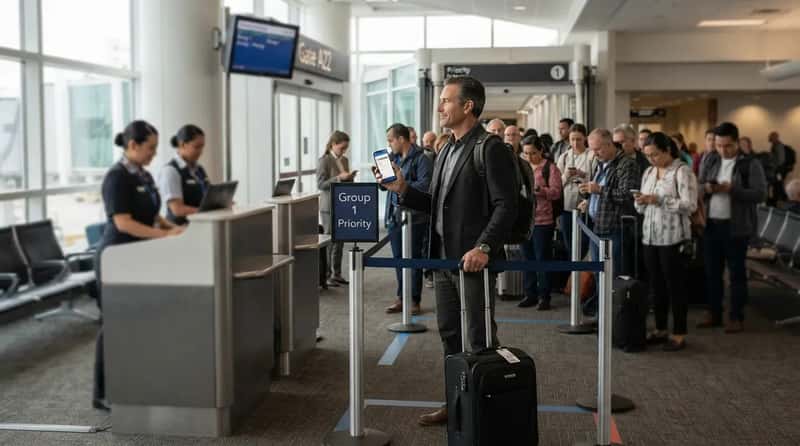
Frequent flyers don’t wait to hear their zone announced – they checked it on the app before they even left security. Gate agents work off a structured priority list, not guesswork, and regulars know exactly where they land on it before the podium lights up.
That means a seasoned traveler is already mentally sorted into the right lane while everyone else is still squinting at the screen. They’re not asking “what group am I?” They’re asking “how many people are ahead of me in my group?” It’s a subtle but instant tell for staff watching the crowd form.
Fast Facts
- Most major U.S. airlines board in 5 to 9 numbered groups, from top elites down to basic economy.
- Boarding order is typically set by loyalty tier, fare class, and sometimes co-branded credit card status.
- Many airlines now push your group number straight to your phone before you even reach the gate.
#15 – They Never Join the “Gate Lice” Crowd
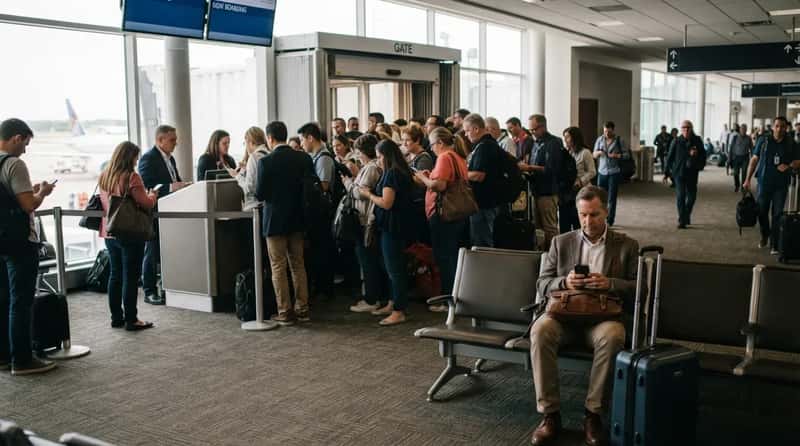
There’s an actual nickname for the passengers who swarm the gate before their turn, and frequent flyers refuse to be one of them. Staff call it “gate lice” – the hovering, the inching forward, the quiet dare that the rules might not apply to them.
Gate agents notice the difference immediately. One traveler is glued to the podium; the other is sitting calmly a few rows back, scrolling their phone, glancing up only when the group numbers change. One former American Airlines gate agent said she never stands near the gate before her boarding group is actually called, since there’s no real point in crowding an area she’ll be walking through anyway. That patience alone separates road warriors from everyone else.
#14 – Their Boarding Pass Is Already Glowing, No Fumbling Required
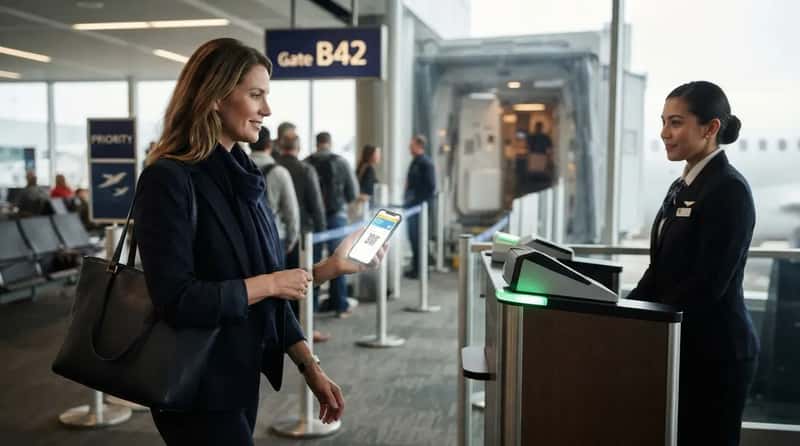
By the time a frequent flyer reaches the scanner, their phone screen is already bright and open to the right pass, not buried under five unlocked apps. Staff can spot the difference from ten feet away, long before anyone even taps the screen.
New airport technology has made this tell even sharper. Airlines have started rejecting passes scanned at the wrong time entirely, which makes the confident, ready-to-go traveler stand out even more against the person digging through a bag for a printed itinerary. It’s a two-second interaction that tells an entire story about someone’s flying history.
#13 – Their Outfit Alone Rules Out an Amateur Mistake
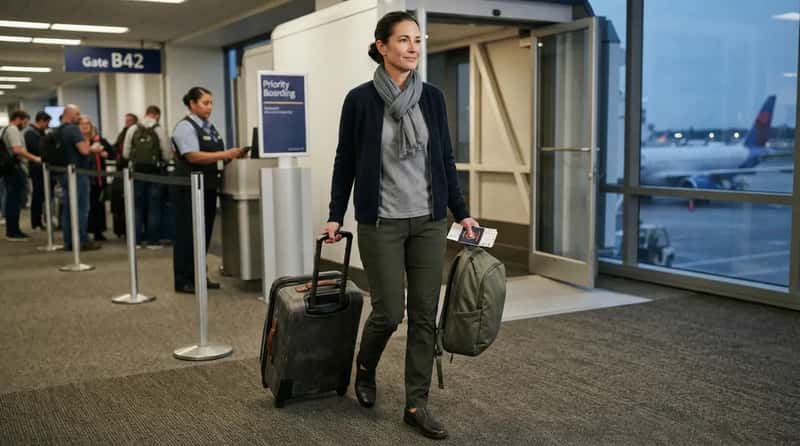
Clothing is one of the fastest silent signals in the boarding line, and staff read it constantly. Flip-flops, pajama pants, jeans too tight to sit in for three hours, or dress shoes that pinch by minute twenty all signal someone who hasn’t learned the art of airplane comfort yet.
Frequent flyers dress like they’ve done the math on comfort versus chaos. Strategically packed bags, layers that come off fast, nothing bulky to wrestle into an overhead bin. It’s not a fashion statement, it’s an efficiency plan, and staff can tell the two apart instantly.
#12 – Their Carry-On Has Already Done the Math
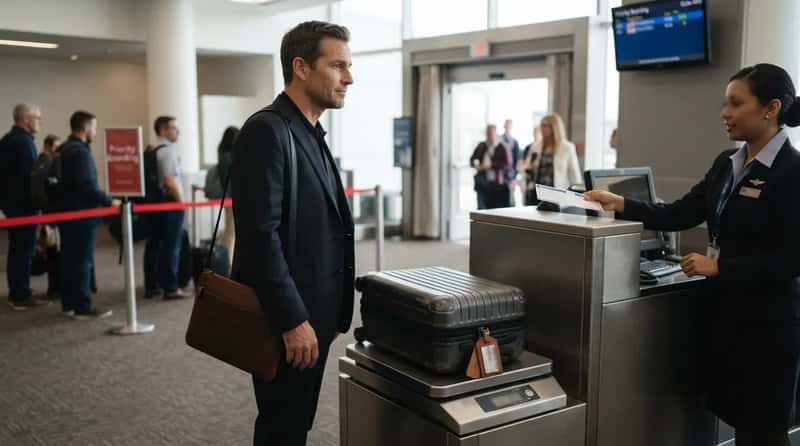
Regulars don’t overpack, and they definitely don’t show up juggling three separate bags hoping nobody notices. Every item earns its place because they’ve learned the hard way what actually gets used on a flight. Frequent flyers stick to one strategically packed bag, the fewer moving parts the better.
That single-bag discipline saves real time at the gate and in the overhead bin later. Staff genuinely appreciate it, because a lean, purposeful carry-on moves through the line in seconds instead of minutes. It’s one of the quietest tells, but one of the most reliable.
#11 – They Speak the Secret Alphabet Without Even Realizing It
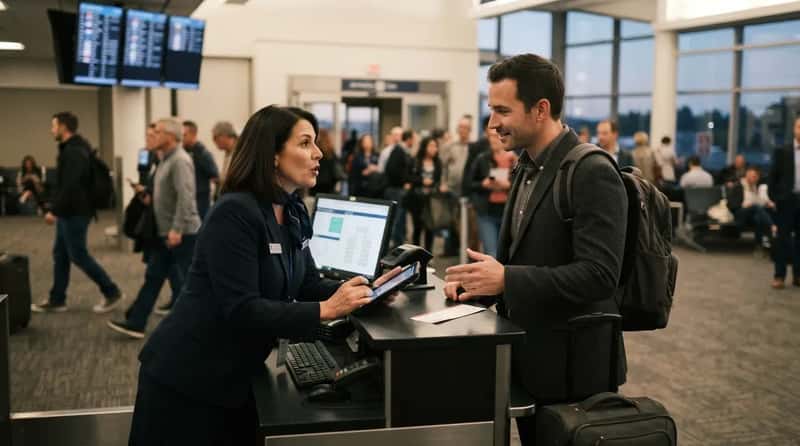
Ask a frequent flyer to spell something under pressure, and don’t be surprised if you get a phonetic alphabet instead of regular letters. One traveler described rattling off “Foxtrot, Lima, Yankee, Echo, Romeo” without even thinking about it.
It’s a small verbal tic, but gate agents catch it constantly. Regulars also use airline shorthand naturally – zone numbers, gate codes, terminal jargon – the same way locals use slang that tourists never quite pick up. Staff don’t need a boarding pass to know who’s fluent.
#10 – They Already Know What’s On the Menu Before Anyone Says a Word
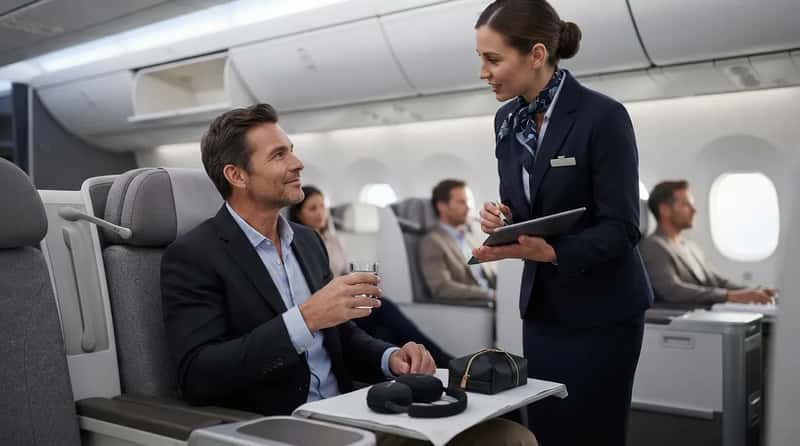
Frequent flyers on longer routes don’t wait for the meal cart to explain the options, they’ve already decided. Some preorder ahead of time, and others just know the menu cold, casually asking, “Do you have the Asian chicken?” before the flight attendant finishes the sentence.
That kind of familiarity only comes from repetition. It’s a small moment, but for crew working a packed cabin, it’s an instant signal that this passenger has done this exact flight, or one very much like it, many times before.
#9 – Snacks and Entertainment Are Already Within Reach Before They Even Sit
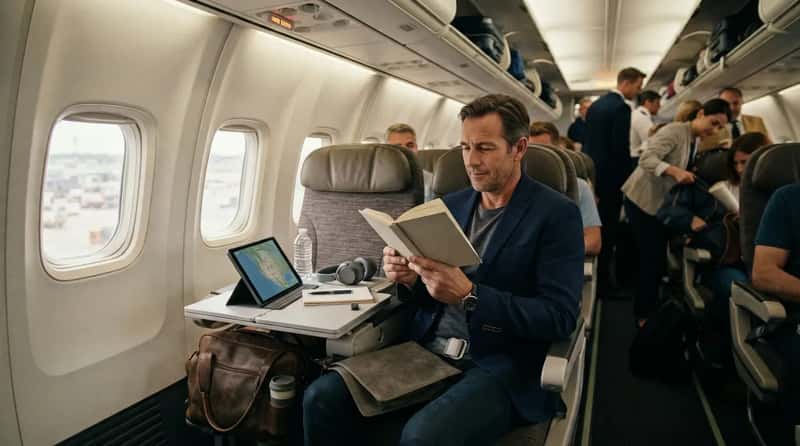
The overhead bin closes, and a frequent flyer is already holding exactly what they need for the next few hours. A book, a tablet, headphones, water, something work-related, all staged and within reach before the seatbelt sign even goes on.
Compare that to a first-time flyer who reopens their bag three separate times mid-flight looking for a charger they forgot to pull out beforehand. Staff notice who has to ask for the aisle to be cleared twice, and who never does.
#8 – They Stay Unnervingly Calm When Everything Goes Wrong
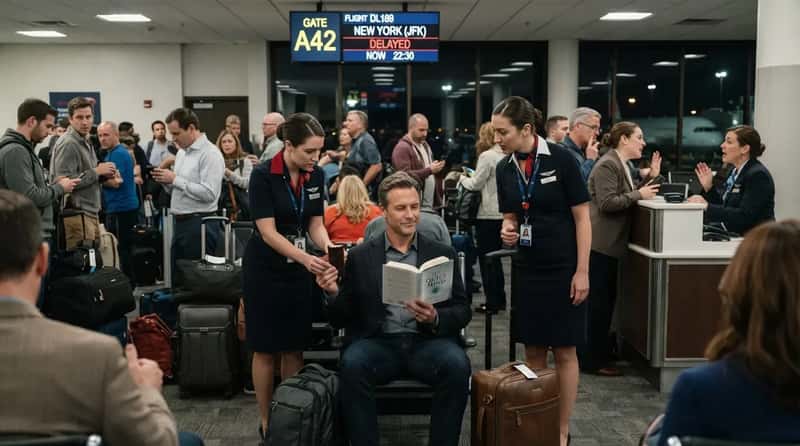
Delays and diversions separate frequent flyers from everyone else faster than any boarding pass could. Flight attendants say the passengers who stay calm in chaos stand out immediately, because calm is contagious, and chaos spreads even faster.
One traveler described a six-hour delay where half the passengers were pacing and arguing while the other half, mostly regulars, stayed composed, with one man even offering the crew a chocolate bar. Guess who got the open upgrade seat when one finally appeared. That’s not luck. It’s a pattern staff have watched repeat itself for years.
Worth Knowing
- Frequent flyers often have a backup plan ready: rebooking apps open, alternate routes already checked.
- Staying visibly composed can factor into how gate agents choose who gets an open upgrade seat.
- Crew consistently say calm passengers are the first ones they think of during irregular operations.
#7 – Crew Recognize Them by Schedule, Not by Name Tag
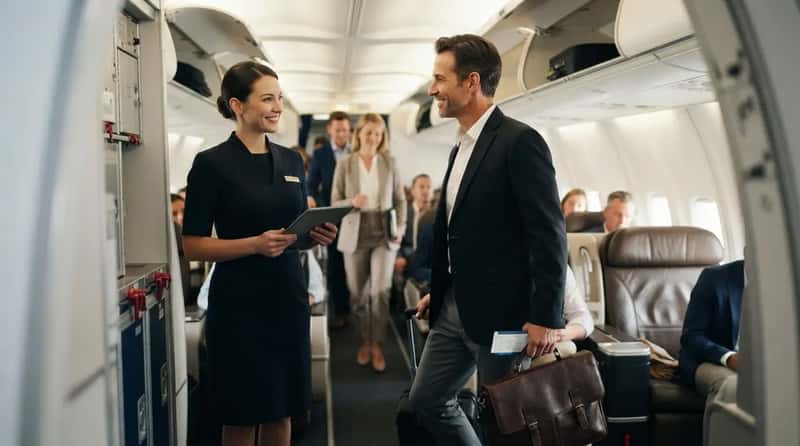
On heavily traveled business routes, some passengers become so familiar that crew stop needing a name at all, they just know the pattern. One flight attendant who works a lot of business routes said she gets to know her regulars by their schedules: “On Mondays and Wednesdays, I see them because they have a meeting in another city that’s not too far away.”
That level of recognition doesn’t happen by accident. It happens because a specific type of traveler flies the exact same short-hop route so often that crew rotations start to feel like a recurring cast of characters. It’s oddly personal for an industry built on strangers passing through.
#6 – They Treat the Cabin Crew Like People, Not Staff
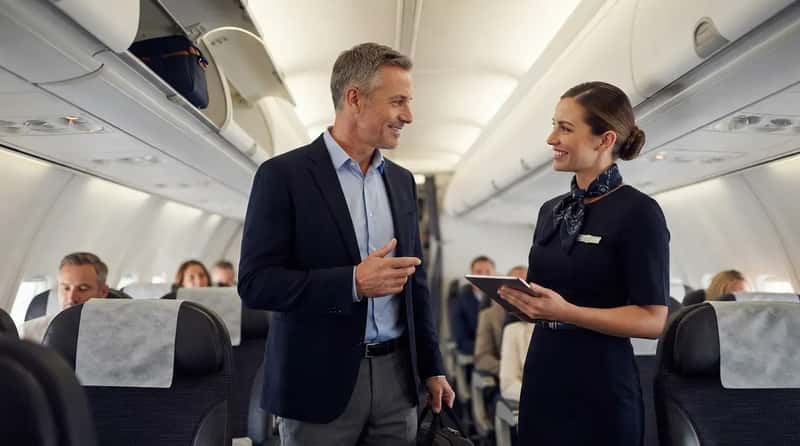
Basic acknowledgment goes further than most travelers realize, and crew remember exactly who offers it. A simple hello reminds a flight attendant they’re not an invisible service provider in a uniform, and it makes the traveler’s own flight lighter too.
We remember passengers who act like guests, not owners.
Flight attendant
Frequent flyers tend to fall into that first category without even trying, because years of flying have taught them the crew’s day is harder than it looks from a window seat.
#5 – They Clean Up Without Ever Being Asked
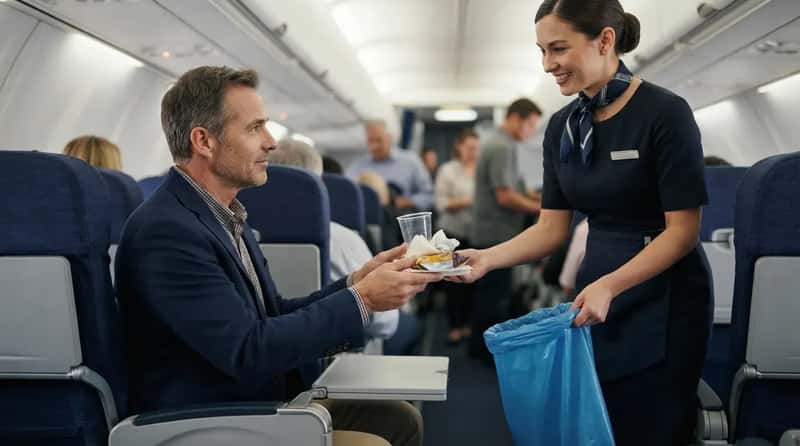
Little habits at landing tell staff almost as much as boarding habits do. Some passengers treat the plane as temporary, a space to be endured and left behind – wrappers stuffed in seat pockets, tissues left on the tray, spilled drinks never wiped up.
Seasoned travelers do the opposite almost automatically. They tidy up, stack their cups, hand trash straight to the crew. It’s a tiny gesture, but for flight attendants doing a fast cabin turn, it’s an unmistakable signal of someone who’s done this hundreds of times before.
#4 – New Boarding Technology Is Exposing Pretenders in Real Time
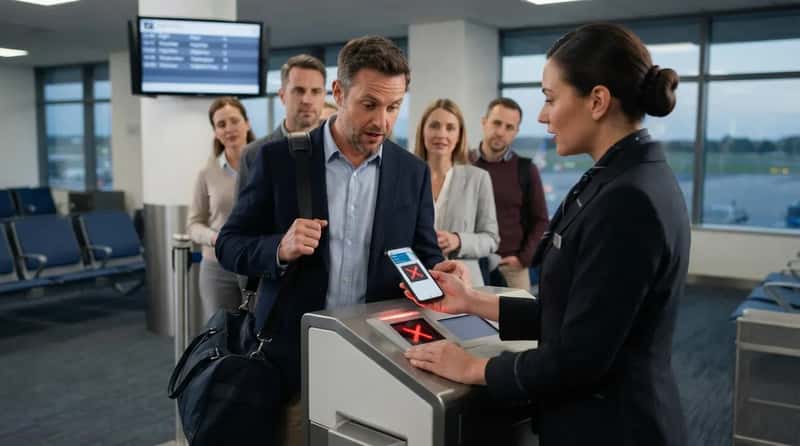
This is the tell that’s genuinely new, and it’s making frequent flyers look even more obvious by comparison. American Airlines introduced new ticket-checking technology in 2024, similar to the Qantas model, that rejects the boarding pass and beeps when passengers try to board out of turn.
The public embarrassment factor is real. The rogue flyer has to walk back and rejoin the proper boarding group, in full view of everyone waiting behind them. One traveler flying out of Albuquerque said flatly it “was awesome to see it enforced.” Frequent flyers never trigger the beep, because they never needed to test the system in the first place.
#3 – Gate Agents Already Have a Secret Priority List With Their Name Near the Top
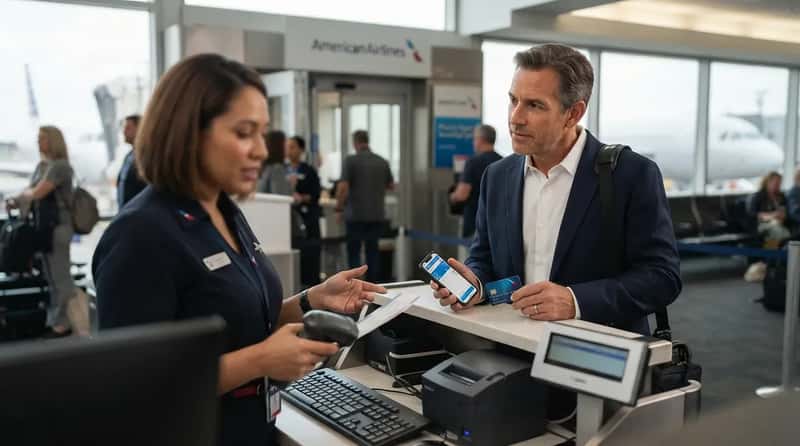
Most passengers don’t realize upgrades aren’t handed out on vibes, they follow a strict internal order that gate agents can’t skip. For American Airlines specifically, that list runs from elite status, to the type of upgrade requested, to Loyalty Points earned in the last 12 months, to fare class, to the exact date and time the upgrade was requested.
Frequent flyers who’ve been burned before know this list exists, and it shows in how they interact at the counter – direct, specific, no wasted small talk. Roughly four in five travelers worldwide are now enrolled in some kind of frequent flyer scheme, but only a fraction understand how that list actually orders them. Staff can tell instantly who belongs to that fraction.
Quick Compare: American Airlines Upgrade Priority
- Elite status level
- Type of upgrade requested
- Loyalty Points earned in the last 12 months
- Fare class purchased
- Date and time the upgrade was requested
#2 – Solo Travelers on Quiet Flights Get Noticed First
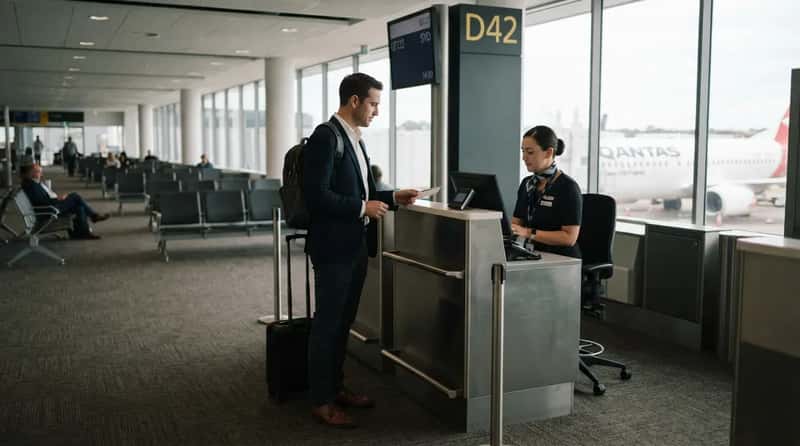
Flying alone quietly puts a passenger ahead of almost everyone else in the upgrade conversation, and staff clock it the moment they scan a solo ticket. It sounds almost unfair, but when only one seat needs to move, the logistics are simple.
Frequent flyers have figured this out, which is why so many of them deliberately book off-peak, midweek departures instead of the busiest flights of the week. Research has actually found that frequent flyers, even at the entry level of a loyalty program with no real perks yet, change their booking behavior in anticipation of tier upgrades down the road. Staff see the pattern before the passenger even reaches the counter.
#1 – The Overhead Bin Move Gives Them Away in Under Three Seconds
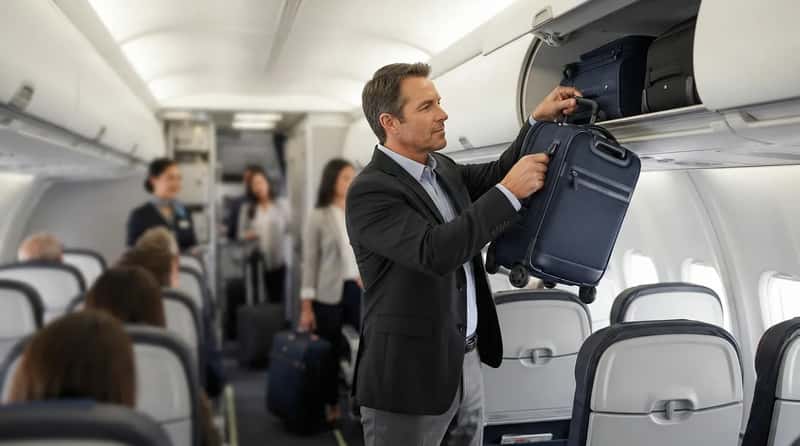
If there’s one single tell that beats every other on this list, crew agree it’s this one. Frequent flyers already know exactly what they’re doing before they even arrive at their row, and it shows in how fast the whole moment unfolds.
The choreography is almost identical every time. They lift the bag, store it, close the compartment, and step out of the aisle without breaking the flow of everyone boarding behind them. On a full aircraft carrying hundreds of people, those few seconds actually matter. One flight attendant summed up the entire tell in a single line: frequent flyers “come on, they put their stuff away, boom, they’re seated. Everything’s tucked in, and nothing else has to be said.” No status tag required. That alone tells the whole story.
Why It Stands Out
- Bag stored, compartment closed, aisle cleared – all in about three seconds.
- No hesitation, no repacking, no blocking the row behind them.
- It’s the single tell every gate agent and flight attendant mentions first.
None of these tells require a black elite card or a lounge invitation. They’re built entirely out of small, repeatable habits – reading a screen instead of fumbling for one, staying quiet instead of hovering, tidying up instead of walking away. Staff aren’t guessing. They’ve simply watched thousands of boardings play out the same way, over and over, until the pattern became impossible to miss.
Which one of these hits closest to home for you? Drop it in the comments, and be honest about which tell you’re still working on.