You walk down the gangway with a sunhat, a loose plan, and no worries. Up on the bridge, the same morning looks very different: tides, gusts, paperwork, and a clock that doesn’t care about your lunch reservation. These are 17 real calls officers make on a so-called ordinary port day, and almost none of them ever reach the loudspeaker.
Some are settled before the ship touches the pier. One can decide whether your port exists at all. And the last one involves a rule about stragglers that’s colder than most people expect. Start with the conversation that happens before the ship even moves.
#17 – The Pilot Comes Aboard With a Plan, and the Captain Has to Decide If It Holds Up
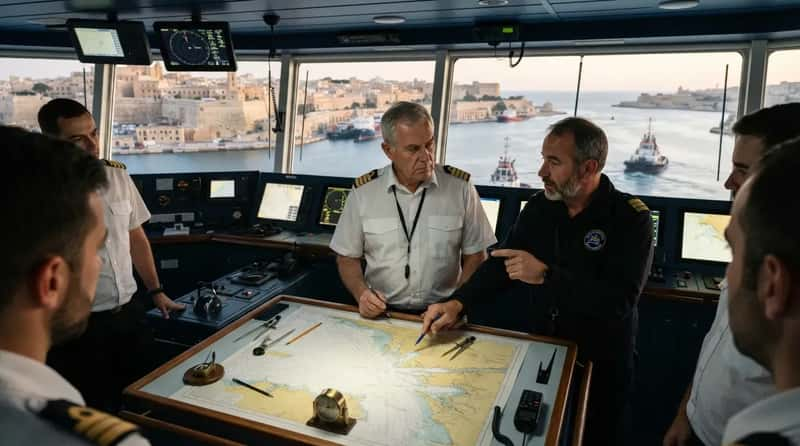
Many ports require a local pilot, so the day’s first big call happens on the bridge before a single line is cast off. The bridge team and the pilot go through a master–pilot exchange. That covers the route, speed, tugs, berth, and what happens if something fails. It’s a real briefing, not a handshake.
Here’s the twist: bringing aboard a local expert doesn’t hand over the responsibility. IMO guidance says a pilot on board does not relieve the master or officer of the watch of their duties. Bridge teams are trained to speak up if something looks off, even when the person with the local knowledge is the one talking. But that’s nothing compared to what officers weigh about the water itself in #16…
#16 – The Tide Table Quietly Decides How Much Water Is Under Your Cabin
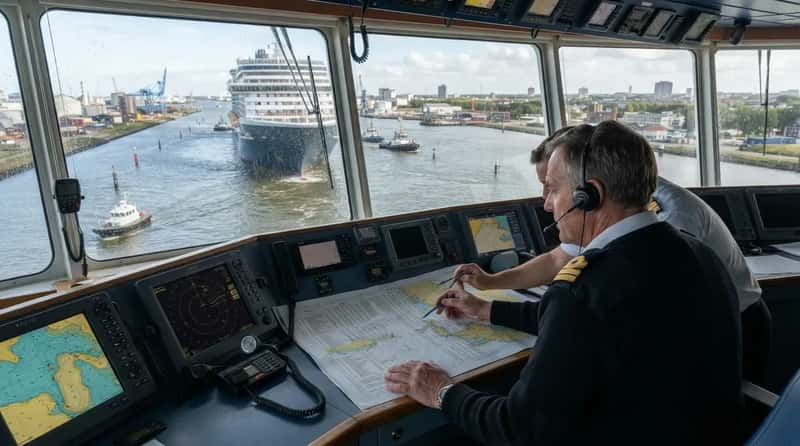
Before the ship goes anywhere, officers check how much water sits beneath the hull. That gap is called under-keel clearance. On many large cruise ships the draft runs roughly eight to nine meters, so channel depth and tide height matter. In some tidal ports, the clock on your itinerary is shaped partly by the moon.
Charts, tide tables, and the pilot’s advice all feed one go or no-go call. Dredged channels add a safety margin, but they aren’t bottomless. A ship can be a tight squeeze for a harbor at one hour and perfectly fine at another. Next up is a threat that has nothing to do with depth…
#15 – Wind Can Overrule the Whole Itinerary Before You’ve Had Breakfast
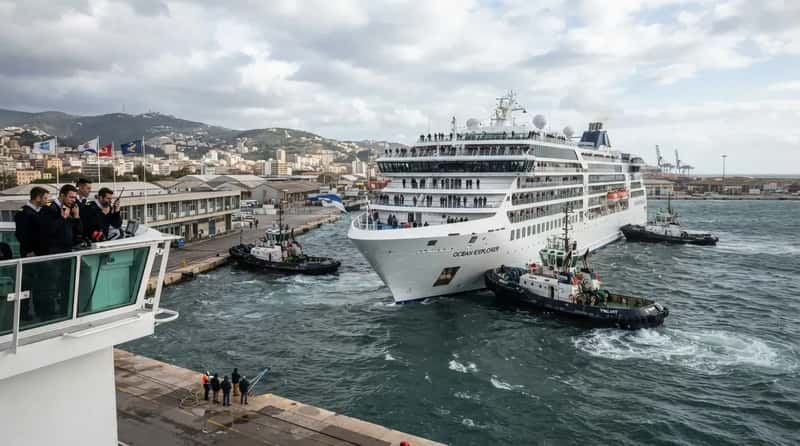
A modern cruise ship is basically a floating apartment tower, and it catches wind like a sail. Officers watch both steady wind and gusts, because a gust can shove the ship sideways at the worst moment of docking. If the numbers climb, the captain may delay, ask for more help, or skip the berth. Wind, not rain or waves, is often the real itinerary-killer in port.
Passengers usually blame the cruise line when a port gets scrapped. But a ship that won’t dock in unsafe wind is doing exactly what it should. Mariners would rather disappoint a few thousand people than crush a pier, a hull, or a gangway. Which brings us to the help ships call in when they can’t do it alone…
#14 – The Quiet Call on Whether to Order Tugs
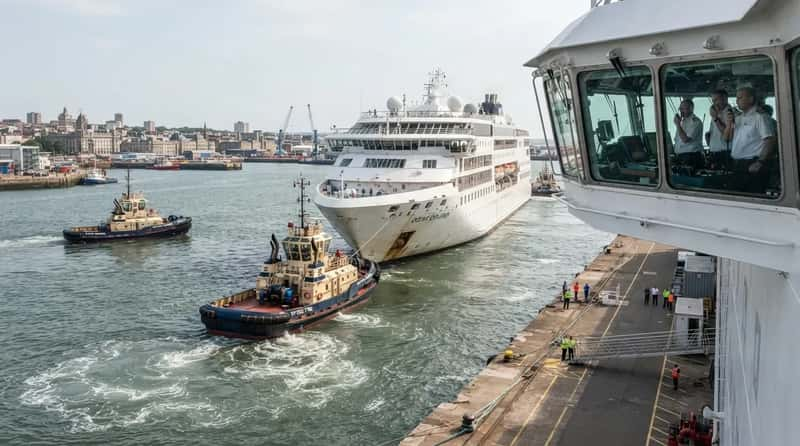
Many cruise ships carry bow thrusters and powerful propulsion units that let them move with surprising precision. Some can actually slide sideways toward a pier, thanks to thrusters at both ends. In calm weather, some dock with little or no tug help. But a captain can still order tugs as a precaution when conditions look uncertain.
Quick Compare
- Calm, clear morning: a well-equipped ship may dock with little or no tug help.
- Gusty or uncertain morning: the captain may order tugs early as cheap insurance.
- Strict local rules: some ports require tugs no matter the weather or the crew’s skill.
Port rules may also require tugs no matter how skilled the crew is. The call has to be made early, because tugs need time to get into position. Ordering them costs money, but the safety decision sits with the bridge. Passengers see a small boat nudging the hull and assume it’s routine, when it’s often a judgment call made an hour earlier. And speaking of ships that never touch a pier at all, there’s #13…
#13 – Dock or Anchor? The Tender Decision That Can Make or Break Your Day
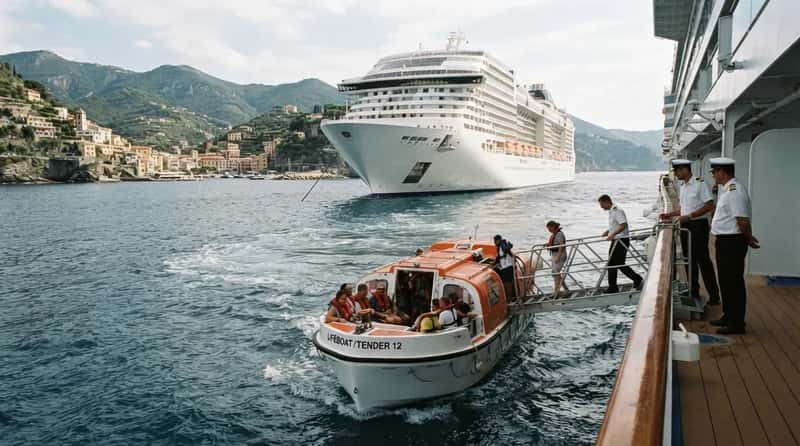
At some ports the ship anchors offshore and ferries passengers in on small boats called tenders. Officers have to decide whether the sea is calm enough for that. They look at swell, wind, and how much the tender and the ship’s boarding platform move against each other. If it’s too rough, tendering can be paused or canceled.
Here’s the part few passengers know. On many ships, the boats carrying you to town are also the ship’s lifeboats. That ties tender operations to safety planning, not just convenience. It’s one reason captains tend to be cautious when conditions turn. But even when the ship is secure, nobody gets off until one more thing happens in #12…
#12 – The Ship Can Be Tied Up and Still Officially Off-Limits
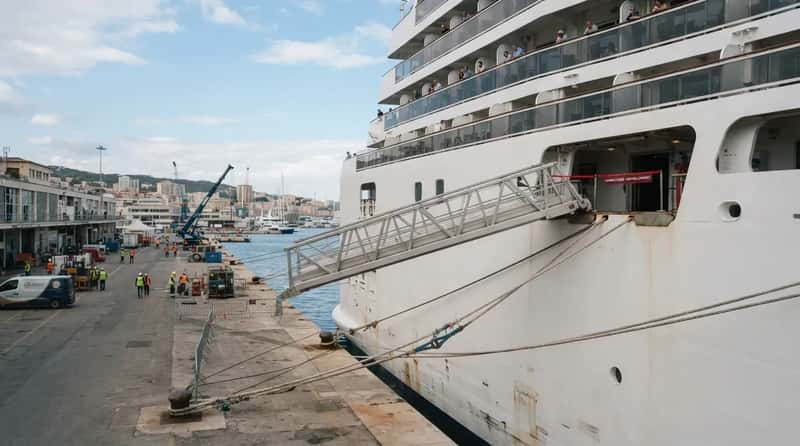
Arriving at the pier doesn’t mean the gangway opens. Ships typically wait for port authorities to grant clearance, often called free pratique, which is permission to have contact with the shore. Immigration, customs, and health checks can all play a role. Officers coordinate with the ship’s agent and wait for the green light.
So a ship can sit at the berth, fully secured, and still be waiting on paperwork. That’s why “we’re delayed getting off” announcements happen even on perfect-weather days. Once clearance arrives, officers also decide where and how the gangway goes, adjusting for tide and pier height. Next comes a call that touches every single person who steps aboard, in #11…
#11 – Which of Three Security Levels the Ship Is Actually Living Under
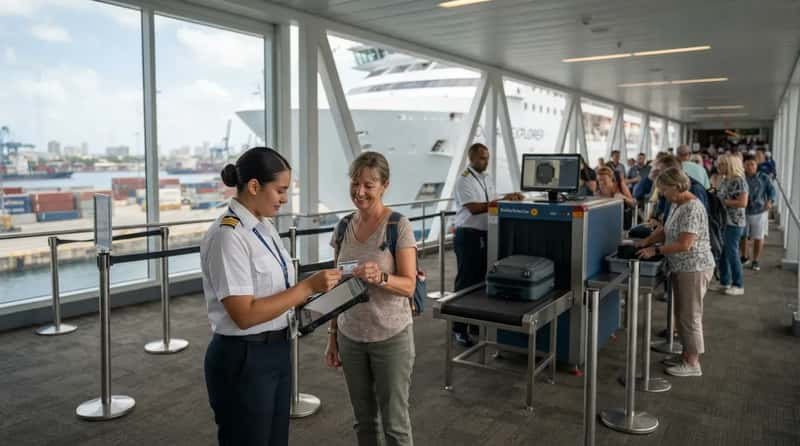
Under the ISPS Code, ships and port facilities operate at a defined security level. The bridge and the ship’s security officer coordinate with the port and confirm who is allowed on board. Visitors, vendors, and deliveries all get checked. Passengers see a bag scanner and a card swipe, but the system behind it is much bigger.
If a ship and a port are working at different levels, they can complete a Declaration of Security to agree on who does what. Most people have no idea this paperwork exists. It’s routine, but it sits quietly behind every boarding. And the next decision is about who’s awake to handle all of this, in #10…
#10 – The Exhausted Officer Problem: Who Gets to Sleep Before Departure
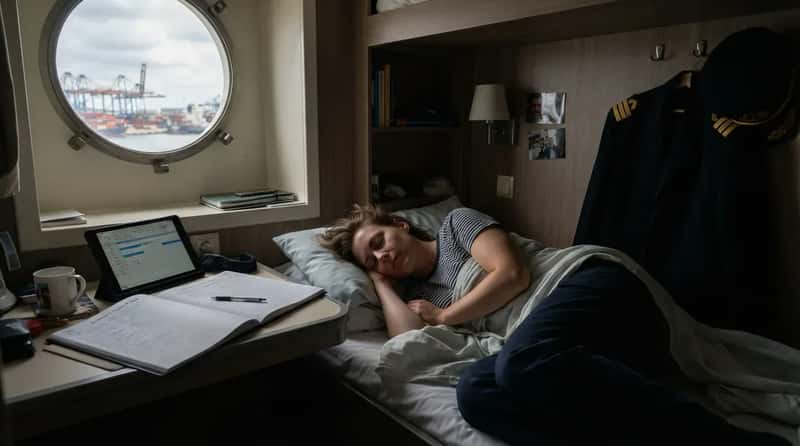
Port days are some of the busiest of the whole cruise for deck officers. Arrival, security, supplies, and departure all land within a few hours. The captain and staff have to plan who rests and who stands watch. International rules call for a minimum of 10 hours of rest in any 24 hours and 77 hours in any seven-day period.
Fast Facts
- The daily 10 hours of rest can be split into no more than two blocks.
- One of those blocks must be at least six hours long.
- Seafarers’ hours of work and rest are meant to be recorded, so inspectors can check them.
- Exceptions exist for emergencies and drills, but they’re meant to be limited.
That means the officer who helps steer you out of port is supposed to be rested before the job starts. Fatigue is a recognized factor in maritime accidents, so rest isn’t a perk, it’s a safety tool. It’s also why a bridge schedule can look like a puzzle with a lot of moving pieces. And while the crew sleeps in shifts, another operation is underway on the pier in #9…
#9 – Fuel, Food, and Trash: The Logistics Calls Passengers Never See
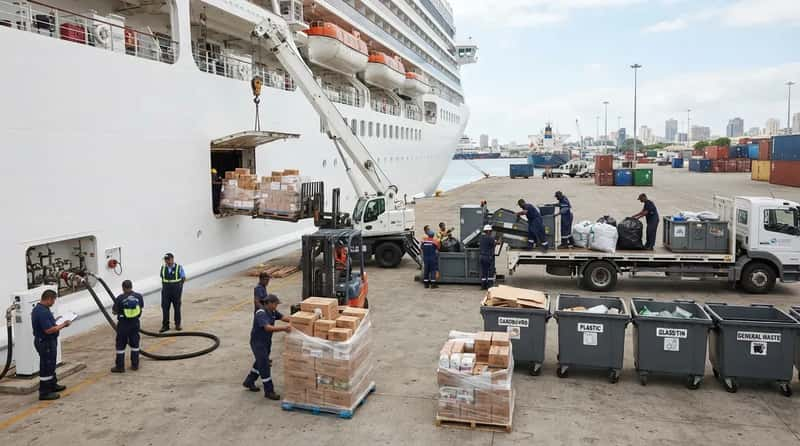
A port day is also a loading dock. Supplies come aboard, waste goes off, and some ships take on fuel. Officers decide when these jobs can overlap with passenger flow, and when they have to stop. A fueling operation can be paused if conditions change, because it follows strict checklists.
Waste is its own hidden world. Under MARPOL Annex V, rules limit what ships can discharge at sea, and larger ships must keep a garbage record book. In plain terms, trash isn’t just thrown away, it’s logged. Passengers see crates on the pier and walk right past. But the next decision is about something far less visible, and it shapes tomorrow in #8…
#8 – Tomorrow’s Weather Is Already Being Argued About Over Lunch
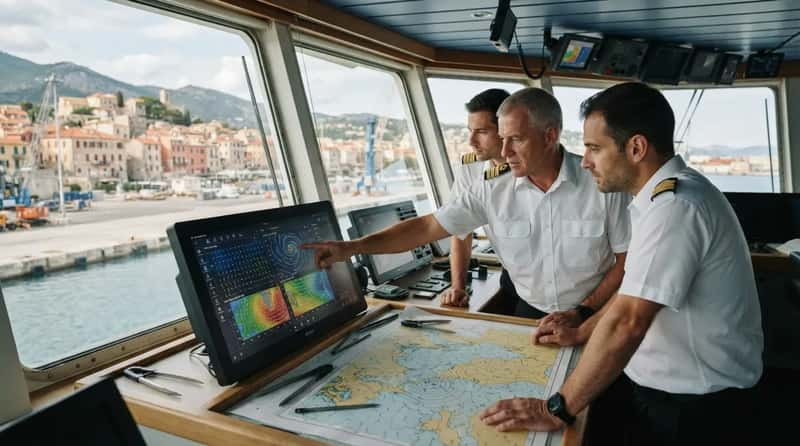
While you’re ashore, officers are reading forecasts for the next leg. They look at wind, swell, and any storm systems that could change the route. If a problem is coming, the ship may leave early or change speed. Some itinerary changes get decided while most passengers are still on shore.
The harbor can look calm while trouble builds somewhere else. Swell from a distant storm can arrive long after the wind has dropped. That’s why the bridge treats a “beautiful day” with a little suspicion. And one more quiet thing is humming away deep in the ship in #7…
#7 – The Ship Never Really Powers Down, and Officers Have to Prove It Still Works
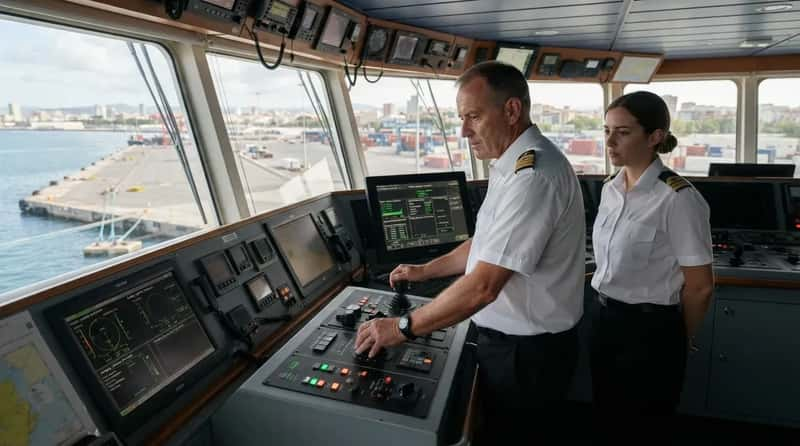
Even docked, a cruise ship needs electricity for lights, kitchens, air conditioning, and safety systems. Most ships run onboard generators, though some can plug into shore power where ports offer it. Officers and engineers decide how to balance power and how ready the ship should be to move. Even at the pier, the ship’s power plant never really sleeps.
Before leaving, the bridge has to confirm that key equipment works. SOLAS rules require testing steering gear and other critical systems ahead of departure. It’s the check nobody sees, and it takes only minutes. Then a different kind of emergency can interrupt the day in #6…
#6 – When One Passenger’s Emergency Changes the Departure Time
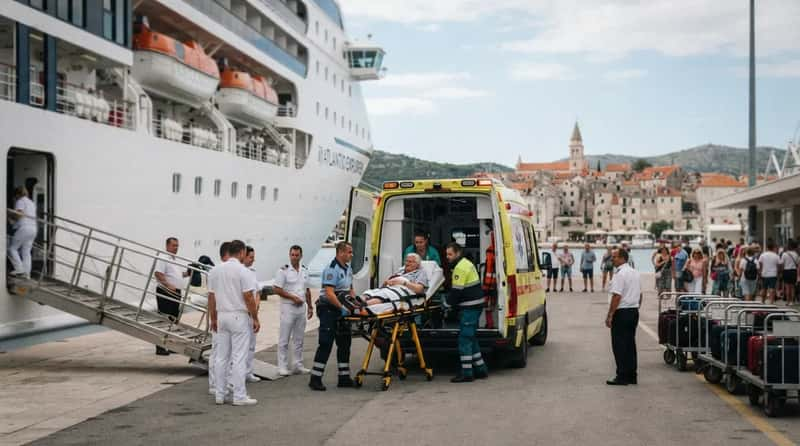
A port day is often the best moment to handle a serious medical case, because a hospital is nearby. The captain works with the ship’s medical team to decide whether a passenger should go ashore. That can involve the port agent, local ambulance services, and sometimes a delay. A single passenger’s emergency can move the whole ship’s schedule.
The rest of the ship usually carries on as if nothing is happening. Staff coordinate quietly, and the plan can include whether a family member goes along. Cruise lines generally have procedures for this, but every case is different. And the next choice involves a whole bus of people who may not make it back, in #5…
#5 – The Late Tour Bus That Tests Whether the Ship Waits
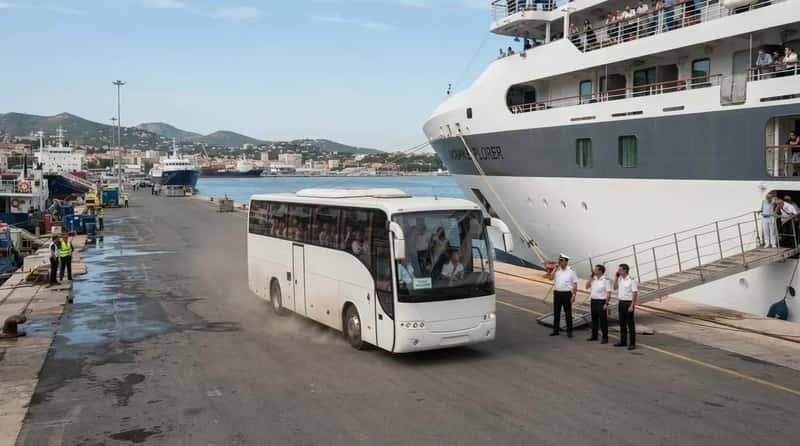
When a ship-organized excursion runs late, the bridge and the shore excursion team talk fast. Policies vary by cruise line, but ships generally wait for their own tours. If you booked on your own and run late, the ship usually won’t hold for you. That’s the bargain behind the higher price.
Officers weigh how late the bus is, how long the pilot window lasts, and whether the next port is on a tight timeline. The captain makes the final call. Cruise forums argue about this one endlessly: ship tours cost more, and plenty of travelers swear independent trips are better. Both sides have a point, but only one comes with a safety net. Up next, the part of the day almost nobody thinks about, in #4…
#4 – The Quiet Watch That Means the Bridge Is Never Truly Empty
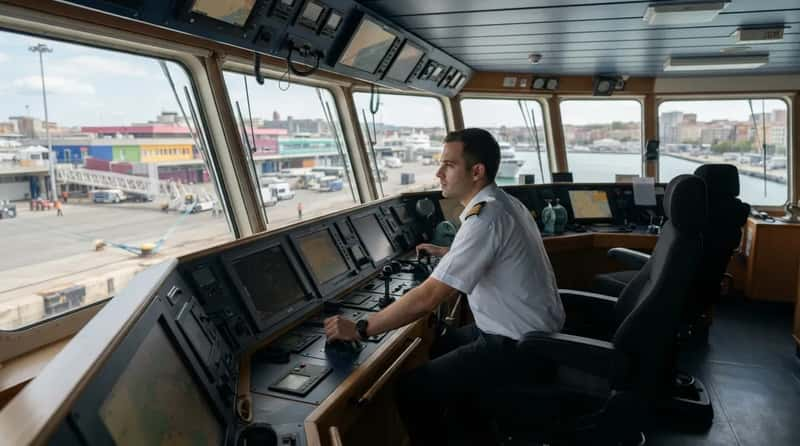
Passengers tend to picture the ship going to sleep once it docks. It doesn’t. A ship in port still keeps an officer in charge of the watch. That person keeps an eye on the weather, the mooring lines, the gangway, and activity around the ship. A ship is never left without someone responsible for it.
At a Glance
- Who: an officer of the watch, around the clock, in shifts.
- Eyes on: mooring lines, the gangway, weather, and nearby vessels.
- Calls the captain when: wind shifts, traffic gets close, or something at the pier looks wrong.
- What success looks like: nothing happens at all.
Their decisions are small but constant. They decide when to adjust lines, when to call the captain, and when something nearby looks wrong. Another vessel moving too close or a sudden change in wind can trigger action. None of it looks dramatic from the pier, and that’s the point. But a much bigger decision about where the ship goes next waits in #3…
#3 – The Authority to Skip the Next Port Entirely
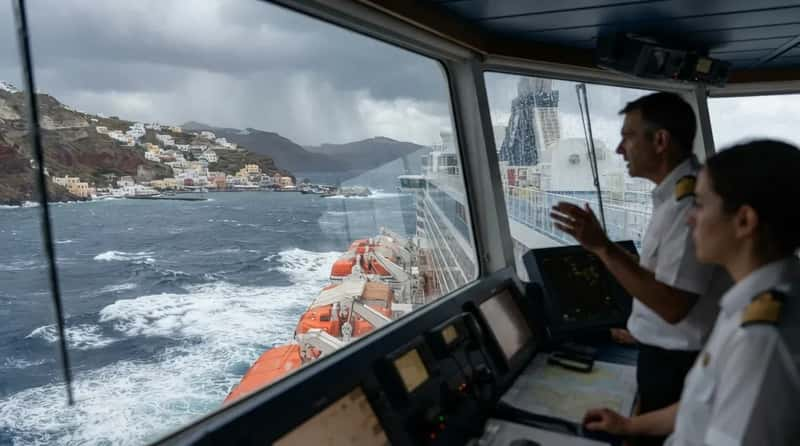
Weather, a port closure, a delay, or a safety concern can all change the plan. The captain has the final say on safety, though the cruise line’s shoreside teams are involved in the bigger picture. Tender ports are often the first to go when seas build. An entire port can vanish from the itinerary within hours.
Passengers usually hear about it through a short announcement and a revised schedule. Officers don’t enjoy making that call, but they make it. In most cases it reflects safety, not convenience. And the next detail is about something that can actually be dangerous, in #2…
#2 – The Mooring Lines Are Under Constant Strain, and Officers Watch Them Like Hawks
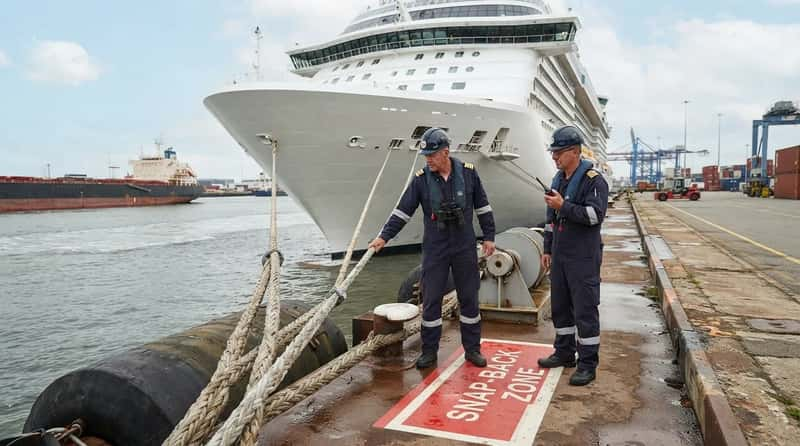
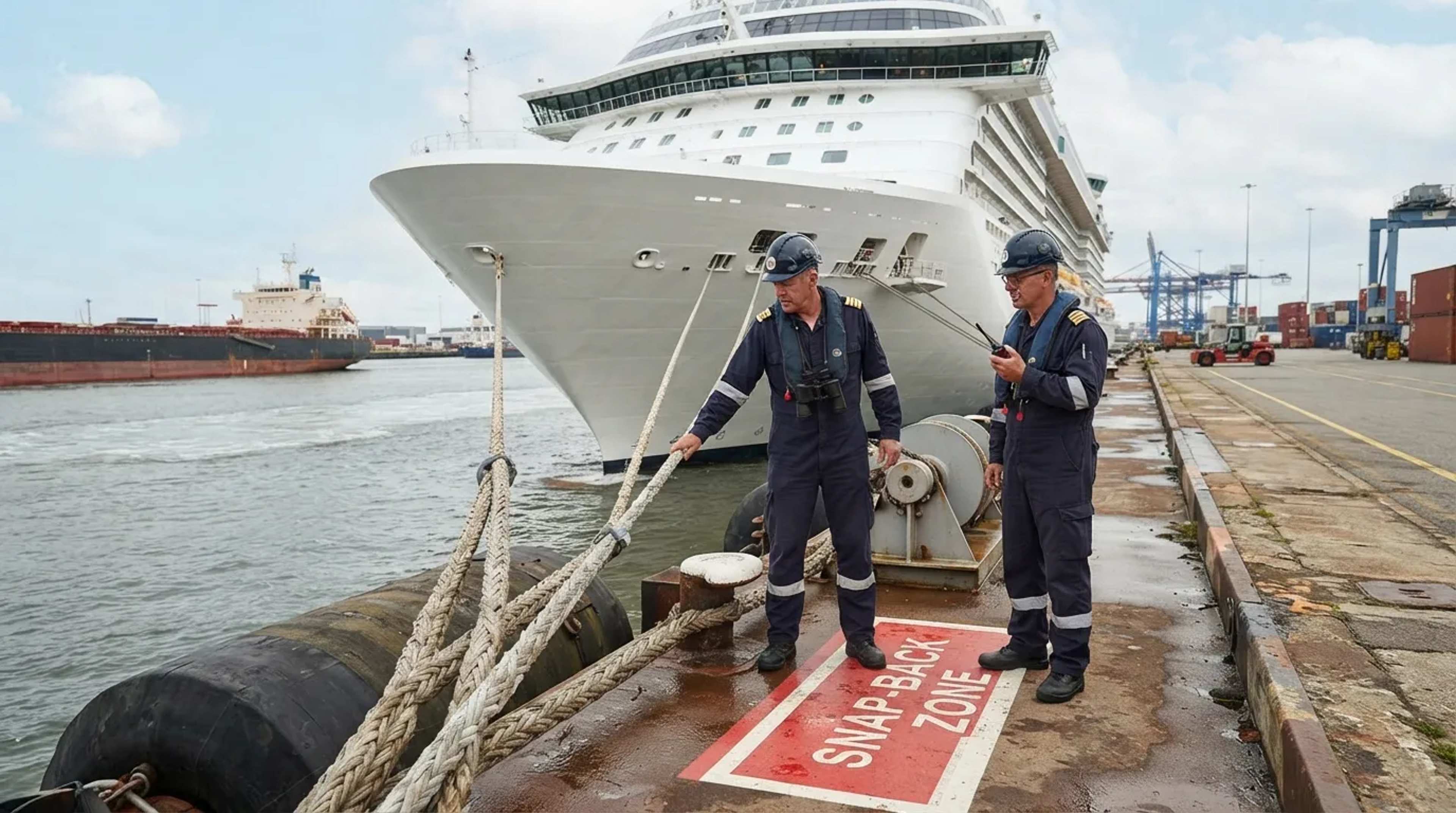
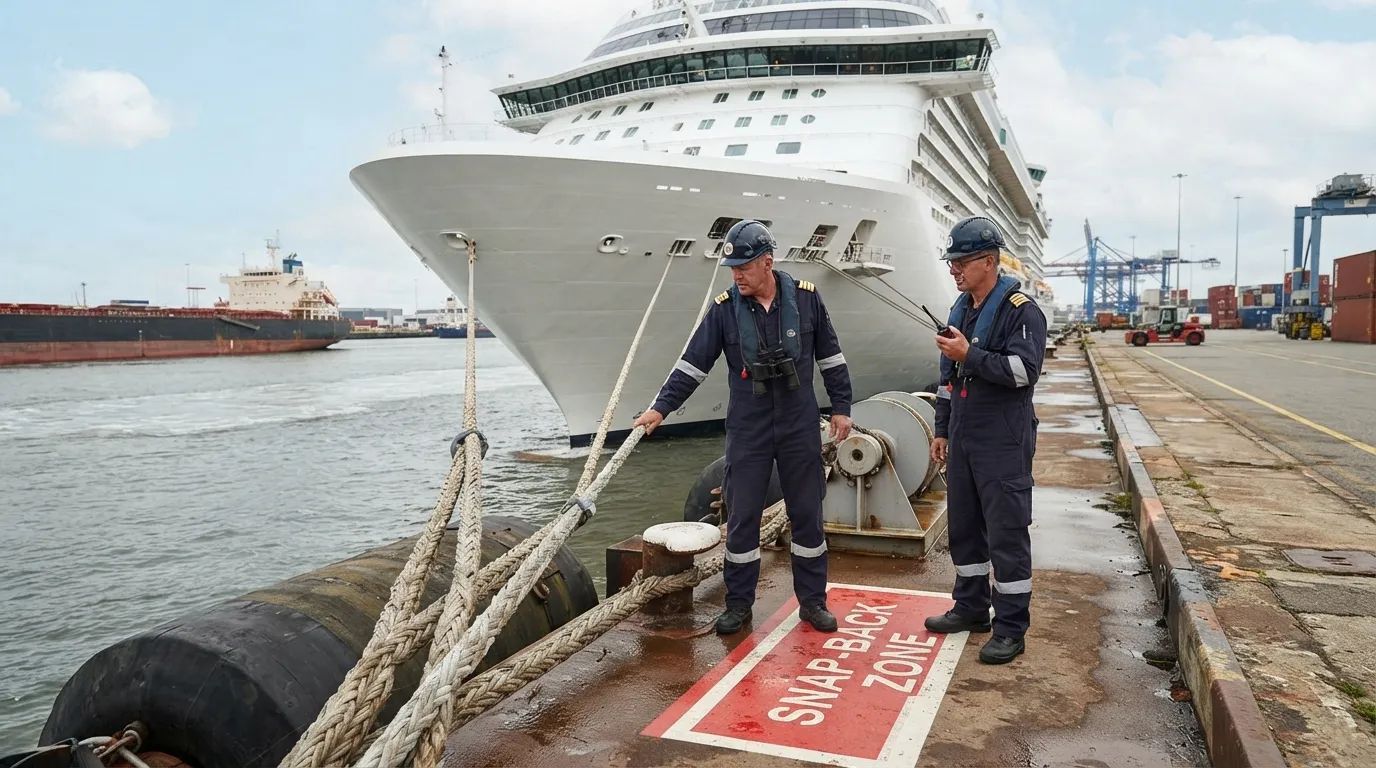
A docked ship isn’t really stationary. Tide, wind, and passing traffic keep pulling on it, and officers monitor the mooring lines to hold it in place. They may add lines, ease tension, or tighten them as conditions change. A mooring line under strain can snap back with deadly force, which is why crews keep clear of snap-back zones.
It’s one of those jobs that looks routine until it isn’t. Deck crews and officers coordinate closely, and the bridge watches for any movement. A ship that drifts even slightly can affect the gangway and the pier. Now for the final decision, the one passengers feel most, in #1…
#1 – The Moment the Captain Decides Whether to Sail Without the Stragglers
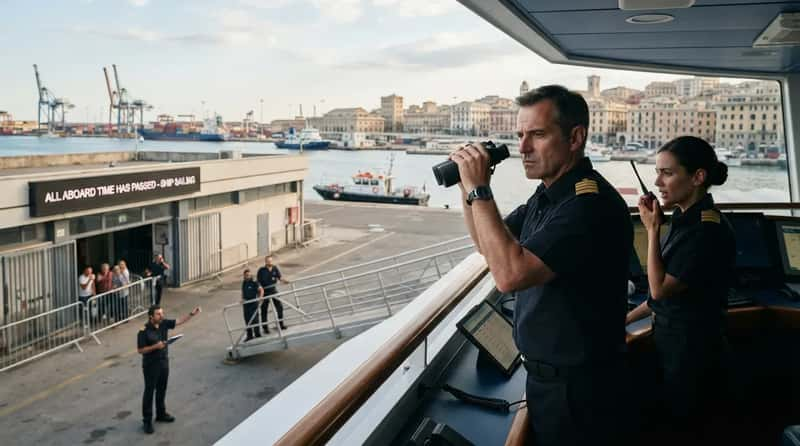
All-aboard time is not a suggestion. It’s usually set well before the ship actually leaves, often about 30 to 60 minutes ahead, so crews can count heads, close the gangway, and prepare to sail. Officers track who is back through card scans and headcounts. When the last few are missing, the captain makes the call.
The ship’s schedule often belongs to the port as much as the cruise line, since pilots, tugs, and berths are booked in windows. The next ship may need that berth, and the tide won’t wait. Passengers who miss the ship are generally responsible for catching up at their own expense, with help from the port agent. It’s a cold rule, but every decision above points to the same goal: moving thousands of people safely.
An ordinary port day is never really ordinary. Behind the quiet announcements, officers are balancing tides, wind, security, rest, weather, and the clock. Most of those calls end with nothing happening, and that’s exactly the goal.
So the next time the gangway opens right on schedule and your afternoon feels effortless, remember who made that possible. Somebody up there already decided it would be fine.