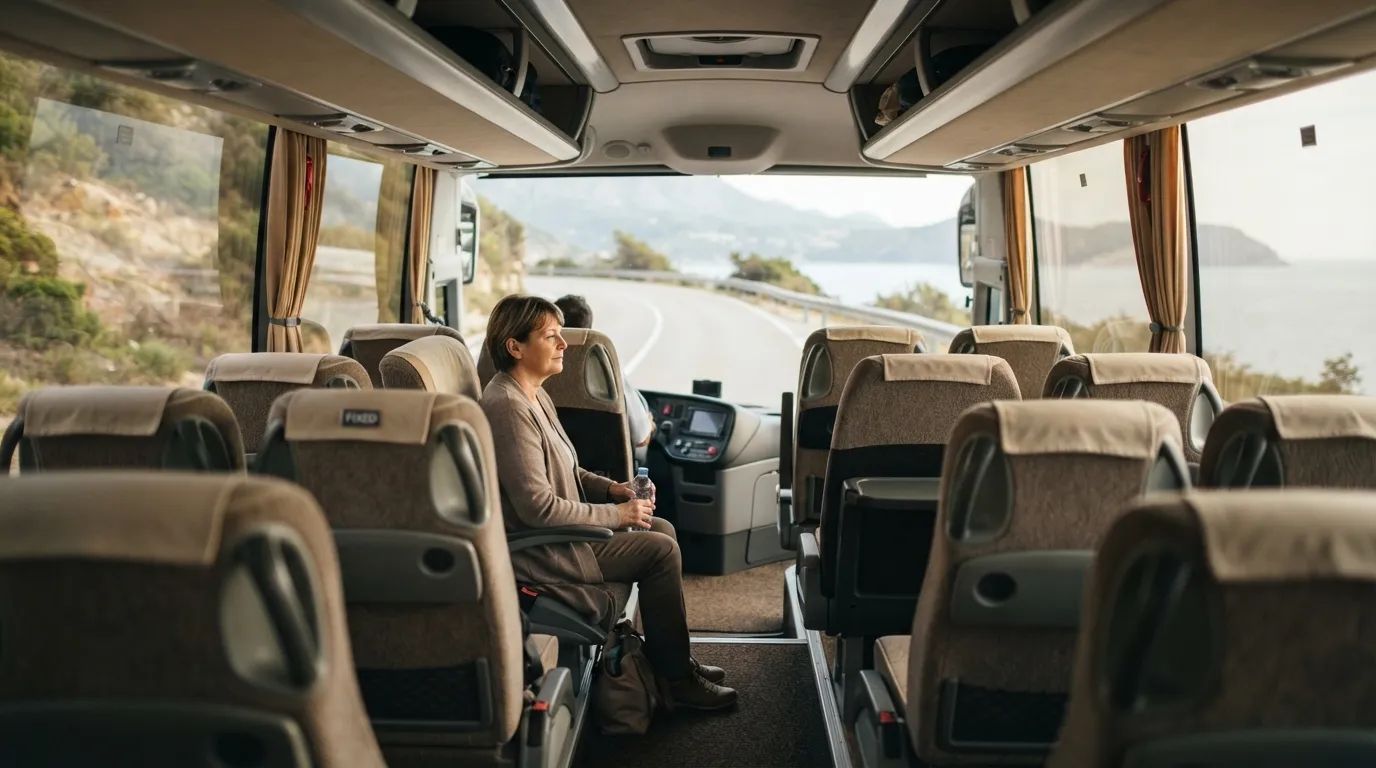
You walk onto the coach, spot a window seat, and feel like you won something. Chances are, someone planned for you to feel that way. Seat rotation on escorted tours is rarely luck. It’s a system, and it was built before anyone arrived.
Behind that seating chart sit 17 quiet decisions. Some are tiny, like which way the group shifts. Others decide who gets the best view and who spends a week staring at a pillar. A couple end with a tour manager delivering news nobody wants to hear, right at the coach door.
#17 – The First Decision: Whether Your Tour Rotates Seats at All
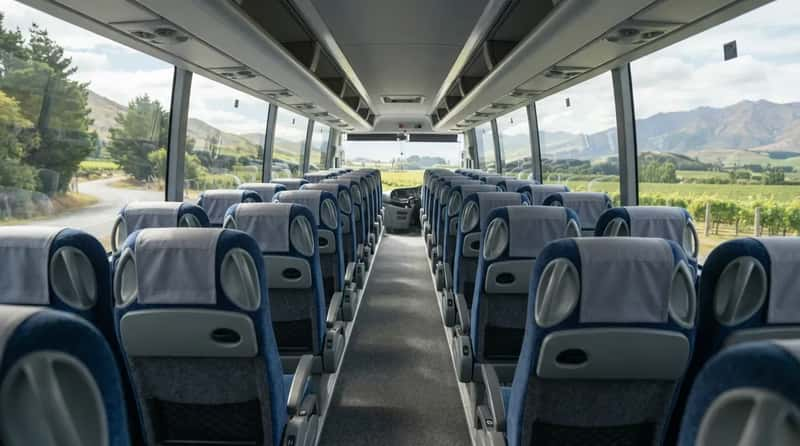
Before anything else, the plan has to answer one question: does this tour rotate seats? Escorted tours in New Zealand use rotation, while independent coach tours don’t assign seats or rotate. That single choice shapes the whole trip.
Some operators have dropped rotation altogether. One U.S. company lets customers pick a seat at booking from a seating chart and says it no longer rotates. Another line says special seating requests won’t be honored. Fans of fixed seats love the certainty. Critics say it hands the best views to whoever books first, and the manager has to run whatever plan the company chose.
Quick Compare
- Fixed seats: You pick from a chart at booking and know your spot early. The catch is that the best views can go to whoever books first.
- Rotating seats: Everyone gets a turn up front and a day in the back. The catch is that you stop choosing after day one.
- Independent coach tours: No assigned seats and no rotation at all.
Even on tours that do rotate, day one works differently than you’d expect…
#16 – The “Free Pick” on Day One That May Be the Only Seat You Ever Choose
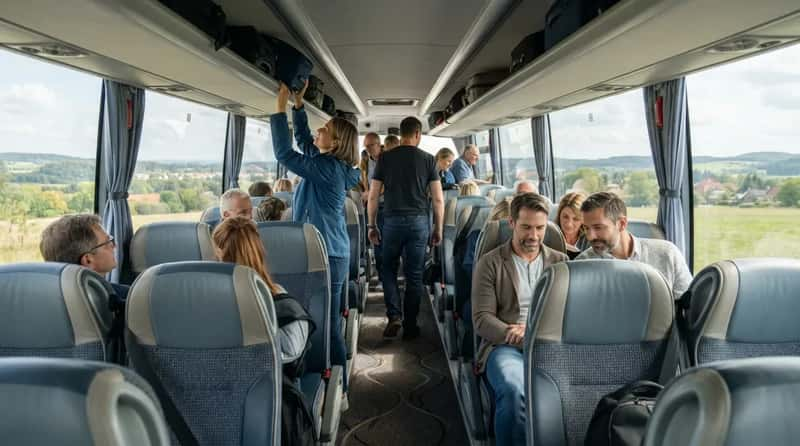
Day one looks like a free-for-all. Travelers can typically choose a seat on day one, and then the rotation takes over. That’s a deliberate starting point, not an accident.
Not every company handles it the same way. Some tours assign day-one seats by booking order or group size. TLC Tours, for one, lets guests choose on boarding and rotate from there. The seat you sprint toward may be the only one you ever pick yourself. Managers know it, and they plan around the early-bird rush.
Once everyone is seated, the next question is which way they move…
#15 – The Direction of the Shuffle That Decides Who Sees the Scenery

Forward or backward? Clockwise or not? It sounds trivial until half the coach heads the wrong way. A common pattern is moving two rows forward or backward in a clockwise direction.
The aim is simple. Over a trip, everyone should get a turn in the front row and a day in the back. A bad direction call can leave one side of the coach staring at the same scenery all week. That’s why managers pick a loop and stick to it. Consistency beats cleverness here.
Then comes the question that starts the arguments: how far does everyone move?
#14 – The One Number That Makes Rotation Feel Fair or Rigged
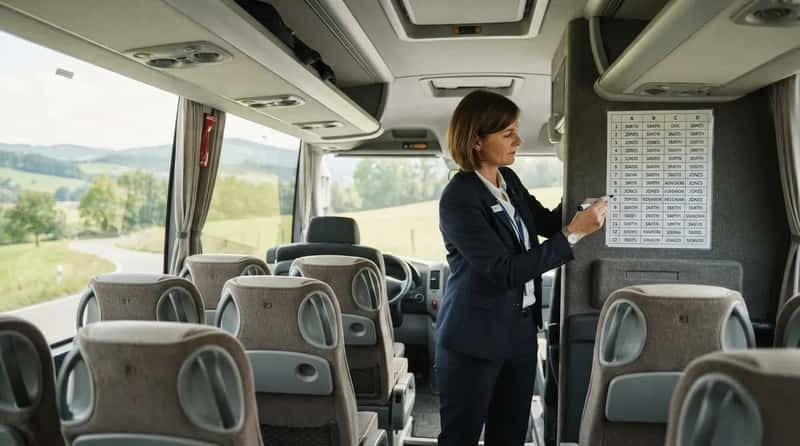
The size of the shift is a real design choice. TLC Tours moves guests up one seat each day, so someone in the front ends up in the back. Others use bigger jumps.
Company practice varies. Rotation generally covers two rows when both front seats are used by guests. Other operators shift guests by an amount that depends on the group’s size. The same coach can feel fair or rigged depending on that one number. Small steps feel gentle, and big steps feel like musical chairs.
And some tours skip the whole routine…
#13 – The Tour Type Where the Fairness Rules Disappear
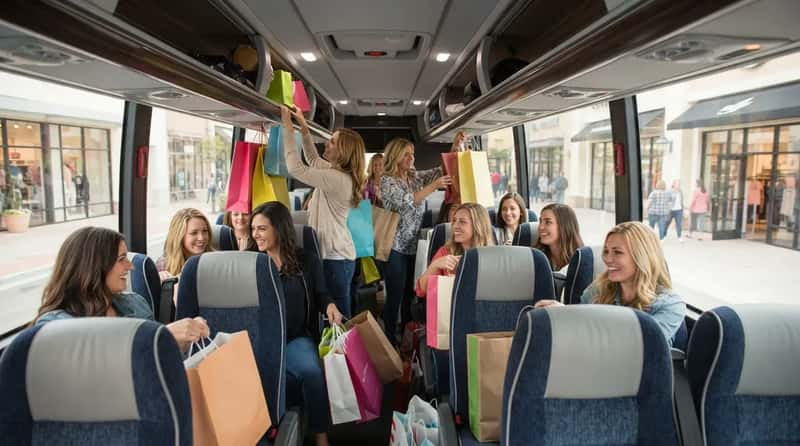
Rotation isn’t universal even inside one company. Atlantic Tours & Travel rotates seats on all its motor coach tours except Shopping Tours. Short trips with a different goal get different rules.
On those exceptions, seats become a product. Preferred Seating is sold only on the shopping tours, and payment is due when it’s reserved. The company that preaches fairness on long trips sells the best seats on short ones. Managers have to explain the difference without sounding inconsistent. It comes down to trip length and purpose.
Then there are the two seats nobody on the coach can touch…
#12 – The Front Seats That Quietly Vanish From the Pool
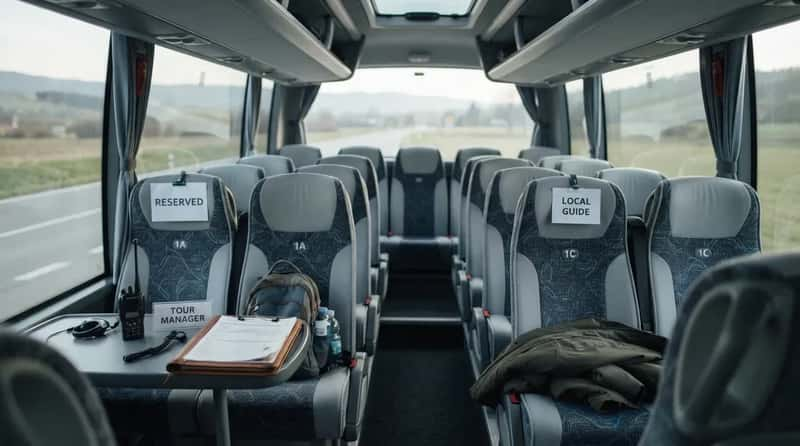
Many travelers assume the front row is open to everyone. On some coaches, one front seat is used by the Tour Manager, and a local guide may take a front seat as well. Those seats never enter the rotation.
That shrinks the “best view” supply fast. The seat everyone fights over may never have been available. Managers have to be upfront about it. Otherwise the front row starts to look like favoritism.
But what happens when the coach isn’t even full?
#11 – The Half-Empty Coach Where the Rules Go Soft
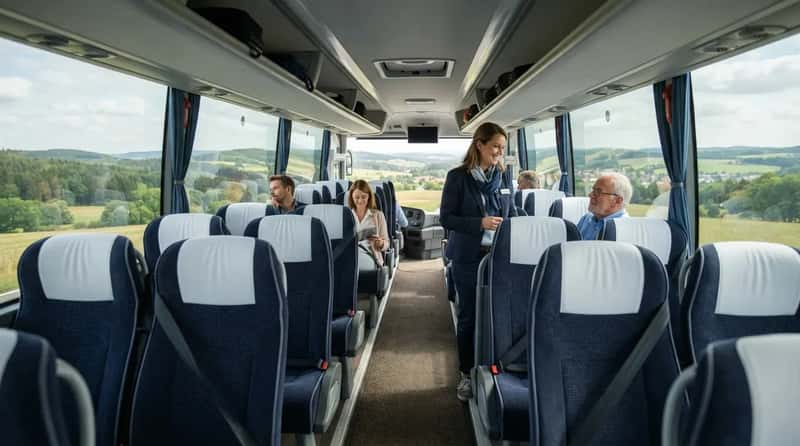
A strict rotation needs a full vehicle. TLC Tours uses daily rotation on overnight tours of 30 or more. Below that, the math gets messy.
Empty seats create loopholes. If the coach isn’t full, a less formal rotation may be used at the Escort’s discretion. The loosest rules on the trip can depend on how many people showed up. That gives managers real power, and it makes their judgment the whole system.
Then there’s the passenger who shows up alone…
#10 – The Solo Traveler Who Doesn’t Get the Empty Seat Beside Them
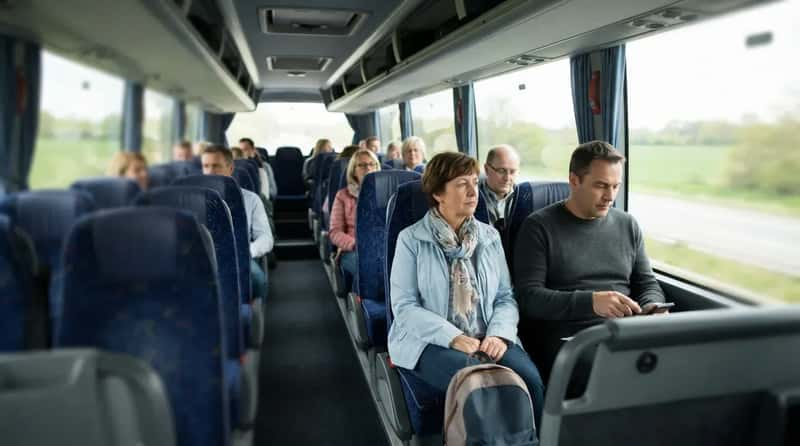
Solo travelers often get a surprise at the seating chart. Operators note that someone traveling alone will usually share a row with someone else. That’s a plan, not a mistake.
The fine print can be blunt. TLC Tours says its single rate doesn’t include two seats on the coach. Paying the single rate doesn’t buy you the empty seat beside you. Managers have to pair people sensibly, because a bad pairing can sour a week.
Couples and friends face a different gamble…
#9 – The Group of Three Nobody Can Seat Together

Pairs and trios are where the plan gets complicated. Companies try to keep real friends together, but groups of three or five usually need someone to share a row. Odd numbers never divide neatly into two-seat rows.
Some operators say it outright. TLC Tours notes that uneven groups may sit with other travelers and that small groups can’t be guaranteed seats together. Even a booking made together doesn’t guarantee a shared row. Managers try to protect friendships while keeping rotation intact, and it’s a constant juggling act.
Worth Knowing
- Groups of three or five usually mean someone shares a row with another traveler.
- Two-seat rows don’t split evenly into odd numbers.
- Some operators say small groups can’t be guaranteed seats together.
- Solo travelers usually share a row too, so everyone is in the same boat.
Now for the seat people ask for most…
#8 – The Fixed Seat That Costs You Your Turn Up Front

Rotation has a built-in exception for people who feel ill. Where rotation operates, a traveler who suffers from travel sickness may be able to request a fixed seat. The manager decides how to make that work.
The trade-off is real. A fixed seat usually won’t be the front seat, and the passenger probably won’t get a turn there. Solving one problem can quietly cost someone their moment up front. Managers have to explain that kindly, because nobody likes hearing they’ve traded the view for comfort.
Mobility needs raise the stakes even higher…
#7 – The Mobility Need That Overrides the Whole Chart

Some seating needs outrank any chart. Passengers with mobility concerns are advised to tell the tour director, who can often accommodate special seating needs. Rotation bends for them.
Passengers bend too. Among repeat coach travelers, the unwritten rule is to move without hesitation if someone needs a seat for mobility reasons. Even the strictest system on the road keeps an escape hatch. Managers have to build it in without opening the door to every request, and honesty from passengers keeps it working.
Some travelers, though, would rather pay than wait their turn…
#6 – The Front Row That Now Has a Price Tag
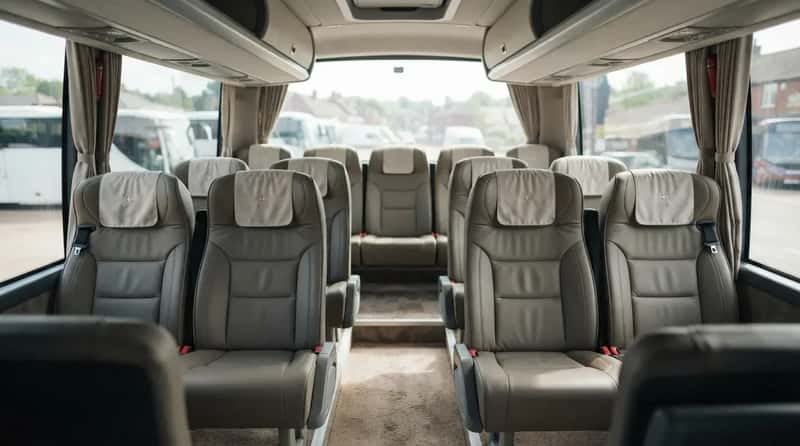
Front seats used to be first come, first served. Now some operators sell them as a paid product. Whether that’s smart or unfair is a hot debate.
Some people love it. Leger Holidays lets customers pre-book front seats. Critics argue that paying for the best view defeats the point of rotation. Fans say it’s no different from picking an airline seat. Managers simply run whichever policy the company chose.
Even without paying, timing can decide your seat…
#5 – The Booking Date That Quietly Decided Your Seat
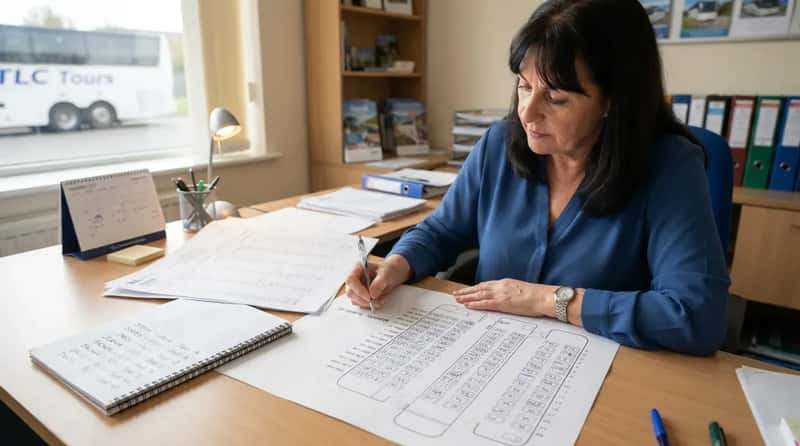
When you booked can shape where you sit. On rotation tours, group size and booking time can affect whether you get front seats. Early birds often get first pick.
Boarding order matters too. TLC Tours suggests boarding at the first pickup location if your seat position is a worry. Where you get on can matter as much as when you booked. Seat numbers can also arrive late. When requested at booking, they’re confirmed with final documents, usually 7 to 10 days before travel.
And then there’s the seat with a flaw built right in…
#4 – The Seat With a Pillar Where the View Should Be
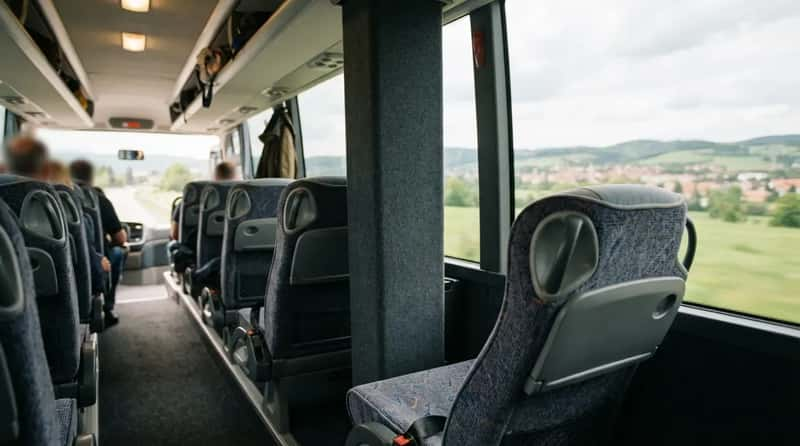
Not every seat is equal, and managers know it. Some coaches have a column running through a seat, leaving very little view. Rotation is partly meant to share that bad luck around.
Without it, one person can get stuck. Imagine a week of sightseeing through a gap the width of a hand. One unlucky number on a chart can sour a whole trip. That’s why a manager checks the layout of each coach, and it’s rarely visible from the booking page.
Fast Facts
- Some coaches have a column running through a seat, which leaves very little view.
- Rotation spreads that unlucky seat across the group instead of leaving it to one person.
- Layouts differ from coach to coach, so the same seat number can mean different things.
- Booking pages rarely show the flaw, which is why managers check each coach themselves.
The next decision is where policy gets really firm…
#3 – The Doctor’s Note That Doesn’t Move You Up Front

Some companies draw a hard line. TLC Tours states that it cannot accept doctor’s notes regarding requests to sit in the front seats. The rule is meant to keep things consistent.
It’s a blunt policy. A medical letter doesn’t buy a guaranteed spot up front. Supporters say it prevents a flood of requests, and critics think it sounds harsh. Either way, the manager is the one who has to say it to someone’s face.
So how does a manager even get a coach full of strangers to accept all this?
#2 – The Day-One Speech That Heads Off Drama

Good managers explain the rules early. A former coach driver on a Rick Steves forum thread said he’d announce on day one how seats would rotate daily and rarely had any problems. That’s one person’s account, but it fits the common approach.
Clear expectations calm people down. Most seat arguments start with a surprise, not with the seat. A short speech on the first morning avoids that. It also gives the manager something to point to later.
And then comes the passenger who says the rules don’t apply to them…
#1 – The Travel Agent’s Promise That Collapses at the Coach Door

This is the awkward one. The same forum poster recalled passengers whose travel agent had promised them the front seat for the whole tour, which he said was against company policy. Picture those passengers walking up to the door, certain the best seat is theirs.
The manager has the final say, and it can feel personal. A promise made weeks earlier can fall apart in a single sentence at the coach door. The tour manager wasn’t part of that deal, but they take the blame. It’s the most human moment in the whole system.
Why It Stands Out
- The promise was made weeks earlier by someone who isn’t even on the coach.
- According to the forum poster, it went against company policy from the start.
- The manager takes the blame for a deal they never made.
- It all plays out in public, right at the coach door.
Seat rotation looks like a small courtesy, but it’s a stack of choices. Managers decide who rotates, how far, and who gets exceptions. They also decide what to do about the best seats and the worst ones. The details vary from company to company, so the only reliable answer is to ask before you book.
So which would you rather have: one seat you chose yourself, or a strict rotation that gives everyone a turn at the view?