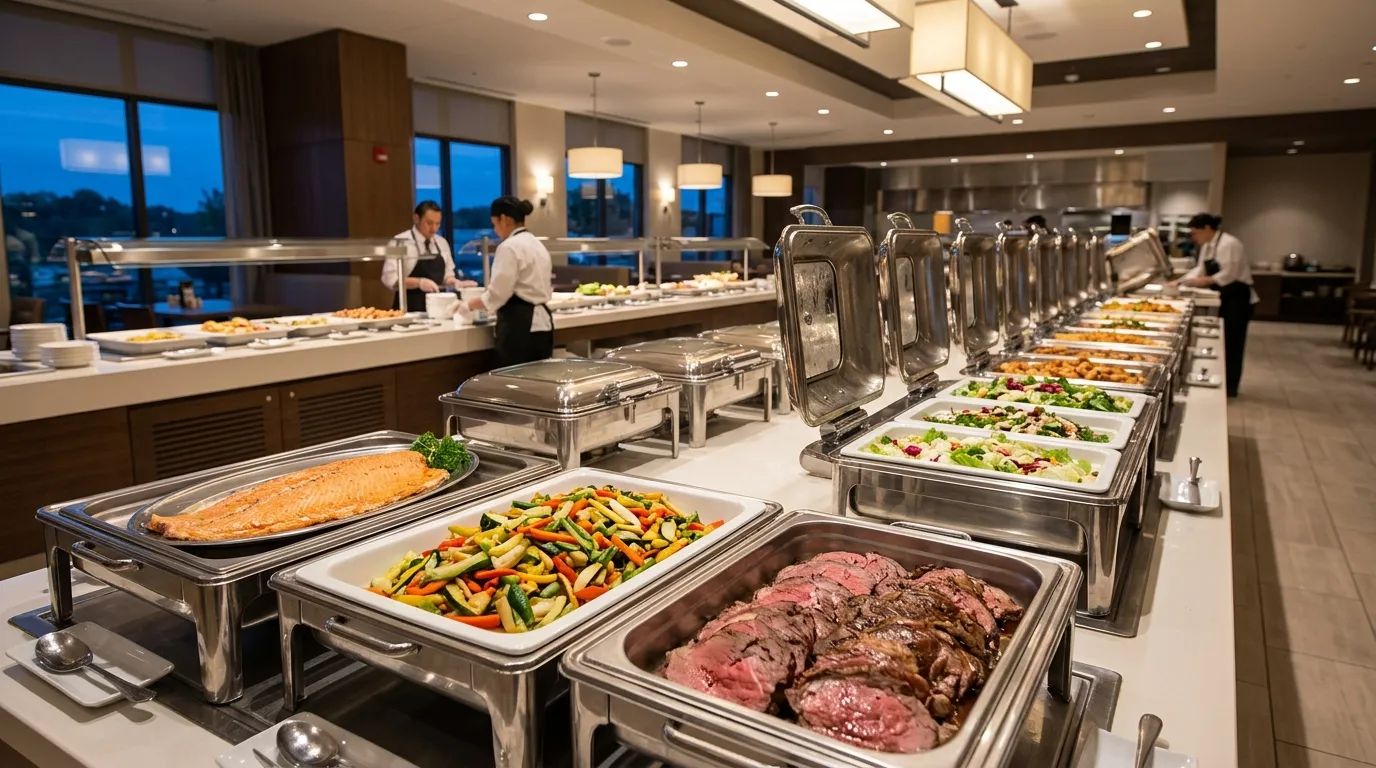
Most people think buffet dining is just about loading a plate and eating as much as possible. Turns out, that’s exactly what the restaurant wants you to think – and it’s quietly costing you both money and enjoyment.
Research tracking hundreds of diners across dozens of all-you-can-eat restaurants found a staggering gap between novice and experienced eaters. The habits that separate a seasoned buffet regular from a first-timer aren’t about appetite – they’re about strategy, and here’s exactly what the insiders do differently.
#17 – They Do a Full Lap Before Touching a Single Plate
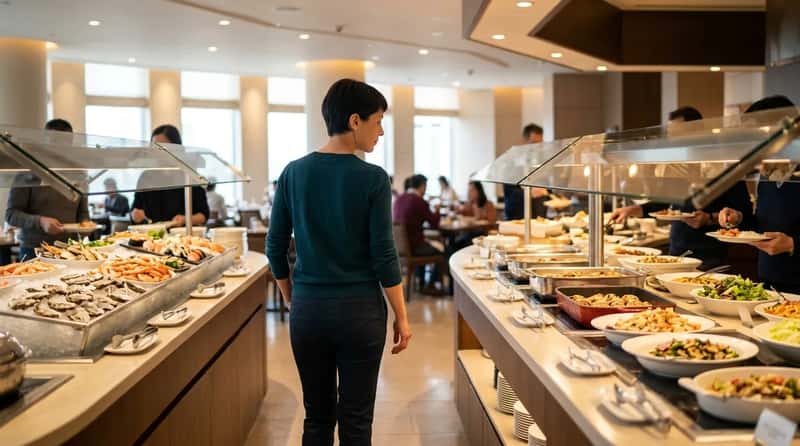
The first move a rookie makes is grabbing a plate the second they walk in. Experienced diners do the opposite – they walk the entire buffet first, empty-handed, just to see what’s actually on offer.
It’s advice that buffet owners themselves wish more customers followed, because it lets you see the whole spread before committing to anything.
Skinny people are more likely to scout out the food. They’re more likely to look at the different alternatives before they pounce on something.
Brian Wansink, Cornell food behavior researcher
Skipping this step is the single most expensive mistake you can make at a buffet. You’ll fill up on the mediocre stuff near the entrance and have no room left when you finally spot the good stuff tucked in the back.
Don’t skimp on the recon – because what you find hiding at the back of that buffet is exactly what #16 is about.
#16 – They Ignore the Front of the Line
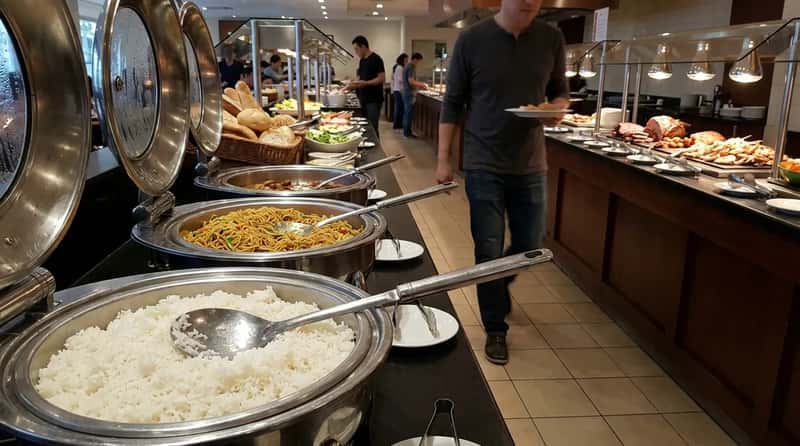
Seasoned diners know the buffet layout is built against them. Rice, noodles, pasta, and potatoes almost always sit right at the entrance, and that’s no accident.
Carbs fill you up fast and cost the restaurant almost nothing. Starchy dishes even get the bigger serving spoons, while the meats and premium items further down get the small ones.
The front of a buffet line is a trap. Amateurs load up on bread and pasta before they’ve even seen what’s coming next.
Walk past the carbs without guilt. The real value is waiting further down the line – which brings us to what experienced diners actually put on their plates first.
#15 – They Go for the High-Value Items First
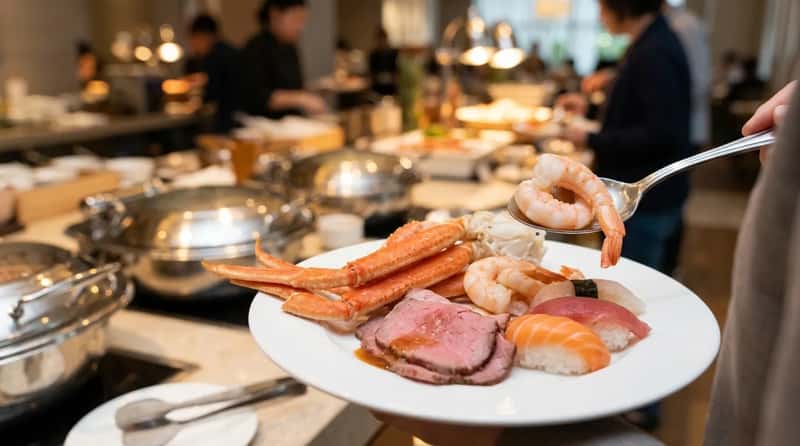
Experienced buffet diners treat cost-per-bite like a personal metric. They head straight for the dishes they’d rarely order as a standalone entrée anywhere else.
Crab legs, carved roast beef, sushi, fresh shrimp – that’s the opening move, not the finale.
These are the items with the biggest markup at a sit-down restaurant and the thinnest margin for the buffet. Rookies save the good stuff for last. Pros lead with it, every time.
Once the premium real estate on your plate is claimed, you’ll understand why #14 is all about plate size – not plate count.
#14 – They Choose a Smaller Plate on Purpose
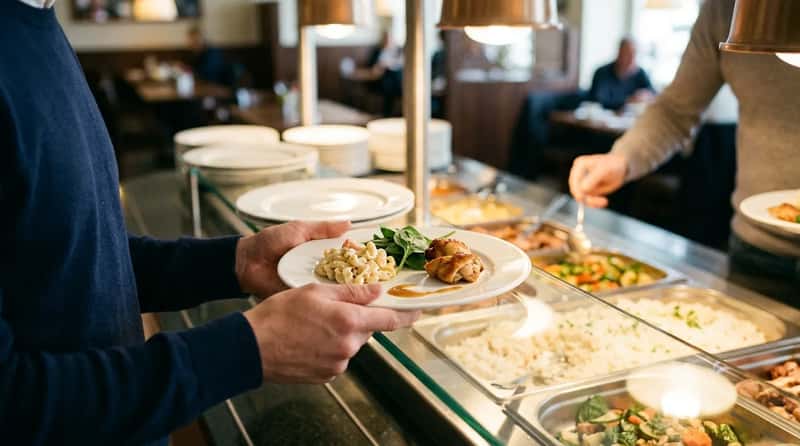
This one surprises people, but the science backs it up. A bigger plate tricks your brain into thinking you’re eating less than you actually are.
Studies observing hundreds of diners at all-you-can-eat restaurants found that plate size directly shapes how much people eat – and how satisfied they feel afterward.
Fast Facts
- Large-plate diners at a buffet study served themselves 52% more food than small-plate diners.
- Those same large-plate diners went on to eat 45% more overall.
- Food waste jumped 135% higher among the large-plate group.
Experienced diners use smaller plates on purpose to stay in control and keep returning for fresh selections. Multiple small, well-chosen plates always beat one towering, chaotic one.
The plate is sorted. Now comes the part most people get completely wrong – and it’s about what they drink.
#13 – They Skip the Sugary Drinks Entirely

First-timers grab a soda and refill it twice. Veterans stick to water, and there’s a reason.
Sugary, fizzy drinks fill your stomach with empty calories and make you feel full before your best dishes ever hit your plate.
Carbonation alone can bloat your stomach before you’ve eaten a single bite. That’s prime real estate wasted on liquid. Water keeps the palate clean and doesn’t fake you out with premature fullness.
Water’s locked in. Now, what about the moment you actually sit down to eat? #12 changes everything.
#12 – They Eat Slowly and Deliberately
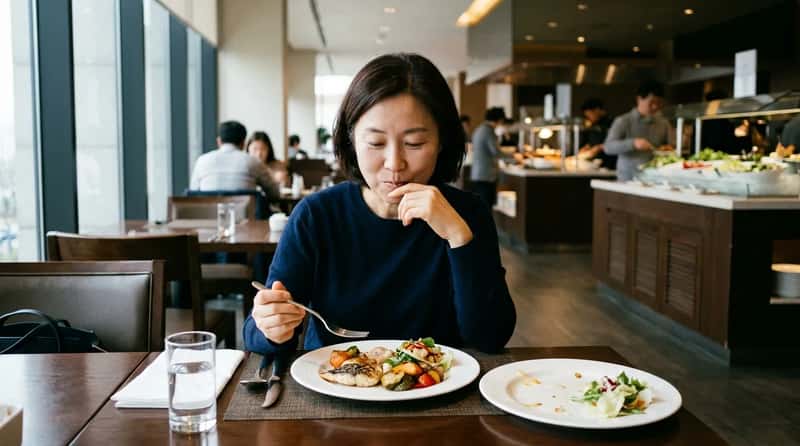
Buffets make people rush. Experienced diners do the opposite, and it’s the single biggest reason they leave satisfied instead of stuffed.
Chewing thoroughly and pacing yourself gives your body the time it actually needs to signal you’ve had enough.
Worth Knowing
- The brain typically needs about 20 minutes to register fullness after eating starts.
- Eating fast means you can blow past “full” long before your body tells you to stop.
- A slower pace gives that delayed signal time to catch up before the damage is done.
The biggest mistake at any buffet is eating fast – you overshoot your fullness signal by ten minutes and end up miserable. Experienced diners treat each plate like a course, not a race.
Pacing your eating is only half the story. What you do between plates is where #11 comes in.
#11 – They Take Real Breaks Between Plates

Rookies chain-plate without stopping. Veterans pause, sip water, and actually check in with their hunger.
A short break resets the palate and turns the meal into an occasion instead of a sprint.
Most overeating at buffets isn’t hunger – it’s momentum. You keep going because you’re already going, and a deliberate two-minute pause breaks that cycle completely.
That pause is also where the smartest diners start saving stomach space for the part most people forget until it’s too late.
#10 – They Plan for Dessert Mid-Meal

Waiting until the end for dessert is one of the most common buffet regrets there is. By then, you’re already too full to enjoy it.
Experienced diners scout the dessert table on their opening lap and pick one or two things worth coming back for.
Dessert gets treated as a scheduled course, not an afterthought. If the pastry chef made something extraordinary, it deserves a real moment – not a panicked three-bite squeeze-in when you can barely breathe.
Dessert’s planned. But what about the order of the savory courses? #9 flips conventional wisdom on its head.
#9 – They Save Starches for Last
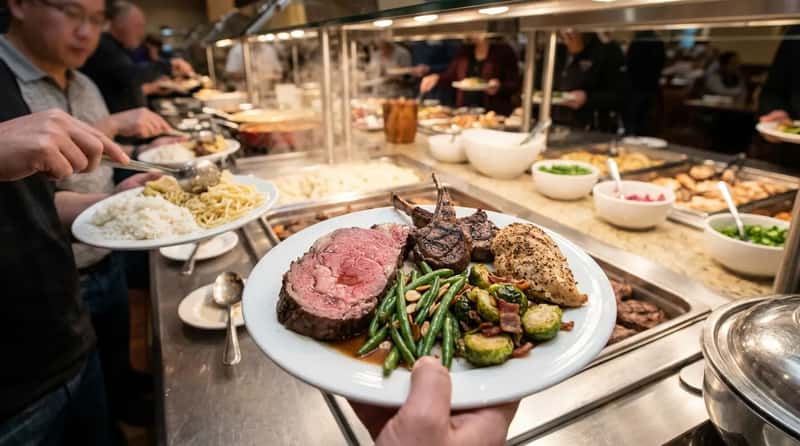
Almost everyone gets this backwards, and it’s costing them the best part of the meal. Bread, rice, and pasta sit at the front of the line for a reason.
They’re the cheapest items on the buffet – for the restaurant, and for your experience.
Carbs are calorie-dense, fast-filling, and low-reward compared to a perfectly carved prime rib. Save them for the final stretch, when they make a satisfying finish instead of a premature wall.
Starches are saved. Plate strategy is locked. Now the savvy diners do something most people never even consider – they watch the crowd.
#8 – They Watch What Other Diners Are Choosing
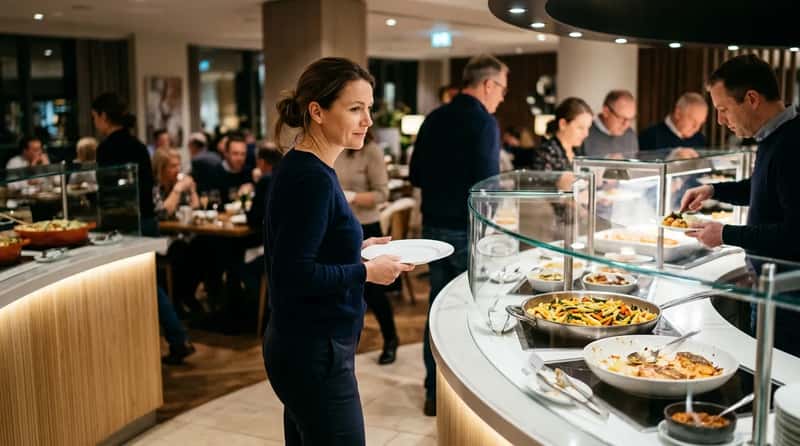
This is the buffet version of social proof, and it genuinely works. What people take from the line tells you something real.
One widely cited study on buffet behavior found that most diners simply chose whatever food they saw first in line, and the first few items ended up making up the majority of everything selected.
That means the crowd is almost never a useful guide to quality – but it IS a useful guide to red flags. A dish sitting untouched by dozens of people is a warning. A line forming at one station is a signal worth following.
The crowd tells you what to avoid. But there’s one more thing to check before loading up any plate – and it’s about freshness.
#7 – They Check for Fresh Replenishments

Timing isn’t just about when you arrive. It’s about when the trays actually get refilled.
Staff know exactly when the popular items come out fresh, and a polite question can change your whole meal.
A fresh tray of crab legs or carved roast is worth waiting five minutes for. Experienced diners quietly ask, “When’s the next tray of salmon coming out?” It’s not rude – it’s smart, and staff almost always respect it.
Fresh trays spotted. Now for the habit that separates truly sharp buffet diners from everyone else – how they handle portion size.
#6 – They Take Small Portions of Everything New
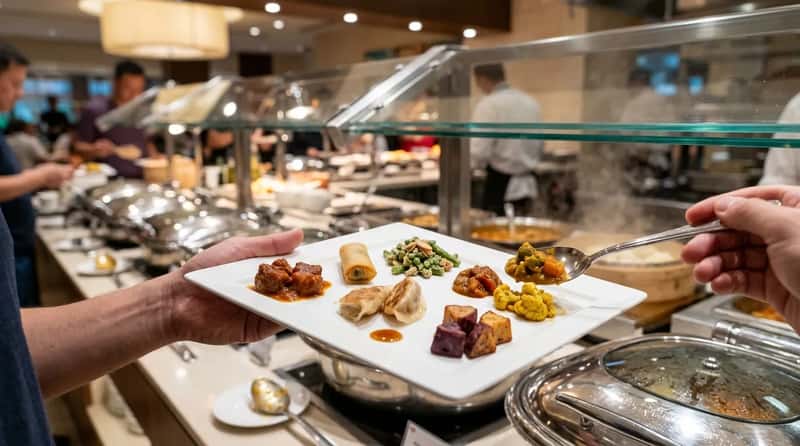
The pros treat unknown dishes like a tasting menu, not a commitment. It’s easy to overestimate how much you’ll actually enjoy something.
Starting small on anything unfamiliar prevents waste and keeps every plate interesting.
The amateur piles a mountain of something unfamiliar and then can’t finish it. The expert takes two bites’ worth, decides if it earns seconds, and moves on. That’s how you actually taste seventeen things instead of forcing down a heap of one.
Portions controlled. Now comes a habit that has everything to do with timing – specifically, when experienced diners show up.
#5 – They Arrive at Exactly the Right Time
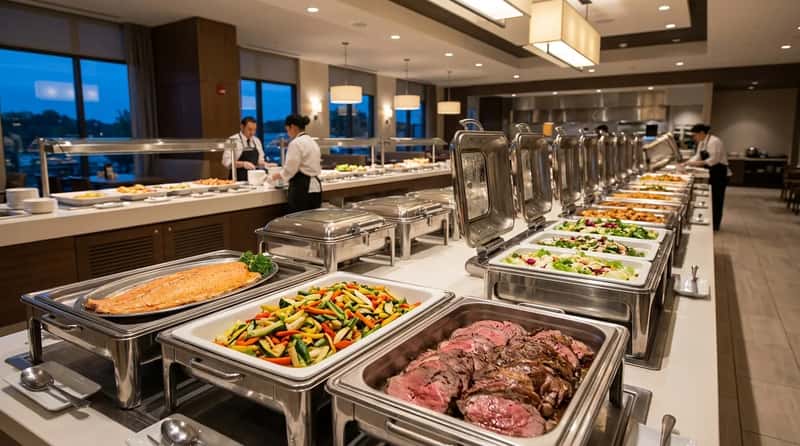
Timing your arrival at a buffet is a real strategy, not a trivial detail. Many patrons show up during peak dinner hours and pay premium prices for food that’s been sitting out longer.
Lunch service often has the same selection at a noticeably lower price.
But here’s the contrarian flip: if you specifically want the freshest food at dinner, arrive the moment service opens – not an hour in. That’s when every tray is brand new and the dessert section hasn’t been picked over yet.
Timing mastered. But the next habit is one almost no one talks about, and it happens before the diner even leaves home.
#4 – They Eat a Light Meal Earlier in the Day

Starving yourself all day before a buffet is one of the most common amateur mistakes – and it backfires every single time.
Skipping meals beforehand almost guarantees you overeat once you sit down. The smarter move is small, balanced meals leading up to it.
Arriving ravenous destroys your ability to taste, pace, or strategize. You rush the first plate, skip the reconnaissance lap, and grab whatever’s closest. A light lunch a few hours before is the move, not a full day of fasting.
Pre-buffet meal sorted. But the final three habits are the ones that truly mark a seasoned pro – and they’re not about food at all.
#3 – They Use Serving Utensils – Always
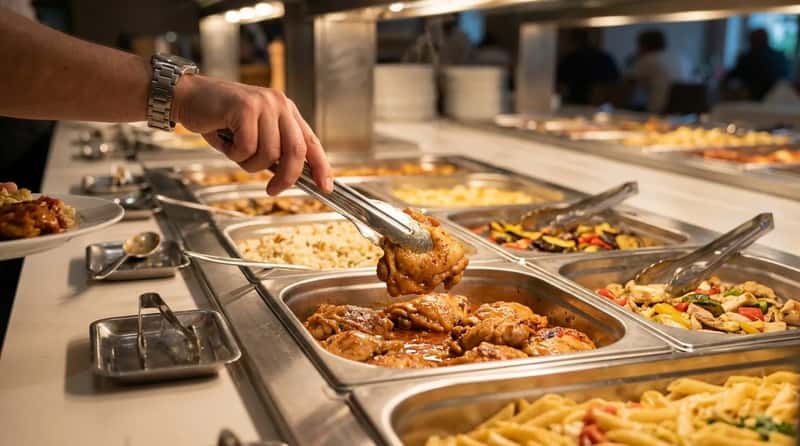
This sounds obvious. You’d be stunned how often it’s ignored.
Shared serving utensils used across multiple trays are one of the clearest red flags at any buffet – it’s a cross-contamination risk that’s both unsafe and unpleasant.
Experienced diners also treat the serving utensil as an indicator of quality. A well-run buffet has a dedicated utensil per tray, replaced often. When that’s not the case, it tells you something about how the kitchen runs behind the scenes.
Etiquette locked in. Now the second-to-last habit – one that quietly guarantees a better experience every single time.
#2 – They Always Sit Facing Away from the Buffet
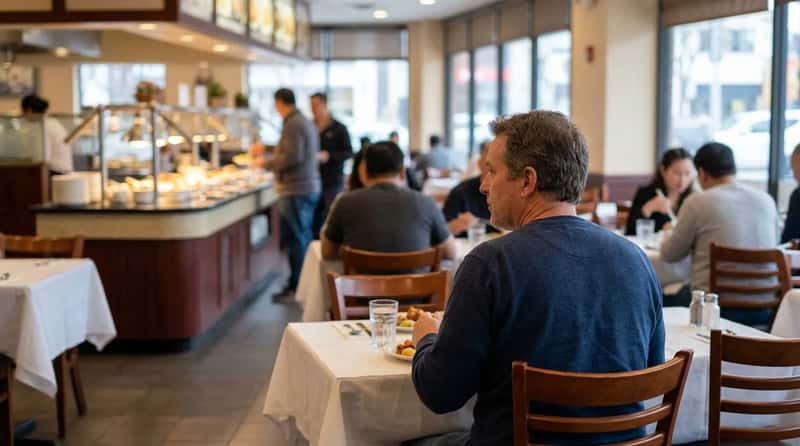
This one is counterintuitive, but it holds up. When you can see the food line from your table, you eat more – not because you’re hungry, but because the sight keeps triggering the urge to go back.
Studies observing buffet diners found this was one of the clearest behavioral differences between people who overate and people who didn’t.
At a Glance
- One Cornell study observed 213 diners across 11 all-you-can-eat buffets.
- Thinner diners were far more likely to sit facing away from the food line.
- They also scouted the spread first and reached for smaller plates.
- Heavier diners tended to face the buffet and start serving themselves without scouting.
Seasoned buffet diners position themselves with their back to the spread on purpose. Removing the constant visual cue means you eat based on genuine hunger, not on the sight of that gleaming dessert station.
That discipline sets up the final habit – the one that truly defines an experienced buffet diner.
#1 – They Know Exactly When to Stop

The most powerful buffet habit has nothing to do with what you eat. It’s knowing exactly when you’re done.
Buffets are fundamentally about the experience, not a test of capacity. If you feel satisfied but not stuffed, that’s the moment to put the fork down.
Most people stop eating at a buffet because they physically can’t continue. Experienced diners stop while they still feel good. They leave able to drive home comfortably, remembering the flavors instead of the discomfort.
The amateurs treat the buffet like a competition. The veterans treat it like a meal – and that’s the difference that was hiding in plain sight the whole time.
The Bottom Line

Experienced buffet diners operate with a system most people never think about. The cheap, filling carbs get front-loaded on purpose, and every habit on this list exists to counter exactly that.
Do the full lap first. Chase the high-value proteins. Use a smaller plate, skip the soda, pace yourself, and sit with your back to the spread.
The difference between an average visit and a great one was never about appetite. It was about paying attention – the whole time, everyone else was just eating faster.