
You’d think the hardest part of a long coach tour is the sitting. Ask the people behind the wheel and the answer is smaller and far more annoying: a dead phone, a freezing cabin, a pill bottle sealed in the luggage bay under your feet. None of it is dramatic, but all of it eats minutes from a schedule that has none to spare.
Some entries below will feel obvious. A few are things nobody thinks about until the coach is already rolling, and one almost never shows up on a packing list at all. Keep scrolling, because the last item might be the one drivers notice most.
#17 – The Two-Dollar Combo Tour Staff Get Asked For All the Time
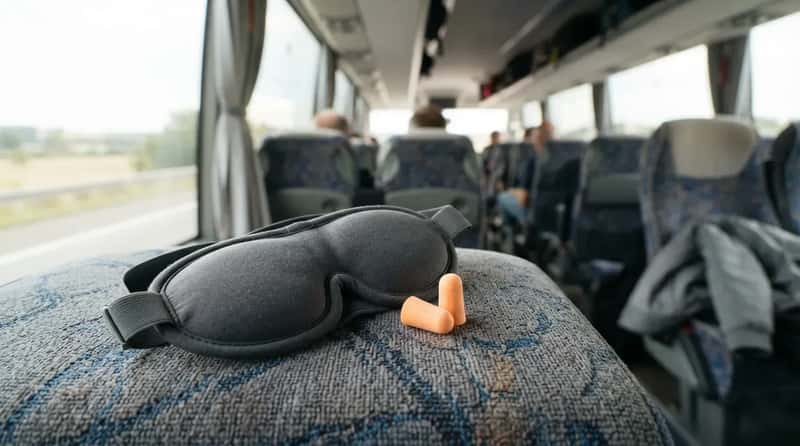
The cheapest item on this list is also one of the most requested. A pair of foam earplugs and a sleep mask costs less than a single overpriced airport coffee. Tour staff hear requests for them all the time, usually after a rough first night. Yet almost nobody packs them on their own.
Picture a 6 a.m. departure after a night in a hotel beside an elevator shaft. A passenger who slept badly often spends the first half of the day foggy and cranky, and the people sitting nearby feel it. A mask also helps on bright afternoons when the sun cooks your side of the coach. Here’s a hot take: a good mask does more for you than a bulky neck pillow.
Next up is the bag that decides how your whole day goes.
#16 – The Small Daypack That Turns Out to Be the Real MVP

Your big suitcase is useless for most of the day. It stays locked under the coach while the group steps off for a walking tour or free time. That’s the moment people realize they have nowhere to put a water bottle, a map, or the souvenir they just bought.
Most operators expect passengers to carry a separate daypack, something small enough for cobblestone streets and museum lines. Hauling one oversized bag everywhere is among the most common packing mistakes on a touring day. A light pack with a chest strap beats a shoulder tote that slides off every time you climb the coach steps. Pick the smallest one that holds your essentials.
At a Glance
- Small enough to sit on your lap or at your feet
- Zippers that close fully, for crowded streets
- A side pocket for water you can reach without unpacking
- One inner pouch for phone, ID, and medication
And what goes inside that pack matters even more.
#15 – The Medication Locked in the Luggage Bay

This is the packing mistake with the most serious consequence. Once the bay doors close, you won’t reach your main suitcase until the next hotel. A missed dose, a forgotten inhaler, or a lost ID card can’t wait that long.
Tour operators commonly advise keeping your phone, medication, ID, and charger in one zippered bag that goes with you at every stop. Drivers can’t reopen the bay mid-route just because someone’s pills ended up in the wrong place. The fix is boring and nearly free. Pack that pouch the night before, not at the curb.
Then comes the argument that starts before the coach reaches mile ten.
#14 – The Light Layer That Ends the Thermostat War
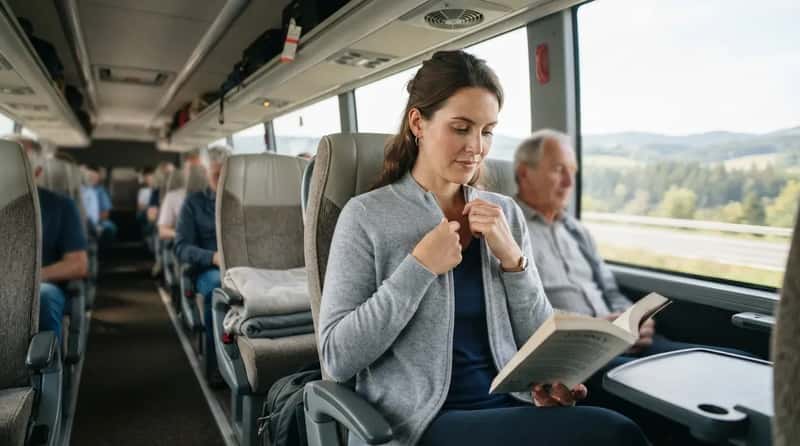
Fifty people will never agree on one temperature. Some riders shiver under the air conditioning while others sweat three rows back. The complaints tend to arrive early, often before the first rest stop.
The simplest fix is a light layer you can add or remove, not a request to change the whole cabin. The passenger with a thin cardigan is rarely the one asking the driver to adjust the vents. Skip the heavy coat, which is too bulky for a seat. A scarf or zip-up works better because it packs flat.
Now for the item everyone assumes is already taken care of.
#13 – The Dead Phone Everyone Has a Story About

Your phone is your ticket, your camera, your map, and your alarm clock. By mid-afternoon on a touring day, it’s often down to 12 percent. Tour staff get asked for chargers constantly.
Many modern coaches have USB ports, but they can be broken, crowded, or out of reach. Never count on the seat outlet working. A charged power bank and a short cable cost very little and solve the problem. A passenger with a dead phone is also the one who can’t check the meeting time.
Thirst hits next, and it comes with a catch.
#12 – The Water Bottle That Quietly Solves a Restroom Problem
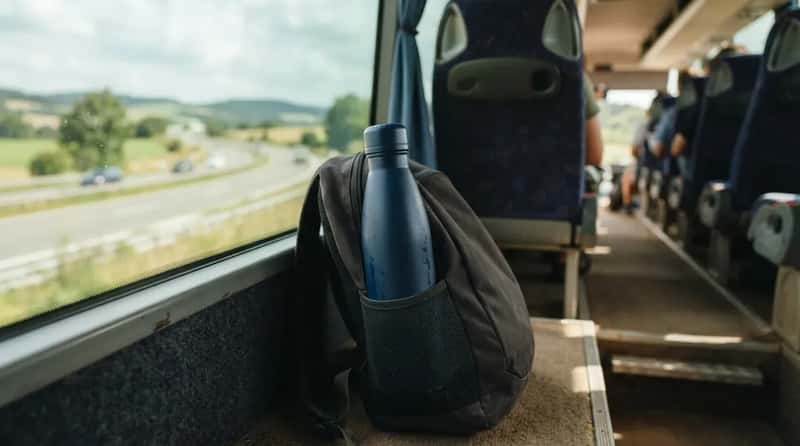
A refillable bottle with a screw-on lid beats a flimsy cup every time. It rides in a side pocket, survives curves, and can be topped up at the stops. Plain water also helps keep headaches and afternoon slumps away on long drives.
There’s a catch, though. Many coaches have an onboard toilet, but plenty of operators ask passengers to save it for emergencies because the tanks are small. That means your drinking habits and your restroom plan are secretly linked. Sip steadily instead of chugging before a long stretch, and know where the next scheduled stop is.
And what’s in your snack bag can start a feud.
#11 – The Snack Smell That Starts a Silent Feud

Here’s an opinion that will divide the group: the tuna sandwich does more damage on a coach than a late arrival. A closed cabin carries smells to every row, and nobody can step outside. Hard-boiled eggs, strong cheese, and fast food bags are the usual offenders.
Better choices are nuts, crackers, fruit that won’t bruise, and bars without strong odors. The person eating is usually the last one to notice the smell. Neat, dry snacks also keep crumbs off the seat and the floor. Your neighbors will quietly thank you.
Now, a tiny card that rescues travelers who wander too far.
#10 – The Hotel Card Nobody Thinks They Need Until They’re Lost
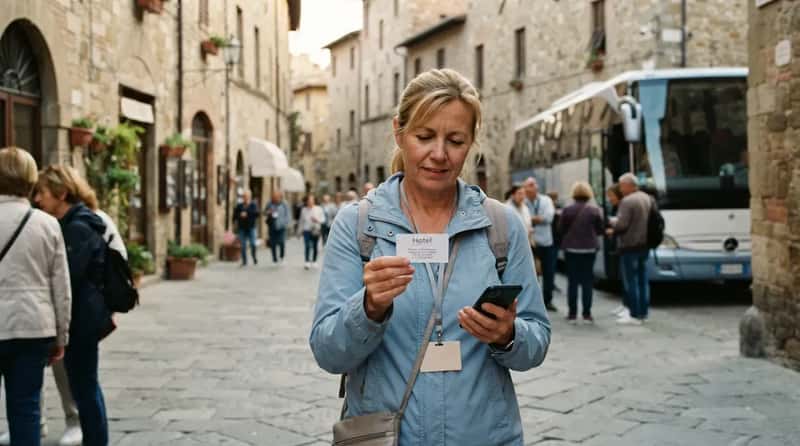
Every tour has a free-time stretch where the group scatters. Before that happens, many managers set one fixed meeting point and one backup, usually landmarks that are hard to miss. Then someone wanders two streets too far and can’t remember either one.
Managers also ask travelers to note the coach number or plate and carry the hotel’s card. One late return can hold up an entire coach full of people. That’s why drivers watch the clock so closely. A paper card still works when your phone has no signal.
Worth Knowing
- The hotel’s name, address, and phone number all fit on one small card
- Write the meeting point and the return time on the back
- Add the tour director’s number as a backup
- Tuck it somewhere other than your phone case, in case the phone is the thing that fails
Then the road starts to wind, and so do stomachs.
#9 – The Motion-Sickness Fix That Has to Be Packed Before the Hills
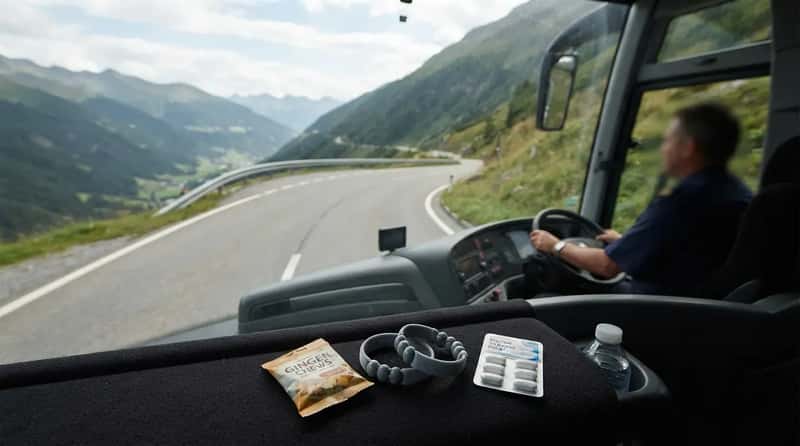
Nobody plans to feel queasy on a mountain pass. It tends to hit not long after the road starts to curve. By then, the remedy is often in a suitcase under the coach.
Ginger chews, wristbands, and over-the-counter tablets are common choices, so ask a pharmacist what suits you. Some tablets cause drowsiness, which can flatten a whole sightseeing afternoon. Sitting toward the front and looking at the horizon can help too. Take your remedy before symptoms start, not after.
Small things can also save a very short break.
#8 – The Tissue Pack That Rescues a Rushed Rest Stop
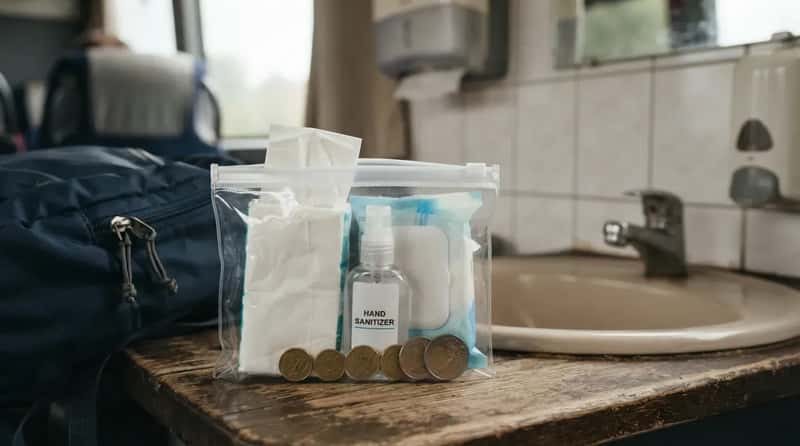
Rest stops are short, and the lines are long. Ask a tour manager what derails a schedule, and restroom stops come up fast. A restroom that’s out of paper or soap makes it worse.
A small tissue pack and hand sanitizer can save you a second trip through the line. In some places, restrooms charge a small fee, so loose coins help. Wet wipes also handle sticky hands after snacks. Keep it all in one zip bag that goes straight into your day pack.
Here’s the habit that’s become a classic on-board complaint.
#7 – The Trash Bag That Keeps Your Seat From Becoming a Crime Scene
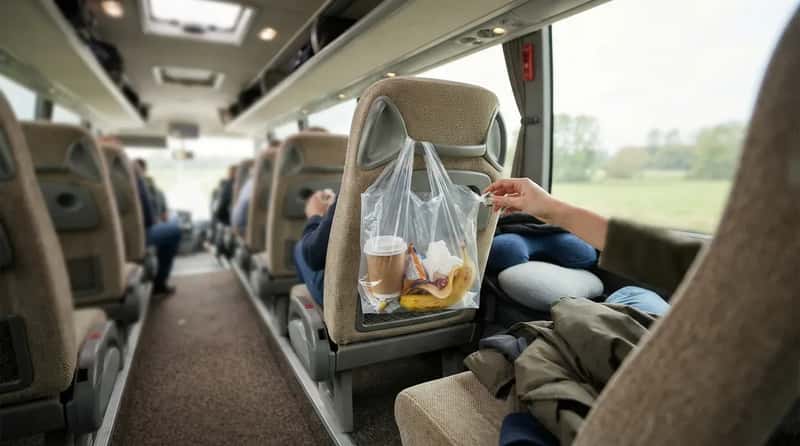
By afternoon, a coach seat can look like a picnic aftermath. Empty cups roll under the seat in front. Wrappers slide into the aisle every time the coach brakes.
A small plastic bag solves all of it. A bag you can close also keeps a banana peel from becoming a smell problem. Drivers still have to clean the coach between legs of the tour. Anything you carry off yourself is one less thing they handle.
Trash is bad, but the next offense is louder.
#6 – The Headphones That Spare Everyone Your Video Feed

Here’s another opinion that might start an argument: speakerphone videos on a coach are a bigger offense than a messy seat. Sound travels easily in a closed cabin. A reel that’s funny to you is background noise to everyone else.
Headphones matter for another reason too. Hop-on hop-off sightseeing buses in many cities typically play recorded commentary through headphones. On some routes, the “guide” in your ear is a recording. Bring your own wired pair in case the supplied ones are broken. It also keeps you from sharing earbuds with strangers.
Why It Stands Out
- A wired pair has no battery to die mid-route
- No pairing, no fiddling, no connection dropouts
- Cheap enough to keep a spare in your day pack
- Check your phone’s port first, since some need a small adapter
On to the seat debate that splits even seasoned travelers.
#5 – The Sunglasses That Settle the “Best Seat” Debate

Everyone wants the window with the view. Few think about the glare. If the coach has no shades or tinted windows, work out which side the sun will hit and consider sitting on the other.
There’s a trade-off. The shady side and the scenic side are often not the same side. Sunglasses and a brimmed hat let you choose the view without paying for it in squinting. A thin scarf can also shield your arm from the window heat. Pack them and stop fighting over seats.
Now the item that decides whether the whole group leaves on time.
#4 – The Phone Alarm That Beats “Just Five More Minutes”
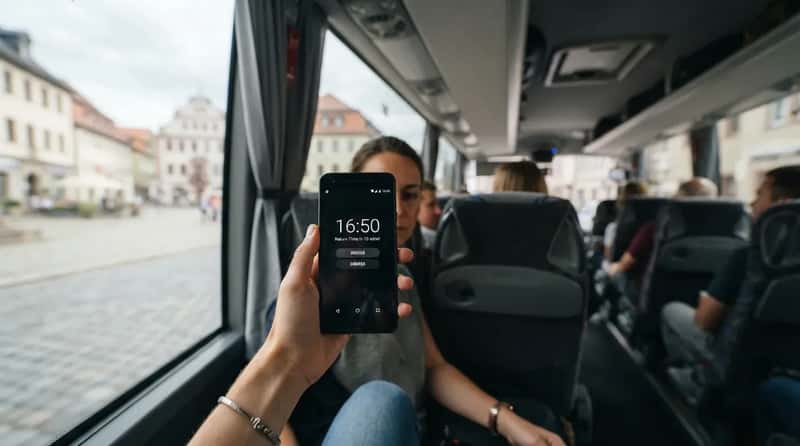
A late return doesn’t just cost you time. It costs the whole group. When the coach leaves early in the morning, the driver’s day started long before the passengers’ did.
The simplest fix is a phone alarm set ten minutes before the return time. Phones near some borders can jump to a neighboring time zone, so double-check the local time. A cheap wristwatch set to local time is a good backup. Absorbed in a museum or a market, people lose track of the hour without a nudge.
Weather is next, and nobody packs for it.
#3 – The Compact Rain Jacket That Beats a Dripping Umbrella
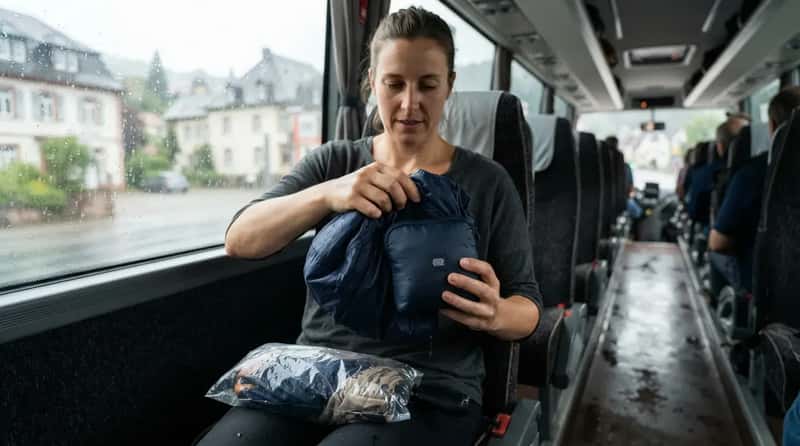
A sudden shower hits right as everyone files back onto the coach. Wet shoes, wet jackets, and wet umbrellas all come aboard together. The steps get slick, and the aisle gets worse.
Safety guidance for buses generally urges passengers to stay seated while the vehicle is moving, since a quick stop or swerve can cause a fall. A dripping umbrella in a narrow aisle makes that risk worse. A packable rain jacket that folds into a pouch is easier to manage. Add a plastic bag for wet gear, and the seat stays dry for everyone.
Quick Compare
- Umbrella: Needs a free hand, drips in the aisle, and takes up seat space
- Rain jacket: Hands-free, folds into a pouch, and drips less once you sit
- Plastic bag: Holds whatever is wet so the seat stays dry
The last two items are the ones drivers care about most.
#2 – The Photo of the Coach Number That Saves You in a Crowded Lot
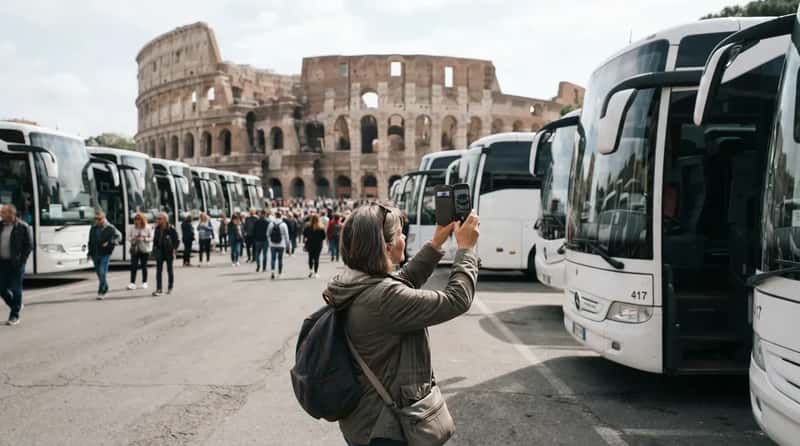
Parking lots at major attractions fill with coaches that all look alike. White, tinted, and identical from fifty feet away. People walk back from lunch and board the wrong one more often than you’d think.
The fix takes ten seconds. Managers ask travelers to note the coach number or plate. A single photo on your phone can save you a panicked search through a sea of identical vehicles. Add the tour director’s phone number to your contacts at the same time. Do it the moment you board, not when you’re already lost.
But the item drivers want most isn’t on any packing list, and it’s waiting at the very top.
#1 – The Cash Thank-You Drivers Quietly Hope You Remembered

This is the item drivers rarely mention but clearly notice. Tips are a meaningful part of income for many tour and charter drivers, but they are never guaranteed. Plenty of riders forget until the last minute, then find they have no cash on them.
Guidance varies widely. Some tour guidance suggests roughly $5 to $10 per passenger per day for the driver and guide combined, while other companies suggest a smaller amount for the driver alone. Because the range is so wide, the safest move is to ask your tour director before the trip. Then hand the tip directly to the driver when you step off the coach for the last time.
Almost nothing on this list is expensive. Earplugs, a daypack, a charged power bank, a hotel card, a photo of the coach number: each one takes minutes to prepare. The real costs of a long touring day are lost time, missed doses, and a full coach waiting on one person.
The best-prepared passengers are the ones who quietly keep the day moving for everyone else. The driver’s day started hours before yours did, and a little preparation is the easiest way to say thanks before you ever hand over the envelope.