Most travelers blame TSA when the line crawls to a stop – but the real data tells a very different story. At busy U.S. airports, the average wait sits under 10 minutes, yet at hubs like JFK it regularly stretches past 23 minutes, and the gap almost always traces back to something a passenger did wrong before ever reaching the scanner.
From forgotten water bottles to the wrong shoes, ordinary people are quietly burning their own time – and everyone else’s, too. Here’s what checkpoint data and TSA’s own spokespeople actually say is slowing you down, starting with the mistake almost everyone still makes.
#17 – Forgetting to Remove Your Belt and Shoes
This rule has been around for over two decades – and it’s still the single most common slip at the checkpoint.
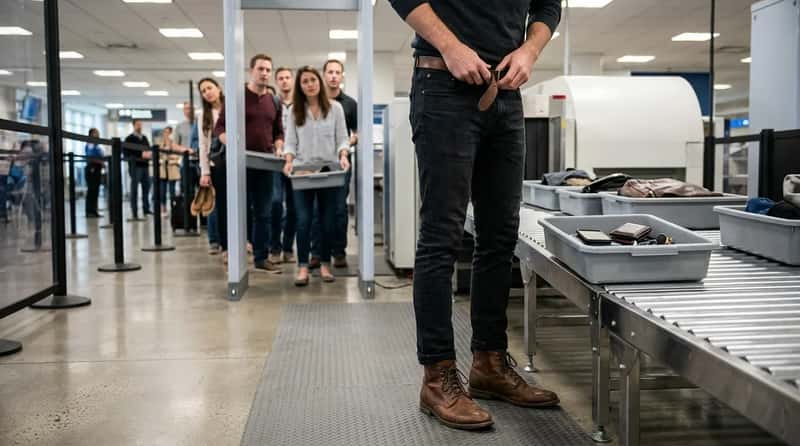
In a national survey, 28% of travelers admitted forgetting to remove their belt and shoes before stepping through the scanner. That’s more than one in four passengers sent back for another bin.
TSA requires shoes, belts, and light jackets off, and lace-up boots create a visible bottleneck with a line stacking up behind you. Slip-ons are the smarter move; every extra second at the bin ripples backward through the whole queue.
But shoes and belts are just the warm-up. The next mistake catches even experienced flyers off guard…
#16 – Wearing Bulky Jewelry and Heavy Metal Accessories
You dressed up for the trip. The scanner does not care.
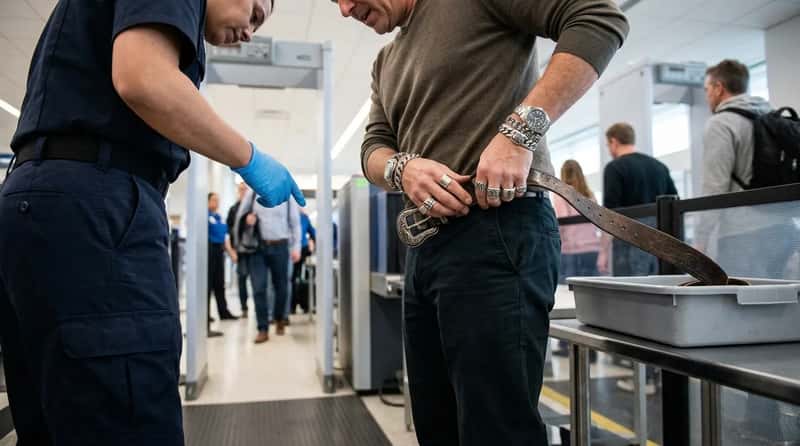
Heavy necklaces, chunky rings, and oversized belt buckles all set off the metal detector and pull you out of the flow. Bulky clothing makes it harder for scanners to see what’s underneath, giving you another reason for a second look.
The fix is simple: wear minimal metal on travel day and pack the statement pieces in your carry-on. Dress simply, without excess layers or hardware, and you’ll move through without anyone giving you a second glance.
That said, what’s on your body is only half the problem. What’s inside your bag can be even worse…
#15 – Leaving Electronics Buried in Your Bag
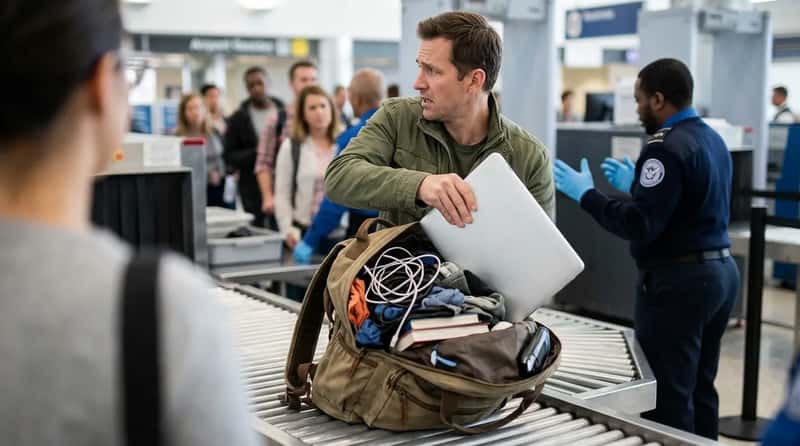
This one trips up even frequent flyers – and it’s completely avoidable.
Any device larger than a phone – laptops, tablets, e-readers – needs its own bin. Leave it buried in your bag and it gets flagged, pulled, and rescreened while the line behind you backs up.
TSA recommends backpacks and purses with dedicated laptop compartments for exactly this reason. An easy-access sleeve means you can pull your laptop out in seconds instead of digging through cables under pressure.
Think that’s bad? The liquid rule has been around even longer – and people still get it catastrophically wrong…
#14 – Breaking the 3-1-1 Liquid Rule
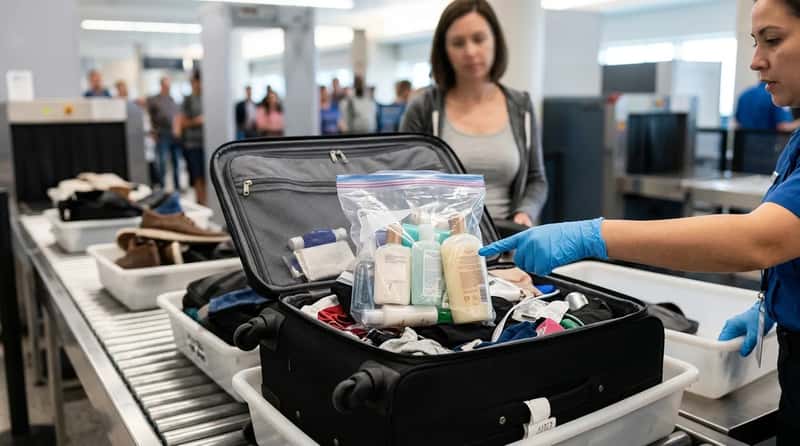
The 3-1-1 rule has been in place since 2006. It’s still the most-confiscated item category at checkpoints every single year.
Each container must be 3.4 ounces or less, and all of them need to fit inside one quart-sized clear bag at the top of your carry-on. Bring a bottle over the limit and officers have to stop, manually search the bag, and hunt it down – slowing down the line for everyone, not just you.
A buried toiletry bag causes nearly the same delay as an oversized bottle, since it still has to be found.
Fast Facts
- Rule has stayed unchanged since 2006: 3.4 oz (100 ml) max per container.
- All containers must fit in one quart-sized clear bag – just one bag per traveler.
- Solid alternatives like shampoo bars and stick deodorant skip the rule entirely.
- Medically necessary liquids over the limit are allowed only if declared first.
Keep your quart bag at the very top of your carry-on, every single time. But forget the liquids for a second – your pockets may be doing even more damage…
#13 – Not Emptying Your Pockets Completely
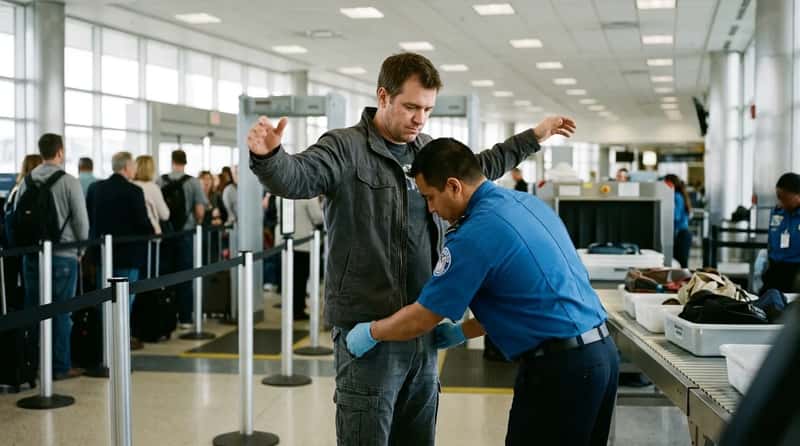
Coins. A receipt. Earbuds. That forgotten pocket knife from last month’s camping trip.
Not fully emptying your pockets can trigger the alarm and require a full physical screening. A pat-down doesn’t just delay you – it pulls a dedicated officer away from the main checkpoint flow, and everyone waits.
The fix: before you even join the line, move everything from your pockets into your bag – not the bin. Bins get lost; bags go straight through.
And while you’re at it, check the bottom of that bag. You might be surprised what’s hiding there…
#12 – Packing a Crammed, Disorganized Carry-On
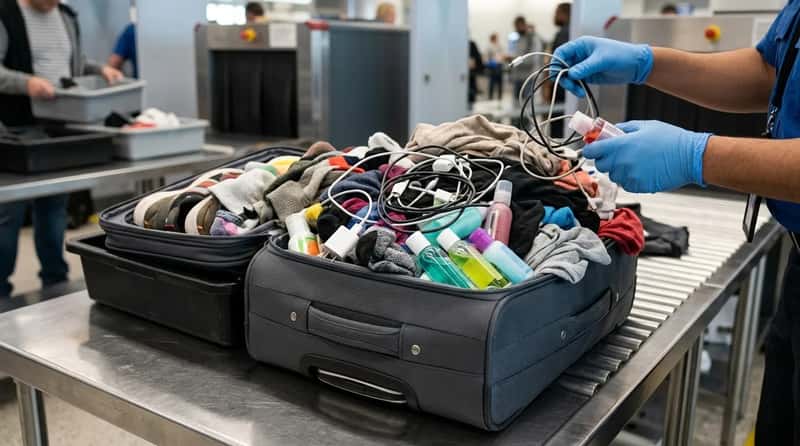
You overpacked to avoid checking a bag. Ironically, that choice can cost you more time than checking it ever would have.
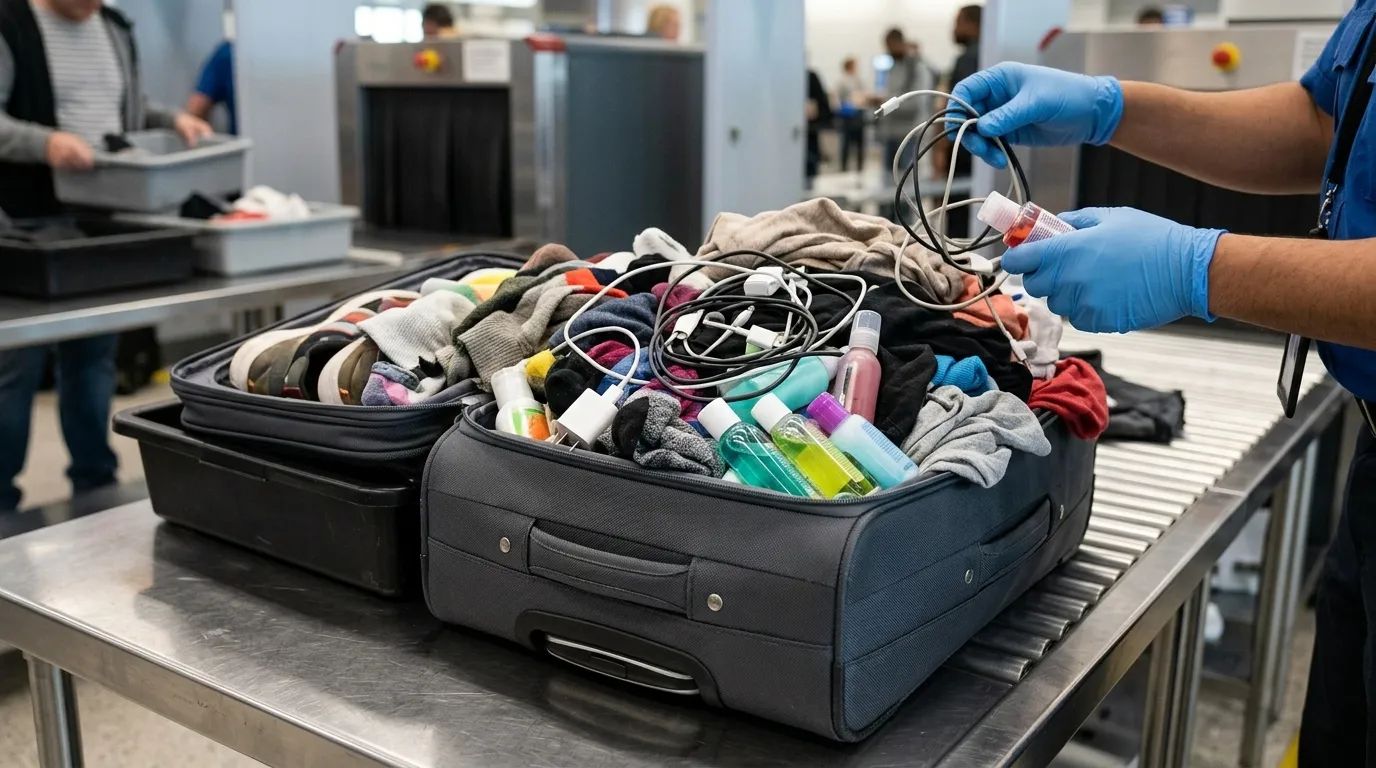
A tightly stuffed carry-on is harder for TSA’s technology to read, and a tangled mess of clothes, wires, and bottles is exactly what flags an agent to search by hand. Disorganized luggage practically invites a manual check.
Packing cubes prevent time-consuming searches and let you fit more in anyway. Clean, separated layers read clearly on an X-ray screen; a chaotic bag does not, and it will be opened.
The next mistake is one most people don’t even consider until it’s too late…
#11 – Wearing Complicated Footwear
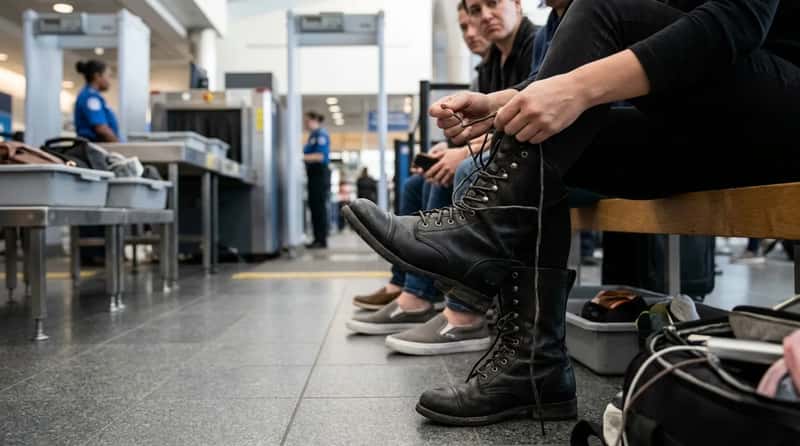
Lace-up boots. Buckle sandals. Platforms with a strap wrapping halfway up your calf. All completely legal – all a time bomb at the checkpoint.
With dozens of people lined up behind you, boots that take real effort to remove turn into a bottleneck fast. Every extra 45 seconds you spend wrestling with laces is 45 seconds the whole line stands still.
This is genuinely controversial advice, since plenty of style-conscious travelers treat their footwear as non-negotiable. But if you’ve ever watched a lane freeze because someone couldn’t get their combat boots off, you know the cost – pack the fashion shoes, fly in the slip-ons.
Footwear is visible. The next mistake is invisible – and far more dangerous to your schedule…
#10 – Not Declaring Medical Devices or Implants
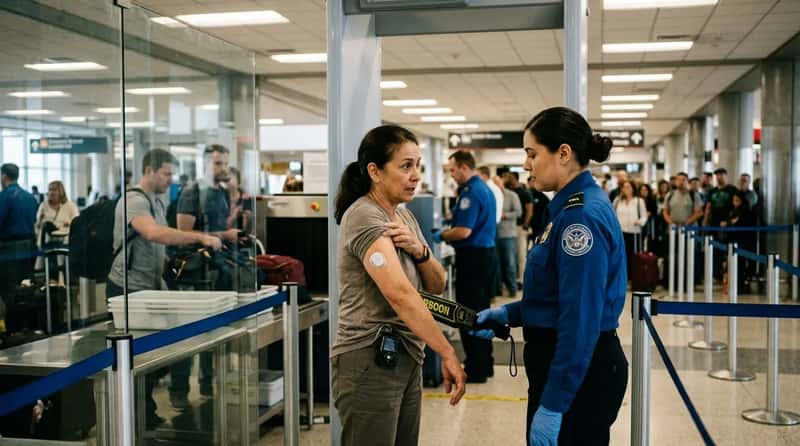
This mistake doesn’t just slow you down – it can turn a routine screening into an extended, uncomfortable stop.
If you have an implant, cast, wheelchair, insulin pump, or any other medical device, tell a TSA officer before you walk through the scanner. It prevents a holdup and lets agents accommodate you properly.
Medically necessary liquid medications are allowed above 3.4 ounces, but only if you declare them first. Saying nothing and hoping for the best is always the wrong call.
A quick word to an officer takes ten seconds. A post-alarm pat-down takes ten minutes.
And speaking of things people say at checkpoints – #9 is a mistake that defies all common sense…
#9 – Making Jokes About Bombs or Weapons
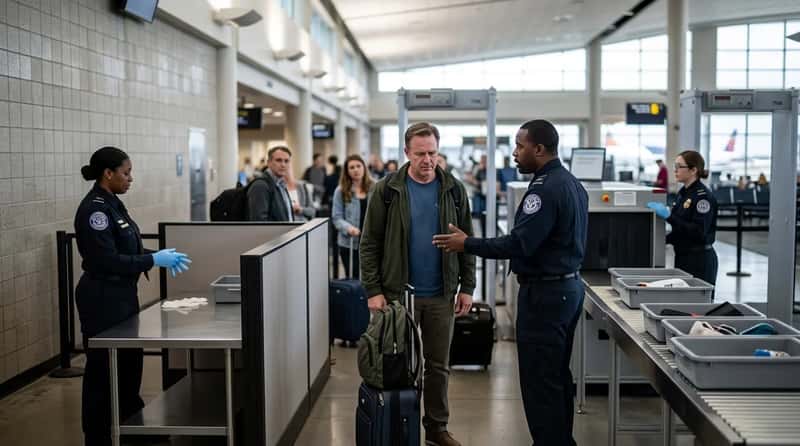
Believe it or not, people still do this. Every single day, at airports across the country.
Even when it’s obviously a joke – like the traveler who told an agent he was carrying eight bombs – TSA has to take it seriously. Jokes about weapons or explosives get you pulled for additional screening and questioning that can eat up a very long time.
Make that kind of joke and expect a visit from local police, not a laugh. Travelers have been kicked off flights, even arrested, over a badly timed comment.
No delay on this list is more entirely self-inflicted than this one. Now for a mistake that feels bureaucratic but is surprisingly common…
#8 – Showing Up With the Wrong ID
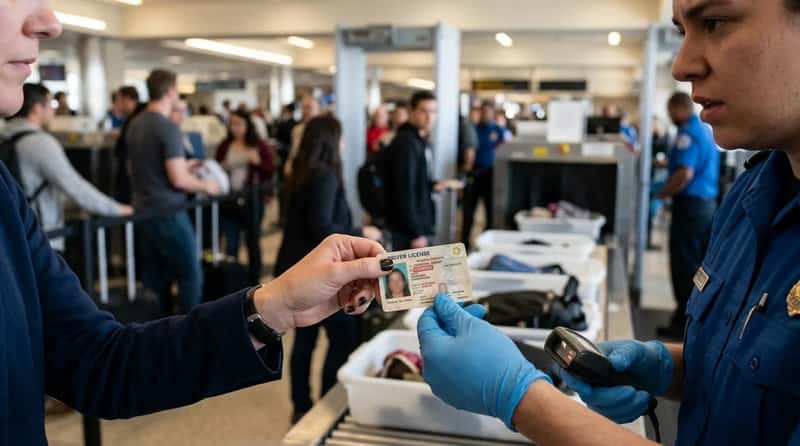
Expired licenses. Non-compliant state IDs. IDs left sitting in the car. TSA sees all of it, constantly.
Travelers need a REAL ID-compliant license or another acceptable form of identification to clear security. Touchless ID through CLEAR or TSA PreCheck isn’t available at every airport, so physical ID is still your backup.
Worth Knowing
- REAL ID enforcement went into effect nationwide in May 2025.
- Accepted IDs include a REAL ID license, a valid passport, a passport card, or military ID.
- An expired license is one of the most common reasons travelers get pulled aside.
- Even PreCheck members still need a physical, valid ID at every checkpoint.
Check your wallet before you check your gate. This one is a full stop – you cannot proceed without it.
The next mistake is about something you have – just not where you can easily reach it…
#7 – Not Having Your Boarding Pass Ready
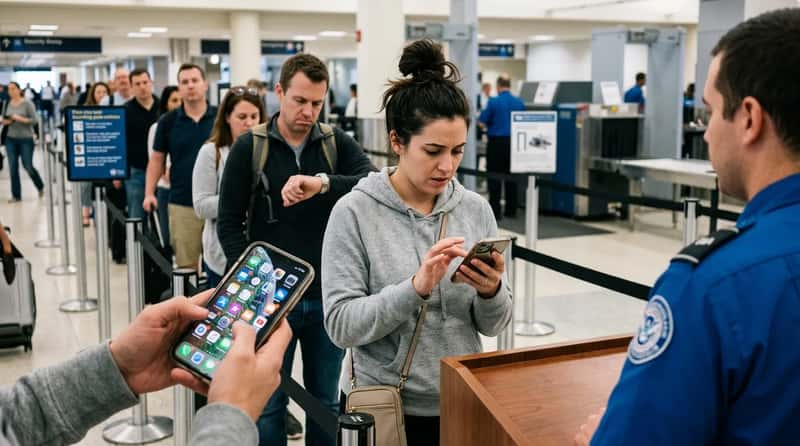
You had it on your phone 20 minutes ago. Now you’re swiping past 47 apps at the document check while the line backs up behind you.
Incorrect booking details or unorganized documents lead to extra checks and missed flights. The officer can’t wave you through until your pass is verified, and every second you spend searching gets shared with everyone behind you.
Screenshot your boarding pass, turn up the screen brightness, and have it open before you join the line. It sounds obvious because it is – yet it’s one of the delays TSA staff report seeing daily.
The next mistake affects the entire queue in a way that’s surprisingly hard to predict…
#6 – Ignoring Officer Instructions
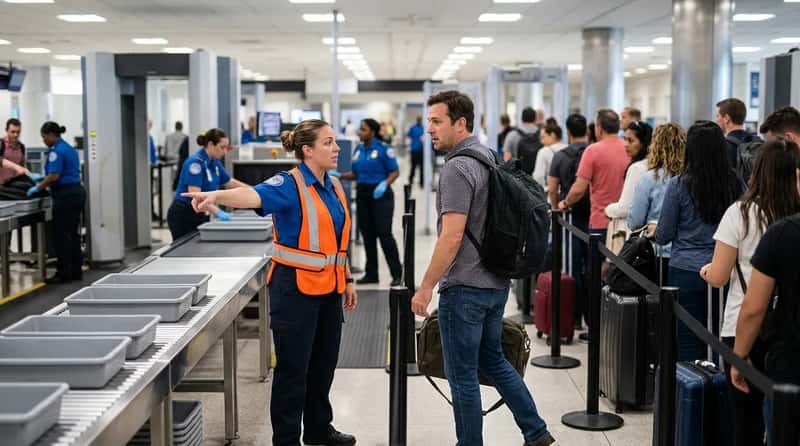
“Use the left lane.” “Remove your jacket.” “Step to the right scanner.” TSA officers call out directions constantly – and most people don’t listen.
Officers are tasked with moving travelers through as safely and efficiently as possible, and screening procedures vary by airport depending on the technology in use. When someone ignores a redirect to an open lane, that lane sits empty while the busy lane backs up even further.
Don’t be that person. Follow the signs and listen to officers so the process stays fast and safe for everyone.
You’re almost to the most surprising mistakes on this list. #5 is one the vast majority of travelers don’t even know is a problem…
#5 – Dropping Small Items on the Conveyor Belt
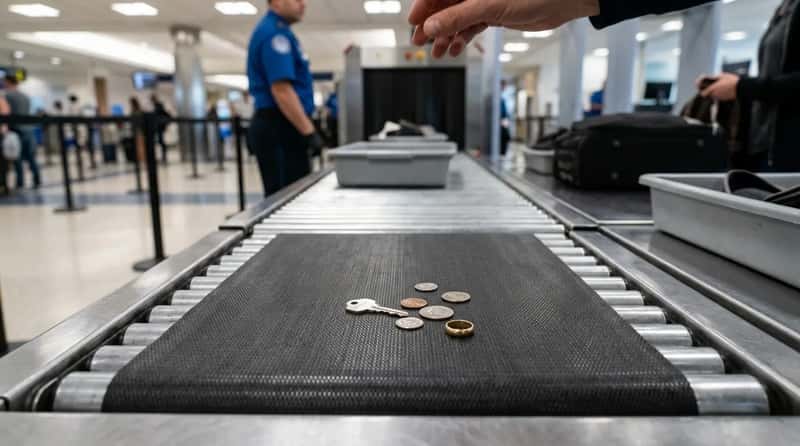
Keys. Coins. A ring. A boarding pass that slips from your hand at exactly the wrong moment.
Phones, boarding passes, keys, and jewelry are likely to fall between the conveyor belt rollers, where they’re difficult or impossible to retrieve. Pack small items in your carry-on bag or bin before you ever reach the belt.
An item lodged in the rollers can stop the belt entirely, forcing an officer to manually clear the jam while the whole checkpoint pauses. And if it’s your boarding pass that fell through, you’ve just created a second problem on top of the delay.
#4 is a mistake you’re probably making before you even get dressed on travel day…
#4 – Wearing Cargo Pants or Excessively Baggy Clothing
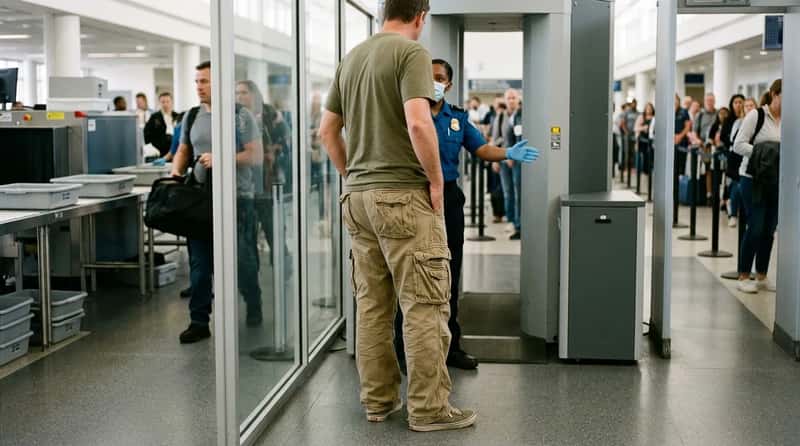
Cargo pants feel like the practical travel choice – more pockets, more storage, more flexibility. TSA sees them very differently.
Excessively loose or bulky clothing gets flagged because the wearer might be hiding something underneath. Too many pockets is its own trigger, and cargo pants check that box twice.
Every pocket needs to be visibly empty before you walk through – and even then, the silhouette of the fabric alone can cause a secondary flag. Save the utility wear for your destination and go simple and fitted on travel day.
#3 is a mistake most people make before they even reach the airport – and it costs them at the very end of the line…
#3 – Arriving Without Knowing the Rules in Advance
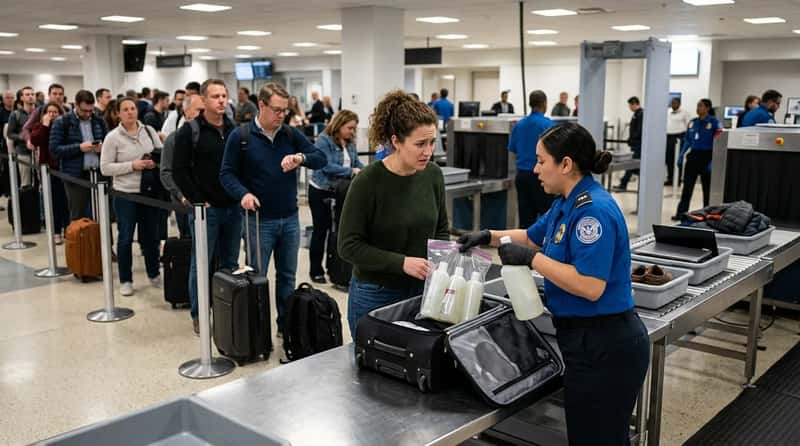
The checkpoint is not the place to learn what’s allowed. That discovery happens in real time, at the worst possible moment, with a queue growing behind you.
Those who try to bring prohibited items like liquids over 3.4 ounces and firearms through the checkpoint will ultimately slow down the process.
TSA representative, to Travel + Leisure
Forgetting TSA’s key rules is the single biggest cause of slowdowns at checkpoints nationwide, according to the agency itself.
Five minutes reading TSA.gov before you pack saves fifteen minutes standing at a checkpoint while your bag gets hand-searched.
#2 is the mistake almost everyone overlooks – and it affects your timing long before you see a single bin…
#2 – Flying at the Wrong Time of Day
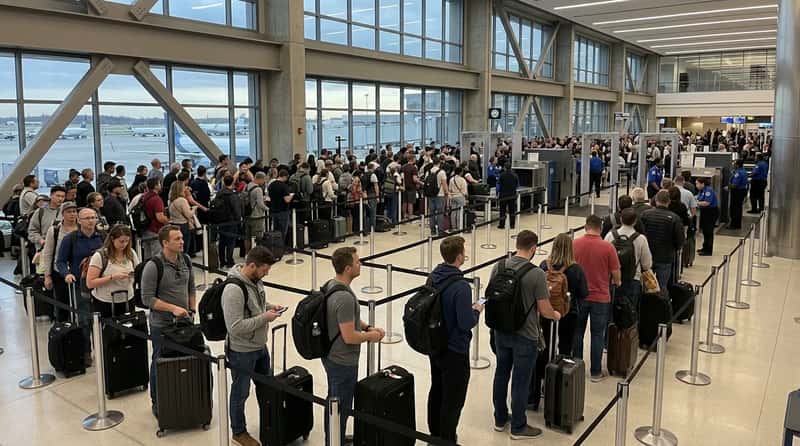
Here’s a secret most travelers never act on: the time of day you fly determines how long you stand in line, almost regardless of everything else you do right.
Quick Compare
- Best windows: 5-7 a.m. and after 8 p.m., when checkpoints run lightest.
- Worst windows: 7-9 a.m. and 3-6 p.m., when business travel and afternoon rushes collide.
- TSA reports the vast majority of PreCheck travelers wait under 10 minutes nationwide.
- Holiday travel: over two million passengers a day were screened during the 2025 Christmas and New Year’s season.
Booking a 6 a.m. or 9 p.m. flight instead of a 7 a.m. one can shave real time off your wait without changing anything about how you pack. Programs like TSA PreCheck, CLEAR, and Global Entry help too, but even PreCheck holders suffer when they pick the worst travel windows.
All of that brings us to the #1 mistake – the one that multiplies the damage of every other item on this list…
#1 – Not Preparing Until You’re Already in Line
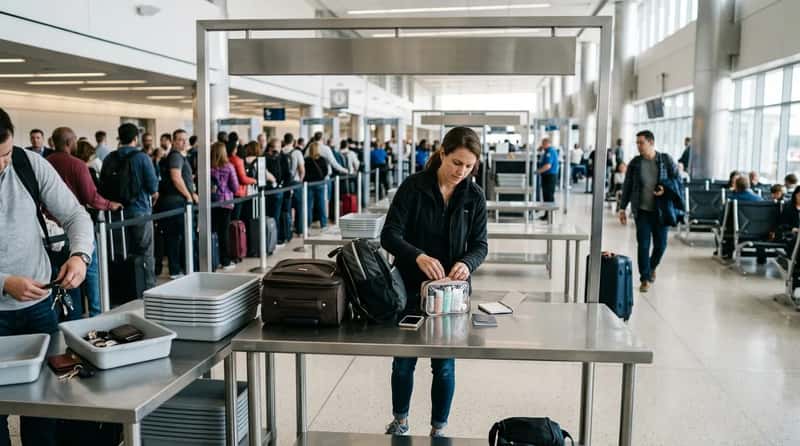
Every mistake on this list shares one root cause: people wait until they’re standing at the checkpoint to start thinking about what it requires.
Former officers, current TSA spokespeople, and checkpoint data all agree on the same thing – your choices before you reach the scanner decide how fast you get through. The bin, the scanner, the officer are just the final seconds of a process that should have started the night before.
Travelers who organize documents, follow liquid rules, and pack efficiently move through security noticeably faster. Checking your ID, boarding pass, and bag contents ahead of time avoids nearly every last-minute issue on this list.
Across the 50 busiest U.S. airports, the average TSA wait is just under 10 minutes – achievable for anyone. Travelers at JFK spend over 23 minutes on average, and most of that gap comes down to exactly the behavior above; prepare the night before, and that’s the entire game.
The TSA checkpoint is not the enemy here – unpreparedness is. Most delays trace back to forgotten belts, buried laptops, oversize liquids, wrong IDs, and travelers who simply haven’t thought ahead.
The average wait at the 50 busiest U.S. airports sits under 10 minutes when things go right, and climbs past 23 minutes at places like JFK when they go wrong. None of these 17 mistakes are hard to fix – they just require doing the work before you leave home, not while you’re holding up the line.
Which of these have you been guilty of? Drop it in the comments, and tag someone who needs to see this before their next flight.