Most cruise passengers step off the ship stunned – not by the fare they paid, but by everything that piled up on top of it. Drinks, spa treatments, gratuities: it’s not unusual for the extras to double the price of the vacation itself.
First-timers get swept up in every upsell the ship dangles in front of them. Experienced cruisers do something completely different – and some of these habits will make you rethink everything you thought you knew about cruising smart.
#17 – They Read the Daily Program Like a Stock Ticker
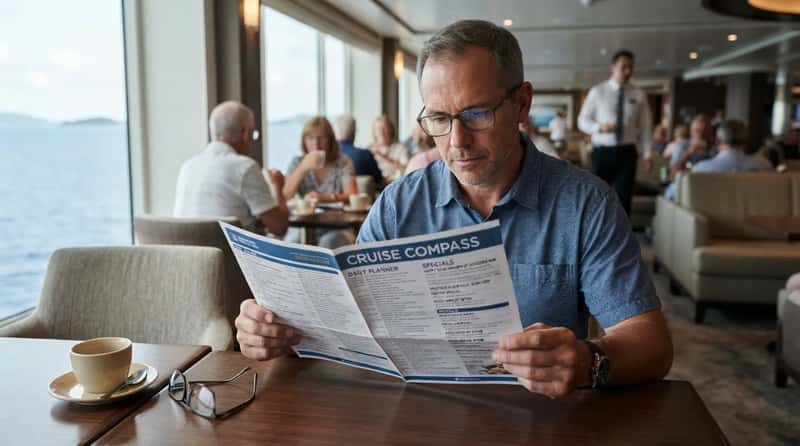
Most passengers glance at the daily schedule just for showtimes, then toss it aside. That’s a costly mistake.
Every morning, the ship prints a rundown of the day’s events – and buried inside are drink specials and happy hour windows most people never notice.
Cruise line boutiques often run BOGO sales or “everything for $10” hours on T-shirts, sunglasses, and accessories. Prices onboard aren’t fixed – they shift based on demand and inventory.
This single habit costs nothing and can trim real dollars off your final bill. Up next: the one onboard expense almost everyone gets wrong from day one.
#16 – They Don’t Auto-Buy the Drinks Package

Cruise lines push drink packages hard – and for good reason. They’re enormously profitable for the ship, not for you.
These packages can look like a steal, but many require several drinks a day just to break even. Casual drinkers often save more buying à la carte or timing happy hour specials.
Prices vary widely – from a little over $80 a day at Carnival Cruise Line (booked in advance) to $105 a day at Royal Caribbean for the top-tier packages. That’s over $700 per person on a seven-night cruise, before a single sip.
Quick Compare
- (cite index=”17-16,17-17″>Carnival’s Cheers! package runs $88.44 per day when purchased onboard versus $82.54 when purchased in advance, gratuities included.
- (cite index=”16-4″>Royal Caribbean’s Deluxe Beverage Package has a fleet median of $83.99 a day, ranging from about $57 to $120 depending on the ship.
- Skip alcohol entirely and (cite index=”15-8″>the Refreshment Package runs about $29-$40 a day, while the Classic Soda Package averages $13-$16 a day.
- Most packages only pay off once (cite index=”10-9″>you’re drinking 6-8 cocktails per day – fewer than that, and à la carte usually wins.
Experienced cruisers do the math before they click “add to cart.” Next: a free habit that can save a family of four hundreds of dollars.
#15 – They Pack Their Own Toiletries and Basics
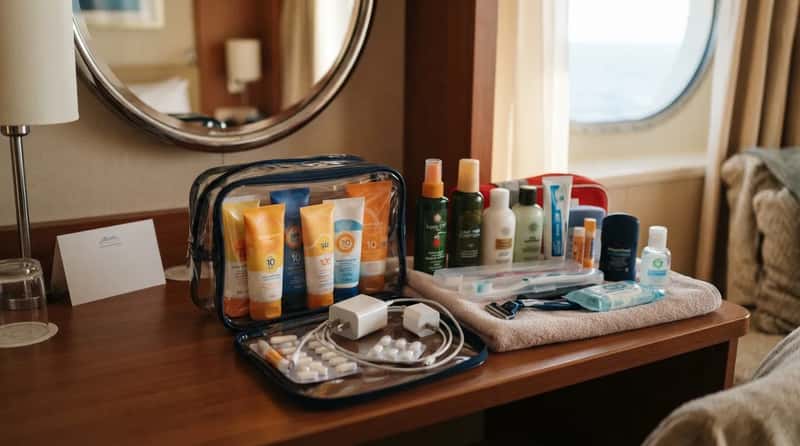
It sounds obvious – until you’re mid-cruise, sunburned, and paying $20 for a bottle of sunscreen. Passengers forget this constantly.
Bring your own toiletries, sunscreen, medications, and chargers from home. Onboard shops mark up basic items brutally.
The markup on basic wellness items onboard can exceed 150%. Experienced cruisers treat their packing list like a financial decision, not just a luggage one.
This habit sets the tone for the whole trip. But ignore your onboard account, and things get ugly fast – that’s next.
#14 – They Monitor Their Onboard Account Daily
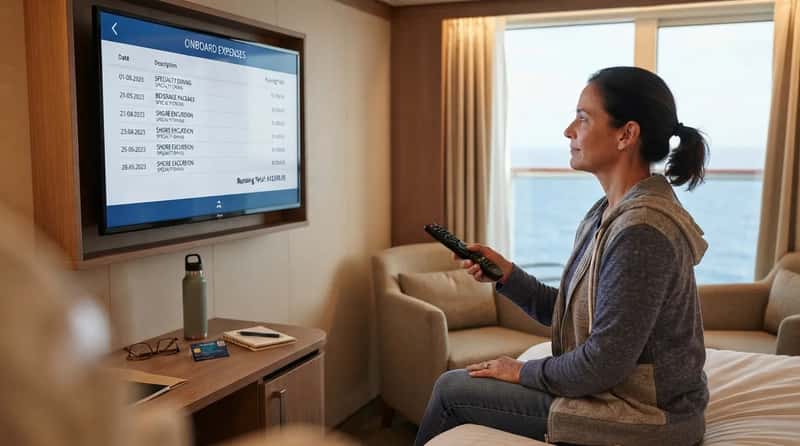
Here’s a habit that separates rookies from veterans almost instantly: checking the tab.
Most ships let you view your running balance through the cabin TV or the cruise line’s app – yet most passengers never look until checkout day. Set a realistic budget before you board, then track it nightly.
Small charges – a $4 soda, a $12 cocktail, a $6 room service fee – compound into hundreds of dollars by the final morning. Experienced cruisers treat their ship account like a bank account, catching errors before it’s too late.
Next up: the habit that turns loyalty into cold, hard cash.
#13 – They Stay Loyal to One Cruise Line

Veteran cruisers don’t hop between lines chasing one-off deals. They pick one line and dig in – and the payoff compounds.
Sail once, and you’re eligible to join that line’s loyalty program. Members get access to past-passenger discounts, free upgrades, and eventually, free cruises.
Royal Caribbean’s Crown and Anchor Society offers perks from $2 of free casino play up to a members-only lounge and a complimentary specialty dinner. That free dinner alone can be worth $50-$60 per person.
The compounding effect across drinks, dining, and upgrades is one of the most underrated strategies in cruising. Coming up: a habit most cruisers never even consider until it’s too late.
#12 – They Book Future Cruises While Still Onboard
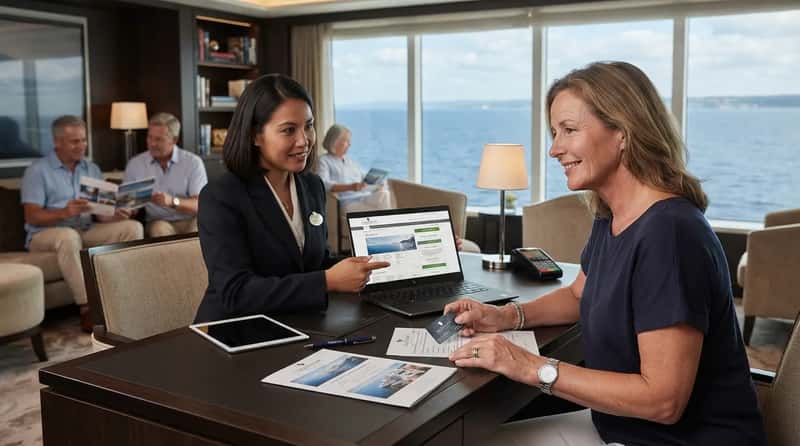
This is one cruise lines quietly hope you don’t act on.
Seabourn passengers who book while onboard get 5% off a future fare with a $500 deposit. Many mainstream lines offer similar “book onboard” perks – reduced deposits, future onboard credit, or early cabin selection.
Booking your next cruise while you’re still at sea can lock in perks that vanish the moment you disembark. Savvy cruisers use the last sea day productively; first-timers spend it packing.
Next: a fee almost every passenger quietly overlooks – and it adds up faster than almost anything else onboard.
#11 – They Understand Gratuities Before They Board
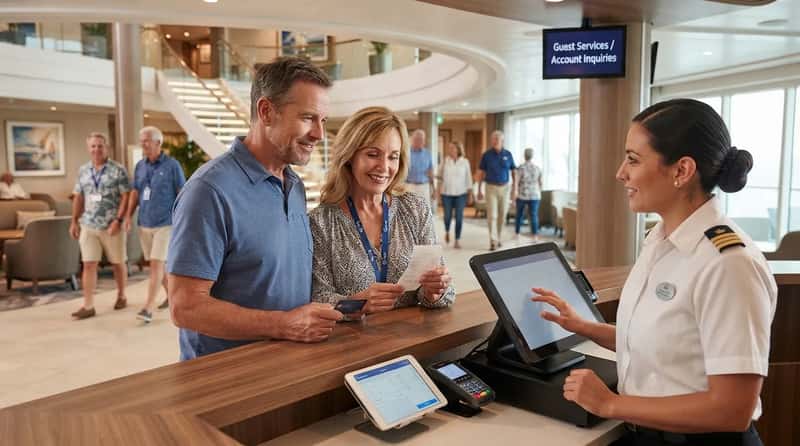
This is where cruise budgets quietly go off the rails. Gratuities aren’t a small line item – they’re a significant, recurring daily cost.
Skip prepaying, and Royal Caribbean automatically charges $21 per guest per day for suites, and $18.50 per guest per day for every other stateroom category. An 18% gratuity is also tacked onto every beverage, specialty dinner, and room service order.
Fast Facts
- (cite index=”8-5″>Royal Caribbean adds $18.50 per guest per day in automatic gratuities, rising to $21 in suites.
- Celebrity raised its rates too: (cite index=”1-1″>$19.50 for standard cabins, $20.50 for Concierge and AquaClass, and $24.50 for The Retreat.
- (cite index=”1-18″>Carnival increased its daily gratuity to $17.00 per person for standard cabins and $19.00 for suites earlier this year.
- At the extremes, (cite index=”9-1″>Norwegian charges the highest of the major lines at $20 per guest per day, while Disney sits lowest at $16 per guest per night.
On a 7-night cruise for two, daily gratuities alone can top $250 before a single cocktail is ordered. Experienced cruisers factor this in before they ever step on the gangway.
Next up: the Wi-Fi trap that catches nearly every first-timer.
#10 – They Skip (or Strategically Buy) the Wi-Fi Package

Cruise ship Wi-Fi is notoriously expensive, notoriously slow, and notoriously oversold. Most passengers buy it reflexively anyway.
Some experienced cruisers skip it entirely and enjoy a digital detox instead. Those who need connectivity buy the minimum tier and use it in short, deliberate bursts.
Many also buy Wi-Fi packages before the cruise, when pre-sail discounts of 20-30% are commonly offered. Waiting until you’re onboard to buy anything is almost always the priciest option.
What’s next will change how you think about eating on every cruise you ever take.
#9 – They Squeeze Maximum Value from Included Dining
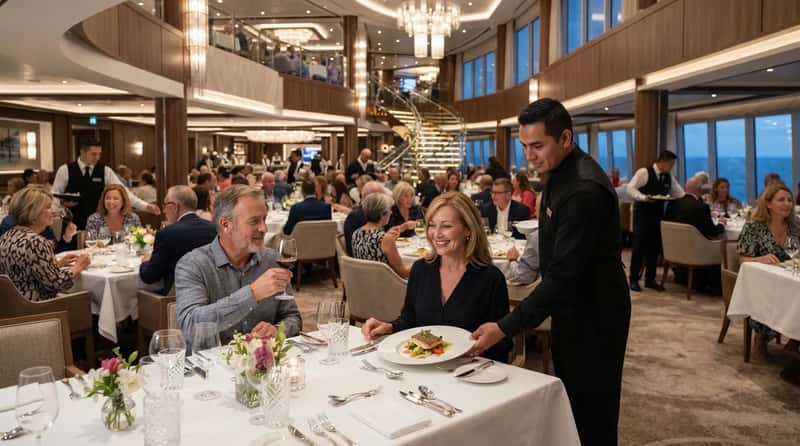
The single most expensive habit on any ship is ignoring what you’ve already paid for. And food is the biggest example.
Free dining rooms, free pools, free entertainment, free fitness centers – all abandoned in favor of paid alternatives that offer only a marginal upgrade. Experienced cruisers squeeze full value from every included item first.
Main dining rooms on modern ships are often genuinely excellent – multi-course menus, attentive service, rotating chefs. Specialty restaurants are a treat worth having occasionally, not a nightly habit.
Veteran cruisers treat specialty dining as a reward, not a default. Next: the free daily event most passengers walk right past.
#8 – They Hit Free Alcohol Tasting Events
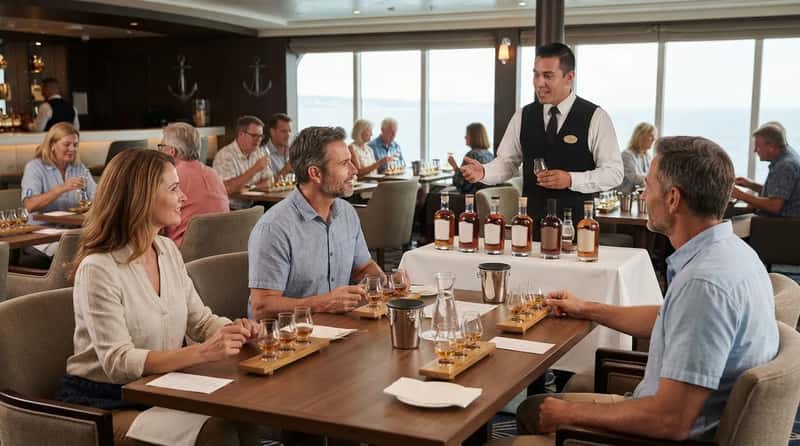
This one flies completely under the radar – and the ships don’t advertise it loudly.
Check your ship’s daily schedule for free tasting events. Wine tastings, rum sessions, whiskey flights – many ships run these as part of their regular programming.
They’re often listed quietly in the daily newsletter, easy to miss if you’re not looking. They won’t replace a full bar tab, but they deliver real value most passengers never claim.
This circles right back to habit #17 – the daily program really is a goldmine. Up next: the shore excursion habit that can save you hundreds per port.
#7 – They Book Shore Excursions Independently

The ship’s excursion desk is convenient – and convenience is exactly what you’re paying for.
Many experienced cruisers report saving $200-$400 per port by booking excursions independently, often with a better experience and fewer crowds. That savings frees up budget for specialty dining or souvenirs.
The ship’s excursion markup can run 30-50% above what independent operators charge for identical tours. Experienced cruisers research ports at home, book direct, and pocket the difference.
Next: a strategy so simple it feels like cheating – but it’s completely legitimate.
#6 – They Bring Permitted Drinks Aboard
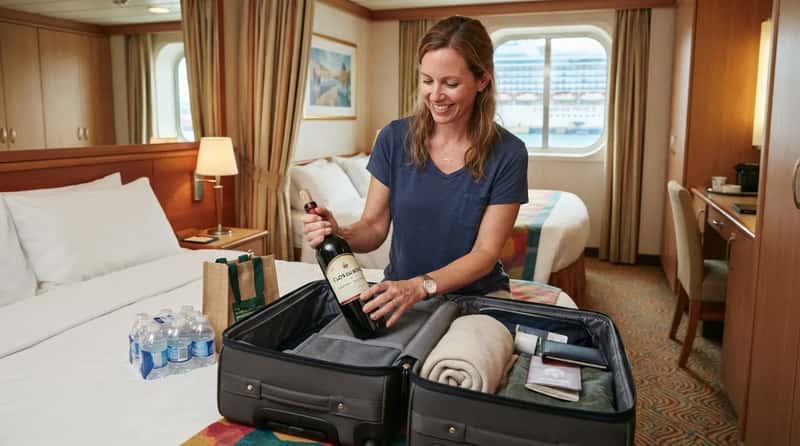
Most cruisers assume they can’t bring any beverages onboard. That assumption is expensive.
Policies vary by line, but many allow one bottle of wine per adult at embarkation, or a case of water or soft drinks. Stop at a local supermarket before the terminal and skip the $10-a-glass bar prices entirely.
A $14 bottle of decent wine from a port supermarket versus a $14-per-glass ship pour is one of the starkest value gaps in all of travel. Check your cruise line’s policy before you sail – it takes five minutes and saves real money.
Next: a habit most people only discover after their first cruise, when it’s already too late.
#5 – They Watch the Onboard Boutique Sales Timing
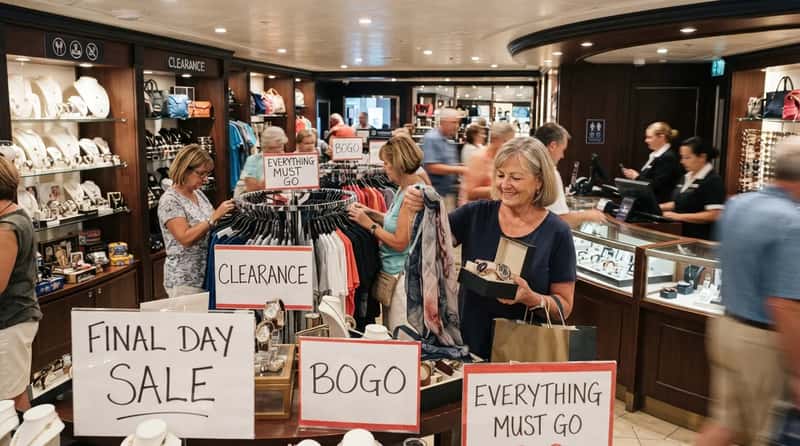
Cruise ship boutiques look like overpriced tourist traps on day one – and they usually are. By the final sea day, the rules change completely.
Boutiques often run BOGO sales or “everything for $10” hours near the end of the voyage, when the ship needs to clear inventory before the next group boards. Experienced cruisers note what they want on day one and buy it at the end-of-cruise discount, not the opening sticker price.
Retail discipline onboard works exactly like retail discipline at home – the patient shopper wins. First-timers buy on impulse; experienced cruisers wait.
What’s at #4 will change how you look at your credit card before you even pack your bags.
#4 – They Pay with the Right Credit Card
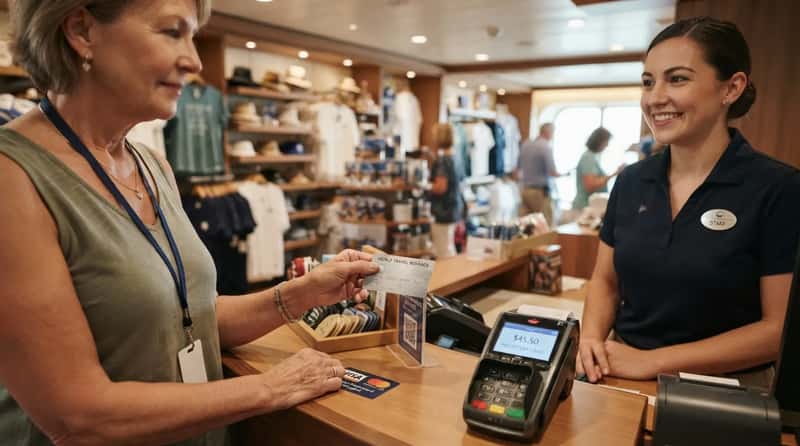
This habit starts before the cruise even begins, but it pays off the entire voyage – and beyond.
Use a card that rewards travel spending, and you’ll pull more value out of every dollar you spend at sea. It costs nothing extra to use the right piece of plastic.
Cruisers who own 100 shares or more of Carnival Corp., Norwegian Cruise Line Holdings, or Royal Caribbean Group can request onboard credit as a shareholder perk. That shareholder OBC can range from $50 to $250 per cruise, just for holding stock.
At a Glance
- Carnival Corporation: (cite index=”27-11″>$250 per cabin for cruises of 14 days or longer, $100 for seven to 13 days, and $50 for six days or fewer.
- Royal Caribbean Group: (cite index=”26-8″>$250 for sailings of 14+ nights, $100 for 6-13 nights, $50 for 5 nights or less, and up to $1,000 on a World Cruise.
- Norwegian Cruise Line Holdings: (cite index=”26-1″>$250 for sailings of 15 days or more, $100 for 7-14 days, and $50 for six days or less, valid across Norwegian, Oceania, and Regent Seven Seas.
- All three require owning at least 100 shares, and the credit has to be requested before sailing.
Most passengers have no idea this exists. Next: the invisible fee that appears on nearly every receipt – and how smart cruisers handle it.
#3 – They Never Double-Tip Without Realizing It
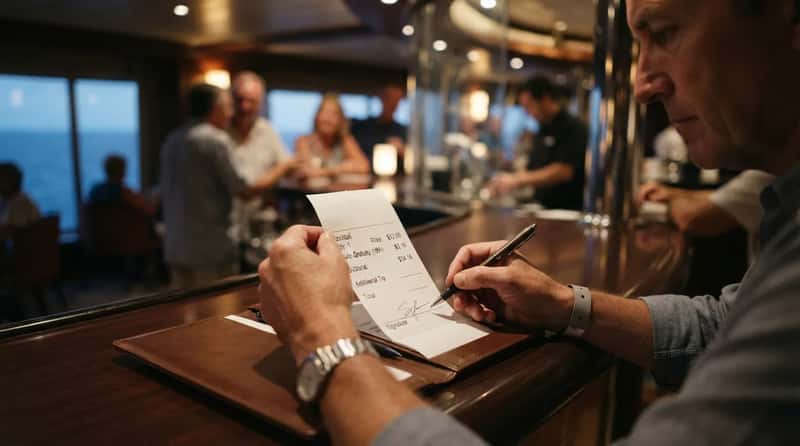
Here’s one that costs passengers real money quietly, consistently, and almost invisibly.
Many cruise lines automatically add a 15%-20% gratuity to extra-fee drinks, specialty meals, and spa treatments. The receipt often includes a blank line for an additional gratuity – even when one has already been added.
Passengers who reflexively fill in that blank are double-tipping on every single transaction. Over a 7-night cruise with daily drinks and a couple of specialty dinners, that adds up fast.
Experienced cruisers check every receipt before they sign – a 3-second habit that saves real money. Next: one that barely anyone talks about, but it moves serious money over time.
#2 – They Use Casino Play to Their Advantage
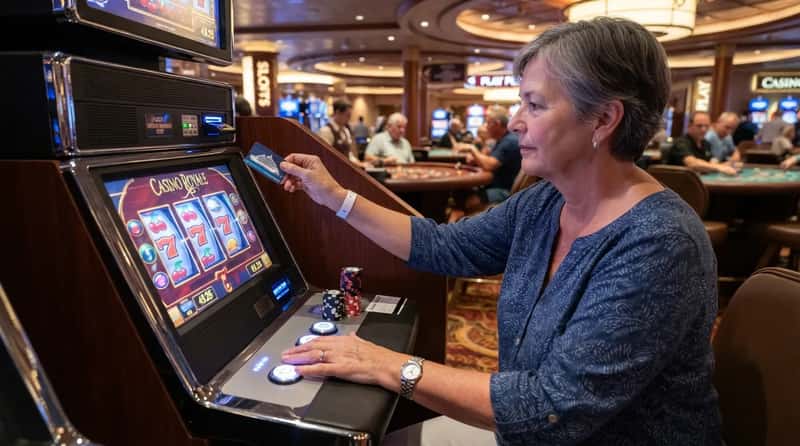
Here’s the angle most cruise advice never covers.
Cruise lines love casino players because they spend money onboard. Join a line’s players club, and you can start receiving discounts and complimentary cruise offers.
It’s not about gambling recklessly – it’s about strategic, modest play that signals loyalty to the reward system. Many veteran cruisers set a small, fixed casino budget per voyage, just enough to register as active players.
They redeem the resulting perks – free upgrades, discounted sailings, casino credit – on future trips. The math works, as long as you set the limit before you sit down.
#1 – They Know Exactly What’s Already Included Before They Board

Every other habit on this list becomes twice as powerful once you master this one. And it’s the most overlooked habit of all.
Most cruisers pay for things their base fare already covers, simply because they lost track of what’s free. Before boarding, review the ship’s included dining, amenities, and attractions.
Set a budget for extras before you board, and stick to it. Research in advance which splurges are worth it and which you can skip without missing a thing.
Experienced cruisers arrive already knowing which restaurants are free, which pools cost nothing, and which “amenities” are upsells in disguise. They’re not discovering the free fitness center on day five – they’re already using it on day one.
The Bottom Line
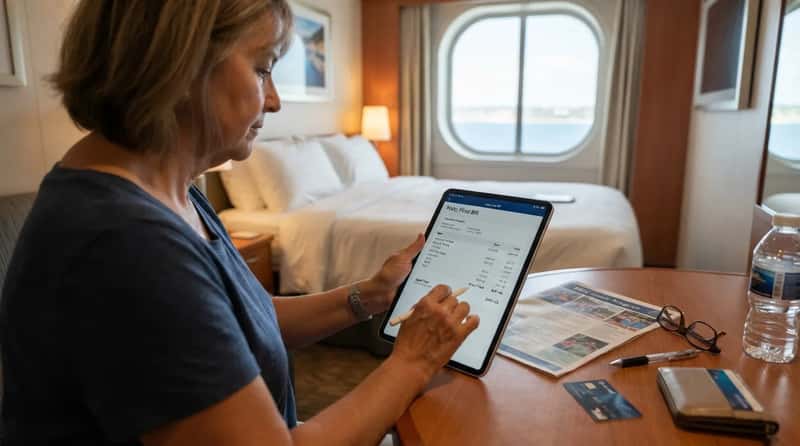
Experienced cruisers don’t just get lucky with their bills – they build habits. They read the daily program for deals, scrutinize every receipt, bring permitted drinks aboard, and skip the impulse Wi-Fi buy.
The difference between a $1,000 onboard bill and a $3,000 one often comes down to these exact behaviors. None of it requires deprivation – just knowing the rules before you play.
The ship is built to spend your money for you. These seventeen habits make sure it doesn’t.
Bonus: The Price-Drop Recall Trick Almost No One Uses
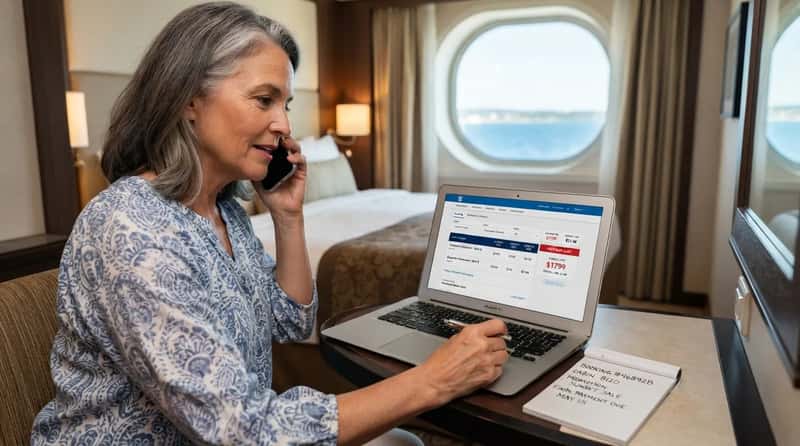
Cruise fares aren’t fixed once you book – they float, sometimes dropping hundreds of dollars before your final payment date. Most passengers never check again after booking, so they never claim the difference.
Experienced cruisers treat their own booking like a stock they’re tracking, and they call to collect when the price moves in their favor.
- Write down your booking number, exact cabin category, and promotion name right after you book.
- Check that same cabin category and promotion on the cruise line’s own site every couple of weeks leading up to final payment.
- If the price drops, call reservations (not a bot chat) and reference the lower fare by category and date – ask for a courtesy reprice.
- Do this before final payment, since most lines won’t adjust fares after that date or on “guarantee” cabin bookings.
Sometimes the line refunds the difference to your original payment method; other times they convert it to onboard credit instead. Either way, it’s free money that most cruisers leave on the table simply because they stopped watching after checkout.