
Picture this: three kids melting into hot vinyl seats, a dad refusing to stop for anything except gas, and then a billboard flashes by promising free ice water 200 miles ahead. Suddenly everyone’s awake, and the whole car is negotiating a detour nobody actually needs. That’s the part people forget about 1970s road trips – the driving was just the filler between stops families would practically beg for.
Some of these places barely sold anything useful. A few were just a fiberglass giant standing in a gravel lot. And yet an entire generation can still describe the smell, the signage, and the exact moment they spotted one from the highway. Here are the 17 stops that turned ordinary summer drives into the memories people are still talking about fifty years later.
#17: The Orange Roof That Meant Dinner Was Already Decided
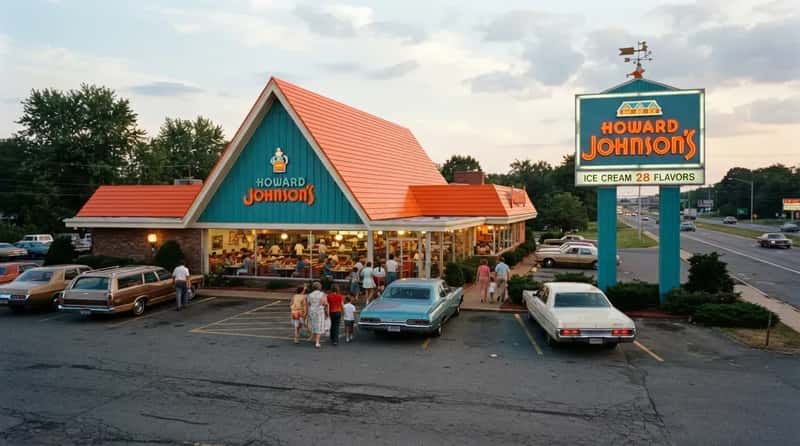
Spotting the orange roof from the highway meant one thing: dinner was settled before anyone even asked. Howard Johnson’s had quietly become the largest restaurant chain in America by the early ’70s, and its turquoise-and-orange buildings worked almost like mile markers from Maine to Florida. Families trusted it precisely because it was everywhere and never changed, which matters more than people admit when the kids in the back seat are exhausted and hangry.
The real hook wasn’t the fried clams – it was the promise that dinner wouldn’t be a gamble in a country where road food was still wildly inconsistent. Twenty-eight ice cream flavors sounded almost absurd for the era, and picking one felt like a major life decision to a seven-year-old. It’s a big reason boomers still talk about HoJo’s with more affection than the food probably earned.
Fast Facts
- Howard Johnson’s was the largest restaurant chain in the U.S. throughout the 1960s and 1970s, with more than 1,000 combined company-owned and franchised outlets.
- By 1965 the chain’s sales had grown large enough to top McDonald’s, Burger King, and Kentucky Fried Chicken combined.
- The original 28 ice cream flavors dated back to the 1920s and became the company’s most famous trademark.
- The very last Howard Johnson’s restaurant closed its doors in Lake George, New York, in 2022.
#16: The Gas Station Stop That Came With Free Stuff
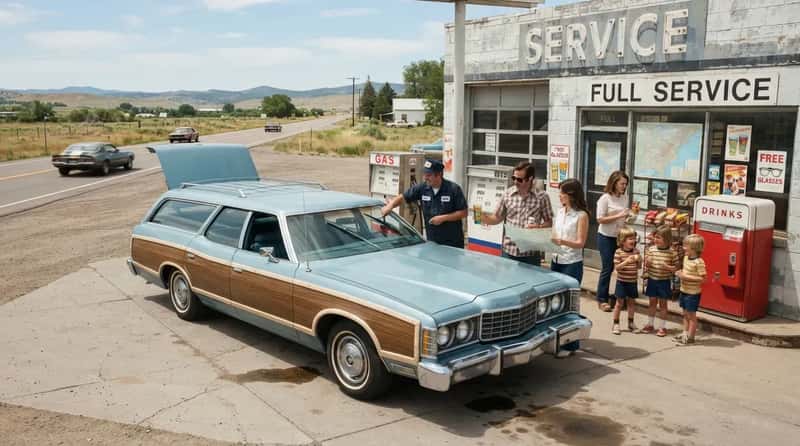
Before GPS existed, the gas station was mission control for the entire trip. Full-service stations stacked free paper road maps by the pump, and attendants would trace your route with a pen while checking the oil without being asked. Many stations ran giveaway promotions too, handing out drinking glasses, dishware, or collector coins with every fill-up, turning a routine errand into a small win.
Kids loved this stop for a completely different reason: it usually meant a bathroom break and a shot at the vending machine. Parents loved it because someone actually checked the tire pressure and washed the windshield unprompted. That mix of real service and free giveaways is basically extinct now, which is exactly why people miss it.
#15: The Drive-In Root Beer That Never Left the Car
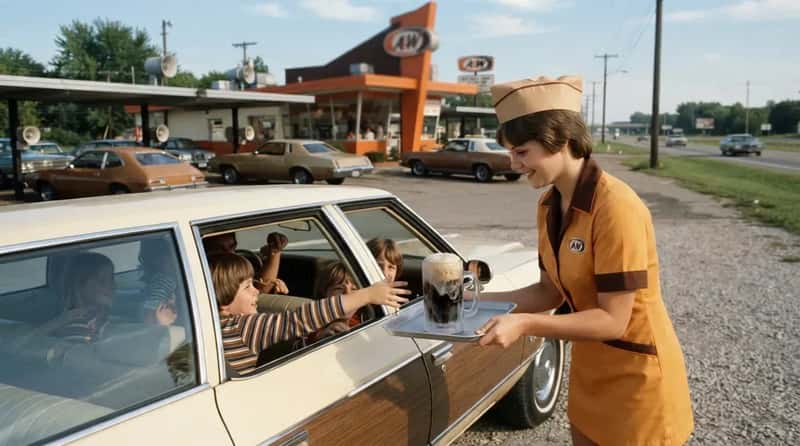
The frosty glass mug was the whole point. A&W drive-ins let families stay in the car while carhops clipped root beer floats right onto the window, which felt like a novelty even to grown adults. For a generation raised on drive-in service, this wasn’t a gimmick – it was the fastest way to feed a car full of restless kids without unbuckling a single seatbelt.
The orange-and-brown signs became familiar landmarks on state highways, especially through the Midwest and South. Plenty of families ran it like a built-in reward system: behave in the car, and there’s a root beer float waiting at the next A&W. It’s a small detail, but it’s exactly why the smell of root beer foam still means summer vacation to some people.
#14: The Red Roof That Meant “Almost There, But Not Quite”
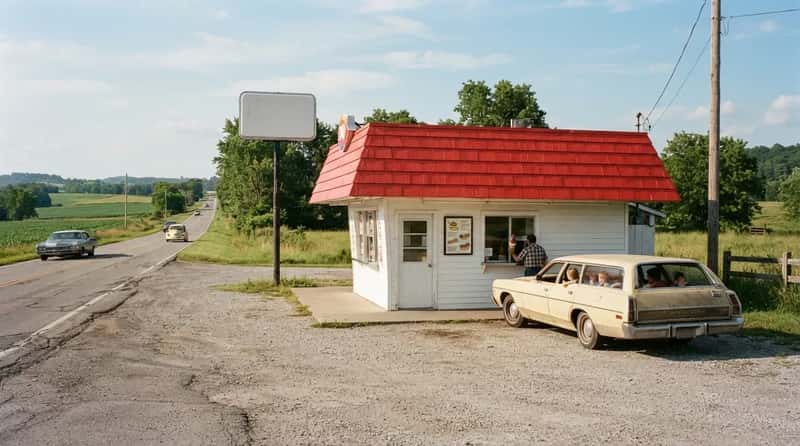
Nothing signaled “we’re close, but not close enough” like a red-roofed Dairy Queen appearing on the horizon. The soft-serve cone dipped in chocolate shell was practically a rite of passage on long drives, and the walk-up window meant nobody even had to get out of the car. It was fast, cheap, and reliable – three things that mattered enormously to a parent managing a hot back seat in July.
What people forget is how strategically these stands sat along two-lane highways long before interstates connected everything. A Dairy Queen sign usually meant civilization was near after miles of empty farmland or desert. That small relief, more than the ice cream itself, is what made the stop feel so good.
#13: The State-Line Stand Where Dad Suddenly Became a Kid Again
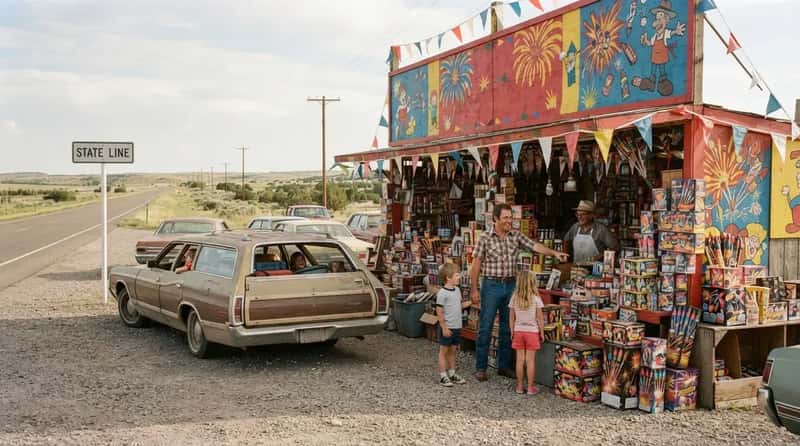
Crossing into a state with looser fireworks laws almost always meant one thing: a giant, garishly painted stand selling bottle rockets and sparklers to anyone with cash. These stands clustered right at state borders specifically because the neighboring state banned what was inside, and buying something there felt like a small act of rebellion. Dads, notably, usually wanted this stop more than the kids did.
The stands themselves were half the attraction – towering signs, cartoon mascots, bins stacked floor to ceiling with merchandise. Families routinely bought far more than they needed simply because the selection looked so much bigger than whatever was legal back home. That impulse-buy energy kept these stands in business for decades.
#12: The 20-Foot Giant Nobody Could Drive Past
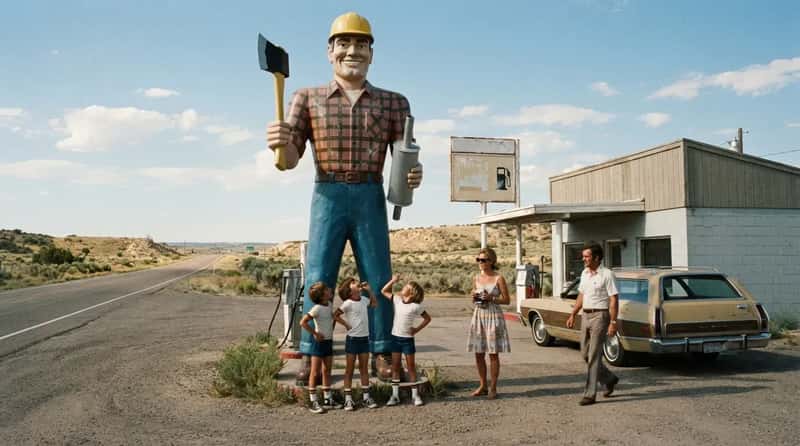
Long before anyone said “photo-worthy,” families were pulling over for 20-foot fiberglass giants holding mufflers, axes, or hot dogs outside gas stations and diners. These oversized statues, nicknamed Muffler Men by roadside historians, were mass-produced from the same mold and then customized for whatever business bought them – which is why the same giant frame might wear a cowboy hat in one town and swing an axe two states over.
Kids demanded the stop purely for the novelty of standing next to something enormous. Business owners knew exactly what they were doing – a giant visible from the highway pulled in customers who otherwise would have sailed right past. Many of these figures are now protected roadside landmarks, which says a lot about how much affection actually survived the decades.
#11: The Concrete Teepee That Became the Best Part of the Day
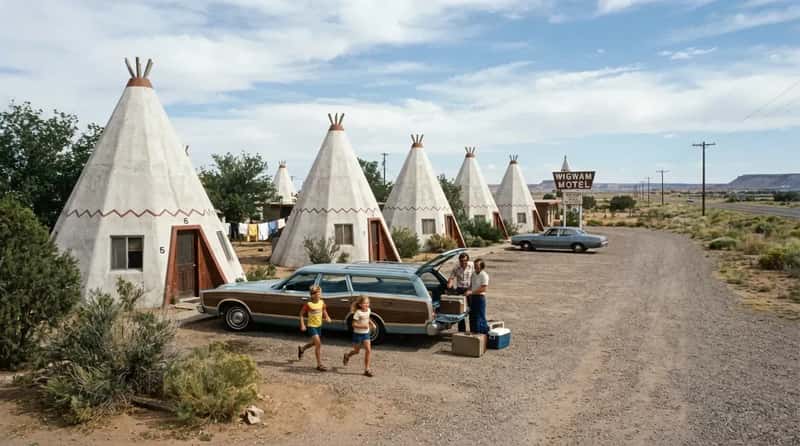
Sleeping in a concrete teepee sounds like a gimmick because it was one, but it worked spectacularly well on road-tripping families in the 1970s. These motor courts, built along major highways like Route 66, offered individual cone-shaped units that promised a novelty overnight stay unlike any ordinary motel room. For kids, it wasn’t just a place to sleep – it was the most exciting part of the entire day.
Parents liked them for a far more practical reason: they were affordable, distinctive, and easy to spot from the road after hours of driving. The design was memorable enough that families would deliberately route a trip through a town that had one. Few roadside lodging ideas have aged into pure nostalgia quite like these.
#10: The Drive-In Movie That Doubled as a Free Babysitter
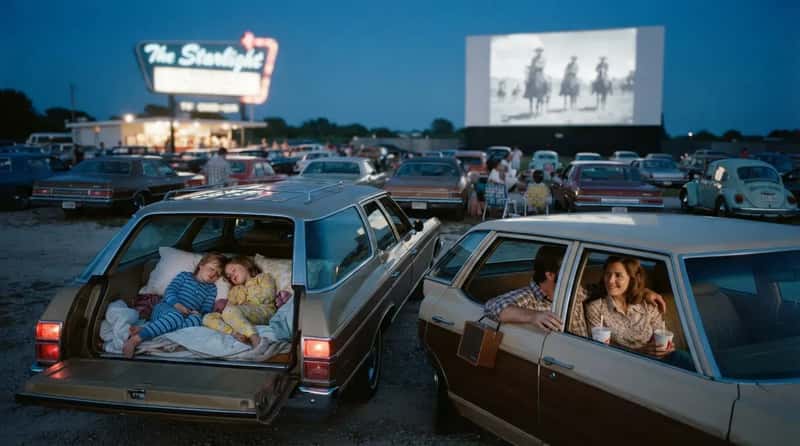
For families driving cross-country, a drive-in theater wasn’t just entertainment – it was a way to let tired kids fall asleep in pajamas while parents got one relaxing evening before the next long day. Many towns along major routes had at least one drive-in, and traveling families would time their arrival specifically to catch a show before finding a motel for the night.
The appeal was practical as much as fun: no unloading the car, no keeping kids quiet in theater seats, and a built-in bathroom and snack break already included. It also gave parents a rare stretch of adult conversation while the kids zoned out in the back seat. That mix of convenience and escapism made drive-ins a near-essential stop on the summer circuit.
Worth Knowing
- Drive-in theaters were a summer staple across small towns and highway corridors well into the 1970s.
- Many drive-ins built playgrounds right under the screen so kids could burn off energy before the show started.
- Admission was typically charged per carload, making it one of the cheapest nights out for a big family.
- Rising land values and pricier gas quietly closed hundreds of drive-ins as the decade wore on.
#9: The Roadside Alligator Pit That Everyone Fell For
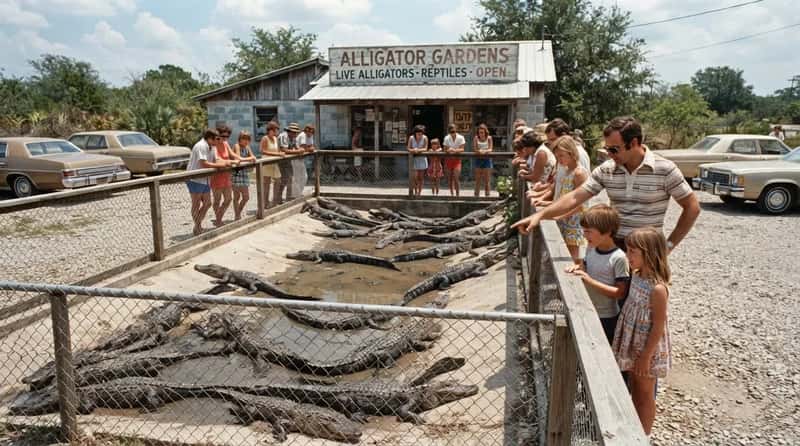
Somewhere between a real zoo and a genuine tourist trap, roadside reptile farms thrived in the ’70s, especially across the South and Southwest. Billboards screaming “See Live Alligators!” or “Rattlesnake Roundup” for miles in either direction promised kids something they couldn’t see at home, and that mystery alone was enough to make most parents pull off the road.
These attractions were rarely polished – often just a modest building with outdoor pens and a gift shop selling rubber snakes and postcards. Many ran on nothing but curiosity and clever signage, yet survived for decades on tourist traffic alone. Looking back, it’s wild how much business a few live alligators and one good billboard could generate.
#8: The Rest Stop That Actually Felt Like Part of the Trip
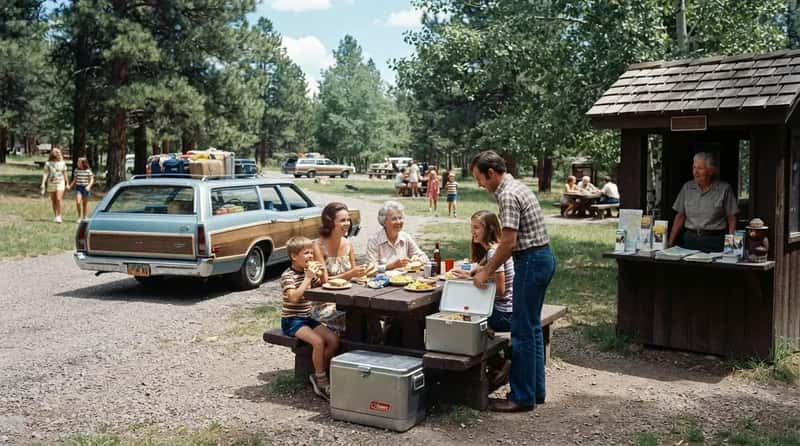
Before rest areas became sterile vending-machine plazas, many were genuinely pleasant places to stop – shaded picnic tables, grassy areas for kids to burn off energy, and sometimes a small booth staffed by a park ranger or local volunteer. Families used these stops not just for bathroom breaks but for actual lunch, unpacking a cooler right at the table instead of paying for restaurant food.
The ranger booths often handed out state maps, Smokey Bear fire-safety pamphlets, and stickers for kids, adding a small dose of education to an otherwise routine break. It made the stop feel less like an obligation and more like part of the adventure. That sense of a free scenic pause is something a lot of travelers say modern rest stops lost completely.
#7: The Quarter-Powered Viewfinder Everyone Fought Over
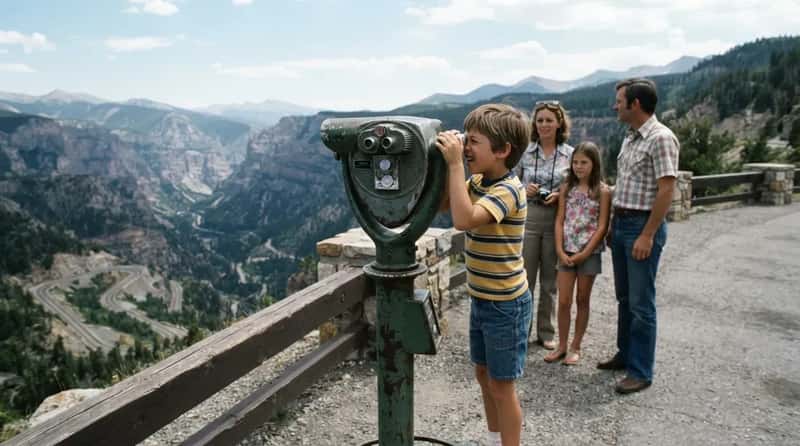
At nearly every scenic overlook – mountain passes, canyon rims, coastal cliffs – a heavy metal viewfinder turned a quarter or dime into a few minutes of magnified sightseeing. Kids raced to be first in line even when the view was already spectacular with the naked eye, simply because the mechanical binoculars felt like a novelty gadget worth the coin.
Parents often used the stop as a built-in break from driving, letting everyone stretch their legs while taking turns at the viewer. It was a tiny transaction, but it turned a simple photo-op into something the whole family did together. Many of these viewfinders are still standing today, rusted but functional, at pull-offs across the country.
#6: The Campground With a Pool That Felt Like a Resort

For budget-conscious families, a KOA campground wasn’t roughing it – it was practically a resort compared to a roadside motel. These campgrounds expanded aggressively through the ’60s and ’70s, offering swimming pools, playgrounds, and organized activities that kept kids entertained after hours of highway driving. The bright yellow-and-red signs became a trusted landmark for families hunting a predictable, affordable place to crash for the night.
What made KOA stops special wasn’t just the amenities but the sense of community – other traveling families, shared campfires, kids meeting new friends for one night before moving on. It gave the road trip a social dimension no hotel stay ever matched. Plenty of families say these overnight stops are their clearest memories from the entire vacation.
At a Glance
- KOA was founded in 1962 in Billings, Montana, by Dave Drum and a small group of local business partners.
- The very first campsite charged $1.75 a night and included a picnic table, a fire ring, and hot showers.
- The chain grew into the world’s largest system of privately owned campgrounds, with more than 500 locations today.
- The oil embargoes of 1973 and 1979 hit KOA hard as Americans thought twice about hitting the road.
#5: The Gift Shop Cluster That Came Before the Real Destination
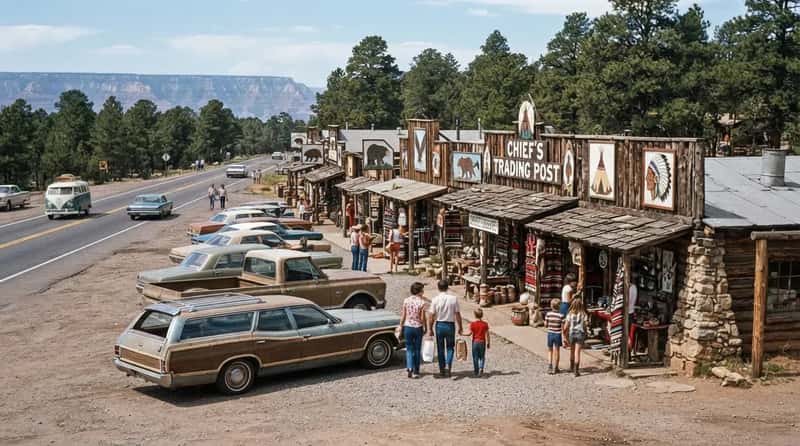
Before reaching the actual park entrance, families almost always stopped at the strip of gift shops and diners that sprang up just outside gates like Yellowstone, the Grand Canyon, or the Smokies. These gateway towns thrived entirely on tourist traffic, selling souvenir tomahawks, postcards, and rock samples that had little to do with the park itself but everything to do with proving you’d been there.
Many families budgeted a specific stop just for souvenir shopping, knowing kids needed some tangible proof of the trip to bring home. It also gave parents a final bathroom and snack break before hours without services inside the park. Looking back, these gateway strips were often more memorable to kids than the natural wonder waiting past them.
#4: The Fake Mexican Border Town That Advertised for 100 Miles
Long before you reached it, you already knew it existed – the Pedro billboards started appearing over a hundred miles out, counting down the distance in increasingly ridiculous slogans. South of the Border turned a simple highway rest stop into a full roadside spectacle, complete with a sombrero-shaped tower, fireworks shops, and a mini amusement park, all built around a fake Mexican border theme.
Families crossing between the Carolinas practically had to stop, if only because dozens of billboards had built up so much anticipation that skipping it felt wrong. Kids begged for the exit long before parents even saw the sign. It’s one of the clearest examples of pure roadside marketing turning a random highway spot into a must-see destination.
#3: The Route 66 Photo Stop Built on a Lie of Superlatives
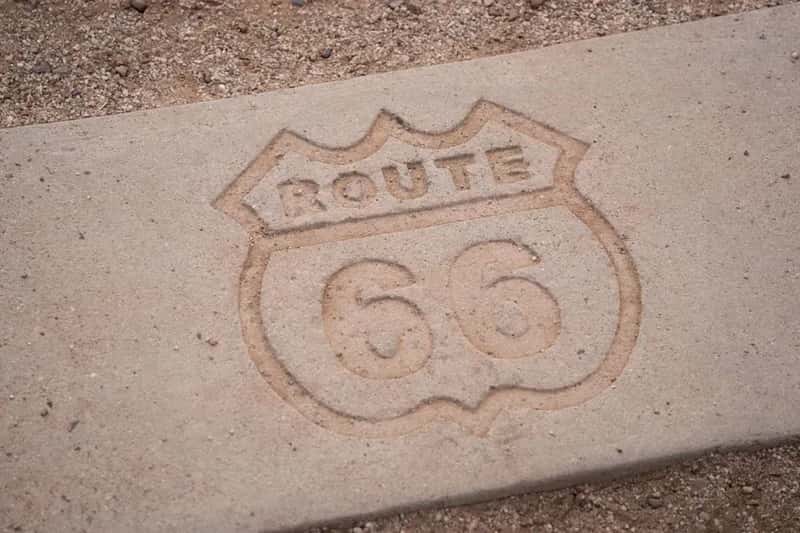
Somewhere along old Route 66, nearly every small town competed to have the “world’s largest” something – a rocking chair, a ball of twine, a totem pole – purely to get travelers to stop and take a photo. These oddities rarely had real historical significance, but that was never the point. The point was a novelty photo and a story to tell back home.
Families treated these stops almost like a scavenger hunt, deliberately routing trips to hit as many oversized roadside curiosities as possible. Local businesses understood the appeal perfectly and built gift shops right next to the attraction, ensuring the photo stop became a purchase too. It’s one of the earliest examples of a small town turning novelty into genuine tourism revenue.
#2: Wall Drug, the Pharmacy That Advertised Its Way Into a Landmark
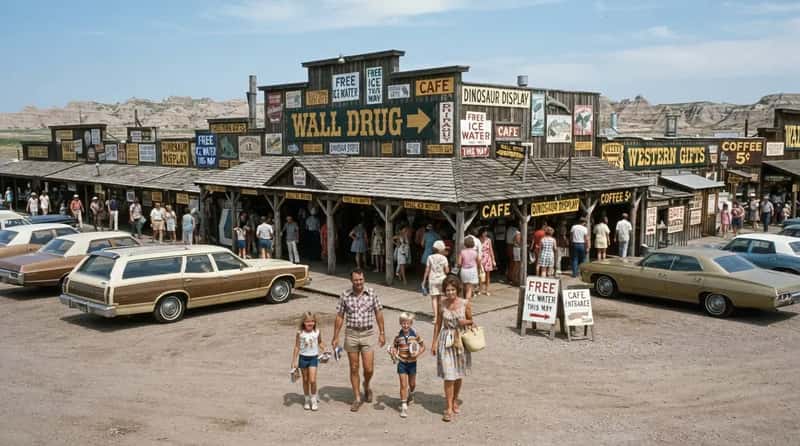
It started with nothing more than a sign. In 1936, pharmacist Ted Hustead’s business in Wall, South Dakota was painfully slow until his wife, Dorothy, had a simple idea: advertise free ice water to thirsty travelers heading toward the newly opened Mount Rushmore, sixty miles to the west. From that single sign came the jingle every road-tripping kid eventually memorized without meaning to – free ice water, next corner, just as near.
By the 1970s, families were spotting Wall Drug billboards for hundreds of miles before ever reaching South Dakota, since most of them line an roughly 650-mile stretch of Interstate 90 running from Minnesota all the way to Billings, Montana. The anticipation alone turned a random pharmacy into a mandatory stop, and remarkably, Wall Drug still hands out free ice water today, along with free bumper stickers and five-cent coffee. Few roadside stops prove the power of one good idea quite like this one.
Fast Facts
- Ted and Dorothy Hustead purchased the small-town drugstore in Wall, South Dakota, in December 1931.
- Business stayed painfully slow for five years until the famous free ice water road signs went up in the summer of 1936.
- Wall Drug still pours free ice water and nickel coffee for roughly two million visitors every year.
#1: Stuckey’s, Where a Pecan Log Roll Was the Whole Reason to Stop
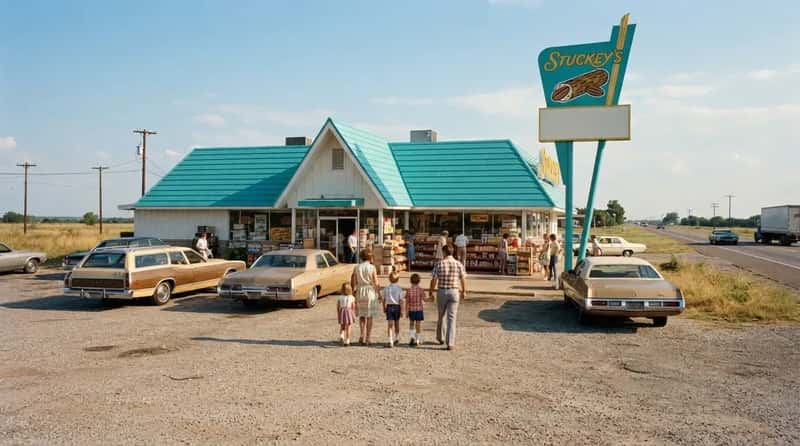
If Wall Drug proved the power of a sign, Stuckey’s proved the power of a sweet tooth. What began as a humble roadside stand in Eastman, Georgia – built on a borrowed truck and $35 loaned from his grandmother – exploded into a nationwide phenomenon once Ethel Stuckey started making the company’s signature candy, a combination of vanilla nougat, caramel, roasted pecans, and maraschino cherry bits known as the pecan log roll. By the height of the era, Stuckey’s had grown to nearly 400 locations, and its teal-roofed buildings became one of the most recognizable sights on the American interstate.
For families, spotting that teal roof from the highway wasn’t just about candy – it meant a bathroom, a gas fill-up, and a souvenir shop stacked with novelty items all in one stop. As one longtime observer of the brand put it, people still remember taking road trips “with their families in a woody station wagon going from New York to Florida in the 1970s” and stopping at Stuckey’s along the way. The oil crisis and changing travel habits eventually hit the chain hard, but for a generation of kids, no road trip felt complete without one.
Looking back, what stands out isn’t how fancy any of these stops were – most were cheap, kitschy, or built on a single clever idea. What made them unforgettable was the anticipation: the billboards counting down the miles, the promise of something free, the chance to stretch your legs somewhere strange. Interstates have gotten faster and rest stops more sterile, but almost nothing built today creates that same slow-burn excitement.
Which one of these stops do you remember most clearly? Did your family have a tradition around one of them, or one we didn’t mention here? Drop your memory in the comments – we’re willing to bet someone else remembers it too.