
Most guests check into a hotel thinking their room was chosen at random – a simple computer match, first-come-first-served. That belief is costing you better views, quieter nights, and free upgrades every single trip.
The truth is, hotel duty managers run a surprisingly strategic, mostly unspoken system for deciding who sleeps where. The front desk smiles, the concierge chats about dinner reservations, and housekeeping quietly turns down your bed – while a parallel world of insider decisions plays out just beneath the surface. Here’s what actually happens behind that counter.
#17 – Your Booking Source Decides More Than Your Room Type

Turns out, where you booked matters just as much as what you booked.
Hotels pay online travel agencies like Expedia and Booking.com commissions ranging from 25% to 30% per booking. Savvy front desk agents often have the authority to offer lower rates, room upgrades, or complimentary perks to guests who book direct instead.
Direct bookings routinely get priority over third-party reservations when rooms are handed out – a fact duty managers never volunteer at check-in. Booking direct is quietly one of the most powerful tools any traveller has, and almost nobody uses it.
But the booking source is only the first layer of the puzzle. The next factor decides even more.
#16 – Loyalty Status Is the Real Room Currency
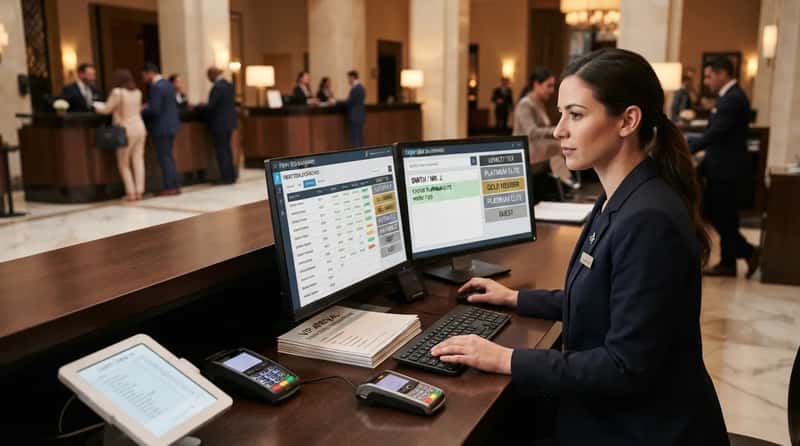
Forget the rack rate. Your loyalty tier is what duty managers actually look at first.
Elite members and repeat guests sit at the top of the internal priority system, shielded from bad rooms, noisy floors, and overbooking chaos before anyone else is even considered. It’s a selective approach, and it’s built to keep the same faces coming back.
Fast Facts
- Joining a hotel loyalty program is free and usually takes just a few minutes online.
- Elite-tier upgrades are almost always granted “subject to availability” – a phrase that quietly decides a lot.
- Many travellers reach elite status faster through a co-branded credit card than through nights stayed.
- Your status gets flagged automatically the second your name lands on the arrivals list.
A guest with top-tier status checking in after midnight will routinely outrank a non-member who booked a premium room six months earlier. The system is designed that way on purpose.
If you’re not enrolled in a hotel’s loyalty programme, you’re essentially standing at the back of the line – no matter what you paid. And it gets more layered once rates enter the picture.
#15 – The Rate You Paid Quietly Influences Your Room

Most guests assume their booked room type is all that matters. It isn’t.
Guests paying higher rates typically get preference over discounted bookings when duty managers sort rooms within the same category. Two guests booked into an identical “Deluxe King” can end up on completely different floors with completely different views, based purely on what each one paid.
The guest who paid full price on a flexible rate often quietly gets the better room, no questions asked. You won’t find this written in any brochure.
It’s a quiet operational norm baked into how the property management system sorts reservations each morning. And that morning sort is where the real decision actually happens.
#14 – The Morning Allocation Meeting Is Where Your Room Is Actually Decided

Guests think rooms are assigned at check-in. They’re usually not.
Reservations hands the next day’s arrivals to the front desk, and everything gets double-checked in the property management system. The duty manager reviews the full arrival list, flags VIPs and loyalty holders, and pre-blocks rooms hours before a single guest walks through the door.
By the time you reach reception, your room is almost certainly already chosen. What you say at check-in can still change it – but only if you know the right script.
That script matters more than most people realise.
#13 – Being Pleasant at Check-In Genuinely Gets You a Better Room
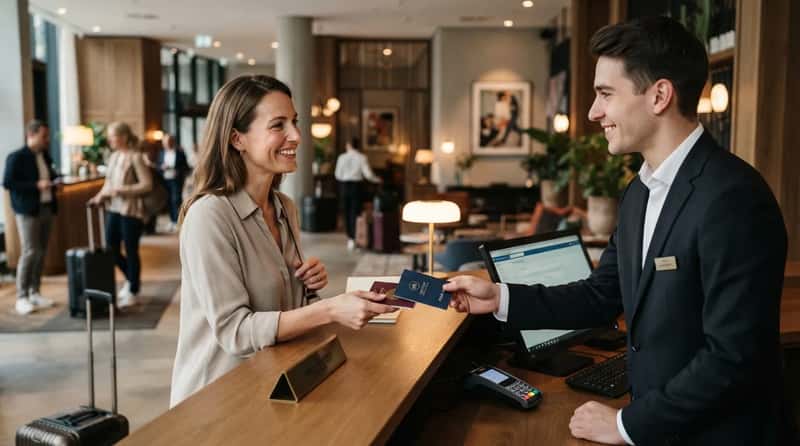
This one sounds soft. The data says it isn’t.
At 25hours hotels, Chief Brand Officer Bruno Marti has been open about how the upgrade order actually works.
Regular guest, those who booked directly, and “nice people” – in that order.
Bruno Marti, Chief Brand Officer, 25hours Hotels
That’s a brand executive openly admitting attitude is a formal upgrade criterion. If a tired, pleasant guest walks up to the desk, staff will often quietly slide them a nicer view or a bigger bed.
Rudeness, on the other hand, is remembered. Former front desk veteran Jacob Tomsky has written that bad attitudes could earn a guest a room where “the phone will ring non-stop.” Most people hand over that power without even realising it.
#12 – Hotels Intentionally Hold Back “Buffer” Rooms

Here’s something your duty manager will never announce: not all available rooms are actually available to you.
Many properties run an overbooking buffer that holds certain room types back from standard sale – reserved for walk-ins, last-minute upgrades, or operational emergencies. That “sold out” message on the booking site doesn’t always mean what it says.
If the front desk claims there’s nothing to upgrade you into, some of those rooms may simply be marked “out of service” instead of genuinely gone. A polite, direct conversation with the duty manager – not the front-line agent – is often the key that unlocks them.
The buffer exists for a reason. It doesn’t always have to be your loss.
#11 – Overbooking Is Deliberate, Not an Accident
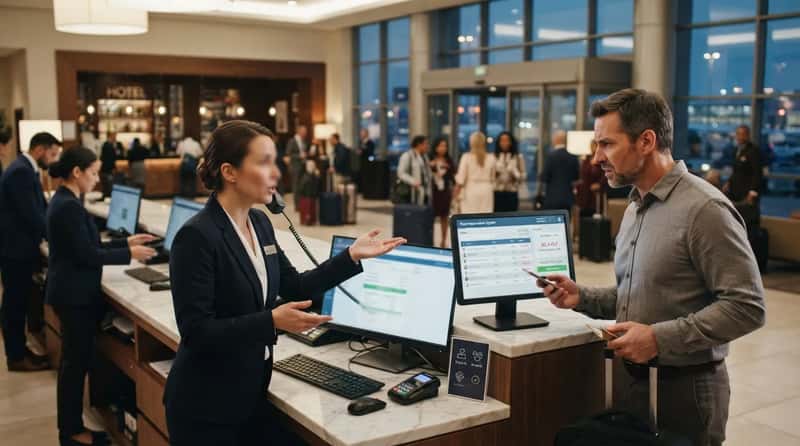
Most guests who get “walked” assume it was a glitch. It wasn’t.
Hotels sell slightly more rooms than they physically have to account for predictable no-shows and cancellations, the same way airlines do.
At a Glance
- on an average night, hotels experience a no-show rate of between five and 15 percent.
- Airport Hotels: 15-20% due to higher cancellation rates from flight disruptions.
- During peak seasons and high-demand periods, up to 40% of bookings may result in cancellations or no-shows.
- Most well-run hotels still aim to keep denied accommodation rates low (under 0.5%).
The decision about who gets walked is not random – it’s algorithmic. Hotels protect repeat guests, loyalty members, direct bookers, and long stays first, while one-night, lowest-rate bookings are the first candidates for displacement.
If you’ve ever been walked, there was a very specific reason you were chosen.
#10 – Celebrating Something? Say It Out Loud

Duty managers won’t ask why you’re staying. But the answer can change everything.
Guests celebrating a birthday, an anniversary, or just needing extra space to work can often talk their way into an upgrade simply by mentioning it. It isn’t begging – it hands the duty manager a legitimate operational reason to move you.
For best results, mention it at booking rather than at the desk, so the hotel already knows you’re hoping for that quiet corner room or the birthday bottle of champagne. Requests made at booking get acted on far more often than requests whispered at check-in.
Most people mention their anniversary to the bellhop and wonder why nothing happens. Front-load the information and watch the experience shift.
#9 – Groups Block Out the Best Floors First

Solo travellers and couples are quietly disadvantaged on high-occupancy nights – and most never know why.
Entire floors or sections get blocked off for groups, tours, and conventions well before individual guests even make their reservations. Room allotment management is a real job title in hotels for exactly this reason.
If you’re checking in on a convention weekend and land in the worst room in the building, you’re likely a victim of group blocking. The duty manager knows this the moment they pull up the arrivals list.
They’ll rarely explain it unless you ask. Knowing when a convention is in town is now part of smart travel planning.
#8 – The Housekeeping Report Overrules the Computer

Even if the system shows a room as clean and ready, duty managers know better than to trust it blindly.
The standing rule is simple: always trust the housekeeping report over the computer status. If a room isn’t physically confirmed clean, it doesn’t get handed out – guests get an alternative room or a short wait instead.
This means the room you’re assigned is partly decided by which rooms housekeeping has actually verified – not just what the screen claims. That’s why checking in during peak turnover, around midday, often lands you a lower-floor or less desirable room.
There’s a timing trick almost no guest knows about, and it flips this problem completely.
#7 – Late-Night Check-Ins Sometimes Score the Best Rooms

It sounds counterintuitive. Experienced travellers swear by it.
Staying only one night, arriving late, or checking in during a conference week makes it far easier for staff to move you around. By late evening, duty managers know exactly who checked in, who’s a no-show, and what inventory is actually left.
Worth Knowing
- Most hotels have a check-in time between 3:00 and 4:00 p.m. and a check-out time between 11:00 a.m. and noon.
- The real crush hits later: a staggering 35% of guests arrive at hotels between 6 PM and 10 PM, making this the busiest check-in period.
- Housekeeping isn’t instant either – it takes an average of 30-45 minutes to clean and prepare a standard hotel room.
- Arriving well after that rush, once the desk has settled, gives staff more room to think about your request.
A late arrival with a pleasant attitude lands in a much cleaner decision window than a midday rush check-in. The chaotic afternoon window is genuinely one of the worst times to ask for anything – staff are triaging dozens of arrivals at once.
Come in after 9 pm instead, and you’re dealing with a calmer, far more flexible shift.
#6 – Special Requests Can Actually Hurt Your Upgrade Chances

This one will frustrate frequent travellers who do everything “right.”
There’s one thing that makes an upgrade almost impossible: overly specific special requests. High floor, away from the elevator, king bed, south-facing – the more precise your pre-booked demands, the less room the manager has to slot you in somewhere better.
The upgrade only works when the manager has options, and a tightly specified request removes all of them.
It’s the great irony of hotel room allocation – the savviest guests often over-specify and accidentally lock themselves out of the good stuff.
#5 – Your Profile Notes Follow You Across Properties
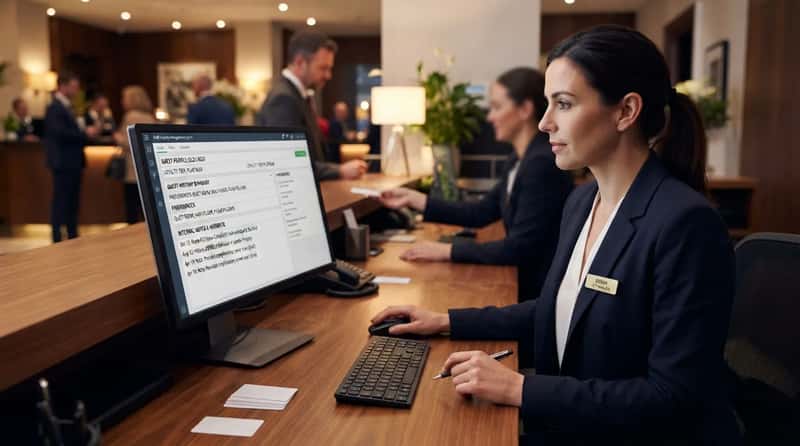
Duty managers aren’t just reading your booking. They’re reading your history.
Major chain loyalty systems store guest preferences, past complaints, past upgrades, and internal notes that travel with your profile across every property in the brand. A guest who complained about noise two stays ago may quietly get a corner room this time, without ever asking again.
The flip side is also true. A history of disputes, chargebacks, or difficult behaviour gets noted too – your hotel profile is effectively a silent reputation score.
#4 – “Out of Order” Rooms Are a Managed Resource, Not Just Broken

When a duty manager marks a room “out of order,” it doesn’t always mean the room is genuinely unusable.
Some rooms are strategically held in that status to maintain the overbooking buffer, give housekeeping breathing room, or reserve inventory for a VIP expected later that day. It’s part of the same loyalty-and-rate architecture that decides everything else on this list.
A perfectly functional room can sit locked on the system while a standard guest is turned away with nothing. It’s one of the least-discussed practices in hotel operations – and one of the most consequential for everyday travellers.
#3 – Being Walked to Another Hotel Follows a Very Specific Pecking Order
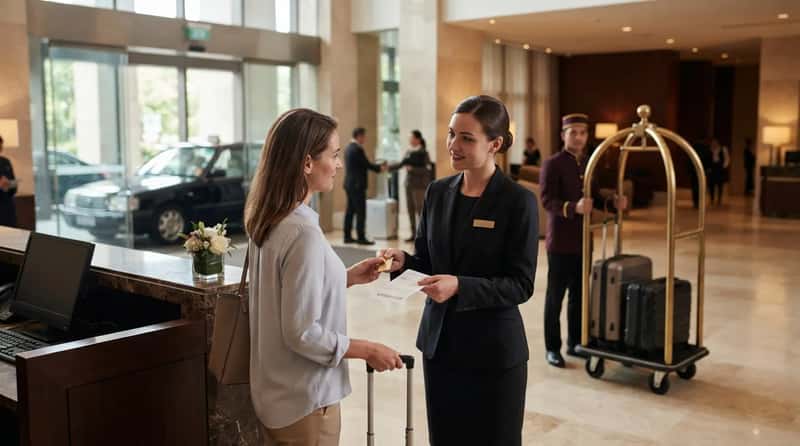
If a hotel is overbooked and someone has to be moved, the selection process is never random.
Hotels apply the same structured prioritisation – loyalty status, booking source, room type – to decide exactly who gets protected when rooms run out. Partnership agreements with nearby hotels of equal or higher quality handle the relocation, right down to the room rate and shared transportation.
Quick Compare
- Protected first: loyalty elites, long-stay guests, direct bookers, repeat guests.
- First to be walked: one-night stays, lowest flexible rates, third-party bookings, first-time visitors.
- Who pays for it: the hotel – covering the room rate difference and transportation either way.
The guest most likely to be walked is a first-time visitor, booked through a third-party site, on the lowest flexible rate, for a single night. That’s not bad luck – it’s a formula.
Walking a loyalty member risks real brand damage, which is exactly why they’re almost never the ones chosen.
#2 – Duty Managers Can Move You Mid-Stay – and They Sometimes Do

Most guests assume once they’re in a room, they stay there. Not always.
A VIP arriving unexpectedly, a maintenance issue next door, or a group block adjustment can all trigger a mid-stay room move that the duty manager has to handle diplomatically. The allocation process never really stops after check-in – it just goes quiet.
If you’re ever asked to change rooms mid-stay, there’s almost always a specific operational or VIP-related trigger behind it. The explanation you’re given at the desk is usually the polished version of a messier back-of-house decision.
And the single biggest secret – the one that shapes everything else on this list – is next.
#1 – The Duty Manager Has More Power Over Your Room Than Anyone Else in the Building

Everything on this list flows from one central truth: the duty manager is the single most powerful person in the building when it comes to where you sleep.
Not all front desk staff are equally empowered to hand out free amenities, credits, or upgrades. If you feel like the person in front of you is boxed in, you can always politely ask for the manager – they hold override access in the system, authority to approve complimentary upgrades, and discretion over every unoccupied room on the property.
Most guests never ask to speak to the duty manager, and that single omission costs them every time. Knowing what’s really happening behind those polished doors is the difference between overpaying for a mediocre room and landing a free upgrade with a better view.
The knowledge exists. Now you have it.
The Bottom Line

Hotel room allocation isn’t luck. It’s a structured, deliberate process run by duty managers using loyalty data, booking source, rate tiers, housekeeping reports, and plain old guest behaviour.
Guests who book direct, hold loyalty status, stay pleasant at check-in, and ask for the manager directly will consistently outperform those who don’t – in every room category, at every price point. The system isn’t rigged against you, but it absolutely rewards the people who understand how it works.
Now that you know the 17 secrets most guests never learn, you’re playing an entirely different game the next time you check in. Did we miss a hotel trick that’s worked for you? Drop it in the comments.