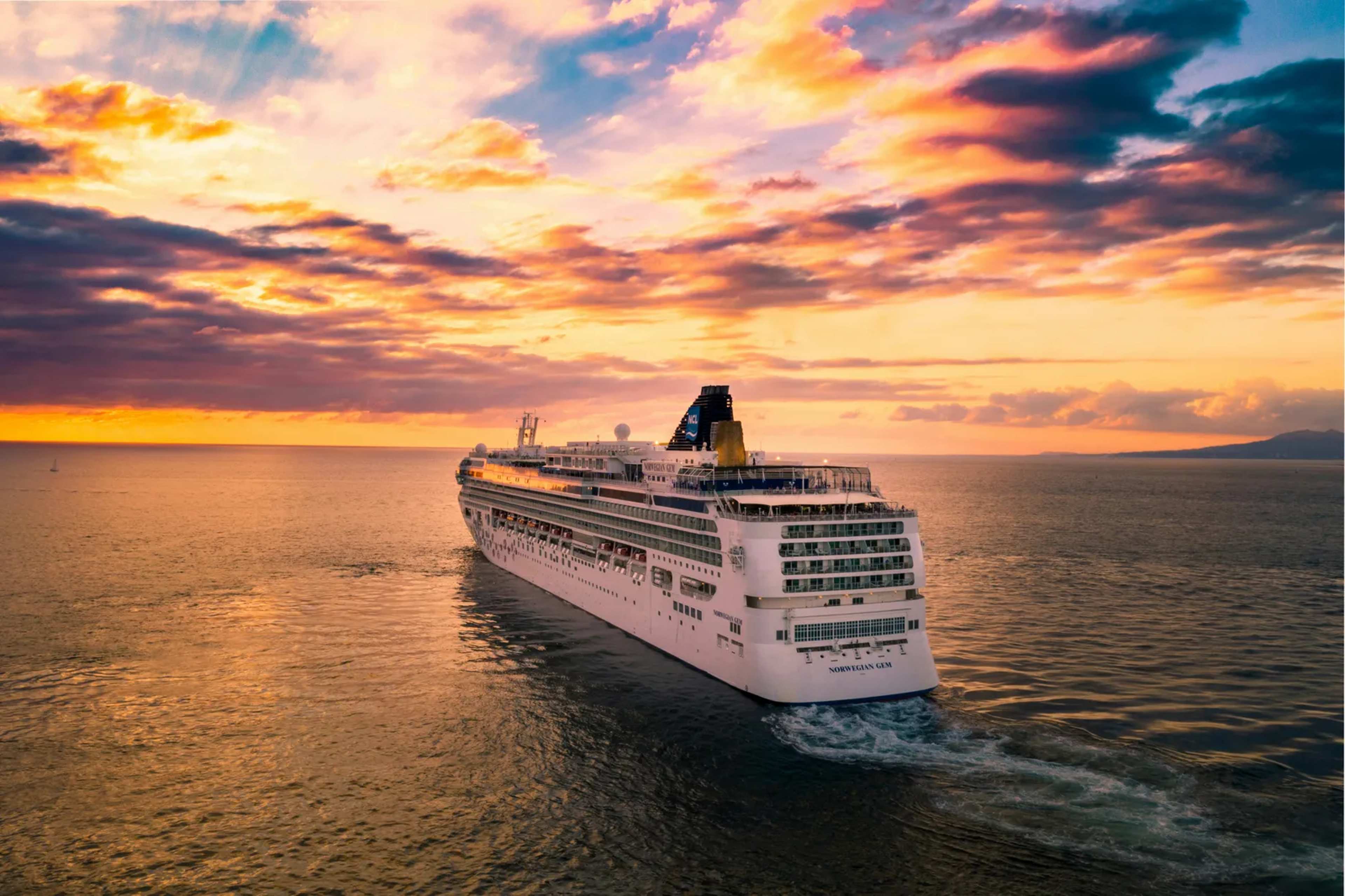

You’d think a boarding pass is a boarding pass and a passenger is a passenger. Crew know better. Ask any veteran steward or bartender who’s spent a decade on the decks, and they’ll tell you a first-time cruiser over 60 gives themselves away in the first ninety seconds, long before anyone asks how many cruises they’ve been on.
Some of these tells earn quiet extra care. Others are the exact moment crew brace for something to go wrong. Here’s what staff, cruise forums, and industry insiders actually notice first, counted down to the one sign that makes crew genuinely nervous.
#17 – The Seasickness Patch Peeking Out Behind the Ear

Crew clock the little tan patch behind an ear before they even say hello. It’s one of the fastest, most reliable signals that someone hasn’t sailed before and is bracing for the worst. Veteran cruisers rarely bother with it on calm itineraries because they already know their own tolerance for motion.
What crew find telling isn’t the patch itself, it’s the anxious energy that comes with it. First-timers over 60 often over-prepare for seasickness on ships that barely rock at all, especially on newer, stabilized vessels. Staff usually respond with reassurance rather than concern, but the patch still gives away a rookie before a single word is exchanged.
#16 – Clutching a Printed Boarding Pass Like a Life Raft

Experienced cruisers glance at their phone app and walk through security without breaking stride. First-timers over 60 often show up with a folder of printed paperwork, gripped tightly, checked three times before reaching the gangway. Crew notice this immediately because it signals someone hasn’t yet trusted the digital system.
The irony is that the cruise app itself frequently fails, and more than one couple has panicked at check-in when their digital pass wouldn’t load. So the paper-clutchers, oddly enough, sometimes have the smarter backup plan. Crew still read it as inexperience, even when it turns out to be the safer move.
#15 – Flip-Flops on a Wet Pool Deck
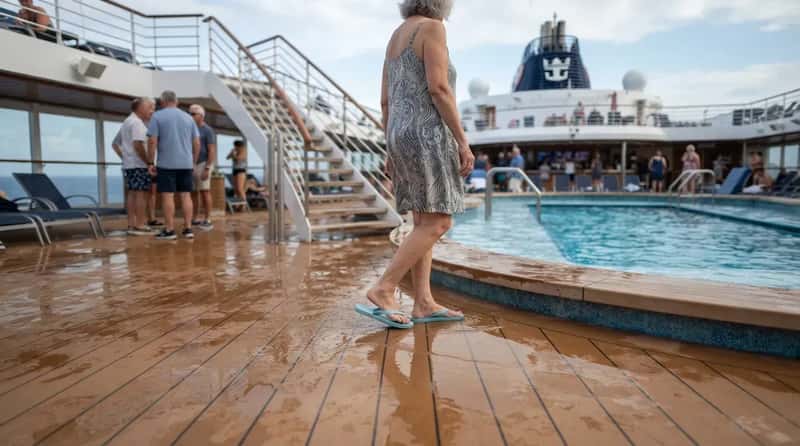
Nothing says “first cruise” to a crew member faster than open sandals near the pool on a rocking ship. Veteran travelers know better, but newcomers over 60 often pack for a resort vacation instead of a moving vessel. Staff quietly watch these guests near stairwells and wet tile because they’ve seen this go wrong before.
One cruiser in her 70s slipped on a wet deck in exactly this kind of footwear and spent three expensive hours in the medical bay. That single detail is why crew take flip-flops on a first-timer as a genuine safety flag, not just a fashion choice. It’s one of the few signs on this list that actually triggers a proactive warning from staff.
#14 – Arriving at the Terminal Three Hours Early
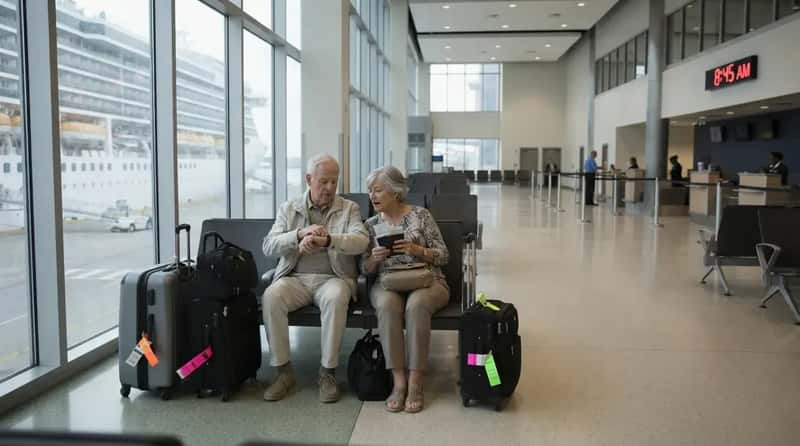
Seasoned cruisers know embarkation runs on a schedule and show up close to their assigned window. First-time passengers over 60, worried about missing the ship entirely, frequently arrive hours before boarding even opens. Terminal staff and porters notice this instantly because it creates a very specific kind of nervous energy in the waiting area.
It’s not a bad instinct, just an inefficient one. Crew say the early arrivals almost always ask the most questions, simply because they have more time to worry before anyone official is even in position to answer them. This pattern shows up so consistently that some staff can predict who’s cruising for the first time just from where they’re standing at 10 a.m.
Fast Facts
- Most ships begin boarding 60–90 minutes before the scheduled departure window.
- Assigned check-in times exist to spread out the crowd, not to create a race to the gangway.
- Arriving right at your assigned slot usually means boarding within 15–30 minutes.
- Porters and terminal staff typically aren’t in full position until about two hours before sailing.
#13 – Treating the Muster Drill Like a Final Exam
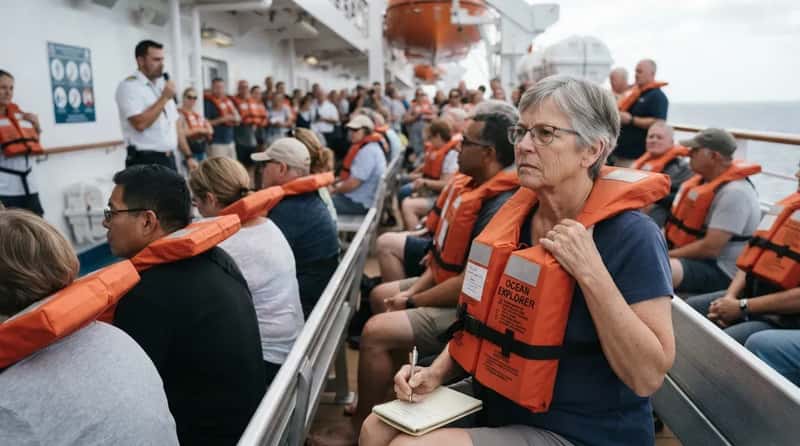
Everyone has to attend the safety drill, but first-timers over 60 tend to take it with unusual intensity, notepad in hand, life jacket strap checked twice. Veteran cruisers chat through half of it. Crew running the drill notice the difference in body language almost immediately.
This isn’t a bad sign, honestly, it’s often appreciated. Staff running musters say the most attentive guests are rarely the ones who need extra help later. Still, that laser focus on every instruction is one of the clearest tells of the entire boarding day, and it sets crew up to keep a slightly closer eye on that guest for the rest of the voyage.
#12 – Asking Where the “Front Desk” Is

On land, it’s the front desk. On a ship, it’s Guest Services, and crew notice within seconds when a passenger uses the wrong term. It’s a small language slip, but it instantly tells staff they’re dealing with someone still translating hotel habits onto a ship.
The mix-up isn’t limited to vocabulary. First-time passengers over 60 also tend to ask about “room service” instead of “cabin service,” or “checkout” instead of “disembarkation.” Crew are used to gently correcting the terminology without making a big deal of it, but internally, it’s one of the fastest ways they clock someone as new to cruising rather than new to travel in general.
#11 – The Suitcase That Needs Two Porters
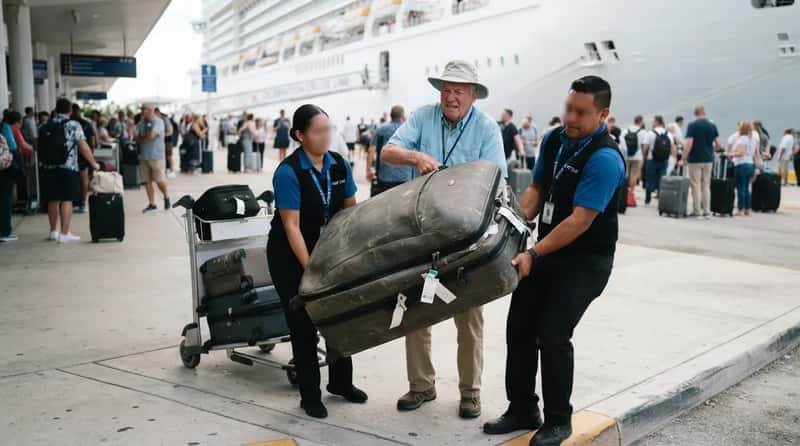
Nothing signals a first cruise louder than luggage that requires help just to lift off the curb. Crew and porters notice oversized bags immediately because experienced cruisers have already learned to travel lighter. The overpacking habit is one of the most common, most predictable first-timer patterns on embarkation day.
Veteran cruisers often say they packed noticeably less on their second cruise than their first, with a rolling carry-on plus one checked bag becoming the sweet spot for most seven-night sailings. Crew who deliver luggage to cabins say the heaviest formal bags sometimes don’t even arrive until late afternoon. The bigger the suitcase, the more likely staff assume it’s someone’s first time.
#10 – Dressed Formally on a Casual Night
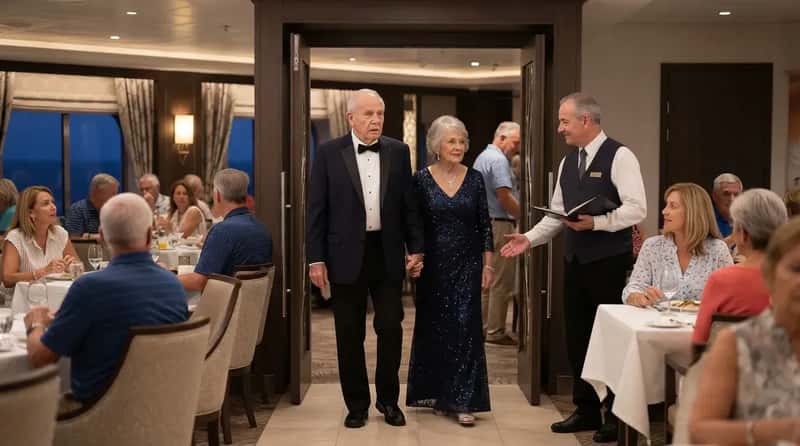
Dining room staff notice wardrobe mismatches faster than almost anyone else on the ship. First-time cruisers over 60 sometimes overdress for a casual night, or underdress for a formal one, simply because dress codes vary so much by cruise line and venue. Servers spot it the moment someone walks in looking slightly out of place.
It’s a minor thing, but it’s consistent enough that dining staff have learned to read it as a first-cruise signal without anyone saying a word. Most crew handle it graciously and never mention it, quietly seating the guest and moving on. Still, it’s one of the clearest wardrobe-based tells in the entire seven-day cycle.
#9 – Constant Questions About Tipping
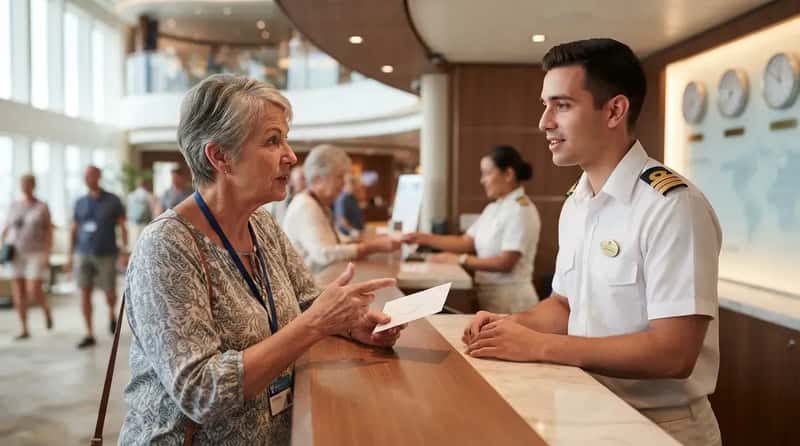
Gratuities confuse a lot of first-time cruisers, especially those used to tipping in cash on land. Crew notice repeated questions about how much to tip, whether it’s already included, or whether to hand someone an envelope directly. It’s one of the more awkward but understandable first-timer giveaways.
Crew have a way of clocking personality traits quickly, including who tends to be generous and who tends to expect more than they give. Passengers who ask thoughtful tipping questions early tend to get read as respectful rather than clueless. How someone handles that one conversation often shapes the service tone for the entire week, whether they realize it or not.
Quick Compare
- Included gratuities: Auto-billed daily, often $16–$18 per person, and already covers dining and cabin staff.
- Extra tips: Optional cash for standout service, like a favorite bartender or steward.
- Veteran move: Check the folio mid-cruise to confirm gratuities are applied correctly.
- First-timer move: Ask Guest Services on day one instead of guessing all week.
#8 – Freezing Mid-Step on a Tender Boat
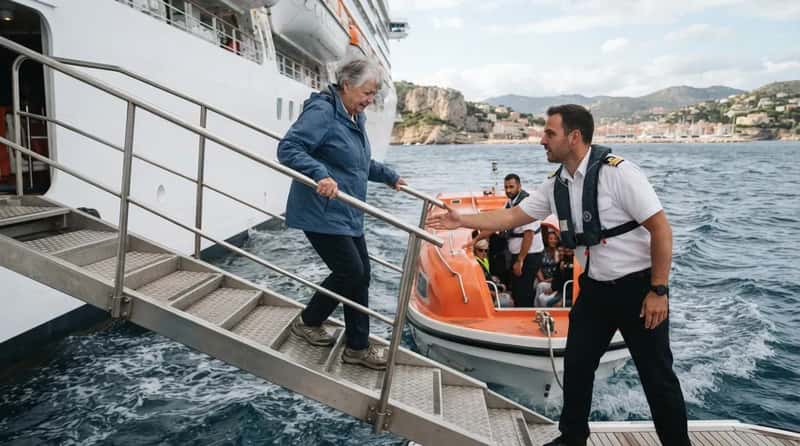
Tender ports require stepping from a moving platform onto a rocking small boat, and it’s one of the most physically nerve-wracking moments for first-time older cruisers. Crew stationed at the gangway watch closely for hesitation, because it’s one of the clearest safety-related tells on the entire itinerary.
Tender boats look easy, but for many older travelers they’re where the trouble actually begins, with steep steps, rocking waves, and slippery decks becoming a recipe for panic when balance isn’t what it used to be. One traveler later admitted feeling embarrassed about how visible the fear was in the moment. Crew respond fast to this hesitation, usually before the passenger even has to ask for help.
#7 – A Cane or Walker That Quietly Changes Everything

The moment a mobility aid appears at check-in, crew behavior shifts, often without a single word being exchanged. Staff read this as a clear, immediate cue rather than a subtle one. It’s less about age and more about the visible signal of need.
One veteran cruiser showed up at the check-in desk with a cane, and staff offered boarding assistance before he could even wave them off, carrying luggage and clearing a path. His wife later said of the experience, “the crew just noticed,” with someone always nearby holding the elevator or helping him off the ship. A cane can trigger more proactive crew attention than almost any other single object a passenger carries.
#6 – Not Realizing Wifi Costs Extra
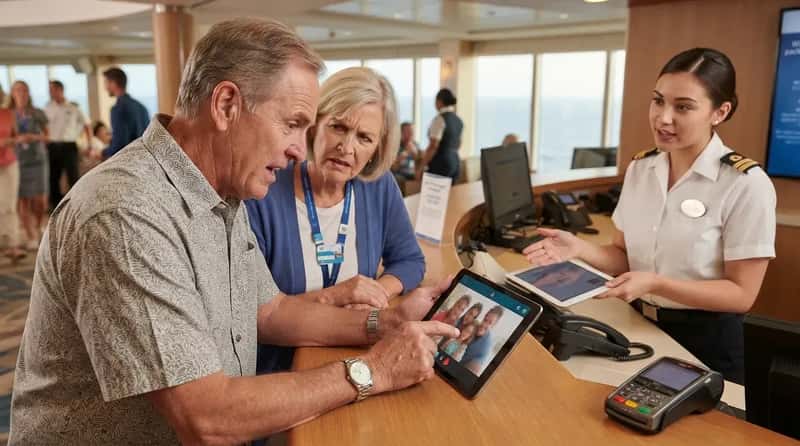
Tech support desks and Guest Services hear this complaint constantly from first-time cruisers over 60: confusion about why the internet isn’t included, or why it’s so slow compared to home. Crew notice the frustration building around day two, usually right after someone tries to video call their grandkids.
It’s a small thing, but it’s telling. Experienced cruisers already know to buy a package in advance or simply disconnect for the week. First-timers tend to treat it as a broken system rather than an expected cost, and that reaction alone tells staff everything about who’s new to cruising versus who’s done this a dozen times before.
#5 – The Kindness That Quietly Gets Remembered

Crew say one of the biggest first-timer tells isn’t nervousness at all, it’s warmth. Staff often notice cruisers over 60 who are friendly and easygoing from the first hour onboard, and they’re quick to reward it. One older couple said crew kept checking in on them all week, and they felt like staff knew them without ever having to ask for anything.
This isn’t official policy, and not every cruiser experiences it the same way. One senior couple who’d cruised for over 20 years said they never felt treated any differently as they aged. But for others, small gestures like a reserved table or a favorite spot saved by a steward show up again and again in cruiser forums. A little day-one kindness seems to travel further with crew than most passengers realize.
#4 – Bringing a Folder of Medical Paperwork
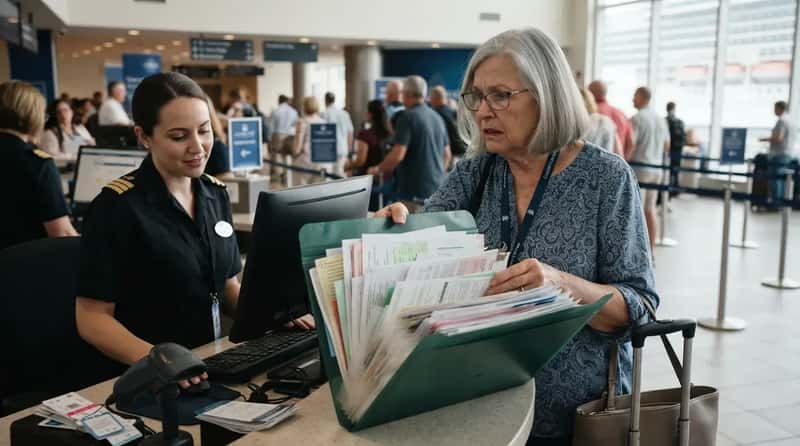
Passengers 70 and older sometimes arrive with a thick folder of documents, unsure exactly what’s required and determined not to be turned away at the gangway. Crew and check-in staff notice this anxiety immediately, especially on lines with stricter age-related policies.
Royal Caribbean, Celebrity Cruises, and Norwegian Cruise Line have required medical certification from passengers 70 and older, with written verification from a physician confirming fitness to travel. First-timers who’ve heard about this rule tend to overprepare, bringing extra documents just in case. Crew say it’s one of the more sympathetic tells on this whole list, since the anxiety usually comes from genuinely wanting to get it right.
Worth Knowing
- Some major cruise lines require a physician’s fitness-to-travel form for passengers 70 and older.
- Requirements can vary by itinerary, especially on routes to remote ports with limited medical access.
- Travel insurance with medical coverage is increasingly common among cruisers in this age group.
- Crew say one clear document is usually enough; extra paperwork rarely speeds up check-in.
#3 – Standing in the Wrong Elevator Line During Showtime

Every ship has predictable elevator bottlenecks, and first-time passengers over 60 almost always get caught in them. Crew and even fellow passengers notice the confusion of someone waiting at a packed bank of elevators right as a show lets out, unaware that timing is everything.
Veterans know to use the main elevators during showtimes or arrive early before the breakfast crowds, and some even find a quiet pair of elevators midship that no one else bothers with. First-timers haven’t learned this rhythm yet, and that single missing habit is one of the most reliable ways crew spot someone brand new to ship life.
#2 – Not Pre-Booking a Single Reservation

This is the tell crew mention most often, and it’s a big one. One of the most common mistakes newer or unprepared passengers make is failing to pre-book their preferred dinners, shows, and excursions before boarding, while experienced cruisers generally plan all of it weeks in advance.
Passengers who are unsure what to do first when they board, or who scramble to book activities and complain about availability, end up looking clearly inexperienced to crew, though staff remain happy to help as long as guests stay respectful. Crew say this single habit predicts more about someone’s cruise experience than almost anything else on this list. It’s the difference between a relaxed week and a stressful scramble for dinner slots and show tickets.
#1 – The Fall Nobody Sees Coming
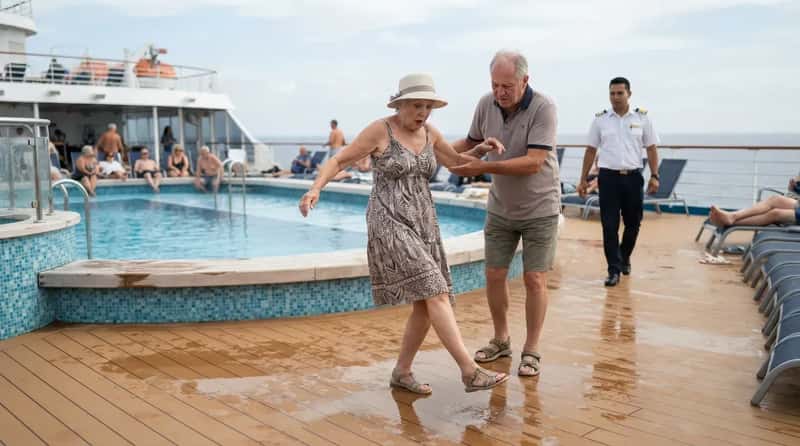
This is the sign crew take most seriously, and it’s not a minor quirk, it’s a genuine safety concern. Slip-and-falls are a real danger for older passengers, and the CDC reports that 1 in 4 Americans over 65 falls each year. Crew watch for unsteady footing near wet decks, uneven thresholds, and stairwells especially closely with first-time older guests who don’t yet know where the hazards are.
Patches of deck that haven’t been properly maintained can lose their non-slip surface over time, and even careful passengers can be caught off guard by a wet spot they never saw coming. This is precisely why staff pay closer attention to gait, balance, and hesitation in a first-time older passenger than to almost any other single behavior. It’s the one sign crew genuinely hope they never have to act on, but train constantly to catch before it happens.
At a Glance
- 1 in 4 Americans over 65 experiences a fall each year, according to the CDC.
- Pool decks and stairwells are the most common onboard fall zones.
- Non-slip deck coatings wear down over time and require regular upkeep.
- Crew are trained to watch gait and balance closely with first-time older guests.
None of these signs are meant to embarrass anyone. Most crew say the goal isn’t to judge first-timers, it’s to catch small moments early, before a wrong shoe, a missed reservation, or a wobbly step turns into a real problem. The passengers who fare best aren’t the ones who hide their inexperience, they’re the ones who ask questions, pack lighter, and treat the crew with a little patience on day one.
Which of these have you noticed on your own first cruise, or spotted in someone else? Drop it in the comments, especially if it’s the one about the flip-flops.