Most hotel guests think housekeeping just swaps towels and straightens pillows. They’re wrong. By day three, a trained housekeeper has quietly catalogued your sleep habits, your relationship status, your spending level, and whether you’re the kind of guest who leaves wet towels on the carpet.
Housekeepers clean dozens of rooms every single shift, and their eyes develop a radar for details most guests never think twice about. , that radar is locked in on your room specifically. Here’s exactly what the insiders notice – and what it says about you.
#17 – The Smell Before the Door Even Fully Opens
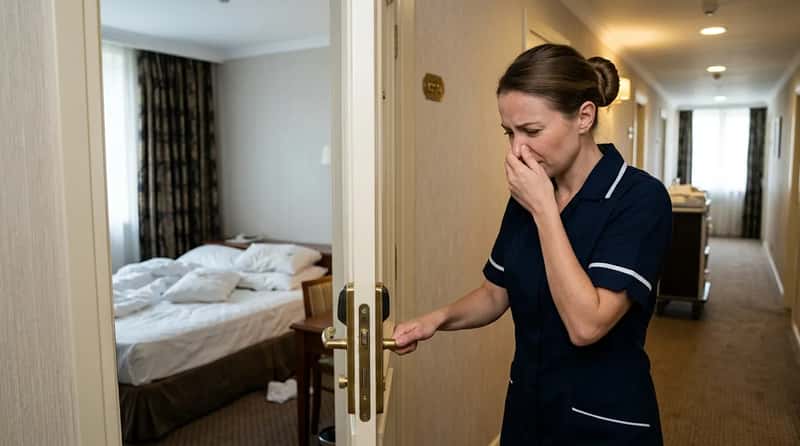
The first thing housekeeping registers isn’t visual – it’s olfactory.
Lingering takeout, damp towels, strong perfume, or stale air tell them what kind of room they’re walking into before they even flip on the lights. Odors cling to bedding, curtains, and carpet faster than most guests realize.
By day three, that smell has settled into every soft surface in the room. A neutral-smelling room takes about 10 minutes to clean. One that reeks of last night’s pizza can take 25.
Don’t underestimate what a closed room does to odors overnight – the HVAC circulates everything. That “light” curry smell from Tuesday? It’s in your pillowcases now.
But odors are just the opening act. What housekeeping sees next is even more revealing.
#16 – Exactly How Long Your “Do Not Disturb” Sign Has Been Up
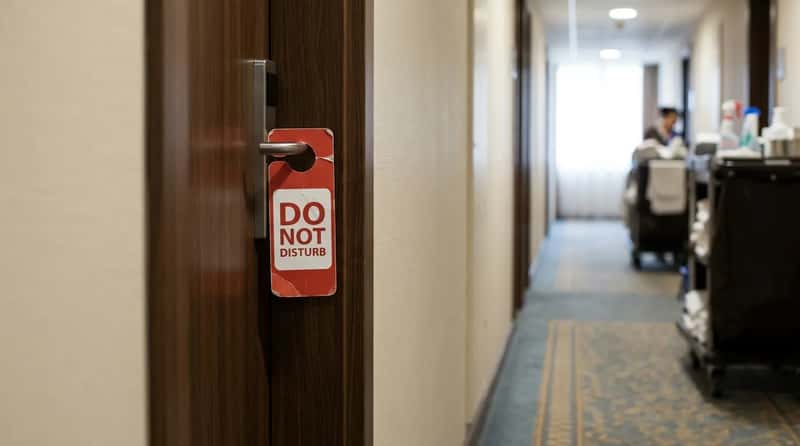
Housekeepers quietly track which rooms leave the Do Not Disturb sign out for days at a time. Rooms left untouched that long usually need a much deeper clean once staff finally get in.
By day three, your DND history is basically on file. Staff already know which rooms are private, which are avoidant, and which might be hiding something.
Some hotels now require a welfare check if a DND sign stays up longer than 48 hours. It’s not just a cleaning headache – it’s treated as a safety protocol.
Some guests hang the sign the moment they spot the cart coming, then pull it down later and complain the room was never cleaned. Housekeepers notice this pattern, and it’s one of their biggest frustrations on the job.
There’s a smarter habit just ahead – one that separates seasoned travelers from everyone else.
#15 – Whether You’ve Been Smoking (Even if You Think You Hid It)
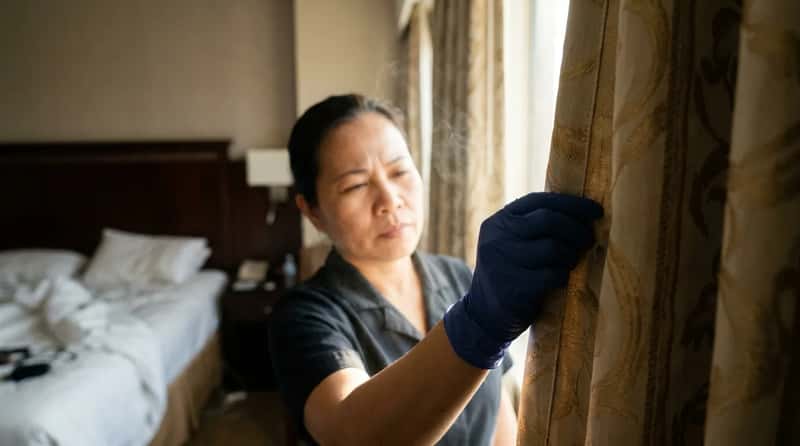
This one has zero wiggle room.
Most hotels are strictly nonsmoking now, and staff can almost always detect cigarette or vape residue the moment they walk in. If they miss it, automatic smoke detectors won’t.
The odor soaks into curtains and upholstery fast, whether a window was cracked or a fan was running. By day three, repeated smoking has piled up enough evidence that it’s impossible to miss.
This is something staff are specifically trained to report, since many hotels charge steep cleaning fees for violations. A single vaping session can trigger a $200-$500 cleaning fee at many mid-to-upscale properties.
The smell doesn’t air out. It marinates.
What housekeeping notices next is something most guests assume is invisible. It isn’t.
#14 – The State of Your Bathroom Counter
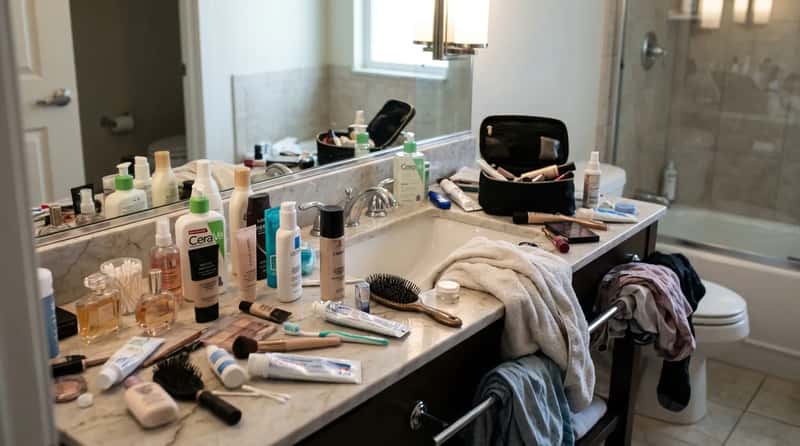
A bathroom counter buried in loose toiletries, with clothes strewn across every surface, tells housekeeping everything before they even start cleaning. It’s one of the fastest reads they get on a guest.
Experienced travelers keep their toiletries zipped in a bag. First-timers explode them across the entire counter.
A guest who’s stayed in fifty different hotel rooms already knows a contained toiletry bag means less to misplace and less for staff to work around. By day three, the pattern is unmistakable.
A chaotic counter adds real minutes to every service visit – minutes pulled straight from the time meant for actually cleaning your room.
What’s sitting on the other side of that bathroom might make you wince.
#13 – Towel Placement (And What It Actually Signals)
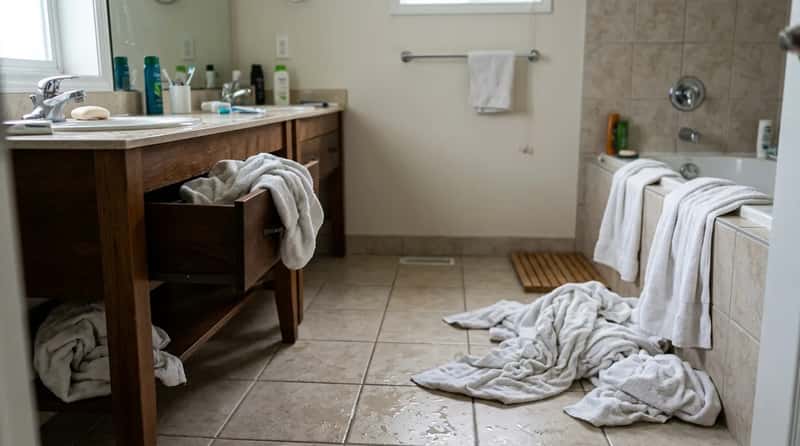
Housekeeping uses towel placement as a direct communication system, and most guests have no idea they’re sending a message at all.
Wet towels shoved behind the bed, crammed into drawers, or hidden under the sink genuinely confuse staff – and breed mildew fast enough to damage wooden furniture. Leaving towels on the floor or draped over the tub is the universal signal for “please replace these.”
Quick Compare
- On the floor or draped over the tub: read as “please replace these”
- Hung back on the rack: read as “still using these”
- Stuffed in a drawer or behind the bed: confuses staff and risks mildew
By day three, if you’ve been hanging your towels back on the rack, a good housekeeper will leave them – that’s the internationally recognized signal for “still using these.” Miss this cue and you’re generating unnecessary laundry every single day.
Anyone who’s worked a resort or beach property can spot towel habits from the doorway. A first-time vacationer piles wet items on the floor; someone with more travel miles reaches for a hook out of pure habit.
#12 – Your Relationship Status (Seriously)
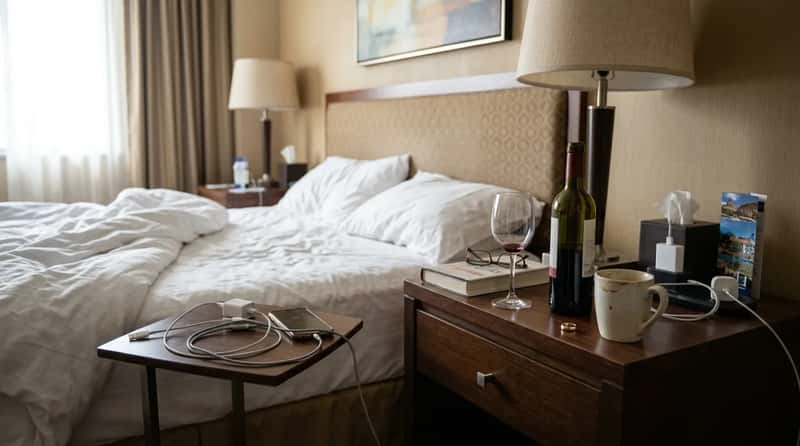
This one surprises most guests – but experienced housekeepers say it’s almost always obvious.
Toys, kids’ snacks, and small clothes usually mean a family. A briefcase, laptop, and button-downs usually mean a solo business traveler. Souvenirs, adult clothing, and a bottle of wine usually mean a couple.
By day three, the picture is complete. Two different toiletry routines, one untouched side of the bed, or two phone chargers on opposite nightstands tell a full story without a single word.
Housekeeping isn’t snooping. But the room is always talking – and what it says next is something almost no one thinks about.
#11 – How Much You’re Spending (Based on What’s in the Room)
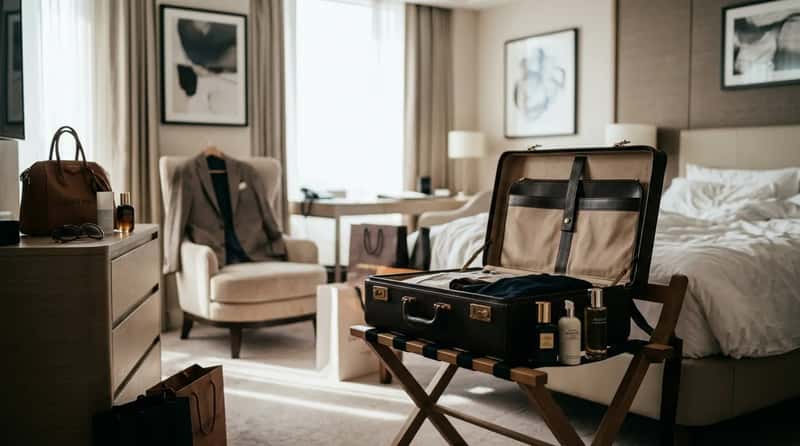
Guests assume housekeeping isn’t paying attention to brands. They are.
High-end luggage, pricey skincare, and name-brand snacks read as “well off.” Generic groceries don’t necessarily mean broke – just budget-savvy.
This isn’t judgment. It’s pattern recognition built from thousands of rooms. By day three, the totality of your belongings paints a surprisingly accurate financial portrait.
Luxury guests tend to leave more out in the open. Budget-conscious guests tend to pack everything away each night.
This detail matters more than you’d think once we get to #4.
#10 – The Remote Control’s Exact Location
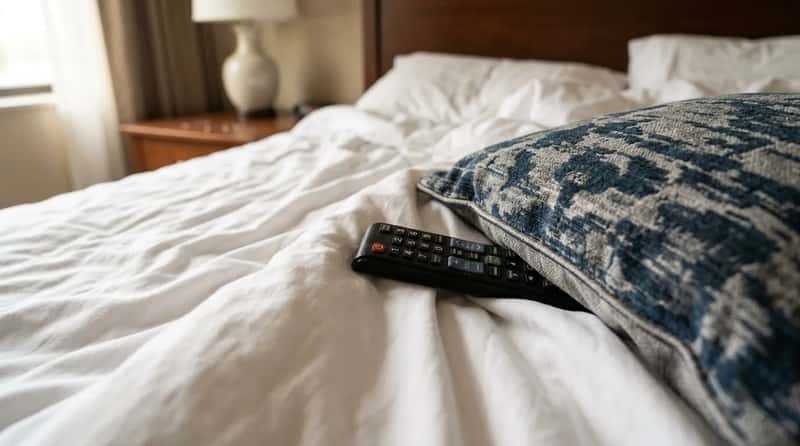
It sounds trivial. Housekeeping takes it very seriously.
According to Mary D’Argenis-Fernandez, founder and CEO of MDA Hospitality Solutions, a company that trains hotel staff, the remote is one thing they’re always hunting for.
Inevitably, this tiny, elusive device is often lost between sheets, behind the bed, under the bed, or somewhere in the most obscure crevices of the room.
Mary D’Argenis-Fernandez
A missing remote can trigger a full room search that adds 10+ minutes to a turnover – time pulled from every other room on the floor. By day three, housekeeping already knows if you’re a “remote on the nightstand” person or a “buried under pillows at 11 p.m.” person.
They’ve planned around it. The question is whether you’ve noticed.
#9 – The Curtains: Open, Closed, or Destroyed
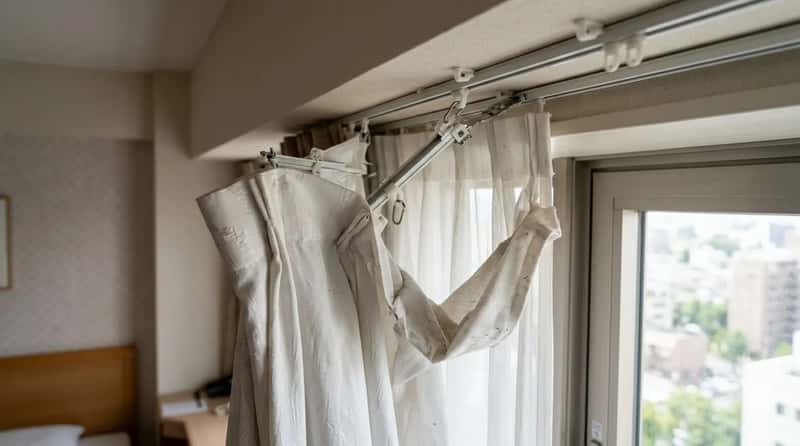
Housekeepers check the curtains almost immediately. Pulling them open lets in natural light that reveals dust, stains, and anything else needing attention.
Curtains yanked off their track or tangled around furniture signal a rougher stay. By day three, the curtain condition tells its own behavioral story.
Guests who open them cleanly each morning tend to keep tidier rooms overall. Guests who wrestle them open in the dark at 6 a.m.? Their rooms typically need 20-30% more attention.
Curtain tracks are one of the most commonly damaged fixtures in hotel rooms – and most guests have no idea they broke one.
What’s coming next genuinely surprises most guests.
#8 – Whether You’ve Been Eating in Bed
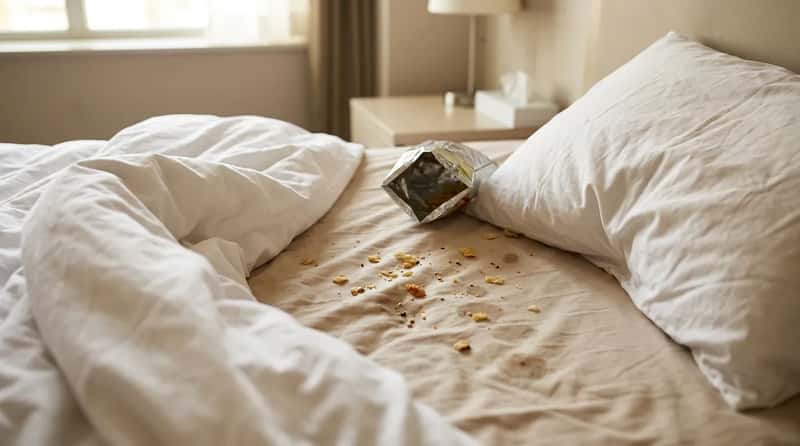
Housekeeping doesn’t need to see a crumb to know.
The moment they pull back the bedding, they scan for stains. By day three, the sheets are basically a diary entry.
Snack wrappers under pillows, crumbs in the fitted sheet corners, that faint greasy outline from a bag of chips – all of it registers instantly. Food debris in bedding is a pest risk hotels take extremely seriously, especially in warm-climate properties.
A housekeeper who spots repeated in-bed eating is required to flag it. Leftover food doesn’t just create odors – it attracts pests surprisingly fast.
The next tell is one most guests would never guess, yet it’s one of the most consistent.
#7 – Your Exact Morning Routine
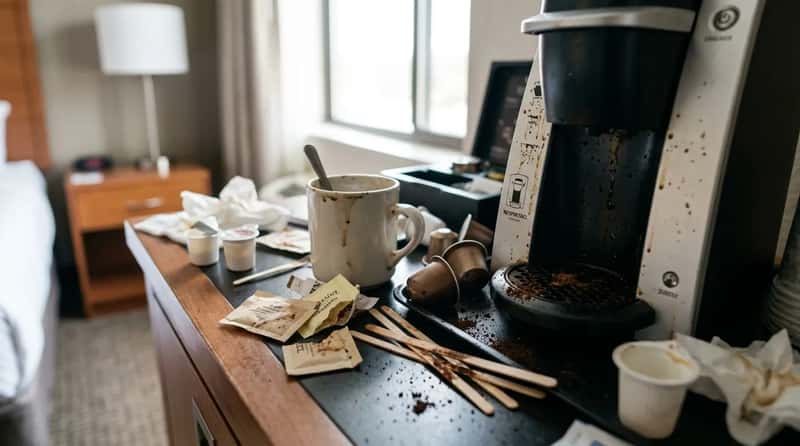
Torn sugar packets, scattered stirrers, and spilled coffee grounds seem like tiny details. They add up fast.
By day three, housekeeping has your morning fully mapped. An early riser with three cups of coffee leaves a wrecked station; a late sleeper who orders room service leaves the tray sitting by the door at noon.
Housekeepers have to restock and sanitize that coffee area every single turnover. A tidy station versus a caffeine explosion turns a 30-second task into a 4-minute one – and across 20 rooms a shift, that’s an extra hour of unplanned work.
#6 – Whether You Tip – and How You Leave It
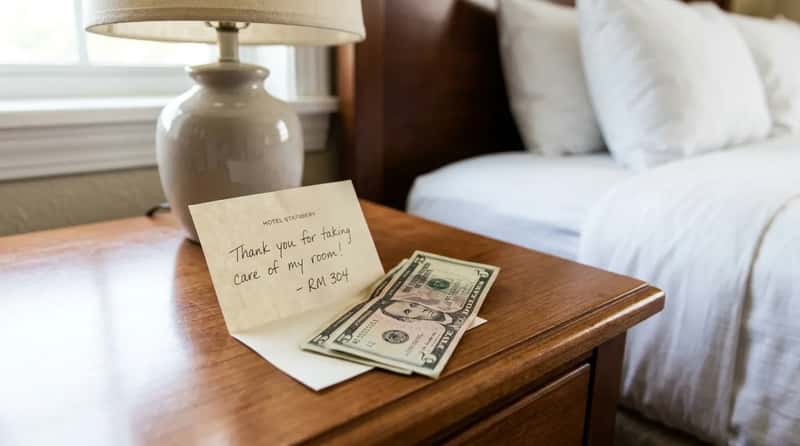
The American Hotel and Lodging Association recommends $3 to $5 per night for housekeeping. Yet fewer than one-third of guests actually leave a tip.
Fast Facts
- Only about 25% of Americans say they always tip hotel housekeeping, according to a recent Bankrate survey – well below pre-pandemic norms
- Older guests tip far more reliably than younger travelers
- A different housekeeper may service your room each day, which is why daily cash beats one lump sum at checkout
By day three, your tipping behavior is known. Housekeepers absolutely notice a small tip or a quick thank-you note, and it makes a genuinely difficult shift feel appreciated.
Many travelers now tip daily instead of leaving one lump sum at checkout, since different housekeepers may service the room during a stay. Guests who tip daily consistently report better service – not because effort is being withheld otherwise, but because those same guests tend to communicate more clearly and treat the room with more care overall.
#5 – Your Laptop and Devices Situation
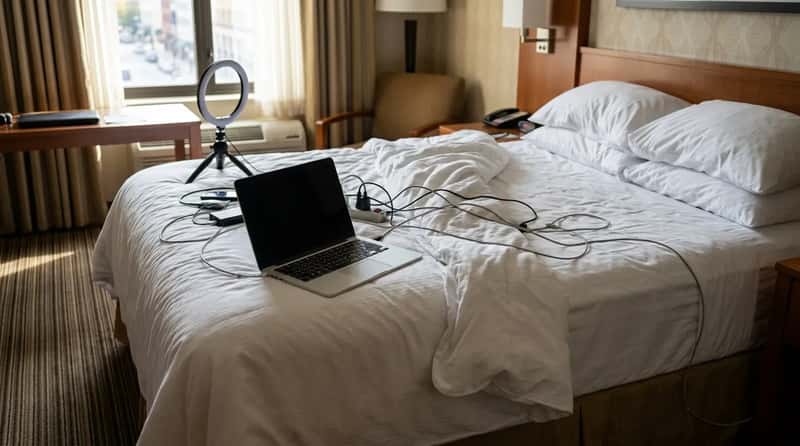
I always notice when people leave their computers on their beds. I don’t want to touch your stuff, but I want to make your bed nicely.
A Hilton housekeeper
By day three, a laptop permanently parked on one side of the bed, three charging cables snaking from different outlets, and a ring light by the window have already told housekeeping exactly what you do for work.
Devices left on beds create a real cleaning dilemma – housekeepers are trained never to move expensive electronics. That section of the bed often gets a surface-level tidy instead of a full change.
It’s not personal judgment. Most housekeepers are simply sizing up how much work lies ahead.
#4 – The Minibar and What’s Been Consumed
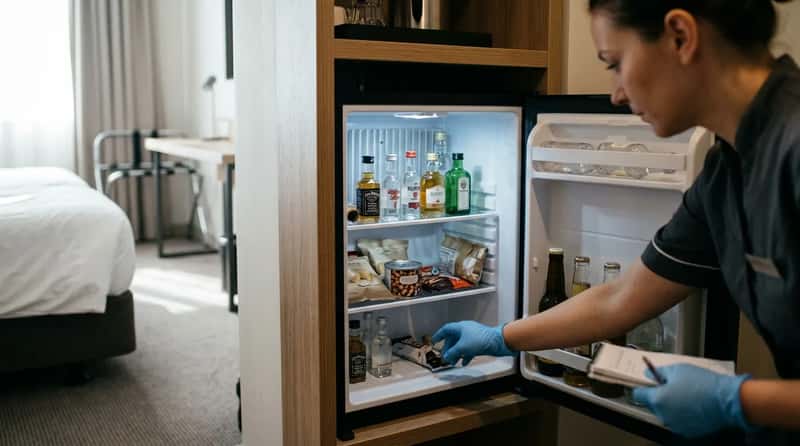
Many hotels now use sensor-based minibars that charge automatically. At properties with traditional setups, housekeepers are the first line of inventory control.
By day three, housekeeping has a running mental tally of your habits. Two beers gone night one, every snack gone by night two, the tiny whiskey opened but not finished – it all gets logged and restocked.
Housekeeping disputes are the #1 source of minibar billing errors. When a guest contests a charge, it’s often their memory against the housekeeper’s notes – and after three days, the notes almost always win.
What they catalog next is something guests find genuinely unsettling.
#3 – Items That Have Been Moved – or Searched
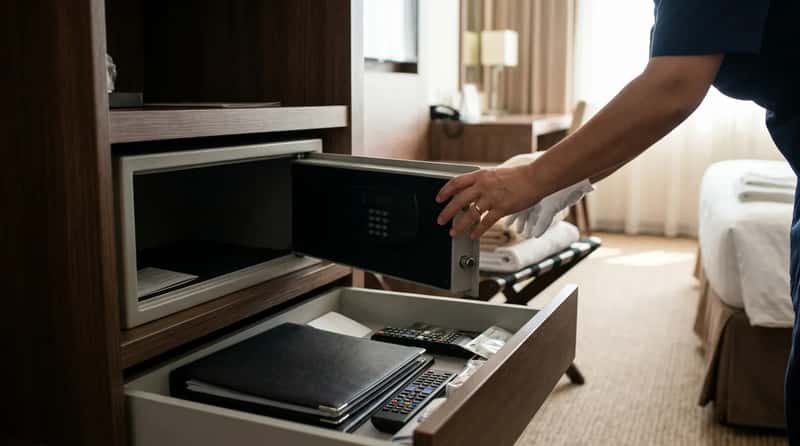
An experienced housekeeper reads your room like a book. By day three, they know the default position of every item because they’ve reset it twice already.
Which means they also know the moment something’s been moved. Drawers left ajar, items pushed to the back of a shelf, or a safe left open all get quietly flagged.
This isn’t paranoia – it’s a trained eye doing its job. Hotels treat housekeeping as an informal security layer, and the longer you stay, the more any deviation from your “baseline” stands out.
#2 – Whether You Treat the Room Like Home (Or Like You Hate It)
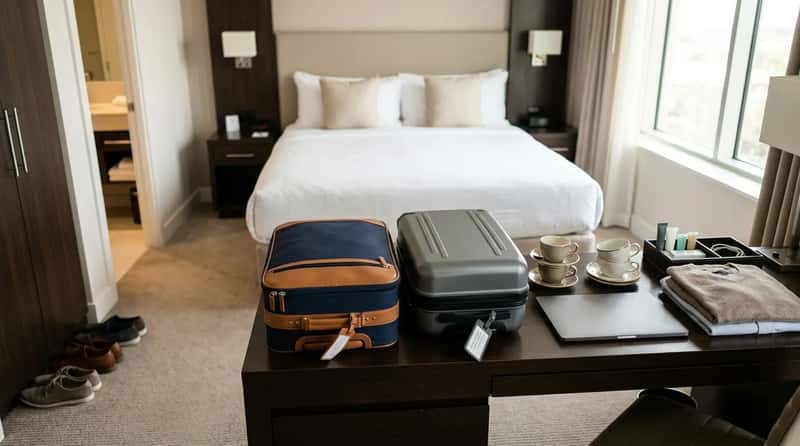
Tidying personal items is part of the job, and arranging a guest’s belongings neatly during service is standard procedure. But by day three, housekeeping knows whether you’re living in the room or trashing it.
Guests who make some effort – stacking cups, keeping luggage zipped, corralling used items – get a fundamentally different experience than guests who scatter everything across the floor by 9 a.m.
The time available to clean your room is fixed. How you leave it determines what that time actually gets spent on. A typical housekeeper cleans 15 to 30 rooms a shift, with roughly 15 minutes per room – nowhere near enough for a real deep clean if the room fights back.
A cooperative room gets a thorough clean. A chaotic one gets a surface tidy and a silent prayer.
#1 – Whether You’re the Kind of Person Who Will Ever Come Back
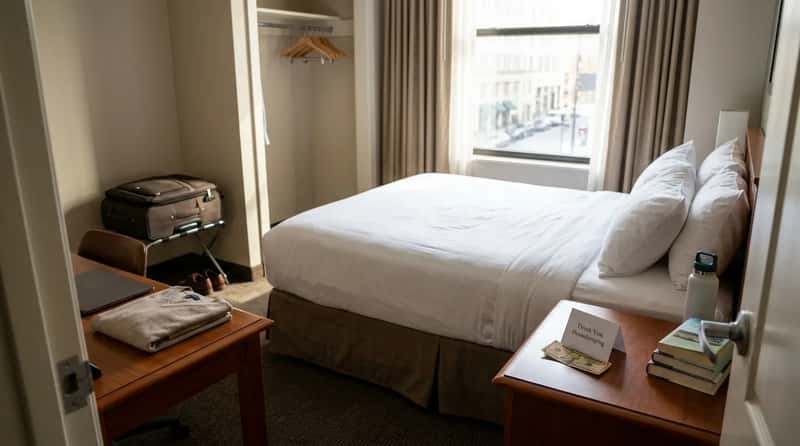
This is the one that matters most – and it’s never spoken out loud.
Housekeepers walk into dozens of rooms daily, and after a while they read a space within seconds. By day three, they’ve formed a complete picture – not just of your habits, but of whether you’re the kind of guest a hotel actually wants back.
Why It Stands Out
- Guests who tip early tend to get remembered – and get their name used for the rest of the stay
- A tidy exit each morning signals “easy room” to the whole cleaning team, not just one housekeeper
- Small, consistent gestures build a reputation that follows you through repeat stays at the same property
Guests who are considerate, tip fairly, and keep basic order are remembered, and that goodwill travels. Staff are instructed to address guests by name when possible, and the guests they remember favorably get that treatment without even asking.
The guests who treat housekeeping like invisible service robots are often the same ones wondering why their requests always take twice as long. The ones who leave a note and a tip on day one get a clean room and a noticeably smoother stay. That’s not a coincidence.
The Bottom Line
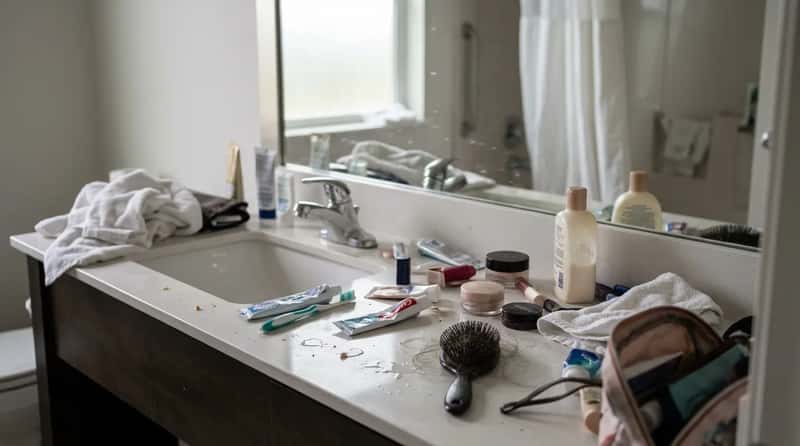
By day three, your housekeeper knows your sleep schedule, your relationship status, your spending habits, and whether you’ve been smoking. They also know exactly how chaotic your bathroom counter gets after 10 p.m.
The moment that door swings open, a mental scorecard kicks in. Your housekeeper isn’t judging you as a person – they’re sizing up the job ahead in about three seconds flat.
The guests who understand this get better service, cleaner rooms, and a stay that actually delivers on what the hotel promised. The ones who don’t wonder why everything feels slightly off.
Tip daily. Hang your towels. Move your laptop off the bed. It’s that simple.
Did we miss a housekeeping tell? Drop it in the comments – we read every one.
#18 – The Bonus Tip Nobody Shares
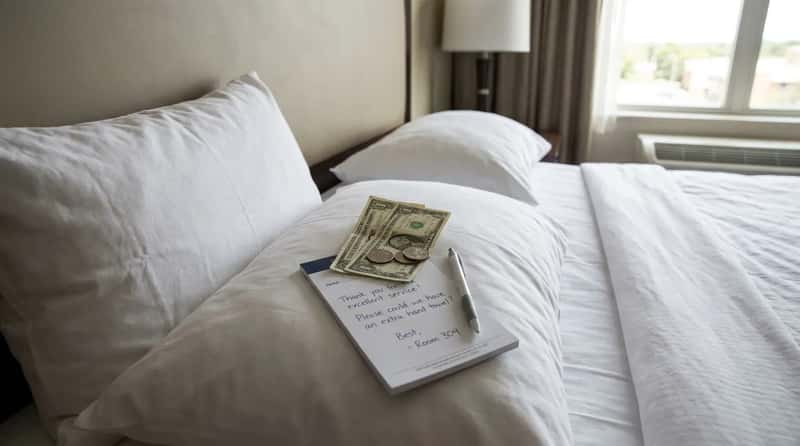
Want the single habit that flips how every housekeeper treats your room, starting on day one instead of day three? It’s not about the tip amount – it’s about making yourself instantly “easy” and memorable in the first sixty seconds they’re inside your door.
- Each morning, leave $2-$3 cash visibly on the pillow, not the nightstand – visible tips get noticed immediately, while hidden ones are often missed or credited to the wrong shift entirely.
- Write one line on the hotel notepad: a thank-you plus one small, specific ask, like an extra hand towel or more coffee pods – specific requests read as “easy guest,” while vague or no requests read as “unknown.”
- If you know the housekeeper’s name from a daily service card, use it in the note – staff are trained to remember and prioritize guests who use their name back.
- At check-in, casually mention to the front desk that you’re staying multiple nights – many properties flag “returning” or “multi-night” guests on the room assignment sheet housekeeping sees each morning.
Do this by day one instead of day three, and you skip the entire evaluation period – you’re already the room every housekeeper wants to walk into.