
Ask a lounge pianist what makes a great night and you’d expect a story about a gorgeous grand piano or a packed house. Instead, you’ll often hear about a bench, a blender, or a tip jar hidden behind a candle. Working pianists say the room quietly decides how the night will go before the first chord is played.
The strange part is that guests almost never see the cause. They just feel that one piano bar is warm and a little magical while another feels tense, tinny, or oddly flat. The countdown below moves from small details to the one thing pianists say outranks everything else, and a few entries may change how you look at the next piano in the corner.
#17 – A Piano Tuned This Season, Not This Decade

Pianists say the first test happens before the first song: they press a few keys. A piano that hasn’t been tuned in years gives itself away within seconds. Chords wobble, upper notes drift sour, and no amount of talent can hide it. Guests can’t name the problem, but they feel that something is off.
Pianos slip out of tune because the wood inside swells and shrinks with the seasons. Technicians commonly recommend tuning at least twice a year. Good rooms put it on the calendar the way they schedule beer-line cleaning. Difficult rooms wait until somebody complains, and by then the pianist has been fighting the instrument for months.
But a perfectly tuned piano still loses if the player can’t sit comfortably, and that’s where many rooms slip.
#16 – The Bench That Actually Fits a Human Being
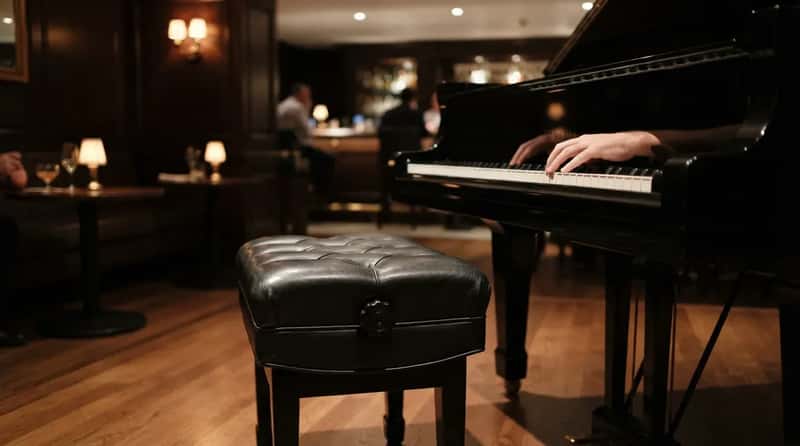
Ask a veteran pianist about their worst gig and the answer is often a wobbly bench. Many rooms hand over a fixed, too-low seat and expect four hours of clean playing. Pianists say that’s where wrist and back trouble starts. It also changes the music, because tired hands play it safe.
The usual ergonomic rule is that forearms should sit roughly level with the keys. That’s hard to hit on a bench that can’t change height. An adjustable bench costs a fraction of what the piano did. A room that owns one is quietly telling the pianist they’d like them to stay.
Even a comfortable pianist can’t fully relax if the tip jar is an afterthought.
#15 – A Tip Jar That Isn’t Hidden in Plain Sight

Here’s a hot take pianists share: a tip jar buried behind a candle is a tip jar nobody uses. Guests want to tip. They just don’t want to hunt for the spot or feel watched while they do it. Rooms that put it within easy reach, with a small, clear sign, tend to keep their players happy.
Difficult rooms go the other way. Some ban tip jars entirely, and some make the pianist hand-sell them. Others let a server whisk the jar away the moment it fills up. Pianists say that’s a fast way to lose a great player to the bar down the street.
And if guests can’t see the player at all, the whole act falls flat.
#14 – Lighting That Doesn’t Leave the Pianist in the Dark

Dim is the whole point of a lounge. But some rooms go so dark the pianist can’t see the keys or the sheet music. Others aim a spotlight straight into the player’s eyes. Pianists say the sweet spot is a soft, warm wash that lights the hands without a glare.
Lighting also changes how guests treat the music. A lit, visible pianist reads as a performer, while a pianist hidden in shadow reads as background noise. Many players say they get more respect and fewer shouted requests when people can actually watch them work.
Light is one thing. Sound is another, and that’s where plenty of rooms come apart.
#13 – A Sound System That Treats the Piano Like It Matters

Pianists say the house audio in some rooms is an afterthought. A good acoustic piano can fill a small lounge on its own, but a bad amplification setup can make it sound like a tin can. Boomy speakers, feedback squeals, and a monitor that doesn’t work are the usual complaints.
The best rooms ask the pianist what they need before the first night. They know the piano usually sounds best when it’s lightly supported, not buried in reverb. Difficult rooms hand over a cable and wish everyone luck.
Worth Knowing
- A small room often needs only a touch of reinforcement, not a wall of volume.
- Feedback squeals usually mean speakers and microphones are fighting each other.
- A monitor the pianist can actually hear is not a luxury, it’s how they stay in time.
- A quick sound check before doors open saves the whole first set.
Good sound is half the battle. The other half walks around behind the bar.
#12 – Bartenders Who Know When a Ballad Is Starting

Every pianist has a story about a cocktail shaker going off during the quietest bar of a slow song. Pianists say the best bartenders read the set like a second conductor. They hold the ice scoop through the soft passages and save the loud work for the upbeat tunes.
That kind of awareness can’t be taught in a day. It comes from a bar team that respects what’s happening ten feet away. Pianists remember those rooms for years, and they tell other musicians about them. Rooms with noisy, careless bar staff earn a reputation too.
Even the quietest bar can be broken by one little sentence from a guest: “Do you know…?”
#11 – The Request Culture Nobody Warns You About

Here’s a controversial one. Some pianists say the song everybody thinks is a treat is the one they’re sickest of playing. Guests lean over and ask for the same handful of tunes, night after night. Many pianists will play them with a smile, but they quietly dread the third request of the evening.
Good rooms handle this smoothly. They let the pianist set the rhythm of the night, welcome tasteful requests, and never pressure anyone to play a song they don’t know. Difficult rooms let guests treat the piano like a jukebox. Some even tell the pianist to play anything for a tip, which pianists say gets old fast.
Quick Compare
- Good room: requests are welcome, and the pianist decides when they fit.
- Difficult room: the piano becomes a jukebox with a person attached.
- Good room: a polite “not tonight” is respected.
- Difficult room: a tip is treated like a contract.
Requests are only part of the grind, because every pianist eventually needs to stand up and walk away from the keys.
#10 – Breaks That Are Actually Breaks

A four-hour gig sounds easy until you try it. Pianists say the difference between a good room and a draining one is often what happens during the break. A good room gives them a quiet spot, a glass of water, and ideally a meal. A difficult one expects them to mingle, field requests, and be back at the keys in ten minutes.
Hours of playing put real strain on hands and shoulders, so a proper pause matters. So does having somewhere to sit that isn’t the piano bench. Pianists notice whether a room treats them like staff or like furniture.
Rest matters, but so does the noise level around the piano, and that’s where things get surprisingly technical.
#9 – A Room Where You Can Actually Hear Yourself Play

Some lounges are so loud the music turns into a rumor. Pianists say they can tell within one song whether the crowd came to listen or to shout over the keys. Hard floors, glass walls, and bare ceilings bounce noise around the room. A few rugs, curtains, or wall panels can quietly fix a lot of it.
Noise isn’t just an annoyance. Pianists spend hours in these rooms, and repeated loud exposure can affect hearing. Rooms that manage the volume are protecting their players as well as their guests.
Managing noise is one thing. Deciding where the piano actually sits is another.
#8 – A Piano Placed Where the Pianist Can See the Room

Where the piano sits can make or break a night. Many pianists say the worst spot is one that faces a wall, with their back to the crowd. They can’t read the room, can’t see who’s listening, and can’t catch a guest’s eye. That changes how they play.
Good rooms place the piano where it’s visible and where the pianist can see the bar and the tables. Difficult rooms shove it next to the kitchen door, the restrooms, or the front entrance. Pianists say they end up playing to slamming doors and passing trays instead of people.
Even a well-placed piano can suffer from what’s hanging over it, or shining on it.
#7 – Air, Sun, and Vents That Don’t Slowly Wreck the Piano
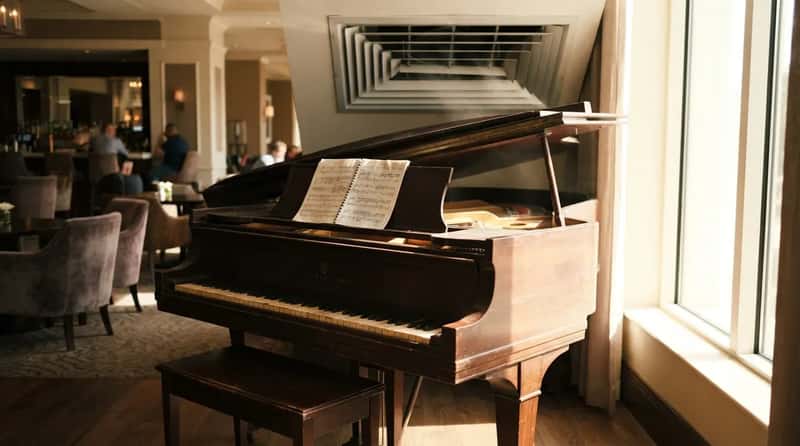
Pianos are sensitive furniture. Pianists say a piano sitting under an air vent or beside a sunny window is being slowly damaged. Heat, dry air, and humidity swings can affect the wood and the tuning. Rooms that know this tend to keep the instrument away from the worst spots.
A piano that gets moved around a lot, or left in a drafty corner, drifts out of tune faster. It can also develop sticky or uneven keys. Pianists notice because they feel it in their fingers by the second set.
All of that raises a question that starts arguments in green rooms everywhere: is a bad acoustic really better than a good digital?
#6 – A Good Digital Beats a Neglected Grand

Here’s a take that starts fights. Plenty of working pianists say a well-kept digital piano beats a worn-out acoustic grand. A digital never drifts out of tune, never has a sticky key, and can be turned up or down to fit the room. A neglected grand can be a nightmare.
Purists disagree, and they have a point. A properly maintained acoustic has a depth and warmth that digitals struggle to match. But pianists say the real divide isn’t acoustic versus digital. It’s cared-for versus ignored.
At a Glance
- Well-kept digital: stays in tune, adjustable volume, no seasonal drift.
- Well-kept acoustic: richer resonance and a feel many players prefer.
- Neglected acoustic: sour notes, sticky keys, and a tired player by the second set.
- Neglected digital: dead keys and a cheap speaker can sink it just as fast.
Whichever instrument a room picks, the pianist still needs to know what the night is supposed to be.
#5 – A Clear Idea of What the Night Is Supposed to Be

Pianists say confusion is one of the quietest ways a gig goes wrong. Is the pianist background music, or the main event? Rooms that never decide leave the player guessing. One night they’re asked to turn it down, and the next they’re asked to put on a show.
Good rooms are clear up front. They say whether it’s a dinner-hour set, a late-night sing-along, or something in between. That lets the pianist build a set list that fits the crowd. Difficult rooms change the rules mid-song.
And for pianists who sing, the plan means nothing without one small piece of gear.
#4 – A Microphone That Works When the Pianist Sings

Many lounge pianists also sing. A microphone that cuts out mid-chorus can turn a smooth night into a scramble. They say the details matter: a stand that holds its height, a cable that isn’t frayed, and a monitor they can actually hear.
Good rooms test the gear before doors open. They keep spare batteries and a backup mic on hand. Difficult rooms hand over whatever was left in a drawer. Pianists say they can usually tell which kind of room they’re in during the sound check.
Gear problems are fixable. The next one is about money, and pianists get blunt about it.
#3 – Pay That Arrives on Time and Doesn’t Come With “Exposure”

This one is the least glamorous and the most common complaint. Pianists say the clearest sign of a difficult room is a vague promise of “exposure” instead of a set fee. They want to know the pay, the hours, and when the money arrives before they load in.
Good rooms put it in writing, pay that night or soon after, and treat the pianist as a professional. Difficult rooms delay, deduct, or shrink the fee. Experienced players tend to walk away from those rooms and rarely come back.
But money isn’t the scariest thing that can happen near a piano. Number two is a horror story.
#2 – Guests Who Know the Piano Is Not a Coat Rack

Every pianist has a drink-on-the-piano story. A spilled cocktail can seep between the keys and cause damage that costs real money to repair. Pianists say good rooms politely keep glasses off the lid, off the keys, and off the player’s music stand.
Difficult rooms let guests lean on the piano, set drinks on top, or even reach over and press keys mid-song. Pianists say the best staff step in before it becomes a problem. A gentle word, or a small sign, protects the instrument and the performance.
Still, pianists say every one of these pales next to the thing that defines a truly great room.
#1 – A Room That Actually Listens

Ask pianists what they remember most and the answer is rarely the piano. They remember the night a whole bar went quiet for a slow song. Glasses stop clinking, and phones go down. A table of strangers hums along to a tune they haven’t heard in years.
That kind of room doesn’t happen by accident. It comes from staff who respect the music, a manager who trusts the pianist’s read on the crowd, and guests who feel invited to listen. Difficult rooms treat the piano like wallpaper. Good rooms treat it like the heart of the night.
Why It Stands Out
- The bar goes quiet on its own, without anyone asking.
- Staff move softly during the slow songs.
- Guests turn toward the piano instead of away from it.
- The applause feels earned, and the pianist can tell.
The truth, pianists say, is that talent is only half the equation. A tuned piano, a bench that fits, fair pay, and a staff that respects the set do more for a night than any song list. Difficult rooms usually fail on the basics: neglected instruments, vague expectations, and noise nobody manages.
The great ones simply pay attention. And somewhere tonight, a pianist is hoping the room will do the same.