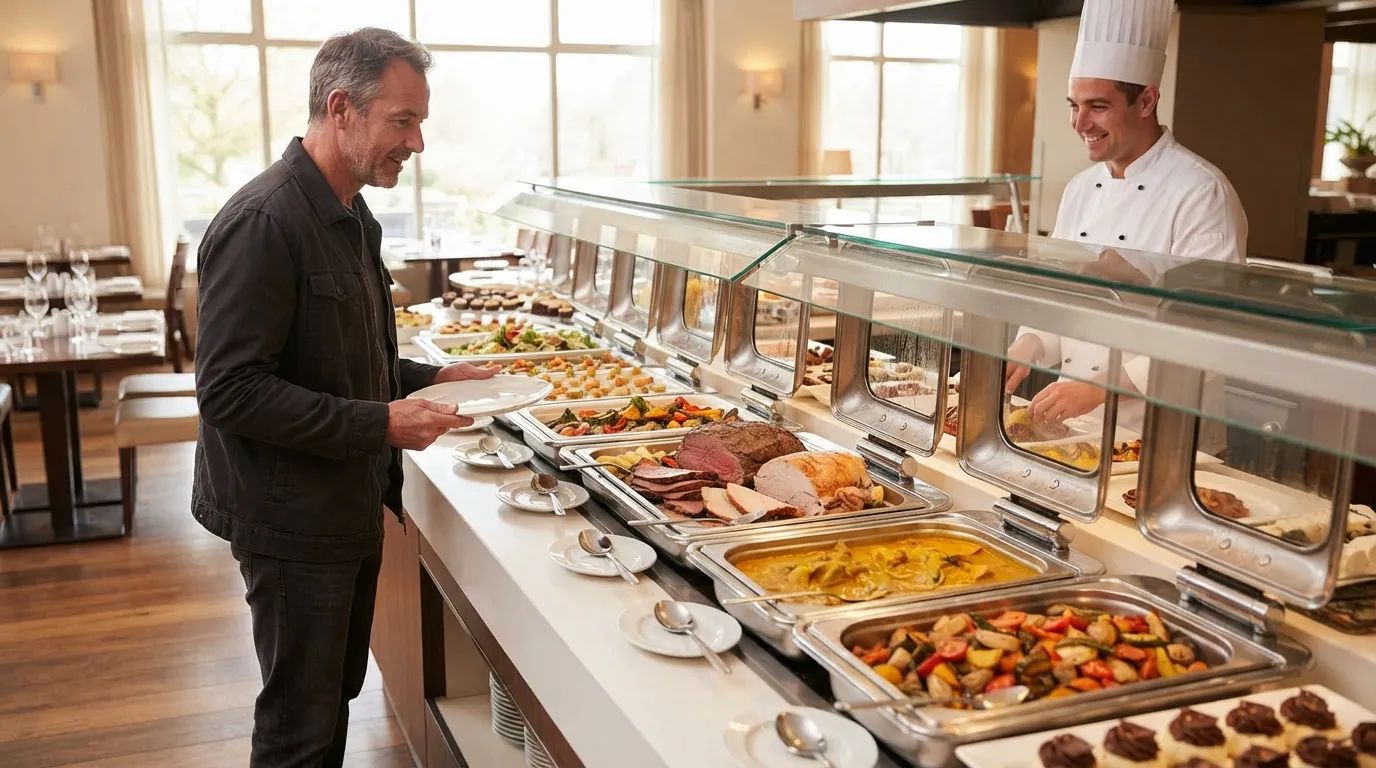
Most people treat a buffet like a free-for-all – pile the plate, eat until it hurts, call it a win. Veteran diners know that’s exactly the trap the restaurant wants you to fall into.
The real pros play a completely different game, built on timing, plate psychology, and quiet reconnaissance most customers never notice. Here are the 18 habits that separate them from everyone else in line – and the data behind why each one works.
#18 – They Never Eat in the Buffet Line
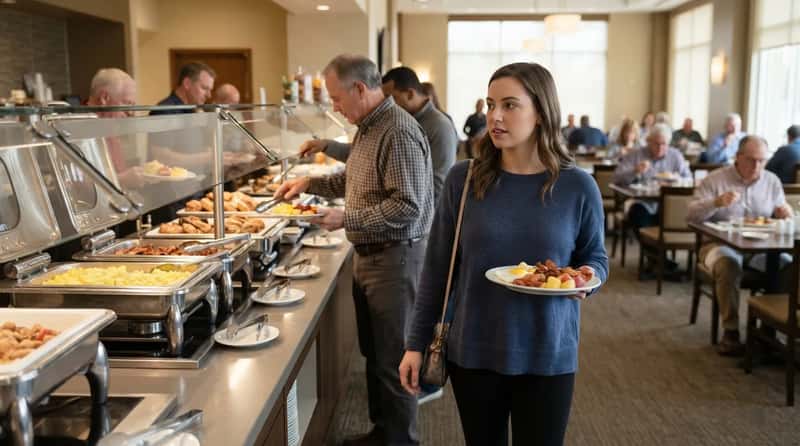
Sampling food while still standing at the buffet table is an instant rookie tell. Veterans wait until they’re seated before taking a single bite.
There’s a real hygiene reason behind the rule, too. Eating while hovering over shared dishes can spray saliva and bacteria onto food that dozens of other people are about to eat.
It’s a small habit, but it tells you everything about how seriously someone takes the buffet experience. And the next habit? That’s where the real strategy begins.
#17 – They Do a Full Reconnaissance Lap First
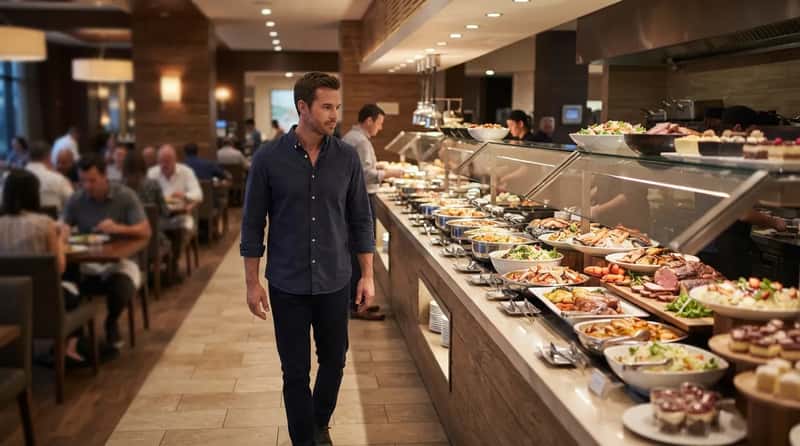
Before touching a single plate, experienced diners walk the entire buffet line to see what’s actually on offer. Buffet owners wish more customers did exactly this.
Diners who scope out the spread before serving themselves end up making fewer trips and eating less overall. The lap also stops you from loading up on the first dishes you see and missing the good stuff further back.
Two minutes of scouting can quietly reshape your whole meal. And that first-dish trap you just avoided? It’s not an accident – it’s designed.
#16 – They Skip the Carb Trap at the Front – and Save It for Last
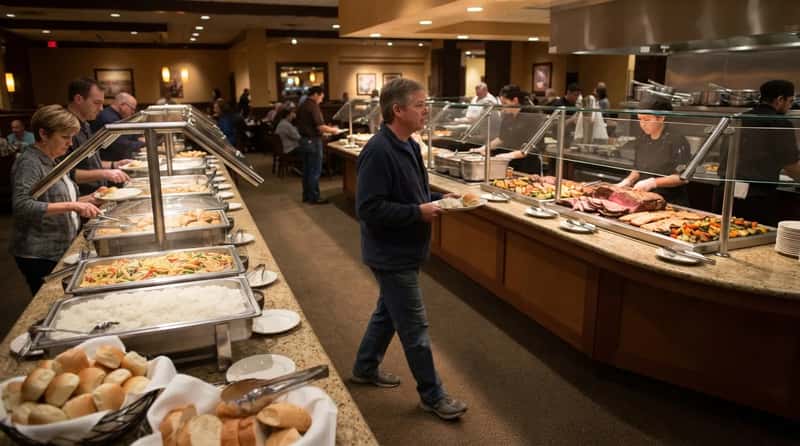
Buffets are built so you eat more cheap food and less expensive food, which is exactly why bread, rice, and pasta sit right at the entrance. A study published in PLOS ONE explains exactly why that placement works so well on unsuspecting diners.
Fast Facts
- 75% of diners pick the first food they see on the line
- The first three items in line make up 66% of everything selected
- Bread, rice, and pasta stations are placed at the entrance on purpose
Veterans walk straight past the carb station and head for the higher-value dishes further down. If they want bread or pasta, they treat it as a closing act, not an opener – loading up on starch early just leaves less room for the food that actually costs the restaurant money.
They know the front of a buffet isn’t a menu suggestion. It’s a revenue trap.
#15 – They Deliberately Choose a Smaller Plate
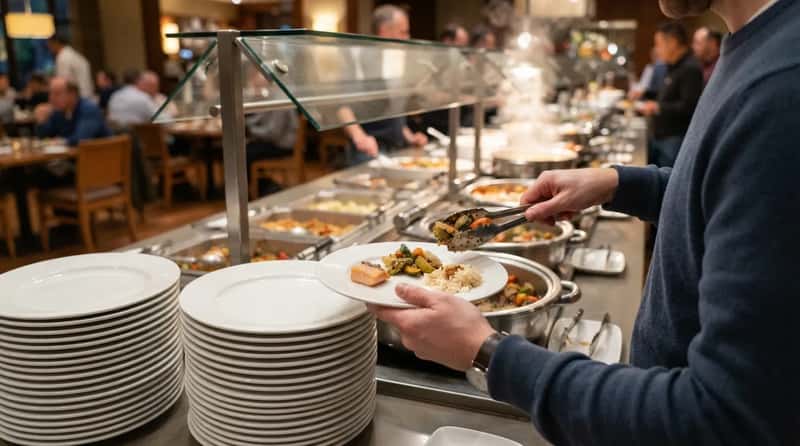
A study in the Journal of Experimental Psychology: Applied found diners with large plates took 52% more food, ate 45% more, and wasted 135% more than diners using smaller plates. Experienced diners flip that psychology on purpose.
Smaller plates force more intentional choices and cut down on waste almost automatically. Some restaurants even stock smaller “buffet line” dishware specifically to nudge customers toward less.
Veterans know the plate-size game is already being played on them. They just choose to play it back.
#14 – They Avoid Sugary Drinks and Giant Sodas
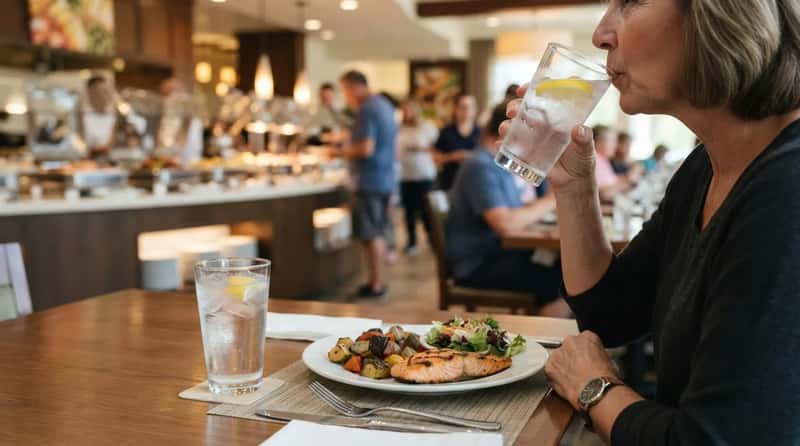
Sugary, carb-heavy drinks fill you up fast – before you’ve touched the food worth eating. Experienced diners know a large soda is one of the most profitable items in the entire restaurant.
Restaurants buy soda syrup and carbonated water for pennies, then sell it at a steep markup. Veterans sip water instead, saving their appetite for the food that actually matters.
Drinks sorted. Next comes a timing habit most rookies never even think about.
#13 – They Time Their Arrival Strategically
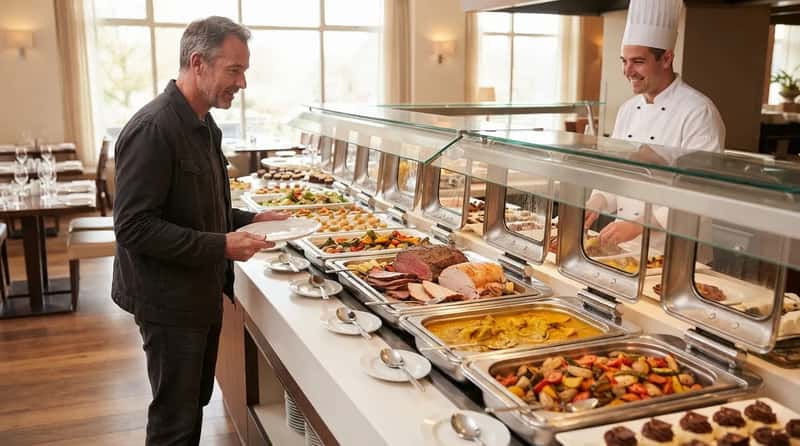
Going at lunch instead of dinner is one of the easiest ways to save money – restaurants often price lower-volume lunch sessions cheaper to pull people in. Arriving right when a session opens is an even bigger win.
The trays are full, the food is fresh, the lines are short, and kitchen staff are still at full energy. Show up mid-session on a weekend instead, and you’ll find half-empty trays and the best items long gone.
Timing isn’t luck for a veteran diner. It’s a plan.
#12 – They Watch for Fresh Replenishment
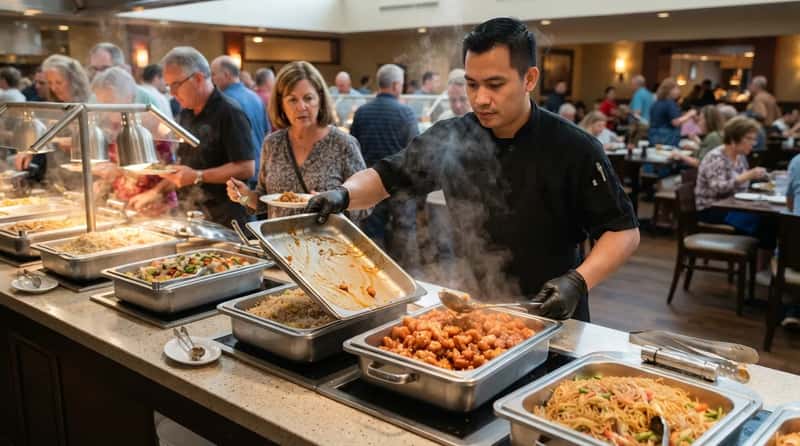
Experienced diners track which dishes get refilled often, because frequent replenishment usually means the freshest food on the table. They pay close attention before ever picking up a serving spoon.
There’s a rhythm to it once you learn to spot it. Watching which trays staff swap out most often tells you exactly where the kitchen is sending its best product.
Follow the staff, not the crowd. But freshness isn’t only about timing – there’s a temperature check most people never think to make.
#11 – They Check That Hot Food Is Actually Hot
Hot food needs to be hot, and cold food needs to be cold.
Kristin Kirkpatrick, R.D., Cleveland Clinic Wellness Institute
Hot food should be held at a minimum of 135°F, and cold food at no higher than 41°F – anything in between sits in what food safety experts call the danger zone. Experienced diners give lukewarm protein dishes a hard pass.
If the steam isn’t rising and the tray feels tepid, they skip it and wait for a fresh batch. No dish is worth a night of food poisoning.
#10 – They Use the Right Utensil for Every Dish
Using the same serving spoon across multiple dishes spreads pathogens and allergens from one tray to the next. Experienced diners never touch communal food with their personal fork or spoon.
Watch a busy buffet line for five minutes and you’ll see this rule broken constantly. Veterans use the correct utensil every single time, without even thinking about it – it’s pure muscle memory.
#9 – They Prioritise Live Cooking Stations
Pasta, stir-fries, and omelette stations made to order are almost always fresher than anything sitting under a heat lamp. Experienced diners seek these out first, even when the line looks longer.
Quick Compare
- Live station: cooked to order, shorter hold times, better flavor
- Heat-lamp tray: sits longer, dries out faster, uneven temperature
- Line length: usually longer at live stations, but almost always worth it
A chef cooking in front of you means shorter hold times and food made specifically for that moment. Rookies see a long line and walk away; veterans know the wait is almost always worth it.
#8 – They Hunt for Hidden Premium Items
Many buffets deliberately bury their best offerings – seafood, premium meats, chef-prepared specialties – between the common, cheaper dishes. A full lap before serving is what reveals them.
Amateurs load up on whatever’s visible and easy to reach. Veterans go looking for the snow crab legs tucked behind the salad bar, or the carving station hiding around the corner – finding it is half the fun.
#7 – They Sit With Their Back to the Food
Cornell University research found that diners with a higher body-mass index tended to serve before scouting, use larger plates, and sit facing the buffet. Experienced diners do the opposite – they choose seats with their backs to the spread on purpose.
Out of sight really does mean out of mind. Every glance at the buffet is a small invitation to go back before you’re actually hungry again, and veterans remove that trigger before they even sit down.
#6 – They Take Real Breaks Between Plates
Experienced diners pause between plates to ask themselves a simple question: am I still hungry, or just eating because the food is unlimited? If the answer is “satisfied,” they stop right there.
The stomach takes about 20 minutes to signal fullness to the brain. Rush from plate to plate without pausing, and you’ll be miserable long before dessert even shows up.
#5 – They Hit Dessert in the Middle, Not the End
The classic buffet regret is being too stuffed for dessert. Experienced diners solve this by eating dessert in the middle of the meal, especially if there’s a specialty cake or dish they’ve been eyeing.
It sounds backwards, but the logic holds up – if it’s a limited item you can’t make at home, waiting until you’re full means skipping it or forcing it down miserably. Veterans claim that plate real estate early, on their own terms.
#4 – They Monitor the Line for Hygiene Red Flags
It’s not glamorous, but experienced buffet-goers quietly watch for broken hygiene habits in the people ahead of them. Restaurant staff follow strict food safety rules – other customers don’t have to.
If someone touches a serving spoon with bare, unsanitised hands, that contamination transfers straight to the food and then to everyone after them. Veterans notice, and quietly wait for staff to refresh that tray instead of serving from it.
#3 – They Wash Hands Without Being Reminded
Experienced diners wash their hands or use sanitiser before ever touching a serving spoon – no sign required. Buffets are one of the easiest places for illness to spread through shared surfaces.
Worth Knowing
- Buffets are hot zones for norovirus, rotavirus, and other shared-surface illnesses
- The CDC estimates roughly 48 million Americans get sick from foodborne illness every year
- A few seconds of hand sanitizer breaks that entire chain
Rookies grab a plate and go straight in; veterans stop at the sink first, every single time.
#2 – They Eat a Light Meal Before Going
Skipping every meal before a buffet feels like strategy, but it backfires almost every time. Studies show that skipping a meal usually leads to overeating at the next one.
Experienced diners eat something small and balanced beforehand, arriving hungry but not starving. A famished diner grabs whatever’s closest and burns through their capacity on cheap carbs before ever reaching the good stuff.
#1 – They Know Exactly What the House Wants – and Do the Opposite
Buffets are engineered, top to bottom, to push customers toward cheap food and away from expensive food. Smaller spoons sit with the premium items so you take less; larger spoons sit with the filling, low-cost dishes so you take more.
The lighting, the layout, the plate sizes, the endless drink refills – none of it is designed for your satisfaction. It’s designed for the house’s margin.
The true mark of an experienced buffet diner is treating every choice – plate size, seating, timing, which tray to serve from – as a deliberate counter-move against a system built to work against them. They don’t just eat at a buffet. They play it, and they win.
The Bottom Line
Most buffet diners leave full but strangely deflated, having burned most of their capacity on bread rolls and soda. Experienced diners leave having eaten exactly what they came for – premium, freshly replenished food, at the right temperature, with zero food coma.
At a Glance
- Scout the full line before serving a single plate
- Skip the carb station up front, save starch for last
- Sit with your back to the buffet to curb extra trips
- Arrive right when a session opens for the freshest trays
Every one of these habits is learnable, and the data backs each one up. Skip the front of the line, watch the replenishment, sit with your back to the food, arrive light instead of starving – and always, always do the reconnaissance lap first.
Bonus: The Insider Move Even Veteran Diners Miss
Every habit above works before or during the meal – but the single highest-value move happens the moment something’s wrong, and almost nobody uses it.
- Ask for the manager, not the server, if a dish is cold, empty, or stale. Servers usually just relay the message; a manager can authorize an immediate fix, a fresh batch, or even a discount on the spot.
- Ask a live-station chef for an off-menu combo. Most cooks will happily mix ingredients from two stations – say, adding stir-fry vegetables into an omelet – since it costs the kitchen nothing extra but isn’t ever advertised.
- Ask directly if there’s an end-of-session discount. Many buffets quietly reduce admission price in the final 30-45 minutes before closing to clear out food rather than waste it, but they rarely post this – you have to ask at the register.
None of these moves require complaining or confrontation – just a direct, polite question that most diners never think to ask. It’s the difference between passively accepting whatever’s on the line and actively negotiating a better meal.