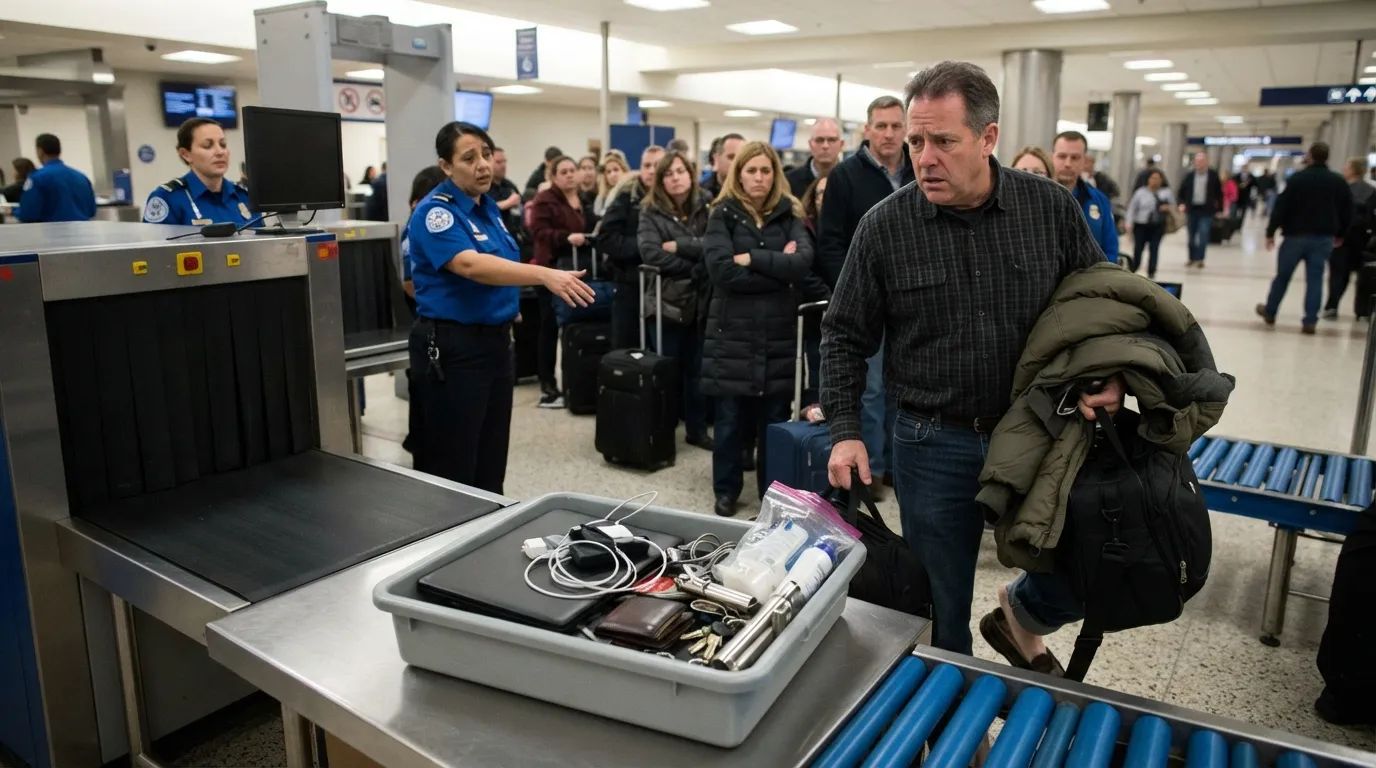
Most people think security lines crawl because of crowds. Turns out, the data tells a very different story: the vast majority of delays are caused by individual passengers making the same avoidable mistakes, over and over again.
Former TSA officers, current agency spokespeople, and checkpoint data all agree on one thing – your choices before you even reach the scanner decide how fast you get through. From oversized liquids and checkpoint arguments to forgotten electronics and red-flag behavior, these are the 18 mistakes that turn a two-minute screening into a twenty-minute nightmare.
#18 – Showing Up Without a REAL ID
Travelers need a REAL ID-compliant license or another acceptable form of identification, such as a passport, to clear security. Millions of people still arrive at checkpoints with expired licenses or non-compliant state IDs – and then act surprised.
Face recognition technology through CLEAR and TSA PreCheck allows for Touchless ID, but that feature may not be operating or available at every airport, so it’s still smart to carry physical identification as a backup.
Fast Facts
- TSA accepts a REAL ID-compliant driver’s license, a valid passport, or a passport card at the checkpoint.
- DHS trusted traveler cards, military IDs, permanent resident cards, and tribal photo IDs also qualify.
- Touchless facial-matching ID is expanding but still isn’t live at every airport, so a physical backup matters.
Fumbling through a bag or suitcase to find an ID can cause an unnecessary bottleneck. Pull it out before you reach the agent – not after.
But a valid ID is only half the battle. The name on it matters just as much…
#17 – Name Mismatches on Your Ticket
TSA requires that the name on your ticket closely match the name on your government-issued ID, and even small differences – nicknames, missing middle names, spelling errors – can cause delays. Airline staff may need to manually verify your identity if there’s a mismatch.
In some cases, passengers get pulled aside for additional checks before they’re allowed to continue. This is a mistake you make at home, weeks before your flight.
Book your ticket exactly as your name appears on your government ID, no shortcuts, no nicknames – it takes ten seconds to check and can save you twenty minutes at the checkpoint.
And speaking of things you do before you pack – your footwear choice matters more than you think…
#16 – Wearing the Wrong Shoes
For standard security screening, TSA requires passengers to remove shoes, belts, and light jackets. With dozens of passengers in line behind you, you don’t want to wear lace-up sneakers or boots that take forever to remove.
Complicated boots can slow your whole line down. On travel days, wear simple slip-ons you can kick off fast without wrestling with laces.
This single choice can shave two or three minutes off your screening time – which doesn’t sound like much until forty people behind you are doing the same thing. Slip-ons are the unspoken uniform of savvy travelers.
The next mistake is just as wearable – and just as fixable before you leave the house…
#15 – Wearing Too Much Metal
Metal items can set off detectors and lead to additional screening, so minimize what you wear before going through security. Heavy belt buckles, layered jewelry, underwire bras, and metal-shank boots are the most common offenders.
Every single piece of metal on your body is a potential alarm trigger. And every alarm trigger sends you to a secondary screening lane.
The fix is dead simple: load your metal into your carry-on before you join the queue, don’t wait until you’re at the bin. The officer watching the body scanner sees hundreds of people every hour – a metal alarm is one more delay they didn’t ask for either.
But wait – there’s something even sneakier than metal that agents flag constantly…
#14 – Not Fully Emptying Your Pockets
The cause for slowdowns isn’t always in your baggage – it’s on your body. Not fully emptying your pockets can trigger the alarm and lead to a full physical screening.
When officers ask you to empty your pockets, they mean everything – not just your phone, wallet, and keys, but breath mints and tissues too, which can register on the scanner.
A forgotten receipt or crumpled tissue is enough to trigger a rescan – so place every item from every pocket into your bag or bin before you step forward. Patting yourself down takes five seconds; a pat-down from an officer takes five minutes.
The next mistake is one that even frequent flyers get wrong…
#13 – Leaving Electronics in Your Bag
A common mistake TSA agents see is passengers leaving electronics buried in their carry-on – any device larger than a cell phone, like laptops, tablets, and e-readers, needs to come out and go into its own bin. When these are left inside, the bag gets flagged, pulled, and rescreened, backing up the line for everyone behind you.
Cameras, drones, power banks, and tablets may need separate screening too. Most people know to pull out the laptop – but they forget the tablet, the Kindle, or the handheld gaming device buried at the bottom.
Do a quick mental inventory before you reach the belt: everything larger than a phone comes out, goes in its own bin, and gets screened separately. It’s not a suggestion – it’s the rule.
And your loose cables are making this even worse…
#12 – Tangled Cables and Loose Wires
TSA agents report that large tangled piles of wires and chargers can obscure the X-ray view of everything else, forcing them to open the bag and search by hand. A small pouch or organizer for your cords helps the scanner see inside your bag clearly.
Frequent travelers report the same thing: loose, randomly packed cables often mean a hand inspection. It’s one of the fastest ways to get pulled aside.
A bird’s nest of cables looks deeply suspicious on an X-ray screen – a $5 cable organizer pouch is one of the smartest investments a traveler can make. Bundle your cords and watch your bag sail through the scanner untouched.
Here’s where it gets really interesting – because the outside of your bag matters too…
#11 – Overpacking Your Carry-On
Overpacked bags make it harder for agents to see items clearly on X-ray, often triggering manual inspections. When agents can’t identify what’s inside, they’re forced to open and repack your bag – and that slows you down.
A tightly stuffed carry-on makes belongings harder to inspect during an unexpected bag check, adding real minutes to the process. It’s a self-inflicted wound most travelers never see coming.
The irony? You overpacked to avoid checking a bag and save time – but you end up spending that time and more at the checkpoint.
Agents don’t just look for threats – they need to see your bag clearly, and a dense, crammed carry-on makes their job harder and your wait longer.
But messy packing is just the start of the X-ray problem…
#10 – Chaotic, Disorganized Packing
The messier your packing, the more it stands out on a screen. Disorganized luggage makes it harder for TSA’s technology to assess whether there’s actually a threat inside.
A tangled jumble of clothes, wires, and bottles is often exactly what flags an agent to dig through your bag by hand. It’s not the mess itself – it’s what the mess hides from view.
Quick Compare
- Tangled, mixed contents: shapes overlap on the X-ray, so agents open the bag by hand more often.
- Packing cubes or folders: clean, separated layers agents can read at a glance.
- Liquids and gadgets buried at random: higher odds of a rescan or manual pull.
- Liquids bagged, electronics on top: a smoother pass-through, usually on the first try.
Packing cubes aren’t just a travel-influencer trend – they serve a real function at the checkpoint. When an agent has to open your bag, organized contents mean they can see everything without a “tangled mess” triggering a full search.
Think of your bag as something a machine has to read. Give it something legible.
And speaking of things that look suspicious on a scanner – you’ll want to hear about this one…
#9 – Packing Wrapped Gifts
Especially around the holidays, travelers should leave gifts unwrapped until they reach their destination. Dense wrapping can flag the item as a concern, and TSA will not be offering to re-wrap anything they open.
If a wrapped gift triggers an alarm, it has to come open to confirm it isn’t a threat. Officers don’t want to unwrap someone else’s present, but they will if it sets off the alarm.
TSA officially recommends using gift bags with tissue paper so agents can peek inside quickly without destroying your holiday presentation. Don’t let a bow turn into a twenty-minute baggage check.
The next mistake involves something that seems completely harmless…
#8 – Dense Food Items and Powders
Avoid packing anything that resembles an explosive device or obscures the X-ray image – tangled wires, powder-like substances, dense foods like jars of peanut butter, and wrapped gifts all qualify. Large stacks of books or thick reams of paper are also hard for X-rays to penetrate.
Powders – protein powder, dry shampoo, even spices – are a particular red flag, since TSA has specific screening protocols for anything over a certain volume. Peanut butter counts as a liquid under TSA’s rules because it’s a gel above 3.4 oz, so it gets confiscated or triggers a longer secondary check – know before you pack.
And here’s a mistake that nobody sees coming…
#7 – Lithium Batteries in the Wrong Bag
Spare lithium-ion batteries and power banks are strictly prohibited in checked bags. If found during screening, they get pulled out and can trigger a search of your entire bag.
Vaping devices belong in your carry-on too, since TSA bans them from checked luggage over explosion risk. The same logic applies to power banks and spare laptop batteries – they travel in the cabin, always.
Most travelers get this completely backwards, assuming batteries belong in checked luggage. A misplaced lithium battery doesn’t just slow you down – it can trigger a full secondary inspection of every bag you’ve checked, so know the watt-hour limits before you fly.
The next one? Even experienced travelers forget it all the time…
#6 – Ignoring the 3-1-1 Liquid Rule
Travelers who try to bring liquids over 3.4 ounces or other prohibited items through the checkpoint slow the entire process down, according to TSA. Even the most well-traveled passenger can recall forgetting a half-filled water bottle or a small pocket knife.
The 3-1-1 rule has existed since 2006, yet it remains the single most confiscated-item category at checkpoints every year – each container must be 3.4 oz or less, and all of them need to fit inside one quart-sized clear bag at the top of your carry-on. A buried toiletry bag is almost as bad as the wrong-sized bottle.
But prohibited liquids are just one category of a much bigger problem…
#5 – Packing Prohibited Items “Just to See”
Prohibited items remain one of the biggest causes of delays at airport security, and TSA’s list is longer than most passengers realize. Many infrequent travelers pack banned items by accident – and some do it on purpose, betting they’ll slip through unnoticed, a gamble that almost always backfires.
In 2024, TSA found 6,678 firearms in carry-on bags at checkpoints nationwide – and most of those travelers said they had no idea the gun was even in the bag.
“One firearm at a checkpoint is too many.”
TSA Administrator David Pekoske
If TSA detects a prohibited item, expect a long delay – a TSO will search every inch of your bag, and you may face an intrusive secondary screening with an enhanced pat-down. Don’t gamble – check TSA.gov before you pack.
The next mistake is one where your behavior – not your bag – triggers the alarm…
#4 – Making Jokes at the Checkpoint
Even if it’s obvious you’re kidding, TSA has to take every security threat seriously. Jokes about weapons, bombs, or terrorism are likely to get you pulled aside for additional screening and questioning that eats up serious time.
Most of the time this just makes you late – but in some cases, badly timed jokes have gotten people kicked off flights or even arrested. It is never worth the risk.
There is zero upside to joking at a checkpoint – officers are trained to treat every verbal threat as real until proven otherwise, and that’s not a policy flaw, it’s exactly how the system is supposed to work. Keep the comedy for the departure lounge.
And then there’s the mistake where people know better but do it anyway…
#3 – Arguing With TSA Officers
If you disagree with a TSA officer, the smart move is to follow instructions and cooperate. Arguing will not change the rules – it will only cause further delays.
From a former TSO’s perspective, arguments over banned items are exactly the kind of behavior that brings passenger flow to a crawl. It rarely ends the way the traveler hopes.
TSA officers do not have the authority to change federal screening regulations at the checkpoint, and they know it – arguing doesn’t unlock a secret exception, it just burns your time and theirs. If you genuinely believe a rule was applied wrong, file a complaint through TSA’s formal process after your flight, not in the line.
The next mistake is one that costs thousands of travelers hours every single year – and it’s completely optional…
#2 – Skipping TSA PreCheck
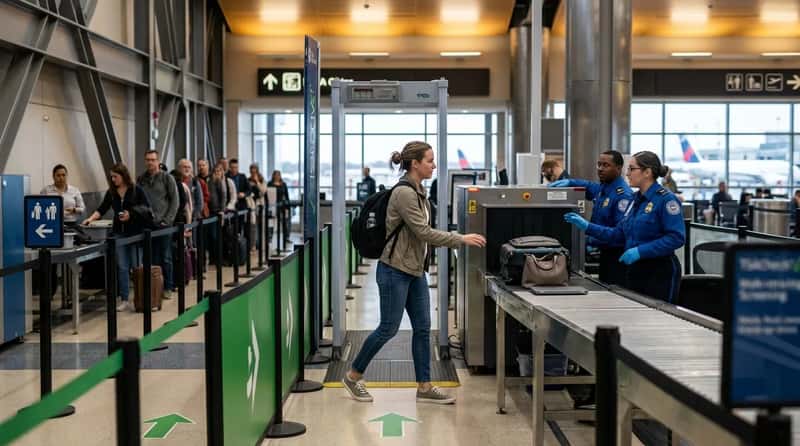
For frequent travelers, skipping trusted traveler programs can mean missing a connection entirely. PreCheck often cuts wait times dramatically.
Enrolling in PreCheck or Global Entry is strongly recommended if you fly often – Global Entry also speeds up international re-entry so you’re back through security faster.
Why It Stands Out
- Dedicated PreCheck lanes are open at more than 200 U.S. airports.
- Members keep shoes, belts, and light jackets on, and leave laptops and compliant liquids in the bag.
- A five-year membership runs about $78, or roughly $15.60 a year.
- Many travel credit cards reimburse the fee, which can make enrollment effectively free.
PreCheck members keep their shoes on, their laptops in their bags, and their liquids stowed – bypassing the most time-consuming parts of standard screening entirely. If you fly more than twice a year, that math makes obvious sense, yet millions of regular travelers still queue in the standard lane every single time and then complain about the wait.
But none of that compares to the #1 mistake that causes the most delays of all…
#1 – Arriving Unprepared and Unaware
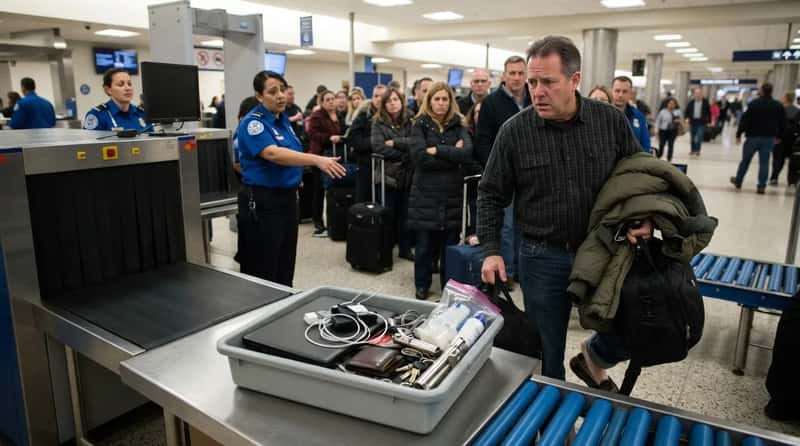
Even experienced travelers can slow down a security line by missing basic prep steps. Complicated clothing, unorganized documents, or full pockets often lead to extra screening and delays.
TSA officers keep stressing the same point: most delays are preventable with a little preparation and awareness. It really is that simple.
Transportation officials recommend arriving early enough to absorb unexpected issues at parking, check-in, and security – recent TSA guidance advises at least two hours before domestic departures.
The ripple effect is real: one unprepared traveler can delay dozens of people behind them – the belt stops, the lane backs up, and a two-minute hold becomes a ten-minute jam. Preparation isn’t just courtesy – it’s what separates passengers who make their flights from those who don’t.
The Bottom Line
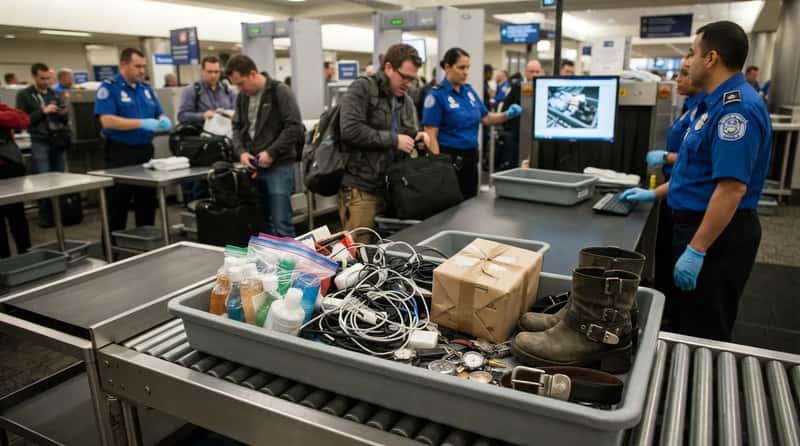
Security delays are almost never random. Small, preventable mistakes at the checkpoint create a ripple effect that can delay dozens of people at once.
The 18 mistakes above are the same ones officers see every single day: forgotten liquids, tangled cables, wrapped gifts, bad shoes, and a refusal to just follow the rules. Fixing even three or four of them can cut your checkpoint time in half.
Enroll in PreCheck, pack smart, empty your pockets, and walk in already knowing the rules. The line moves fast the moment everyone stops treating it like a surprise.