Most cruise passengers stumble off the gangway genuinely stunned by how much they spent beyond the ticket price. A “deal” cruise that looked like $899 somehow rings up thousands more by disembarkation day – and it happens to smart, careful people constantly.
Cruise lines aren’t sloppy about this. For some of them, the entire business model is built on quiet upsells – which is exactly why experienced cruisers have built a private playbook to beat it, one small habit at a time.
#18 – Put Your Phone on Airplane Mode the Moment You Board
Most passengers assume their unlimited cell plan just works at sea. It doesn’t.
The instant your ship leaves the dock, your phone can latch onto “Cellular at Sea” – a maritime network completely separate from your normal plan. Roaming through it can run $10 or more per megabyte.
It charges you even when you’re not touching the phone. Incoming calls rolling to voicemail, texts landing in the background, apps quietly refreshing – it all adds up while the phone just sits on your nightstand.
The fix is free and takes two seconds: airplane mode the moment you board. Use the ship’s app and designated Wi-Fi zones if you need to stay connected.
Most experienced cruisers treat sea days as a real digital detox – and their post-cruise credit card statements show it. But there’s an even smarter play waiting at #17.
#17 – Buy Wi-Fi Before You Board, Not Onboard
If you truly need internet access, timing your purchase is everything.
Cruise Wi-Fi can easily run $20 to $30 per person per day. On a seven-day cruise, that’s an extra $200 for one person alone.
Carnival’s Premium Wi-Fi package costs about $25.50 per day for one device if you buy it before midnight the day before sailing. Wait until you’re onboard, and it jumps to roughly $30 per day.
Fast Facts
- Social plan: about $20 per day pre-cruise for basic messaging and social apps.
- Value plan: around $24 per day pre-cruise, with no streaming included.
- Premium plan: about $25.50 per day pre-cruise, several dollars more once you’re onboard.
- Multi-device Premium: roughly $90 per day pre-cruise for up to four devices, versus around $120 onboard.
That gap looks small until you multiply it across a week for two people. Experienced cruisers lock in their Wi-Fi during the pre-cruise window without a second thought.
The savings at #16 are even more straightforward – and most first-timers completely miss them.
#16 – Grab the Spa and Specialty Dining Deals on Embarkation Day
Day one of a cruise feels chaotic. Most passengers are hunting for their cabin or hitting the buffet – savvy cruisers are doing something else entirely.
Spas and specialty restaurants are quietly open on embarkation evening, and they’re hungry for business. Onboard spas often run first-day discounts, and specialty restaurants may throw in a free bottle of wine.
These deals are rarely advertised loudly. They exist for the passengers who show up and simply ask.
This is one of the most reliably overlooked savings windows on any cruise ship. The crowds are thin, the staff is eager, and the pricing is at its most flexible.
Skip this window, and you’ll pay full rate for the rest of the voyage. The next habit costs nothing but five minutes of reading.
#15 – Read the Daily Schedule Like a Treasure Map
Every morning, your ship publishes a schedule of the day’s events. Most passengers scan it for showtimes – experienced cruisers scan it for deals.
Look for daily drink specials and happy hour windows buried in the fine print. Cruise line boutiques often run BOGO sales or “everything for $10” hours on T-shirts, purses, and sunglasses.
Prices onboard aren’t fixed – they shift based on demand and inventory. Passengers who check the schedule daily consistently spend less than those who don’t.
Next up: the single habit that quietly saves the most money on drinks.
#14 – Know the Drink Package Math Before You Buy
Drink packages are sold hard by every cruise line. They’re also frequently a bad deal for the wrong traveler.
These packages are priced to profit the cruise line, so you typically need 5 to 7 drinks a day just to break even. Casual drinkers usually come out ahead buying u00e0 la carte instead.
The package only wins if you drink heavily and consistently – on every single sea day. Experienced cruisers do the math honestly before sailing.
They only buy in when the numbers genuinely favor them. The next habit is one most passengers have never even considered.
#13 – Bring Permitted Beverages From Home
Before you pay $4 for bottled water or $6 for a soda onboard, know what your cruise line actually allows in your carry-on.
Carnival, Royal Caribbean, and Princess all allow a limited number of sodas or non-alcoholic drinks brought onboard. Double-check current policy before you pack, and compare it against the cost of a soda package.
Pack a reusable water bottle, too – many ships have free refill stations. These are small savings, but they compound quietly over a seven-day voyage.
The habit at #12 targets a hidden expense that shocks passengers every single cruise.
#12 – Pack Your Own Essentials
Onboard shops are convenient. They are not cheap.
Forgotten sunscreen, toiletries, seasickness remedies, even snacks can cost double or triple once you’re onboard. Bring your own from home and skip the markup entirely.
Sunscreen is one of the worst offenders – a $10 drugstore bottle routinely sells for $20 to $25 onboard. Multiply that across a family and the math turns brutal fast.
Experienced cruisers pack a complete personal kit and never visit the ship’s pharmacy out of desperation. Up next: the habit that could save hundreds at every single port.
#11 – Book Shore Excursions Before You Board
Waiting until you’re onboard to book excursions is one of the most reliably expensive decisions a cruiser can make.
Excursions almost always cost more once you’re already sailing. Book them on the cruise line’s website ahead of time, and watch for periodic discount windows.
If you have onboard credit, you can usually apply it toward booking excursions early, too. Pre-booking also locks in your spot on popular tours that genuinely sell out.
Experienced cruisers treat excursion planning like flight booking – early, deliberate, never impulsive. The next step is even more aggressive on cost.
#10 – Go Independent at Port
Here’s a genuinely controversial opinion most cruise insiders hold quietly: ship-organized excursions are often the worst value in cruising.
Research ports in advance, hire local guides, or book directly with local operators for real savings. Many ports are walkable or served by cheap local transportation.
Some experienced cruisers report saving $200 to $400 per port by going independent. The trade-off is real, though – if you’re stranded in port, you’re paying your own way to catch back up with the ship.
Quick Compare
- Ship-run excursion: Costs more, but the ship waits for you if it runs long.
- Independent tour or local guide: Costs less, often by hundreds of dollars, but you’re on your own clock.
- Best use case: Save independent touring for ports you already know, and lean on ship excursions when tight timing matters.
Experienced cruisers go independent only for ports they know well, or with a serious time buffer built in. Risk management is part of the savings strategy here, not an afterthought.
#9 – Eat Lunch and Dinner Back on the Ship
This one cuts against every instinct when you’re standing in a beautiful port surrounded by restaurants. Do it anyway.
Trying local cuisine is a fun way to experience a new culture. But if you’re on a budget, skip the paid meals in port and head back to the ship’s included eateries instead.
If you do eat out, avoid the overpriced waterside tourist spots and ask locals where they actually eat. A cheap gelato or pastry can scratch the itch without wrecking the budget.
You’ve already paid for food on the ship. Using what you’ve paid for isn’t deprivation – it’s arithmetic.
#8 – Exploit Onboard Credit Strategically
Onboard credit feels like free money. Treated carelessly, it disappears on things you never actually wanted.
If a booking offer includes onboard credit, only count on the amount you’re confident you’ll actually use. A $200 credit isn’t worth $200 if it nudges you into buying things you’d normally skip.
Excursions, Wi-Fi, drink packages, and specialty dining can often be booked in advance using credit that’s already sitting in your account. Experienced cruisers assign their onboard credit a purpose before the ship even leaves port.
Spend it on things you’d have paid for anyway – not on impulse buys the ship conveniently made easy. Habit #7 takes this discipline even further.
#7 – Monitor Your Onboard Account Daily
The bill at the end of a cruise can be genuinely alarming – and almost always preventable.
Cruise ships excel at making spending feel effortless. Everything charges to your room, nothing requires cash, and you “settle up” at the end like some kind of floating tab.
Most cruise lines now have apps that show your running total in real time. Checking it every morning takes 30 seconds and has a surprisingly powerful effect on how you spend the rest of the day.
The next habit targets one of the quietest money drains on any cruise ship.
#6 – Skip Onboard Souvenir Shopping Until the Last-Day Sales

There’s a predictable rhythm to onboard shopping, and experienced cruisers exploit it quietly.
Boutiques often run BOGO sales or “everything for $10” hours late in the cruise – check the daily schedule for the announcement. If you want high-end jewelry, wait for the specials; these purchases won’t be cheap, but you might snag a bonus item free.
Better yet, plan souvenirs around each port instead of waiting until the last minute. Local markets often sell handmade items with actual cultural meaning, at better prices than anything on the ship.
The rule is simple: never buy onboard what you can buy in port for less. The next habit is one the cruise line will never advertise.
#5 – Book Your Next Cruise While Still Onboard

This is the move that separates occasional cruisers from the ones who always seem to land the best deals.
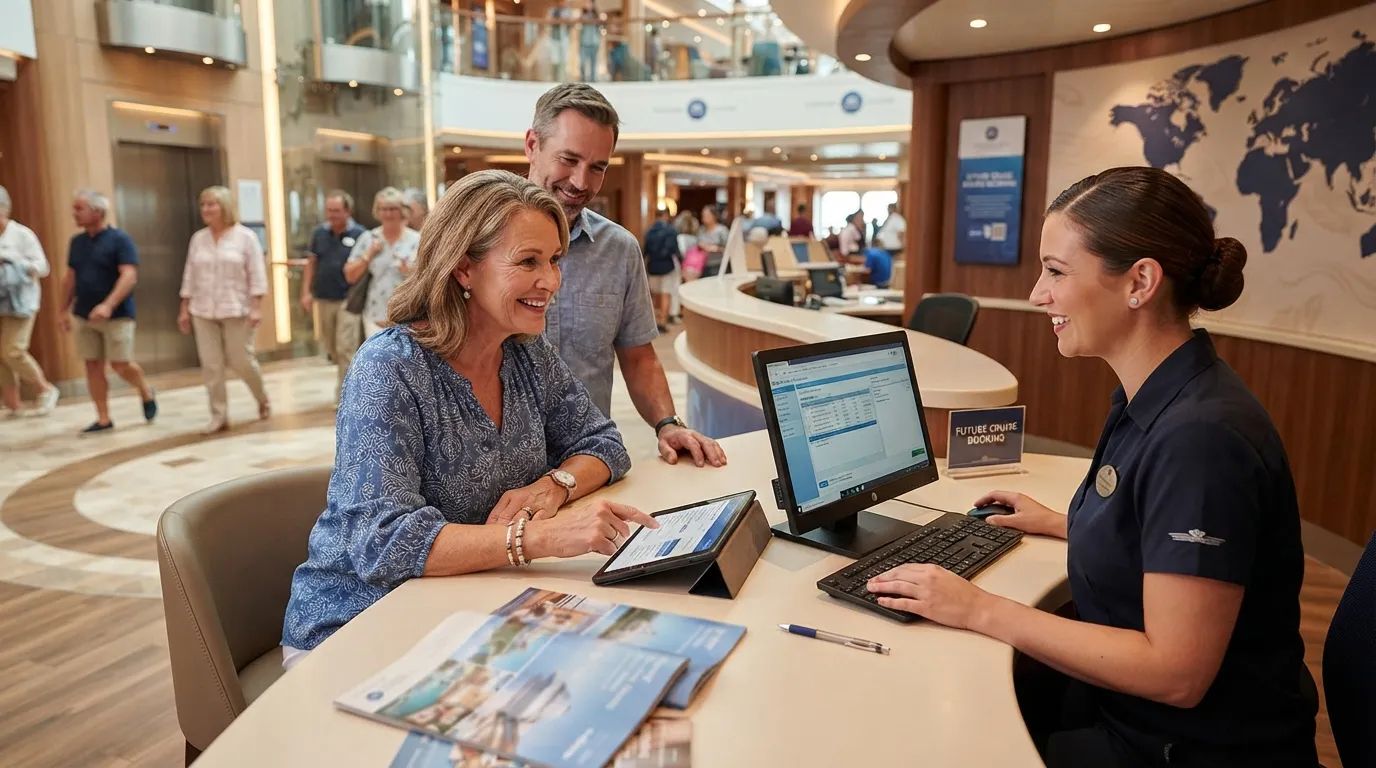
Most ships run a future-cruise sales desk onboard. Put down a deposit on your next sailing while you’re still on this one, and you can lock in discounts plus onboard credit for the future trip.
That onboard booking credit often stacks on top of whatever promotion the cruise line is already running. Experienced cruisers treat a visit to the future cruise desk as a standard stop on every voyage.
The deposit is usually small and often refundable, while the perks – extra credit, priority cabin picks, reduced fares – can be substantial. Next up: the loyalty habit that compounds over every sailing you take.
#4 – Take Your Loyalty Program Seriously

Most casual cruisers treat loyalty programs as a nice bonus. Experienced cruisers treat them as a serious financial tool.
Royal Caribbean’s Crown and Anchor Society, for example, offers perks ranging from free casino play up to a members-only lounge and a comped dinner at a specialty restaurant. Suite guests and loyalty members can also score free drink vouchers, happy hours, or events with comped drinks.
The compounding effect of loyalty status – across drinks, dining, and cabin upgrades – can easily outweigh the savings from any single tip on this list. Stick with one cruise line long enough, and the ship starts paying you back.
The next habit takes a totally different angle.
#3 – Know What’s Already Included (And Actually Use It)

Turns out, most cruisers are consistently paying for things they already covered in their base fare.
With so much happening onboard, it’s easy to lose track of what’s free and what costs extra. Before boarding, review the ship’s included dining venues, amenities, and attractions.
The most expensive habit on any cruise ship is ignoring the amenities you’ve already bought. Free dining rooms, free pools, free entertainment, free fitness centers – all abandoned in favor of paid alternatives that offer only a marginal upgrade.
Experienced cruisers squeeze full value out of every included item before spending a dollar on extras. What’s coming at #2 is one that barely anyone talks about – but it moves real money.
#2 – Use Discounted Gift Cards to Offset Onboard Spend
This trick is almost embarrassingly effective, and it’s hiding in plain sight.
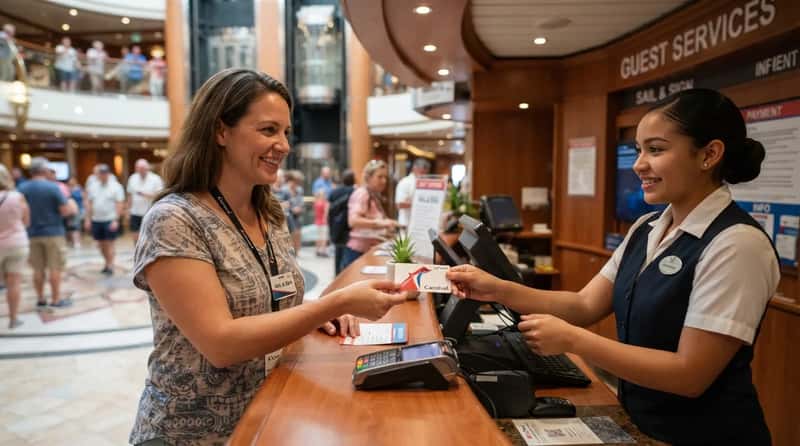
Carnival gift card holders, for example, can load their balance onto their Sail & Sign account and spend it at the spa, bars, or casino. The real move is buying those gift cards at a discount through third-party resale platforms before you sail.
That means you’re paying less than face value for spending power you were going to use anyway. Buying discounted gift cards before boarding is about as close to a guaranteed discount as cruise spending gets.
Worth Knowing
- Carnival gift cards can cover nearly everything onboard – drinks, gratuities, casino play, and even shore excursions booked in advance.
- Unused balance doesn’t just vanish. Leftover funds from a gift card deposit are typically refunded as a new gift card for a future cruise.
- That makes discounted gift cards close to risk-free: worst case, unspent value simply rolls forward instead of disappearing.
It costs zero negotiation and works on expenses you’d have paid regardless. But everything on this list leads to the single most powerful habit experienced cruisers never skip – and it’s #1.
#1 – Set a Hard Spending Budget Before the Ship Leaves Port

Every other habit on this list works better inside a defined budget. Without one, none of them matter.
Cruise ships excel at making spending feel effortless. The whole environment is cashless, and every purchase charges straight to your onboard account – there’s no psychological friction at the point of spending, ever.
Experienced cruisers write down a hard daily spending number before embarkation and treat it as a rule, not a suggestion. They check it against their onboard account every single morning.
When they hit the number, they stop. It sounds almost too simple – but it’s the one habit that ties every other habit on this list together.
The Bottom Line
Cruise lines are masters at the upsell – for some, the entire business model runs on getting you to spend more onboard than you ever imagined. The cruisers who consistently beat that system aren’t doing anything exotic.
They book Wi-Fi and excursions early, chase the first-day deals, read the daily schedule for hidden discounts, and track their onboard account like it’s a second job. Above everything else, they sail with a hard budget already set in stone.
Stack even five of these 18 habits, and your end-of-cruise bill will look dramatically different. Which of these do you already do – and which one just surprised you? Drop it in the comments.
Bonus: The Price-Drop Habit That Beats Every Tip on This List
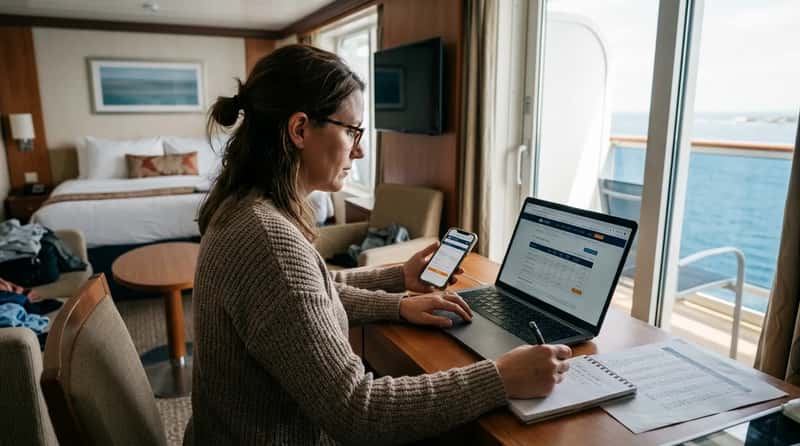
Most passengers assume their cruise fare is locked the moment they book. It isn’t – not until the final payment date arrives.
- Note your exact ship, sail date, and cabin category, then check that same booking’s price on the cruise line’s own website once a week.
- If the fare drops before final payment, call and ask for a re-fare to the new price – this keeps your existing cabin and perks instead of cancelling and starting over.
- Booked through a travel agent? Ask them to monitor and request the re-fare for you; many agents track price drops automatically.
- If the drop happens after final payment, ask whether it can be converted into onboard credit instead of a refund – several lines allow this even when a cash re-fare no longer applies.
One short phone call built on this habit can put more money back in your pocket than every embarkation-day deal, gift card discount, and loyalty perk on this list combined.