You clapped, you laughed, maybe you even teared up at the finale, and you probably assumed the whole night just happened on its own. It didn’t. Long before the lights dropped, entertainment directors and cruise directors were juggling agents, rehearsal schedules, backup performers and safety duties that passengers never notice.
Some of these arrangements are charming. A few are a little startling. One might change how you hear the cheerful voice on the loudspeaker for good, and the countdown starts with a credit that most guests hand to the wrong person.
#18 – The Cruise Director Usually Isn’t the One Who Hired the Cast
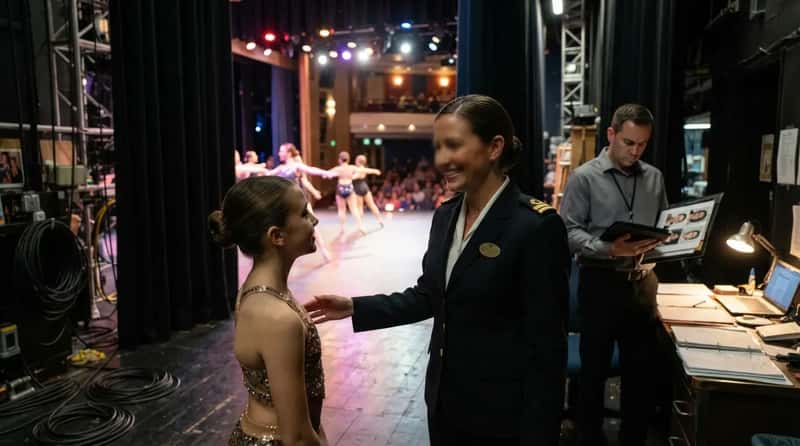
The friendly voice on the loudspeaker gets most of the credit, but not most of the casting power. Guests often assume the cruise director runs the whole entertainment department, so they praise a singer or dancer to the director’s face. One entertainer pointed out that the agents and corporate staff who evaluate performers are shoreside and never see what happens onboard.
Cruise-industry veterans say performers are hired through agencies, and different lines use different ones. So the person you thank at the buffet may have had no say in who stood on stage that night. And the people who did choose the cast weren’t done yet, because the real work started before anyone boarded.
#17 – Weeks of Paid Rehearsal Happen Before Anyone Boards
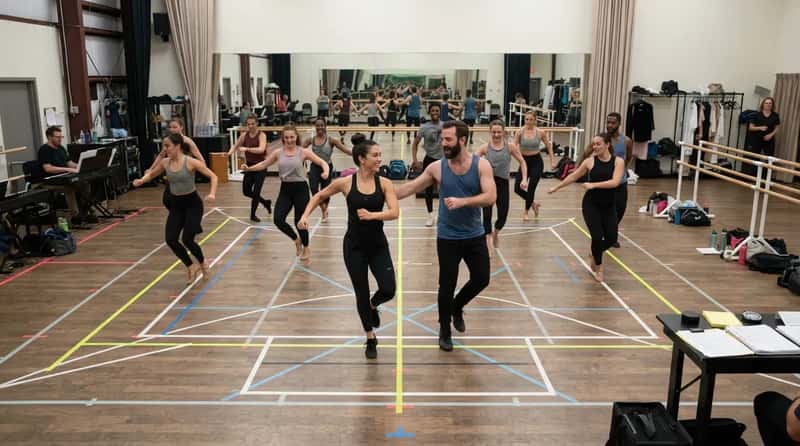
Those polished production numbers were drilled on dry land first. Backstage reports that cruise gigs include a paid rehearsal period, and many production casts rehearse in Florida even when the ship sails from somewhere else. One 2026 dancer guide puts the standard at three to six weeks of paid rehearsal before a six-to-eight-month contract.
Then comes the hard part: fitting the show onto a moving ship. Dancers describe installing the productions on board as intense, even though they may have more time off than expected afterward. The stage you admired was a taped outline on a rehearsal-room floor just weeks earlier.
#16 – Someone Is Always Secretly Ready to Step In
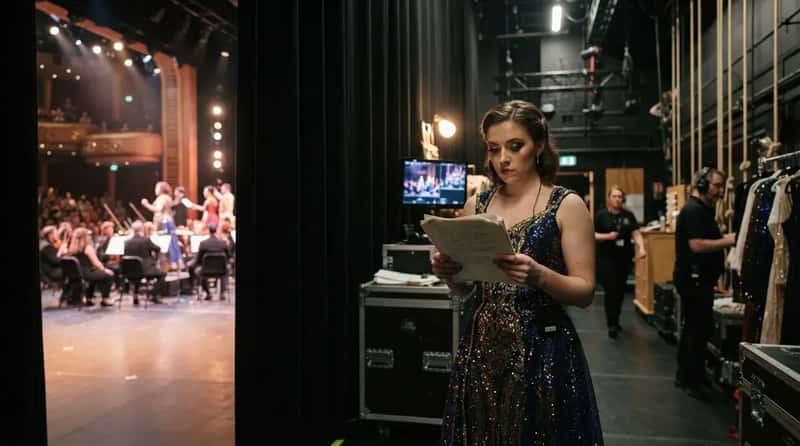
Shows rarely fall apart when a performer gets sick, and that’s by design. Backstage notes that performers get sick, injured or fired, which means near-constant tweaks to the shows. Spotlight adds that with a limited pool of singers, dancers and actors, an absence can mean another cast member has to step up.
Bigger productions build the safety net in. One performer who worked a Disney cruise described 22 main stage performers, with singers covering different principal tracks and two swings for the dancers. The “lead” you cheered for may have been covering someone else’s track entirely.
#15 – Comedy Is Picked by Itinerary, Not Just by Funny

That comedian was probably chosen for your route as much as for the jokes. Stand-up comics may be hired based on the passenger mix and itinerary, with more Australian and New Zealand comics in the Pacific and more U.S. and Canadian comics on ships catering to North Americans. It’s a booking decision you’d never notice.
Some people call cruise comedy watered down, but the reason is practical. Jokes about politics are typically off-limits at sea, and so are cheesy cruise ship jokes. When thousands of strangers share one room and one ship all week, a divisive bit can follow the comic around until the last night.
Quick Compare
- Pacific sailings: more Australian and New Zealand comics
- Ships catering to North Americans: more U.S. and Canadian comics
- Off-limits material: politics and cheesy cruise ship jokes
#14 – Headliners Often Fly In for a Day, Then Vanish
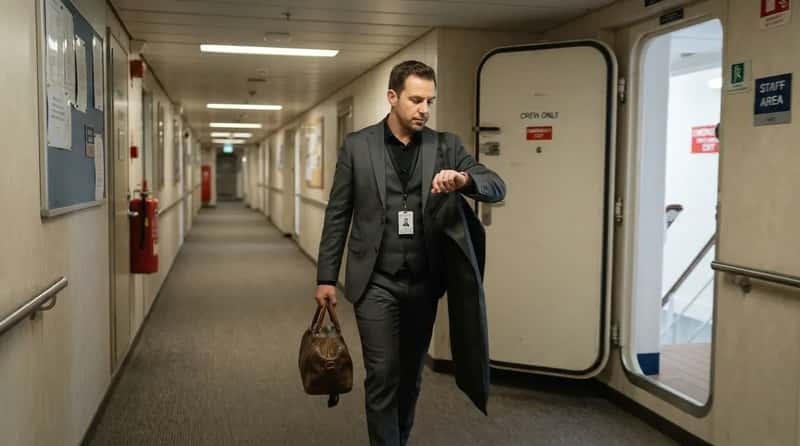
The act you caught Tuesday night may have been gone by Wednesday. Fly-in acts are commonly called guest entertainers, and they may fly in to perform for a day or so before heading to the next gig. That timing is arranged well ahead of sailing.
Don’t expect a household name, either. On most ships you won’t find big-name entertainers, though that doesn’t mean the acts are bad. The “headliner” label is often a booking category, not a celebrity promise.
#13 – The “Men in Black” Who Run Every Show From the Shadows
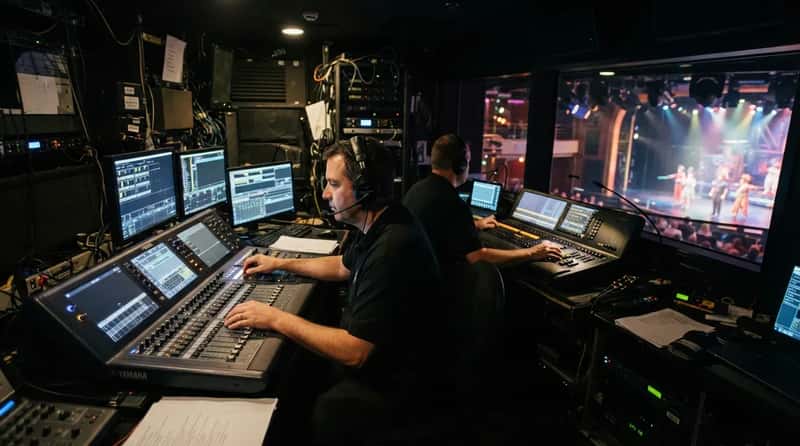
Without one invisible team, none of your evening entertainment would exist. Marella Cruises director Scott Sanders calls his technical crew his “Men in Black,” and says they look after all of the lighting and sound. He says that without them there would be no production shows, game shows or quizzes.
Guests rarely see them because they work out of sight. Sanders notes that these people are tucked behind the scenes, yet in his words they run the whole ship. The loudest ovation in the theater almost never reaches the people who earned a big share of it.
#12 – The Mic Holder Is Actually a Ship’s Officer
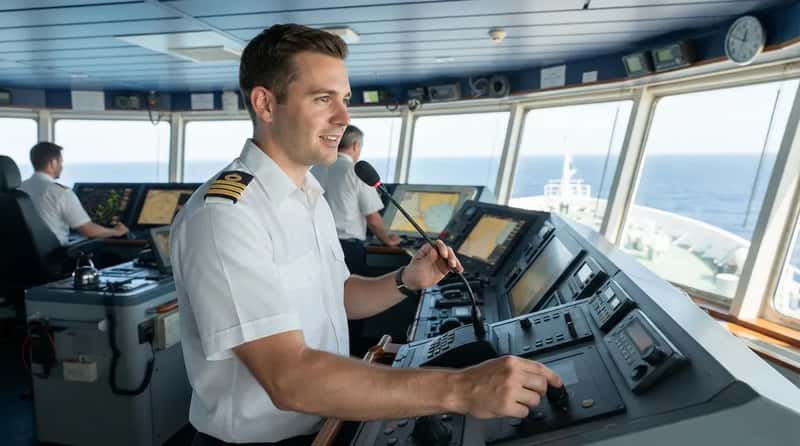
The person emceeing trivia may also help manage a crisis. Royal Caribbean’s Marc Walker says he’s a 3.5-stripe officer responsible for guest flow, crowd management, and fire and safety, and that he works with revenue, housekeeping, food and beverage, marine and guest services teams. That’s a long way from just hosting bingo.
Even the announcements come from a surprising place. At Marella, the cruise director makes PA announcements from the Captain’s Bridge, an area not open to guests unless they request a tour. That cheerful morning update can come from the same room that steers the ship.
At a Glance
- Rank: a 3.5-stripe officer on Royal Caribbean, per Marc Walker
- Safety role: guest flow, crowd management, fire and safety
- Teams involved: revenue, housekeeping, food and beverage, marine and guest services
- Broadcast spot: the Captain’s Bridge, at least on Marella
#11 – Dancers Secretly Moonlight as Ship Staff

That dancer in the finale may be leading your Zumba class the next morning. Spotlight says performers may be expected to take on other duties, including cleaning the theatre after shows, leading dance workshops or running exercise classes. It varies by contract, but it’s more common than most guests expect.
The details depend on the line. Spotlight stresses that these add-ons vary, so performers need to read every detail of their contract. A glamorous stage job can come with a surprisingly practical to-do list.
#10 – Every Performer Is Also Trained as Emergency Crew
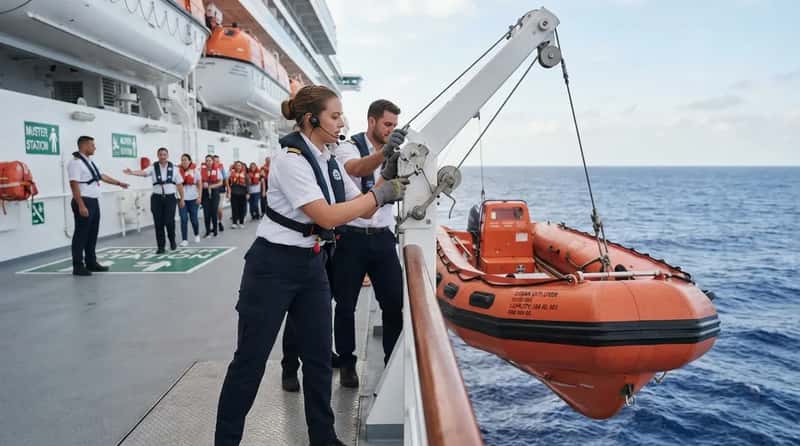
Behind the spotlight, the cast has safety jobs. One former performer explained that all performers are considered crew members, and in an emergency any crew member has duties to help get guests off the ship. The performers took part in periodic safety drills.
The training is real, not a formality. Spotlight says all staff, including performers, complete basic safety training such as lifeboat training, first aid and fire hydrant knowledge. The person doing high kicks in the finale may also know the ship’s emergency routines by heart.
#9 – That “Band” Is Often a Group of Players Who Just Met
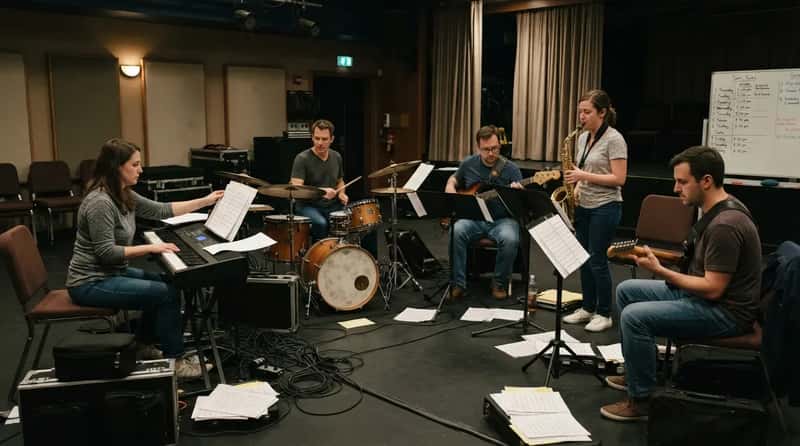
Many passengers picture a group that has played together for years. Often it isn’t. Cruise forum regulars say the bands you see are often hired individually, so members come and go and have to be very versatile to pick up the arrangements.
Show bands work differently again. On lines that still have them, they are contracted musicians working under the ship’s music director, who is also a member of the band. That tight, polished sound is often built from players who met each other recently.
#8 – Language Barriers Quietly Shape the Lineup
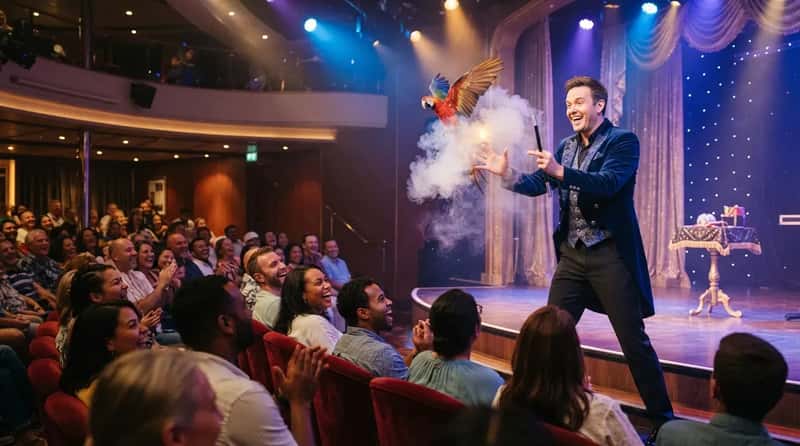
When the crowd speaks many languages, a wordy act can sink. With an international audience, cruise lines may go more for visual acts, such as comedy magicians. That’s a scheduling decision driven by who is actually on board.
It explains why some sailings feel more like a circus and others like a comedy club. The act you rolled your eyes at may have been the only one everyone in the room could follow.
#7 – One Rule Can Get an Entertainer Fired on the Spot
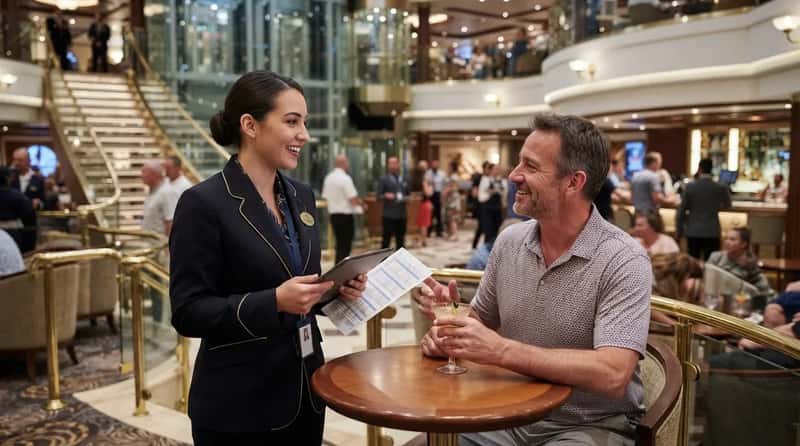
The line between crew and guests is guarded closely. Spotlight says performers must never invite a guest into their cabin or enter a paying passenger’s cabin, and that either can be treated as a breach of trust that leads to instant dismissal.
The rule is part of why the friendly staff chat stays on public decks. Carnival cruise director Matt Mitcham once called the staff-passenger dating rule very strict. Behind every friendly wave is a rulebook that most guests never see.
#6 – Some Ships Have Two Directors, and Guests Mix Them Up
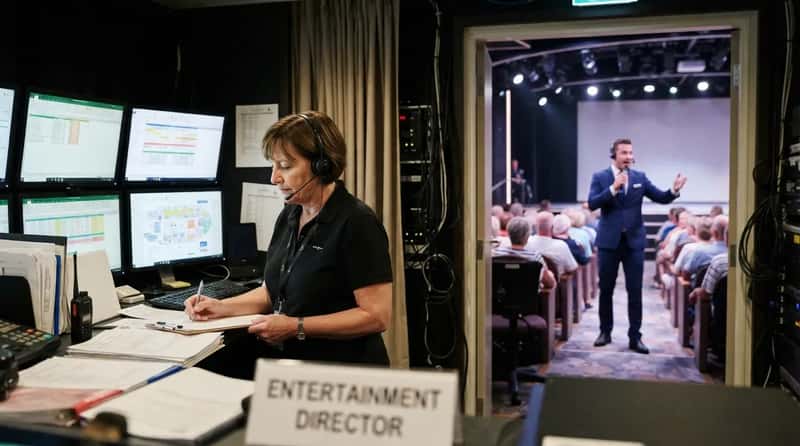
Not every ship runs entertainment the same way. Cruise Critic posters note that some lines have a dedicated entertainment director who handles the details passengers mostly don’t see. One poster said the position was added to take over administrative and behind-the-scenes duties so the cruise director can focus on guests.
The hierarchy can surprise people. Another poster said that on some lines the entertainment director is subordinate to the cruise director. Those are forum accounts, not an official rule, and the setup clearly differs from line to line. So the person you assume is in charge may share the job with someone you’ve never met.
#5 – Plan B (and C) Is Always Sitting in a Drawer
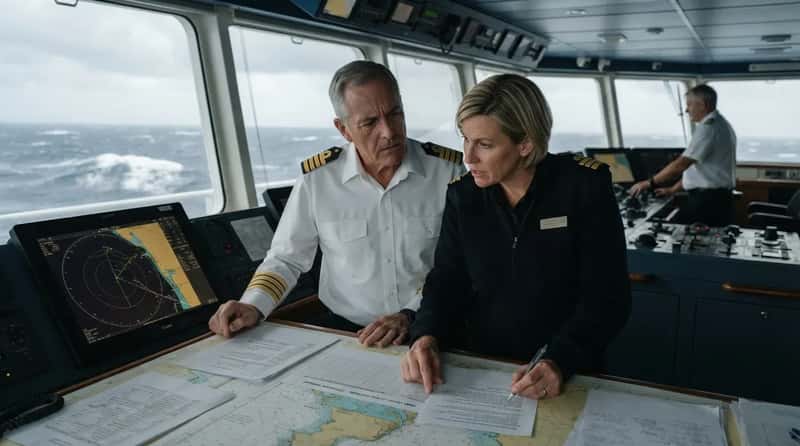
A missed port can wreck a day unless someone has already planned for it. Cruise director Heather Clancy describes helping come up with alternative ideas for guests when weather forces a ship to skip a port, and standing next to the captain to break the news.
She says the contingency planning runs deep. In her words, there is a curveball almost every day and always a Plan B and C. That smooth sea day you enjoyed may have been rewritten at the last minute.
#4 – The Contract Rules Nobody Mentions at the Show
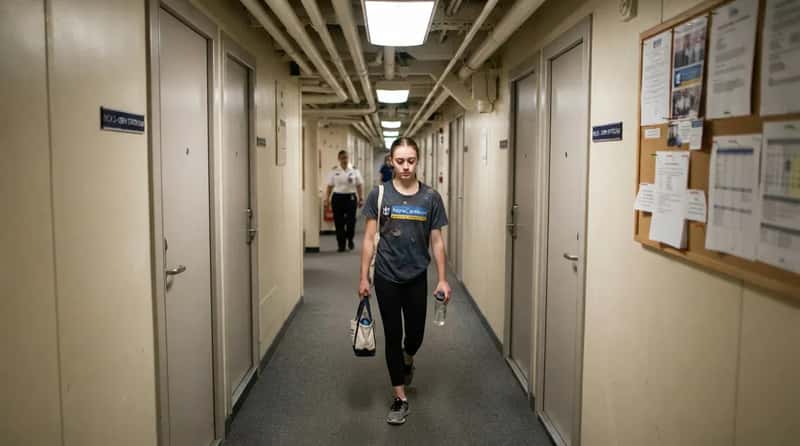
The cast doesn’t clock out and go home. Backstage says production cast contracts usually run four to seven months, and performers sleep on the ship every night. Non-emergency leave has to be arranged well in advance.
Leaving early is rare. A Royal Caribbean rehearsal director said dancers normally leave a contract only because of illness or injury. One dancer guide says the maximum stretch onboard without a break is 10 months. That’s a long time to smile on cue.
Fast Facts
- Typical production contract: four to seven months
- Where performers sleep: on the ship, every night
- Time off: non-emergency leave must be set up well in advance
- Longest stretch without a break: 10 months, per one dancer guide
#3 – Passengers Are Quietly Grading Every Act
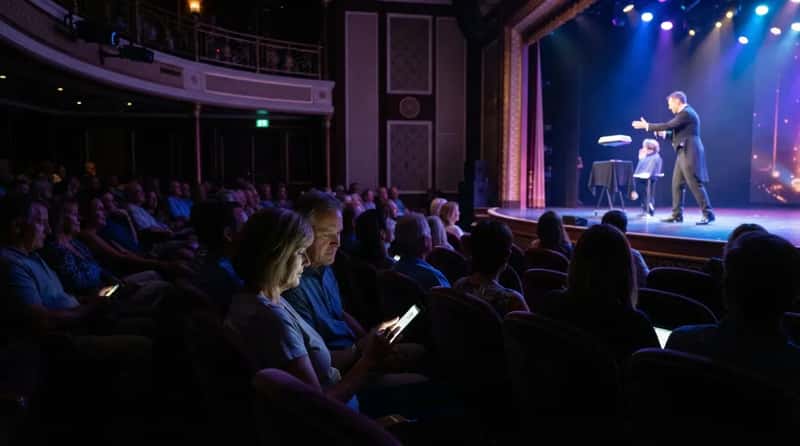
The audience isn’t just clapping. It’s rating. A magician-advice blog points out that passengers score cruise experiences from entertainment to food, so lines demand a certain standard. The same post adds that good cruise gigs are very tough to get and very tough to hold onto.
The bar for acts is high before they even board. Most ships want two polished, fully scripted 45-minute acts, with lighting, music and amplification mapped out. That’s why a “random” magician can feel more rehearsed than a theater production.
#2 – Some Passengers Book a Cruise Just for One Performer
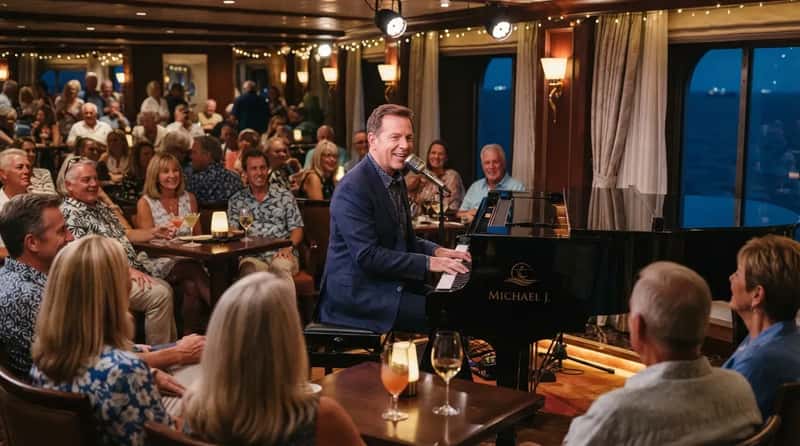
A single entertainer can fill cabins. Cruise forum posters say piano bar players on some lines often have a long history with the cruise line and work through their agents. One poster said there are actually passengers who book cruises because a specific entertainer is working the ship.
That kind of loyalty is a quiet advantage for entertainment teams. A familiar face can matter more to some guests than the itinerary itself. It also explains why some acts return again and again to the same lines.
#1 – The Goodbye That Resets Before Breakfast Ends
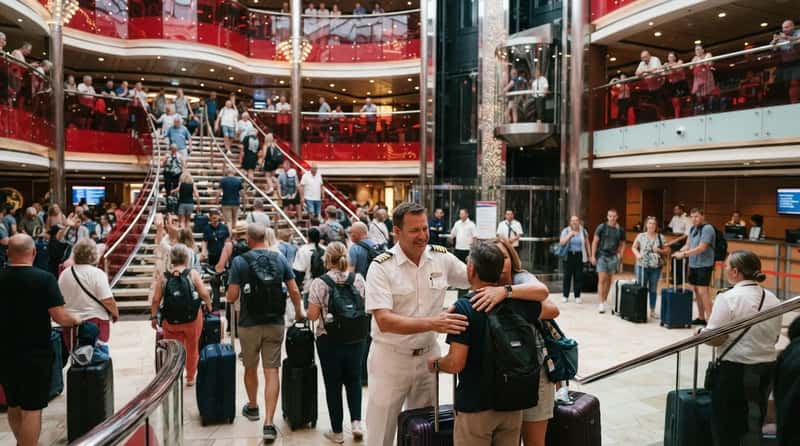
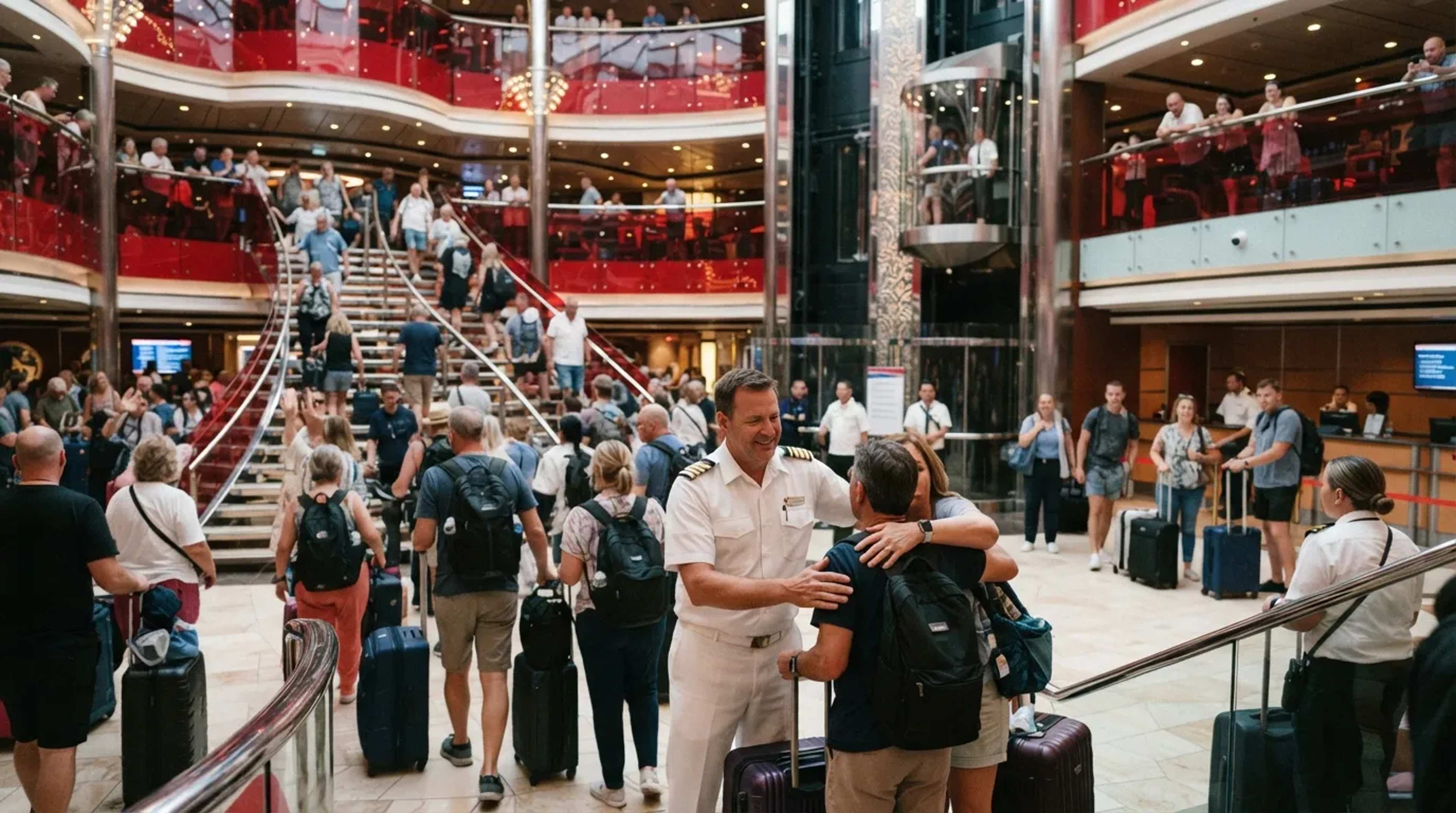
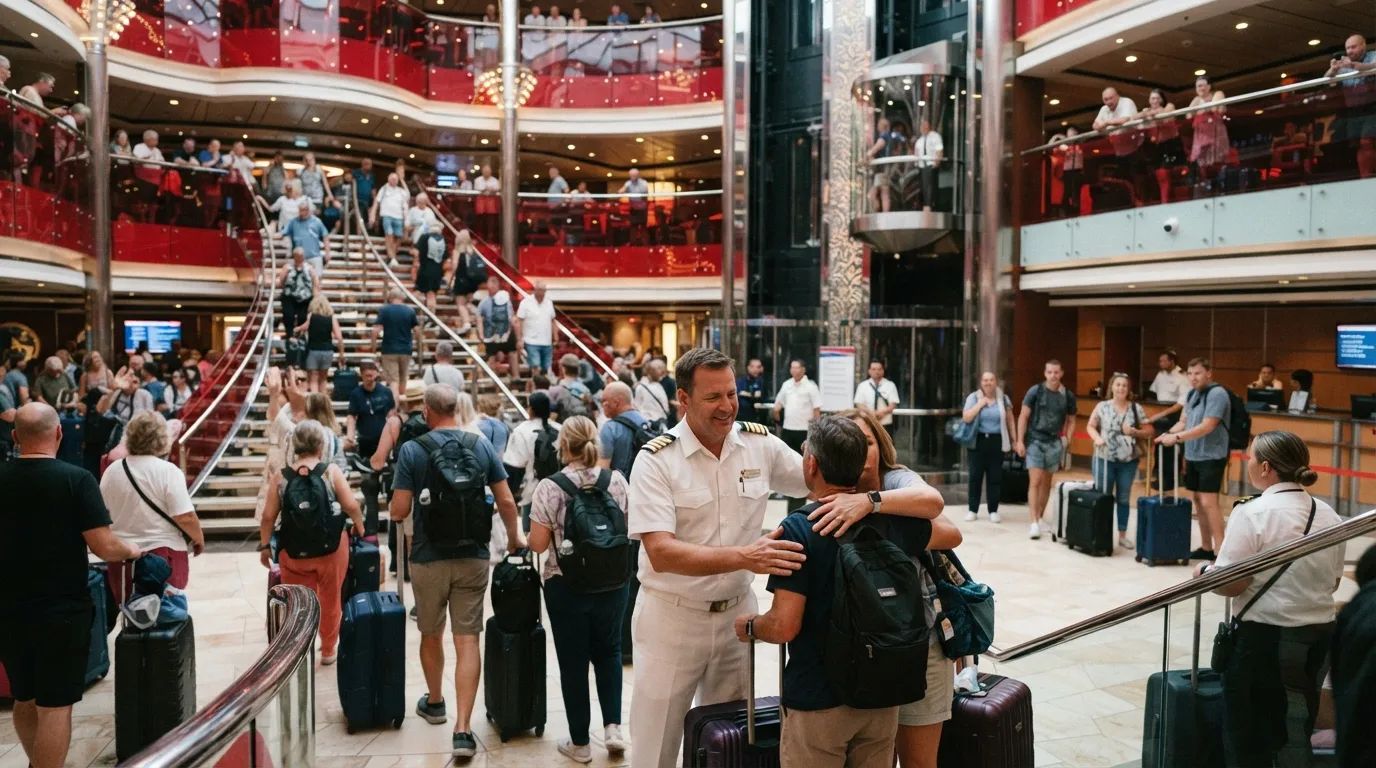
The most emotional moment of a cruise director’s week happens off stage. Carnival’s Matt Mitcham described waking at dawn to say goodbye to roughly 5,000 guests who had made him part of the family, then facing embarkation an hour later when nobody knows who he is. He called it an emotional roller coaster.
That fits how others describe the job’s real purpose. Clancy says the most important work happens behind the scenes, coordinating everyone aboard. The warm hug on departure day is followed, within the hour, by starting over with strangers.
Cruise entertainment looks effortless because so much of it is hidden. The cast was often chosen shoreside, rehearsed on land and trained as emergency crew, while the technical team stays almost invisible. Sources agree the details vary by cruise line, so not every ship works the same way.
Next time the lights drop and the show starts right on cue, remember that someone already solved a handful of problems you’ll never hear about. That’s the whole trick, and it’s why the night felt so easy.