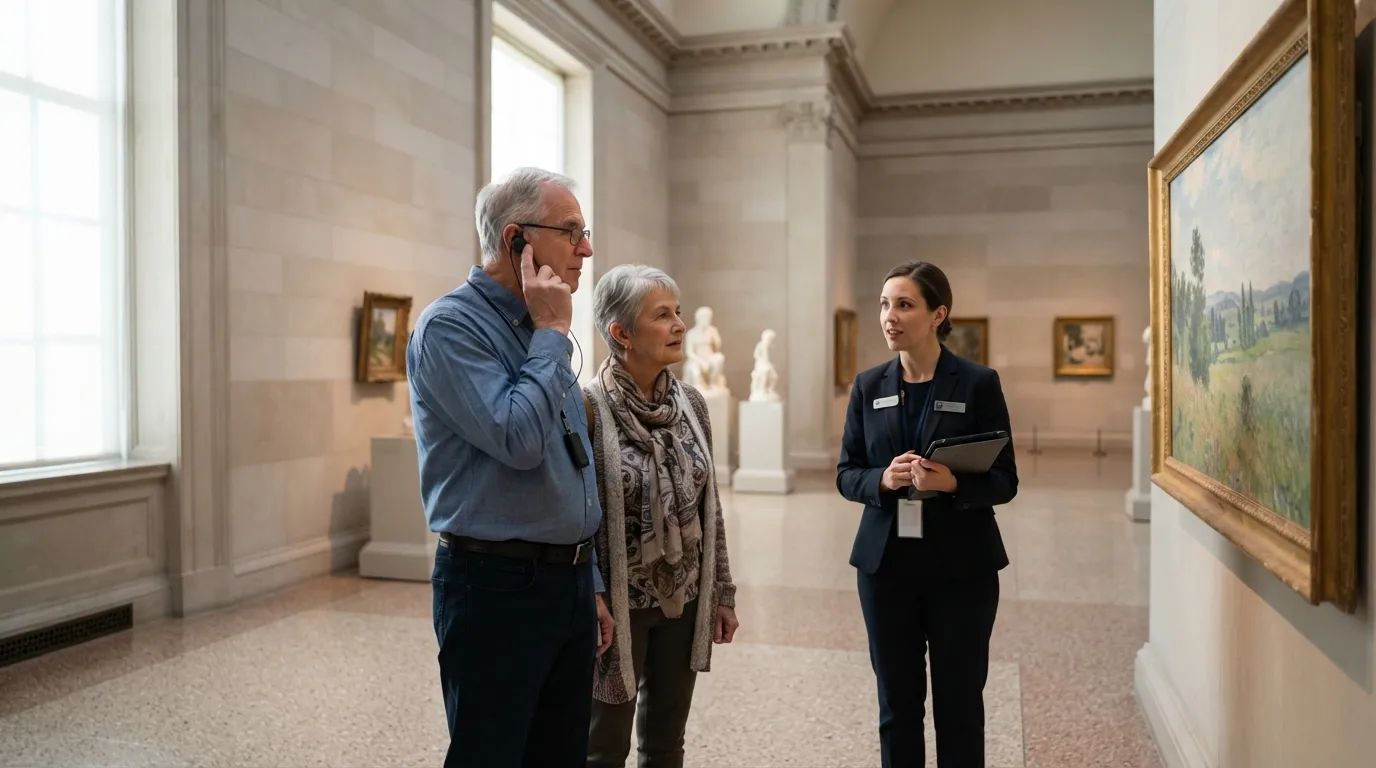
Most people assume museums just open their doors and let visitors figure it out. Behind the scenes – especially during the chaos of peak summer and holiday season – staff are quietly running a playbook of arrangements built specifically for visitors over 60.
Here’s the twist: even though people assume older adults are the most frequent museum-goers, most actually skip museums altogether in any given year. That gap isn’t about interest – it’s about information nobody bothers to share.
Most visitors over 60 never learn what’s already been arranged just for them. Museums rarely advertise it out loud, and here’s what the insiders actually know.
#18 – Reserved Wheelchair and Mobility Aid Loans
Staff don’t wait for you to ask. They stock the entrance before the doors even open.
Free manual wheelchair loans are available at all Smithsonian museums and the zoo, offered first-come, first-served. During busy season, demand spikes hard, and many institutions quietly stock extra mobility aids to keep up.
Plenty of museums go further, offering benches for resting and even magnifying glasses so older guests can see fine details in artwork.
Fast Facts
- Wheelchair loans are first-come, first-served – no reservation accepted
- Extra benches often appear near popular exhibits during peak weeks
- Magnifying glasses are usually available at the information desk
- Arriving at opening is the single best way to secure a mobility aid
The catch most visitors miss: it’s first-come, first-served. Arriving at opening – not mid-morning – is the difference between getting a wheelchair and going without.
But that’s nothing compared to what staff arrange about crowd timing. See #17.
#17 – Strategic Crowd-Timing Guidance at the Information Desk
This one hides in plain sight, and almost nobody uses it.
The first 90 minutes after opening are consistently the quietest stretch of the day. Security lines are short, galleries have breathing room, and the busiest exhibits are actually accessible.
Front-desk staff will tell you exactly when the crowds hit – and when they thin out – if you simply ask. Calling ahead before a busy-season visit is one of the most underused tools older visitors have.
But timing is only half the picture. #16 is where it gets strategic.
#16 – Slow Art Tours Paced for Older Adults
Forget the standard 45-minute sprint through 200 exhibits.
Some museums run “Slow Art” tours built specifically for older adults, encouraging quiet observation of just a handful of works instead of a rushed march through every gallery. It’s a completely different pace, and a completely different experience.
This isn’t a watered-down version of a tour. It’s often more intellectually rewarding, with small groups and guides who tailor the stories to what older visitors actually connect with.
The dirty secret: these tours often sell out first during peak season. Book online before you arrive, not after.
What happens when you can’t get a dedicated tour? See #15.
#15 – Large-Print and Tactile Exhibition Guides
Most visitors walk straight past the accessibility desk without stopping.
Large-print guides are available at all Smithsonian museums in the Washington area, downloadable ahead of time or picked up on arrival. The high-contrast labeling helps everyone, not just older visitors.
During busy season, these guides run low fast, sometimes gone by early afternoon. Staff can often reserve a copy if you call ahead, a fact almost nobody advertises.
The next arrangement surprises almost everyone, and it involves your ears, not your eyes. See #14.
#14 – Hearing Loop Systems at Key Exhibit Points
Hearing loops for hearing aid users are becoming more common in museums, and they change everything for visitors with hearing loss.
These systems, also called audio induction loops, transmit sound directly into compatible hearing aids and cut out crowd noise entirely. During busy season, gallery noise can climb high enough to make standard audio guides nearly useless.
A hearing loop bypasses the crowd noise completely. It’s one of the most transformative tools in the building, and almost nobody asks for it.
Staff are trained to offer it, but only if it comes up. Ask directly: “Do you have a hearing loop at this exhibit?”
Wait until you read what some museums do with sound and light specifically for older guests. That’s #13.
#13 – Dedicated Quiet Hours with Reduced Sensory Stimulation
This is one of the fastest-growing initiatives in museums right now, and most visitors don’t even know it exists.
Brooklands Museum in the UK runs “Quiet Hours” during school holidays, dimming audio-visual effects and capping visitor numbers. The National Museum of Singapore built a calm space for seniors, with adjustable lighting and sensory tools caregivers can control.
Ironically, busy season is when these sessions matter most, and they’re the most underbooked. Visitors who know about quiet hours are having a completely different experience from everyone else in the building.
Check the museum’s calendar before you go. These slots rarely make it onto the main booking page.
But quiet hours are just one piece of the sensory puzzle. What staff arrange for physical navigation in #12 goes even further.
#12 – Pre-Mapped Accessible Routes Avoiding Crowd Bottlenecks
During peak season, bottlenecks form in the same spots every single day, and experienced staff know exactly where they are.
Well-designed museums build wide, unobstructed pathways for mobility aids even in their busiest halls. But the real insider move is asking a staff member at the entrance for the low-traffic route through the building.
Many institutions keep informal maps for staff use that never reach the public. The difference between the standard route and the accessible route can mean avoiding most of the crowd crush entirely.
That’s not even the best navigation trick. #11 is where staff really flex their knowledge.
#11 – Prioritized Elevator Access During Peak Hours
Here’s something most tourists never figure out on their own.
During peak season, elevator queues at large museums can stretch past 10 minutes, exhausting for anyone standing that long. Many museums quietly run a staff-assisted elevator protocol for visitors who need it.
Tell a front-desk staffer or floor attendant the queue is too long, and many institutions will arrange priority access, especially for mobility aid users. It’s rarely posted anywhere – you have to ask.
The next item saves both time and money, and it starts before you even walk through the door. See #10.
#10 – Senior-Specific Ticketing Discounts Not Shown Online
Turns out, the museum website isn’t always telling you the full pricing story.
The American Museum of Natural History, for example, offers a lower admission rate for visitors 60 and over than the standard adult price. Other institutions go further, revealing deeper discounts, or free entry, only at the physical ticket desk or over the phone.
The Detroit Institute of Arts offers free senior visits for adults 55 and older, including free bus transportation for groups of 25 or more. During busy season, calling ahead about senior pricing can unlock prime early time slots at a fraction of general cost.
Quick Compare
- American Museum of Natural History: senior tickets run several dollars below the standard adult rate
- Detroit Institute of Arts: free entry for visitors 55+, with free bus transportation for groups of 25 or more
- Rubin Museum of Art: free admission for older adults on set days each month
There’s an even more targeted financial perk waiting at #9, one tied to specific days of the month, not just age.
#9 – Monthly Free Admission Days Arranged for Older Adults
This is the arrangement that flies completely under the radar during busy season.
The Rubin Museum of Art offers free admission for older adults on a monthly basis. Some museums also open free entry on the first Sunday of each month, with senior visitors getting access alongside or ahead of the general public.
These free days rarely sit on the homepage – they’re buried in the accessibility or programs section. The counterintuitive truth: free days during busy season are often less crowded at opening, because savvy older visitors arrive early while everyone else shows up late.
But what staff arrange for repeat visitors over 60 is even more layered. See #8.
#8 – Tailored Audio Guide Programs with Slower Narration Tracks
Standard audio guides are built for the “average” visitor’s pace, which is nobody’s actual pace.
Many galleries offer a range of audio options – family guides, standard tours, guided talks. What most visitors don’t realize is that some institutions run a separate, slower-paced narration track built for people who want more time at each stop.
These tracks exist, but you have to ask for them specifically at the audio desk. They’re often labeled generically – “accessibility guide” or “extended tour” – instead of being marketed directly to seniors.
Ask the desk plainly: “Do you have a slower-paced or extended audio guide?”
What staff arrange around physical comfort mid-visit at #7 is something most visitors genuinely don’t expect.
#7 – Rest Seating Positioned Inside the Galleries, Not Just the Lobby
This goes well beyond a bench by the front door.
Institutions like the National Gallery of Art position wheelchairs at entrances and place seating so guests can rest without having to leave the exhibit. During busy season, well-run museums add extra chairs inside galleries and near high-traffic exhibits specifically for older visitors.
The insider trick: a floor attendant can point you to the nearest rest seat inside the gallery, rather than sending you back to the main lobby. Ask any floor staff member – they know exactly where every seat is.
#6 deals with something most visitors over 60 assume they have to manage alone. They don’t.
#6 – Voluntary Guide Escorts Through Busy Sections
Most people think personal escorts at museums are reserved for VIPs or visitors with severe disabilities. They’re not.
Front-of-house staff receive regular training on welcoming visitors with disabilities, and part of that training includes walking an older visitor personally through the busiest sections during peak periods. It’s rarely offered unprompted.
During busy season, this one option can turn an overwhelming Saturday afternoon into a calm, focused visit. Walk up to any uniformed staff member and ask: “Is there someone who can walk me through the main exhibit?”
The answer is usually yes. What museum staff arrange around sensory comfort in #5 is the item that surprises most people.
#5 – Touch Tours for Visitors with Low Vision
This is where many museums are genuinely ahead of what the public realizes.
The Penn Museum has developed Touch Tours for people with blindness or low vision, training sighted staff in tactile and verbal description methods. These aren’t only for visitors who are fully blind – anyone who struggles with dim lighting or small labels can benefit.
Tactile and verbal-description tours can usually be arranged with two weeks’ advance notice. Two weeks is the number that matters – book as early as possible during busy season, or the slots disappear.
Worth Knowing
- Touch Tours: request at least two weeks ahead of your visit
- Slow Art tours: often sell out first during busy season – book online
- Quiet Hours: check the museum’s calendar page, not the main booking page
- Large-print guides: call ahead if you’re arriving after early afternoon
The next arrangement has been formally studied and documented, and it involves museums correcting something they got wrong for decades. See #4.
#4 – Dementia-Friendly Programs and Memory Art Sessions
This is one of the most significant – and least discussed – shifts in museum accessibility.
The High Museum of Art’s “Musing Together” is a monthly program for people with early-stage Alzheimer’s or other dementia and their care partners. Staff guide a 90-minute conversation around three or four artworks, giving participants space to share and connect.
The Penn Museum built a similar program with the Penn Memory Center. These aren’t fringe offerings – they reflect a real shift in how museums think about older adults.
Sessions are usually scheduled early in the day, when the museum is quietest. #3 is the hidden arrangement most visitors over 60 discover only after a frustrating visit – don’t wait that long.
#3 – Staff-Facilitated Advance Visit Planning Calls
Here’s what insiders know and almost nobody else does.
The Natural History Museum of Los Angeles County’s accessibility page lists wheelchair and sensory-kit loans, accessible restrooms, and language resources – but these pieces only come together when you call ahead of your visit. Many large museums keep a dedicated accessibility coordinator or visitor line just for this.
A pre-visit call can unlock arrangements that simply aren’t possible on the day – reserved mobility aids, specific tour slots, pre-positioned seating, quieter entry windows. Most people skip this step entirely.
The second-most powerful arrangement on this list happens outside normal opening hours. See #2.
#2 – Member Early-Entry Access to Beat Peak Crowds
The gap between a member’s experience during busy season and a standard visitor’s experience is enormous, and almost nobody over 60 realizes how affordable membership actually is.
Museum members often get the most popular galleries almost entirely to themselves, turning a packed attraction into a personal sanctuary. Many memberships also include express lines that skip general admission queues.
For a visitor over 60 who plans two or more visits a year, membership often pays for itself on the first trip through combined discounts and time saved. During peak season, early entry is the single most effective crowd-avoidance tool available.
At a Glance
- Members often bypass general admission lines entirely
- Popular galleries feel noticeably calmer during member entry hours
- Frequent visitors typically recoup membership cost within one or two trips
The #1 arrangement on this list is the one museums have built specifically around older visitors’ wellbeing, and it’s quietly changing how seniors experience culture.
#1 – Proactive Staff Wellbeing Check-Ins During Extended Visits
This is the arrangement that separates truly visitor-centered museums from the ones that just have ramps.
Traditional museum design is quietly age-hostile – too little seating, too much sensory overload, too many physical barriers. The best institutions train floor staff to notice when someone’s been standing too long, looks fatigued, or seems disoriented in a crowd, without waiting to be asked.
During peak season, this proactive check-in is what turns a difficult visit into a genuinely memorable one. It costs the museum nothing extra – it just requires attentive, trained staff.
The question is whether you’re visiting one of them.
The Bottom Line
Museums are doing far more for visitors over 60 during busy season than most people realize – quiet hours, Slow Art tours, hidden senior pricing, proactive staff check-ins. The critical mistake most older visitors make is assuming they have to navigate peak-season chaos the same way everyone else does.
They don’t. Advance planning calls, mobility aid reservations, member early entry, hearing loops, dementia-friendly sessions – the tools already exist, and most of them go unused.
The museum experience for visitors over 60 is either excellent or exhausting. The difference almost always comes down to knowing exactly what to ask for – and asking before the doors even open.
Bonus: The Insider Phone Script That Unlocks Every Perk at Once
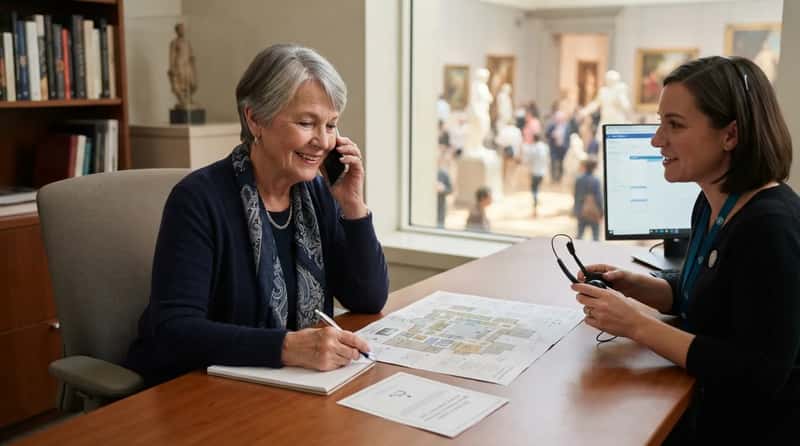
Most of the arrangements above get handed out one at a time, only to visitors who happen to ask the right staff member on the right day. There’s a faster way: a single pre-visit phone call that bundles nearly everything into one confirmed plan before you ever leave the house.
Call the museum’s accessibility coordinator or main visitor line 2-3 days before your visit – not the day of, when lines are busiest and staff have less time to coordinate. Ask for the accessibility or guest services line specifically, not general ticketing.
- Say exactly this: “I’m visiting on [date] and I’m over 60 – can you note a wheelchair reservation, a rest-seating map, and any slower-paced tour or audio option available that day?”
- Ask directly whether a hearing loop, Touch Tour, or dementia-friendly session is running that week, since these are rarely listed on the main calendar.
- Request the low-traffic route staff use internally, plus the exact senior admission price – phone staff will often quote a lower rate than the website shows.
- Get a name and confirmation note if possible, so any staff member on arrival can pull it up immediately instead of starting from scratch.
One call turns six or seven separate insider perks into a single confirmed plan waiting for you at the door. It costs nothing, takes about five minutes, and almost no visitor over 60 has ever tried it.