Most people assume travel food only got interesting once Instagram made everyone document their meals. But before 1980, vacationing Americans were casually eating things that would look downright bizarre on a modern plate – flaming desserts served mid-flight, ice cream churned with extra butterfat at a highway pit stop, lobster served in coach on a domestic flight. The food wasn’t always gourmet. It was unforgettable, and half of it doesn’t exist anymore.
Some of these dishes disappeared because the airlines and restaurant chains that served them went bankrupt. Others just quietly vanished when tastes moved on, and nobody noticed until decades later, standing in a grocery aisle, wondering why nothing tastes like it used to. Here’s what actually filled travelers’ plates back then, one memory at a time.
#19 – The Motel Danish and a Cup of Instant Coffee
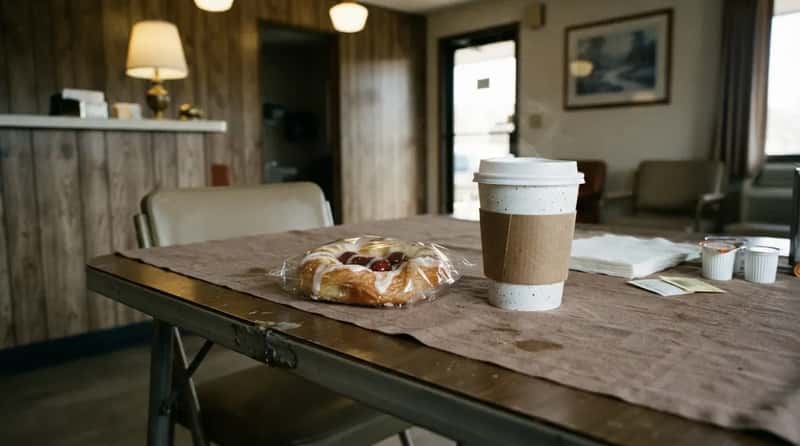
Before hotel breakfast bars existed, “continental breakfast” usually meant a single cellophane-wrapped Danish and a paper cup of instant coffee sitting on a card table in the lobby. It wasn’t fancy, but it was free, and free was the whole point for families stretching a road trip budget across a dozen motel stops.
Orange juice came from a powdered mix more often than a carton. Sugar packets and powdered creamer rounded out the spread. It was the kind of breakfast nobody remembers loving, but everybody remembers eating.
#18 – Canned Ravioli Heated on a Motel Hot Plate
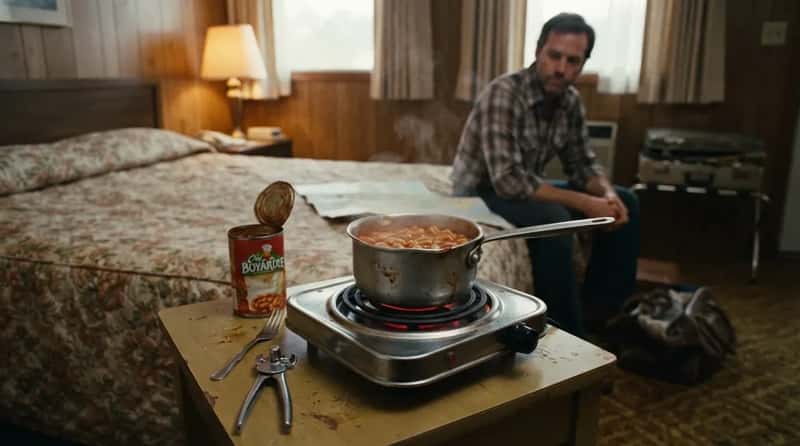
Long before drive-thru windows lined every highway exit, road-tripping families packed a cooler and a can opener instead. Chef Boyardee ravioli, Spam, and canned stew were vacation staples because they didn’t need refrigeration and could be heated on a portable stove at a rest stop or motel room burner.
It wasn’t glamorous, but it was practical. Parents saved real restaurant money for one big meal a day, and the canned dinner filled the gap without a single dish to wash.
#17 – Kool-Aid and Tang From a Thermos
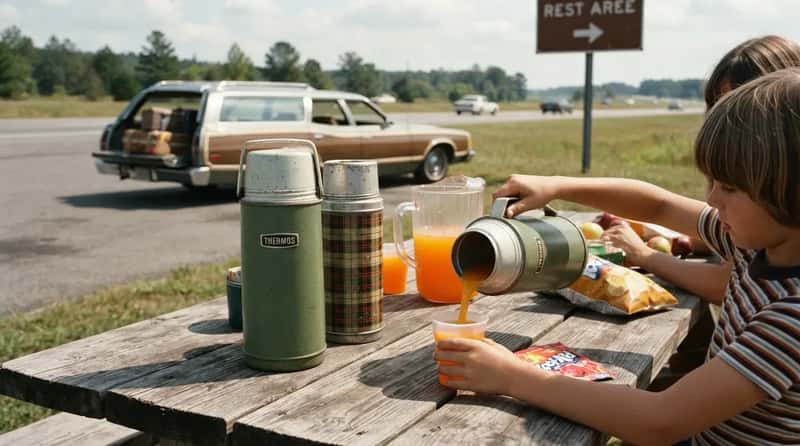
Powdered drink mixes were the fuel of the American road trip. Tang rode the coattails of the Space Age, marketed as the same drink astronauts supposedly sipped in orbit, and families packed it right alongside sunscreen and maps.
Kool-Aid worked the same way, mixed in a big thermos jug and rationed out at rest stops. It was cheap, it traveled well, and it turned tap water at a roadside picnic table into something that felt like a treat.
#16 – A TV Dinner in the Motel Room
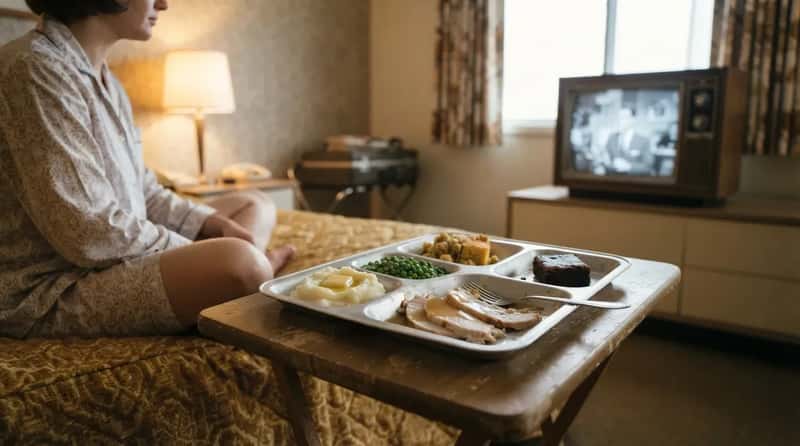
When a family didn’t want to dress up and drive to a restaurant after a long day of sightseeing, the frozen TV dinner solved the problem. Motels with kitchenettes became popular in the 1960s and ’70s partly because travelers wanted the option to skip a sit-down meal entirely.
The segmented aluminum tray with turkey, mashed potatoes, and a brownie square wasn’t restaurant food, but it let exhausted vacationers eat in front of the television without changing out of their pajamas.
Fast Facts
- Swanson’s original TV dinner hit grocery shelves on September 10, 1953, priced at just 98 cents.
- The debut tray consisted of a Thanksgiving-style meal of turkey, cornbread dressing, peas, and sweet potatoes.
- Swanson’s first year sales exceeded 10 million units, then jumped to 25 million the next year.
#15 – Jell-O Salad at the Roadside Diner
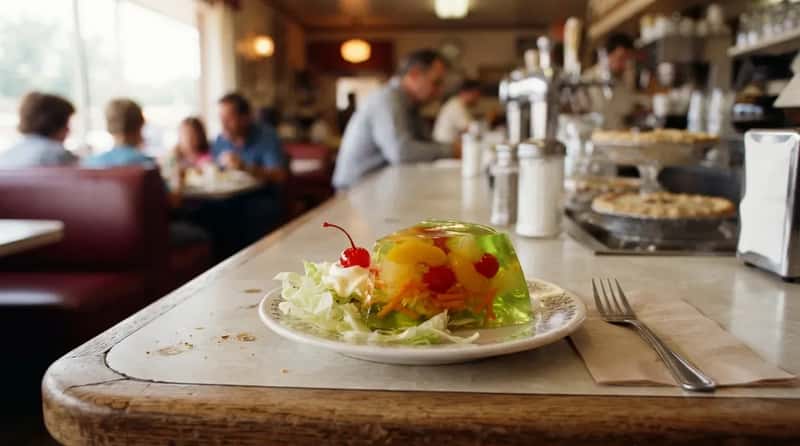
Wobbly, colorful, and suspended with fruit or shredded carrots, Jell-O salad showed up on diner counters and hotel buffet tables across the country. It was considered a genuinely sophisticated side dish, not a novelty.
Molded Jell-O required a refrigerator, which made it a point of pride for roadside restaurants advertising modern amenities. Ordering it on vacation felt like eating something a little bit fancy, even though it was mostly sugar water and canned fruit.
#14 – Deviled Eggs From the Picnic Basket
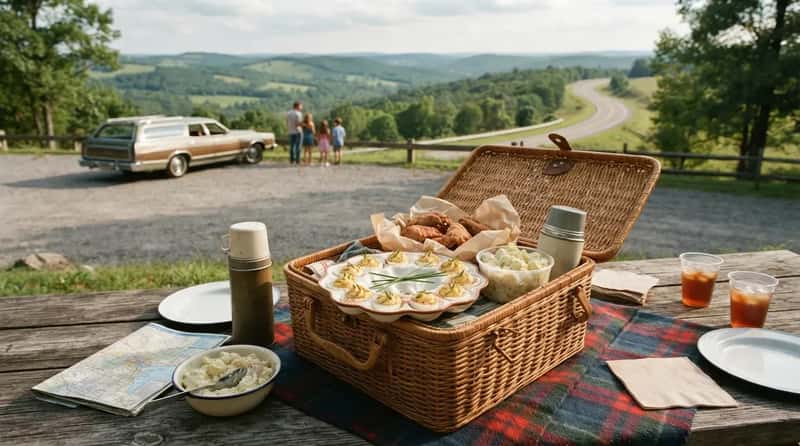
Before fast food chains blanketed every highway, the picnic basket was the original road trip meal plan. Fried chicken, deviled eggs, and potato salad packed in wax paper got families through long stretches between towns.
Deviled eggs held up especially well without refrigeration for a few hours, which made them a road trip favorite. Rest areas and scenic overlooks doubled as dining rooms, and the picnic basket was as essential as the road map.
#13 – A Nickel Sandwich From the Automat
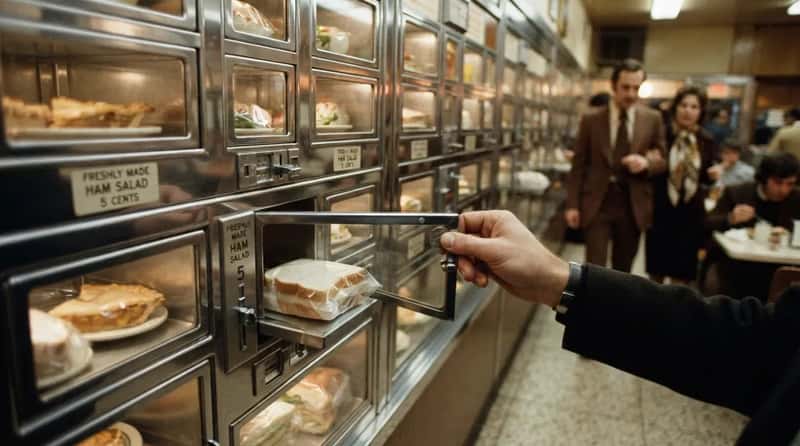
Visiting New York City before 1980 often meant a stop at the Automat, where entire walls of small glass-and-chrome compartments held sandwiches, pie, and baked beans behind coin-operated doors. Tourists loved it as much for the novelty as the food itself.
Dropping a nickel in the slot and watching the little door pop open felt like magic, especially to kids seeing it for the first time. It wasn’t cheap by the 1970s anymore, but the ritual of the Automat remained a must-do vacation stop in Manhattan.
#12 – A Pecan Log Roll From Stuckey’s
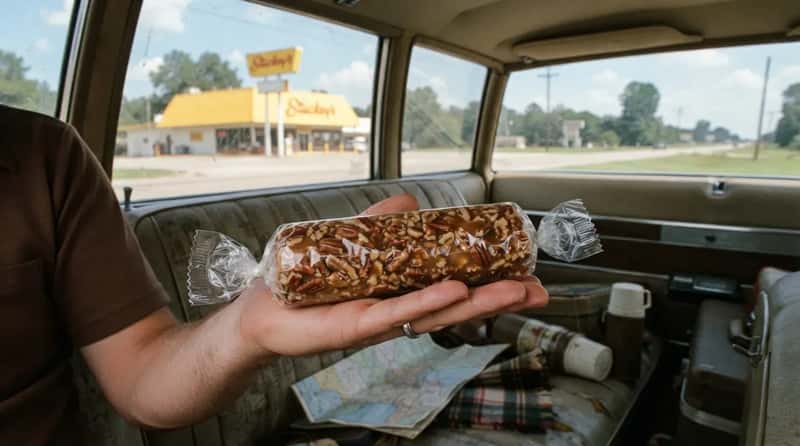
The bright yellow-roofed Stuckey’s stores were as much a highway landmark as gas stations, and the pecan log roll was the reason families pulled over. Nougat rolled in caramel and pecans, wrapped in cellophane, became the unofficial souvenir of Southern road trips.
Buying one felt like a small ritual of the journey itself. Stuckey’s sold gas, pecans, and postcards, but the log roll is what people still remember from the back seat decades later.
#11 – Saltwater Taffy on the Boardwalk
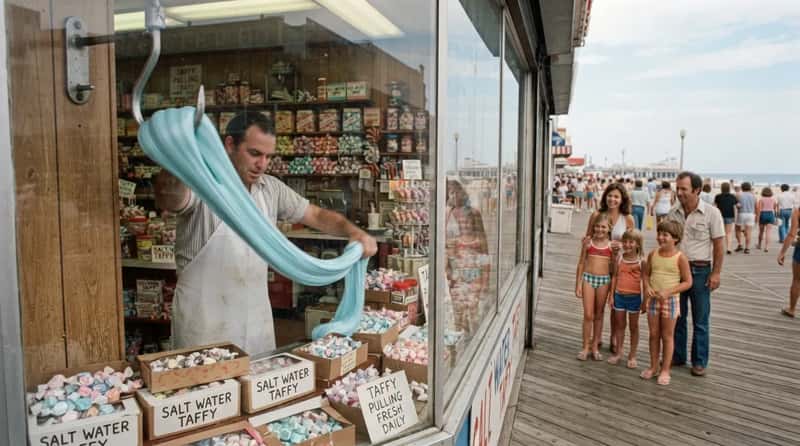
No beach vacation on the East Coast felt complete without a box of saltwater taffy from an Atlantic City or Ocean City boardwalk shop. Vendors pulled and stretched the candy in shop windows as a form of live entertainment for passing families.
The taffy itself barely had any actual saltwater in it – the name was mostly marketing legend from the 1880s that stuck around for a century. Tourists bought it anyway, packing boxes of it home as the definitive proof they’d been to the shore.
#10 – A Root Beer Float at the Drive-In
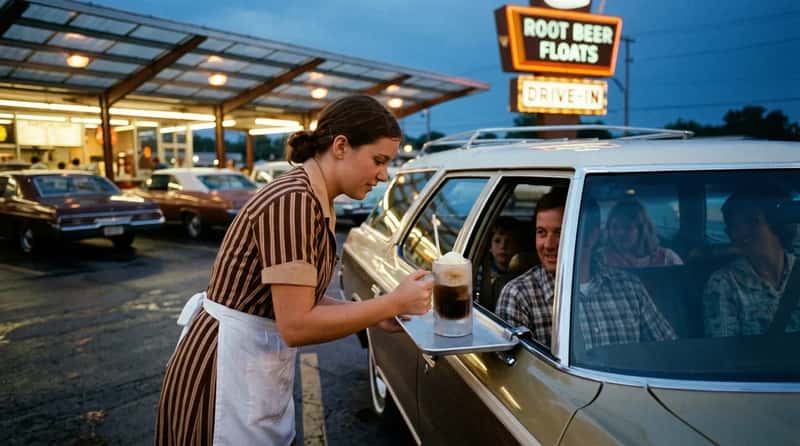
A&W’s frosty mug root beer float was practically a rite of passage for families driving cross-country before interstate highways made every town look the same. Carhops delivered the order right to the car window, which felt like the height of convenience.
The frosted glass mug, kept ice cold before pouring, was part of the appeal – the drink stayed colder longer than anything served in paper cups. For a lot of travelers, an A&W stop was the highlight of an otherwise uneventful stretch of highway.
At a Glance
- Roy Allen opened his very first root beer stand in Lodi, California, in 1919, and sold the concoction for a nickel a frosty mug.
- He soon partnered with an employee named Frank Wright, and the two combined their initials to create the A&W name.
- Allen opened his first drive-in in Sacramento in 1923, and by 1930 he had nearly 200 locations.
#9 – Key Lime Pie Anywhere in Florida
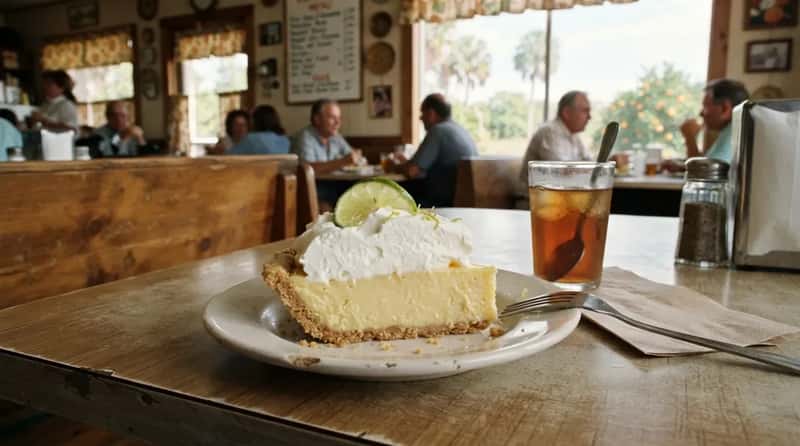
Long before Florida was theme park territory, it was orange groves and citrus stands, and key lime pie was the dessert every restaurant claimed to make “the real way.” Locals argued fiercely over whether it should be green or pale yellow, a debate that still hasn’t fully died down.
Vacationers treated a slice as proof they’d actually made it to Florida rather than just another beach town. Roadside stands sold whole pies to tourists heading home, wrapped and balanced on laps for the entire drive north.
#8 – Fondue at the Ski Lodge
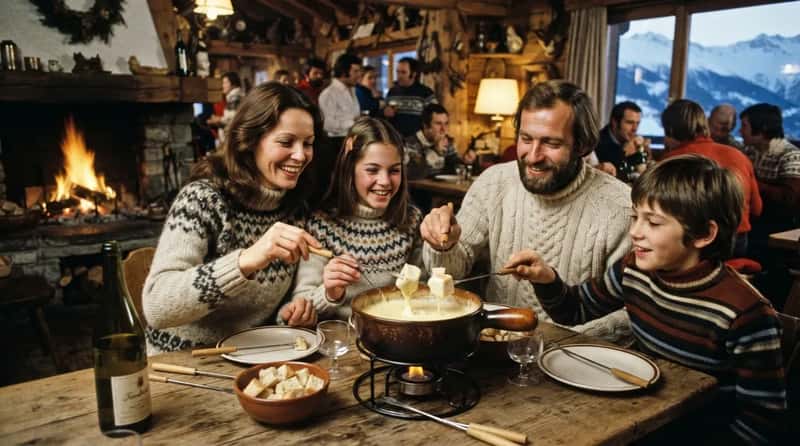
Fondue parties exploded in popularity through the 1960s and ’70s, and ski lodges leaned hard into the trend, serving pots of melted cheese with bread cubes for dipping as an après-ski ritual. It felt European, sophisticated, and slightly indulgent all at once.
Chocolate fondue for dessert became just as common, with fruit and marshmallows on long forks passed around the table. The lodge fireplace, the fondue pot, and a family crowded around one dish made for one of the era’s most repeated vacation photos.
#7 – The Midnight Buffet on a Cruise Ship
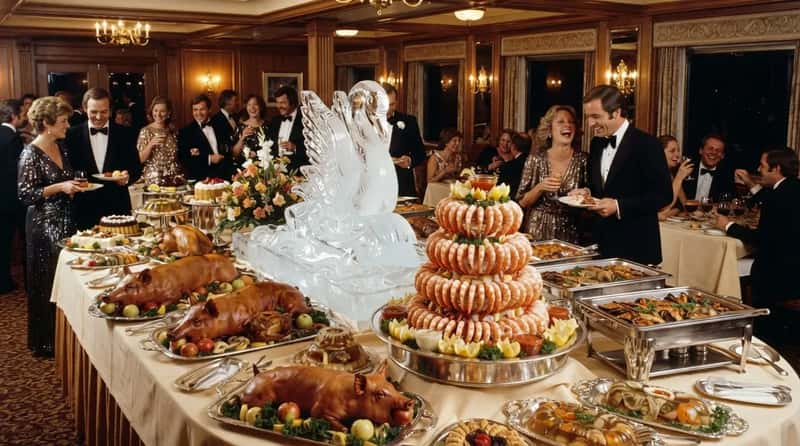
Ocean liner cruises before 1980 were built around excess, and the midnight buffet was the nightly proof. Passengers who had already eaten a full multi-course dinner returned to their cabins to change, only to head back out for a second spread hours later.
Elaborate ice carvings, towers of shrimp, and entire roasted meats sat under the lights for guests who simply couldn’t stop eating. The midnight buffet wasn’t really about hunger – it was a status symbol, proof that the cruise fare bought unlimited indulgence.
#6 – A Mai Tai and a Pupu Platter at Trader Vic’s
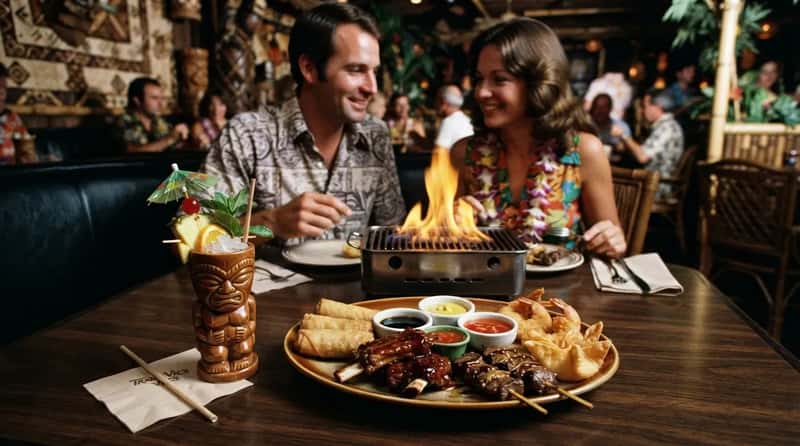
The tiki craze that swept postwar America turned Trader Vic’s and its imitators into must-visit vacation stops, especially for couples on honeymoons or anniversary trips. The Mai Tai, served in a carved mug with a paper umbrella, became the signature drink of an entire era.
The pupu platter – a mix of egg rolls, spare ribs, and skewered meats arranged around a tabletop flame – turned dinner into theater. Diners weren’t really eating Polynesian food; they were eating an American fantasy of it, and it didn’t matter one bit at the time.
#5 – Roast Pig and Fresh Pineapple at a Hawaiian Luau
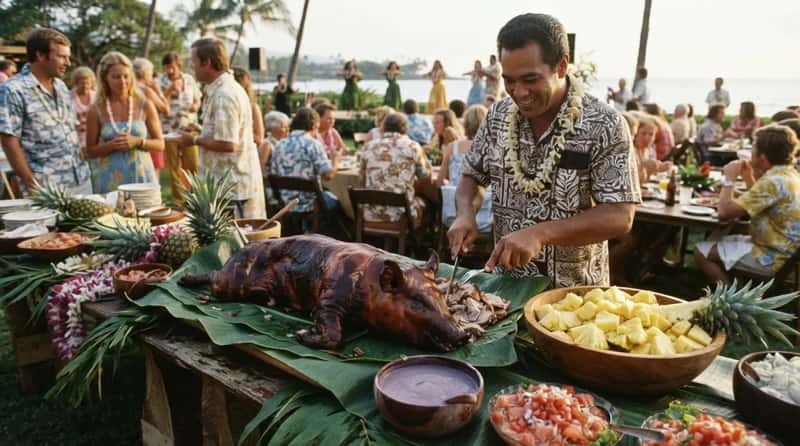
Once jet travel made Hawaii reachable for ordinary vacationers rather than just the wealthy, the package-tour luau became the centerpiece of nearly every trip. A whole pig, slow-roasted in an underground pit, was the meal every visitor wanted photographed.
Fresh pineapple, poi, and lomi lomi salmon rounded out the spread, though most tour operators simplified the menu heavily for mainland palates. Even simplified, it was often the first time many travelers had eaten anything resembling Polynesian food at all.
#4 – Steak Diane and Cherries Jubilee at the Supper Club
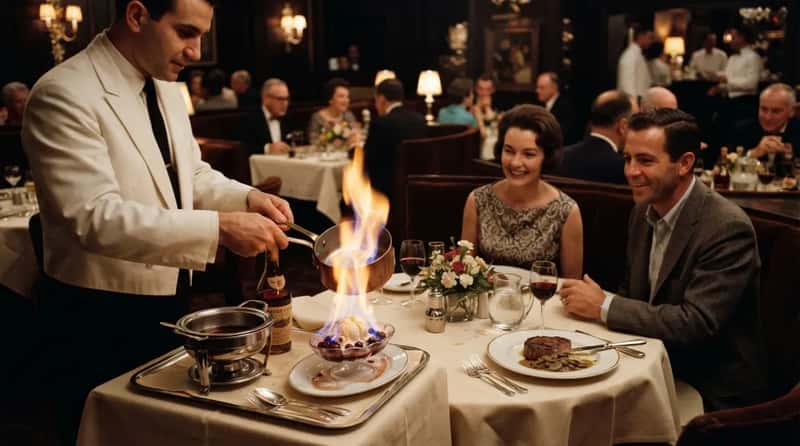
Vacationing somewhere with a proper supper club meant one thing: a tableside show. Waiters flambéed Steak Diane in brandy right at the table, and Cherries Jubilee arrived on fire, the flames doused theatrically over vanilla ice cream in front of an audience of impressed diners.
These dishes weren’t really about flavor – they were about spectacle, and travelers picked restaurants specifically for the fire show as much as the food. A vacation dinner that ended in flames was a story worth telling for years afterward.
#3 – A Full Steak-and-Lobster Dinner at 30,000 Feet
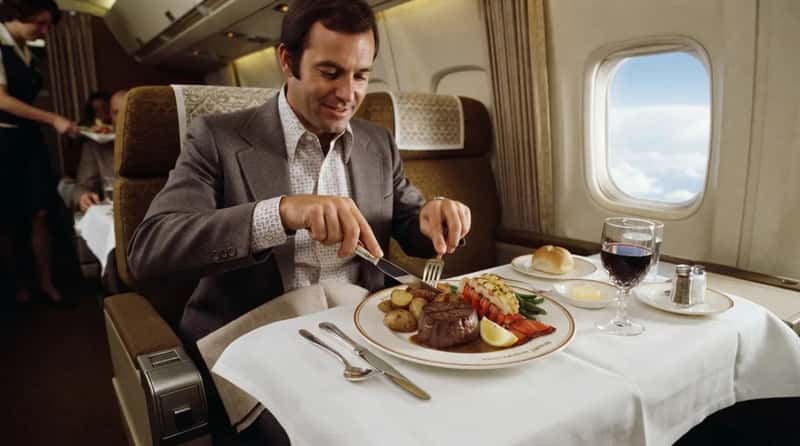
Flying was so glamorous before deregulation that airlines competed almost entirely on food quality rather than price. Braniff hired a team of internationally trained chefs, led by a two-time Culinary Olympics winner, just to redesign its onboard menus, and rivals scrambled to match dishes like Chicken Kiev and steak with Sauce Diane served on real china with real silverware.
Passengers flying in the early 1970s could order a full steak-and-lobster dinner even in coach on certain routes, with prime rib carved tableside from a rolling cart. It sounds unbelievable now, but before the Airline Deregulation Act of 1978 changed everything, in-flight food was one of the only ways carriers could compete at all.
Worth Knowing
- Before 1978, the federal government controlled airline fares and routes, so carriers had almost no way to compete except through service, comfort, and food.
- Braniff, Pan Am, and TWA each built entire marketing campaigns around onboard dining rather than ticket price.
- Once deregulation arrived and price competition took over, most of the lavish in-flight meals disappeared within about a decade.
#2 – Baked Alaska at the Captain’s Dinner
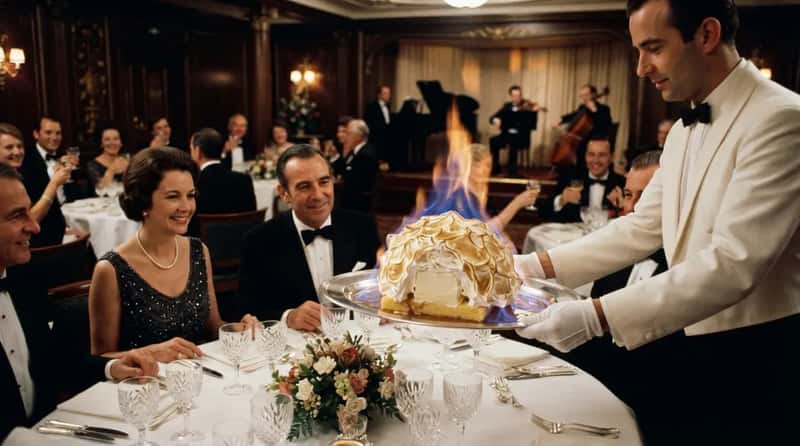
Transatlantic ocean liner crossings ended their voyage with a formal Captain’s Dinner, and the dessert course was the entire evening’s finale: Baked Alaska, a block of ice cream wrapped in torched meringue, carried out under dimmed lights while the orchestra played. Passengers dressed for the occasion because the meal itself was the event, not just something that happened between ports.
The flaming dessert became such a signature of luxury travel that it trickled down into fine hotels and restaurants everywhere, chasing that same sense of occasion. For a lot of travelers, it was the single most memorable dish of an entire vacation.
#1 – Fried Clams and 28 Flavors at Howard Johnson’s
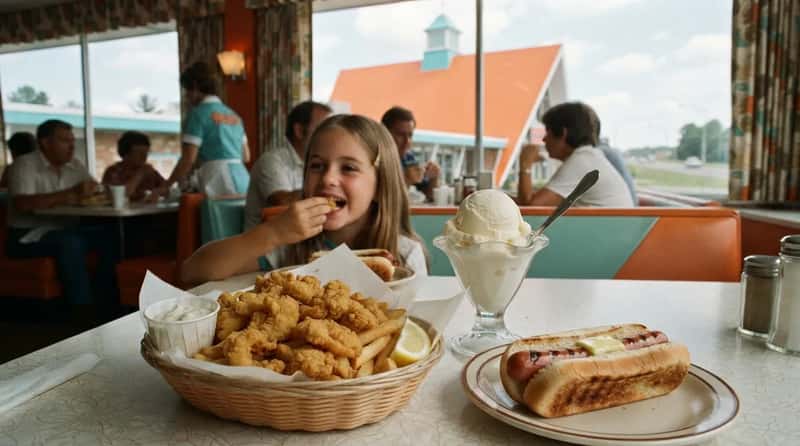
No food memory defines pre-1980 American vacations quite like a stop at Howard Johnson’s. The chain grew to more than 1,000 locations by its 1960s and ’70s peak, becoming the largest restaurant company in the country, recognizable instantly by its bright orange roof and aqua cupola visible from the highway. Families ordered the same things every time: crispy fried clams, grilled-in-butter frankfurters, and a scoop from the famous 28 flavors of ice cream.
Vanilla was reportedly the actual bestseller despite all that variety, and the ice cream recipe used extra butterfat and buttermilk that longtime fans still say they miss. HoJo’s wasn’t fine dining, but for an entire generation, it was the taste of hitting the road – reliable, familiar, and waiting at practically every exit on the way to wherever they were going.
Why It Stands Out
- Howard Johnson’s had about a thousand restaurants operating across the country during its 1960s and ’70s heyday, once making it America’s largest restaurant chain.
- The very last Howard Johnson’s restaurant, in Lake George, New York, closed for good in 2022 after staying open for most of the previous 70 years.
- Baby boomers who grew up on the chain still associate it most with its 28 ice cream flavors and fried clam plates.
Travel food before 1980 wasn’t trying to be photogenic. It was trying to be memorable, reliable, or occasionally theatrical enough to justify the price tag. The airlines went bankrupt, the roadside chains got bought out or bulldozed, and the flaming desserts quietly disappeared from menus somewhere along the way.
What’s left is a strange kind of proof: for a few decades, getting somewhere mattered almost as much as arriving, and every meal along the way was part of the trip.