

Most people think the golden age of American family travel was defined by freedom, open roads, and a kind of easy joy that’s hard to recreate today. They’re right – but the rituals that made those trips possible look absolutely alien by modern standards. No GPS. No streaming. No bottled water in the cupholder. No screens whatsoever. What filled that space instead was a whole strange, wonderful ecosystem of habits, gear, and social customs that an entire generation built their best memories around.
If you grew up after 1995, some of these will hit like nostalgia – and some will hit like anthropology. A few will make you genuinely grateful for your phone. And at least one will make you wonder what we actually lost when we traded all of it in. Starting with #19 and counting down to the ritual that changed everything.
#19 – Driving to the Airport Just to Watch the Planes
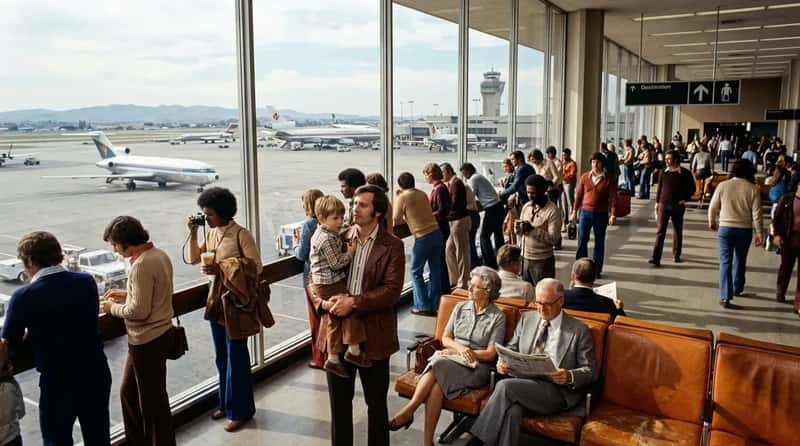
Here’s something that would get you flagged immediately today: going to the airport with zero intention of flying anywhere. In the 1970s, it was a legitimate leisure activity. Flights were considered a luxury most families couldn’t afford, but the terminals were wide open – no security checkpoints, no TSA lines, no bag scanners. You could park and walk straight to the gate like you were entering a shopping mall.
Nostalgia for this ritual runs surprisingly deep. One traveler recalled going to O’Hare in the ’70s to “hang out, watching the planes come and go, laugh at the Hare Krishnas trying to sell their flowers and people-watch, making up stories about the travelers” – and yes, smoking the whole time. For a generation that mostly couldn’t afford to fly, watching planes was the closest thing to travel they could get. Somehow, it was enough.
#18 – Packing a Cooler Full of Wax-Paper Sandwiches That Were Already Soggy by Noon
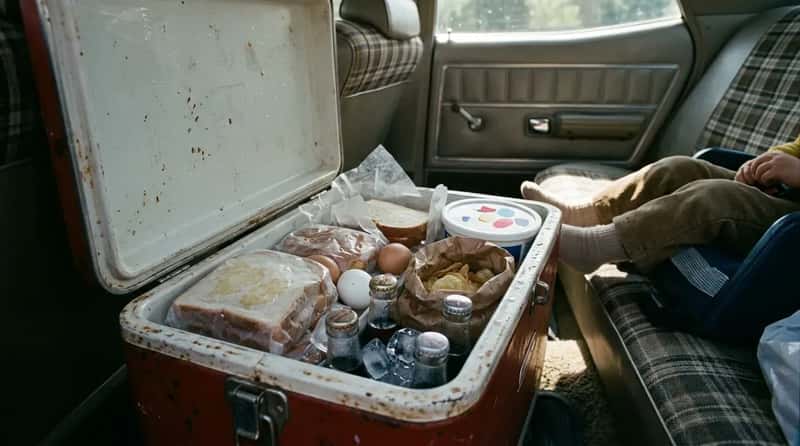
Before fast food chains dotted every highway exit, the cooler was everything. Families packed it the night before: bologna or peanut butter sandwiches wrapped in wax paper, hard-boiled eggs, potato chips in a paper bag, and soda bottles nestled in ice. Dad bought a block of ice from the ice house downtown and broke it up with an ice pick. The potato salad went into a repurposed Cool Whip container and stayed good exactly as long as the ice held out.
The sandwiches were soggy by the state line. Nobody cared. The cooler sat on the floor of the back seat between the kids’ feet like a fifth passenger, and raiding it was one of the few legitimate reasons to stop fidgeting. Zero glamour, maximum charm. Today’s kids would be horrified. 1970s kids didn’t know any different – and most of them remember those lunches as some of the best food they ever ate.
#17 – Pulling Over at Roadside Picnic Tables to Eat Lunch Like It Was Completely Normal
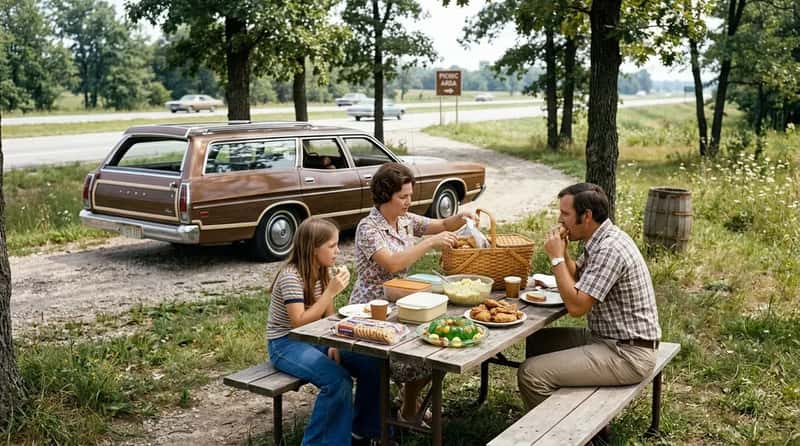
The idea of stopping on the side of the highway, spreading a blanket, and eating lunch from a basket sounds almost pastoral now – but it was completely standard practice. Roadside picnic areas were built into the highway system specifically for this purpose, and families used them without a second thought. Mom packed fried chicken, potato salad, and Jell-O. If you were lucky, there were store-bought cookies. If you were really lucky, there was a shady tree.
“We brought picnic baskets and just pulled off the road and sat in the grass and ate lunch,” one nostalgic road-tripper recalled. Another went further: “We did picnics on the hood of the car. Dad even stuck a can of beans in the engine to warm them up.” The engine-warmed beans detail alone says everything about how resourceful – and slightly unhinged – those trips really were. The interstate rest stop with a vending machine felt like civilization by comparison.
#16 – Stopping at Stuckey’s Like It Was a Religious Obligation
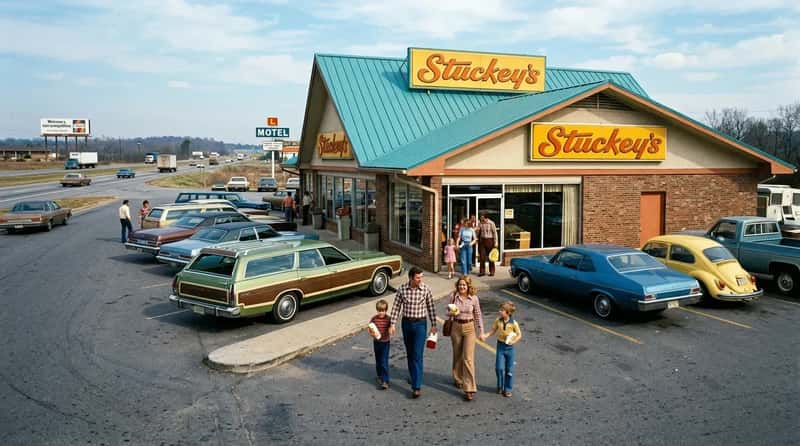
If you took any road trip through the South or Midwest in the ’70s, Stuckey’s wasn’t optional – it was a pilgrimage. The turquoise roof. The pecan log roll. The promise of a clean restroom when every other gas station was handing over bathroom keys chained to a wooden block the size of a boat paddle. For kids watching out the back window of the station wagon, a Stuckey’s sign on the horizon was pure salvation.
The ritual had its own internal logic: you’d start begging from five miles out. You’d sprint inside, fight over a praline or a bag of boiled peanuts, and then argue about that purchase for the next 200 miles. There was nothing architecturally impressive about Stuckey’s. There was nothing gourmet about the food. But it represented a kind of road-trip luxury that budget-conscious families genuinely looked forward to – and for millions of kids in the back seat, it was the highlight of day one.
Fast Facts
- At its 1960s-70s peak, Stuckey’s had 368 stores across more than 30 states – all with the signature teal-blue roof.
- The chain put up over 4,000 yellow-and-red billboards along U.S. highways – so kids started begging miles before the exit.
- The famous pecan log roll was invented by Ethel Stuckey in 1937, made with Georgia pecans, caramel, and a secret ingredient: maraschino cherries.
- After a corporate takeover in the late 1970s, hundreds of stores closed; by decade’s end only 75 original locations remained.
- Granddaughter Stephanie Stuckey bought the company in 2019 and is actively reviving the brand – today it has 65 licensed locations and candy in 5,000+ retailers.
#15 – Asking the Attendant to Check Your Oil While He Pumped Your Gas
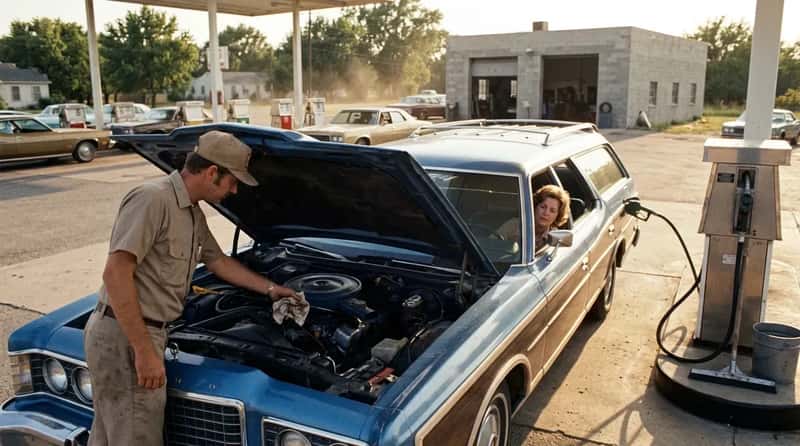
Pull up to a gas station today and you pump your own gas, swipe your own card, and leave without making eye contact with a single human being. That entire experience would have been unrecognizable in the 1970s. In most states, laws actually prohibited self-service. You pulled in, rolled down the window, and a uniformed attendant came out to handle everything – fuel, oil check, windshield squeegee, sometimes tire pressure too.
The attendant wiping down your windshield wasn’t a bonus. It was expected. You sat in the car while someone actually looked after your vehicle before a long haul, then walked inside to pay at the cash register. The shift to self-service started as a cost-cutting move in the late ’70s, and it spread fast. What drivers gained in convenience and speed, they quietly lost in the small ritual of someone treating the car – and the trip – like they actually mattered.
#14 – Using the 8-Track Player as the Family DJ
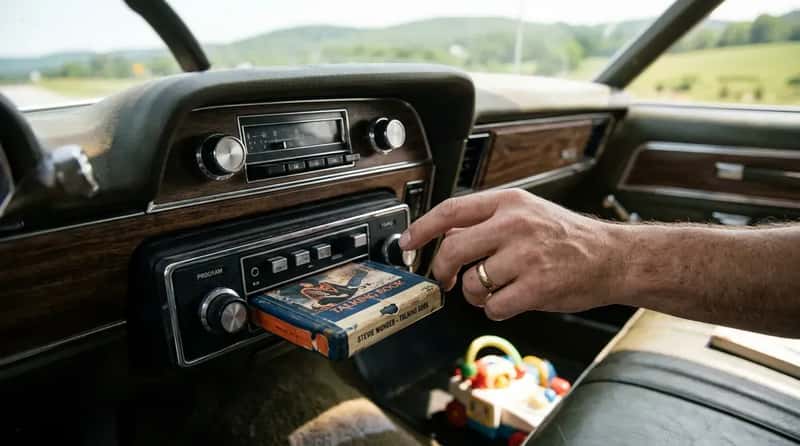
Before Spotify, before iPods, before cassette tapes fully took over, there was the 8-track. And the 8-track was both glorious and deeply, deeply annoying. It let families carry their favorite albums on the road instead of hunting for a radio signal that didn’t fade out every fifty miles – which felt like a genuine technological miracle in 1973. The cartridge clicked into the slot, the music started, and for a few minutes, all was well.
Then came the brutal reality: you couldn’t skip, rewind, or pause. The tape would switch tracks mid-song with a loud mechanical chunk and a few seconds of dead silence. If Dad was playing his Eagles tape, you were hearing all of it – twice – before Tulsa. Every bathroom break became a negotiation about whether to eject the cartridge or just let the music keep playing into an empty car. It was the format that taught an entire generation that convenience was never guaranteed.
#13 – Financing the Trip Entirely in Traveler’s Checks
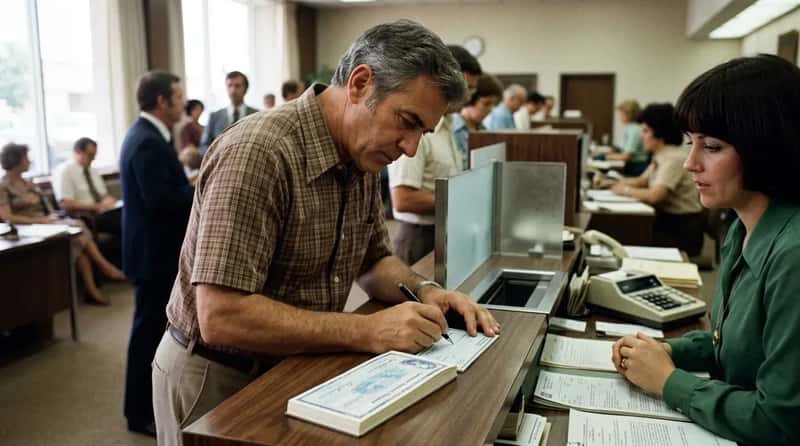
Today’s under-30 traveler pays for everything with a tap of their phone. In the 1970s, cash was king – but carrying a wallet full of bills on a two-week trip felt genuinely reckless. The solution was the traveler’s check: a pre-purchased, serially numbered paper check that you signed once at the bank and once again at the moment of spending. American Express, Bank of America, and Citibank all sold them, and every careful family had a stack tucked in the glove compartment.
The ritual had real weight to it. Before the trip, Dad would drive to the bank, buy checks in $10 and $20 denominations, and sign each one right there at the counter. At hotels and restaurants, he’d countersign them while the cashier compared both signatures – slowly, skeptically, sometimes with a phone call to the manager. It was slow and occasionally embarrassing. But if your wallet got stolen somewhere in Missouri? Those checks were replaceable. Lose your actual cash in 1974 and your vacation was simply over.
#12 – Navigating by a Giant Unfolded Road Map That Never Folded Back
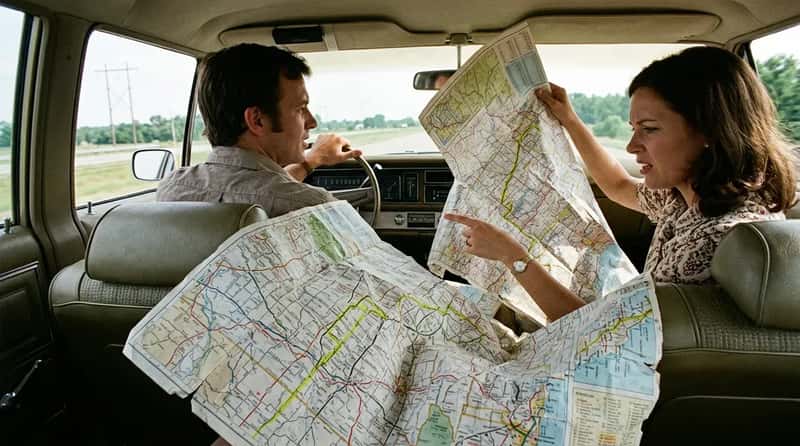
The pre-GPS navigation ritual was a family sport with real stakes. Before a major trip, Dad would visit the local AAA office and pick up a TripTik – a custom spiral-bound booklet with each page showing a segment of the route, marked in highlighter by an actual human being who sat across a desk from him. For smaller legs of the journey, there were paper maps. Enormous ones. Tablecloth-sized ones that once unfolded in a moving vehicle, never returned to their original form.
Mom was the co-pilot, holding the map up to the window light and calling out turn numbers while Dad argued he already knew where he was going. Creases multiplied. Sections tore at the worst intersections. Parts of highways were still under construction, which meant sudden transitions to older roads or temporary detours that the map may or may not have reflected. There was no recalculating. There was no satellite view. There was just Dad’s confidence versus Mom’s map, and the whole family holding its breath somewhere around the Tennessee border.
#11 – Tuning the CB Radio to Hear About Speed Traps Before You Hit Them
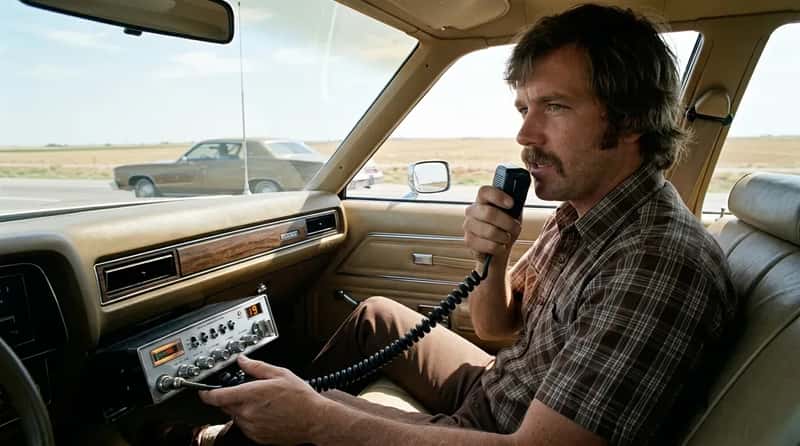
By the mid-1970s, CB radios had exploded from a truckers-only tool into a full-blown cultural craze. Families on road trips mounted CB antennas on the car roof and tuned to Channel 19, where truckers broadcast real-time reports of police speed traps, road hazards, and slowdowns miles ahead. It was the original crowd-sourced navigation alert – Waze, but on AM frequencies and spoken in a dialect most civilians were still learning.
The 1974 national speed limit of 55 mph gave the CB radio its real fuel. Nobody wanted to cruise through Kansas at 55, and with cops setting up radar traps on every flat stretch, the CB scanner felt practically essential. At its peak in 1979, there were approximately 14 million licensed CB users in the United States – and millions more operating without a license at all. “Smokey” meant cops. “Bear trap” meant a radar gun. “Handle” meant your nickname on the air. Kids in the back seat thought it was the coolest technology in existence – and honestly, for its moment, it really was.
Worth Knowing
- The CB craze was triggered by the 1973 OPEC oil embargo and the new 55 mph national speed limit – truckers needed to share intel on fuel and speed traps.
- At the height of the craze, the FCC was receiving over 1 million CB license applications per month – so many it had to set up a dedicated ZIP code in Gettysburg, PA just to process them.
- Channel 19 became the unofficial highway channel nationwide; Channel 9 was reserved for emergencies by FCC rule.
- First Lady Betty Ford’s CB handle was “First Mama.” Voice actor Mel Blanc used “Bugs” and “Daffy” on the air.
- By 1983, individual licensing was dropped entirely – the craze burned hot and fast, then faded almost as quickly as it began.
#10 – Sleeping in Motels With Coin-Operated “Magic Fingers” Beds
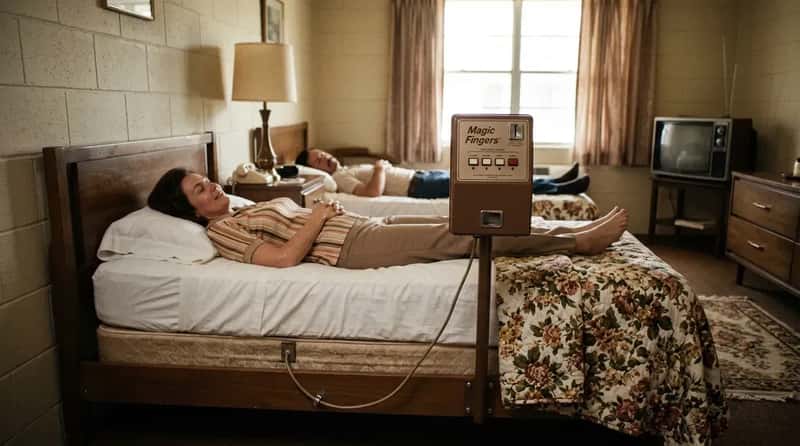
Pull into the right motel in 1975 and your bed was basically a carnival ride. For a quarter dropped into the bedside box, you got 15 minutes of gentle vibration – marketed to adults as a relaxation aid, experienced by every child as the greatest invention in human history. The Magic Fingers Vibrating Bed was invented in 1958 by New Jersey entrepreneur John Houghtaling, who designed a compact motor that bolted onto any standard box spring and split revenue 50/50 with the motel owner. By the late 1970s, more than a million Magic Fingers units had been installed in hotels and motels across the United States and Europe.
The motels themselves had their own language. Mom-and-pop places always had the word “Court” in the name and advertised loudly if they had a color TV. Howard Johnson and Holiday Inn meant reliability. The vibrating bed meant luxury. A color TV and a Magic Fingers bed was essentially five-star living in 1973. You checked in, you fought over who got the bed by the window, someone dropped the first quarter, and for fifteen humming minutes, the whole family forgot they’d been in a car for nine hours.
At a Glance
- Cost: 25 cents for 15 minutes of vibration – unchanged from launch in 1958 until the units disappeared.
- Peak scale: Over 1 million units installed across U.S. and European hotels by the late 1970s.
- Why they vanished: Guests broke into coin boxes to steal quarters; upscale chains decided the units looked cheap and sleazy.
- Pop culture footprint: Featured in National Lampoon’s Vacation, Slaughterhouse-Five, The Simpsons, and a Frank Zappa song.
- Today: Virtually gone from American motels – the high-end adjustable massage bed is their distant, pricier descendant.
#9 – Rationing Film and Praying Every Single Shot Came Out
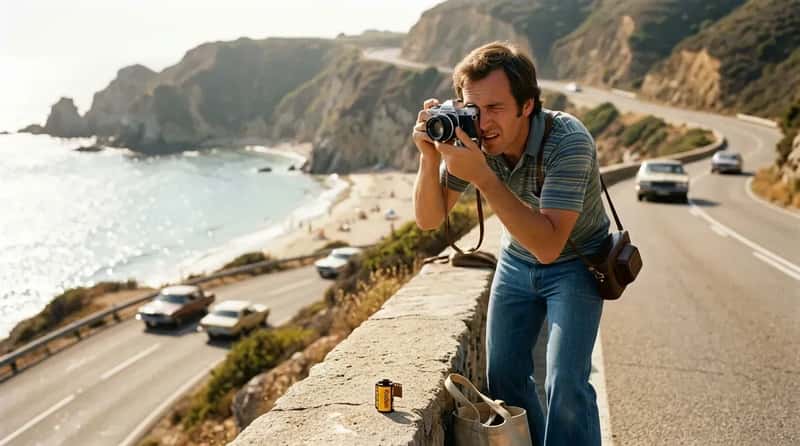
The pre-digital photography ritual was built entirely on delayed gratification and low-grade anxiety. You had one roll of 24 or 36 exposures for an entire two-week trip, and you could not – under any circumstances – check whether the shot actually worked. Squeeze the shutter, hope the lighting was right, move on. If someone blinked, you didn’t know until the photos came back from the developer, sometimes ten days after you got home.
Every picture was a genuine decision. Burn an exposure on this overlook? Save it for the hotel pool? Polaroids offered instant gratification but cost more per shot and faded in sunlight. Standard 35mm slides went into carousels and became the raw material for something even more ritualistic – but that comes next. “It was like two vacations for one,” one nostalgic traveler put it. The trip itself, and then the second experience of seeing what you’d actually captured weeks later. Nobody under 30 has ever felt that specific combination of hope and dread.
#8 – Forcing the Entire Extended Family to Sit Through the Vacation Slide Show
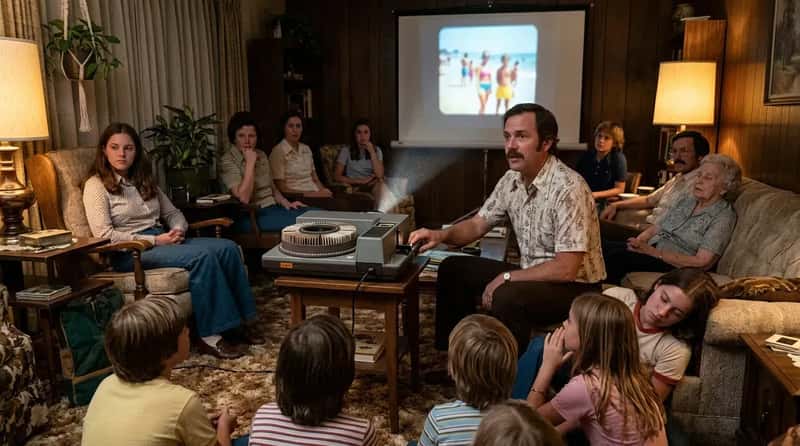
Getting the photos back was just the beginning. Once those 35mm slides came back from the developer in their little cardboard mounts, they went straight into a Kodak Carousel tray, and the whole extended family was invited over for a formal viewing. Dad would set up the projector in the living room, pull down the screen, kill the lights, and then narrate every single frame at considerable length while the kids drifted toward sleep on the carpet.
A single vacation could fill three full carousel trays of 80 slides each – meaning a slide night ran two hours or more. Neighbors were invited. Grandparents sat in the front row. Autofocus was a selling feature on better projectors because even getting a sharp image was genuinely uncertain. Nobody under 30 has ever been held captive in a darkened living room while someone’s dad slowly clicked through 240 photographs of the Grand Canyon, stopping to explain each one. It was an endurance sport dressed up as entertainment, and somehow, people looked forward to it.
#7 – Carrying Spare Car Parts in the Trunk as Standard Equipment
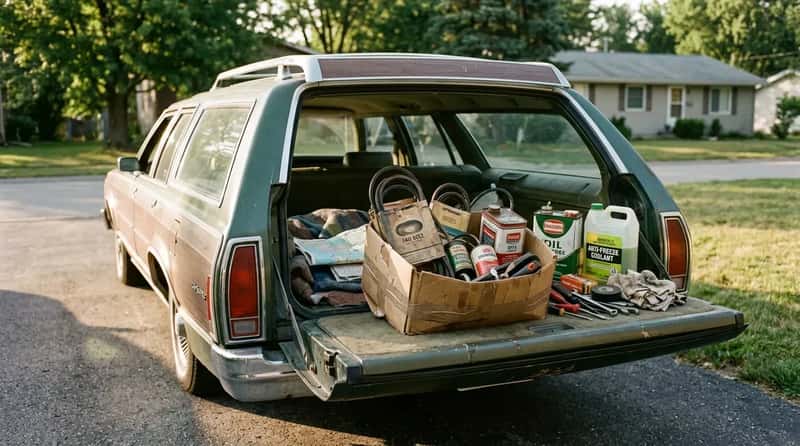
Modern cars fail so rarely on road trips that most drivers wouldn’t know what to do if one actually broke down on the interstate. In the 1970s, that wasn’t a hypothetical – it was a planning assumption. Cars were less reliable and lacked the diagnostic technology of modern vehicles. The question wasn’t whether you might break down on the way to Yellowstone. It was whether you’d packed enough to deal with it when you did.
Pre-trip car prep was its own multi-hour ritual. Dad would spend the Saturday before departure in the driveway – checking hoses, testing the battery, rotating tires, and loading a cardboard box in the trunk with spare fan belts, extra oil, coolant, and basic tools. The station wagon was the dominant family vehicle of the era, beautiful and chrome-laden and also known to run hot, leak oil, and strand a family of five without much warning. A spare fan belt was as essential as a spare tire. You didn’t leave without it.
#6 – Playing the License Plate Game for Eight Straight Hours Without a Single Screen
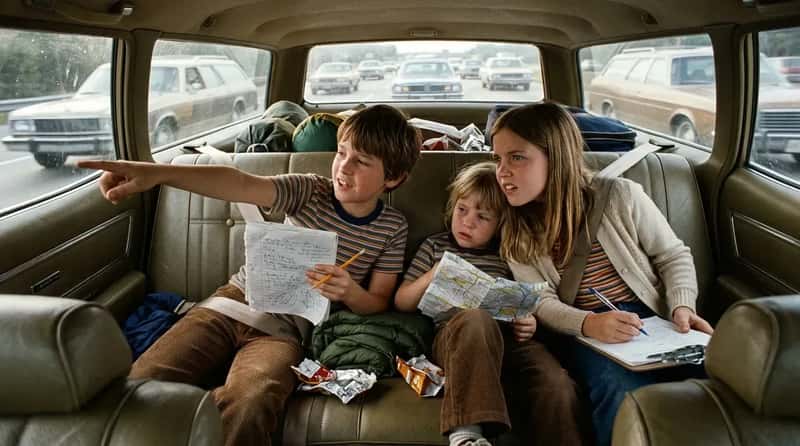
Before tablets, before portable DVD players, before a single screen existed inside a family vehicle, kids in the back seat had to generate their own entertainment – and the License Plate Game was the undisputed champion of the genre. The rules were simple: spot a plate from each of the 50 states, call it out first, mark it on the list. It sounds humble. It was genuinely fierce. Accusations of cheating were made. Grievances were born on the Ohio Turnpike and carried into adulthood.
Spotting an Alaska or Hawaii plate was a once-in-a-decade event that the winner talked about for years. It sat alongside “99 Bottles of Beer,” I Spy, and the punch-buggy game in a whole ecosystem of back-seat entertainment that required nothing but eyeballs and attention. And it served an unspoken purpose: it kept kids staring out the windows at the actual country rolling past them. No streaming service has ever managed to do that.
#5 – Riding in the Back of the Station Wagon With Zero Seatbelts
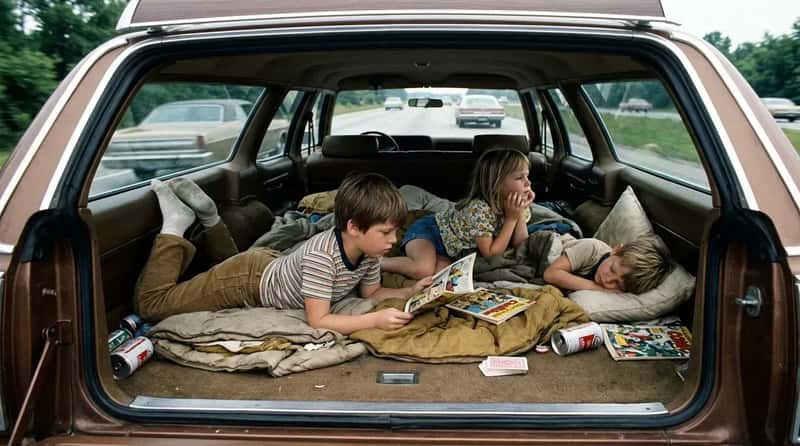
This one genuinely baffles anyone under 30, and it should. The station wagon’s rear cargo area – that flat, carpeted zone behind the back seat – was a completely unsupervised kid zone on every family road trip of the 1970s. Kids sprawled back there on pillows and sleeping bags, played cards, read comics, and pressed their faces against the rear window to make faces at the car behind. There were no seatbelts. No car seats. No adult supervision once the liftgate clicked shut.
Safety regulations weren’t as strict, and families took full advantage of the open space. Kids rode on laps. Some perched in the rear window ledge – that flat shelf above the back seat – like cats in a sunbeam. Dad drove, navigated, and refereed arguments simultaneously. Every person who survived this ritual knows on some level how lucky they are. Every single one of them will also tell you, without hesitation, that they’d do it again.
#4 – Planning Your Gas Stops Around Whether Your License Plate Was Odd or Even
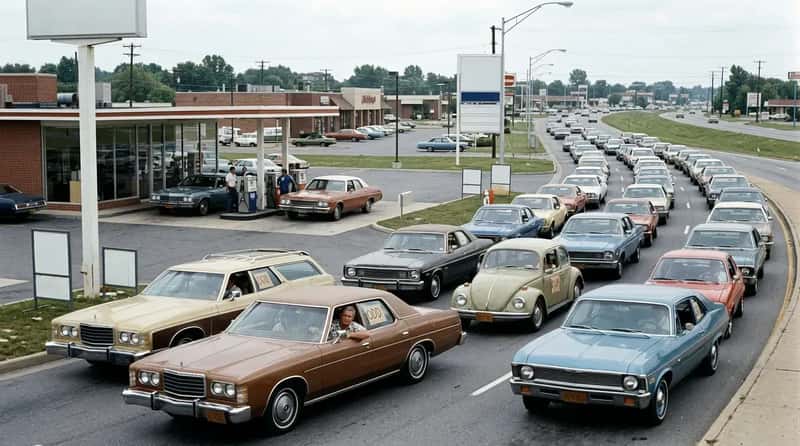
Young travelers today have never had to plan a vacation around whether they were legally allowed to buy fuel on a given day. In the mid-1970s, that was an actual constraint. After the OPEC oil embargo of 1973, gas shortages hit American highways hard – the first fuel rationing since World War II. Many states introduced odd-even rationing: drivers could only purchase gas on days that matched the last digit of their license plate number. Vacation planning had to account for this.
Gas was around 36 cents per gallon in the early ’70s – roughly equivalent to $2.50 today – cheap by modern standards, except that by 1974, you sometimes couldn’t get it at all. Lines at stations stretched around the block. Some stations ran dry before noon. Families mapping out road trips had to factor in their plate number when choosing departure days and calculating fuel stops. The whole vacation could hinge on whether you had enough in the tank to reach the next open station. It was an anxiety that no low-fuel notification has ever come close to recreating.
#3 – Hitchhiking as a Completely Normal Part of Getting Around
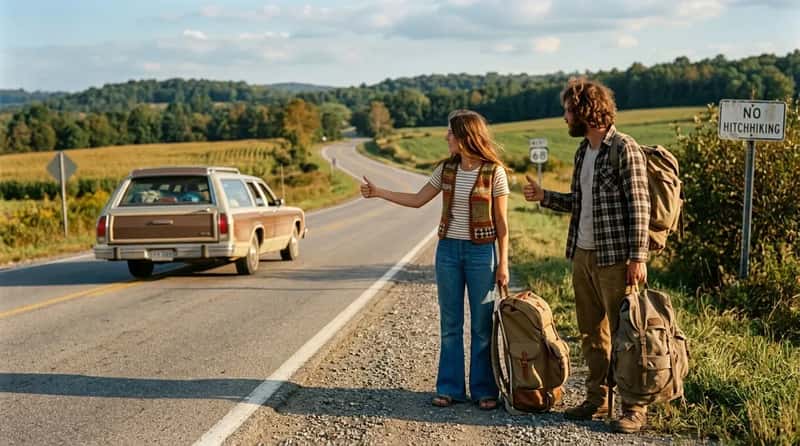
It’s almost impossible to explain this one to anyone who grew up in the true-crime podcast era. Today, most people wouldn’t consider letting a stranger into their car under any circumstance. But in the early-to-mid 1970s, sticking out your thumb was a legitimate travel strategy, and stopping to pick someone up was widely considered a neighborly thing to do. College students hitchhiked across the country for the summer. Backpackers used it as their primary mode of transport between towns.
The decline was fast and nearly total. Cheaper cars, expanding highways, and a sharp increase in media coverage of roadside violence changed the cultural calculus quickly. By 1985, hitchhiking was already becoming taboo. By 1995, it had essentially vanished from American life. What’s strange in retrospect isn’t that it ended – it’s how thoroughly normal it once was. An entire generation of travelers built cross-country adventures around the assumption that strangers would stop. Most of the time, they did.
#2 – Planning the Entire Route at the AAA Office, In Person, Weeks Before the Trip
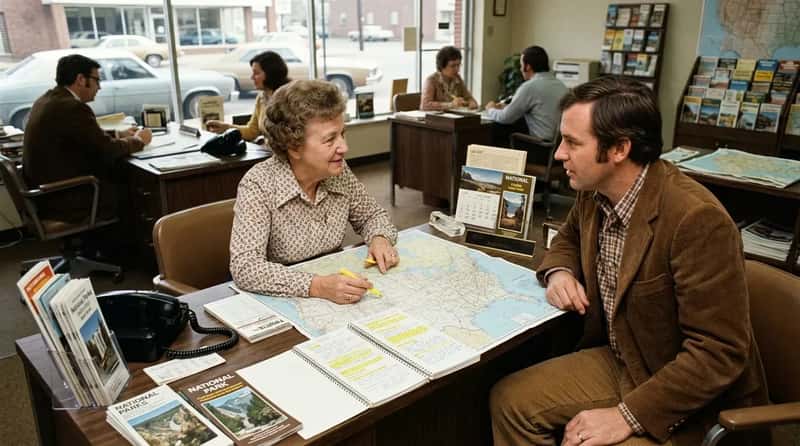
Weeks before a major road trip, the ritual began not in the car but at the local AAA office. Dad would walk in, sit down with a travel counselor, and describe the trip. The counselor would pull out regional maps, highlight the best route, and assemble a custom spiral-bound booklet – the TripTik – with each page showing a segment of the journey, marked hotels, gas stations, and points of interest. It was handcrafted, analog, and completely personal. It also could not be updated in real time if anything changed.
The TripTik sat in the front seat like a sacred document for the entire trip. Spilling coffee on it was a genuine family crisis. Missing a turn meant flipping through the pages manually, holding the booklet up to the windshield, and hoping the next page made things clearer. Getting around also meant relying on word-of-mouth for restaurant recommendations and simply showing up at a motel to see if there was a vacancy. No booking app. No reviews. No confirmation number. Just a family pulling into a parking lot at 8 p.m. after ten hours of driving, hoping the “Vacancy” sign was lit.
#1 – Flying Was a Once-in-a-Lifetime Event That the Whole Family Talked About for Years
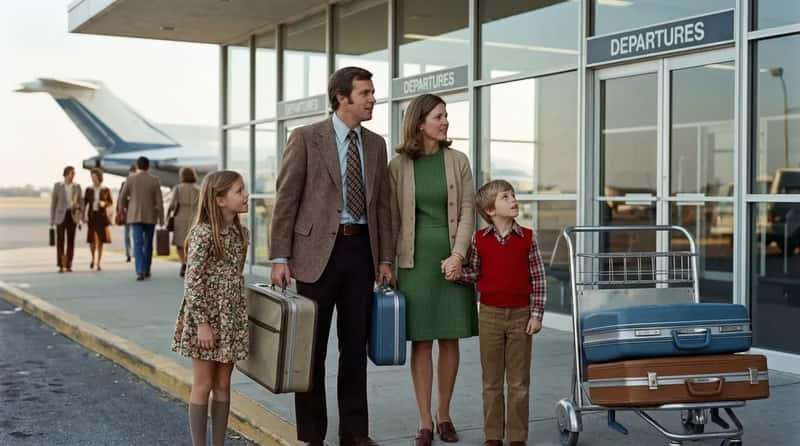
Nothing captures the distance between 1970s vacation culture and modern travel more sharply than this single fact: as late as 1975, roughly four in five Americans had never traveled by plane. Not for a weekend trip. Not for a honeymoon. Never. Flying wasn’t a mild Tuesday morning inconvenience – it was an event so rare and significant that families talked about it for months. The ticket price. The gate. Whether they made the connection. What the food tasted like, because yes, there was real food.
People dressed in their best clothes to board. Children were sometimes invited into the cockpit mid-flight. Smoking was permitted – older planes still have the ashtrays built into the armrests as evidence. Flight attendants were treated like celebrities by passengers who had never done this before and genuinely might never do it again. Today, Americans take roughly 900 million domestic flights per year. In 1975, most of those passengers’ grandparents had never left the ground. That gap – between a world where flight was magic and a world where it’s a logistical chore – is the single sharpest measure of how completely vacation culture has been transformed.
Quick Compare: Flying Then vs. Now
- 1975: ~80% of Americans had never flown. Flying was a rare, dressed-up occasion.
- 2003: 82% of Americans had flown at least once in their lives – the inversion happened in a single generation.
- 2022: 44% of Americans flew commercially in that year alone; nearly 90% had flown at least once in their lifetime.
- Then: Real meals served in-flight, cockpit visits for kids, smoking sections on board.
- Now: ~900 million domestic flights per year in the U.S. – the miracle became a Monday morning commute.
It felt a lot more exotic, and there was more joy of discovery. American monoculture had not spread all over the world yet.
A nostalgic road-tripper reflecting on 1970s travel
The 1970s vacation wasn’t just a different era of travel – it was a different relationship with time, distance, and uncertainty. You didn’t know if the motel had a vacancy. You couldn’t check the weather. Your car might break down in rural Kentucky and that was just part of the deal. There were blank spaces on the map, literal and otherwise, and the rituals families built to navigate them were genuinely irreplaceable. The cooler, the TripTik, the slide show, the Magic Fingers bed – none of it was sophisticated, and all of it was unforgettable. Which one hit closest to home? Drop it in the comments.