
Most people picture the 1970s beach trip as some hazy, sunburned cliché – plaid coolers, ugly swimsuits, done. But talk to anyone who actually lived it, and the details that stick aren’t the ones you’d expect. It’s the smell of baby oil baking on hot skin, the sound of a transistor radio losing its signal, the panic of losing a motel key the size of a hubcap.
What made those summers unforgettable wasn’t the beach itself – it was everything surrounding it. The waiting, the risk, the total lack of a plan B. Here’s what actually stuck with the people who were there.
#21 – The Metal Cooler That Doubled as a Bench, a Table, and a Weapon
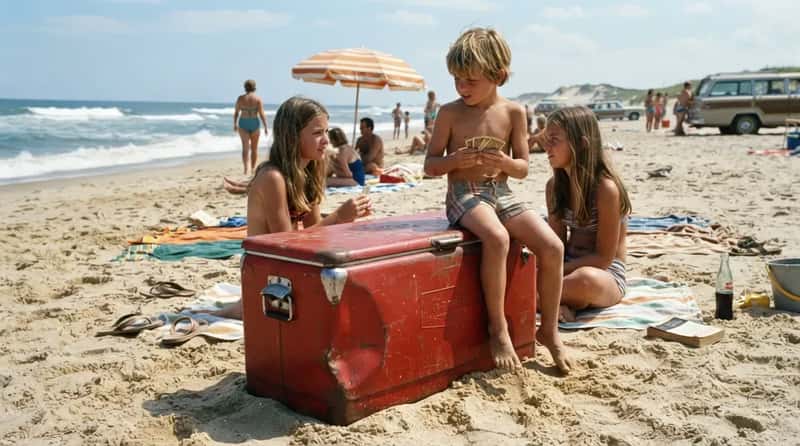
Before soft-sided coolers existed, families hauled a heavy metal cooler with a built-in bottle opener and a lid that doubled as extra seating. It wasn’t insulated the way modern coolers are, so ice melted fast, and by afternoon everything floated in lukewarm water. The dent in the side from being dropped out of the station wagon was practically a family heirloom.
Kids sat on it during card games, adults used it as a footrest, and somehow it survived every vacation for a decade. Nobody threw these things away. They got passed down, rusted a little more each year, and still worked exactly the same.
#20 – Baby Oil and Iodine: The “Tanning Lotion” Nobody Questioned
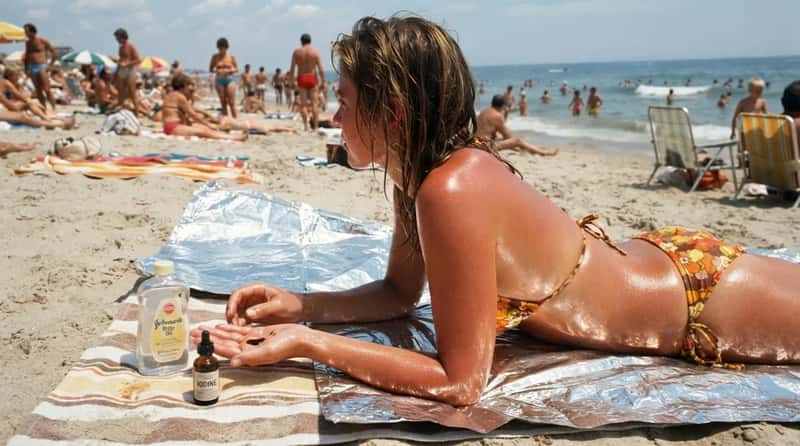
Sunscreen barely existed in any meaningful SPF form, so people mixed baby oil with a few drops of iodine and called it tanning lotion. The goal wasn’t protection – it was speed. The deeper and faster the burn turned into a tan, the better the vacation was considered.
Reflector blankets, essentially foil sheets, were used to bounce even more sun onto already-baking skin. Nobody reapplied anything because nobody thought they needed to. Looking back, most people who lived through it now admit it’s the one part of the era they’re genuinely glad is over.
#19 – The Woodie Wagon Packed Like a Puzzle
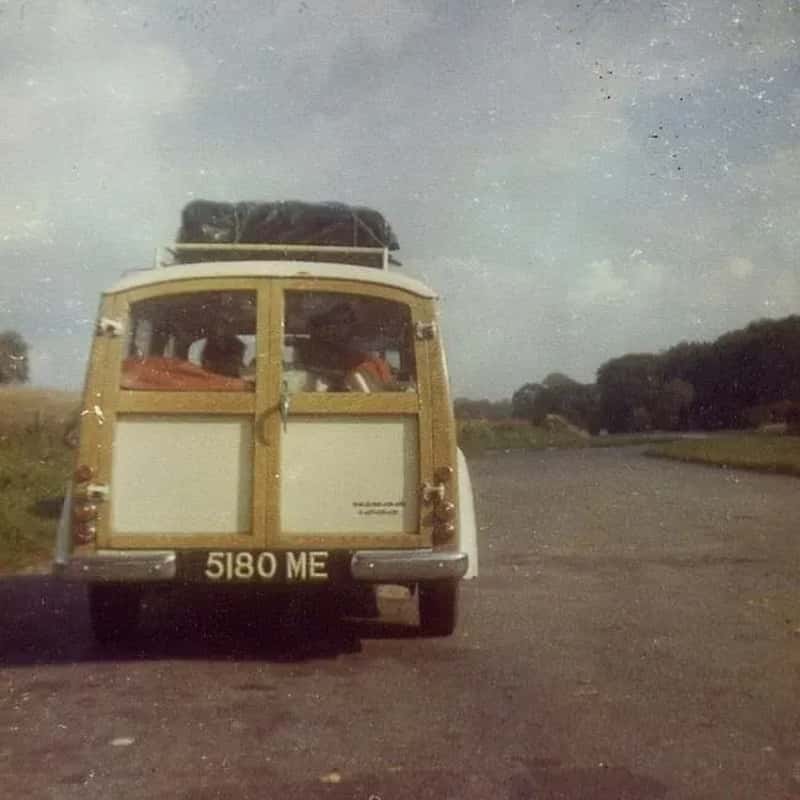
Getting to the beach meant loading a station wagon until the back windows were nearly blocked by suitcases, inner tubes, and a cooler wedged sideways. There were no minivans with cupholders for everyone – kids sat wherever they fit, sometimes in the far-back seat facing traffic behind them. Seatbelts in that back seat were basically optional, and nobody blinked at it.
The drive itself became part of the vacation story, full of “are we there yet” and paper road maps refolded wrong. Breaking down on the highway wasn’t rare, and families just accepted it as the price of admission to summer.
Fast Facts
- Wood-paneled wagons like the Ford Country Squire were the default family road-trip vehicle of the decade.
- A national 55 mph speed limit took effect in 1974 as an oil-crisis response, slowing down every beach-bound drive.
- Rear-facing third-row seats were common, and seatbelt use back there was rarely enforced.
- Air conditioning was still far from standard, so rolled-down windows did most of the cooling.
#18 – Transistor Radios Fighting the Static All Day Long
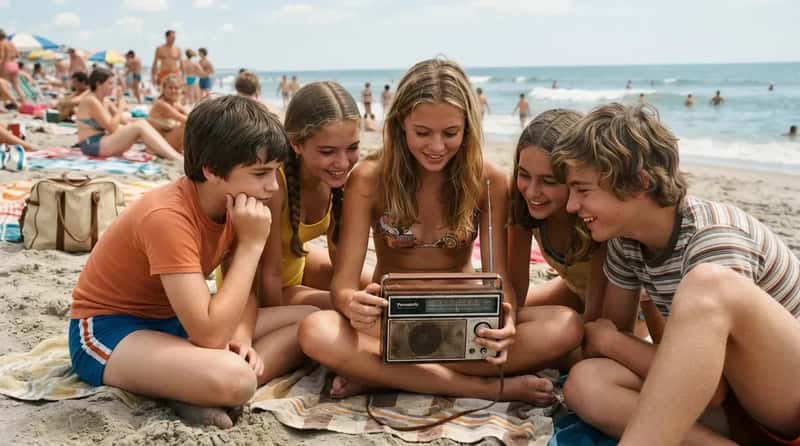
A pocket-sized transistor radio was the only soundtrack the beach had, and it came with constant static, fading signals, and one AM station everyone fought over. Batteries died mid-song more often than anyone wanted, and someone always had spares buried in a beach bag. Losing the signal completely for a few minutes felt like a small tragedy at the time.
Groups of teenagers would huddle around one radio just to hear a single song clearly. It wasn’t background noise the way music is now – it was the entire entertainment system, shared by whoever happened to be nearby.
#17 – Postcards Instead of Instant Photos
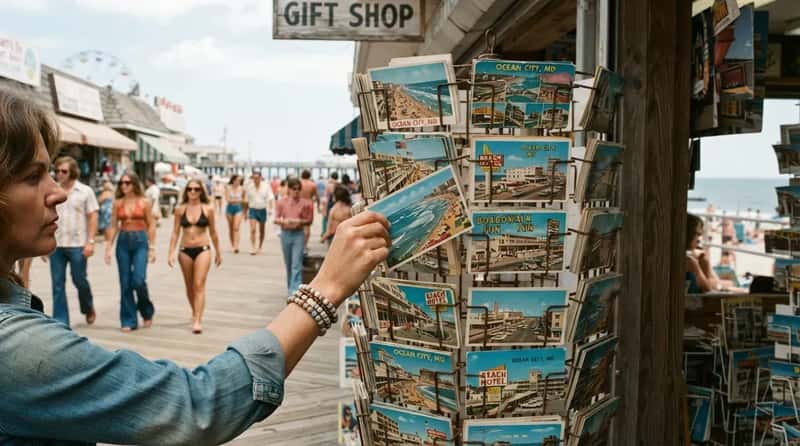
Nobody could text a photo home, so postcards from the boardwalk gift shop were the only proof-of-life update parents sent. Writing “Wish you were here” wasn’t a joke yet – it was a genuine, slightly awkward attempt to summarize an entire week in four lines. The postcard often arrived home after the family did.
Picking the postcard was its own small ritual, usually a rack outside a drugstore with faded, curling designs. Grandparents kept them for years afterward, tucked into drawers, which is honestly more than most vacation photos get today.
#16 – The Kodak Instamatic and the Agony of Waiting for Film
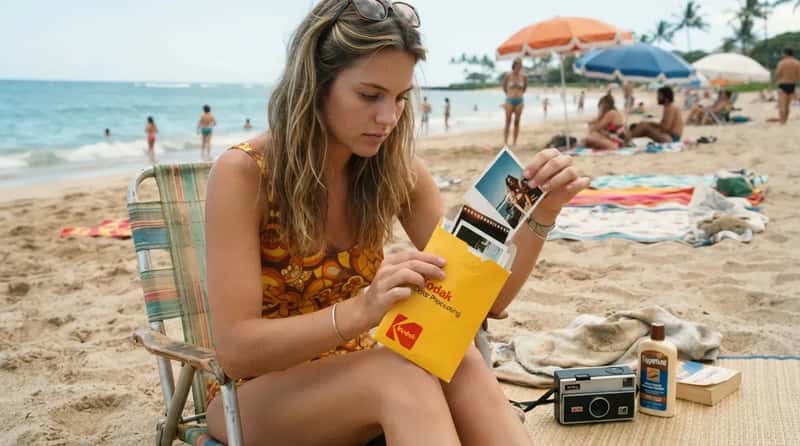
Cameras used actual film cartridges, and you had no idea how any photo looked until it came back from the drugstore, sometimes a full week later. That meant entire rolls could be ruined by a thumb over the lens or bad lighting, and nobody found out until vacation was long over. People rationed their shots because film and developing weren’t cheap.
This forced a strange kind of restraint – maybe 24 photos for an entire week, so every shot had to count. The upside was that opening that yellow envelope of prints became its own small event, almost like reliving the trip a second time.
#15 – Saltwater Taffy Stands on Every Boardwalk Corner
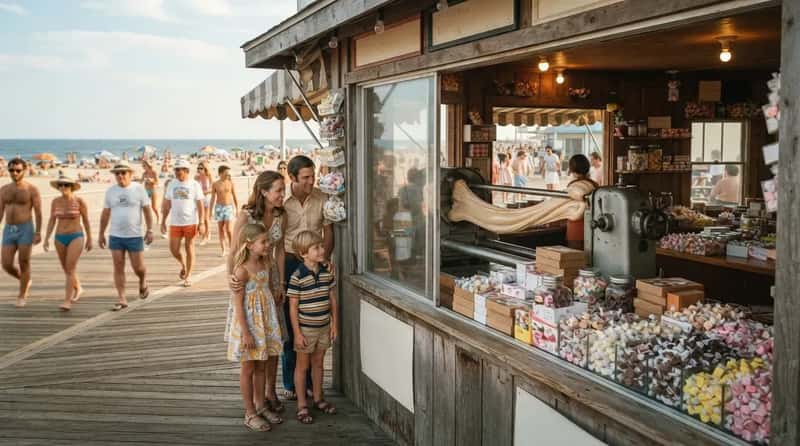
Saltwater taffy wasn’t a novelty item, it was practically mandatory, and boardwalk shops stretched taffy machines right in the front window for anyone walking by to watch. The smell of sugar and butter pulled families in even when nobody was hungry. Most people bought a box purely because watching it get made felt like the entire point.
Flavors were simple back then – vanilla, chocolate, maybe banana if the shop was fancy. It rarely traveled home in one piece since it got eaten in the car before the trip even ended.
#14 – Coin-Operated Boardwalk Binoculars That Barely Worked
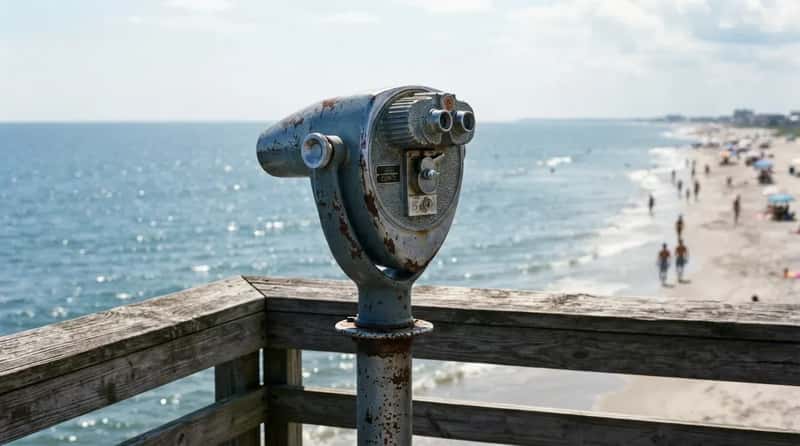
Every boardwalk or pier had those metal viewfinder binoculars on a pole, and putting a coin in usually bought about ninety seconds of blurry ocean view. Half the time the shutter closed before you found anything worth looking at. Kids fought over turns anyway, even knowing the view was mediocre at best.
It wasn’t really about seeing anything specific – it was a five-cent thrill in an era with far fewer built-in distractions. Today most of those old viewers are gone or rusted shut, but people who used them still remember exactly where they stood.
#13 – Vinyl Inflatable Rafts That Never Survived the Whole Week
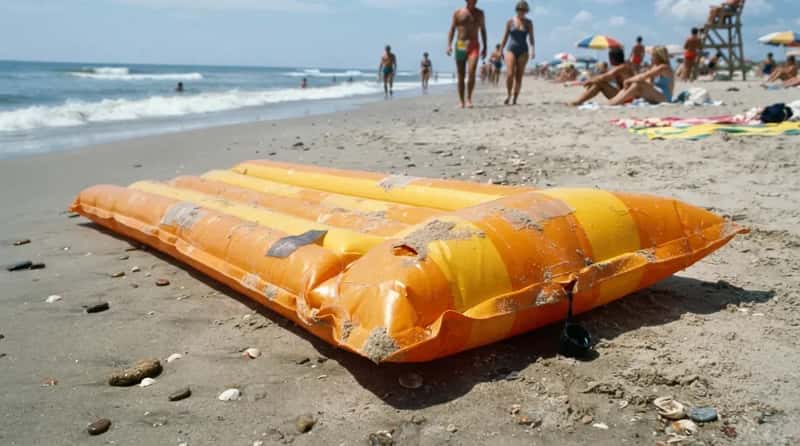
The rafts were bright, cheap vinyl, and they almost always sprung a leak by day two or three, usually from a hidden shell in the sand. Patching kits existed, but most families just kept blowing air back in until it finally gave out completely. A raft lasting an entire week was considered a genuine victory.
The smell of hot vinyl mixed with sunscreen is one of those scent memories people still bring up decades later. Losing a raft to a rip current was also a real fear, and more than a few kids learned to swim back fast after chasing one too far out.
#12 – The Boardwalk Arcade and Its Deafening Pinball Machines
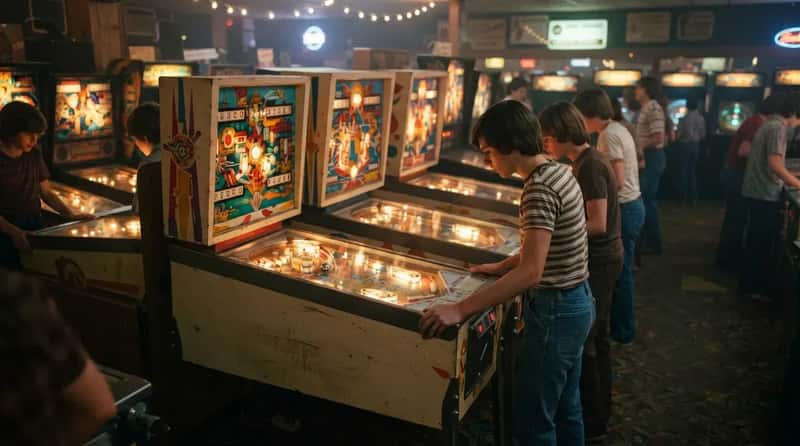
Long before video games took over, boardwalk arcades were full of pinball machines, skee-ball lanes, and claw machines rigged just enough to keep quarters flowing. The noise alone – bells, buzzers, and flippers – was overwhelming in the best way. Winning enough tickets for a genuinely good prize felt like an actual achievement.
Parents handed out rolls of quarters like currency, and running out early in the trip was a real crisis for any kid. These arcades became meeting spots for teenagers too, less about the games and more about who else showed up that night.
Worth Knowing
- Pinball was actually illegal in New York City, Chicago, and Los Angeles for decades, treated as a form of gambling.
- New York’s ban wasn’t lifted until 1976, after a demonstration convinced the city council the game required real skill rather than luck.
- Once that ruling stuck, other cities across the country dropped their own bans soon after.
- That lingering legal cloud is part of why boardwalk arcades still felt a little rebellious well into the decade.
#11 – Drive-In Diners With Carhops on Roller Skates
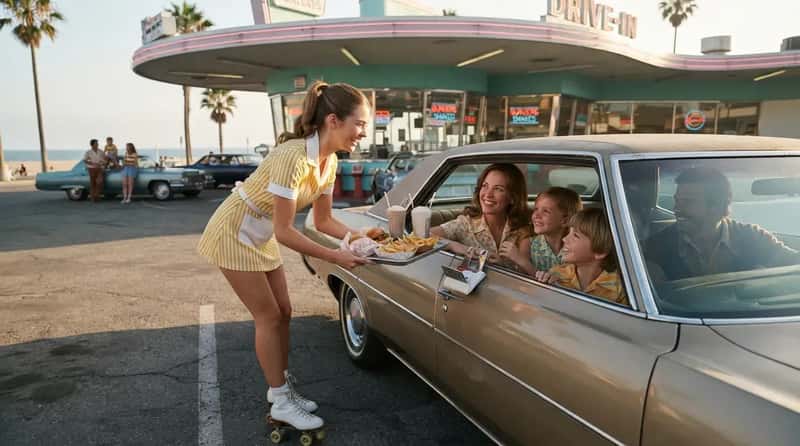
Beach towns were full of drive-in restaurants where a carhop, sometimes literally on roller skates, brought food out on a tray that clipped onto your car window. Ordering meant flashing your headlights or using a little intercom speaker that crackled constantly. Getting the order wrong was common, and nobody complained much about it.
Milkshakes came in real metal cups, and burgers were wrapped in wax paper instead of anything branded. It wasn’t fast food the way we think of it now – it was a slower, more social version, and families lingered in the car far longer than they would today.
#10 – The Motel Pool With No Fence and Basically No Rules
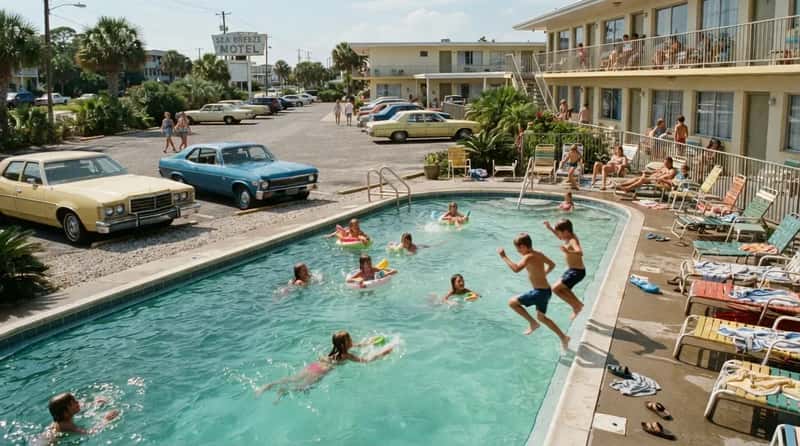
Motel pools in the 1970s were often small, oddly shaped, and completely unfenced, sitting right next to the parking lot with zero barrier between cars and water. Lifeguards were rare at these smaller motels, so supervision came entirely from parents, if it came at all. Kids were often allowed to swim unsupervised for hours at a time.
The water was frequently over-chlorinated to the point of stinging eyes, and the deep end sign was more of a suggestion than a rule. Somehow this was considered completely normal, and most people who grew up with it don’t remember it as reckless – just how things were.
#9 – Warm Tab and Fresca by Early Afternoon
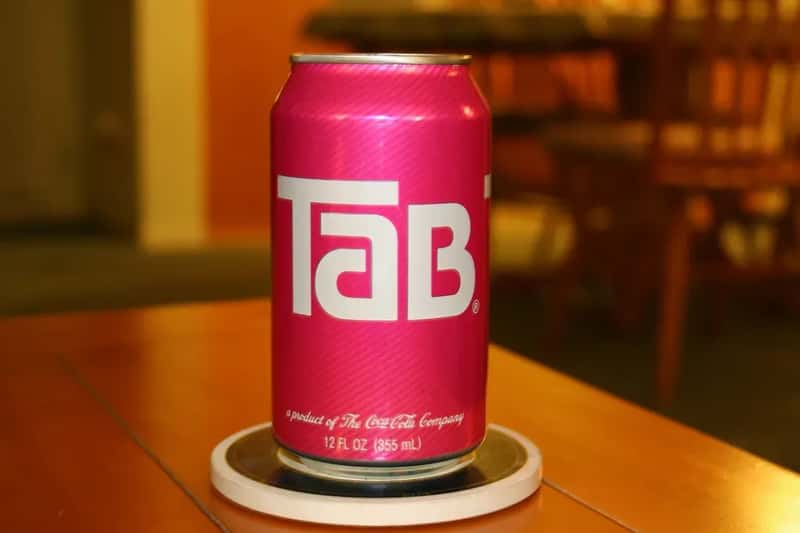
Sodas like Tab and Fresca were beach-cooler staples, but with ice melting fast in non-insulated coolers, most drinks turned lukewarm well before lunch. Nobody complained much because cold drinks weren’t really the expectation to begin with. A truly cold soda by 3 p.m. felt like a small luxury.
Diet soda itself was still a relatively new idea, and Tab in particular had a very specific, almost medicinal taste that people either loved or couldn’t stand. Either way, the can with the pink label is instantly recognizable to anyone who grew up drinking it on a beach towel.
#8 – The Giant Plastic Motel Key Fob You Couldn’t Lose
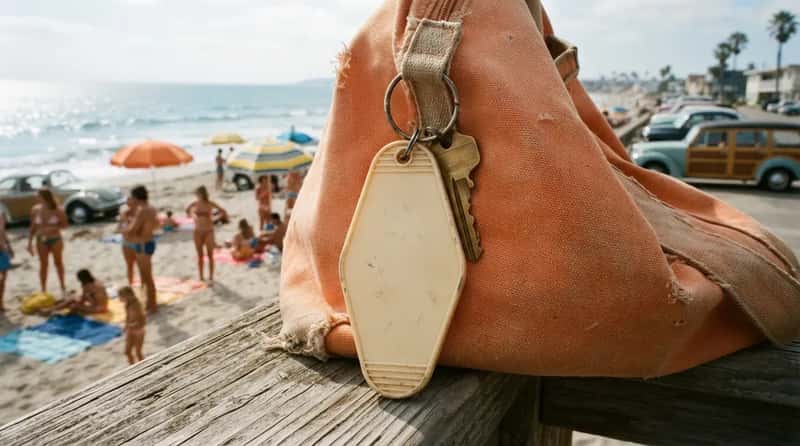
Motel room keys came attached to a large, often diamond-shaped plastic fob printed with the motel’s name and a warning about mailing it back if found. The size wasn’t an accident – it was designed so guests couldn’t accidentally slip it into a pocket and walk off with it. Losing one anyway usually meant an awkward conversation with the front desk.
Kids liked collecting them from different trips almost like trophies. It’s a small detail, but it instantly signals the era to anyone who sees an old photo with one dangling from a beach bag.
#7 – The Beach Read Everyone Was Suddenly Talking About
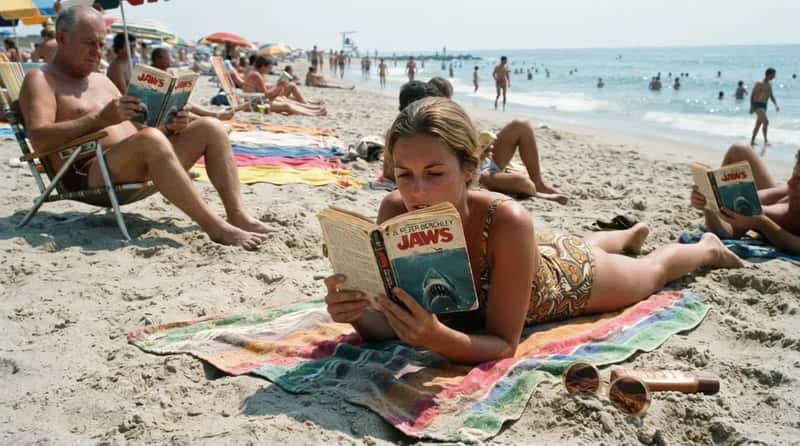
By the mid-1970s, one paperback thriller changed how people thought about the ocean entirely, and beach towels that summer were full of dog-eared copies passed between family members. Some people admitted the book made them genuinely nervous to swim past the sandbar that year.
It wasn’t unusual to see three or four people on the same stretch of sand all reading the identical paperback, since beach town drugstores stocked it heavily. That shared experience – everyone reading the same book at the same beach the same summer – is something modern vacations rarely replicate.
Quick Compare
- The novel: Peter Benchley’s book hit shelves in 1974 and spent months on bestseller lists before summer even started.
- The movie: the film adaptation opened in June 1975 and went on to become one of the biggest box-office hits in movie history.
- The effect: plenty of beachgoers that summer admitted they thought twice before swimming out past the sandbar.
#6 – The Boardwalk Photo Booth Strip
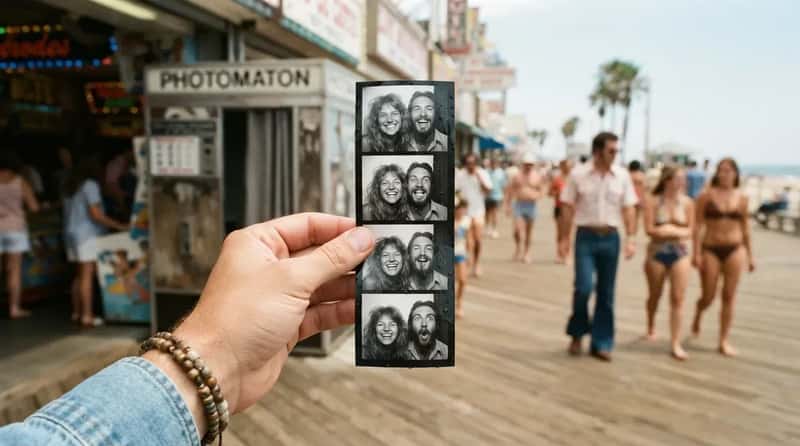
Coin-operated photo booths produced a strip of four black-and-white photos in a couple of minutes, developing right there inside the machine. Friends and couples crammed into the tiny curtain together, making faces before the flash caught them off guard. Nobody got to see the picture until it slid out wet and still developing.
These strips ended up taped inside diaries, glued into scrapbooks, or tucked into wallets for years afterward. Unlike a phone photo that gets buried in a camera roll, a physical strip like that tends to survive because it was actually held onto.
#5 – No Sunscreen Reapplication, Just a Reflector Blanket
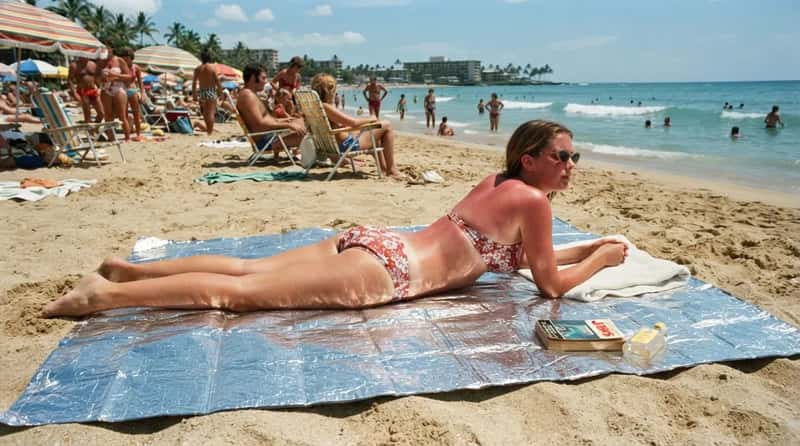
Reapplying sunscreen wasn’t really a concept most people practiced, partly because sunscreen with real SPF protection wasn’t widely used yet. Instead, people used foil-backed reflector blankets to intensify the sun’s effect rather than block it. A “good” vacation was often measured by how red or peeling someone got by the end of the week.
Skin cancer risk simply wasn’t part of the public conversation the way it is now. Most people who lived through this era now look back and consider it one of the clearer signs of how much beach culture has actually changed for the better.
#4 – The Payphone Check-In Call Home

Checking in with family back home meant finding a payphone, usually near the boardwalk or motel office, and having a roll of coins ready. Calls were kept short and to the point because long-distance charges added up fast, even for a quick “we made it safe” update. A dropped call meant starting the entire coin process over again.
There was no way to reach anyone instantly if plans changed mid-day, so families relied on set meeting times and trusted each other to show up. That built-in disconnect from constant contact is something a lot of people now genuinely miss.
Almost everything captures your imagination in some way, but the human imagination is the source of it all.
Walt Disney
#3 – Frisbees Flying Everywhere for the First Time
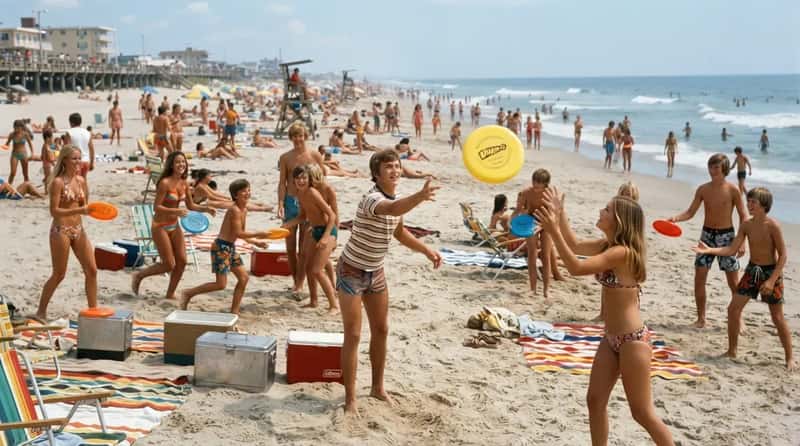
The Frisbee had only recently exploded in popularity, and beaches became one of its favorite proving grounds, with games breaking out between total strangers. It required almost no equipment and no rules, which made it an easy way for kids from different families to end up playing together. A wayward throw hitting someone’s cooler was practically a rite of passage.
Frisbee golf and organized ultimate weren’t really mainstream yet, so most games were completely improvised. That casual, pick-up-game energy is part of why so many people remember beach Frisbee as one of the simplest, most social parts of the whole trip.
#2 – One Cramped Motel Room, the Entire Family, No Escape
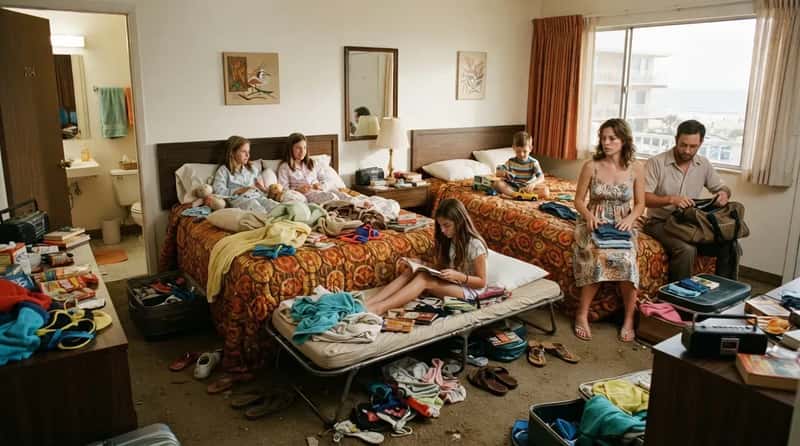
Vacation budgets usually meant one motel room for the entire family, often with two double beds and a rollaway cot squeezed in for extra kids. Privacy essentially didn’t exist, and arguments over the one bathroom were a nightly occurrence. Somehow this forced closeness is one of the details people remember most fondly now.
There was no separate hotel suite, no extra room down the hall – just one shared space for a full week. Looking back, many say that constant togetherness, annoying as it felt then, is exactly what made those vacations feel like a real family event instead of a series of separate activities.
#1 – The Total Freedom of Zero Screens and Zero Schedules
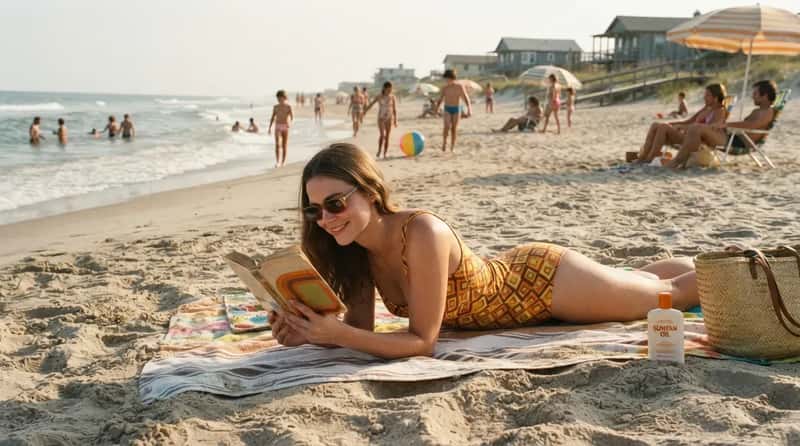
There was no phone buzzing with notifications, no group chat to check, and no real way for the outside world to reach you unless it was an actual emergency. That absence wasn’t seen as a sacrifice at the time – it was simply the default, and it gave the entire week a different rhythm. People genuinely disappeared for a week, and nobody expected otherwise.
Days stretched out with no set agenda beyond the beach, meals, and whatever boardwalk activity came up. Ask almost anyone who vacationed this way, and the freedom from constant contact is the detail they name first – the thing modern beach trips, for all their comforts, still can’t quite recreate.
Why It Stands Out
- No notifications, no group chats, no way for work or errands to follow you onto the sand.
- A full week could pass with almost zero outside contact beyond one scheduled payphone call.
- Boredom wasn’t avoided – it was where half the best vacation memories actually came from.
- It’s the one detail nearly everyone says they’d trade modern conveniences to get back, even briefly.
None of these details were considered special at the time. They were just Tuesday. But looking back, it’s clear the imperfections – the warm soda, the leaky rafts, the week of total disconnection – are exactly what made those summers stick in memory decades later, long after the sunburn faded.