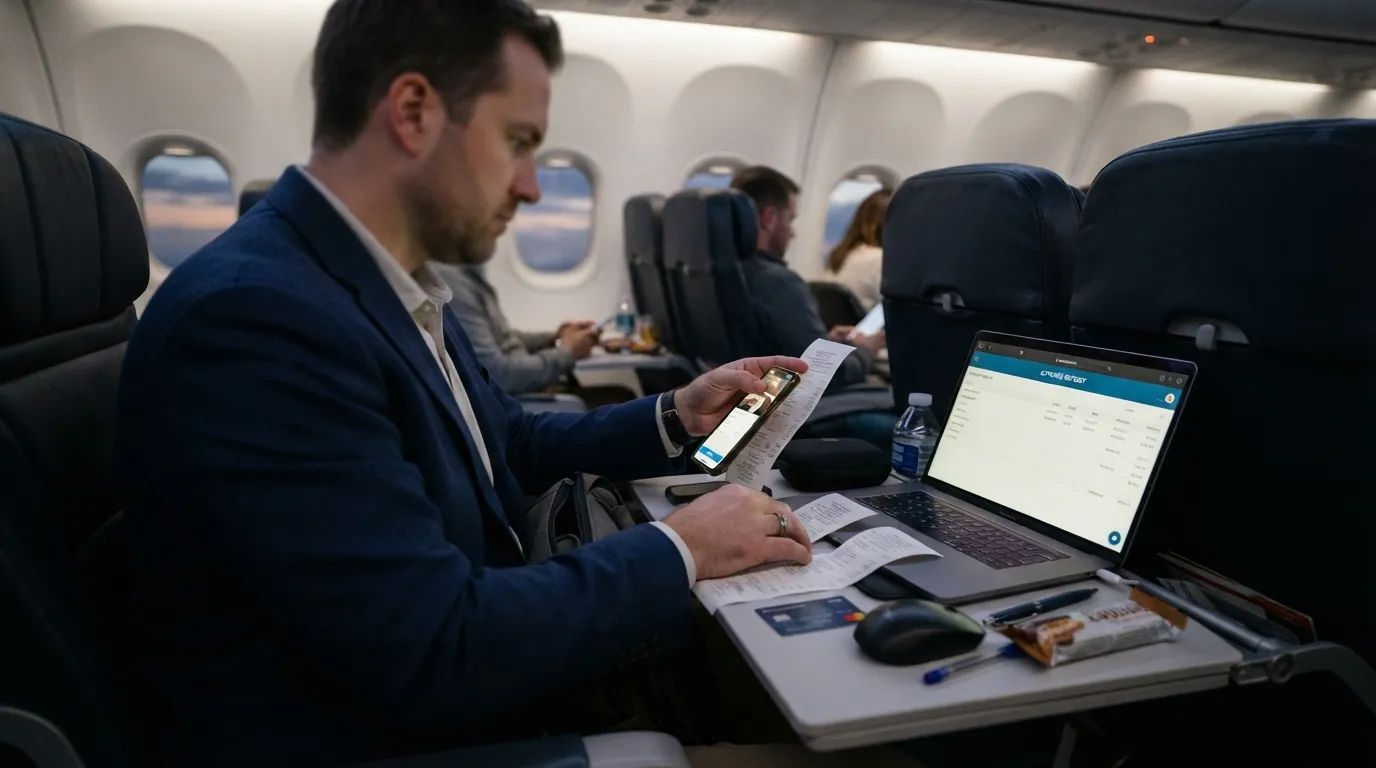
Most people think they can spot a business traveler by the suit and the rolling carry-on. They’re wrong – the real tells are almost invisible, and far stranger than a wardrobe choice.
In the US alone, 1.3 million people take a business trip every single day. Yet almost nobody can actually name the habits that separate a road warrior from a first-time flyer – until now.
#21 – They Already Have TSA PreCheck (And Have Had It for Years)
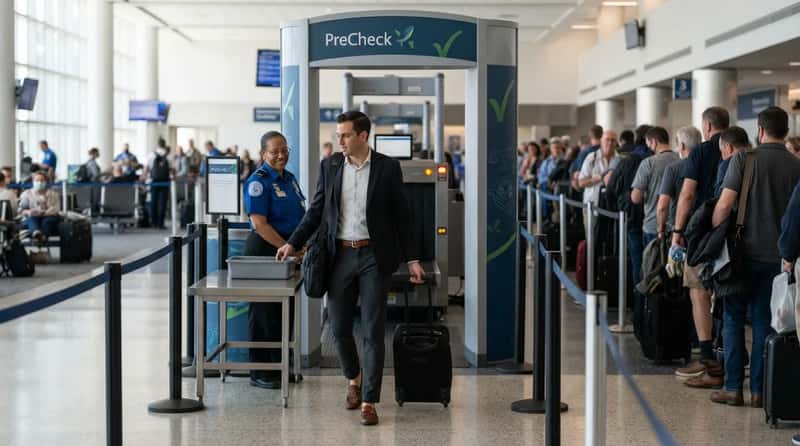
The first giveaway happens before they even reach the terminal.
As of January 2020, 94% of PreCheck passengers spent five minutes or less in the security line. Regular travelers, meanwhile, can wait 30 to 45 minutes on a busy Monday morning.
PreCheck members never remove their shoes, laptops, or belts. They glide through while everyone else scrambles to repack a bin.
Fast Facts
- More than 20 million people are now enrolled in TSA PreCheck nationwide.
- PreCheck lanes operate at 200-plus U.S. airports and are honored by 90-plus airlines.
- TSA’s own benchmark: under 10 minutes in PreCheck lanes versus under 30 minutes in standard lines.
- A five-year membership runs $78, with online renewal starting around $69.
But #20 is where this habit stops looking like convenience and starts looking like a system.
#20 – They Pack a Carry-On Only, Every Single Time
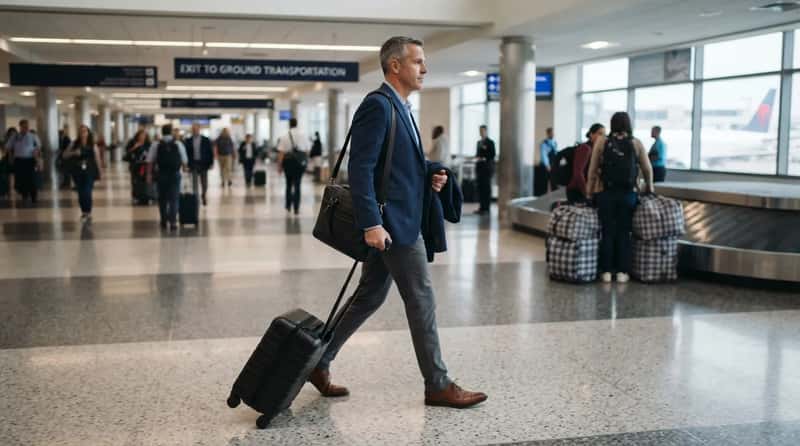
Ask a veteran business traveler when they last checked a bag. The answer will make you rethink your own packing.
Once someone has traveled enough, their gear stops being a checklist. A pre-loaded toiletry bag, a spare charger, a backup dress shirt – all permanently staged in the carry-on.
Checked luggage means lost time at baggage claim, and business travelers treat every minute at the airport as lost productivity. Leisure travelers pack for every scenario. Work travelers pack for one outcome: speed.
But #19 exposes a habit that’s less about packing – and more about strategy.
#19 – They’re Enrolled in Multiple Loyalty Programs at Once
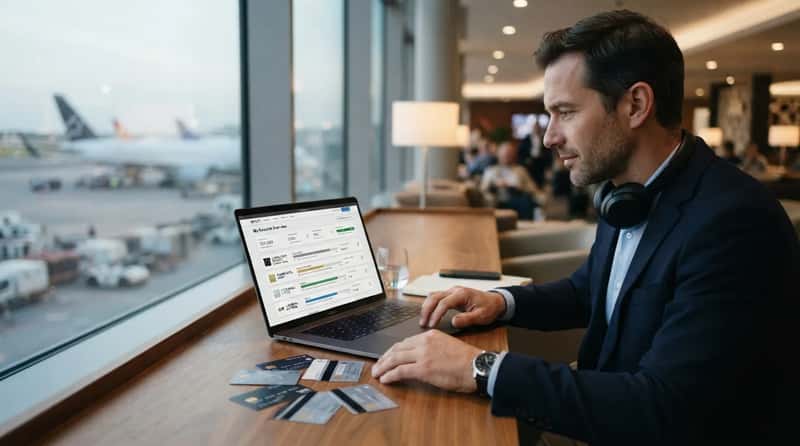
This isn’t brand loyalty. It’s a full-time optimization strategy.
Fifty-nine percent of business travelers belong to one or more hotel loyalty programs, and many stack several – one airline alliance, one hotel chain, and a backup for each. Frequent flyers sign up for everything they can, because status quietly unlocks upgrades and better service.
They check their points balance the way most people check their bank account. That habit alone tells you everything.
But #18 shows just how deep that obsession with efficiency really goes.
#18 – They Know the Airport Layout Better Than Their Own Neighborhood
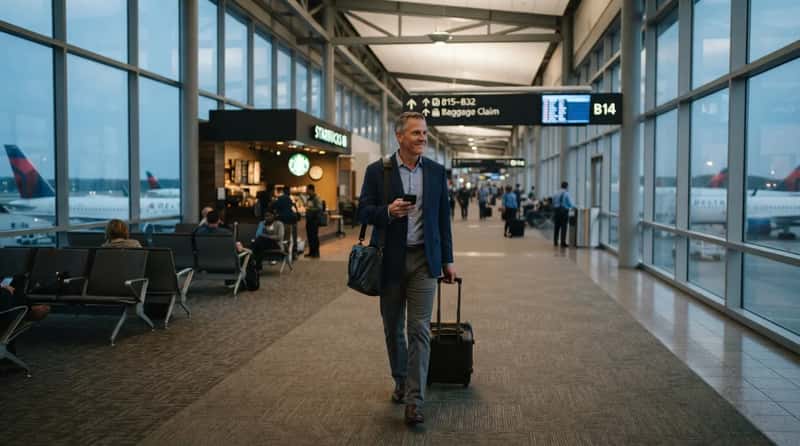
Ask a frequent traveler where the best outlets are in Terminal B of Atlanta’s airport. They’ll answer without blinking.
Research on frequent business travelers found their time in airports actually feels like a kind of “time off” – a familiar space with its own quiet comforts. They know the fastest security lane, the strongest Wi-Fi signal, and which coffee shop opens at 5 a.m.
This spatial fluency isn’t accidental. Fly the same route monthly for six months, and you’ll know that terminal better than most of the staff who work there.
But #17 reveals a habit almost nobody outside the industry has ever noticed.
#17 – They Fly on Tuesdays and Wednesdays on Purpose
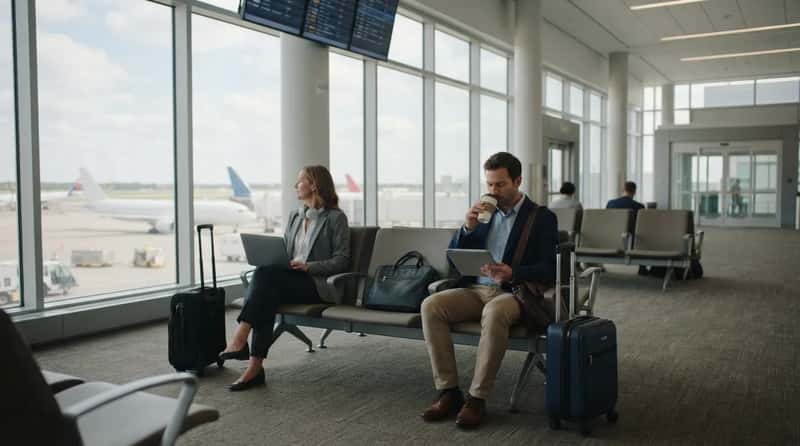
Most people book flights around their own schedules. Work travelers book around a code they’ve quietly cracked.
Tuesday and Wednesday mid-morning flights are consistently cheaper, less crowded, and less prone to the delays caused by weekend traffic. Business travelers learn fast that avoiding Monday mornings and Friday afternoons saves hours of misery a year.
One in five frequent travelers hits the road for work more than once a month. At that pace, flight-timing stops being a preference and becomes survival instinct.
Quick Compare
- Monday morning: heaviest business travel volume of the week, longer lines, more sold-out flights.
- Tuesday/Wednesday midday: lighter loads, smoother security, more predictable on-time performance.
- Friday afternoon: leisure travelers flood the airport and delays compound fastest.
But #16 is almost too small to notice – until you realize how deliberate it is.
#16 – They Have a Go-To Airport Meal and Never Deviate
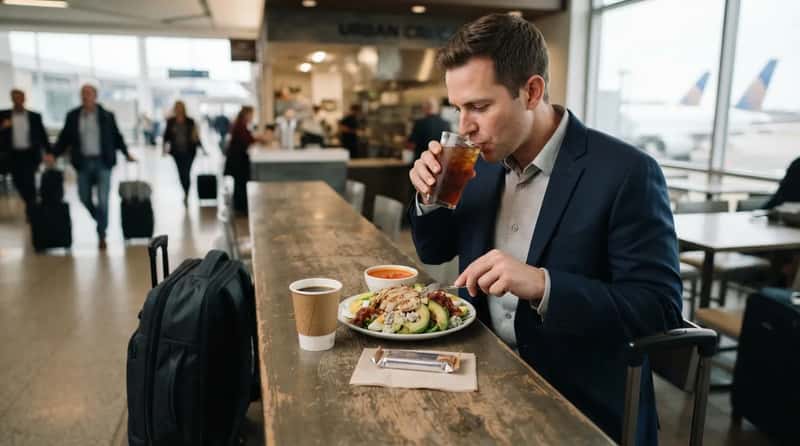
This sounds trivial. It is not.
Struggling to maintain a healthy lifestyle is one of the biggest recurring stressors identified in business travel research, ranking right up there with delays and hotel headaches. The fix seasoned travelers land on is total systemization: same coffee order, same protein bar, same “real meal” spot if there’s time.
Removing food decisions from the mental load isn’t fussiness. It’s decision fatigue management – and it’s a dead giveaway.
But #15 shows how fast that discipline extends onto the plane itself.
#15 – They Treat the Plane Like an Office, Immediately
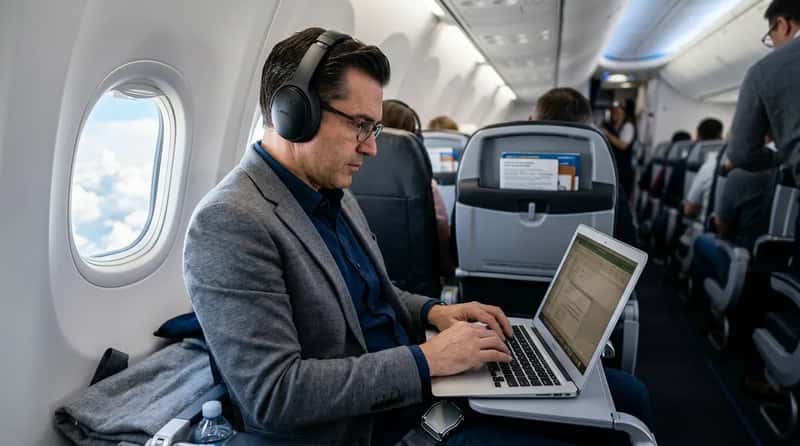
The second the seatbelt clicks, the laptop opens or the headphones go on. There’s no transition period.
Research shows frequent business travelers treat the flight as their only real pocket of uninterrupted time in the whole trip. They guard it fiercely.
Noise-canceling headphones are the universal signal. They’re not watching a movie – they’re either deep in a deadline or sleeping strategically to arrive fresh.
But #14 is the habit that separates the pros from everyone still learning the hard way.
#14 – They Never Bring a Checked-Bag-Sized Toiletry Kit

The oversized shampoo bottle is the clearest sign someone is new to work travel.
A business traveler’s toiletry kit is a tightly curated set of TSA-compliant minis that never has to leave the bag for screening. Many keep a duplicate kit permanently stocked in the carry-on.
The seasoned road warrior has never once had a bottle confiscated at security. When you see someone fumbling with full-size conditioner at the bin, you already know: they’re not traveling for work.
But #13 reveals a habit that companies are only now starting to notice – and quietly encourage.
#13 – They Add Leisure Days to Business Trips, Strategically

This is more common than most people realize, and it’s reshaping how companies think about travel budgets entirely.
Nearly half of business travelers – 45% – tack on at least one leisure night to a work trip, and 74% now blend business and leisure on the same journey. It’s a trend now widely known as “bleisure.”
This isn’t slacking – most executives actively encourage it. Seventy-five percent favor employees extending trips for leisure, and 86% even endorse remote work from anywhere.
At a Glance
- 89% of business travelers say they want to extend a trip with personal leisure time.
- 83% have actually taken a “bleisure” trip within the past year.
- Most extensions are short: 57% add just one or two days, 32% add three or four.
- Millennials are the most likely generation to bolt on leisure days, ahead of Gen X and Boomers.
But #12 shows how work travelers pay for everything – literally.
#12 – They Have a Corporate Card Loaded Into Their Phone Wallet
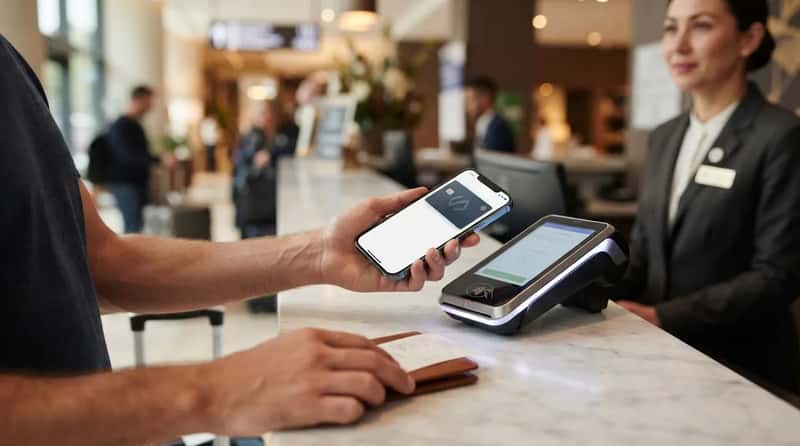
Cash is for leisure travelers. A corporate card in a mobile wallet is the default for a road warrior.
Two-thirds of business travelers worldwide receive a corporate credit card, and about 64% of them add it straight to their phone. No wallet-digging at check-in – just a tap and they’re moving again.
This habit extends into expense tracking too. If you see someone photographing a receipt seconds after signing it, that’s a work traveler automating their expense report in real time.
But #11 is a seat preference most people assume is just personal taste – it’s not.
#11 – They Always Book the Aisle Seat
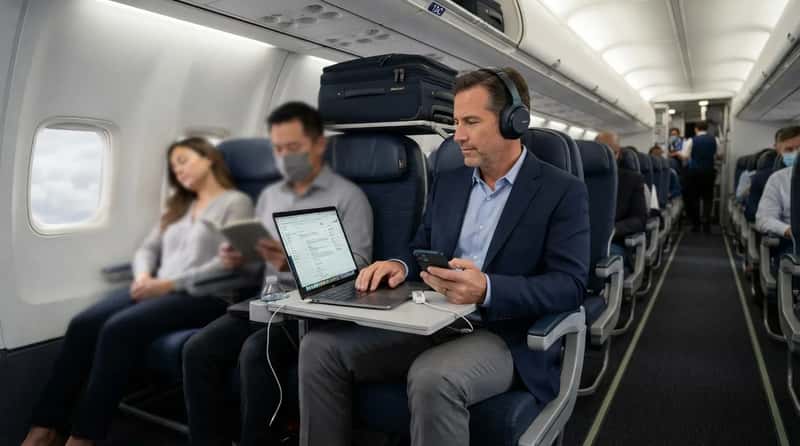
Among business travelers, this isn’t a preference. It’s practically a rule.
The aisle means faster deplaning, easier laptop access, and no climbing over strangers. Business travelers have mentally calculated that it saves 4 to 8 minutes at the gate – every single flight.
Across dozens of trips a year, that adds up to hours of recovered time. The window seat has a view; the aisle seat has an exit strategy.
But #10 is the one that shocks casual travelers every time they hear it.
#10 – They Arrive at the Airport Later Than You’d Think Is Safe
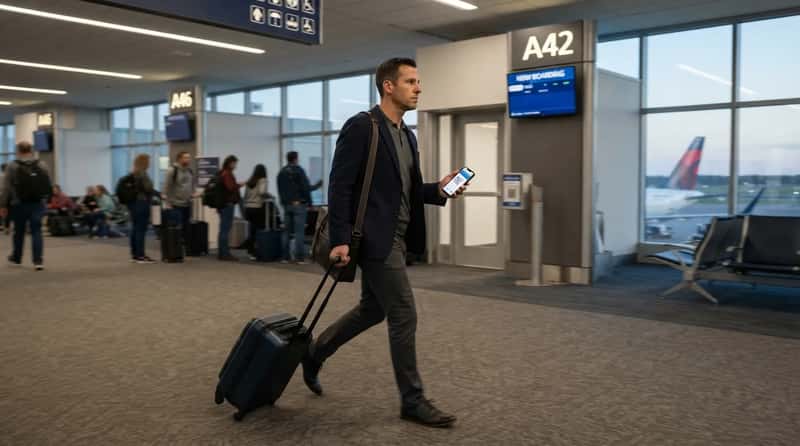
Business travelers consistently cut arrival times that would give a leisure flyer a panic attack.
It’s not about moving faster physically – it’s a series of small decisions made long before reaching the terminal that quietly remove the friction everyone else is still fighting through.
With PreCheck, a mobile boarding pass, no checked bags, and the layout memorized, a seasoned road warrior can get from curb to gate in under 20 minutes. The two-hour early arrival is for people who haven’t systematized the process yet.
But #9 shows the real reason they’re so loyal to one hotel brand.
#9 – They Have One Preferred Hotel Chain, and Only That Chain
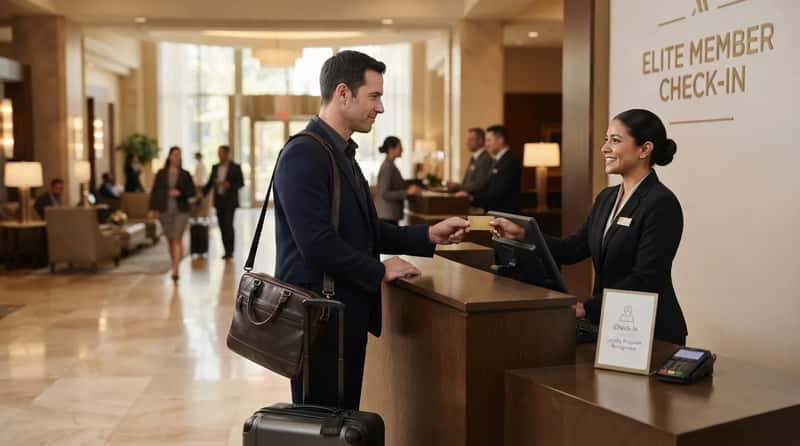
This isn’t brand loyalty in the traditional sense. It’s a points strategy with a hotel room attached.
More than 80% of business travelers are interested in – or already using – early check-in and late checkout perks. Those benefits only unlock at loyalty status, which requires concentrating stays with a single brand.
The traveler who seems picky about hotels isn’t being high-maintenance – they’re protecting their elite status. Every off-brand stay is progress lost toward the next tier.
But #8 is a skill that takes months of misery to build.
#8 – They Sleep on Planes Without Any Visible Effort
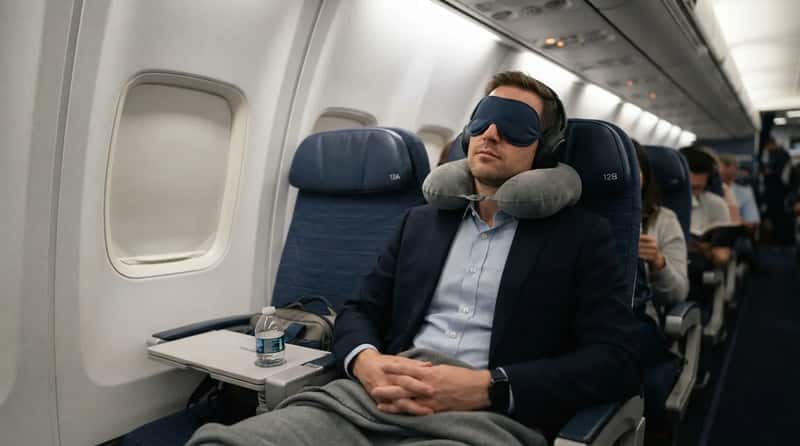
You can spot this on any early-morning flight. The work traveler is asleep before the safety video ends.
This skill is built out of necessity. In 2019, 1 in 5 business travelers reported that business travel negatively affected their mental health, and sleep becomes a strategic resource rather than a luxury.
The neck pillow, the eye mask, the window shade pulled down before wheels-up – it’s a protocol, not comfort-seeking.
But #7 is the skill they’re weirdly proud of.
#7 – They Know How to Expense Everything, and They Do
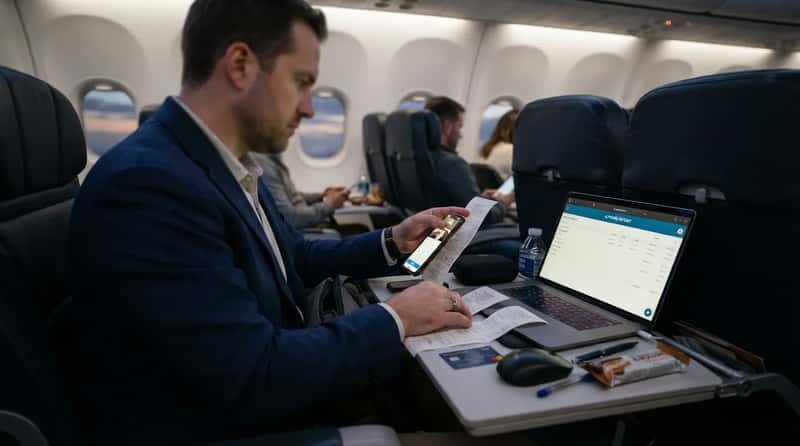
This is an art form that takes months to develop and becomes completely automatic.
Fifty-seven percent of frequent business travelers have expensed a high-end meal, compared to just 28% of occasional travelers. They also expense Wi-Fi, airport parking, phone cables, even gate snacks – they know exactly what counts as “miscellaneous.”
The seasoned work traveler never pays out of pocket for anything travel-related if they can help it. Expense reports get filled out on the flight home, while receipts are still fresh in the app.
But #6 is the most counterintuitive habit on this entire list.
#6 – They’re Completely Unbothered by Flight Delays
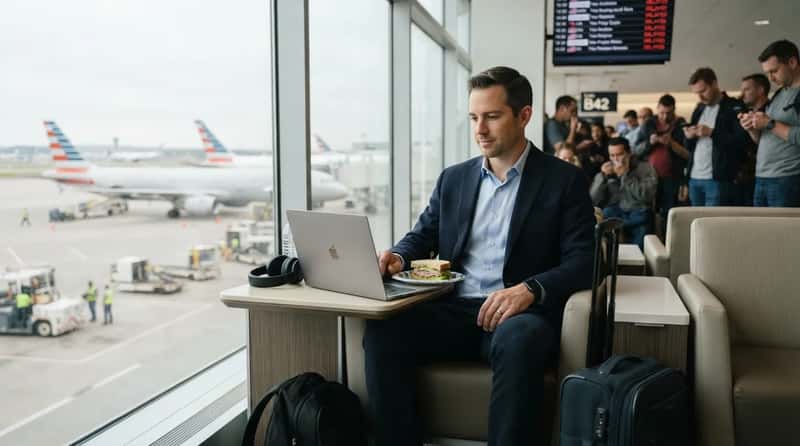
This one throws people off every time – and it’s one of the most reliable tells there is.
The top reasons business travelers skip trips entirely are total flight time (40%) and the risk of delays or cancellations (26%). So the ones who still fly have already mentally budgeted for disruption.
The passenger white-knuckling their phone at the gate is almost never a road warrior. The one calmly eating a sandwich and answering emails probably is.
But #5 is where the habit turns into something almost like a second home.
#5 – They Have a “Default City” They Know Like a Local

Ask a frequent traveler about their most-visited city. They’ll name the restaurant, the hotel, and the fastest route from the airport without pausing.
Nearly two-thirds of business travelers expected to attend a conference in 2025, making it the single biggest driver of trip volume. Cities like Chicago, Las Vegas, and Dallas become secondary home bases.
This city-familiarity is a dead giveaway. When someone says “I’m routing through ORD” instead of “I’m going through O’Hare,” you’re talking to a business traveler.
But #4 surprises people the most, because it has nothing to do with airports at all.
#4 – They’re Oddly Skilled at Small Talk With Strangers
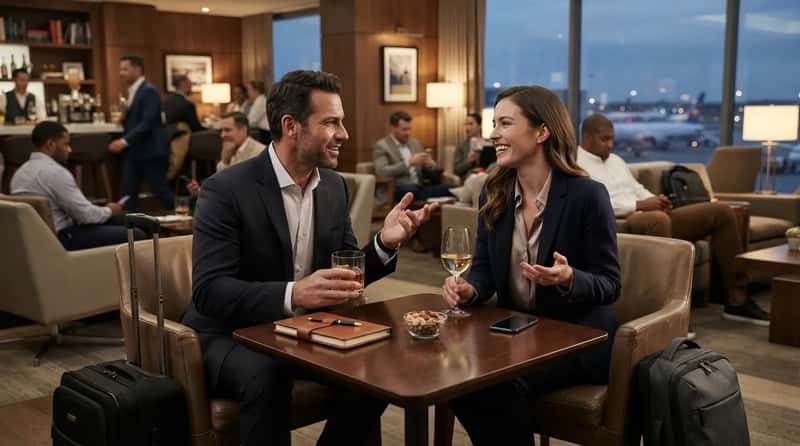
This one catches people off guard, but it makes total sense once you think about it.
Salespeople, consultants, field engineers, executives, and trainers make up much of the road-warrior population – and nearly all of those roles demand relationship-building as a core skill. The airport lounge and hotel bar become networking venues whether the traveler wants that or not.
Business travelers can hold a confident, credible conversation with a total stranger in under two minutes. It’s not charisma. It’s repetition.
But #3 is the darker side of this lifestyle – the part employers rarely talk about.
#3 – They Struggle to Fully “Switch Off” at Home

This is the hidden cost of road warrior life, and it’s far more common than most companies acknowledge.
Constant travel disrupts personal relationships and makes a consistent, healthy routine genuinely hard to maintain. A 2025 joint Situ and YouGov study found 21% of Gen Z travelers said it was difficult to keep a good work-life balance while working away.
The person at a weekend family dinner glancing at their phone isn’t rude. They might just have a Monday morning flight waiting.
But #2 explains why they keep doing this to themselves anyway.
#2 – They Genuinely Believe Business Travel Has Helped Their Career

This belief is everywhere among frequent travelers – and the data actually backs it up.
Seventy-six percent of all survey respondents believe business travel opens up more opportunities, and 90% of frequent travelers say it has positively impacted their careers directly.
They don’t complain about the travel, or if they do, it’s tactical, not genuine. Thirty-five percent of executives believe reduced business travel actually hurts their company’s competitive edge – and frequent flyers have internalized that same logic personally.
But nothing prepared us for what we found at #1.
#1 – They’ve Quietly Accepted the Airport as Their Third Place
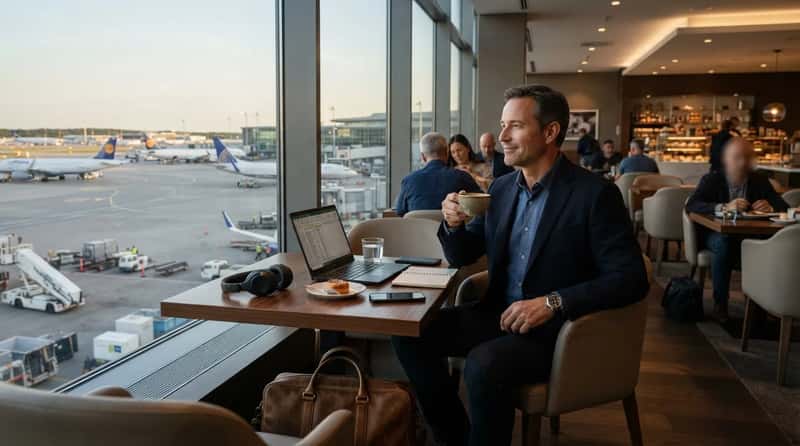
Home. Office. Airport. This is the unspoken reality of a road warrior’s life, and it’s the habit that explains every other one on this list.
Frequent business travelers genuinely enjoy their familiarity with airports, describing the experience as a kind of relaxation rather than stress. The lounge isn’t a waiting room – it’s a workspace, a dining room, and a place to decompress, all in one.
The airport is not the obstacle to the trip. For some travelers, it’s the only part of the trip that still feels like theirs.
Common observation among frequent business travelers, travel industry research
Eighty-eight percent of frequent business travelers are satisfied with their travel experience, and 84% want to travel the same amount or more. The chaos that overwhelms a casual flyer is just background noise to them. They’ve made peace with the terminal – and that, more than any loyalty card, is the ultimate tell.
The Bottom Line
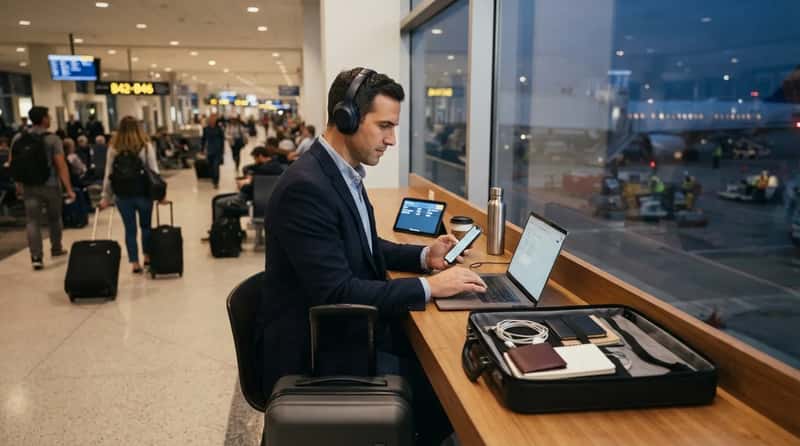
Business travelers were never defined by the suit or the rolling bag. They’re defined by systems – PreCheck, carry-on-only packing, loyalty stacking, and a practiced ability to work anywhere and sleep anywhere.
Business travelers make up just 12% of all airline passengers, yet their airfare is twice as profitable for airlines. That single number says more about this lifestyle than any habit on this list – because somewhere between flight one and flight one hundred, the road stopped being a hassle and became a second identity.
Worth Knowing
- Just 12% of airline passengers are business travelers – but they’re disproportionately profitable for airlines.
- About 59% belong to at least one hotel loyalty program, often stacking several.
- 83% have taken a “bleisure” trip in the past year, blending work with personal time off.
- 90% of frequent travelers say the road has genuinely helped their career.