
Most people today think of a motel as a forgettable box off the highway – somewhere you sleep between Point A and Point B and never think about again. But that wasn’t always the case. In the 1970s, pulling into a roadside motel was an event. Neon signs, vibrating beds, themed rooms, ice machines you could walk to in your socks at midnight. These places had personality in a way that today’s beige-box chains simply don’t – and the people who built them were genuinely trying to give you something worth stopping for.
Then the chains took over, the interstates bypassed the old routes, and one by one these features vanished. What got lost in that shuffle wasn’t just kitsch – it was comfort, character, and a genuine sense of place. Some of what disappeared is now being sold back to us at boutique hotels for two hundred dollars a night. A few of these features, though, haven’t come back at all. Here are 21 that deserve a second shot.
#1 – The Giant Glowing Neon Sign Out Front
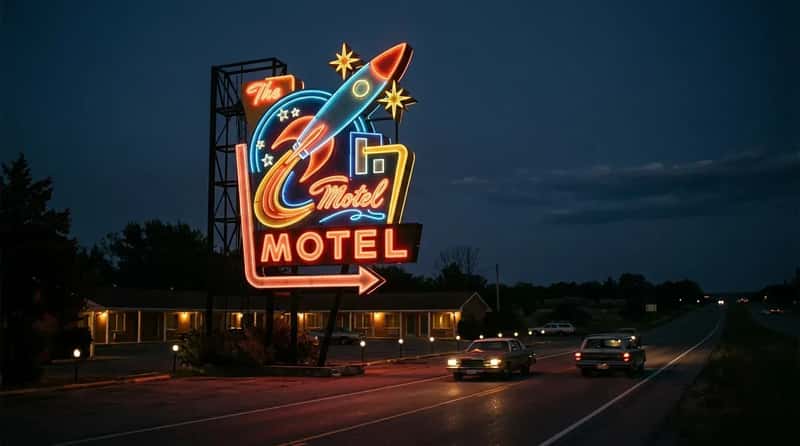
Before GPS and Google Maps, the neon sign was how you knew a motel existed. Post-war motels sought visual distinction, featuring eye-catching signs that ran the full range of American imagination – cowboys and rocket ships, atomic starbursts and palm trees – all of it burning against a dark highway sky. These weren’t just advertisements. They were landmarks. You could spot a good one from a mile away and feel relief wash over you after eight hours of driving.
Today’s motel signs are backlit plastic rectangles with the same font as every other property on the block. The fact that boutique hotels now spend serious money to recreate neon signs tells you everything. We didn’t ditch them because they stopped working. We ditched them because they got expensive to maintain – and we lost something irreplaceable in the process.
#2 – The Kidney-Shaped Swimming Pool
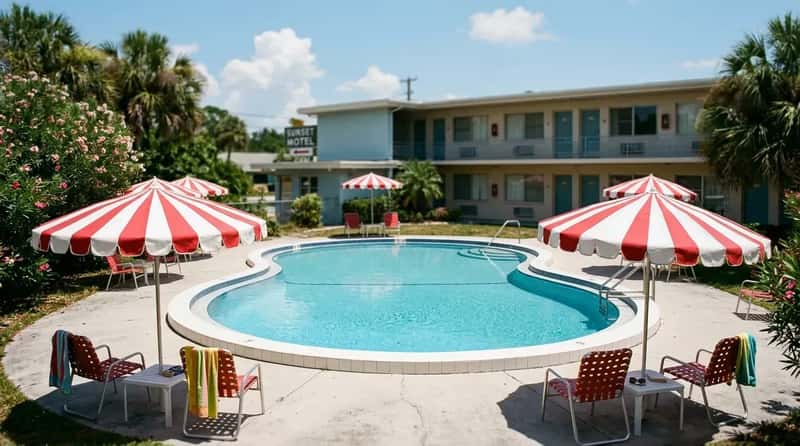
The kidney-shaped pool is one of the most recognizable design icons of mid-century America, and by the 1970s it was practically a motel religion. There was something deliberate and human about that shape. It wasn’t a rectangle stamped into concrete by a contractor following corporate specs. It had a curve to it, a sense of playfulness, like someone actually thought about what would be fun to swim in – and then surrounded it with red-and-white umbrellas and aluminum lawn chairs.
Today’s motel pools, when they exist at all, are rectangular, shallow, and surrounded by zero-personality deck furniture. The kidney pool wasn’t just aesthetic. It created a gathering point, a social hub where road-weary strangers actually talked to each other. Restored vintage motels that kept theirs intact treat the pool as the centerpiece of the whole property. That’s not an accident. That’s the pool doing exactly what it was always supposed to do.
#3 – Free On-Site Mini Golf
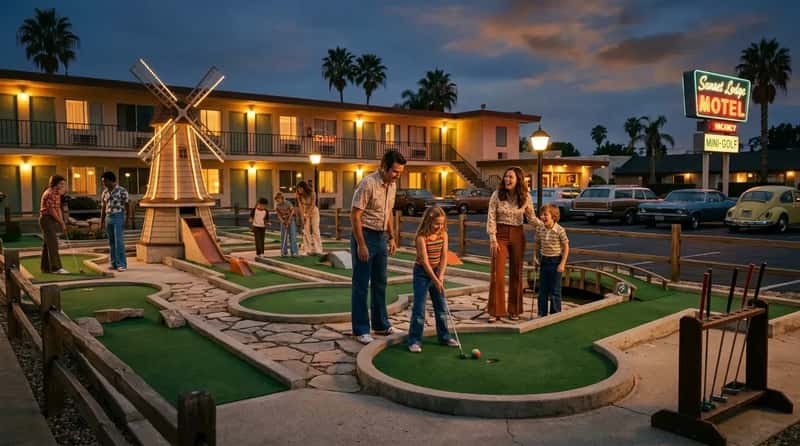
This one doesn’t get nearly enough credit. In the 1970s, a motel with a mini golf course on the property wasn’t unusual – it was a selling point that appeared right there on the roadside sign. The key word was free. Not a $15 upsell at checkout. Not a wristband activity. Just a little nine-hole course lit by the motel’s own neon, waiting for you after dinner.
Think about what that actually did for families. Parents got a drink and a moment of quiet. Kids burned off energy they’d been storing since Ohio. Everyone wound up at the same place talking to people they’d otherwise never have met. Today, most budget motels offer a vending machine and maybe a sad breakfast bar. Compared to a putting course under string lights, that’s not even in the same universe of value.
#4 – Motel-Branded Stationery and Ashtrays on the Desk
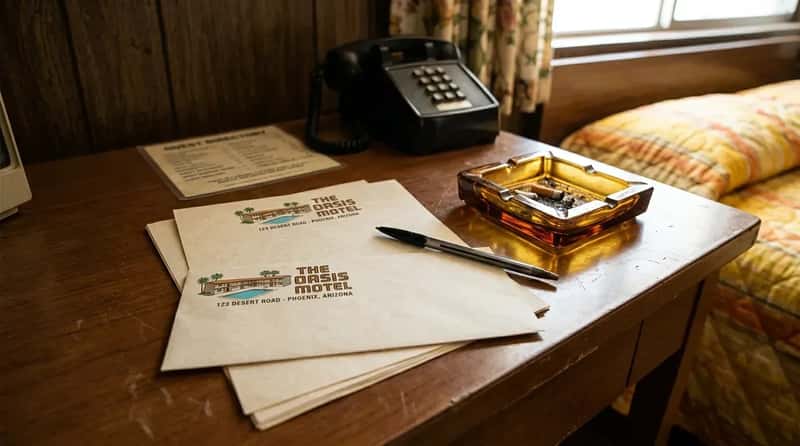
Walk into a 1970s motel room and the desk had things on it. Real things. Stationery with the motel’s own logo – sometimes a little illustration of the building or the pool – and an address that told you exactly where you were in America. People actually wrote postcards and letters on that paper. It was tactile proof that you’d been somewhere specific, not just somewhere generic.
The ashtray question is complicated now. But the broader point is about the small, branded, physical objects that made a motel feel like a place with an identity. For many people who experienced that era, the nostalgia isn’t really about the smoking – it’s about a time when rooms were stocked with small souvenirs that felt personal and worth keeping. Today’s equivalent is a card with a QR code telling you to download the hotel app. One felt like a small gift. The other is homework.
#5 – The Heavy Metal Room Key With a Big Plastic Fob
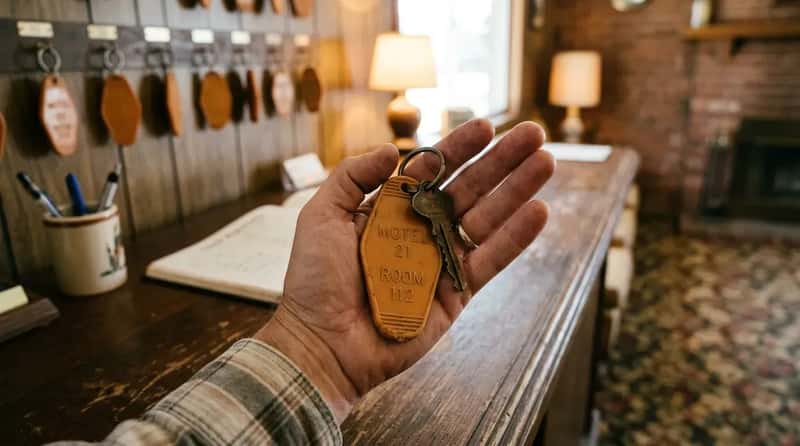
There was a ritual to getting a real room key. The fob was chunky, often brightly colored, and had the motel name and room number stamped right into the plastic. You could feel the weight of it in your hand at check-in. That bulk was intentional – a gentle nudge to leave the key at the desk when you went out rather than carry it everywhere. It also meant something: this room is yours, here is the proof, here is the object.
Key cards give you none of that. They’re slim, forgettable, and regularly stop working if they get near your phone. At Austin Motel in Texas, guests can buy a plastic key fob modeled after old room-key tags in the gift shop – which proves people still want this experience badly enough to pay for a replica. When your amenity becomes a gift-shop novelty item, something has clearly been lost.
#6 – Wood Paneling on the Walls
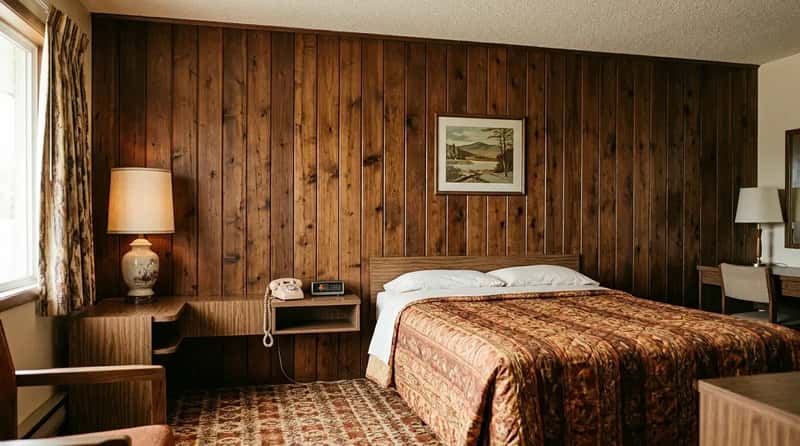
Wood paneling gets mocked endlessly as a 1970s design cliché, but here’s the truth: it worked. It made a motel room feel warm, contained, and slightly cabin-like in a way that stark white drywall simply does not. It absorbed sound, aged gracefully, and gave a room a sense of material presence that no amount of decorative throw pillows can replicate.
Boutique hotels are now paying serious money to recreate wood paneling as a luxury feature – Fairlane Hotel in Nashville features it prominently alongside terrazzo flooring in rooms designed to evoke a 1970s crash pad. The interior design industry has fully rehabilitated what budget motels figured out decades ago. It’s warm. It’s human. It belongs in rooms where tired people sleep.
#7 – The Coin-Operated TV (and the Thrill of Fighting for the Remote)
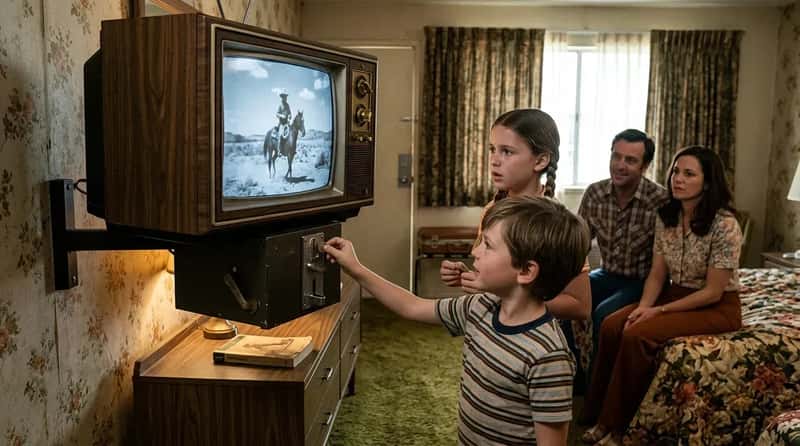
Coin-operated televisions were polarizing – you loved them as a novelty and resented them deeply when your quarter ran out right before the ending of a Western. The tension was real: the quarter lasted maybe twenty minutes, just long enough to almost finish an episode, with kids immediately screaming for another one. In hindsight, that friction created a kind of shared family theater. Everyone was invested in the same screen at the same time.
The coin-TV itself isn’t worth resurrecting. But the idea behind it – that television in a motel room was a treat, not a given – created an attitude toward the stay that’s completely gone. Today, hotels offer sixty-channel cable packages that nobody watches because everyone’s already streaming on their own device. There’s a version of this worth reviving: curated local programming, or drive-in-style movies screened by the pool. Something that makes watching feel like an event again.
#8 – The Magic Fingers Vibrating Bed
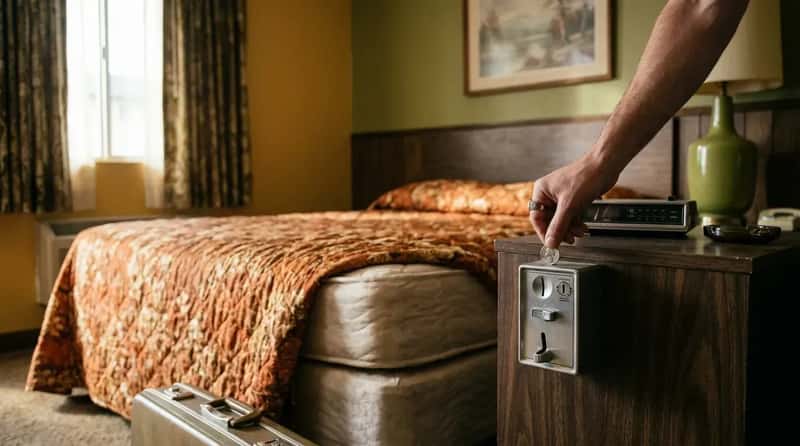
Slip a quarter in the bedside coin box and fifteen minutes of gentle, rhythmic vibration would roll through the mattress. The Magic Fingers bed promised to “tingle away fatigue and tension” – and people believed it, because by the late 1970s there were over a million of these devices installed in hotels and motels across the United States and Europe. That’s not a gimmick. That’s infrastructure. It was everywhere because road-weary guests genuinely liked it.
What killed it wasn’t the concept – it was the coin box. The boxes were a constant target for theft; guests used slugs, foreign coins, or simply broke them open for the quarters inside, creating a maintenance headache that eventually made the whole system unworkable. The technology was never the problem. The monetization model was. A modern version with tap-to-pay or folded into the room rate could absolutely work. Some high-end hotels already sell massage-bed upgrades. Magic Fingers did it for a quarter.
#9 – The Attached Diner or Coffee Shop
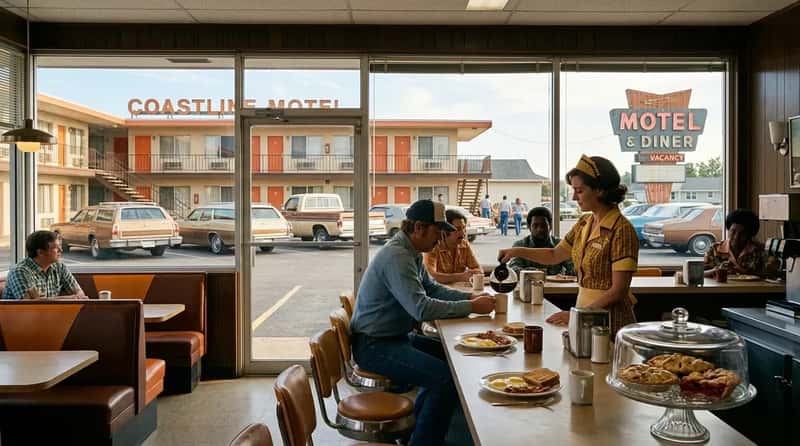
The best 1970s motels didn’t just give you a room – they gave you a whole stop. There’d be a kidney-shaped pool and an adjoining diner with waitresses in uniforms, fresh-baked pie, and bottomless coffee. That diner wasn’t fancy and didn’t need to be. It was open at six in the morning, the coffee was hot, and you could get eggs and toast before getting back on the road. The whole thing took twenty minutes and cost almost nothing.
Today, economy chains typically offer a styrofoam cup of watery coffee next to a basket of cellophane muffins and call it breakfast. That is not a diner. The motel diner had actual community energy – locals ate there, staff knew the regulars, travelers got a genuine taste of wherever they’d landed. That’s not just nostalgia. That’s something travelers are currently paying premium prices to find at boutique hotels, because the original version quietly disappeared.
#10 – Themed Rooms That Were Genuinely Committed to the Bit
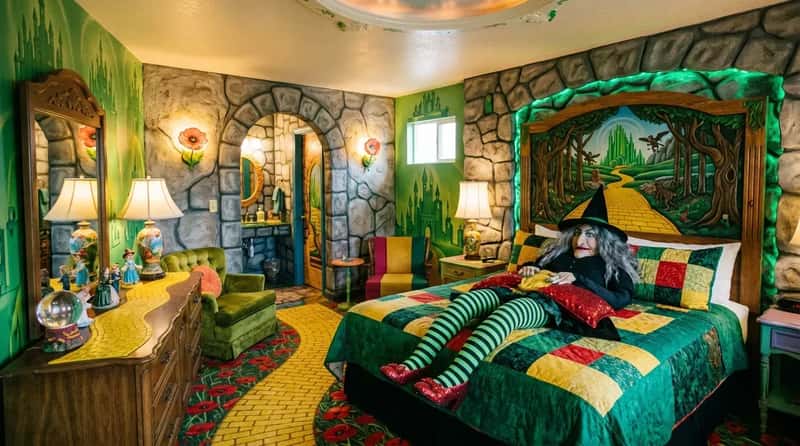
The 1970s motel world understood something the modern hospitality industry mostly forgot: people on vacation want to feel transported, not just housed. Properties like the Madonna Inn offered wildly themed rooms – each one a fully committed, sometimes absurd design universe with vibrant colors and eccentric details that catered to guests who wanted an actual experience. These weren’t Instagram setups engineered for content. They were sincere creative swings.
The Roxbury Motel in New York took this further, designing rooms as full tributes to TV shows and movies from the era – a Wizard of Oz room with the Wicked Witch rendered as a pillow of striped stockings and ruby slippers, Gilligan’s Island, Austin Powers, The Addams Family. These properties now have cult followings and long wait lists. The demand for this kind of immersive commitment never went away. The supply dried up when corporate chains decided beige was safer.
#11 – The Ice Machine at the End of the Hall
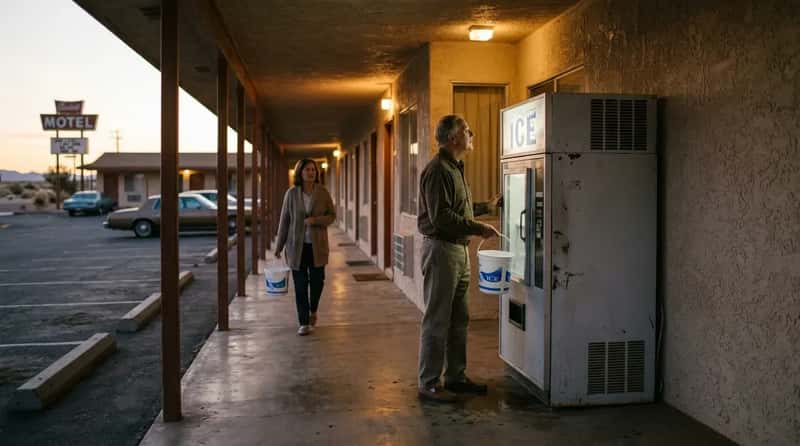
This one sounds minor until you really think about what the ice machine represented. It gave you a reason to leave your room. You grabbed the plastic bucket off the bathroom shelf, padded down the exterior corridor in your socks, and maybe bumped into another guest doing the same thing. It was the motel’s version of a water cooler. Brief, random human contact on a trip where you’d otherwise spend twelve hours alone in a car and then alone in a room.
Modern hotels still have ice machines, technically. But in a single-story motel with exterior corridors and rooms opening onto the parking lot, the ice run was more exposed, more social, more connected to the physical place. Every walk down that open-air hallway at night – the highway noise, the neon reflecting on the asphalt, the stranger nodding at you with their own ice bucket – was a minor piece of the motel’s atmosphere. It’s not nothing. It’s actually quite a lot.
#12 – Exterior Corridors and Direct Room Access From the Lot
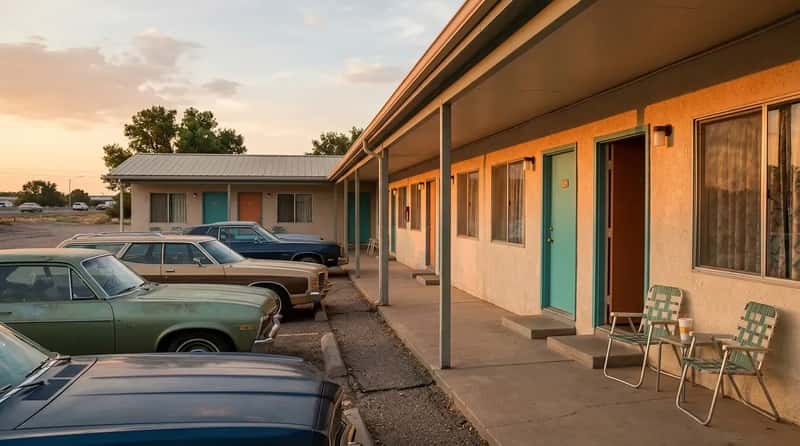
Modern hotels bury you. You park in a garage, take an elevator, walk through a carpeted maze of identical hallways, and finally locate your room somewhere on the seventh floor. In a 1970s motel, you parked your car literally three feet from your door. The low-rise, I-, L-, or U-shaped layout kept things to one or two stories and made it genuinely easy to unload – especially for families with kids, road-trippers with gear, or anyone arriving after midnight when the last thing you want is an elevator bank.
The exterior corridor also gave every room a small threshold between your private space and the outdoors. You could sit outside your door at dusk with a gas-station drink and watch the parking lot and the highway beyond it. “Motels already have such a casualness to them, an approachability,” as one hospitality designer put it. That approachability came directly from this architecture. Today’s interior-corridor hotels are more secure, sure. They’re also noticeably more isolating.
#13 – Polyester Patterned Bedspreads in Bold Colors
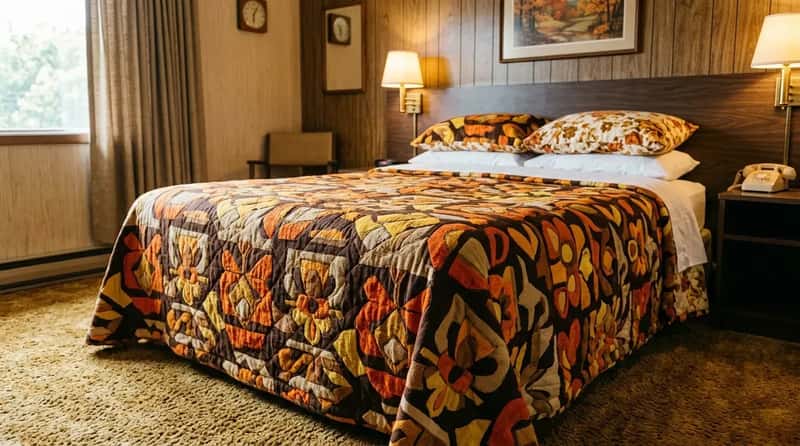
The 1970s motel bedspread is one of the most recognizable objects of American road culture. Brown florals, orange geometrics, harvest-gold stripes – they were loud, durable, and they looked like something. In hindsight, those bedspreads are practically art objects. Design museums archive them. Vintage shops sell them for real money. They communicated that you were in a specific place, at a specific time, and that someone had made a deliberate design decision.
What replaced them? White duvet covers and white sheets – the hotel industry’s great homogenization of the 1990s, driven by the logic that white looks clean and photographs well. It does. It also makes every room look like every other room on earth. Even an aggressively orange bedspread had a point of view. A white duvet has none. That’s a trade-off the industry made for efficiency, and guests have been quietly paying for it in atmosphere ever since.
#14 – The In-Room Record Player
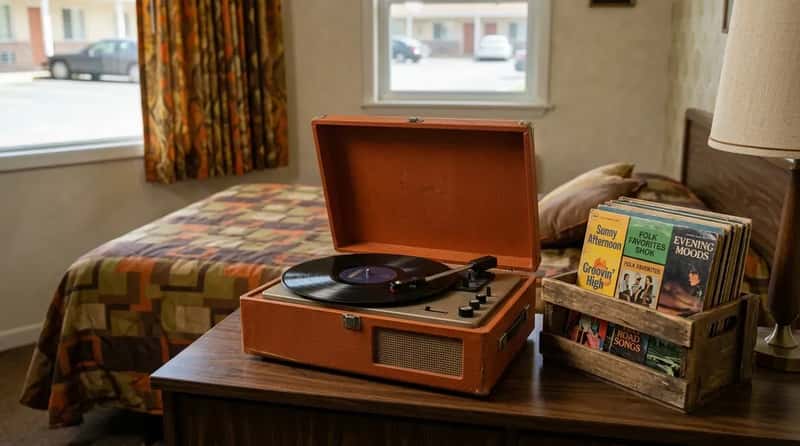
Some of the better 1970s motel rooms – particularly at the upper end of the budget range – came with record players. You’d flip through the handful of albums left in the room and find something to play while you unpacked. The selection was finite, which forced a kind of commitment: pick a record, drop the needle, let the room fill up with sound. No endless scrolling. No algorithm. Just five albums and a decision.
That act of committing – to an album, to a mood, to an evening – is increasingly rare and increasingly craved. Boutique hotels have noticed: Fairlane Hotel in Nashville now sells an in-room record player as a premium feature, and the lobby of the Phoenix Hotel in San Francisco is anchored by a Shinola turntable. What once came standard in a nice motel room is now a luxury line item. The record player didn’t go out of style. It just got taken away.
#15 – The On-Site Proprietor Who Actually Knew Things
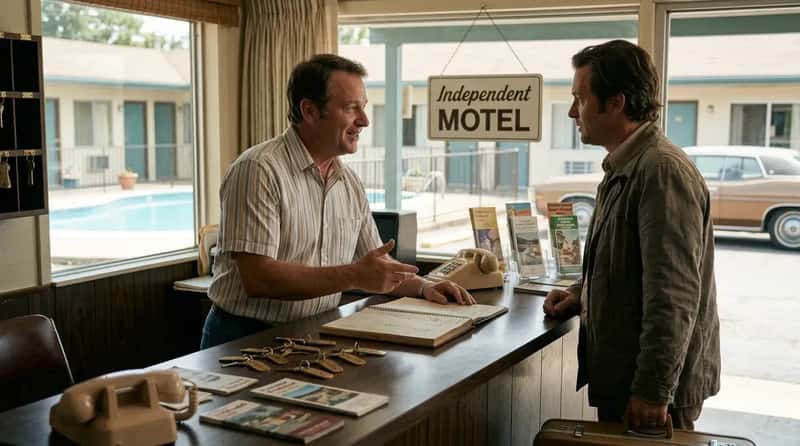
In the era of the independent motel, you checked in with the owner. Not a front-desk associate reading from a laminated script – the actual person who ran the place, knew every room, and had strong opinions about where to eat dinner. That personal investment showed up in how they treated you. They had skin in the game. If your room was bad or the pool was dirty, they heard about it directly, face to face, that same night.
The shift to chain ownership and outsourced management didn’t just change motel aesthetics – it changed the entire relationship between guest and host. Independent owners served their communities naturally, because the motel was their livelihood and their neighborhood at the same time. For chains following a corporate playbook, that community instinct has to be deliberately engineered back in. The fact that it requires engineering at all is a telling sign of what was lost.
#16 – The Postcard Rack in the Front Office
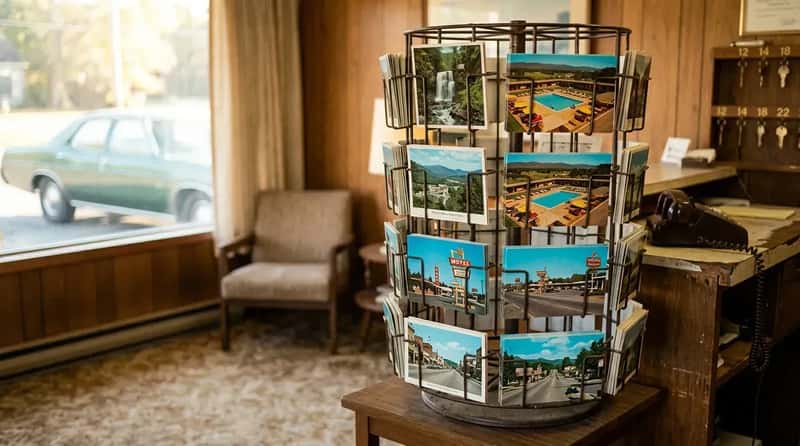
Every motel front office had a spinning rack of postcards near the door. Some showed the motel itself – a cheerful aerial shot of the pool and the neon sign, everything looking sunnier than it actually was. Others showed the canyon, the waterfall, the main street of whatever town you were passing through. Travelers would sometimes go out of their way to stop at independent motels specifically hoping to find a postcard with more character than the one they’d picked up down the road.
The postcard rack was a small act of local pride. It said: this place matters, here’s proof, you can hold it in your hand and mail it to someone who wasn’t here. In an era of Instagram and location-tagged stories, a physical postcard has actually become a more meaningful gesture than a digital post – more deliberate, more permanent, more surprising to receive. The market for motel-branded postcards has never been better. Someone just needs to bring the rack back.
#17 – The Lighted Vacancy / No Vacancy Sign
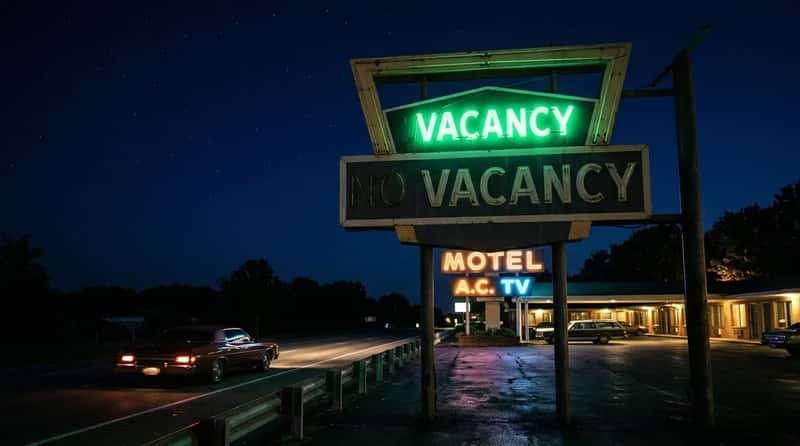
Two words. Two possible states. Maximum drama. The “VACANCY” sign glowing green against a dark highway sky was one of the most emotionally loaded images of American road culture. The flip to “NO VACANCY” in red could genuinely ruin an evening’s plan and send a family back onto the highway in silence. These signs were part of what made the neon era of Route 66 so visually distinctive – honest, readable communication between the motel and anyone coming down the road.
Today you book on an app before you leave your driveway and the idea of driving around hoping to spot a vacancy feels like science fiction. That’s efficient. But something genuinely exciting was lost when road travel stopped being even partly improvisational. The vacancy sign was proof that the trip wasn’t fully planned – that something might still happen. That spirit of open possibility lived in two blinking words on a pole, and nothing in the booking app era has replaced it.
#18 – Complimentary Local Maps and Road Atlases at the Desk
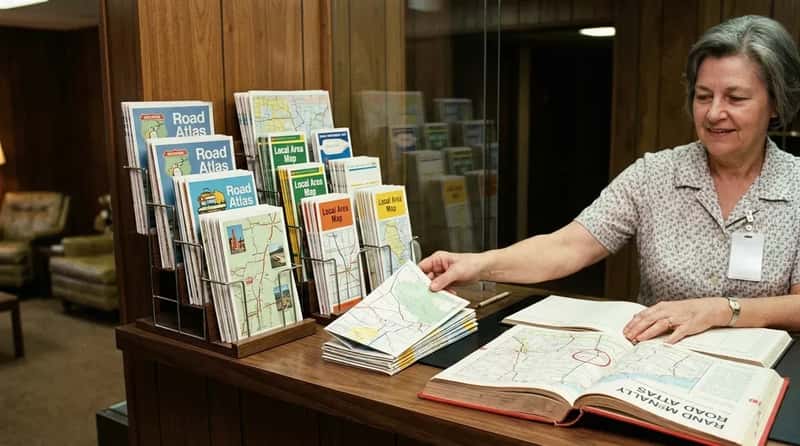
Before GPS made every driver equally dependent on a screen, motel front desks kept stacks of local maps. Free ones. Paper ones. Maps that sometimes had the motel circled in marker, with a few good roads and restaurants highlighted by whoever was working the desk that morning. That small act of local curation – someone who actually knew the area telling you where to go – was worth more than any algorithm-generated recommendation.
A physical map also forced a spatial awareness that GPS quietly destroyed. You had to understand where you were relative to everything around you, not just follow a blue dot. Getting lost with a paper map is a completely different experience from getting lost with GPS: one is an adventure, the other is a failure state. The motel map rack existed at the intersection of genuine hospitality and geographic literacy. It cost the motel almost nothing and gave travelers something that turns out to be surprisingly hard to replace.
#19 – Communal Fire Pits and Lawn Chairs in the Courtyard
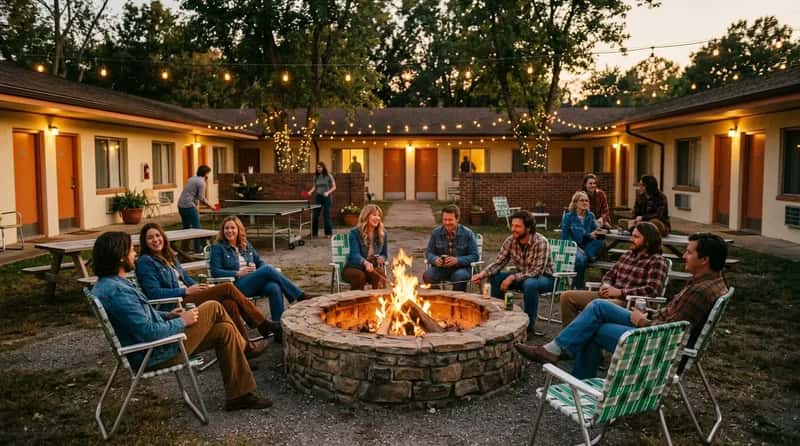
The best 1970s motels arranged their rooms around a central courtyard – and then actually put things in that courtyard for people to use. Fire pits, lawn chairs, picnic tables, sometimes a ping-pong table open to anyone. These weren’t luxury additions. They were the motel understanding that people might want to sit outside together after dinner, especially on a warm summer night when you’d been cooped up in a car all day.
Boutique hotels now charge a premium for exactly this: Adirondack chairs around a pool, s’mores around a bonfire at dusk, communal gathering spaces that make strangers briefly into neighbors. That’s a direct lift from 1970s motel culture, now repackaged as a curated experience. The communal fire pit is the motel’s version of a town square – the one place where people who arrived in separate cars actually become, however briefly, part of the same story. No app delivers that. You have to build the pit.
#20 – The Retro-Themed Room That Felt Like a Different World
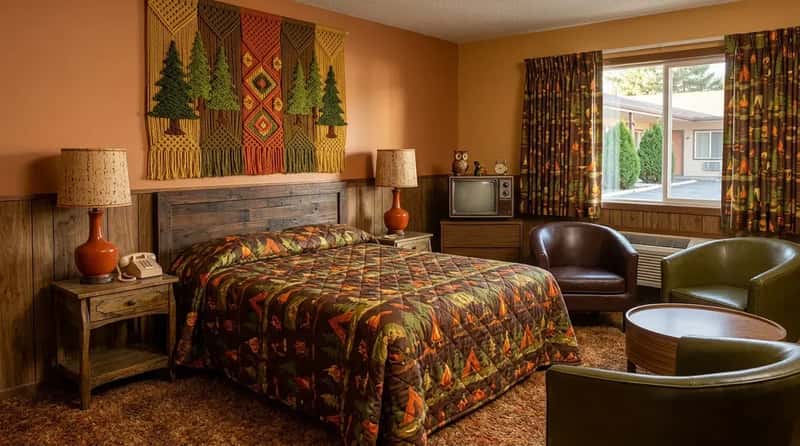
The very best 1970s motels understood that a room could be a destination, not just a container. Properties like the Campfire Hotel in Bend, Oregon – known for rooms done up in browns and oranges reminiscent of a 1970s campground – didn’t arrive at that aesthetic through a corporate focus group. They got there because someone had an actual vision for what staying at their property should feel like and committed to it hard enough that it became an identity, a reason to drive specifically to that exit.
For decades this aesthetic was dismissed as kitsch. Now it’s being carefully reproduced at significant expense, because the design world has finally admitted it had a genuine vision worth returning to. That’s the real loss: not just the orange walls and the shag carpet, but the conviction that this specific place should feel like nowhere else on earth. Chain hotels killed that conviction. The best independent properties opening right now are working hard to get it back – and paying handsomely for the privilege of reinventing what used to come naturally.
#21 – The Feeling That Stopping Somewhere Was Worth It
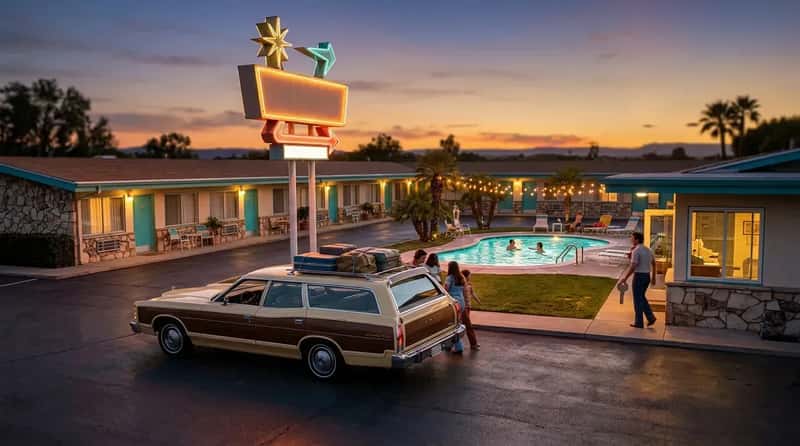
Everything else on this list is a symptom of this one. In the 1970s, pulling into a motel wasn’t something you endured on the way to your real destination – it was part of the destination. Families piled into station wagons and pointed themselves at the horizon, knowing that somewhere along the way, a neon sign would beckon and a stranger at a front desk would hand them a heavy metal key. The stop mattered. The place had a name and a face and a kidney-shaped pool.
Over the past several years, dozens of mid-century motels that had fallen into disrepair have been reopened as boutique properties, and the demand for them is real and growing fast. People aren’t just nostalgic for orange bedspreads. They’re nostalgic for the feeling that where they stopped for the night actually mattered – that it was a choice, not just a transaction. That’s the feature every modern property should be fighting hardest to bring back first. The neon signs and the fire pits and the real metal keys are all just ways of saying the same thing: you’re somewhere now, and somewhere is worth being.
The irony is that none of this is technologically complicated. Neon signs, real keys, fire pits, community pools, a diner that opens at six – these are choices, not inventions. Somewhere along the road, the motel industry stopped making the interesting ones. Which of these features do you miss most? If you know a spot that still does any of these right, share it. The road is waiting.