
Everyone assumes the “good old days” of family travel were just a slower version of what we do now – same road trips, same motels, just worse air conditioning and no phones. That assumption is wrong. The 1960s family vacation ran on its own rituals, gadgets, and unspoken rules, and most of them would look almost alien to a modern family staring at a GPS in the backseat.
Some of these customs disappeared because of new safety laws. Others got paved over, quite literally, by the interstate highway system. A few were quietly retired because, looking back, they were unsafe, strange, or flat-out unfair – and one of them might be the biggest thing families lost without ever noticing.
#21 – The Paper Map Ritual That Turned Wrong Turns Into Adventures
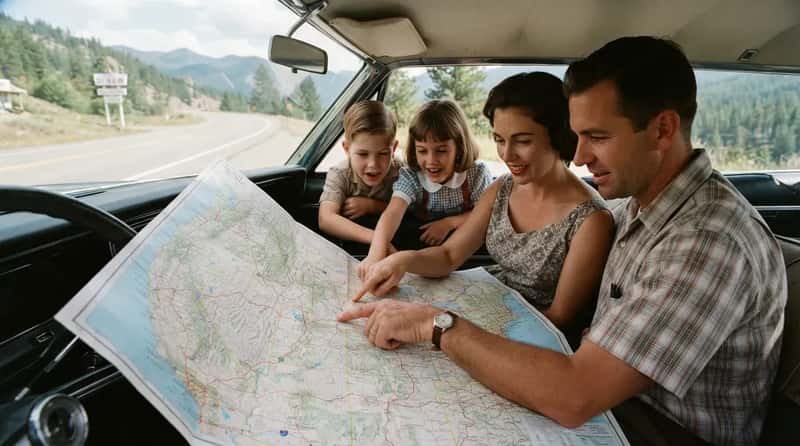
Before a single mile was driven, the real ceremony happened on the dashboard. Dad unfolded a massive paper map like it was a treasure chest, mom traced the route with her finger, and the kids leaned in to pick interesting stops along the way. Navigation was a family sport, not a chore handled by a screen.
Wrong turns weren’t a failure – they were half the fun, leading families to diners and roadside oddities they never would have found otherwise. Nobody recalculated a route in three seconds; you just adjusted, laughed, and kept driving. That randomness is exactly what GPS quietly erased.
#20 – The Diner Stop That Doubled as a Nickel Jukebox Show
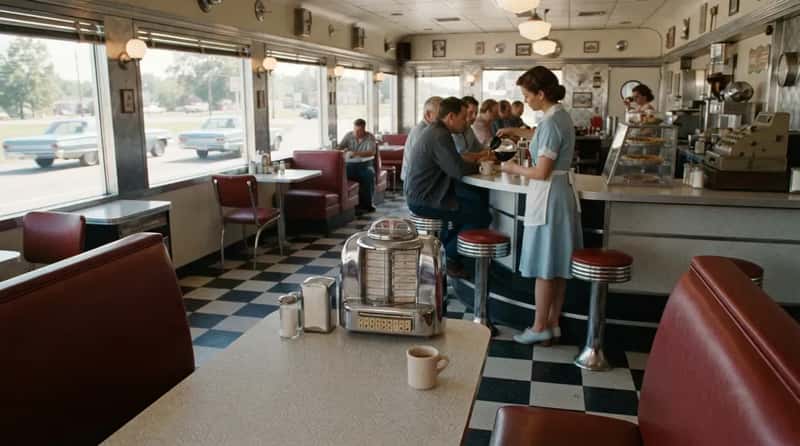
Roadside breakfast wasn’t a drive-thru transaction – it was an event with its own soundtrack. Chrome-trimmed diners with buzzing neon signs promised home-cooked meals, red vinyl booths, and checkered floors to hungry travelers pulling off the highway.
Waitresses called everyone “hon” while pouring endless coffee refills, and tabletop jukeboxes let customers pick a song for a nickel. Chain restaurants have since replaced most of these independent spots, and with them went the personal touches that made a random exit feel like a discovery. Most families never even learned the diner’s name – they just remembered the exit number.
#19 – Choosing a Motel Based Entirely on Whether It Had a Pool
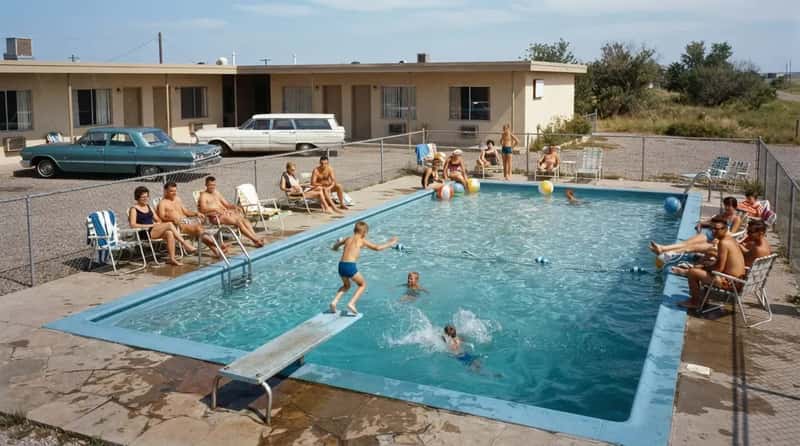
Forget star ratings – in the 1960s, one amenity decided everything. A rectangular patch of chlorinated water behind a roadside motel was the pinnacle of vacation luxury, and kids pressed their faces to the car window scanning for that magical “Pool” sign.
These modest swimming holes, sometimes barely bigger than a large bathtub, provided hours of entertainment regardless of how questionable the water looked. Families chose entire motels based on pool availability alone. Nobody checked reviews – they just checked for a diving board.
#18 – CB Radio Chatter That Replaced Small Talk on Long Hauls
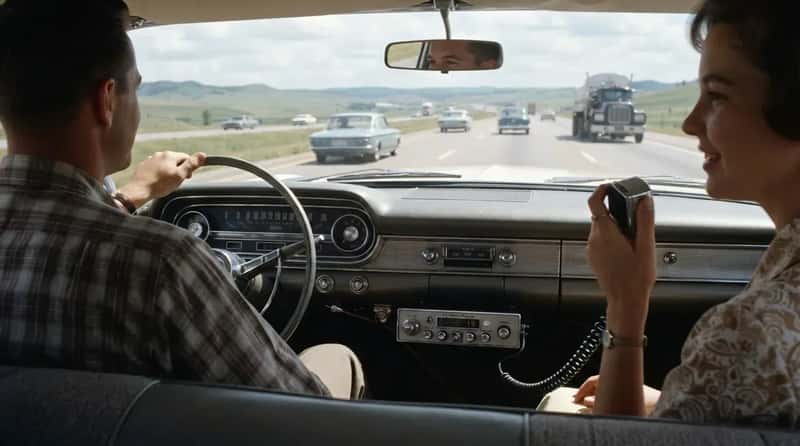
Long before phone apps warned drivers about speed traps, truckers did it for free over the airwaves. The crackling voice of “Breaker one-nine” filled car radios as strangers shared road conditions, warnings, and friendly conversation with anyone listening.
A family with a CB radio in the car felt like they had insider access to a secret network of people looking out for each other. It turned a dull stretch of highway into a live broadcast of real-time gossip. That stranger-helping-stranger culture has almost no modern equivalent.
#17 – Kids Roaming the Back Seat With Zero Restraints
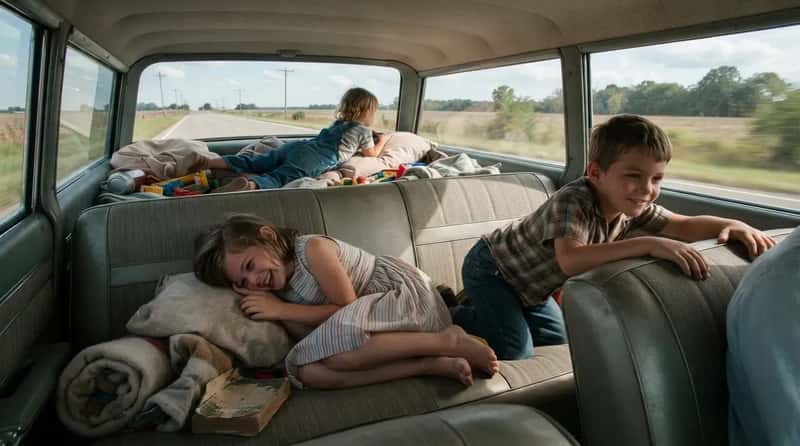
Seatbelt laws simply didn’t exist the way they do now, and it changed how kids experienced the entire drive. Safety regulations have undoubtedly saved countless lives, but something got lost when kids could no longer roam freely on a long trip.
Kids stretched out on the rear window ledge, played cards on the floorboard, or napped sprawled across the whole back seat. It sounds reckless by today’s standards, and honestly, it was – but it also gave kids a sense of freedom no car seat will ever replicate.
Fast Facts
- Federal rules required seatbelts in every seating position of new U.S. cars starting with the 1968 model year.
- New York didn’t pass the country’s first mandatory seatbelt-use law until 1984 – nearly two decades later.
- Until laws changed, sprawling across the back seat or floorboard was simply normal road-trip behavior, not a rule anyone was breaking.
#16 – Collecting Souvenir Spoons Instead of Snapping Photos
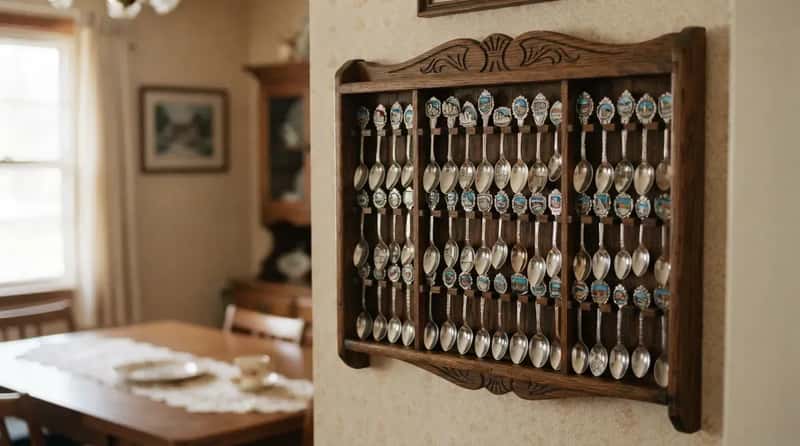
Before phone cameras, families proved they’d been somewhere with a physical object, not a photo dump. Vacations meant disconnecting completely and building memories through drive-in movies, diner stops, and a growing collection of tiny souvenir spoons.
Those spoons sat in a display rack in the dining room, quietly mapping out where the family had traveled over the years. Grandma’s spoon rack often told a more accurate travel history than any photo album ever could. A single missing spoon could spark an argument about a forgotten trip.
#15 – Mailing a Postcard Instead of Texting a Photo
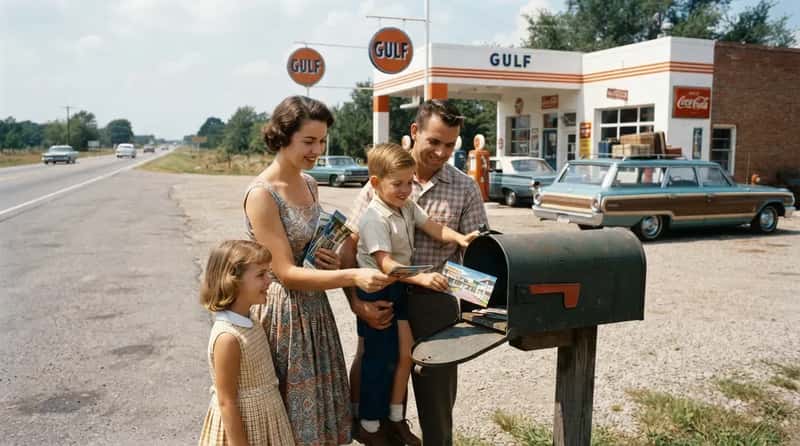
Communication during a 1960s vacation had a built-in delay that today’s instant messages have completely erased. Families bought postcards at gas stations, scribbled a few lines, and mailed them home – often arriving after the family themselves had already returned.
There was no way to know if the postcard even made it on time, and nobody expected it to. The delay was the point; it made the trip feel bigger than a quick check-in ever could.
#14 – Being Completely Unreachable for Days at a Time
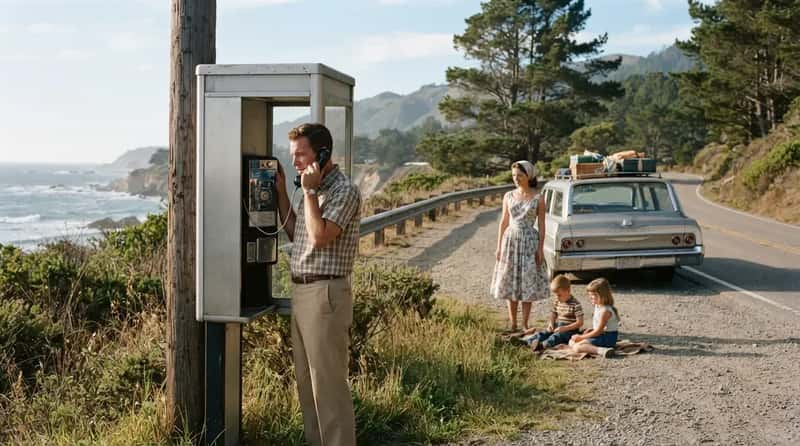
Emergencies meant something very different when there was no cell signal to fall back on. Reaching anyone required a payphone or a hotel operator, which made every phone call deliberate and every silence normal.
That forced distance let families focus entirely on each other without a screen pulling attention away. True unreachability, once just a fact of life, has quietly become a luxury almost nobody can buy anymore.
#13 – Detouring Miles Out of the Way for a Giant Roadside Statue
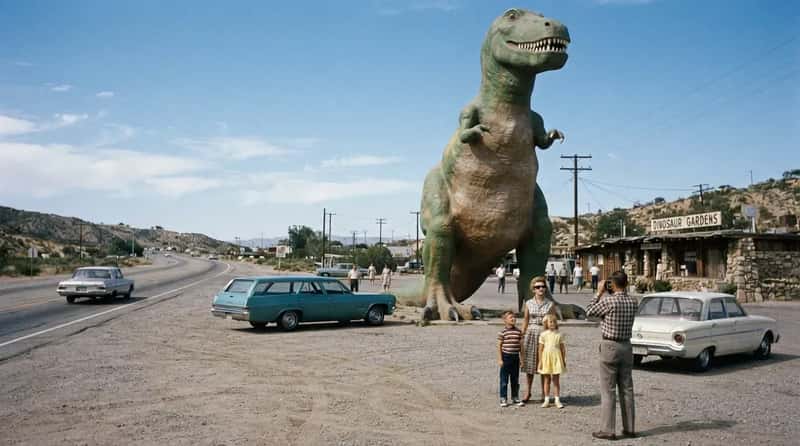
Novelty landmarks weren’t a punchline back then – they were a legitimate reason to change your route. The oversized roadside attraction took off across the U.S. and Canada between the 1940s and 1960s, often built to match whatever the business actually sold.
A giant dinosaur, a towering turkey, or an enormous ball of twine was treated like a must-see monument worth an afternoon detour. Nostalgic travelers still swear these were the best part of any road trip, while plenty of modern ones call them the biggest waste of gas money in American tourism history.
At a Glance
- The giant roadside statue trend peaked between the 1940s and 1960s, spreading from coast to coast and into Canada.
- Most were custom-built to match whatever a business actually sold, from towering fruit stands to oversized farm animals.
- Many of these giants survived the interstate era and are now protected as classic pieces of American roadside history.
#12 – Trusting a Family-Run Motor Court Over a Recognizable Chain
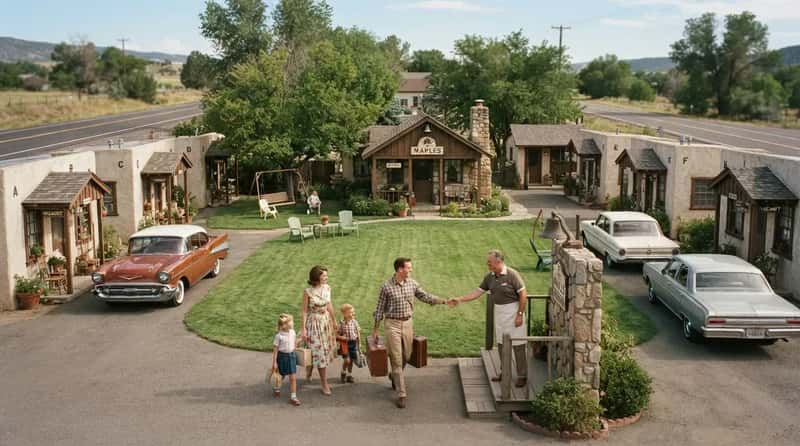
Loyalty programs didn’t exist, so families picked lodging on gut instinct and a friendly face at the front desk. Starting in the 1930s, “cottage courts” became a classier alternative to dingy roadside cabins, arranged as individual cottages around a manager’s office and a shared lawn.
These small, independently owned motor courts thrived because reputation traveled by word of mouth between road-tripping families. A handshake with the owner meant more than any star rating ever could.
#11 – Sleeping Inside a Concrete Teepee or a Neon Tiki Palace
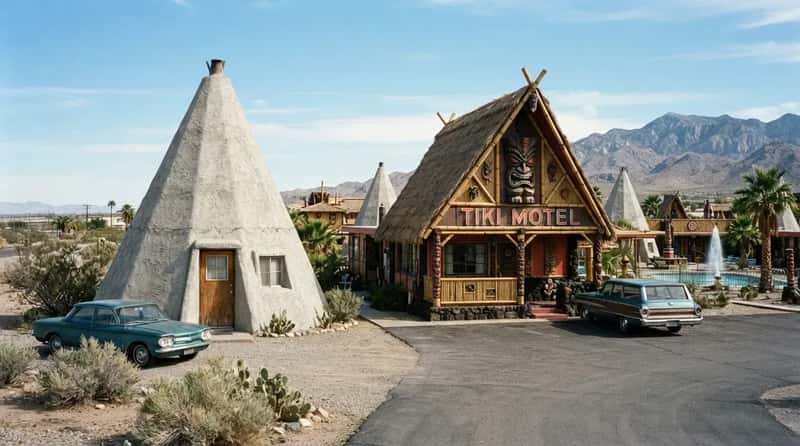
Motel themes in the 1960s were wildly, almost embarrassingly literal. Some rented rooms shaped like a country cottage covered in plastic flowers, while others offered concrete teepee-shaped units loosely appropriated from Native American design.
This was also the age of the Tiki craze, inspired by soldiers returning from the Pacific, and motel owners built towering, culturally careless depictions of Polynesian gods over pools and buffet lines. Nobody questioned the theming at the time – it was marketed as exotic, not offensive. Plenty of travel historians now argue it was more careless than charming.
#10 – Making a Drive-In Movie the Entire Vacation Night Out
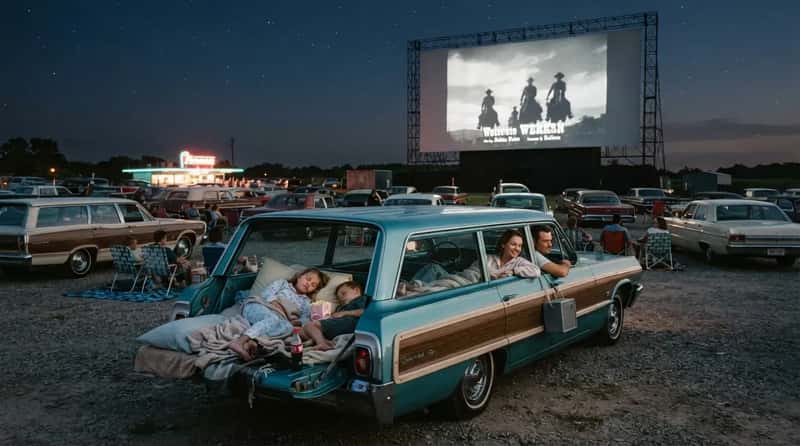
A hotel TV wasn’t the evening’s entertainment – a giant outdoor screen was. Families packed the station wagon with pillows and blankets, parked in a gravel lot, and hung a speaker box on the window for a double feature under the stars.
Kids in pajamas often fell asleep before the second movie even started, and nobody minded. A single ticket usually covered the whole family, turning an ordinary weeknight stop into a genuine event.
#9 – Stopping at “10 Attractions for One Price” Tourist Traps
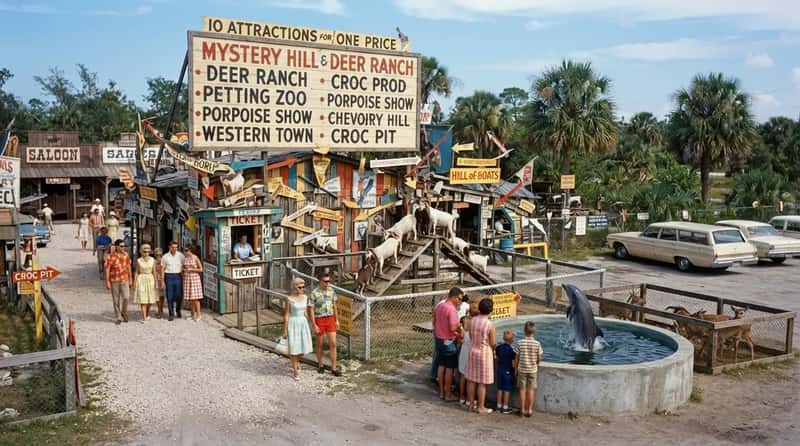
Bundled attractions were a full-blown business model, and Florida perfected it. The pitch was simple: ten roadside attractions for one price, $2.50 for adults and half price for kids, all packed into a single tacky stop.
A visit might include a Western town with a saloon and cancan girls, a hill of climbing goats, a porpoise show, a deer park, and a cactus garden, all in one afternoon. Some of these acts, by modern standards, would never pass a safety inspection.
#8 – Visiting Relatives and Family Reunions as the Actual Vacation
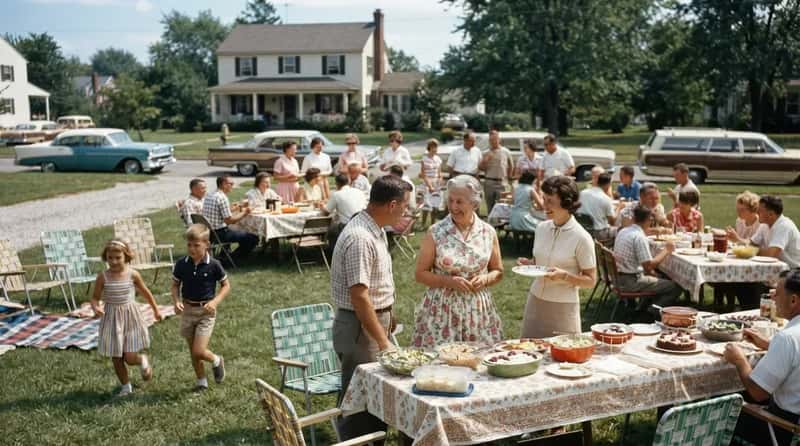
A “vacation” often didn’t mean a resort at all – it meant driving hundreds of miles to see family. National parks and historical monuments were popular, but so were weddings, funerals, and reunions spread across several states.
These trips blurred the line between obligation and leisure, since the whole point was reconnecting with relatives you rarely saw. Nobody questioned why a “vacation” meant sleeping on Aunt Carol’s fold-out couch instead of a hotel bed.
#7 – The Unspoken Reality That Not Every Family Traveled Freely
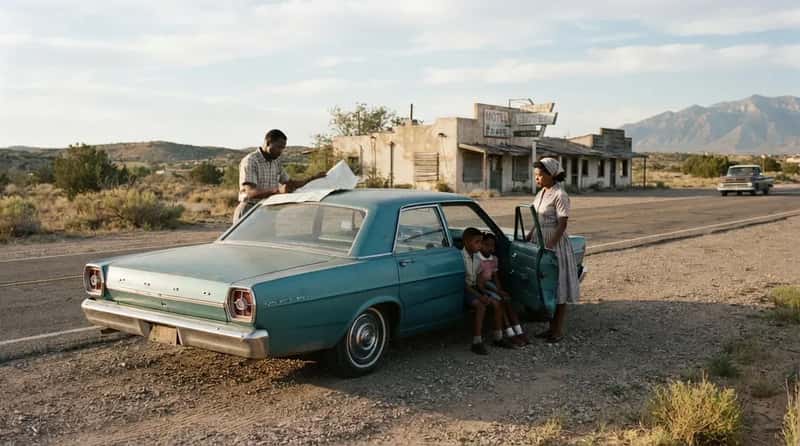
The open road wasn’t equally open to everyone, and this is one custom nobody looks back on with nostalgia. NAACP records from the era hold hundreds of testimonials describing the uncertainty and humiliation Black families faced simply trying to drive across the country.
Travelers described being turned away from motels and diners with no warning, forced to plan routes around where they might actually be served. It’s a hard truth that many warm retellings of the 1960s road trip conveniently leave out.
Worth Knowing
- By the end of the 1960s, thousands of U.S. towns effectively operated as “sundown towns” that barred Black travelers after dark.
- In Albuquerque, only a small fraction of the more than 100 motels lining Route 66 admitted Black customers.
- Guidebooks marketed specifically to Black families listed which hotels, gas stations, and restaurants were actually safe to stop at along the way.
#6 – Real Tent Camping With Lanterns Instead of Glamping Gear
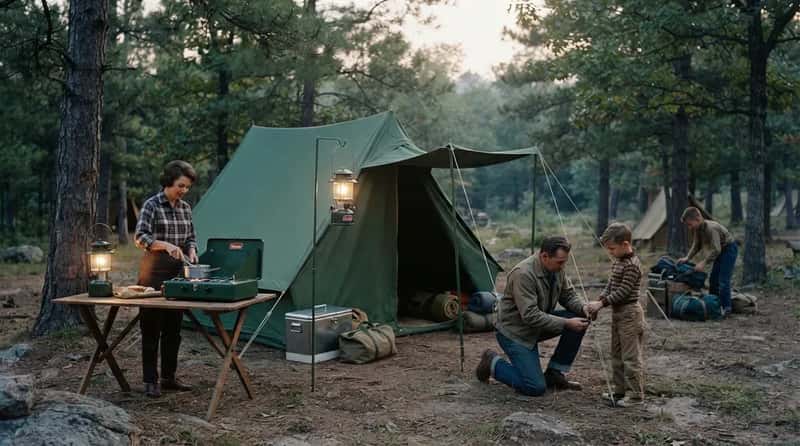
Camping in the 1960s meant actual canvas, not a climate-controlled rental camper. Families packed real tents, sleeping bags, and Coleman stoves and lanterns, then set up camp together as a group effort.
Cooking over a portable stove was considered part of the fun, not an inconvenience to be avoided. There was no backup hotel reservation waiting if the weather turned – you just rode it out.
#5 – Treating National Parks as a Quick Windshield Stop, Not a Hike
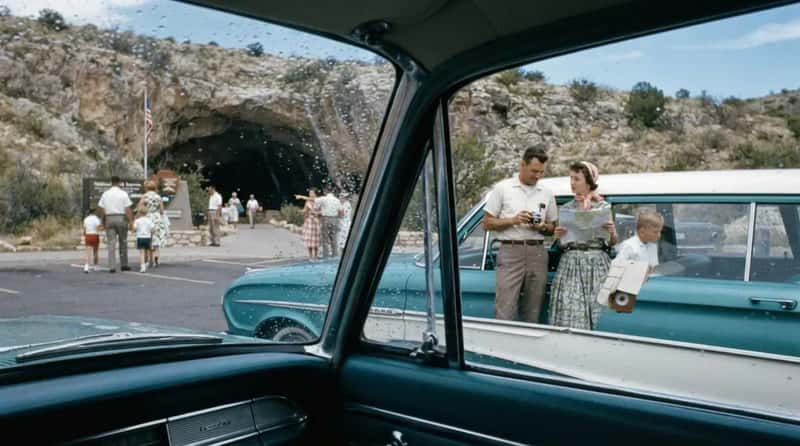
Many families experienced national parks from behind glass rather than on foot. At Carlsbad Caverns, most visitors mainly remembered the Big Room and the Bottomless Pit, sights that stuck with a child’s imagination for decades.
The goal was often to see the highlight, snap a photo, and move on to the next stop on a tight, multi-state itinerary. Some historians now argue this “collect the parks” mentality actually cheapened the experience compared to slower, modern visits.
#4 – The Station Wagon That Functioned as a Second Living Room
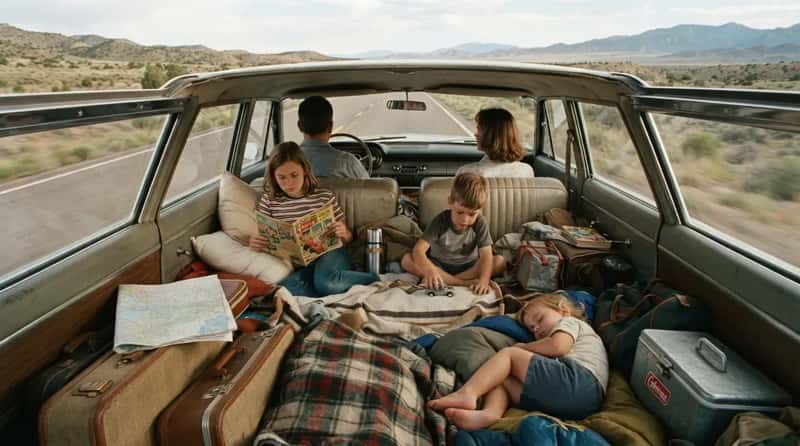
The vehicle itself wasn’t just transportation – it was the vacation’s true home base. Historian Susan Rugh has described the family car during this era as functioning like a home on wheels, and it’s hard to argue otherwise once you picture the setup.
Kids ate meals in the back seat, napped across the bench, and treated the cargo area as a makeshift play zone. Entire trips were planned around what a single vehicle, with no GPS and no phone charger, could realistically handle.
Life on the road provided its own “cocoon of domestic space” that insulated parents and kids from the anxieties of the era.
Susan Sessions Rugh, historian
#3 – Racing to Beat Bypassed Small Towns Before They Vanished
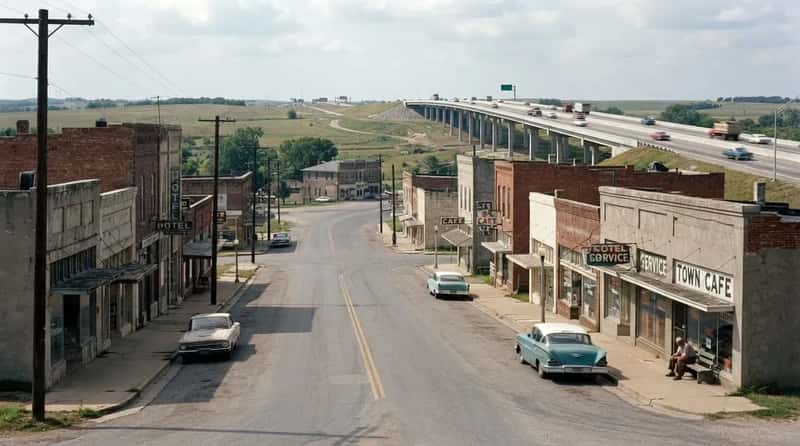
The interstate highway system quietly killed off entire tourist economies, and most families never realized it was happening in real time. Limited-access interstates snaked across the country through the 1950s and 1960s, and towns that had survived on passing trade were suddenly cut off and left to fade.
In the 1930s, a coast-to-coast drive took roughly three weeks. By 1960, the same trip took about four days. That speed came at the direct cost of the small-town main streets families used to stop in.
#2 – Motel Courtyards Where Strangers Mingled Like Neighbors
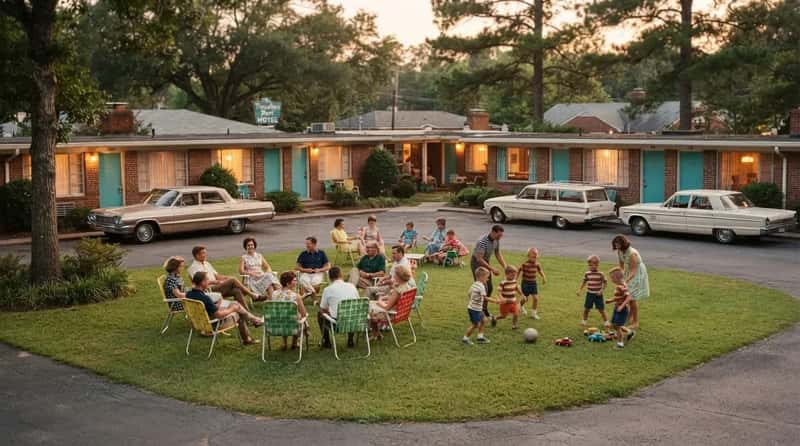
Privacy wasn’t the priority it is today – community was. Cottage courts were built around a central lawn where guests could mingle with other road travelers at the end of the day.
Kids from different families played together in the same parking-lot courtyard while parents swapped travel tips from lawn chairs. It created a strange, temporary neighborhood that reset every single night, and nobody thought twice about it.
#1 – Total, Guilt-Free Disconnection From the Outside World
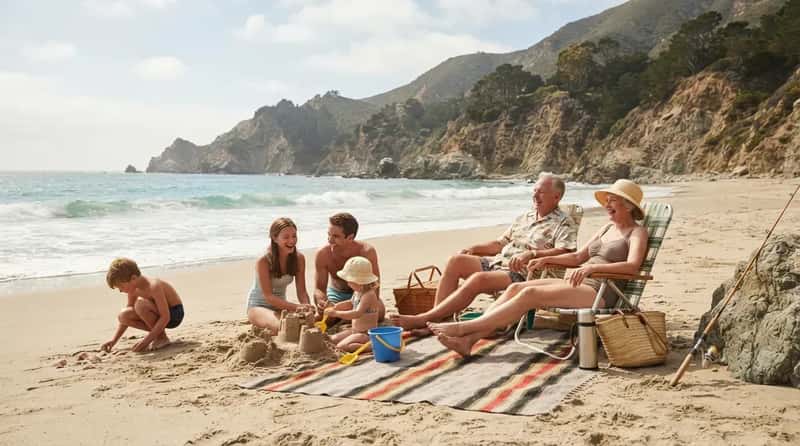
Above every gadget, motel theme, and roadside gimmick, one custom stands above the rest as the biggest thing modern families lost. There was no inbox to check, no notification buzzing in a pocket, and no expectation of being instantly available.
A 1960s family vacation meant the outside world simply waited its turn. That kind of guilt-free, total disconnection has quietly become the rarest vacation luxury of all – one no amount of money can really buy back.
Looking back, the biggest shock isn’t how different these customs feel. It’s how deliberately most of them were abandoned, not by accident, but by highways, safety laws, and new technology all arriving at once.
Some habits, like unequal access to the open road, were long overdue to disappear. Others, like total disconnection or trusting a stranger’s roadside motel, feel like something today’s burned-out travelers secretly miss. The 1960s vacation wasn’t slower because people had less – it was slower because nobody expected more.