There’s always one person at the airport who looks like they’ve done this a thousand times – because they have. Laptop bag perfectly packed, PreCheck stamp on the boarding pass, lounge wristband on the wrist, coffee already in hand. They glide past the chaos like it’s a Tuesday morning commute. Meanwhile, everyone else is digging for IDs, arguing with kiosk machines, and paying $14 for a bottle of water they forgot to bring. The gap between those two experiences isn’t luck or elite status. It’s a specific set of rules that frequent flyers follow every single time they step into a terminal.
The wildest part? Most of these rules are completely invisible to casual travelers. Some cost nothing. A few take five minutes to set up once and then work silently in the background for years. But a handful of them – the ones buried in the middle and toward the end of this list – are the ones that actually change how you feel when you land. Here’s what the road warriors actually do, counted down from habit to game-changer.
#22 – They Never Check In at the Counter If They Can Avoid It
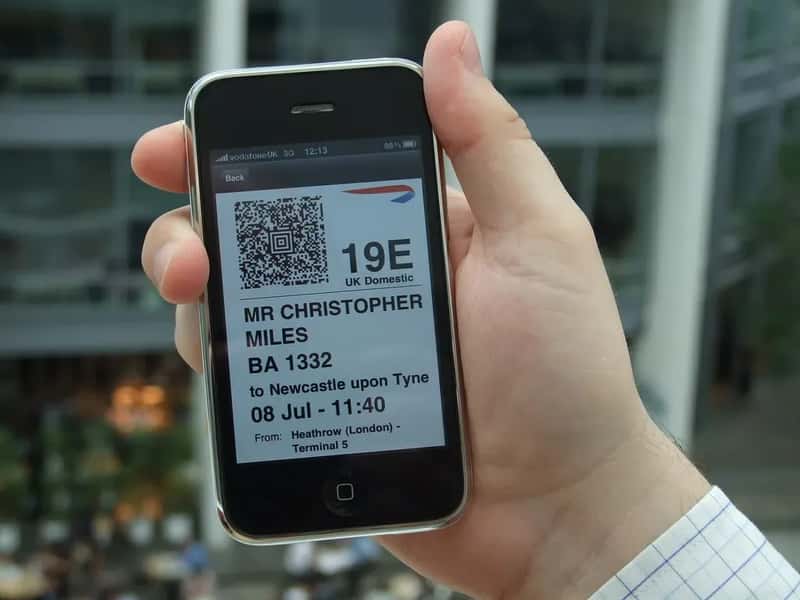
The check-in counter line is one of the most avoidable time-sinks in air travel, and frequent flyers treat it like a tourist trap. Online check-in opens 24 hours before departure – and that window matters, because it’s also when the best remaining seats become available. Experienced travelers are in the app the moment it unlocks, not scrambling in the parking garage when the flight’s already boarding.
Downloading a mobile boarding pass removes the printer problem, the kiosk problem, and the “my app needs to update right now” problem all at once. The moment that pass is on your phone, your travel day is officially underway without a single conversation at an airline desk. Frequent flyers don’t wait for the airport to process them – they arrive already processed.
Fast Facts
- Online check-in typically opens exactly 24 hours before scheduled departure across most major U.S. carriers.
- Mobile boarding passes work at security and the gate – no printer, no kiosk required.
- The 24-hour window is also when upgrades and better seat selections often unlock.
- Skipping the counter means skipping the longest line in the terminal on busy travel days.
#21 – They Stash Small Items Before Security, Not After

Coins, cash, and loose cards have a way of disappearing in the shuffle of gray security bins – and nobody at the checkpoint is going to chase you down. Before even entering the security queue, experienced travelers empty their pockets completely into a zippered pouch inside their carry-on. It sounds minor until you lose $60 at a busy checkpoint and realize the bin was already restacked before you noticed.
The smarter version of this extends to the whole outfit. Frequent flyers dress with security in mind – slip-on shoes, no metal belt, no layered jackets that take three bins and a side-eye to remove. They treat the security line like a performance they’ve rehearsed a hundred times. The airport rewards the prepared and slows down everyone else, loudly, in front of a crowd.
#20 – They Always Know the Airport Map Before They Arrive

Most travelers have studied a map of their destination city but haven’t glanced at the airport they’re flying into. That’s backwards. Knowing the terminal layout before you land is the difference between a confident 12-minute connection and a panicked sprint that ends badly. Massive hubs like Atlanta’s Hartsfield-Jackson and Dallas/Fort Worth have internal trains between terminals – information that’s useless to discover after you’ve already missed the train.
Looking up airport maps along your route – including layover airports – tells you where restrooms, food, and power outlets actually are, not where you hope they’ll be. The more you know before the wheels touch down, the fewer decisions you’re making while tired, rushed, and dragging a carry-on. Frequent flyers treat the airport map like a neighborhood they live in. First-timers treat it like a city they’ve never visited.
#19 – They Use the Airline App as Their Command Center
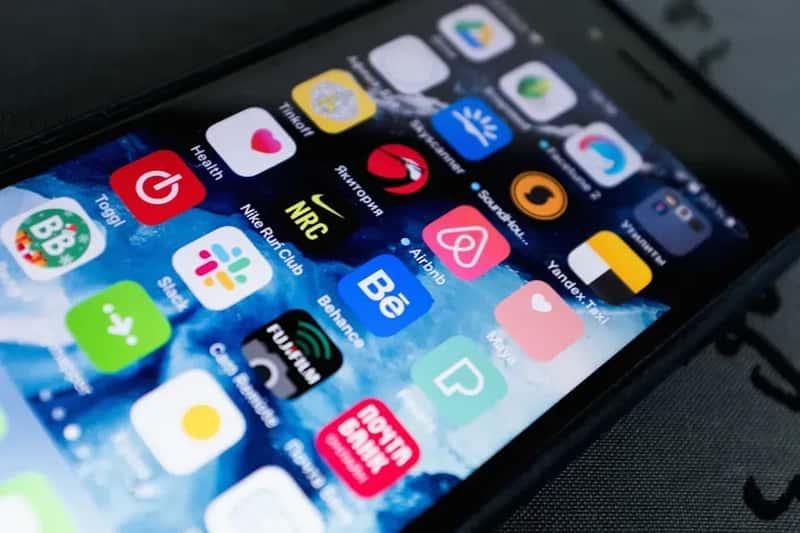
The gate agent’s PA announcement is almost never the first notification – the airline app usually beats it by 15 to 20 minutes. Frequent flyers have real-time gate change alerts, delay notifications, and boarding updates pushed directly to their lock screen. While other passengers are standing at the wrong gate wondering why it’s so quiet, seasoned travelers already rerouted.
Beyond the airline’s own app, tools like FlightAware offer real-time aircraft tracking, so you can see whether your incoming plane is already on the ground or still two states away. That one piece of information changes everything about how you spend your pre-departure hour – and whether a tight connection is genuinely manageable or genuinely not. Knowledge is the buffer between a smooth connection and a ruined itinerary.
#18 – They Dress Like They Know There’s a Security Checkpoint

The person in front of you struggling with three layers, a metal belt, lace-up boots, and a watch that keeps triggering the alarm is, without fail, also the one who forgot their laptop was in the bag. Frequent flyers eliminate that entire category of problem before leaving the house. Slip-on shoes, no metal accessories, light layers – every clothing decision is filtered through one question: will this slow me down at security?
Beyond the outfit, they keep their laptop or tablet in an easy-access sleeve at the top of the carry-on, and their ID or boarding pass is already pulled up before they reach the front of the line. The security checkpoint is not a surprise encounter – it’s a predictable obstacle with a known sequence of steps. Experienced travelers have that sequence memorized. The airport rewards everyone who does.
#17 – They Carry a Reusable Water Bottle Every Single Time

The $8 plastic bottle of water at the departure gate is one of the most consistent rip-offs in travel, and it’s completely optional. Most airports now have free water-filling stations past security – and frequent flyers bring an empty reusable bottle specifically for that reason. On a heavy travel year, that habit saves real money, but the bigger benefit is physiological, not financial.
Cabin humidity on a commercial aircraft is significantly lower than what most people are used to on the ground, and flying is quietly dehydrating in a way that sneaks up on you. Most people land feeling foggy and exhausted and blame the time zone when the real culprit was never drinking enough water during the flight. A full reusable bottle in the seat-back pocket is the simplest thing you can do to land feeling human instead of wrecked.
#16 – They Know When to Skip the Gate Agent and Call Instead
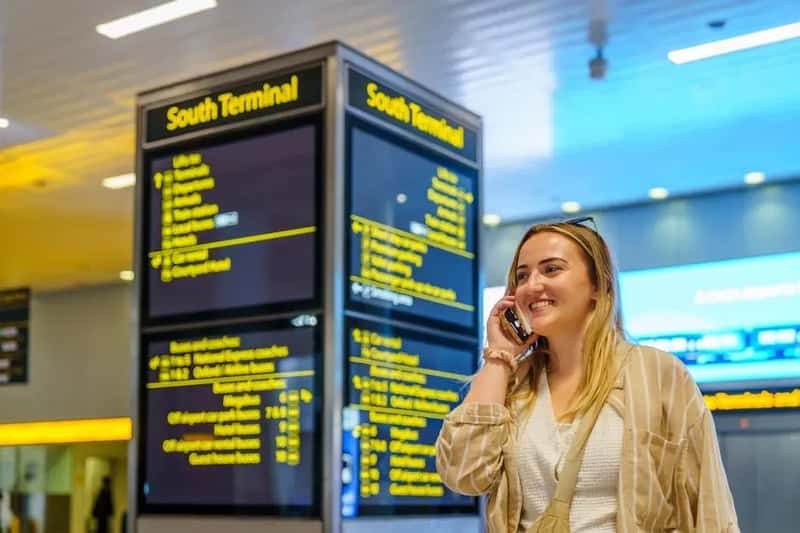
When a flight gets canceled, two hundred frustrated passengers immediately form a line at the two available gate agents. Frequent flyers don’t join that line. They step aside and call the airline directly, because the phone agent has access to the same rebooking system – and often has more availability options and shorter wait times than the overwhelmed person behind the desk surrounded by luggage and crying toddlers.
Airport phones near gate areas are free to use when calling an airline, and many seasoned travelers run two rebooking attempts simultaneously – a call on the phone and a chat through the airline’s app. Whoever responds first wins. By the time the person at the front of the gate line gets their boarding pass reprinted, the frequent flyer is already confirmed on the next flight out and heading back to the lounge.
#15 – They Know What They’re Actually Owed When Things Go Wrong
The DOT’s airline passenger protection rules that took full effect on October 28, 2024, established significant new rights for U.S. travelers that most passengers don’t know exist. Airlines must now provide automatic cash refunds – not vouchers, not miles, not future flight credits – when flights are canceled or significantly delayed and the passenger chooses not to travel. A “significant delay” is defined as three hours or more for domestic flights and six hours or more for international. Most passengers accept a voucher without ever asking if cash is an option. It is.
For controllable cancellations, passengers are also entitled to rebooking on the next available flight, meal vouchers for delays over three hours, hotel accommodation for overnight delays, and ground transportation to and from the hotel. The gate agent’s first offer is almost never their best one – and frequent flyers know exactly what to ask for next, because they did the reading before they needed it.
Worth Knowing
- Cash refunds for canceled or significantly delayed flights are now automatic – airlines are required to initiate them without you filing a formal request.
- Refunds must be processed within 7 business days for credit card purchases or 20 calendar days for other payment methods.
- Paid extras like seat selection and Wi-Fi are also refundable if not provided due to a cancellation or change.
- Baggage fees are refundable if your checked bag arrives 12+ hours late on a domestic flight.
- The DOT’s full passenger rights guide is at transportation.gov – free, official, and worth bookmarking.
#14 – They Pack Carry-On Only Whenever Humanly Possible
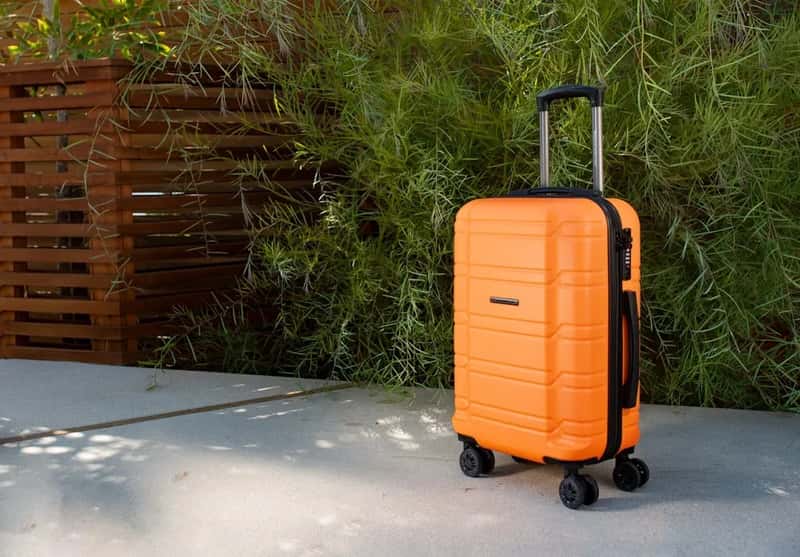
The person standing at baggage claim after a 45-minute wait for a suitcase essentially added an extra commute to their trip – a commute they paid for. Frequent flyers avoid checked bags whenever possible, not just for the time saved but because checked bags create a category of risk – delays, damage, and loss – that carry-on travel eliminates entirely. Rolling clothes, packing cubes, and a disciplined packing list make it possible for trips up to a week.
Most airlines allow both a carry-on suitcase and a personal item, which means a properly packed backpack alongside a rolling bag covers most trips. Once you master carry-on-only travel, voluntarily checking a bag starts to feel like choosing the slow lane on a highway with a perfectly good fast lane right beside it. That’s not an opinion – it’s the near-universal consensus among people who fly more than 20 times a year.
#13 – They Tuck an AirTag Into Every Checked Bag
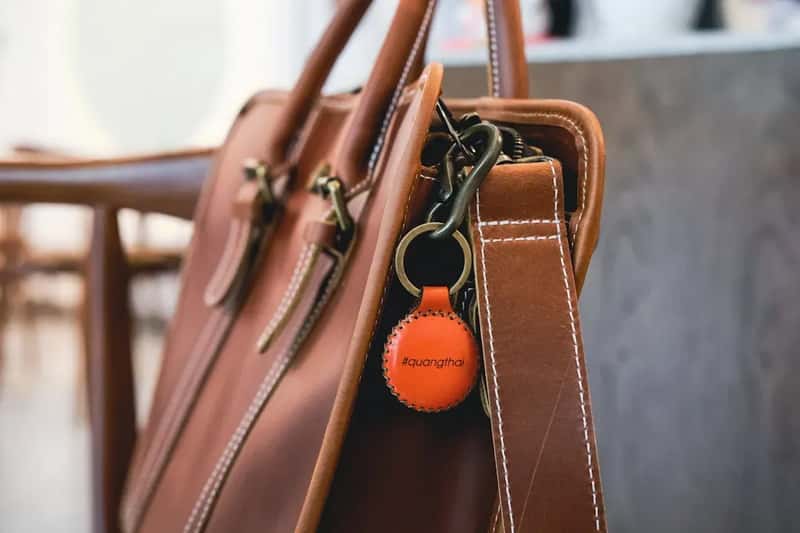
For the trips where checking a bag is unavoidable, frequent flyers add one small insurance policy: a tracking device. Slipping an AirTag into a checked bag lets you use Apple’s vast network of over one billion devices to see exactly where your luggage is at any point in its journey. As of early 2025, more than 50 airlines – including United, Delta, American, British Airways, and Lufthansa – now officially integrate Apple’s “Share Item Location” feature directly into their baggage recovery systems, meaning your tracker isn’t just peace of mind, it’s leverage you can hand directly to a customer service agent.
The real power of an AirTag isn’t finding a lost bag – it’s proving to an airline exactly where the bag is right now, which changes the conversation at the baggage desk from “we’ll look into it” to “we can see it’s in this specific location.” For Android users, Tile and Chipolo serve the same tracking function. The cheap price of an AirTag is among the lowest-cost travel insurance available – and the one most people skip until they’ve had a bag disappear in Frankfurt.
At a Glance: AirTag vs. No Tracker
- With AirTag: Know your bag’s location in real time; share a secure link with the airline to speed up recovery.
- Without AirTag: Rely entirely on the airline’s internal system, which may not update until the bag stops moving.
- Airline integration: 50+ carriers now officially accept Apple’s Share Item Location links – including Delta, United, and American.
- Android option: Tile and Chipolo offer similar tracking without requiring an iPhone ecosystem.
- Battery life: AirTags run about a year on a standard replaceable coin battery – check it before a big trip.
#12 – They Never Use Airport Public USB Chargers
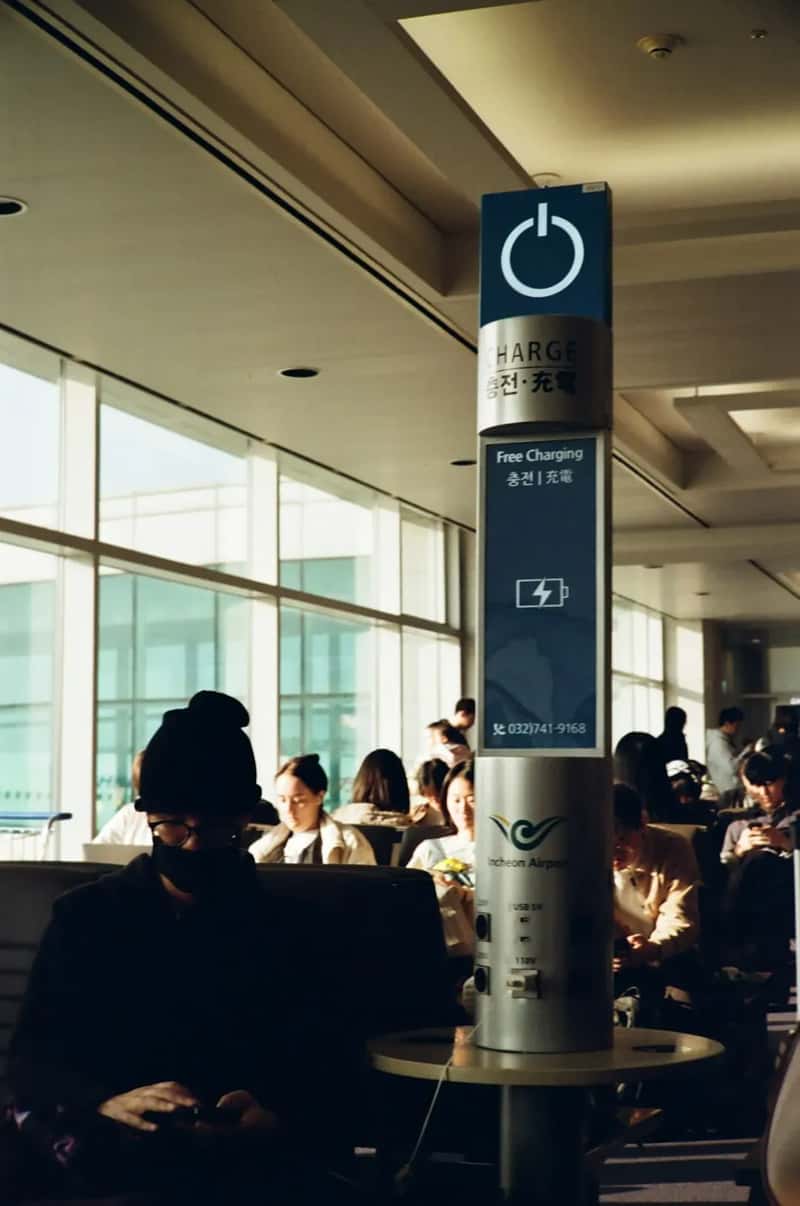
In 2025, the TSA renewed cybersecurity warnings specifically targeting public USB charging ports in airports and hotels. “Juice jacking” – a real attack in which hackers use compromised charging ports to steal data or install malware on connected devices – is the reason frequent flyers treat public USB ports like a security threat, not a convenience. The warning has been issued multiple times, and most casual travelers have still never heard of it.
Experienced travelers bring their own charging brick and plug into standard electrical outlets – the kind that line the walls near nearly every gate in every terminal. They also carry a portable battery pack so they’re never dependent on what the airport provides. A dead phone at the gate means no mobile boarding pass, no real-time gate change alert, and no way to call the airline when the flight goes sideways. Protecting your device’s charge is protecting your entire travel day, end to end.
#11 – They Sit Near a Quiet Gate to Charge and Decompress
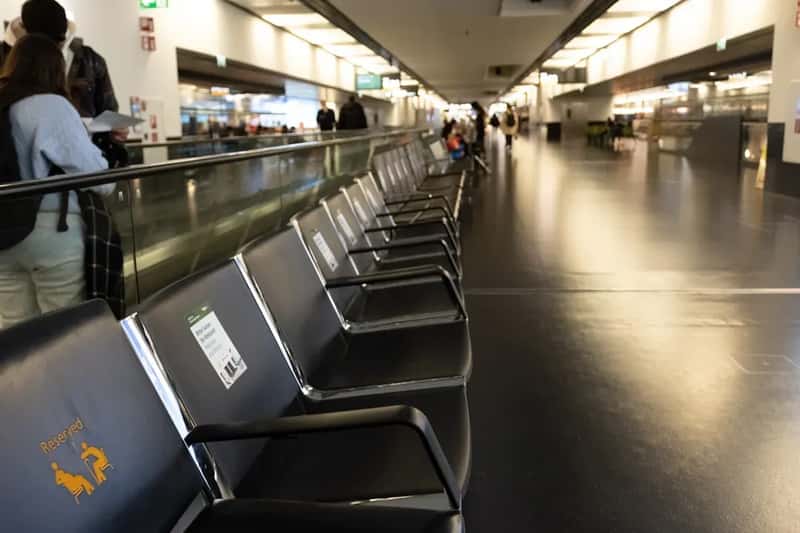
Most travelers automatically walk to their assigned gate and park there for two hours in the loudest, most crowded section of the terminal. That’s the mistake. Adjacent gates – ones with no departing flights – are almost always quieter, emptier, and better stocked with available power outlets. You’re still seconds away when your actual gate opens. You’ve just spent the wait in a noticeably better environment.
Frequent flyers treat the terminal like a neighborhood they know – they find the pockets of calm that first-timers can’t see because they’re following signs straight to the crowded hub. The overhead announcement loop, the gate-area screaming toddlers, the fight over the one available outlet – all avoidable if you walk 50 feet in the right direction. It’s one of those habits that sounds too simple to matter until the first time you actually try it.
#10 – They Get TSA PreCheck and Actually Use It Correctly

TSA PreCheck means leaving electronics and liquids in your bag and using a dedicated lane at over 200 airports nationwide across more than 90 participating airlines. The TSA’s own benchmark promises PreCheck wait times under 10 minutes – and during normal operations, roughly 99% of PreCheck passengers clear security in under that threshold, compared to a standard lane benchmark of under 30 minutes. That single stat should settle every debate about whether the enrollment fee is worth it – and it usually does, the first time someone saves 45 minutes at a holiday checkpoint.
The critical piece most new enrollees miss: approval comes with a Known Traveler Number that must be added to every airline reservation to trigger the PreCheck indicator on your boarding pass. If that KTN isn’t linked to your booking, you’re in the regular line regardless of your membership. That’s the number-one complaint from first-year PreCheck members – and it’s entirely preventable if you add the number to your frequent flyer profile once and let it auto-populate every future reservation.
Quick Compare: TSA PreCheck vs. Standard Lane
- PreCheck benchmark: Under 10 minutes – roughly 99% of members clear within that window during normal operations.
- Standard lane benchmark: Under 30 minutes, though real-world waits at major hubs can run longer during peak periods.
- PreCheck perks: Keep shoes on, laptop in bag, liquids in bag – no unpacking required.
- Enrollment fee: Starting at $68.95 for renewal; valid for five years across 200+ airports.
- Don’t forget: Your Known Traveler Number must be on every individual booking to activate PreCheck on your boarding pass.
#9 – They Understand the Real Difference Between PreCheck, CLEAR, and Global Entry
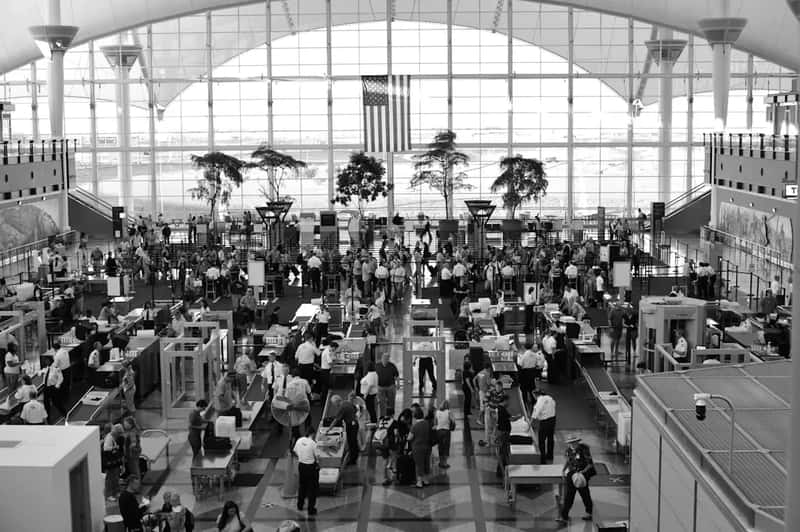
For domestic travel, TSA PreCheck is the most cost-effective option – cheap, widely available, and it covers the part of security that actually takes the most time: the screening process itself. For anyone who travels internationally even once or twice a year, Global Entry pays off quickly because it includes PreCheck benefits plus expedited customs re-entry into the U.S. Most domestic-only travelers who jump straight to CLEAR end up spending more than they need to without fully understanding what they bought.
CLEAR is a biometric identity platform – fingerprint or eye scan – that verifies who you are and escorts you to the front of the security ID check line. What CLEAR doesn’t do is speed up the screening itself. You still need PreCheck or Global Entry to skip the laptop-out, shoes-off process. CLEAR alone gets you to the front of the ID line faster; paired with PreCheck, it makes the entire security experience nearly frictionless. Understanding which layer does what is what separates informed spending from expensive confusion.
#8 – They Book the Aisle and Window Seat When Traveling With a Partner
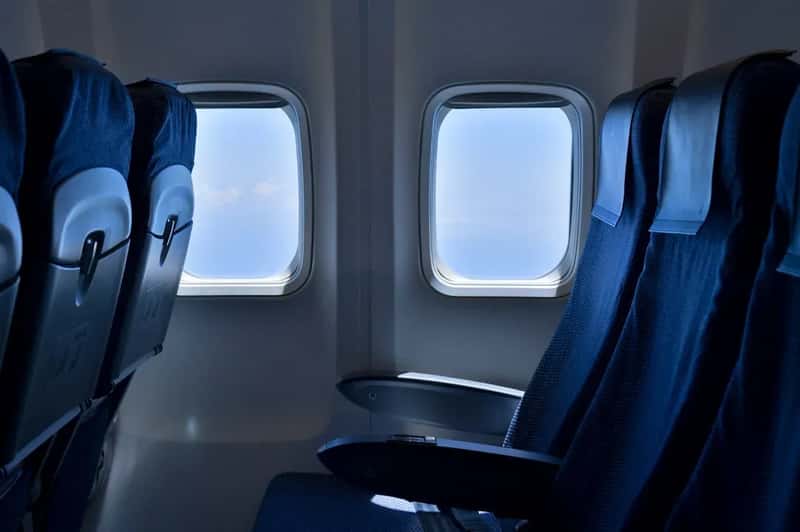
This is one of the quietest and most reliably effective seating tricks in frequent flyer culture. When flying with another person, book one aisle seat and one window seat in the same row. The middle seat is the last one filled on almost every flight – and on any flight that boards less than full, you get the whole row. The math works in your favor more often than it doesn’t.
If someone does claim the middle seat, you simply offer to swap with your travel partner – and nearly every middle-seat passenger takes the window or aisle when offered. You end up seated together regardless, but you gave yourself a real shot at a free row that cost you nothing to attempt. It’s one of those moves that feels like a clever hack right up until you understand the boarding statistics behind it, at which point it just feels obvious.
#7 – They Weigh Their Bag at Home Before the Airport

Arriving at the check-in counter two pounds overweight is one of the most preventable stresses in travel, and it’s entirely self-inflicted. Most domestic airlines cap checked bags at 50 pounds, and a basic luggage scale costs about $10 – a price it pays back the first time it saves you a $50-$100 overweight fee at the counter. Frequent flyers pack around the limit, not up to it, leaving a buffer for anything picked up along the way.
The airport version of this problem is ugly: you’re at the counter, the scale reads 53 pounds, and your choices are to pay the fee, repack in public, or put your heaviest items on your body right there at the desk. All three options are bad. All three are avoidable with one 30-second step at home before you leave. The luggage scale is one of the cheapest, most unglamorous pieces of travel gear a frequent flyer owns – and one of the most used.
#6 – They Volunteer to Be Bumped When the Timing Is Right
Airlines regularly overbook flights and ask for volunteers to take a later departure. Most passengers decline out of reflex. Frequent flyers who aren’t on a strict schedule treat that gate announcement as an income opportunity. The compensation for volunteering – typically $400 to $800 in travel credit or sometimes cash, plus rebooking on the next available flight – represents an exceptional return for a few hours of waiting in a terminal with free lounge access.
The key is knowing your next flight’s schedule before you raise your hand. If the delay is manageable and the next flight works logistically, the math is almost always favorable. Gate agents offer vouchers first, but you can often negotiate for cash, miles, or a combination. The frequent flyer who asks “what’s the cash value?” instead of just accepting the first offer walks away with a meaningfully better deal. Most passengers leave that money on the table every single time – not because it wasn’t available, but because they never thought to ask.
#5 – They Access Airport Lounges Without Actually Having Elite Status
The lounge assumption – that it’s only for first-class passengers or airline executives – is one of the most expensive myths in travel. Priority Pass is the world’s largest independent lounge network, covering over 1,800 locations globally, and membership is open to anyone. Several premium travel credit cards include Priority Pass as a built-in benefit, making the lounge effectively free for cardholders who would have paid the annual fee anyway for other perks.
The American Express Platinum Card’s Global Lounge Collection includes access to more than 1,550 airport lounges across 140 countries – more than any other credit card network as of mid-2025. The Chase Sapphire Reserve includes Priority Pass Select membership plus access to Chase Sapphire Lounges. Frequent flyers stack these benefits deliberately, treating the card’s annual fee as an entry price to a significantly better travel experience rather than a luxury splurge. Once you’ve waited out a two-hour delay with free food, real coffee, and quiet seating, the gate-area alternative feels like a different category of experience.
Why It Stands Out: Lounge Access Without Elite Status
- Priority Pass covers 1,800+ lounge locations in over 600 cities worldwide – no airline status required.
- Several premium credit cards bundle Priority Pass Select as a cardholder perk, including the Amex Platinum and Chase Sapphire Reserve.
- The Amex Platinum’s Global Lounge Collection accesses 1,550+ locations across 140 countries as of July 2025.
- Many cards also reimburse your TSA PreCheck or Global Entry enrollment fee – offsetting hundreds in travel costs.
- Priority Pass standalone Prestige membership costs $469/year – most premium travel cards make it free as a bundled benefit.
#4 – They Always Arrive at the Right Time – Not Just “Early”
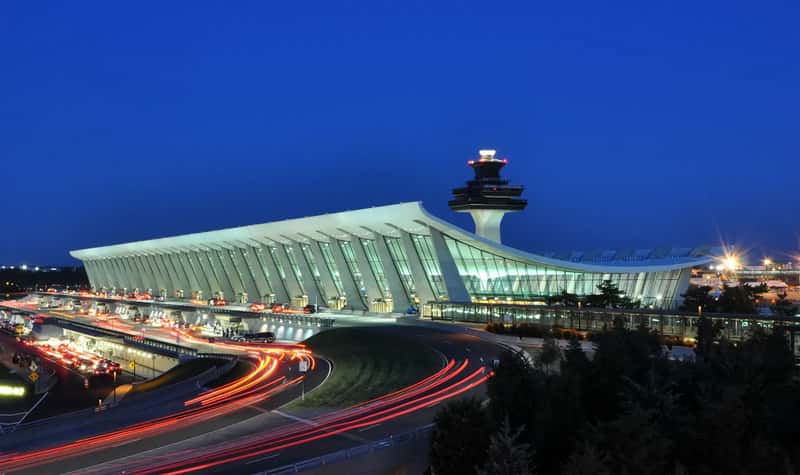
“Arrive early” is advice so generic it’s almost useless. Two hours for domestic flights and three for international is the standard baseline – but “early” is relative to the airport, the terminal, the carrier, and the day of the week. A Tuesday morning in February and the Sunday after Thanksgiving are not the same airport, even if the sign out front says the same thing. Frequent flyers know which travel days operate in a different universe and plan accordingly.
During peak travel periods – holidays, spring break, summer Fridays – the standard two-hour window frequently isn’t enough at major hubs. Red-eye flights are a legitimate strategy: airports past 10 p.m. operate with noticeably thinner crowds, shorter security lines, and calmer gate areas. Not every traveler can or wants to fly overnight, but for those who can, it’s one of the most consistently effective ways to remove airport stress from the equation entirely.
#3 – They Sync Their Watch to the Destination Time Zone Before Boarding
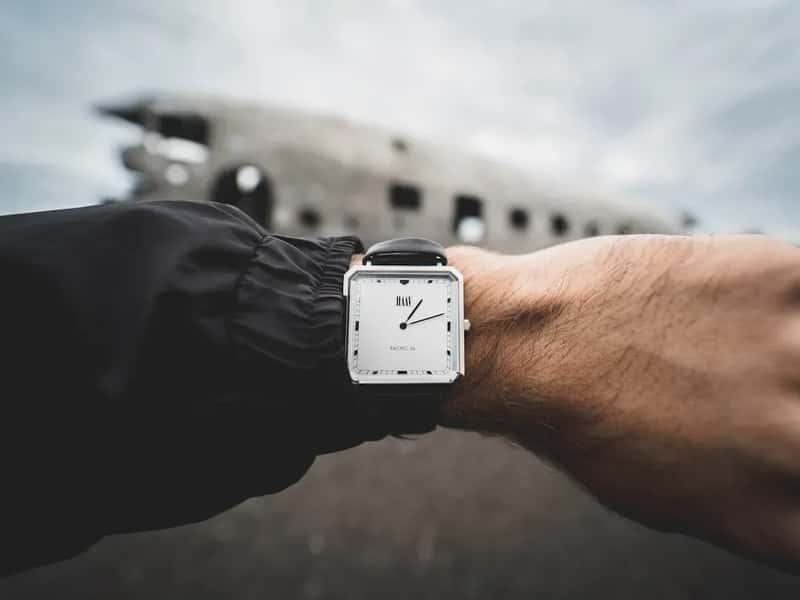
It’s a small gesture, but it’s also a deliberate psychological commitment. Changing your watch – and your mental frame – to the destination’s time zone before you board puts you ahead of the jet lag adjustment process while you’re still on the plane. Most people wait until they land to flip their phone’s clock, which is exactly why they feel disoriented for the first 24 hours. The switch works better when it happens earlier.
Syncing meals and sleep attempts to the destination schedule mid-flight accelerates the body’s adjustment – even if the cabin service runs on a different rhythm. It’s not always easy, especially on daytime flights heading east, but frequent flyers treat jet lag as something to actively resist from the moment they board, not a tax they pay passively after landing. The mindset shift is the point. Once you’re thinking in the new time zone, your behavior follows.
#2 – They Know Their Passenger Rights Cold and Use Them Confidently

Flight disruptions hit millions of U.S. travelers every year. Most of them don’t know what they’re legally entitled to – and airlines count on that gap. The DOT’s passenger protection rules that took full effect October 28, 2024, established the right to automatic cash refunds for canceled flights and significant delays when passengers choose not to travel, defining a significant domestic delay as three hours or more. Most passengers accept a voucher without asking whether cash is an option. It is. The traveler who asks gets a different outcome than the one who waits to be offered something.
For controllable delays and cancellations, most major U.S. airlines are committed to covering meal vouchers for delays over three hours, hotel accommodations for overnight disruptions, and ground transportation to and from the hotel. Knowing the distinction between “controllable” and “weather-related” delays changes what you’re entitled to ask for in real time, at the counter, in the moment when it matters. The frequent flyer who walks up knowing the rules gets a fundamentally different conversation than the one who’s hoping someone will just be nice.
#1 – They Treat Every Part of the Airport as a System to Work, Not Endure
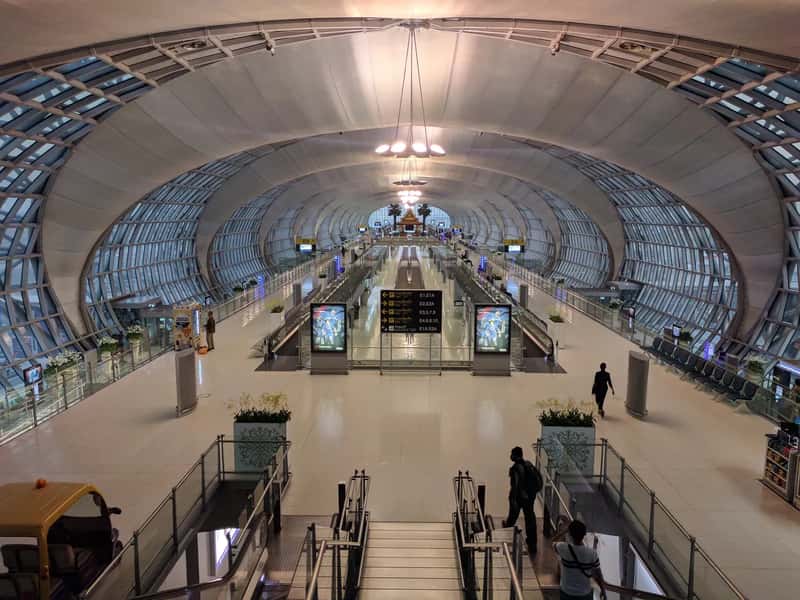
No single hack on this list is the secret. The real separator between a frequent flyer and a stressed-out occasional traveler is the underlying mindset: the airport is a system with known rules, predictable failure points, and learnable workarounds – not a random obstacle course to survive. When you fly often enough, the gate change stops being a disaster because you already knew the terminal layout. The delay stops being a panic because you’re already on the phone. The dead outlet stops being a crisis because you brought a battery pack.
Every rule on this list is a form of preparation that removes a decision from your stressed, tired, rushing brain in the exact moment you can least afford to improvise. That’s what frequent flyers are actually buying with all these habits – not convenience, but cognitive space. The airport doesn’t get easier. You just stop fighting it and start working it. And once that shift happens, the whole experience changes in a way that’s genuinely hard to explain to someone who hasn’t felt it yet.
Most of these rules take minutes to set up and save hours when something goes sideways. The TSA PreCheck KTN trick, the DOT refund rights, the AirTag in the checked bag – none of them require elite status or a corporate travel budget. They just require knowing what experienced travelers already know. A few of them you might already swear by. The ones you don’t yet? Those are the ones worth writing down before your next trip.