Most travelers assume the scariest thing in checked luggage is a leaky shampoo bottle or an overstuffed duffel. Ask anyone who has actually worked a ramp crew, though, and they’ll tell you the real dread comes from bags with cartoon characters printed on the outside. Kids’ gear causes more snags, more “what on earth is this” moments, and more mid-shift headaches than almost anything else moving through an airport.
Parents pack these things with nothing but good intentions – comfort, entertainment, a little piece of home tucked into a strange suitcase. But behind the scenes, that innocent packing habit sets off a chain reaction most families never see coming. Here’s what baggage handlers, TSA officers, and gate agents actually deal with when a kid’s bag hits the belt.
#22 – Metal Cleats That Shred Every Bag Around Them
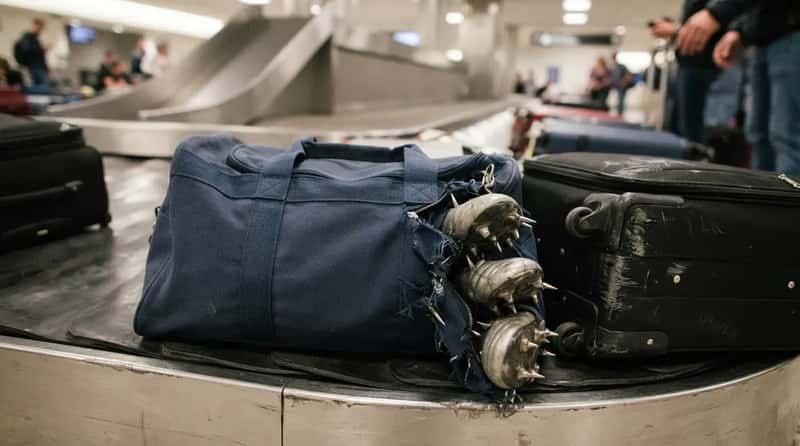
Youth soccer cleats, baseball bats, and hockey sticks look harmless tossed into a duffel bag, but they’re some of the most disliked items on a conveyor belt. Metal spikes catch on canvas, poke through zippers, and scratch every suitcase stacked nearby. The cleats don’t even have to be worn to cause damage – just loose in the bag is enough.
Handlers say the fix is simple: wrap the cleats in a plastic bag or an old sock before packing. Most parents skip that step because it feels unnecessary for something so small. It’s the first sign of a pattern that shows up again and again on this list – the tiniest oversight causing outsized damage.
#21 – Skateboards and Scooters Wedged in Sideways
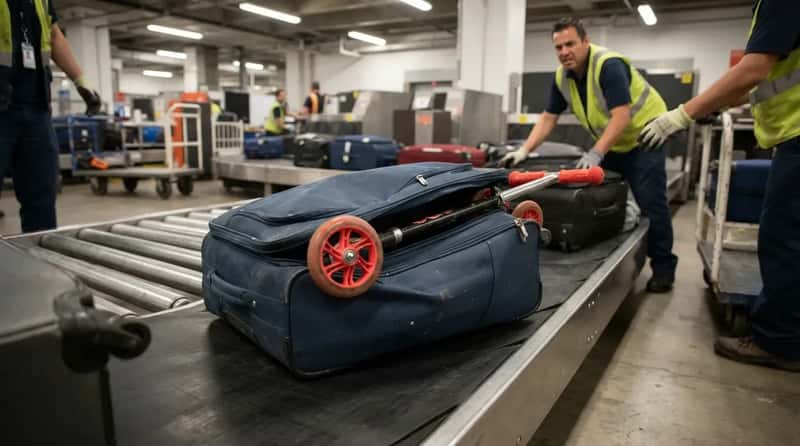
A kid’s scooter or skateboard rarely matches the shape of a normal suitcase, so parents force it in diagonally, leaving wheels and hardware poking through the fabric. That odd shape throws off how bags stack on the belt loader, and it’s one of the top reasons a bag gets pulled for hand-carry instead of automated sorting. Loose wheels have been known to snap clean off mid-transit.
The bigger problem is balance. A suitcase with a scooter jammed inside shifts weight unpredictably, which slows down loading during tight turnarounds when every minute counts. It’s a small annoyance for one bag, but multiplied across a busy flight, it adds up fast.
#20 – The Giant Stuffed Animal That Fits Nowhere
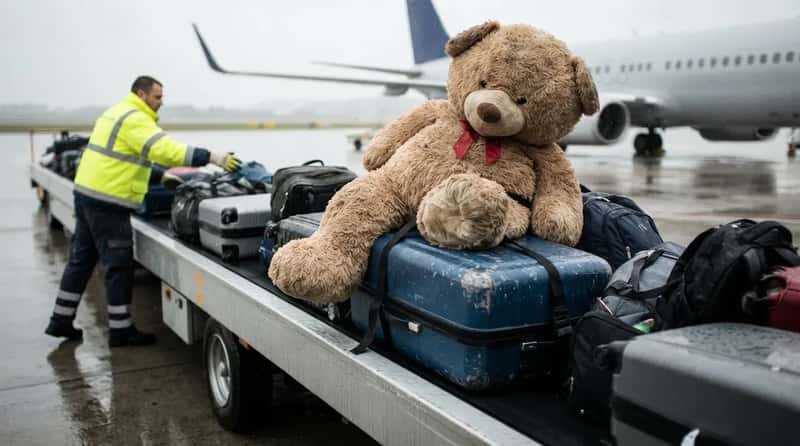
Every family seems to own one stuffed animal bigger than the toddler carrying it, and it never fits neatly into a checked bag. Parents end up strapping it to the outside, tying it on with luggage straps, or checking it as its own separate item entirely. Ramp workers say these oversized plush toys are notorious for getting crushed under everything else on the belt loader.
Because they’re soft-sided and oddly shaped, they don’t stack the way hard-sided luggage does. That means they usually end up on top of the pile, exposed to weather, rain, and rough handling the whole way there.
#19 – Backpacks With Straps Left Dangling Everywhere
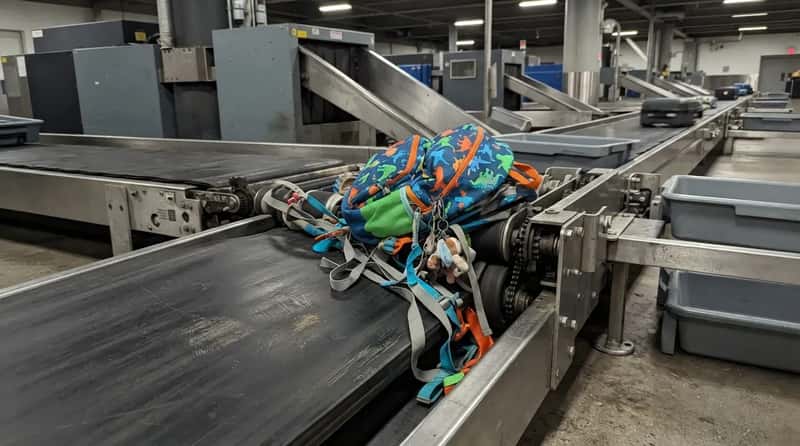
Kids’ backpacks are famous for getting caught on conveyor belts and loading equipment because of their loose, dangling straps. One handler described walking across the airport at the end of a shift picking up every stray zipper pull he found along the belt line – by his count, thousands of them in a single day.
That’s an enormous number of tiny snags happening across just one shift at one airport. Parents rarely think to tuck in the loose straps on a child’s backpack before check-in, but it’s one of the most common reasons a bag comes back torn.
Worth Knowing
- Tuck every dangling strap flat against the bag before check-in
- Snip or tuck loose zipper pulls and charms that can snag belts
- A luggage cover or plastic wrap adds a cheap layer of protection
- Check outside pockets for open flaps that catch on rollers
#18 – Strollers Handlers Won’t Touch Bare-Handed
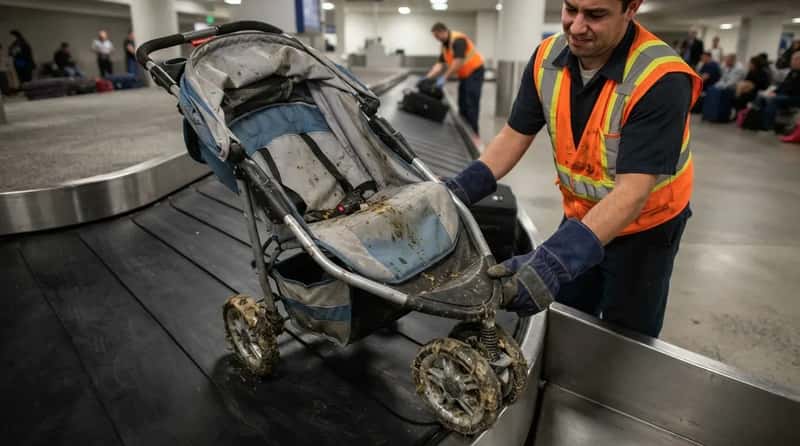
Strollers checked at the gate often come back in rough shape – sticky wheels, spilled snacks, and worse. One handler told Condé Nast Traveler that people would be shocked at the condition some strollers arrive in, and that crews genuinely try to avoid touching them more than necessary.
The same handler said an unwrapped stroller is far more likely to get tossed around roughly than one that’s been bagged up first. Wrapping a stroller in plastic isn’t really about avoiding scratches – it quietly changes how carefully the whole item gets handled from gate to belt.
#17 – Car Seat Straps That Snag Everything in Sight
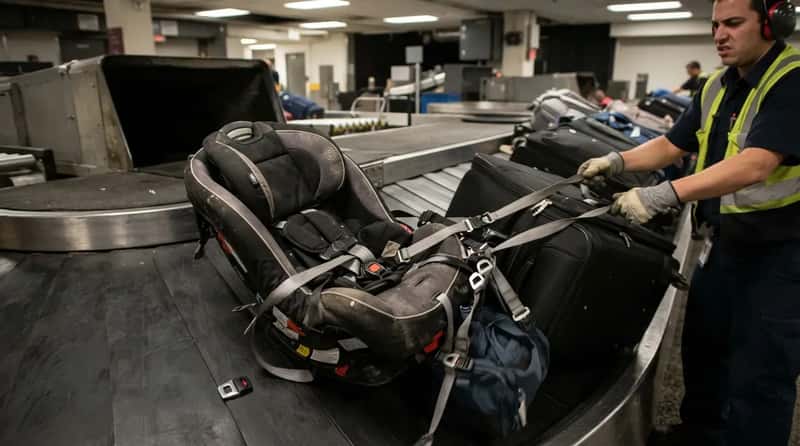
Car seats are some of the most dreaded items on the belt because of their tangle of straps and buckles. One handler said the straps on child car seats are the most annoying things they deal with, because every buckle is a hook waiting to grab the next bag rolling by.
Handlers specifically recommend wrapping car seats in plastic with every strap tucked inside before check-in. Skipping that step doesn’t just risk damage to the seat – it slows down the entire loading line stacked up behind it.
#16 – Powdered Drink Mixes That Look Suspicious on a Scanner
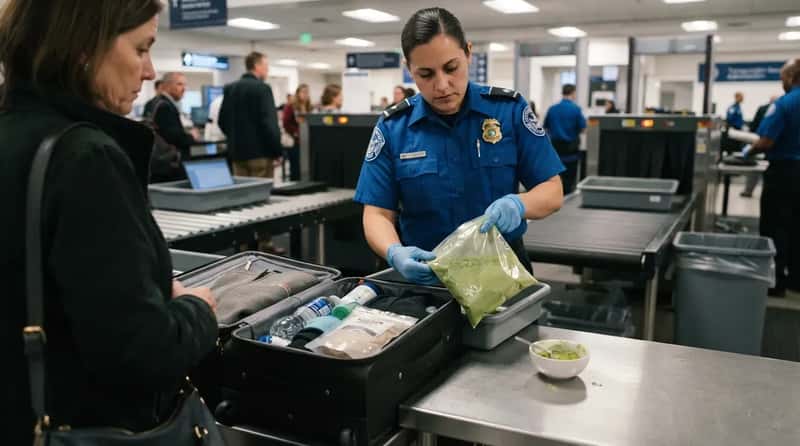
Parents pack powdered electrolyte mixes, protein powder for teens, or loose matcha for themselves, never realizing how alarming an unmarked baggie of powder looks under airport scanning. One traveler was stopped, questioned, and searched – not just her bag but her person too – over a powder that turned out to be nothing more than green tea.
The search was invasive enough that she nearly missed her flight, all because of powdered matcha. Officers simply can’t tell the difference between a kid’s sports drink mix and something far more concerning just by looking at it.
#15 – Baby Formula Tubs That Trigger Extra Screening
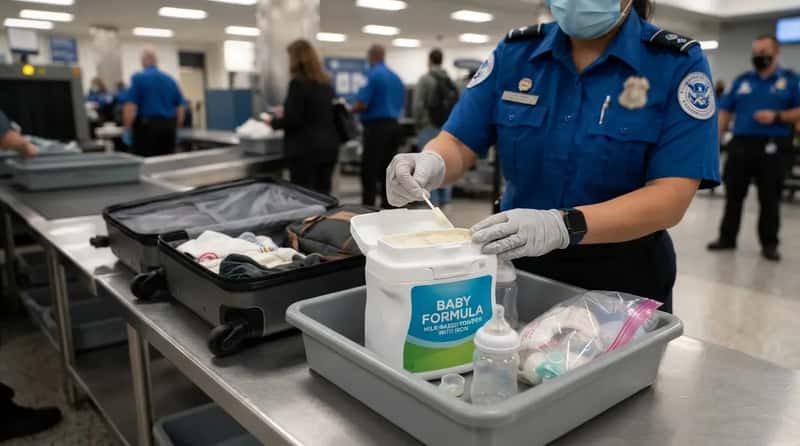
Formula is essential for traveling families, but the tub itself can trigger extra screening if it isn’t packed with care. Powders over 12 ounces – including baby formula and protein powder – automatically receive additional screening under TSA rules. Parents carrying a full-size container often don’t find this out until they’re already pulled aside.
A single oversized tub of formula powder can add several extra minutes to a security line during an already stressful travel day. It isn’t banned, but it’s one of the most misunderstood rules among families flying with babies.
#14 – Wrapped Birthday Gifts That Get Ripped Open
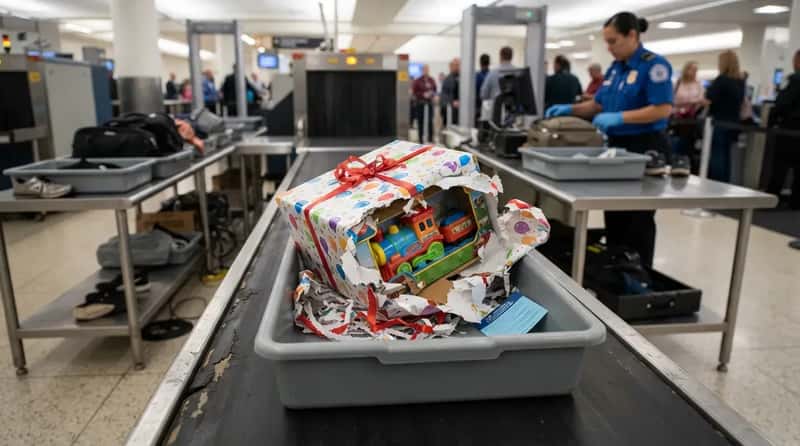
Sending a wrapped present through security feels festive right up until an officer can’t see what’s inside it. TSA specifically recommends gift bags instead of wrapping paper, since it lets agents peek inside without destroying the packaging.
A wrapped present that can’t be visually confirmed gets torn open on the spot, wrapping paper and all. Parents heading to a birthday party across the country rarely think about this rule until the present arrives at its destination in shreds.
#13 – Musical Toys With Batteries Rattling Loose
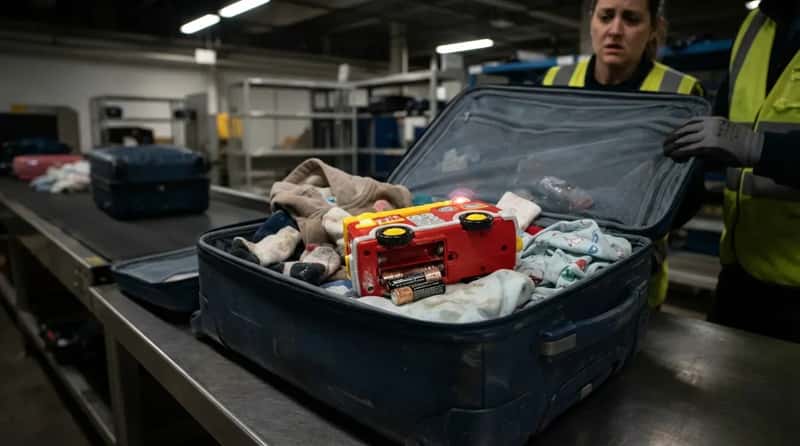
Battery-powered toys that sing, light up, or make noise are a packing minefield. Loose batteries rolling around inside a toy’s compartment can short out, corrode, or leak during a long flight, especially in the pressurized, jostled cargo hold. A single leaking battery can ruin every other item packed nearby.
Parents often forget these toys even have batteries installed until the toy starts singing on its own from inside a sealed suitcase mid-flight. Ramp crews say it happens more often than most families would ever guess.
#12 – Souvenir Snow Globes That Trip the Liquid Alarm
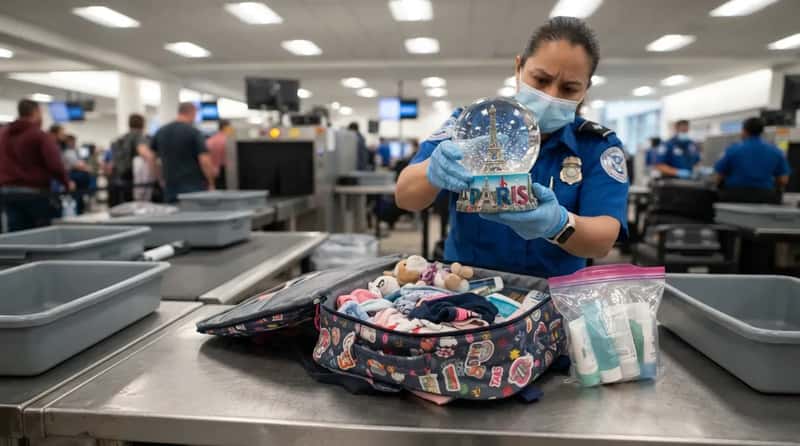
Souvenir snow globes are a classic packing mistake for families. Globes that appear to hold less than 3.4 ounces of liquid can only travel in a carry-on if the entire globe, base included, fits inside the passenger’s one-quart resealable bag – and almost none actually qualify.
A typical gift-shop snow globe holds far more liquid than the limit allows, which guarantees a search every time. Larger globes have to go in checked luggage instead, something most parents never learn until they’re standing at the checkpoint.
#11 – Kinetic Sand That Leaks Into Every Pocket
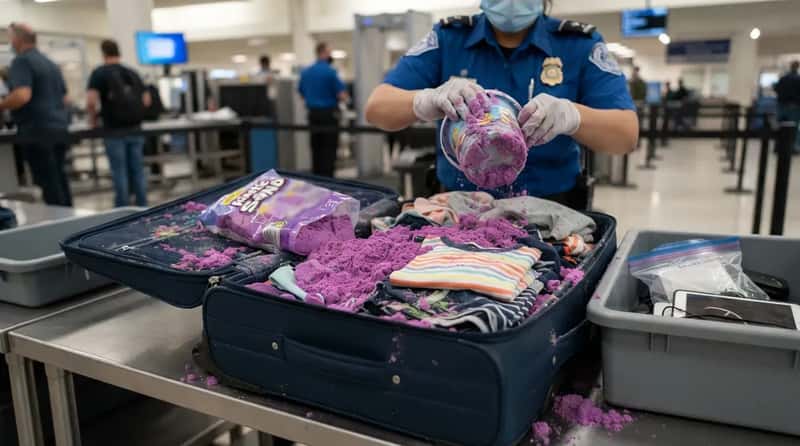
Kinetic sand is marketed as mess-free, but airport security doesn’t see it that way at all. It counts as a granular material under TSA’s powder rule, meaning any carry-on quantity over 12 ounces has to go through hand inspection.
A full container of kinetic sand almost always exceeds that limit, triggering a search of the entire bag around it. Parents packing beach buckets for vacation rarely realize the leftover sand still stuck inside counts against them on the flight home too.
#10 – Slime Containers That Explode Mid-Flight
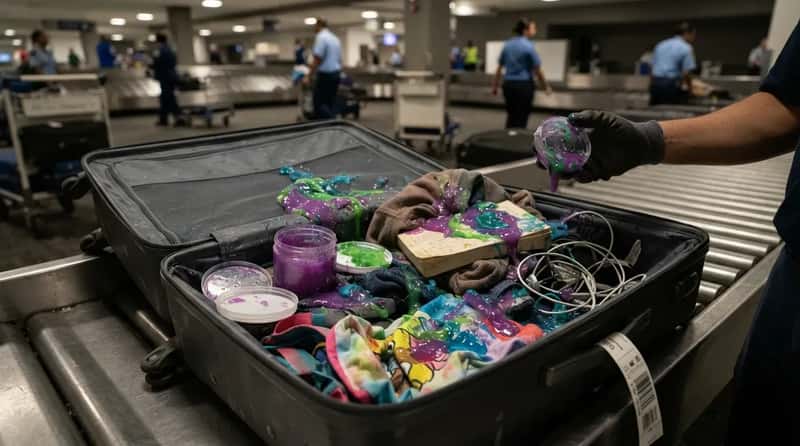
Slime feels solid in the hand, but TSA disagrees completely. It’s allowed in both checked and carry-on bags, but in a carry-on it counts as a liquid and must sit in containers of 3.4 ounces or less. Parents packing a full slime kit for a bored kid on a long flight are often shocked when it gets pulled at the checkpoint.
Pressure changes in the cargo hold have caused slime containers to pop open mid-flight, coating everything nearby in a sticky mess. It’s one of the most common “why is my suitcase covered in goo” complaints families report after landing.
Quick Compare
- Snow globes: carry-on only if under 3.4 oz total, base included
- Kinetic sand: carry-on capped at 12 oz before hand inspection
- Slime: carry-on limited to 3.4 oz; no limit in checked bags
#9 – Science Kits Hiding Mystery Powder
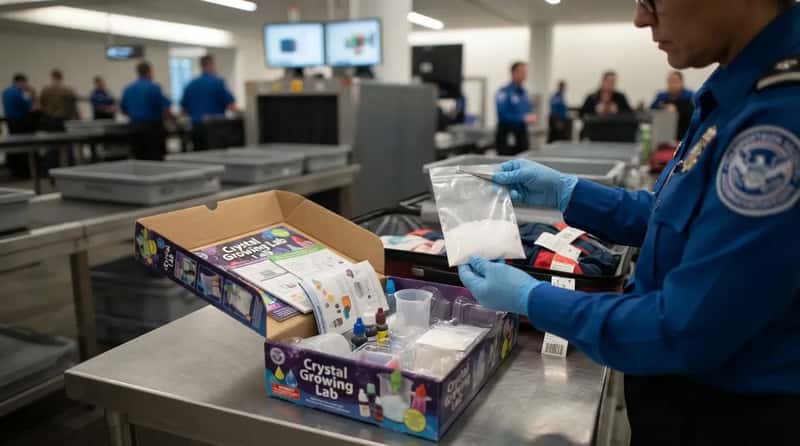
Kids’ chemistry and crystal-growing kits are popular gifts, but the loose powders packed inside them raise real red flags. The powders themselves aren’t automatically prohibited, but an unlabeled bag of unknown substance inside a toy box is exactly the kind of thing that slows a whole line down.
A single mystery powder pouch inside a child’s science kit can trigger the same scrutiny as an unidentified substance found anywhere else. Parents buying these kits as gifts almost never think to check what’s actually sealed inside before a flight.
#8 – Craft Kits Hiding Real Scissors and Needles
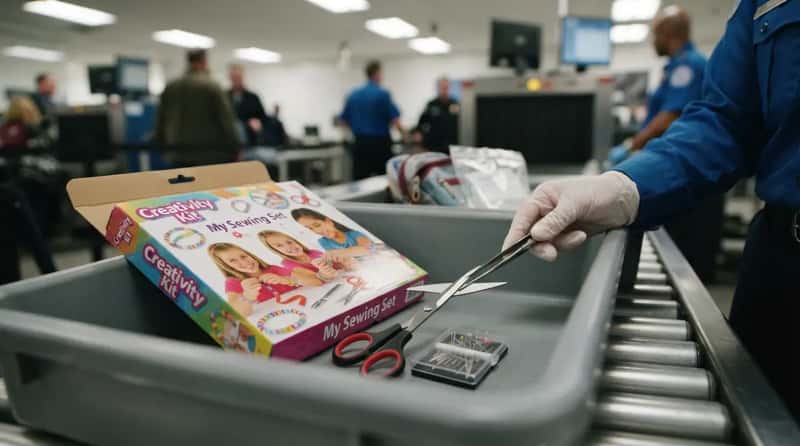
Trendy craft kits for kids often include genuinely sharp metal tools. Crochet kits, sewing sets, and similar creative toys make great gifts, but if they include scissors, needles, or other tools that could double as a weapon, they may not clear TSA inspection at all.
Parents assume a kids’ craft kit is automatically kid-safe for travel, which isn’t always true once security gets involved. The packaging almost never warns buyers that the included tools will be confiscated right at the checkpoint.
#7 – Action Figures With Removable Weapon Parts
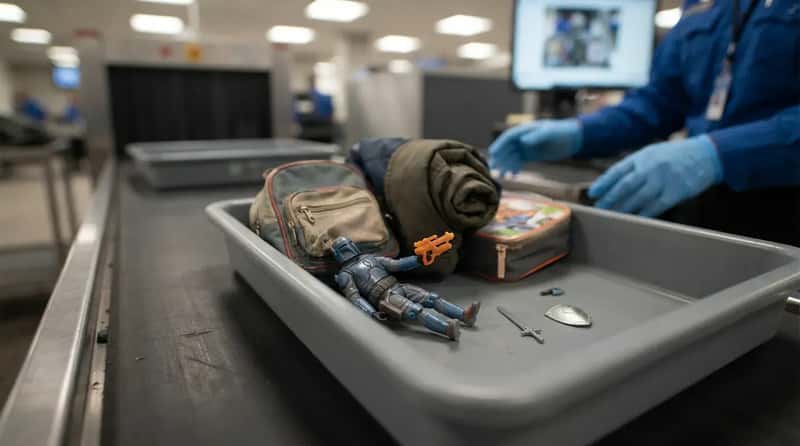
Small plastic swords, shields, and blasters bundled with action figures cause more confiscations than most parents expect. Bubble guns, prop weapons, and any action figure with removable weapon-shaped parts are barred from carry-on bags entirely.
It doesn’t matter how small or cartoonish the accessory looks – a removable weapon-shaped part gets flagged automatically, no exceptions. A tiny plastic sword bundled with a superhero figure has been enough to trigger a full bag search on its own.
#6 – Costume Swords and Armor From Halloween
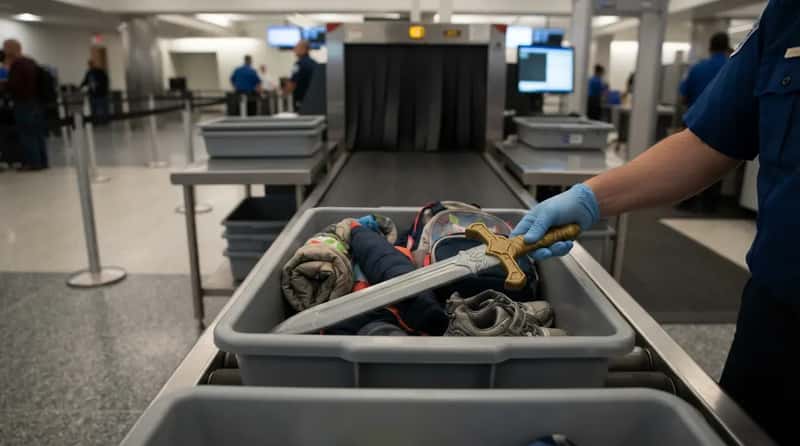
Halloween costumes and pretend-play sets are seasonal headaches for security lines everywhere. TSA officers have documented plenty of oversized prop weapons packed by families, including a 12-inch costume sword pulled from a carry-on during a routine screening.
A costume sword doesn’t need to be sharp to get confiscated – size and shape alone are enough to trigger removal. Parents packing a knight costume for a themed trip rarely think of the sword as a security risk until it’s already in the bin.
#5 – Bubble Guns Mistaken for the Real Thing
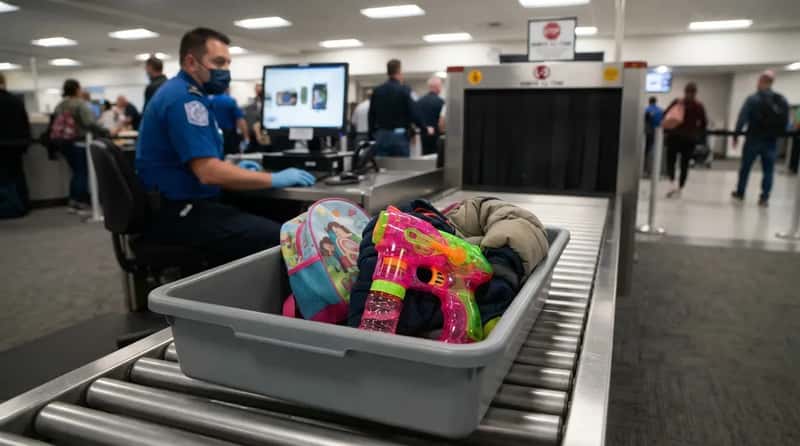
Bubble guns look cheerful and harmless, but their shape is exactly the problem security officers can’t ignore. Bubble guns, prop weapons, and action figures with removable weapon parts are banned from carry-on bags no matter how neon or cartoonish they look.
A bright pink or rainbow-colored bubble gun gets the exact same scrutiny as a realistic toy pistol at the checkpoint. Parents grabbing one as a party-favor gift for a flight rarely expect it to end up in the confiscation bin an hour later.
#4 – Nerf Blasters That Never Make It Past Security
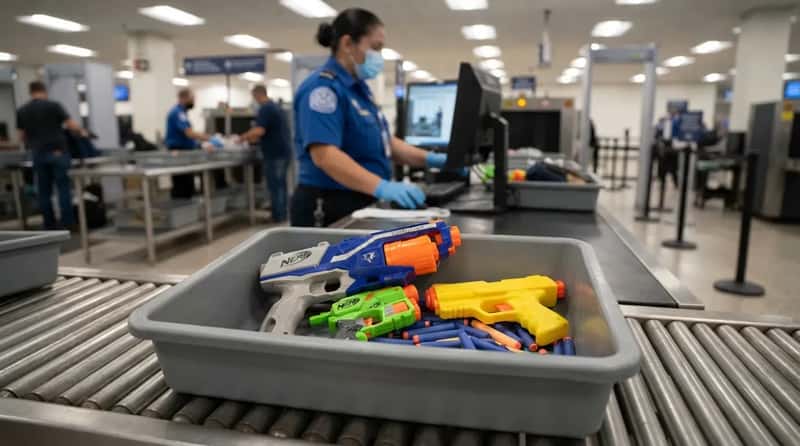
Nerf guns are a summer travel staple, and they’re consistently one of the most confiscated kids’ toys at any checkpoint. Popular picks like Nerf blasters, water guns, and cap guns are an automatic no, right alongside anything shaped like a realistic pistol or rifle.
Even foam-dart blasters built specifically for children get treated exactly like a real weapon replica once they hit the scanner. Parents packing one for a pool day at grandma’s often don’t realize the toy simply won’t make it through.
At a Glance
- Nerf blasters and foam-dart guns
- Water guns and cap guns
- Bubble guns and prop weapons
- Anything shaped like a realistic pistol or rifle
#3 – Toy Guns That Look Painfully Real
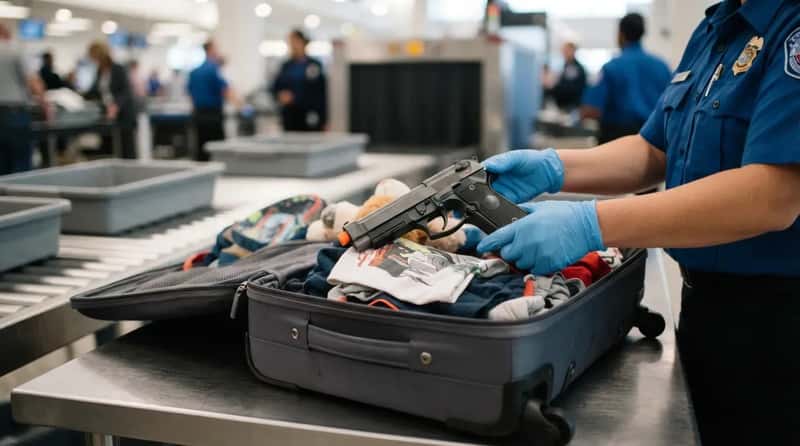
Realistic toy pistols and rifles are an automatic no at security, full stop, no matter the age of the child carrying them. TSA guidance is blunt about it – toys that resemble realistic firearms or weapons of any kind aren’t allowed in carry-on bags.
The more realistic the paint job and detailing, the more likely the toy is treated exactly like an actual firearm during screening. Some families have had cherished toy pistols confiscated outright because there was no time left to reroute them into checked luggage.
#2 – A Forgotten Knife Hidden Inside a Secondhand Car Seat
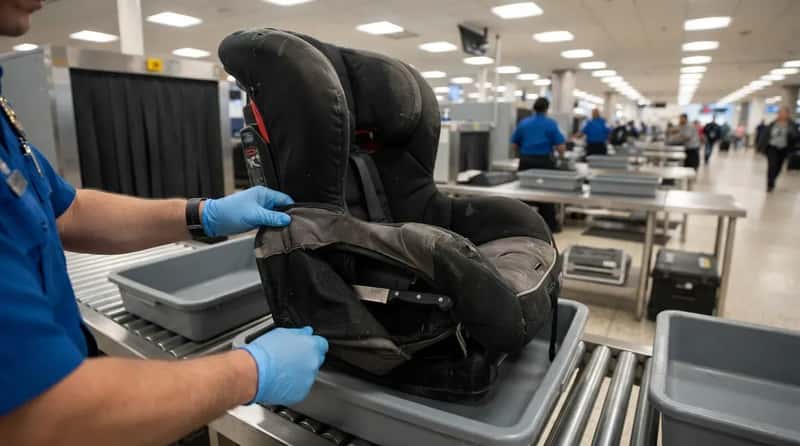
Buying a used car seat or borrowing one from a relative comes with a hidden risk most parents never even consider. In one striking case, screeners at Dallas-Fort Worth International Airport found a knife concealed inside a child’s car seat, left behind by a previous owner entirely.
Nobody had to hide anything on purpose – old compartments and padding in secondhand gear can quietly hold forgotten items for years. Parents inheriting hand-me-down car seats or strollers almost never think to check every hidden pocket before a flight.
#1 – The Comfort Toy TSA Now Confiscates at the Gate
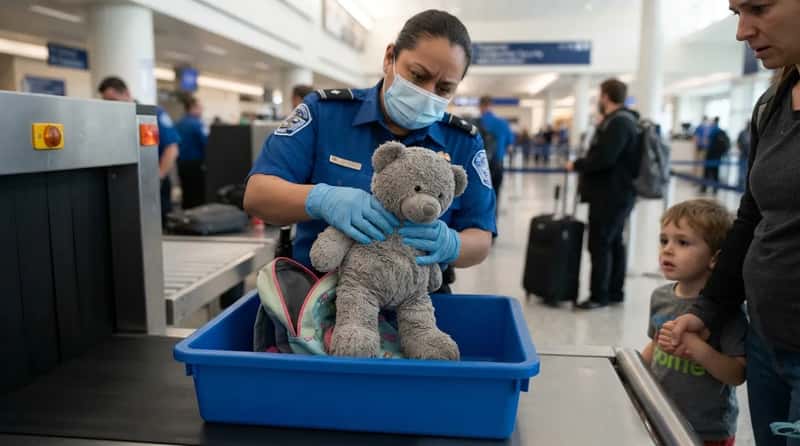
For families with anxious flyers or sensory needs, weighted stuffed animals used to be the go-to travel comfort item. That changed fast. Effective June 30, 2025, the TSA banned weighted stuffed animals – along with all toy guns – from carry-on luggage over security concerns.
A single dense, sand-filled plush toy – the exact kind meant to calm a frightened child – is now treated the same as a security threat at the checkpoint. Even when the toy is medically necessary for sensory support, a healthcare provider’s note doesn’t guarantee it gets through. For parents who packed it specifically to keep a child calm during takeoff, having it pulled at the gate has become the single most dreaded find of all – for the family, and for the officer who has to explain it to a crying kid.
Fast Facts
- Ban took effect June 30, 2025
- Covers all toy guns and weighted stuffed animals
- Applies specifically to carry-on luggage
- A doctor’s note does not guarantee an exception
Some of these items are genuinely dangerous. Most are just innocent mix-ups between what feels like a harmless toy at home and what a scanner or a handler actually sees under airport lighting. The pattern holds up every single time: anything sharp, dense, powdery, sticky, or strap-heavy is going to cause trouble, no matter how kid-friendly it looks on the shelf.
Wrapping gear, checking hidden compartments, and reading the fine print on toy packaging can save a family from a full-blown airport meltdown before it even starts. Which one of these caught you off guard? If you’ve ever had a toy confiscated at security or watched a stroller come back looking worse than it left, you’re far from the only one – ask around and you’ll find another parent who’s lived through the exact same thing.