Most people assume the flight attendants are the only ones quietly grading their behavior on a plane. They’re not. The real judges board after everyone else has gone home, working alone in a dim, powered-down cabin, and they can tell which row belonged to a seasoned traveler before they even check the seat number.
It has nothing to do with expensive luggage or a put-together travel outfit. It’s a string of tiny, almost invisible habits that either make an overnight cleaner’s shift move fast or turn it into a slog. Some of these tells are obvious once you hear them. A few are the kind of thing even frequent flyers don’t realize they’re doing.
22. They Handle the Overhead Bin Like They’ve Done It a Thousand Times
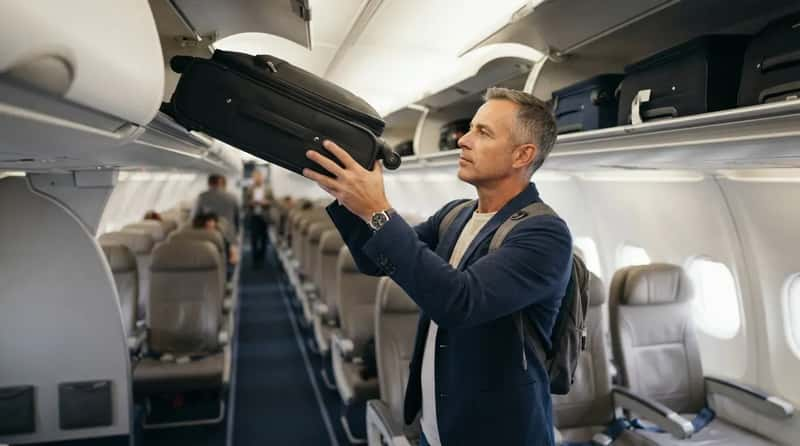
Boarding is the first place a frequent flyer gives themselves away, and it has nothing to do with clothing or luggage brand. Cleaners and crew both point to the same tell: no hesitation, no circling the row twice, no traffic jam in the aisle.
Frequent flyers usually know exactly what they’re doing before they even reach their row. They lift the bag, stow it, close the bin, and clear the aisle in one motion. A smooth boarder almost always means a low-mess row by landing.
21. They’re Seated and Settled Before the Line Behind Them Even Backs Up
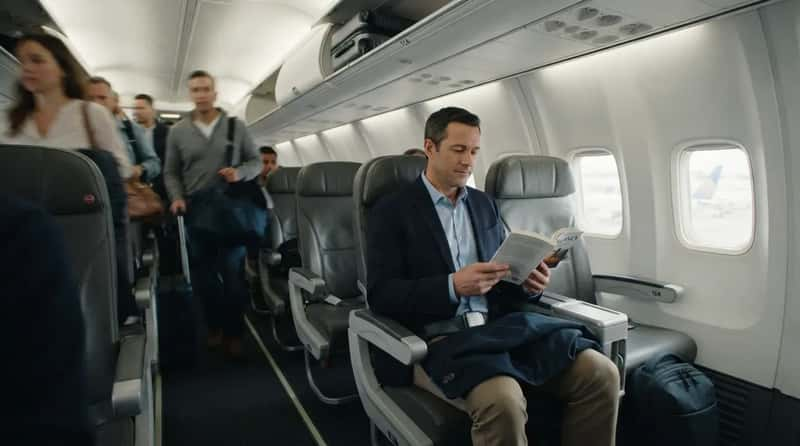
Watch the row instead of the person and the pattern shows up fast. A seasoned traveler settles in almost immediately, with nothing left half-done and nothing else that needs to be said.
“They come on, put their stuff away, boom, they’re seated. Everything’s tucked in, and nothing else has to be said.”
Flight Attendant
That single habit tells cleaners something too. A rushed, chaotic settle-in almost always leaves crumpled napkins, tangled cords, and jackets crammed into odd corners. A passenger seated in under thirty seconds rarely leaves a mess behind, and that’s the row overnight crews are relieved to walk into.
20. Everything They Need Is Already in One Pocket
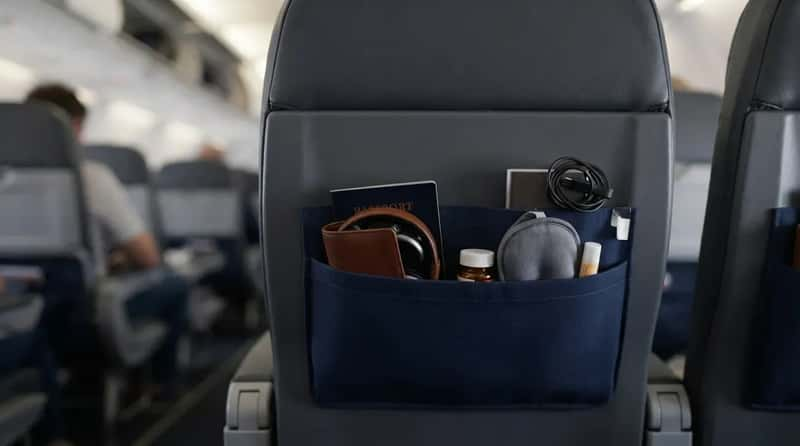
Frequent overnight flyers never dig through their whole bag mid-flight, and cleaners can tell before the plane even pushes back. Headphones, chargers, medication, and passports live somewhere accessible from the start, instead of forcing a mid-flight excavation of the overhead bin.
That habit alone means fewer stray items end up wedged into seat pockets or dropped in the dark overnight. A first-timer’s row can look like a small explosion by landing, chargers, wrappers, and boarding passes everywhere. The organized traveler’s seat pocket looks almost untouched from takeoff to touchdown.
19. They Return the Greeting at the Door Without Fail
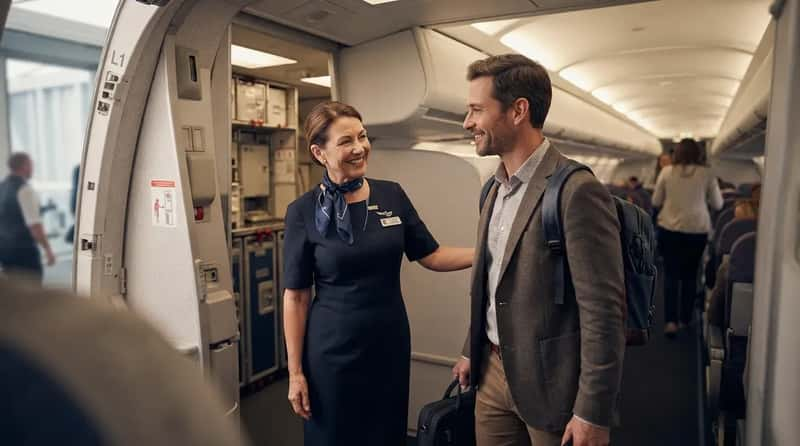
It sounds too small to matter, but crew genuinely register it. Flight attendants have said plainly that they notice whether they’re acknowledged with a smile or a returned hello at the door, and it colors how the rest of the flight unfolds.
Frequent flyers do this almost on autopilot, having walked through hundreds of aircraft doors before. First-timers, understandably nervous, often miss it completely. It’s a two-second habit that quietly shapes how the whole crew treats a passenger for the next several hours.
18. They Never Stand in the Galley, Even for a Second
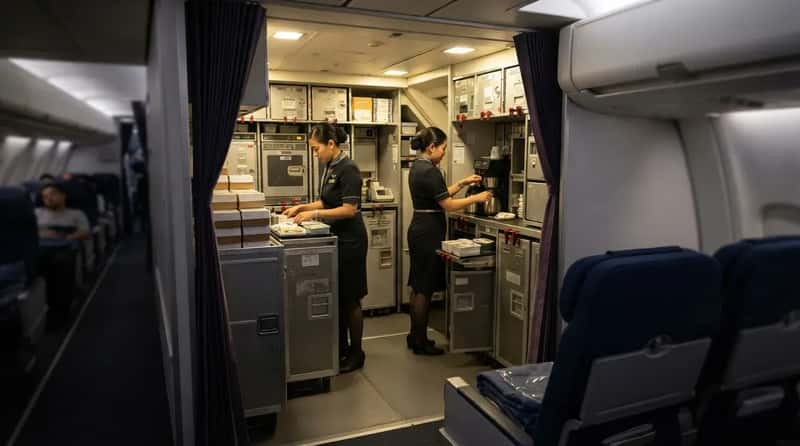
This is one of the more controversial etiquette points, but crew are unified on it. One flight attendant with a major U.S. carrier put it directly: “As a passenger, I would never stand in the aircraft galley for a lengthy period of time. This is the flight attendant’s workspace where we work and eat.”
Casual flyers sometimes wander back there to stretch or chat, not realizing it’s the one space crew actually need to themselves. Frequent overnight passengers know better and stay in their row unless they’re headed to the lavatory. Treating the galley as off-limits is a habit only repeat flyers seem to grasp instinctively.
17. They Wait for the Trash Pass Instead of Rushing the Cart
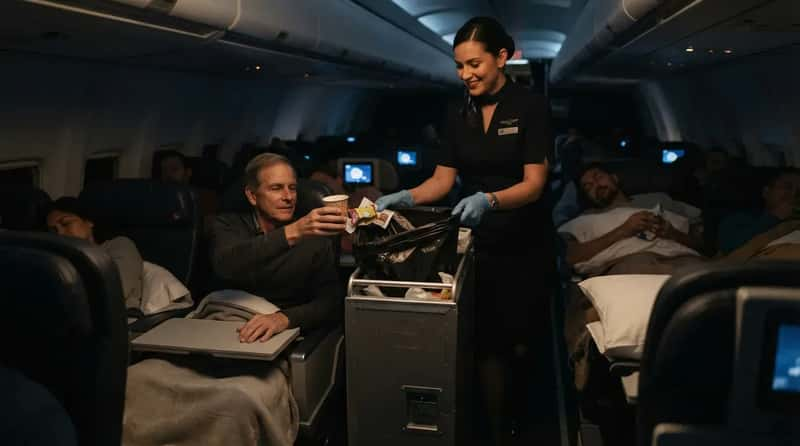
Handing over trash at the wrong moment causes more friction than most passengers realize. Trying to hand a flight attendant loose trash mid-service can actually slow things down, since crew may not have a bag open or a free hand yet.
Waiting until service wraps up, or until the dedicated trash pass comes through, makes the whole process smoother. Overnight regulars know the rhythm of service well enough to just hold onto their cup a little longer. It’s a small patience habit that quietly separates rookies from regulars.
16. They Wipe Down Their Own Tray Table Before Cleaners Ever Touch It
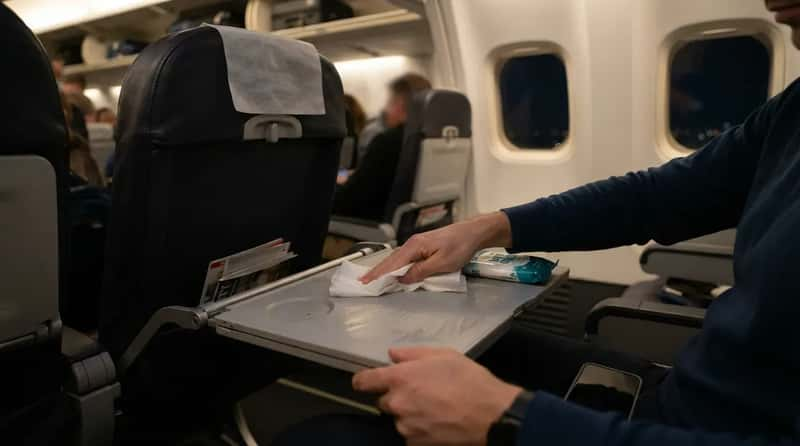
This habit exists for a reason most passengers never learn. Tray tables consistently rank among the least sanitary surfaces on a plane, since passengers rest feet, phones, and snacks on them for hours.
Some crews even carry disinfecting wipes and clean armrests and trays themselves on boarding. Frequent overnight travelers have picked up the same habit for their own comfort, wiping the tray down before eating or resting. Cleaners can tell instantly which rows barely need attention here and which ones skipped the step entirely.
15. They Know the Difference Between a “Turn Clean” and the Real Overnight Clean
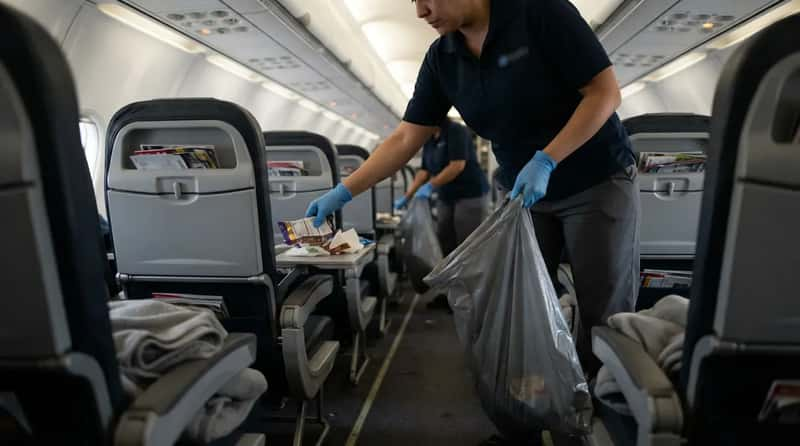
Most passengers assume every clean is the same. Frequent flyers who pay attention know the quick between-flight tidy is triage, not a deep clean, meaning seat fabric, carpets, vents, and hard-to-reach corners are largely untouched.
During a tight turnaround, airlines focus on the visual impression, making the cabin look clean rather than making it sanitized. A quick tidy is not a deep clean, and experienced overnight travelers behave accordingly, never assuming a tray or seatback pocket has been sanitized just because it looks fine. That’s a slightly uncomfortable truth most casual flyers never think about.
Quick Compare
- Turn Clean: A fast tidy between flights, focused on trash and a visual reset
- Overnight Deep Clean: A full pass through seat fabric, carpets, vents, and hard-to-reach corners
- Turn Clean: Seatback pockets and trays are often skipped entirely
- Overnight Deep Clean: Only happens once the plane reaches its base for the night
14. They Fold the Blanket and Stack the Pillow Instead of Leaving Them in a Heap
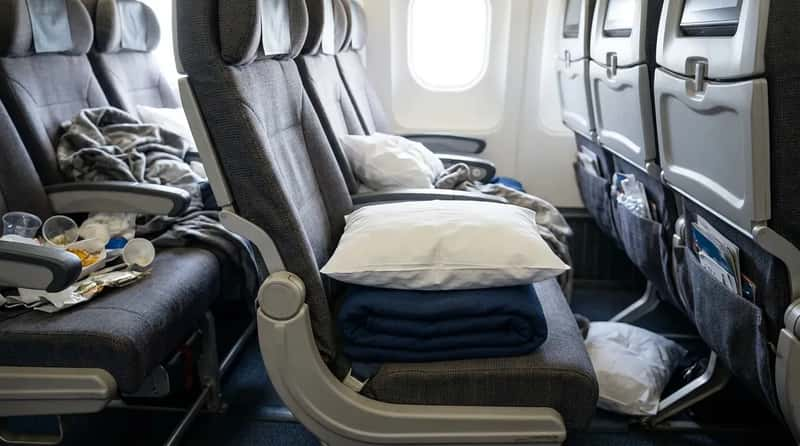
Overnight flights create a very specific kind of mess, and cleaners notice exactly who contributes to it. Once a plane finishes its last route for the day, it often sits overnight for eight to ten hours before the deep clean actually happens.
That long overnight window is when crews finally tackle bedding and blankets properly. A frequent flyer who folds their blanket and stacks the pillow before landing shaves real time off that process. A tangled heap of bedding is one of the fastest ways to flag a first-time overnight flyer.
13. They Order Water, Not Soda, Once the Cart Comes By
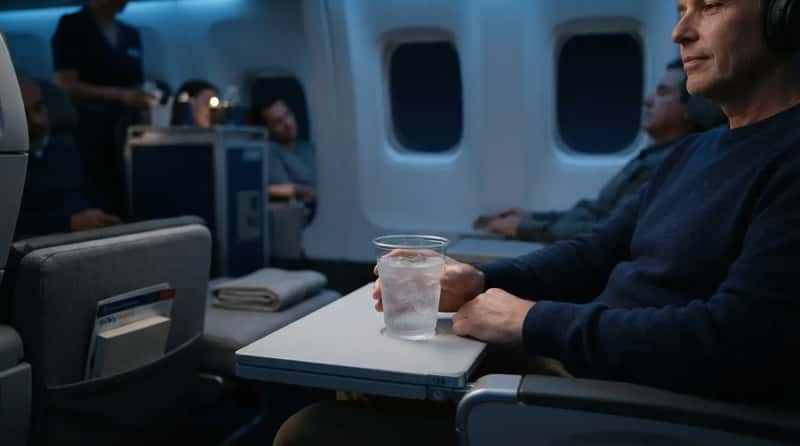
This one is about comfort more than cleaning, but it shows up in the mess left behind. Hydration at altitude affects comfort more than most flyers realize, and crew often recommend water over carbonated drinks, which can worsen bloating in flight.
Sticky soda spills and half-finished cans left in seat pockets are one of the more common overnight cleaning headaches. Frequent flyers who’ve learned this the hard way tend to stick with water, and their rows show it. Fewer sugary spills means a noticeably faster wipe-down for the overnight crew.
12. Their Seatback Pocket Looks Exactly Like It Did at Boarding
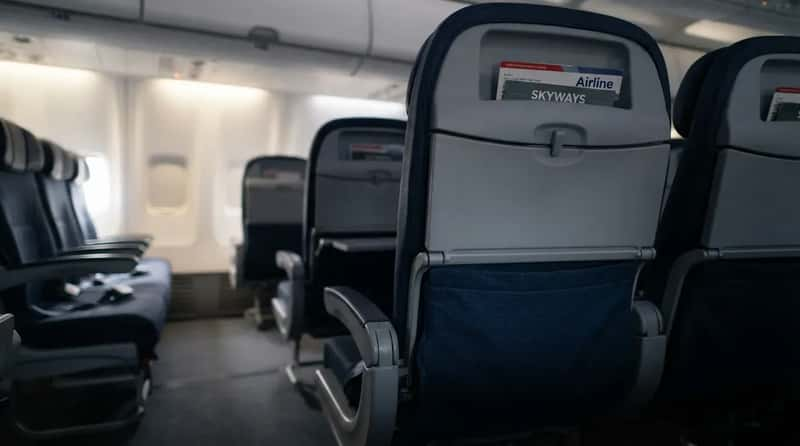
Cleaners deal with more forgotten belongings than most travelers would ever guess. Loose change, chargers, single earbuds, half-read paperbacks, it all ends up jammed in seat pockets by the end of a flight.
Frequent overnight passengers rarely contribute to that pile because they treat the pocket as a holding zone, not a dumping ground. Everything that goes in comes back out before landing. A pocket stuffed with napkins, cups, and wrappers is an instant giveaway of an inexperienced flyer.
11. They Never Assume the Seat Was Sanitized Before They Sat Down
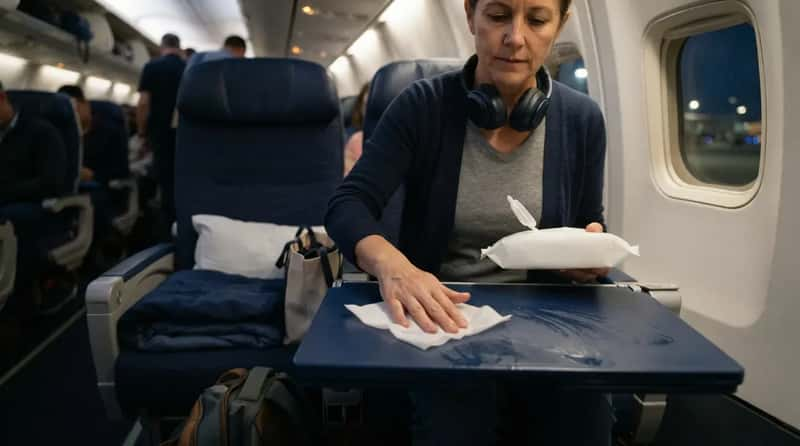
This is a slightly uncomfortable one, but frequent overnight flyers have quietly accepted it. The turnaround clean is about the visual impression for boarding passengers, not the actual hygiene of the surfaces they’ll touch for the next several hours.
That means the seat, armrest, and tray table can look spotless without ever being disinfected. Experienced travelers who fly overnight routes regularly tend to wipe down their own space rather than trust appearances. Most casual flyers have no idea how thin a “clean” plane really is between flights.
10. They Know Exactly When the Real Deep Clean Happens
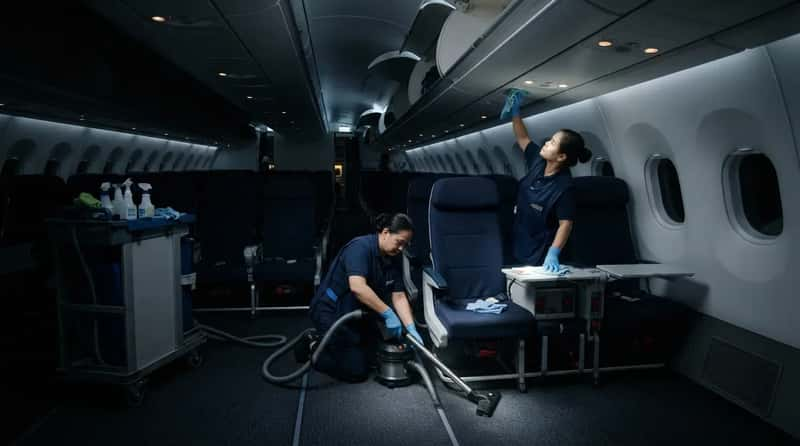
Frequent flyers who’ve paid attention know the deep clean isn’t a nightly event. Airlines get more time once a plane reaches its base overnight, allowing a thorough pass through hard-to-reach spots like seat pockets and overhead bins.
Even that overnight clean doesn’t hit every surface every night. Lufthansa deep-cleans its planes after every 500 flight hours, while Singapore Airlines does it monthly. That gap between “cleaned” and “deep cleaned” is bigger than most passengers ever consider.
Fast Facts
- Lufthansa deep-cleans planes after every 500 flight hours
- Singapore Airlines runs a deep clean on a monthly schedule
- Planes often sit overnight for eight to ten hours before that deeper clean happens
- A quick turnaround clean targets visual impression, not full sanitizing
9. They Never Let Food Containers Pile Up on a Multi-Leg Overnight Trip
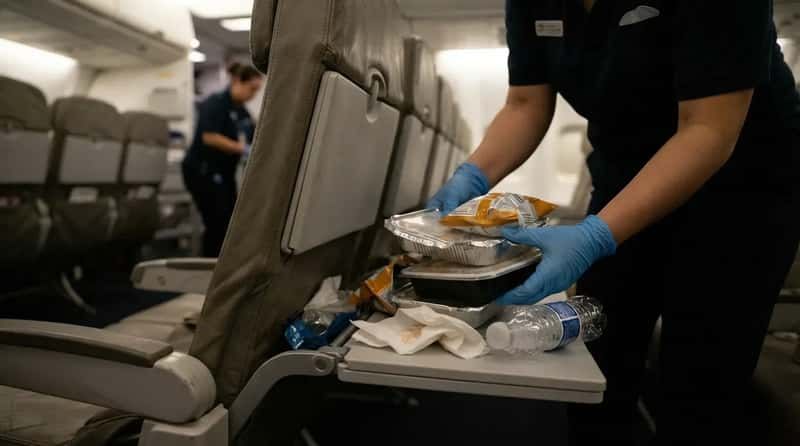
Cleaners can tell instantly who ordered food and forgot about it. On a full turnaround or overnight clean, visible trash gets pulled from seat pockets, overhead bins, and the galley as one of the very first steps.
Frequent flyers who’ve sat through a smelly, container-stuffed row before tend to hand items to crew the moment they’re finished rather than stacking them nearby. It’s a small courtesy that saves real time during the overnight reset. A single forgotten wrapper is minor, but a row full of them slows the whole crew down.
8. They Know Which Surface on the Plane Is Actually the Dirtiest
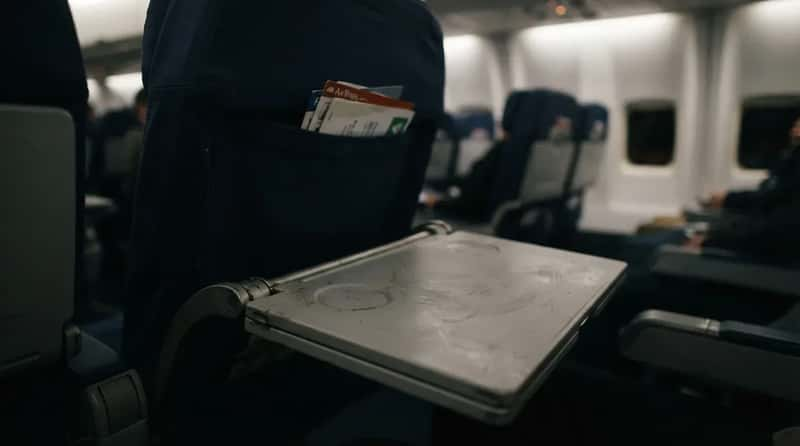
Most passengers would guess the lavatory. Frequent flyers know better, because the tray table has quietly become the surface with some of the worst sanitary conditions on the whole aircraft, thanks to feet, socks, and personal items resting on it for hours.
This slightly gross fact changes how experienced overnight travelers behave in their seat, keeping feet off the tray and food off the fold-down surface entirely. Cleaners can often tell within seconds whether a passenger treated the tray like a footrest or kept it clear. It’s a small distinction that says a lot about how many flights someone has actually taken.
7. They Never Trust a Spotless-Looking Seat on a Tight Turnaround
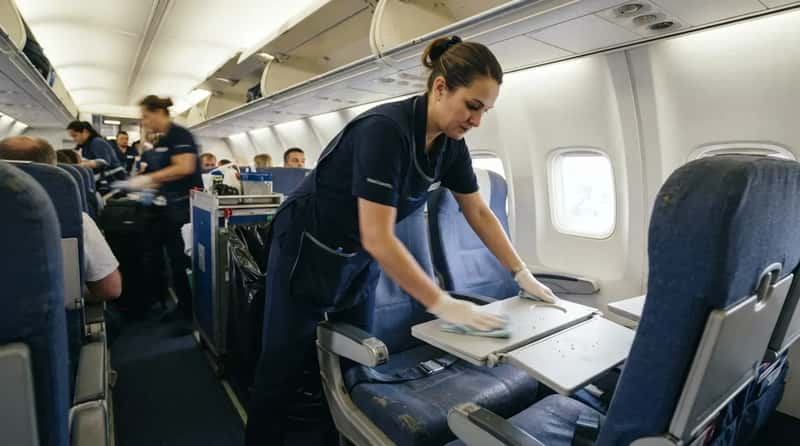
This is where the myth of the “freshly cleaned plane” falls apart a little. Turnaround time between an aircraft’s arrival and departure can be as short as 25 to 45 minutes on smaller jets, which leaves almost no room for anything beyond a quick sweep.
Frequent flyers who’ve watched a turnaround crew race through a cabin in real time know exactly how little happens in that window. Casual travelers tend to assume a fast clean is a thorough one. A twenty-minute turn clean and an eight-hour overnight clean are not remotely the same job.
6. They Clock the Crew’s Break Window and Don’t Make It Worse
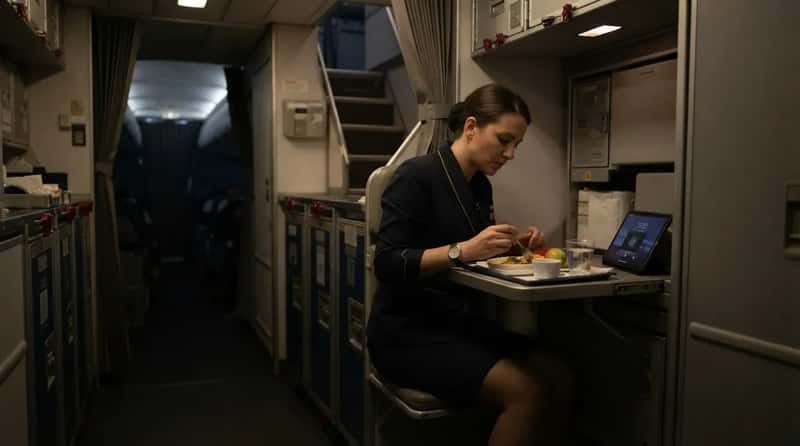
Frequent overnight flyers, especially on long-haul routes, understand something most passengers never think about. One flight attendant described a route where free time in uniform was just 15 minutes within a 15-hour shift, usually spent rushing a meal that got interrupted anyway.
Knowing that, experienced travelers avoid stacking up requests during obvious crew break windows. It’s a subtle form of consideration that casual flyers simply haven’t learned yet. Most passengers have no idea how little downtime crew actually get on long overnight sectors.
5. They Don’t Try to Hand Over Trash Mid-Service
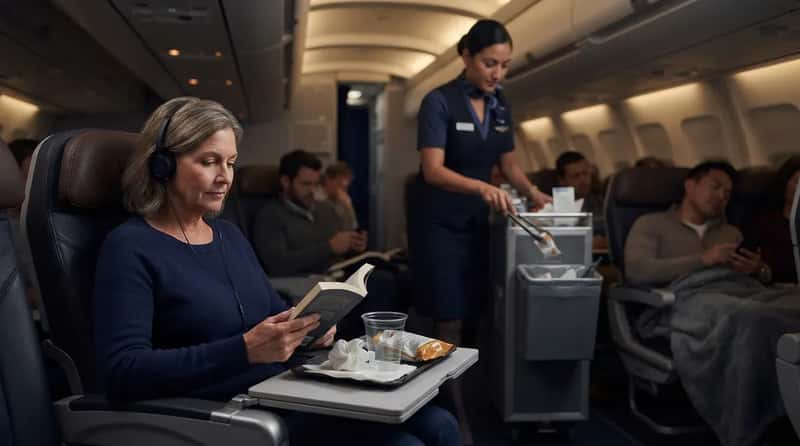
This habit repeats itself constantly, and it’s one of the most common sources of friction on a flight. These moments are small, but they happen over and over throughout the cabin, and the passengers who read the room quickly stand out in a good way.
Frequent overnight flyers have learned to hold their trash until the dedicated collection pass, even if it means sitting with an empty cup a few extra minutes. It’s not glamorous, but it keeps service moving. Crew notice this pattern almost immediately, row by row.
4. They Move Through Boarding Like They’re Barely There
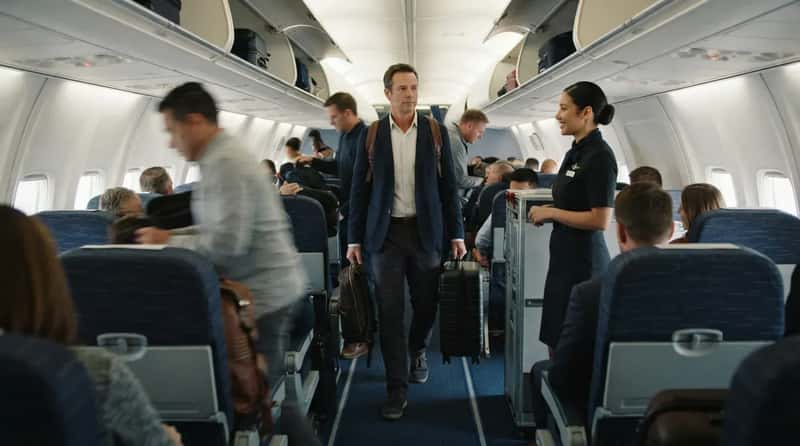
Boarding is chaotic for almost everyone, but crew are watching more closely than passengers realize. From the moment people step onto the aircraft, flight attendants are already checking luggage space, watching for safety issues, and reading passenger behavior.
Frequent flyers tend to move through the process almost invisibly, no stopping, no blocking, no confusion. First-time or infrequent travelers create more friction simply because they don’t know the routine yet. That invisibility during boarding is one of the clearest tells crew rely on.
3. They Never Leave Loose Items That Could Roll Under a Seat in the Dark
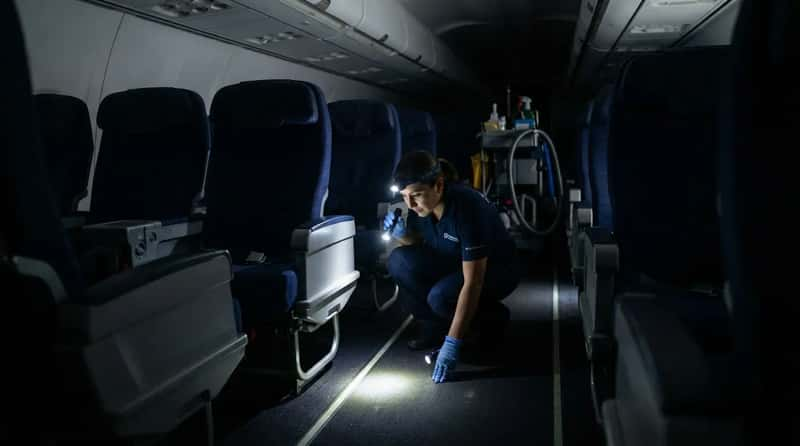
This one surprises people, but it matters more than it sounds. Overnight cleaning often happens without aircraft power or a ground unit running, which means limited lighting and no air circulation in the cabin.
That means a dropped pen, coin, or earbud can genuinely vanish until someone stumbles on it days later. Frequent overnight flyers tend to double-check their row before standing up, almost out of habit at this point. Cleaners working in a dim, powered-down cabin notice instantly which rows were checked before deplaning.
2. They Move Fast Enough to Matter to the Airline’s Turnaround Math
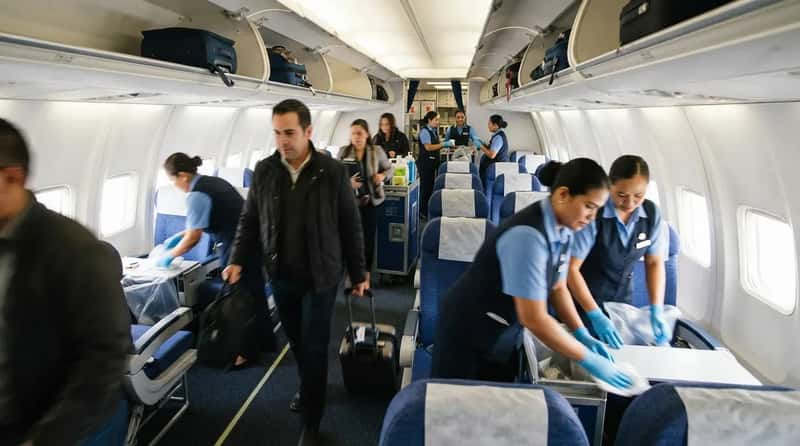
This might be the most surprising item on this list, but it’s backed by real numbers. Shaving the average turnaround time by ten minutes, from 40 down to 30, can increase an aircraft’s usable flying time by roughly 8%, according to industry data drawn from Boeing research.
Every passenger who boards efficiently, settles quickly, and deplanes without lingering is quite literally feeding that math. Turnaround crews measure their work in “man minutes,” and one slow, disorganized row eats directly into that budget. Most flyers have no idea their boarding speed is basically a line item in airline scheduling.
At a Glance
- Cutting turnaround time from 40 to 30 minutes can add roughly 8% more usable flying time per aircraft
- Turnaround crews often measure their work in “man minutes,” not just minutes on the clock
- Smaller jets can have turnarounds as short as 25 to 45 minutes
- One slow, disorganized row eats directly into that tight schedule
1. Their Row Requires Almost No Extra Cleaning Time at All
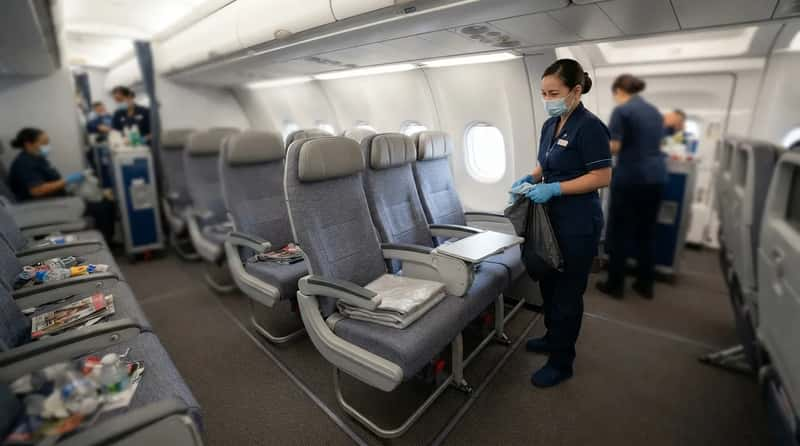
This is the tell that beats every other one on this list combined. Turnaround teams typically run four, eight, or twelve people, with four considered ideal for a regional jet, and every extra minute spent on one messy row is a minute stolen from the rest of the plane.
A frequent overnight passenger’s row, folded blanket, contained trash, wiped tray, nothing rolled under the seat, needs almost none of that borrowed time. It’s not flashy, and the passenger probably doesn’t even think about it anymore. After enough flights, staying invisible to the cleaning crew becomes the real sign of an expert traveler.
None of these are secret airline hacks or hidden rules nobody tells you about. They’re small, repeated behaviors frequent flyers pick up without ever meaning to, and cabin cleaners are the only people positioned to notice all of them at once, night after night, row after row, long after everyone else has already forgotten the flight.
So the next time you land, take a second look at your row before you stand up. It might already be telling the cleaner exactly who you are.