Most new RVers assume campground etiquette is common sense: park somewhere, plug in, enjoy the view. Ask any camp host and they’ll tell you that’s exactly backwards. The biggest complaints they deal with almost never come from bad people. They come from good people who simply never got handed the unwritten rulebook before hitting the road.
Here’s the part that catches most newcomers off guard: some of these “small” habits are the exact reasons campers get quietly flagged, fined, or never invited back. Managers rarely say it to your face. But they talk to each other, and reputations travel a lot faster than most people realize. Here’s what they actually say once the new arrivals are out of earshot.
#22 – Introducing Yourself Before Their Rig Is Even Level
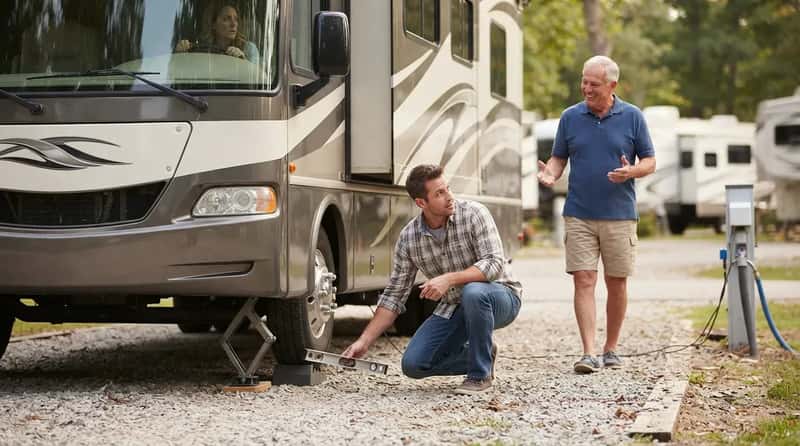
Friendliness feels like it should never backfire, but timing wrecks it every time. Managers say the most common first-day mistake is walking over to greet new neighbors the second they roll in. Backing into a site, leveling the rig, and hooking up utilities takes real focus, and a chatty stranger at the window breaks that concentration fast.
A friendly wave works fine. A driveway conversation mid-hitch does not. Managers say this one habit predicts almost every neighbor conflict that follows for the rest of the week, simply because it starts the relationship on the wrong foot.
#21 – Treating Check-Out Time Like a Suggestion
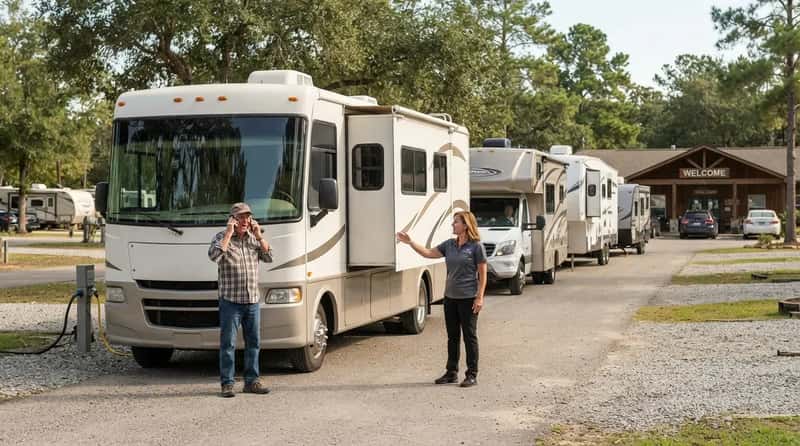
Nothing rattles a front office faster than a guest who “just needs ten more minutes” three separate times. Overstaying blocks incoming campers from getting into their site, and during peak season that single delay can throw off arrivals for hours.
The math is simple: one late departure creates a domino effect for every rig behind it. The fix isn’t complicated, either. A two-minute call to the office to say you’re running late saves everyone an entire afternoon of scrambling.
#20 – Leaving Every Light On Until Sunrise
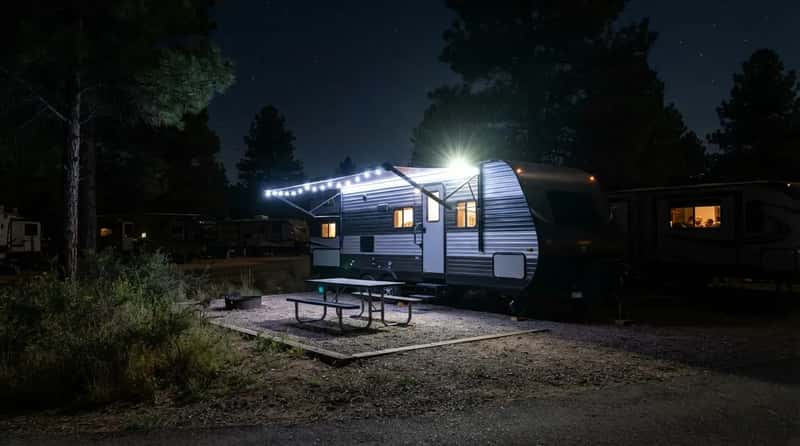
Newcomers love their rig’s exterior lighting, and that’s exactly the problem. Camp hosts describe bright white, blue, or red porch lights that become the only light source for an entire loop once the sun goes down.
Solar string lights are the worst offender, since most have an on/off switch that nobody bothers to flip before bed. Managers say stargazing is one of the top reasons people book a site in the first place, and one careless string of lights can ruin it for everyone around you.
Worth Knowing
- Warm amber or red-toned bulbs are far easier on neighbors’ night vision than bright white or blue LEDs.
- Motion-sensor or timer switches keep porch lights from burning all night without anyone remembering to flip them off.
- Many campgrounds near national parks and forests actively promote dark skies, since stargazing is a huge draw for overnight guests.
- Covering or unplugging solar string lights before bed solves most of the problem instantly.
#19 – Cutting Through a Neighbor’s Site as a “Shortcut”
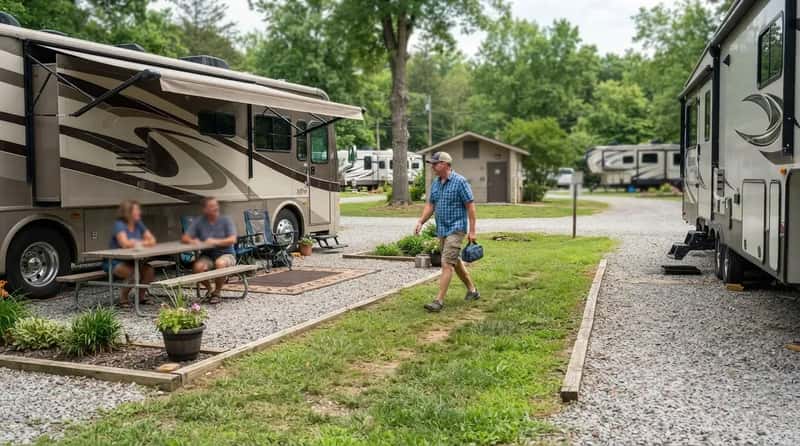
It feels harmless. It isn’t. Managers rank this near the top of every complaint list because campers treat their site like rented property for the length of their stay, and cutting through it uninvited is one of the fastest ways to earn a reputation.
Sure, the bathroom might be closer that way. But the reaction is never worth it. Most veteran RVers won’t say a word to your face. They’ll just remember your rig, and not in a good way.
#18 – Spitting Toothpaste Onto the Ground
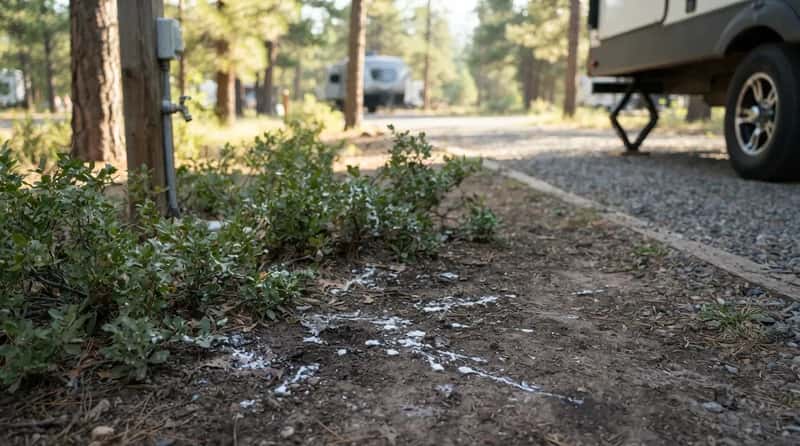
This one genuinely surprises people, but hosts see it constantly during morning cleanup. One longtime campground host admitted it used to be her own habit, too, until she started working as a host and saw the white spots left behind in the dirt and bushes everywhere.
It’s a small habit with an oddly big visual impact for the next guest. Hosts recommend just using the bathroom sink, or at least diluting and rinsing it away completely. Managers say it’s proof that etiquette isn’t always about breaking big rules; sometimes it’s just about basic awareness of what you’re leaving behind.
#17 – Tossing “Compostable” Food Scraps in the Grass
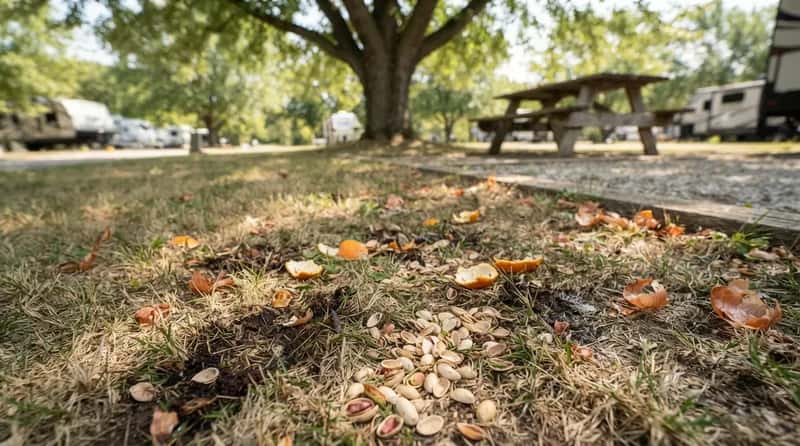
Newcomers assume pistachio shells, orange peels, and coffee grounds just melt back into nature. Hosts strongly disagree. Pistachio shells are one of the biggest pet peeves in the host community because they never seem to actually compost, leaving hosts to pick them out of the dirt one by one with a litter picker.
One host even described fishing discarded spaghetti out of a bush. Onion skins, corn cobs, coffee grounds, and tea bags all belong in the trash, or in a bag to bring home and compost properly. It’s tedious, unglamorous cleanup work, and it’s entirely avoidable.
#16 – Letting a “Friendly” Dog Roam Off-Leash
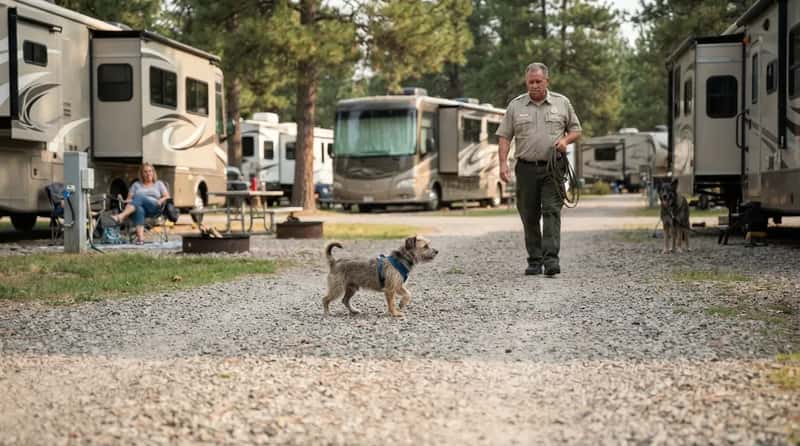
Every manager has heard “he’s never bitten anyone” right before something goes wrong. Camp hosts point out that this applies to small, gentle dogs too, since they’re in an unfamiliar place surrounded by unfamiliar animals, and that alone changes their behavior.
Leash length matters more than most people think, too. National parks require a leash no longer than six feet at all times, and national forests apply that same six-foot standard in developed campgrounds. Most private RV parks enforce something similar, and it’s rarely treated as optional.
Quick Compare
- National parks: leashes capped at six feet, no exceptions, even for the friendliest dog.
- National forests: the same six-foot rule applies in developed campgrounds and picnic areas.
- Private RV parks: rules vary by property, but most mirror the six-foot standard and rarely treat it as optional.
#15 – Leaving a Barking Dog Alone at the Site
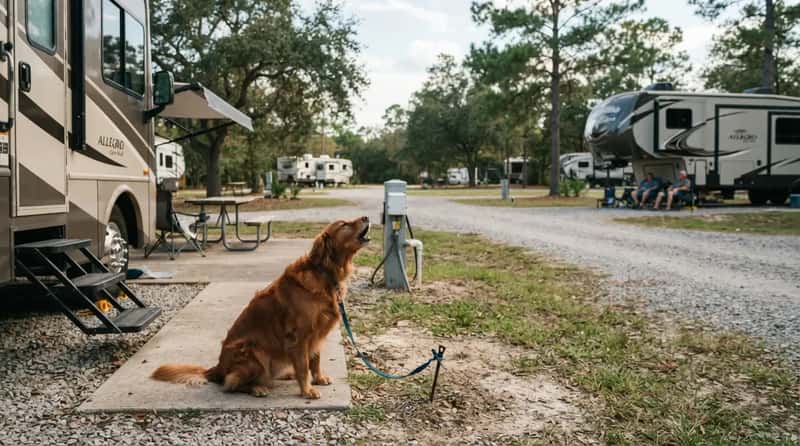
Nothing travels through a quiet RV loop faster than a dog left howling while its owners run errands. Managers say the fix is simple but rarely followed: no extended barking, no unattended dogs left to bother the neighbors, and always keep them leashed.
This isn’t about disliking pets. Most managers love that RV parks are pet-friendly. It’s about the fact that not everyone is an animal lover, and good pet etiquette is what keeps parks welcoming to the many RVers who travel with animals in the first place. One bad experience can change a park’s entire pet policy overnight.
#14 – Chatting With Someone Mid-Hookup
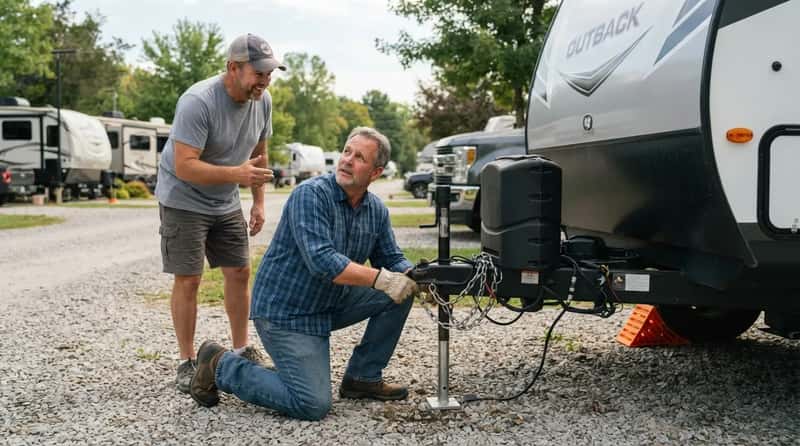
It seems polite to strike up conversation while a neighbor backs into their site or hitches up a tow vehicle. Managers say it’s actually one of the most dangerous habits on this list, since a distracted driver can miss steps, forget a connection, or misjudge a backup entirely.
Departures carry just as much risk as arrivals. A broken concentration during hookup is how forgotten stabilizers, disconnected sewer hoses, and dragged wheel chocks happen. Managers say the kindest thing you can do is wait until the engine’s off and the chocks are set before you say hello.
#13 – Letting Slide-Outs and Awnings Creep Into the Next Site
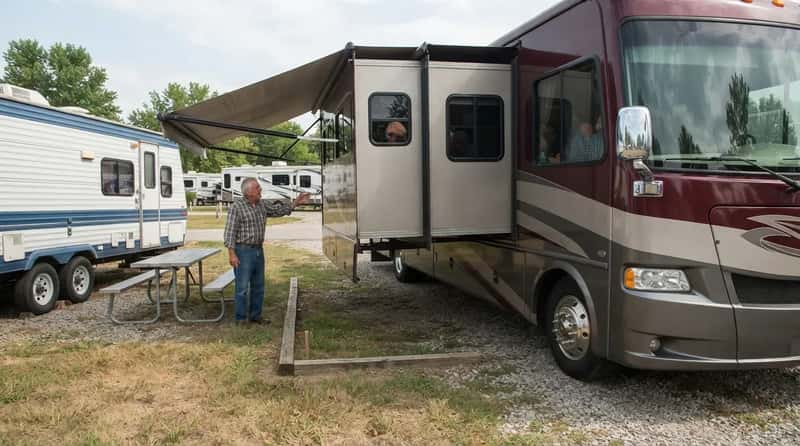
Space in an RV park is tighter than it looks on the map, and managers say this is where good intentions go sideways fast. Vehicles, slide-outs, awnings, and outdoor setups all need to stay within your site’s boundaries, without blocking shared roads or crowding the rig next door.
When the layout isn’t obvious, managers suggest reading the room. Check the campground map, or just glance at how neighboring rigs are angled, to see how much space you actually have to work with. A six-inch slide-out overlap has started more than a few surprisingly heated conversations.
#12 – Parking Right Next to Someone in an Empty Park
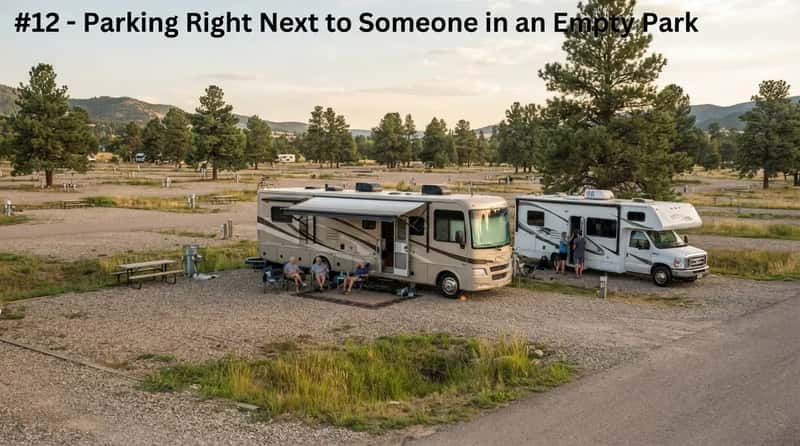
It feels social. Most experienced campers find it invasive. Managers hear this complaint constantly: if you roll into a nearly empty campground and set up right next to a stranger, expect an awkward reaction, since privacy is one of the main reasons people camp in the first place.
There’s one clear exception, and managers say it’s the only one that counts: traveling with friends or family who specifically want to be near you. Otherwise, spread out and give people the buffer they’re actually paying for.
#11 – Treating the Speed Limit as a Suggestion
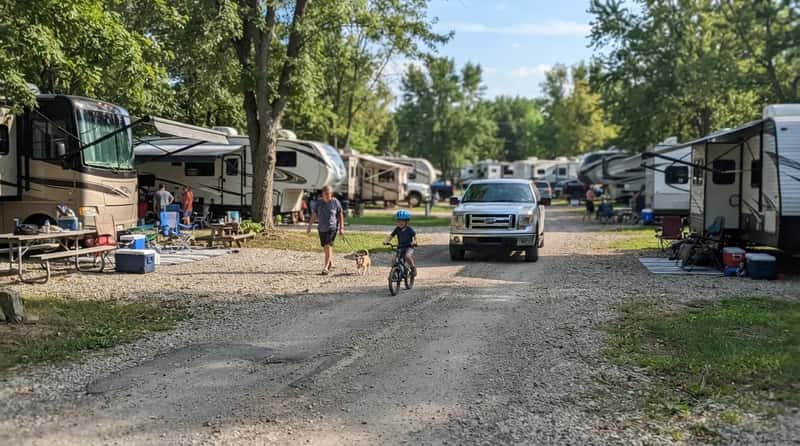
Five miles per hour feels absurdly slow until you remember who’s sharing that road with you. Managers point out that campground speed limits sit low for a reason: kids ride bikes, dogs walk on leashes, and people set up gear right at the edge of the pavement.
This is the rule managers say gets ignored most often, usually by people who’ve driven all day and just want to reach their site. It’s also the rule most likely to end in a real emergency instead of just an awkward apology.
Fast Facts
- Most campground speed limits sit between 5 and 10 mph, far slower than any nearby public road.
- Kids on bikes, loose pets, and gear set up near the pavement are the main reasons parks post such low limits.
- Evening and early-morning hours see the heaviest foot traffic, exactly when tired drivers are most tempted to speed.
#10 – Starting a Campfire Without Asking First
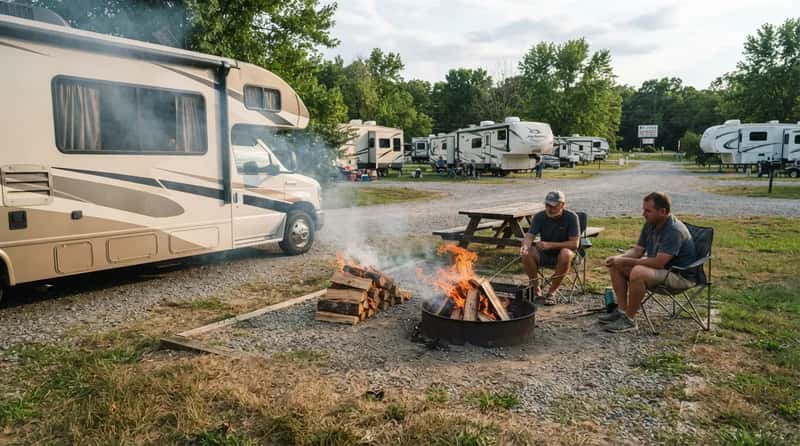
Fire feels like a camping birthright, but managers say it’s one of the most tightly regulated parts of any stay. Campfires shouldn’t be built without checking with the office first, no matter how normal it feels back home.
Fire bans shift constantly with drought conditions, so what was fine last season may not be fine this week. Managers say the smart habit is checking every single visit, not assuming last year’s rules still apply. And if you do get a fire going, make sure the smoke isn’t drifting straight into a neighbor’s window; that complaint lands on the office desk more than people expect.
#9 – Leaving Dog Waste Bags “Just for a Minute”
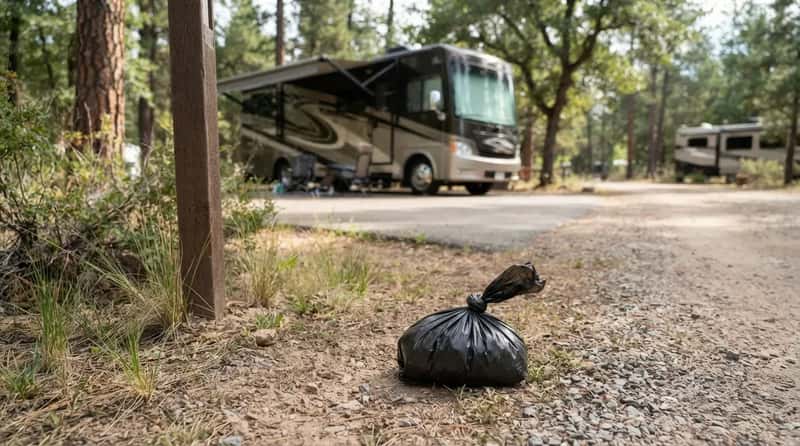
Newcomers often bag the waste, then set it down to grab later on the way back. Managers say that habit is technically still littering. The Forest Service is blunt about it: dog waste bags are garbage, and leaving them behind can get you cited.
It’s a habit that looks responsible but never actually finishes the job. Managers say the rule of thumb is simple: once it’s in a bag, it goes straight to the dumpster, not the ground, not your site, and definitely not a nearby trail marker.
#8 – Not Securing Food From Wildlife
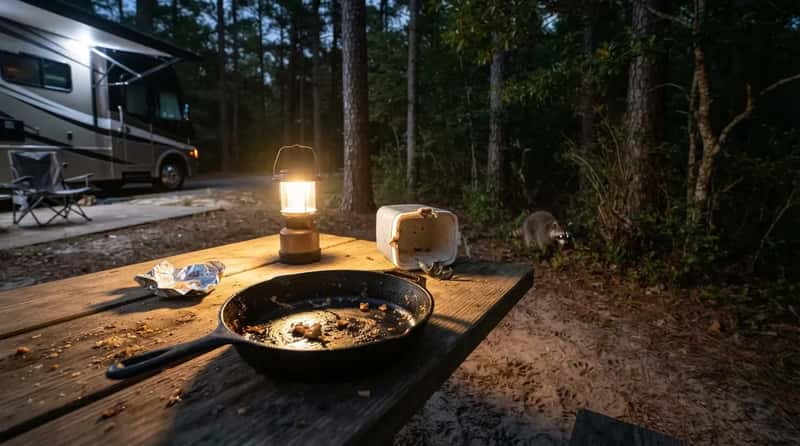
In wooded or western parks, this habit turns from annoying to genuinely dangerous fast. Rangers describe the fix plainly, and it’s worth remembering word for word.
Make sure you keep food secure.
National Park Service
It’s not just about coolers, either. A grease-coated pan left sitting out is basically an invitation, no matter how locked up the rest of the food is. Managers say one unsecured pan can teach an entire local animal population to associate campsites with an easy meal, which becomes everyone’s problem for seasons afterward.
#7 – Running a Generator Whenever It’s Convenient
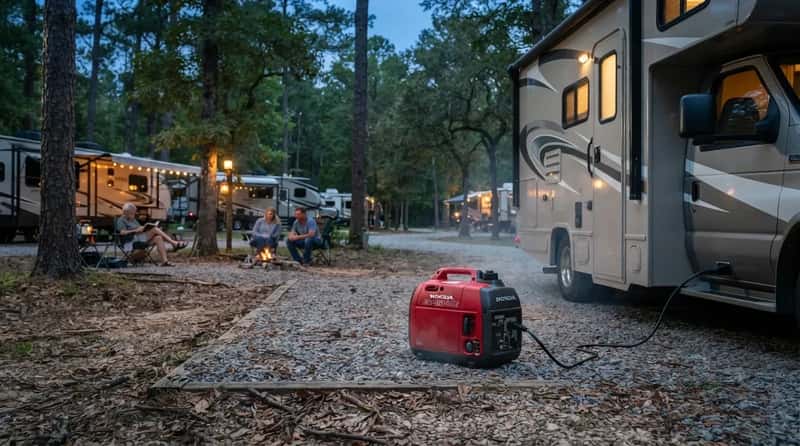
Generators feel like a personal appliance. To everyone else in the loop, they’re a shared noise problem. Managers say the core issue is simple: running a generator past posted hours keeps other campers from actually enjoying the quiet they came for.
Posted generator hours exist for a reason most newcomers never think to ask about. Managers say the real complaint isn’t the noise itself; it’s the assumption that one person’s convenience outranks an entire loop’s quiet time. That assumption is exactly what gets reported to the office fastest.
#6 – Improvising at the Dump Station
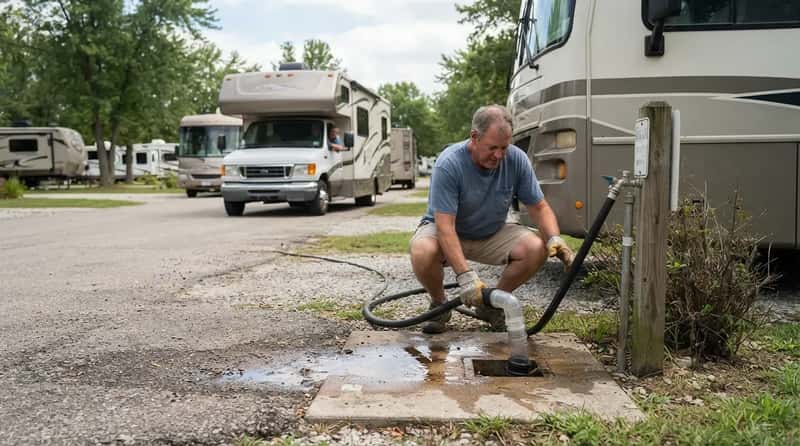
This is where good intentions meet real consequences fast. Managers are blunt about the two non-negotiables: know how to empty your waste tanks correctly, and never, ever dump directly onto the property.
New RVers sometimes skip the dump fee thinking it’s optional, or rush the process because a line has formed behind them. Managers say both habits lead to the same outcome: a mess someone else has to clean up, and a name that gets remembered at the front office for all the wrong reasons.
#5 – Overusing Every Amenity Just Because You Can
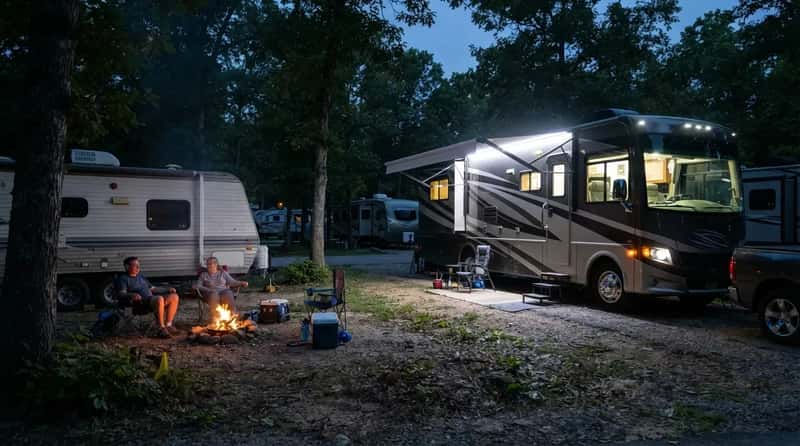
Managers notice this most in campers who recently upgraded from a tent to an RV. It’s an understandable instinct: after years of roughing it, why not run every light, every outlet, every feature the rig offers?
The problem is that most longtime campers still love firelight, not bright LED patio lighting shining into their window at bedtime. Managers say the transition period is exactly when new campers should ask more questions, not fewer, since “using everything the rig offers” is often the exact habit that annoys the neighbors first.
#4 – Forgetting to Unhook the Tow Vehicle
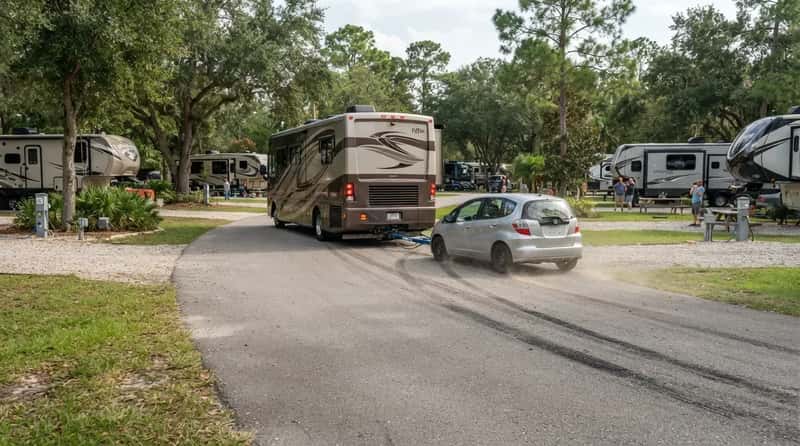
This sounds like a beginner mistake because it usually is one. Managers say the rule is non-negotiable at most parks: unhook your dinghy before driving to your site, not after.
Driving the loop with a dragging tow vehicle still attached isn’t just awkward; it damages roads, curbs, and utility pedestals. Managers say this habit almost always comes from rushing check-in instead of taking the extra five minutes to set up properly first.
#3 – Canceling a Reservation at the Last Minute
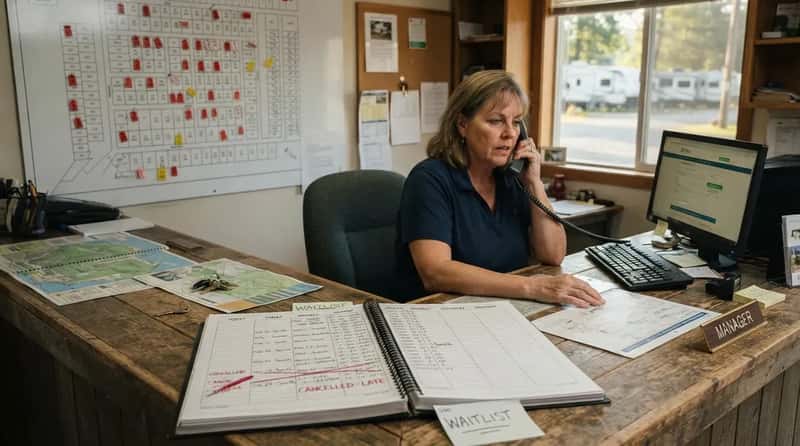
Managers say this habit causes more quiet resentment than almost anything else on this list, because it’s invisible to other campers but very visible to the office. Life happens, but a last-minute cancellation is never actually a good idea.
Popular parks often run waitlists, which means a late cancellation doesn’t just cost the park money. It costs another family a spot they’d been hoping for all season. Managers say the habit they wish every newcomer understood is simple: cancel the moment you know, not the moment it’s convenient.
#2 – Ignoring Quiet Hours “Just This Once”
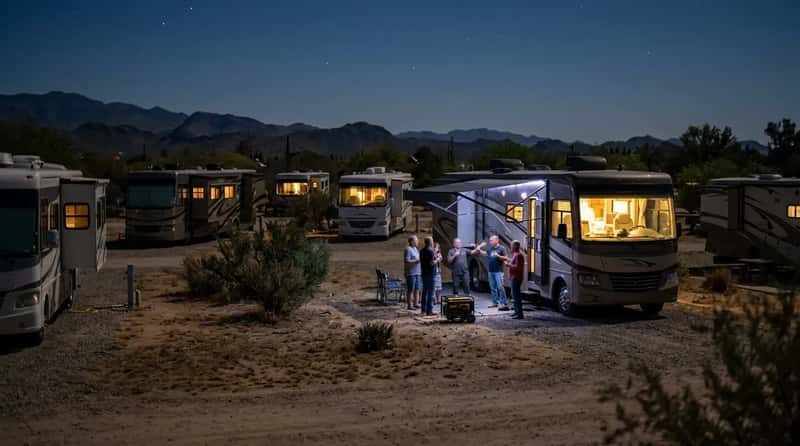
This is the rule managers say gets broken the most and forgiven the least. Quiet hours typically run from 10 p.m. to 7 a.m., meaning lower voices, no loud music, minimal generator use, and absolutely no late-night gatherings spilling into neighboring sites.
What surprises newcomers is how seriously parks enforce this. Ignoring quiet hours can get you evicted on the spot, and in some cases, you won’t be invited back at all. Managers say quiet hours aren’t a polite suggestion; they’re the single rule most likely to end a stay early.
At a Glance
- Standard quiet hours: 10 p.m. to 7 a.m. at most RV parks and campgrounds.
- Covers loud music, raised voices, generator use, and late-night gatherings near neighboring sites.
- A first violation often means a warning; repeated violations can mean eviction without a refund.
#1 – Getting Quietly Reported to Other Park Managers
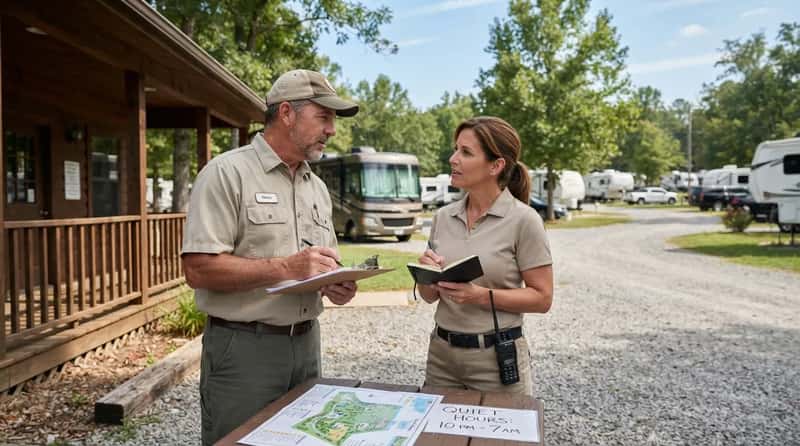
This is the habit that shocks newcomers most, because almost nobody realizes it happens. Managers describe a real, lasting consequence to repeated bad behavior: enough quiet-hour violations or complaints can get you asked to leave, and your name often gets passed along to other campground managers after that.
Most people picture campground drama as a one-time awkward encounter and nothing more. The truth is closer to a small, informal network. Regional operators talk, chains share notes, and repeat offenders get quietly flagged long before they ever notice a pattern forming. The habit newcomers wish they’d known sooner isn’t really about any single rule. It’s the realization that reputation in the RV world travels further, and faster, than almost anyone expects.
None of these habits are complicated on their own. Quiet hours, leash rules, dump station etiquette: most newcomers already mean well. The real lesson from park managers is that etiquette isn’t about following a rulebook perfectly. It’s about noticing the small, repeatable habits that quietly build, or wreck, a reputation over time.
The RVers who get invited back season after season aren’t the ones with the nicest rigs. They’re the ones who learned these 22 habits early, usually the hard way. Which one on this list surprised you the most? Drop it in the comments.