You probably think you’re invisible at the front desk, in the cabin, or behind a housekeeping cart – just another name in a queue, another face boarding row 24. You’re not.
Staff build a mental file on you within seconds, and some of those files last a full year. None of it comes down to money, status, or luxury luggage – it’s 22 small, almost automatic habits, and here’s the full countdown, straight from the people who actually remember you.
#22 – They Have Their ID Out Before They Even Reach the Counter
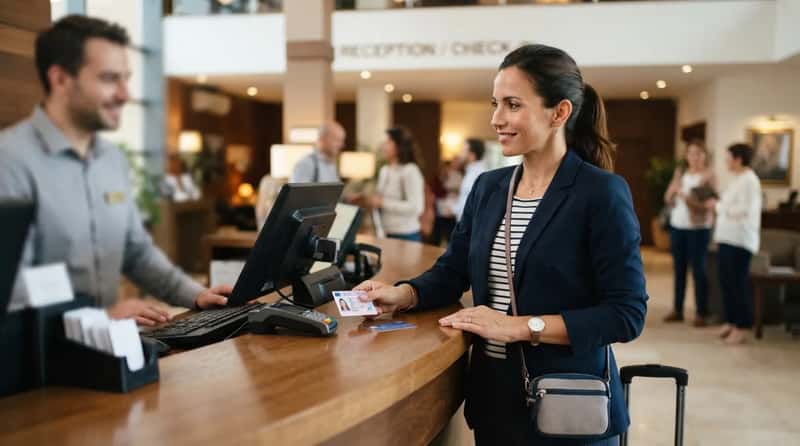
Seasoned guests treat the check-in line like a countdown, not a surprise. ID and card are already in hand before they reach the counter, and that split-second detail sets the tone for the whole interaction.
Guests digging through an overstuffed bag send a different signal, and trained staff quietly adjust their pace for it. Being ready doesn’t just save time – it marks you as someone who respects the flow of everyone else’s day.
Staff process dozens of check-ins an hour. A guest who states what they need and stops talking gets remembered more clearly than one who narrates their entire travel day.
#21 – They Actually Return the Greeting at the Door
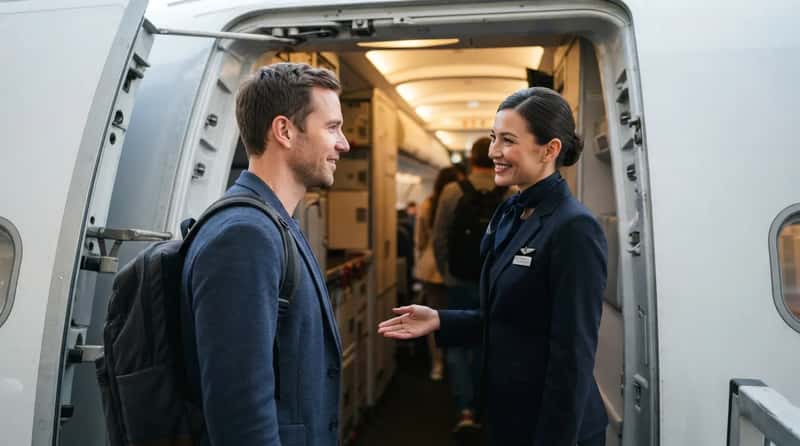
Most passengers barely acknowledge the flight attendant welcoming them aboard. Eye contact and a real smile go further than people realise – and crew notice exactly who bothers.
It signals you’re present, not just passing through. That small moment at the door can quietly set the tone for the entire flight.
The same rule applies at a hotel entrance or a restaurant host stand. A genuine hello at the threshold is a bigger tell than most travellers ever suspect.
#20 – They Read the Room Before They Make a Request
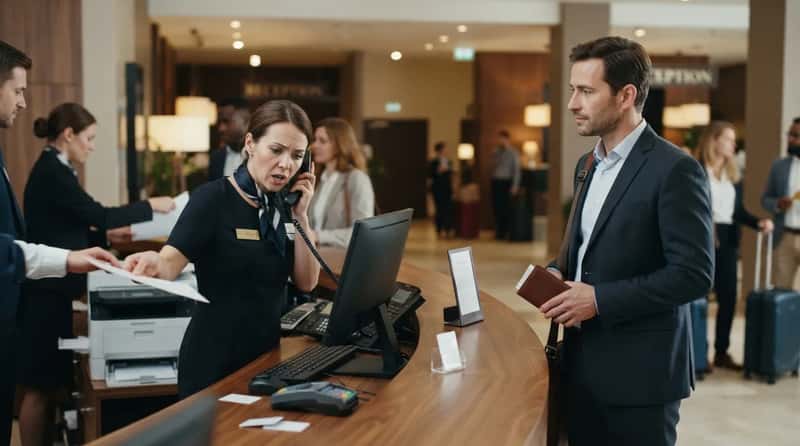
Timing matters as much as the words themselves. If the desk agent is juggling phones, a jammed printer, and three other guests, experienced travellers wait for a natural pause instead of forcing their way in.
They mirror the tempo in front of them – quick when staff are moving fast, patient when things slow down. It’s a small courtesy that quietly buys goodwill for the rest of the stay.
Most guests think persistence equals effectiveness. Staff under pressure remember exactly who made their shift harder – and who didn’t.
#19 – They Book Directly Instead of Through a Third Party

Third-party booking sites typically charge hotels 15 to 25 percent of the room rate in commission. Hotels remember exactly who costs them that margin – and who doesn’t.
Guests acquired through a hotel’s own site or loyalty channel rebook at roughly 33 percent. Guests who arrive through an OTA rebook at closer to 6 percent, and that gap changes how a property views you before you even walk in.
Booking direct is the single easiest way to shift the hotel’s perception of you – the front desk practically knows before you arrive.
Fast Facts
- Commission fees typically run 15% to 25% per booking, and can climb even higher with promotional placement.
- OTA reservations cancel at noticeably higher rates than direct ones in some markets – up to 37% versus roughly 18-20% for direct bookings.
- Hotels tend to earn meaningfully more per direct booking than per OTA booking once fees and add-ons are factored in.
#18 – They Keep Their Toiletries Contained
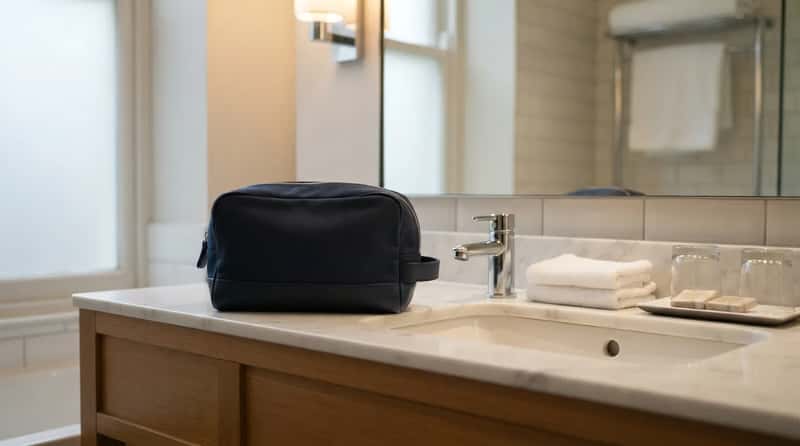
The first giveaway shows up in the bathroom before anyone’s even used it. Experienced travellers keep everything zipped in one bag instead of scattering bottles across the counter, and it’s one of the details housekeepers mention most.
It looks like a small preference, but it signals someone who understands that chaos in a tiny bathroom slows everything down for the next person cleaning it. That awareness is almost always a sign of someone who has stayed in more than a couple of hotels.
Housekeepers clock this within seconds of walking in. One tidy counter, and you’ve already made their shift easier.
#17 – They Tip by the Day, Not Just at Checkout
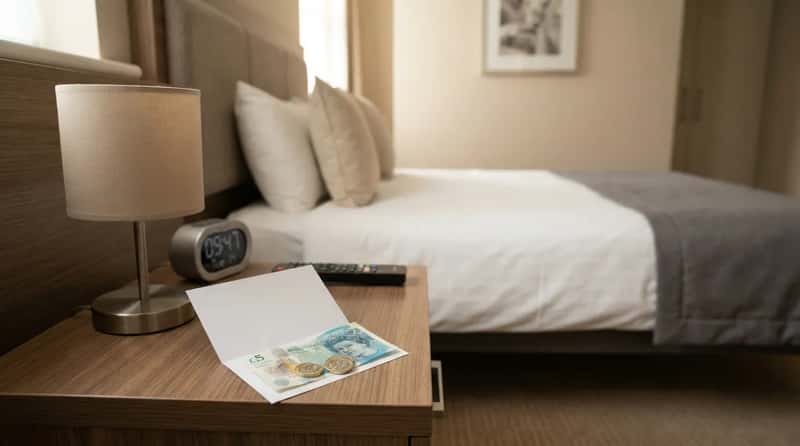
Different housekeepers often clean the same room across a multi-night stay, so seasoned travellers leave a small tip daily instead of one lump sum at the end. It’s the only way to guarantee the right person actually gets paid.
Housekeepers notice a daily tip or a quick note immediately, and even a small gesture makes a physically brutal shift feel a little more human. Most guests never think to leave anything at all.
The housekeeper on Tuesday is rarely the one who cleaned your room on Saturday. This is common knowledge among frequent travellers – and almost unknown to everyone else.
#16 – They Leave a Short Thank-You Note
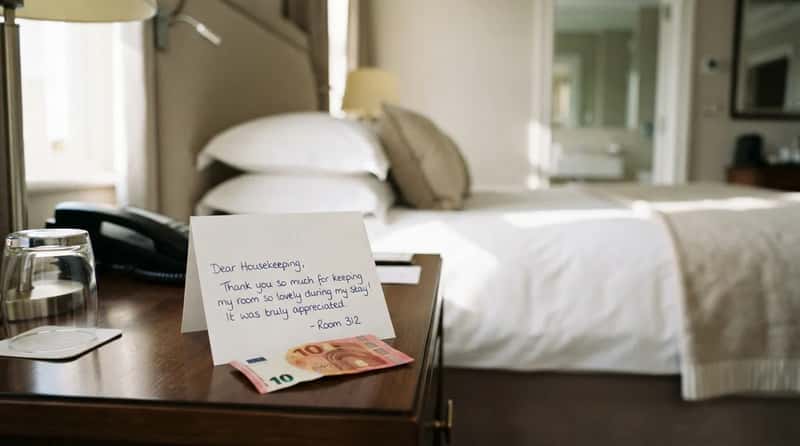
It costs nothing, takes thirty seconds, and housekeeping remembers who bothers. A tip is appreciated, but a note is personal – and staff notice the difference.
Travellers who’ve worked service jobs themselves tend to leave one without being asked. It’s a habit that costs nothing and gets remembered anyway.
In an industry built on human memory, a two-line note on hotel stationery can outlast a five-star review.
#15 – They Never Touch a Flight Attendant to Get Attention
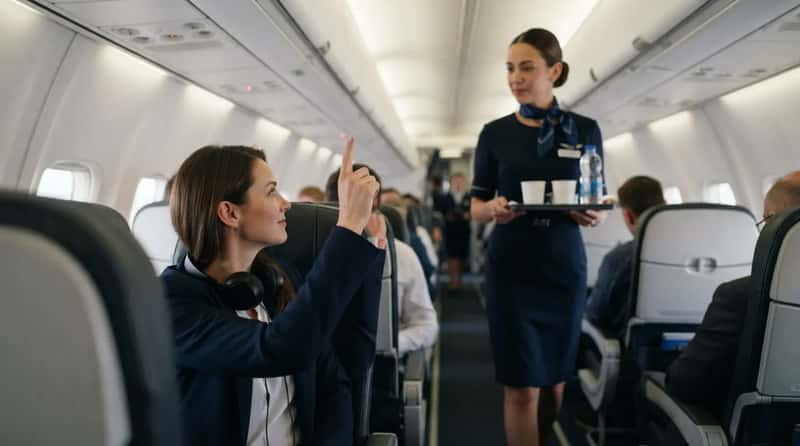
Flight attendants appreciate a raised hand, a word, or the call button – not a tap on the arm. Use your words, use the button, and your likability quietly skyrockets among the crew.
It sounds obvious, but crew discuss it constantly because it happens so often. Attendants are there to help, not to be your personal butler on call for trivial requests.
The sweet spot: press the call button when you genuinely need something, ask politely, and let them do their job. That combination is rarer than people think.
#14 – They Respect the Seatbelt Sign
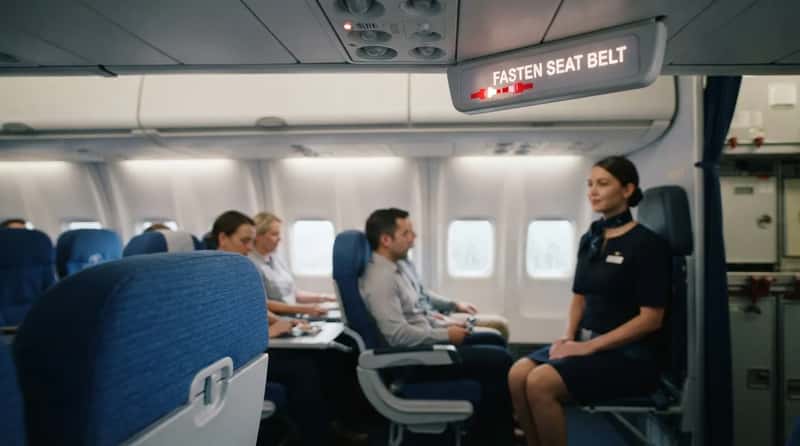
You respect the seatbelt sign. We love when you respect the seatbelt sign.
A flight attendant
Crew are responsible for everyone’s safety, so following direction without delay matters more than it seems. Fastening your belt and stowing items during takeoff are the basics that keep the whole cabin moving.
Passengers who get up during turbulence force crew to interrupt their own safety routine to manage one person’s impatience. Respecting the sign costs nothing – and it quietly signals you understand the hierarchy in that cabin.
#13 – They Keep Their Cabin Space Tidy
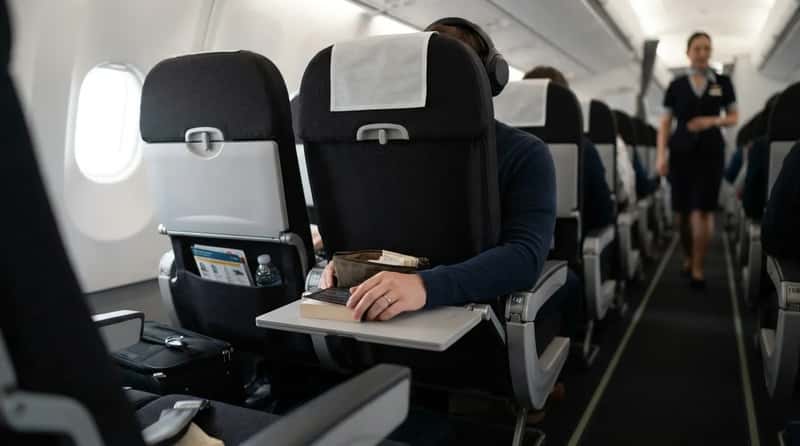
Headphones on, strong-smelling food left in the bag, limbs kept in your own row – these aren’t just courtesy toward other passengers. Crew notice exactly who creates chaos and who keeps things calm, because it directly affects their workload.
Flight attendants spot the space invaders instantly: the aisle-spreaders, the armrest-hogs, the aggressive recliners who never check behind them. A tidy seat pocket and a pair of headphones is the entire bar, and surprisingly few passengers clear it.
#12 – They Bring a Small Gift for the Crew
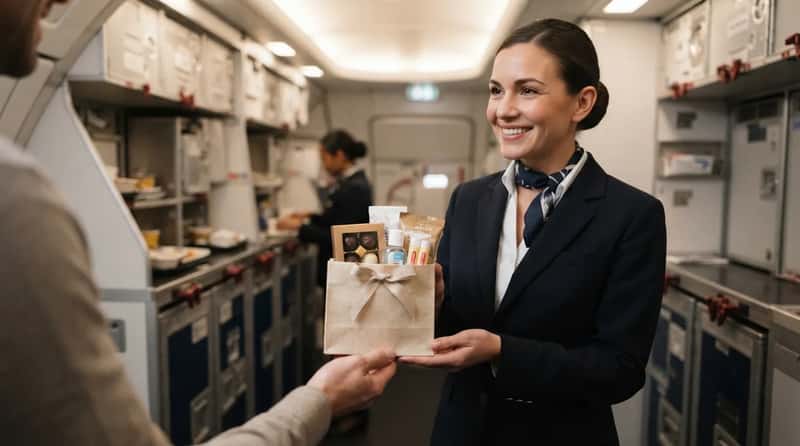
A simple bag of duty-free candy can lift an entire crew’s mood – and it doesn’t go unnoticed. Flight attendants often spend up to 14 hours in the air, and a small gesture can mean extra attention, an upgraded snack, or a warmer interaction for the rest of the flight.
Crew openly say they love goody bags – Starbucks cards, hand sanitizer, chapstick, under-eye patches, small snacks. It’s a habit that costs under $10 and gets remembered far longer than the flight itself.
Worth Knowing
- A typical flight attendant duty shift runs about 12 to 14 hours, and can stretch even longer on international routes.
- Federal rules require at least 9 consecutive hours of rest between duty periods.
- Crew often log 75 to 100 hours in the air each month, plus roughly 50 more hours of ground work most passengers never see.
#11 – They Are Kind to Other Passengers, Not Just Staff
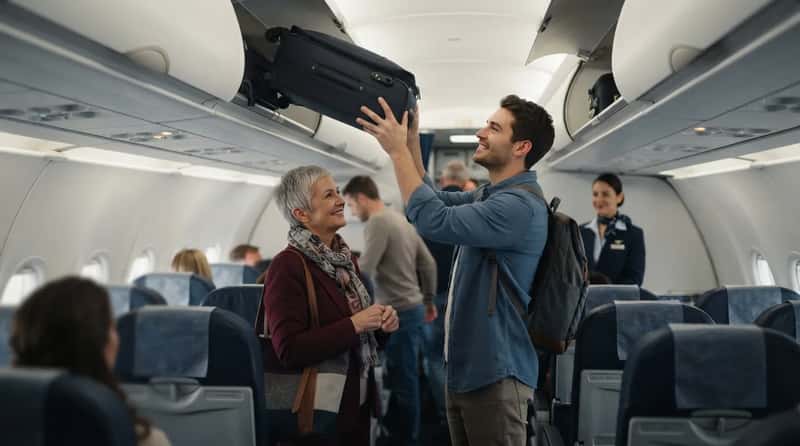
Kindness to other passengers is like a green flag for us. We remember the helpers. When I have an extra amenity kit or a better meal option, guess who’s getting it?
A flight attendant
Helping a stranger lift a bag into the overhead bin, letting someone pass in the aisle, not sighing loudly during a slow boarding – every one of these is visible to the crew. It’s a reminder that how you treat other passengers matters just as much as how you treat staff.
#10 – They Handle Overhead Bin Space Efficiently
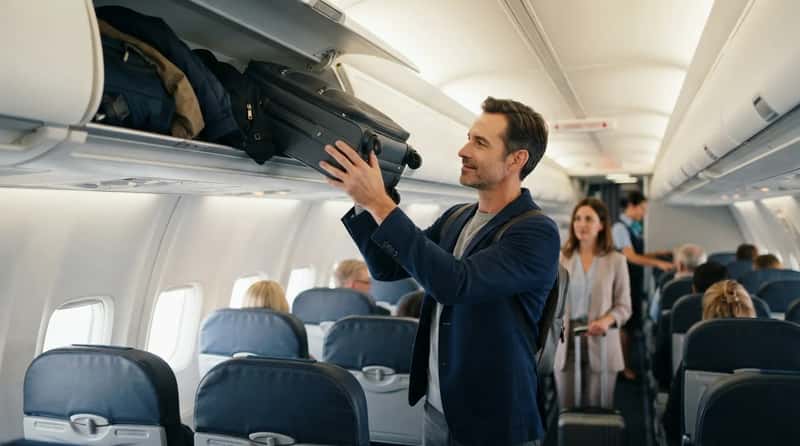
Crew are watching exactly how you handle your bag – whether you lift it cleanly, place it neatly, and keep the line moving. Passengers who wrestle oversized luggage into the bin and act surprised when it doesn’t fit get remembered fast, and not kindly.
One of the biggest mistakes frequent fliers point to is rushing the boarding flow just to claim bin space. A passenger who boards calmly, fits their bag in one motion, and sits down without blocking anyone is a rare and appreciated sight.
#9 – They Make Requests With Basic Courtesy, Not Orders
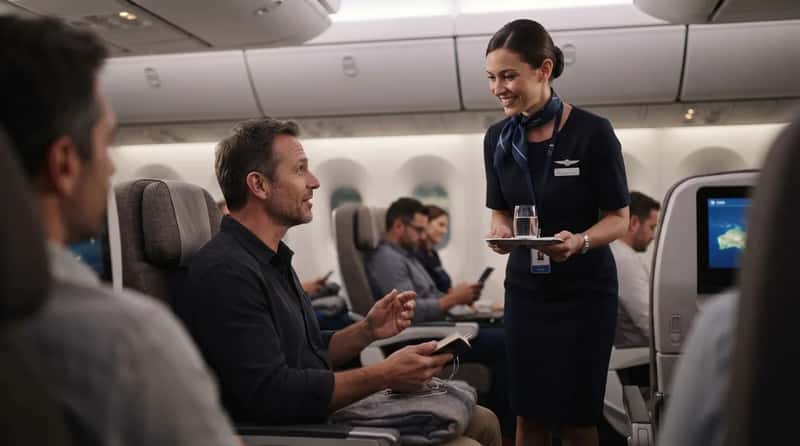
Tone matters more than most travellers think. Crew notice instantly whether a request comes with basic courtesy or sounds like an order barked at someone paid to take it.
A “please” and “thank you” cost nothing and are, apparently, remarkably rare on long-haul flights. Crew say the difference between a pleasant flight and a chaotic one often comes down to exactly this.
#8 – They Stay Calm When Things Go Wrong
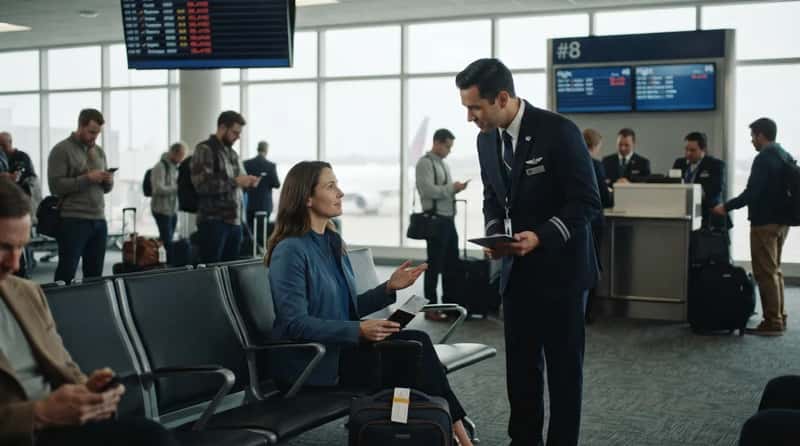
My best flights weren’t necessarily the flights that ran on schedule. They were the flights where people remembered how to be human.
A flight attendant
Delays, seat changes, service gaps – the travellers who handle disruption without theatrics are the ones staff go out of their way to help. Crew have almost no control over delays or overbooking, but they do control how they allocate their goodwill.
Calm passengers simply get more of it.
#7 – They Use the Hotel’s Name – Not the Room Number – When Calling Ahead
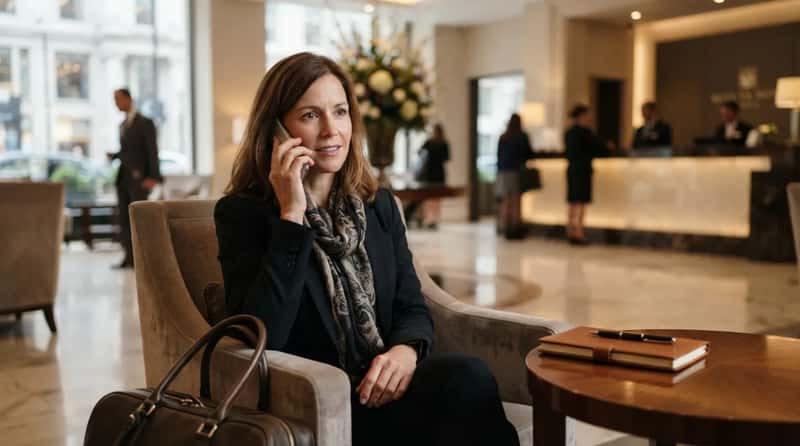
A quick call before arrival – noting a preference for a high floor, a quiet room, away from the elevator – gets logged directly into the guest profile. Hotels track preferences on everything from room features to birthdays, and that data shapes how staff treat you on every future stay.
The travellers who call ahead once are the ones whose preferences get honoured automatically the next time. That’s not luck – that’s data working in your favour.
#6 – They Ask for Specific Staff by Name When Returning
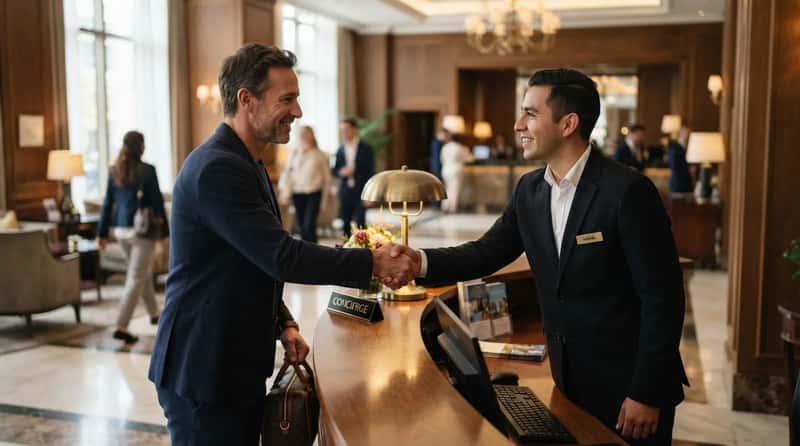
Staff notice within minutes when a guest remembers a first name or asks how someone’s day is going. Returning to a property and asking for Miguel at the concierge desk, or thanking Sara by name at the front desk, signals something powerful: you saw a person, not a service point.
The same is true in reverse. Staff remember the guests who remembered them.
#5 – They Enrol in the Loyalty Programme and Actually Use It
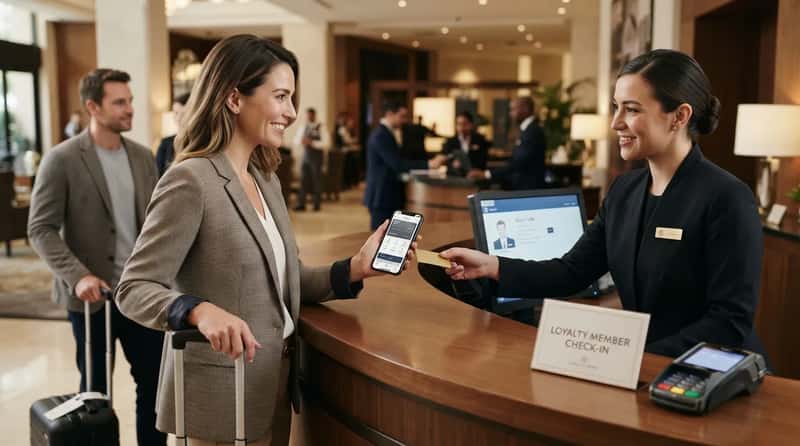
Guests notice whether their status is recognised and whether the app makes arrival easier. When loyalty history surfaces automatically at check-in, staff can deliver recognition without relying on memory alone – the profile does the remembering for them.
Guests booked through a hotel’s own loyalty channel rebook at roughly 33 percent, compared to just 6 percent for OTA-only guests. Enrol, engage, and the system quietly starts working for you on every return visit.
Quick Compare
- First-time stays: OTAs bring in the majority of first-time guests industry-wide.
- Repeat stays: Direct booking flips the script, drawing the clear majority of guests who return to the same hotel.
- The takeaway: The channel that gets you in the door isn’t the one that brings you back.
#4 – They Do a Full Room Sweep Before Unpacking
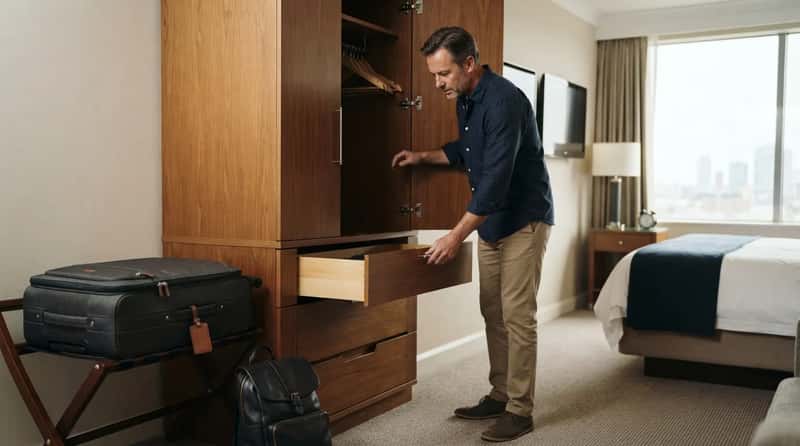
Before anything gets unpacked, experienced guests open every drawer and closet – part curiosity, part habit built from years on the road. It catches anything a previous guest left behind, and it quietly tells housekeeping this is someone who knows how hotels actually work.
Housekeepers don’t need to see your passport stamps to know your travel history. Experienced travellers check the room first; beginners unpack first and find the problems later.
#3 – They Never Leave the Room in Worse Shape Than They Found It
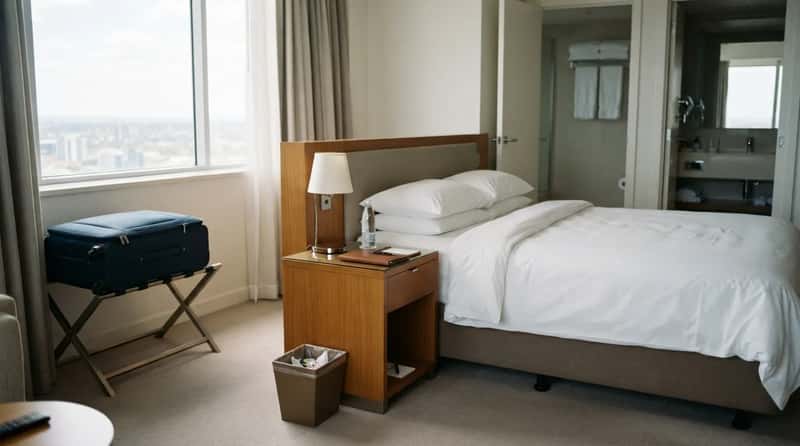
Experienced guests don’t clean the room – they just never let it fall apart in the first place. Towels in one place, rubbish in the bin, personal items off the floor: it takes thirty seconds a day.
That small consistency telegraphs to every staff member who touches your room that you’re worth the extra effort. The logic works both ways – guests who make the job easier get more of the extras.
#2 – They Follow Up With Feedback That’s Actually Useful
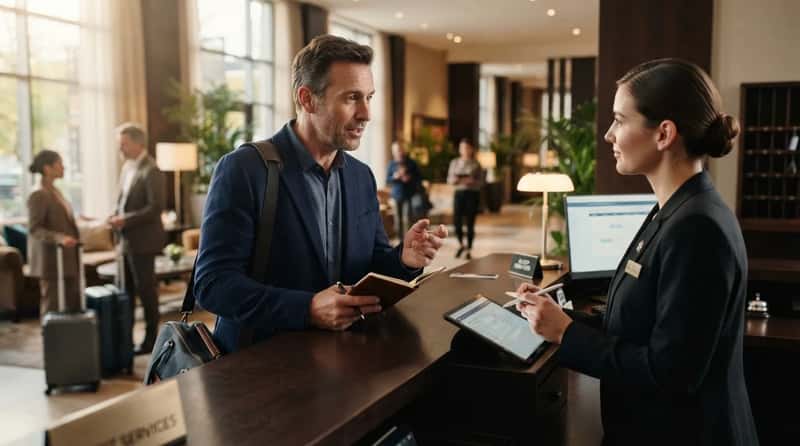
Most travellers either say nothing or leave a scorched-earth review online. Experienced ones do something different – they hand the hotel specific, useful feedback directly, and staff remember it.
Telling the front desk manager that the third-floor ice machine was loud, or that breakfast was genuinely excellent, gives them actionable data instead of a vague complaint. Guests who give useful feedback get quietly flagged in the system as engaged, valued guests – and that flag follows you to your next booking.
#1 – They Make Every Staff Member Feel Seen

This is the one hospitality professionals bring up first, every single time, without being asked. Travel gets dramatically better the moment you stop treating everyone around you as an obstacle and start treating them as fellow humans moving through their own long day.
Respect, eye contact, a smile – crew and staff notice this instantly and go out of their way to return it. The travellers remembered warmly a year later aren’t the ones who spent the most or complained the loudest.
They’re the ones who treated the housekeeper, the gate agent, and the breakfast server as real people doing real jobs. That costs nothing, and by every account, it’s the rarest habit on this entire list.
The Bottom Line
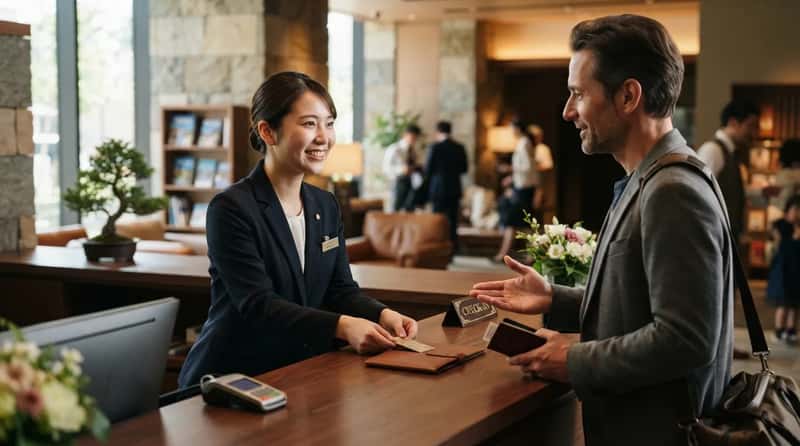
The habits that make travel staff remember you a year later have almost nothing to do with money or status. It’s smaller than that – booking direct, tipping daily, greeting people by name, staying calm when things go sideways.
At a Glance
- Book direct when you can – it changes how a hotel sees you before you arrive.
- Tip daily, not just at checkout, since staff rotate room to room.
- Use names – for staff you meet and staff you return to.
- Stay calm during delays, disruptions, or hiccups – it’s remembered longer than the problem itself.
- Treat every staff member like a person first, a service second.
These are the small signals that move you from “another guest” to “the guest we upgrade.” Now you know exactly what they are – which one do you already do, and which one are you starting tomorrow?