Most people assume seasoned travelers just pack better, leave earlier, or spend more money. Turns out, the real secret is far simpler – and far more available to everyone. Experienced travelers have quietly built a vocabulary of specific requests that most people never think to make.
The result? Better rooms, better seats, free compensation, and stays that run smoother from the first minute. The gap between the traveler who knows and the one who doesn’t isn’t money or status – it’s knowing what to ask for, and exactly when to ask it.
#22 – A Room Away From the Elevator

Noise is the silent killer of hotel sleep. It’s worth asking for a room away from elevators, ice machines, and housekeeping closets to avoid disturbances throughout your stay.
High floors mean longer elevator waits and slower evacuation during emergencies. Rooms directly beside the elevator bank get foot traffic noise around the clock, and they’re often the last to go quiet after midnight.
Experienced travelers ask specifically for floors 3 through 6 – high enough to avoid street noise, low enough to take the stairs if needed. Front desk staff can almost always accommodate this, but most guests never think to ask.
But the room location is only the beginning of what a well-timed request at check-in can unlock – starting with something hiding in plain sight at #21.
#21 – Early Check-In or Late Check-Out
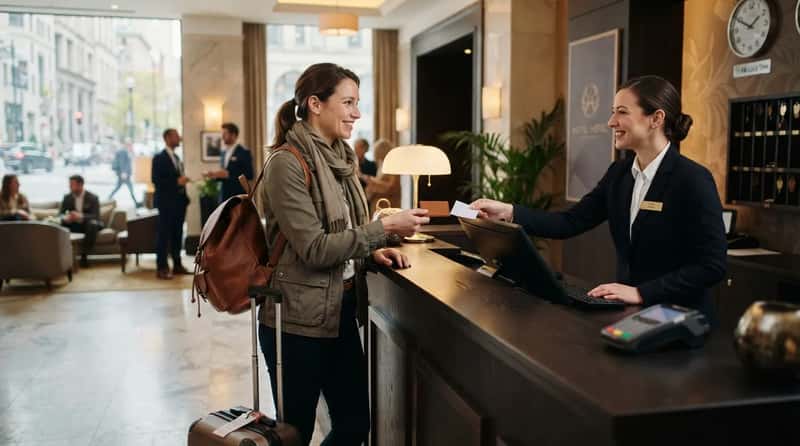
Staying one night at a hotel usually means you get less than 24 hours out of it. Check-in often starts around 3pm, and check-out hits by 11am – a frustratingly short window for what you paid.
Late check-out is one of the simplest requests a guest can make. When occupancy is manageable, hotels often extend the departure time, letting guests linger an extra hour or two – especially handy for anyone with an afternoon flight.
Both requests are essentially free. There’s little downside to asking as soon as you check in, rather than waiting until the morning you’re due to leave.
Don’t wait until checkout morning to ask – that’s when it’s hardest to grant. Speaking of timing, #20 is entirely about knowing when to strike.
#20 – A Room Upgrade, Simply by Asking
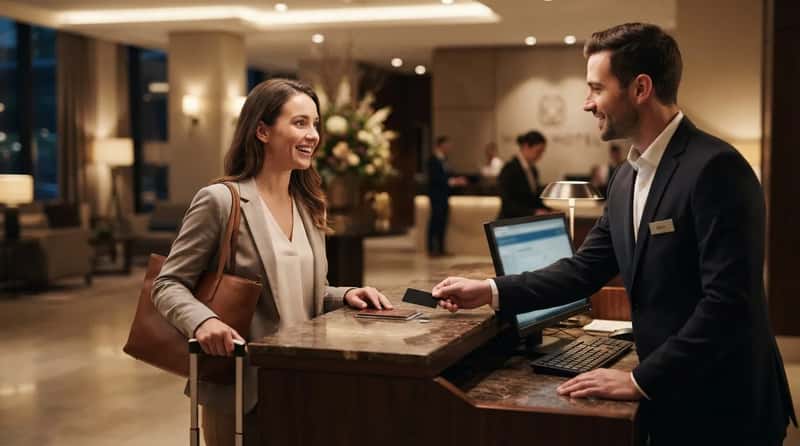
Sometimes all it takes is a simple question: “Is there an upgrade available?” Booking directly with the hotel, arriving late in the evening, and staying only a few nights all quietly increase your odds.
Front desk staff often have discretion to upgrade rooms if inventory allows. Asking politely shows interest without ever sounding demanding.
The key insight most travelers miss: upgrades are assigned, not randomly given. Hotel staff describe a set of habits and small signals that tip the odds in a guest’s favor, long before anyone says the word “upgrade” out loud.
There’s an even smarter play than just asking at the desk, though – and #19 unlocks it before you even arrive.
#19 – Book Direct, Then Ask
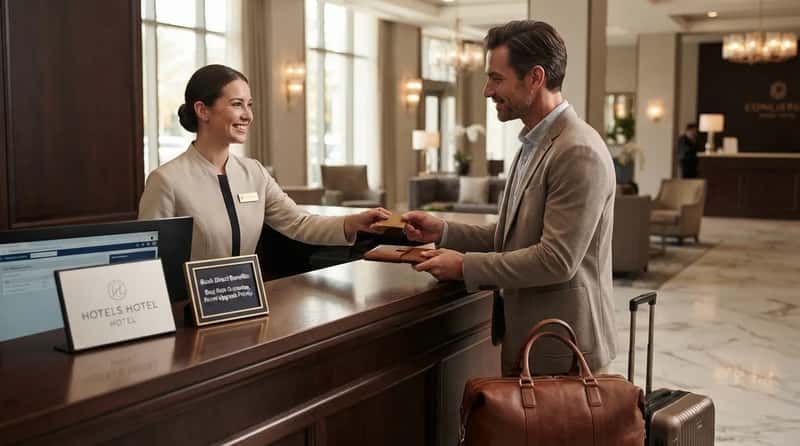
Here’s a mistake millions of travelers make every single day. Book through Agoda, Booking.com, Expedia, or Traveloka, and the hotel usually has zero flexibility to change your room type or upgrade you – those reservations are controlled by the platform, not the property.
Reserving directly with the hotel increases your odds of a free upgrade. It also puts you in the hotel’s own system in a way that makes every other request on this list easier to fulfill.
Quick Compare
- OTA booking: locked room type, little upgrade flexibility, hotel can’t easily change your reservation.
- Direct booking: higher upgrade odds, hotel sees you in its own system, more room to negotiate.
- Smartest move: price-check on an OTA, then book direct if the hotel matches or beats it.
A useful tip: compare prices on OTAs first, then check the hotel’s official website. Many hotels offer a “best rate guarantee” and will match or beat the OTA price – so you get the savings and the leverage.
The next request, #18, is one that saves real money – and almost nobody thinks to make it until it’s too late.
#18 – Resort Fee Waivers
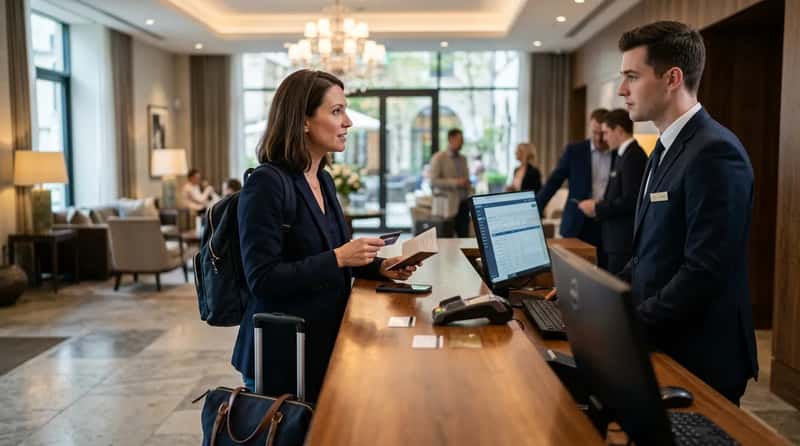
Hidden fees are one of the travel industry’s most successful tricks. Some hotels rebrand these charges as “destination fees,” “urban fees,” or “facility fees” – and city hotels increasingly slap them on even when nothing resort-like exists on the property.
Loyalty program members sometimes get them waived entirely, especially at top-tier status levels. That one question, asked early enough, can save $35 to $55 or more on a two-night stay.
Experienced travelers ask about resort fees before confirming a booking, not after. The window to push back closes the moment you hand over your credit card – once you check in, the leverage disappears fast.
But the minibar in your room holds a trap that #17 will help you dodge entirely.
#17 – Minibar Clearance for Personal Items
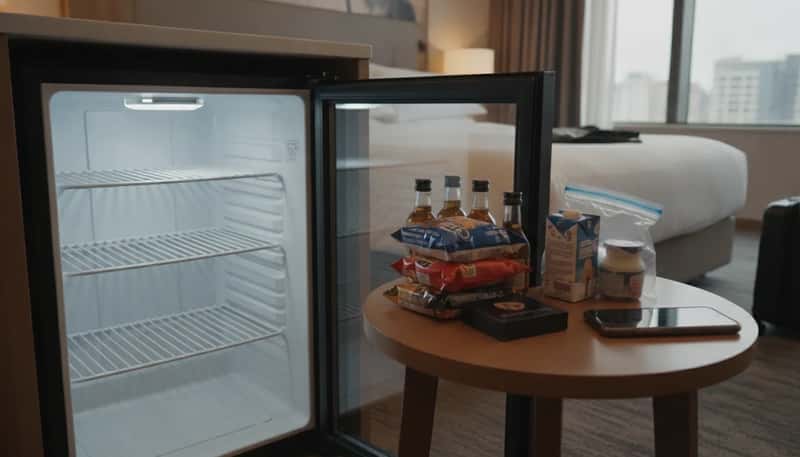
This one catches even frequent travelers off guard. Minibars can generate charges even when you never actually consume anything – some are sensor-based, so simply lifting an item and setting it back down can trigger an automatic charge.
If you need fridge space for your own food or medication, ask the hotel before moving a single thing. It’s also worth photographing the minibar when you arrive, and again before you leave, in case a dispute comes up at checkout.
Most travelers discover this the hard way – on their invoice. The ask is simple: “Can the minibar be cleared so I can use the fridge?” Most hotels will do it without fuss.
The next item, #16, is a comfort upgrade that’s been hiding on hotel menus for years.
#16 – A Pillow Menu
This sounds indulgent, but it’s genuinely practical, and experienced travelers make the request as a matter of routine. There’s nothing worse than sinking into a hotel bed, ready to drift off, and finding the pillow rock hard or embarrassingly flat.
Many business hotels now offer “pillow menus” that let guests choose exactly what they need. The Benjamin Hotel in New York City, for example, offers ten types of pillows, including an anti-snore pillow and a water-filled one.
At a Glance
- Pillow menus are increasingly common at business and boutique hotels across the U.S.
- The Benjamin Hotel in New York offers a 10-option pillow menu, including an anti-snore style.
- Front desk and concierge teams are often trained to match pillow type to sleep position.
- Hotels without a formal menu will frequently still swap pillows from other rooms if asked.
Most guests suffer through a bad night’s sleep without knowing they had options. Front desk staff won’t volunteer this information – you have to ask – and even hotels without a formal menu will often swap pillows from other rooms.
The next item, #15, involves the concierge doing things most guests don’t even imagine are on offer.
#15 – Concierge Handling Everyday Errands
Most travelers think the concierge exists for restaurant reservations and tourist maps. That’s barely scratching the surface – concierge teams can help with dry cleaning, mailing a package, arranging flower delivery, or even a pharmacy pickup.
Services vary by hotel, but if an everyday errand is eating into your trip, it’s worth simply asking.
Concierge teams say the clearest sign of an experienced traveler is specificity. A vague request leaves too much room for interpretation, while mentioning cuisine, atmosphere, timing, and distance gets a far better result.
On the transport side, #14 is a question most guests ask too late – or not at all.
#14 – Hotel-Arranged Transport Over Surge-Priced Rides
You’ve checked in, you’re headed to dinner, and the rideshare app shows a 2.4x surge price. Most travelers just accept it – experienced ones don’t.
If the app price looks painful, ask the concierge what other transportation the hotel can arrange. It won’t always be cheaper, but it gives you an option before you commit to the surge-priced ride.
The average traveler never thinks to compare options at the concierge desk. The experienced one treats it like a real-time travel agent.
Up next, #13 is something you can ask for before you even arrive at the property – and it often yields the best results of the whole stay.
#13 – Pre-Arrival Concierge Planning
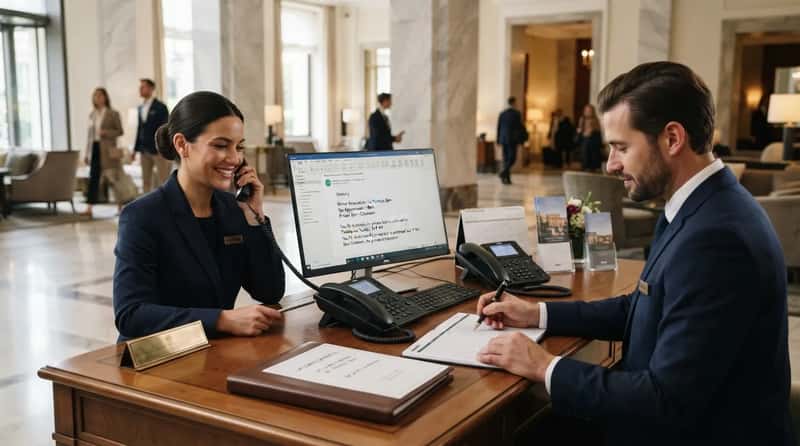
Rather than winging it once they arrive, experienced travelers ask the concierge to build out dinner reservations, spa slots, and transportation before they even land.
Peak travel dates need extra lead time – popular restaurants, private tours, and spa slots at top properties fill fast. This single step, done days or weeks ahead, tends to matter more than any amount of money spent standing at the front desk.
You don’t have to wait until check-in to use the concierge. A quick email before your trip is all it takes, and the travelers who land the best tables aren’t luckier – they just planned smarter.
#12 is about the loyalty program move that costs nothing but unlocks a surprising amount.
#12 – Loyalty Program Enrollment at Check-In
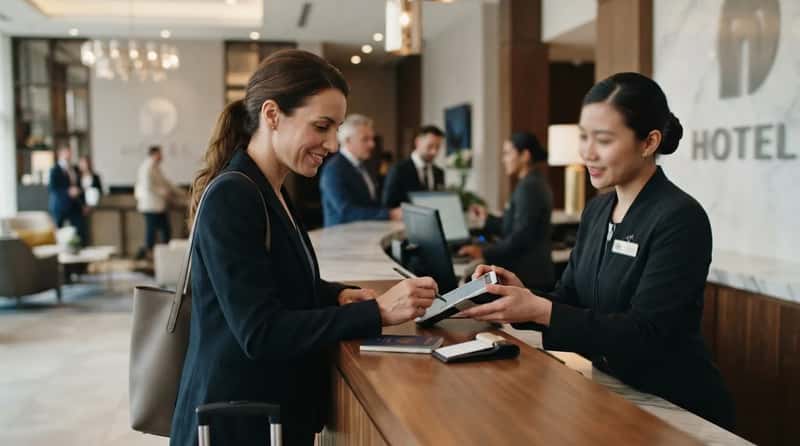
Most people assume loyalty programs only reward road warriors who travel 50 weeks a year. That’s not actually how it works – front desks are often trained to allocate upgrades to loyalty members first, and you don’t need elite status or repeat history, just enrollment.
Most major hotel chains, like Marriott Bonvoy, Hilton Honors, and World of Hyatt, offer free room upgrades as an elite perk. Even if you barely travel, simply signing up can put you ahead of the guest who didn’t.
You can enroll at the front desk in under two minutes. The number of travelers who skip this step and then wonder why someone else got the nicer room is staggering.
Now, #11 involves a borrowed item most hotels have in a drawer somewhere.
#11 – A Forgotten Charger or Adapter
It happens to everyone eventually – the charger stays home. Most travelers make a panicked run to the nearest pharmacy and pay inflated prices, but experienced ones skip that entirely.
Hotels collect chargers and adapters left behind by past guests, covering most popular phones and laptops. Ask at the front desk, and they’ll likely hand one over without hassle.
This is one of the most underused hotel amenities in existence, and it’s entirely free. Front desk staff won’t advertise it, and the ask takes about ten seconds.
Next, #10 moves us to the airport – where the right question to a gate agent is worth more than most people realize.
#10 – Real-Time Delay Intel From the Gate Agent
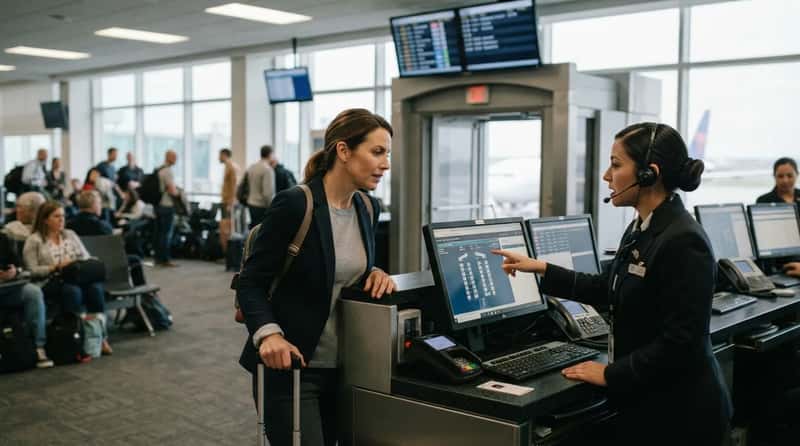
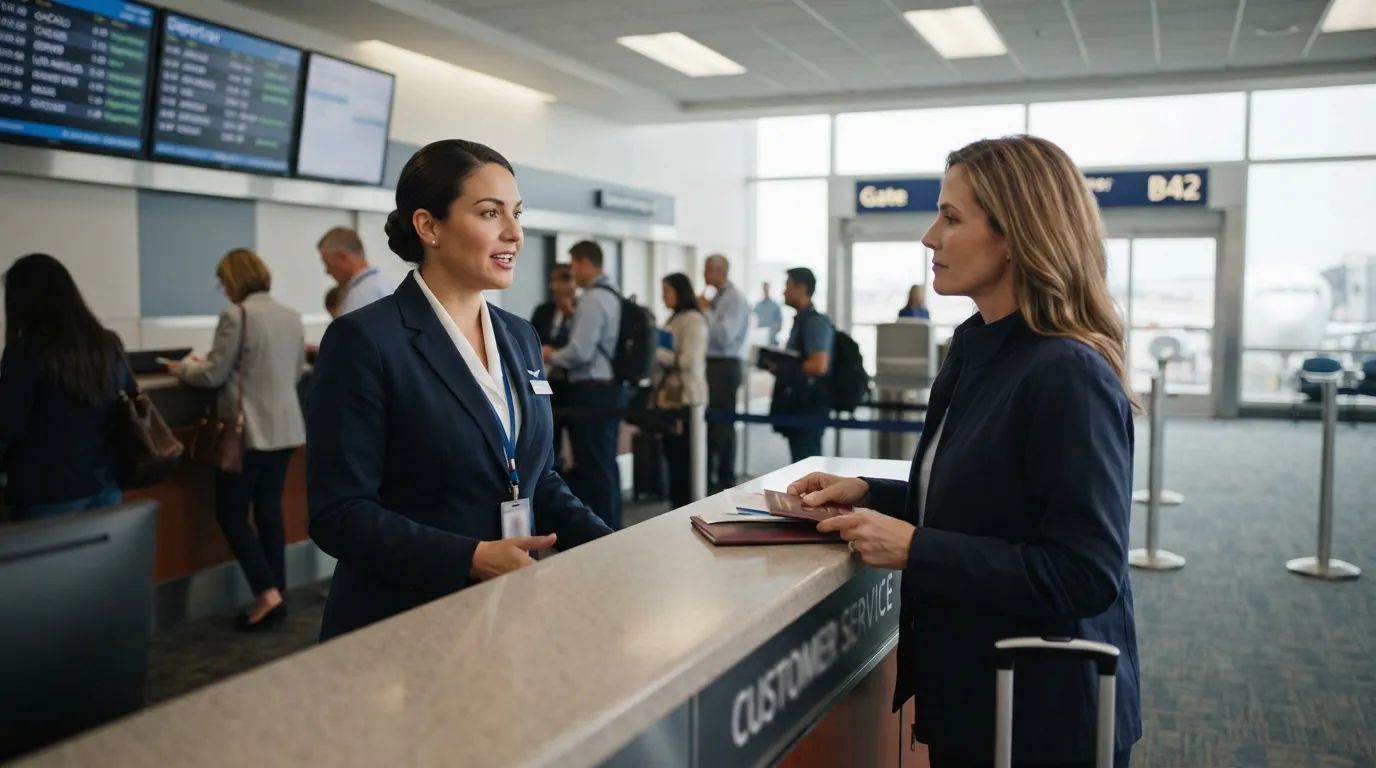
The departure board is not the most accurate source of information in the terminal, though most travelers treat it as gospel. Those public screens lag, while the gate agent’s system updates in real time.
Most travelers shuffle to the gate, stare at their phone, and board without a word to the one person who can actually change their experience. Gate agents have real-time access to the seat map, the standby list, the upgrade queue, and compensation tools – and almost nobody asks for any of it.
Worth Knowing
- Gate agent systems update live, while the departure board can lag behind.
- Agents can see the open seat map, standby list, and upgrade queue before boarding starts.
- Many carriers give agents discretionary authority to offer vouchers or rebooking without a supervisor.
The difference between a cramped middle seat and an exit row, or a silent delay and a hotel voucher, often comes down to one well-timed question.
#9 turns a frustrating delay into something you can actually profit from.
#9 – Meal Vouchers During a Long Delay
Here’s something airlines count on: most delayed passengers sit quietly and assume nothing is on offer. That silence is expensive.
Compensation isn’t automatic, but it’s often available if you know to ask. Many U.S. domestic agents carry discretionary voucher authority, and for controllable delays past three hours, a direct request for a meal voucher and rebooking options often works.
Silence costs you money here. The agent standing quietly next to you isn’t going to volunteer the offer unprompted.
Document your delay, stay calm, and ask specifically – vague complaints get vague responses, specific requests get results. When things go sideways at a completely different level, like an overbooked flight, #8 is where the real money is made.
#8 – Cash Instead of a Voucher When Bumped
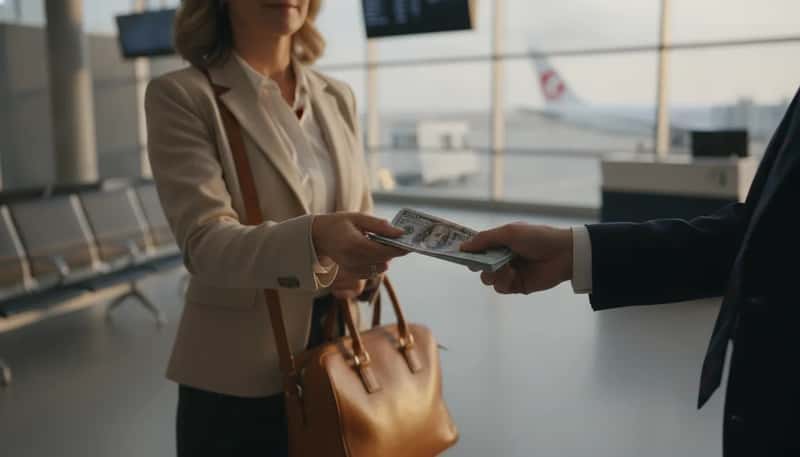
Almost every bumped traveler accepts whatever the airline hands them first – usually a travel voucher with restrictions buried in fine print. Experienced travelers know to ask for something better.
Overbooked flights happen often enough that gate agents are usually hunting for volunteers before things get tense. What many travelers don’t realize is that the compensation is negotiable.
Fast Facts
- Federal rules require real compensation for passengers involuntarily bumped from an oversold flight.
- As of January 22, 2025, the maximum liability limits rose to $1,075 for shorter delays and $2,150 for longer ones.
- Airlines must pay compensation the same day, or within 24 hours if you’re already traveling.
- These figures are legal minimums – voluntary bumps can be negotiated well above the federal floor.
Federal rules require real compensation for passengers involuntarily bumped from an oversold flight, and DOT rules raised the liability limits from $1,075 to $2,150, effective January 22, 2025. That’s the legal minimum, not the ceiling – which is exactly why volunteers sometimes walk away with vouchers well above the federal floor.
Asking specifically, “What can you offer if I give up my seat?” opens a conversation most people never start. #7 is a seating request that experienced travelers phrase very deliberately, for a very specific reason.
#7 – A Bulkhead or Exit Row Seat, Framed the Right Way
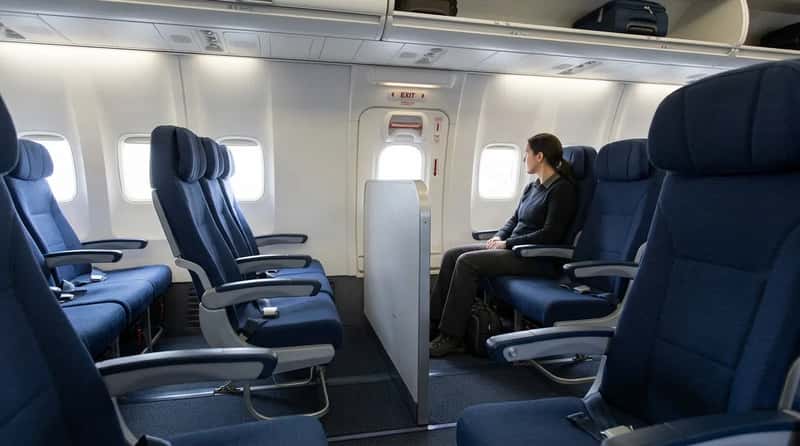
Airlines hold back a meaningful number of seats for day-of accommodation requests – especially bulkhead rows and aisle seats near the front. They’d rather prevent in-flight discomfort than manage it mid-air, so reasonable seating requests often get approved when those seats are still empty at the gate.
The phrasing is everything. “I’d prefer an aisle seat” is just a preference. “I need an aisle seat for a medical reason” is a protected request.
Saying “I require an aisle seat due to a medical condition,” or “my leg can’t bend – I need a bulkhead seat as a disability accommodation,” activates federal protections. No begging, no extra fee – just claiming what the law already guarantees.
Most travelers ask and get nothing because they phrase it as a preference. Experienced ones phrase it as a need. #6 is a request that can reroute your entire trip for free when things fall apart.
#6 – Rebooking on a Partner Airline
Most passengers assume that when their airline can’t get them there, they’re stuck waiting for the next available seat on the same carrier – sometimes a full day later. That’s one of the most expensive assumptions in travel.
When storms or system outages cancel dozens of flights at once, gate agents have tools that outrank the airline’s app, sometimes including partner and codeshare carriers your app will never suggest on its own.
You have to ask specifically: “Can you rebook me on a partner airline?” Many agents won’t offer it unless you do, and supervisors carry real, quiet authority that never shows up in the fine print.
This request can get you home a full day earlier in a disruption. The next item, #5, is about a milestone most travelers casually mention – when they should be strategically mentioning it.
#5 – Mentioning a Special Occasion at the Right Moment
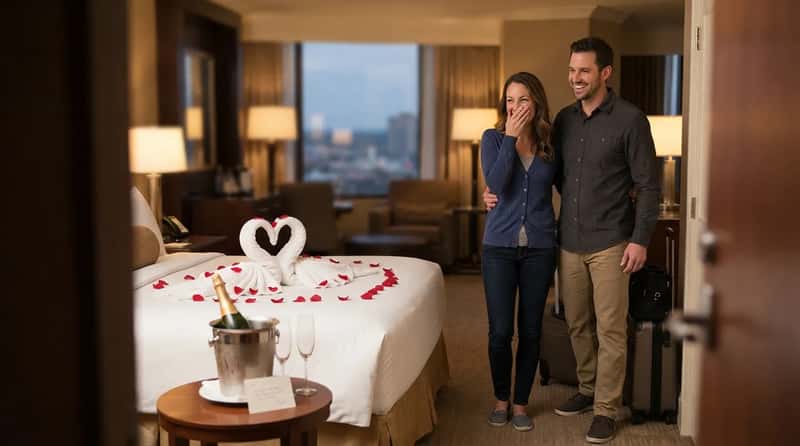
If you’re celebrating a birthday, honeymoon, or anniversary, mention it – subtly – to the check-in agent or flight attendant. Airlines sometimes offer upgrades as a goodwill gesture to passengers marking a milestone.
Hotels go even further. Let them know you’re staying for a reason, and they’ll often go above and beyond – a bottle of champagne for an anniversary, or a bump to a nicer room.
The key word is strategic. Mentioning it casually, as context rather than a demand, is the move that actually works.
#4 is a request that’s hiding in a hotel amenity most guests walk right past every day.
#4 – A Personalized Toiletry Kit
For travelers who forgot to pack essentials, most hotels offer complimentary toiletries like a toothbrush or shaving cream. Some go much further – at Kimpton hotels, guests can ask for lip balm, makeup remover, hair bands, a lint roller, nail clippers, tweezers, anti-static spray, even a curling iron.
Why It Stands Out
- Kimpton hotels keep an unusually deep toiletry stash – lip balm, hair bands, a lint roller, even a curling iron.
- Most other brands can still pull backup items from staff areas if you ask by name.
- A vague request gets a toothbrush; a specific one gets the whole kit.
Most guests only ever ask for a toothbrush – and that’s exactly what they get. Experienced travelers treat the front desk like a small pharmacy and ask for exactly what they need, by name.
Even hotels without Kimpton-level supplies will often pull items from staff areas when a guest asks specifically. Vague requests get nothing; specific ones often get everything.
#3 might be the most underestimated power move in all of hotel travel.
#3 – Calling the Hotel Directly to Check Real Availability
Online booking platforms are powerful, but they don’t show you everything. One direct call can reveal availability that no app will ever display – the rooms are often there, you just can’t see them through a third-party screen.
It costs nothing and takes two minutes, and it’s rescued more than a few trips that looked like dead ends online. Hotel professionals consistently recommend calling directly rather than booking through an app.
You open a conversation, establish a human connection, and put yourself in a position to ask for exactly what you need – before you’ve even arrived.
What separates experienced travelers from everyone else isn’t the size of their wallet. It’s the clarity of their communication. #2 is the quietest, most consistent habit that experienced travelers share.
#2 – Asking Politely, Specifically, and Early
This sounds obvious. It almost never is. None of the best requests on this list require celebrity status or an unlimited budget – just specificity and timing.
Asking calmly, with a clear explanation, tends to get faster results than complaining loudly at the counter. Agents are constantly triaging multiple requests at once, and the easy-to-grant one naturally moves higher on their mental list.
The tone, the timing, and the specificity are the whole game. Vague, late, or aggressive requests get denied. Calm, early, specific ones get approved – sometimes for things that aren’t even officially on offer.
Which brings us to the single most powerful ask that experienced travelers make, and the one almost nobody else thinks to use.
#1 – Asking for the Supervisor When the Answer Is No
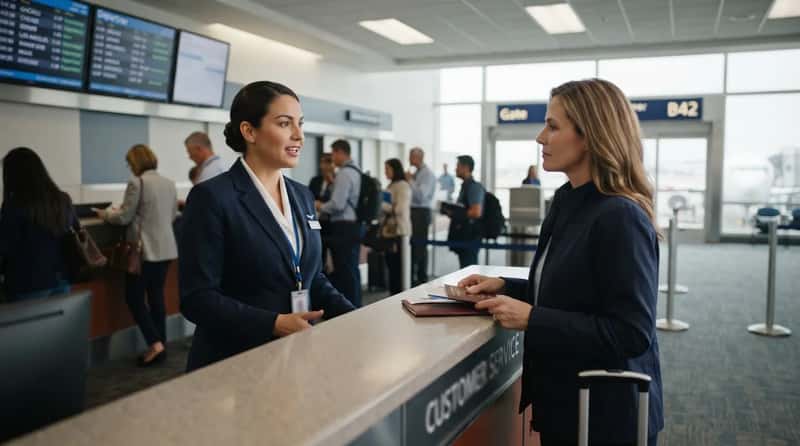
Most travelers accept the first “no” and walk away. Experienced travelers know that a front-line “no” often just means “I personally can’t approve this” – most agents don’t have access to lounge passes or bigger vouchers on their own.
Many U.S. domestic agents carry discretionary voucher authority even without a legal requirement forcing their hand. When a flight is oversold, the gate becomes a live negotiation, and supervisors can authorize amounts well above what a scripted policy page implies.
Volunteering calmly, rather than waiting to get involuntarily bumped, almost always produces a better outcome and a friendlier agent across the counter.
The supervisor question is the master key. It’s the ask that unlocks lounge access, higher compensation, rerouted flights, suite upgrades, and waived fees – things that never appear on any menu. The entire list above works better when you back it up with one politely delivered sentence: “Is there a supervisor I could speak with?”
The Bottom Line
Experienced travelers aren’t luckier. They’re better at asking.
From noise-free hotel rooms and waived resort fees to rerouted flights and bumping compensation well above the legal minimum, nearly everything on this list costs nothing to request. The common thread across all 22 items is the same: specificity, calm, and timing.
Ask early, ask clearly, and ask the right person. Most guests never push past the first scripted “no” – the ones who do tend to get the suite, the exit row, and the free dinner.
Did we miss a request that’s worked for you? Drop it in the comments – we read every one.
Bonus: The Insider Move That Beats All 22 Tips Combined
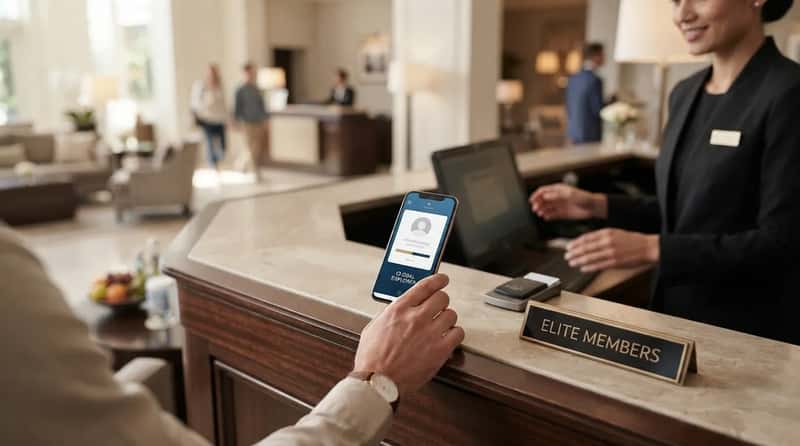
Most travelers never touch this one because they don’t know it exists: status matching. Nearly every major hotel chain will match your elite status from a competing brand instantly, without waiting for a year of stays to earn it the normal way.
Here’s exactly how to use it:
- Search the chain’s own site for its “status match” or “status challenge” page (Hilton, Hyatt, IHG, and others run these regularly).
- Upload a screenshot of your current elite status from another chain’s app or loyalty account as proof.
- Wait roughly 5-10 business days for a decision – most match requests are processed by email.
- If approved, your matched status is active immediately, often with a short window (commonly 60-90 days) to complete a set number of qualifying stays and lock it in long-term.
This single move can hand you upgrade priority, late check-out, and resort fee waivers at a brand-new hotel chain before you’ve ever stayed there once. It costs nothing but a screenshot and a short wait – and almost nobody asks for it.