Most visitors assume park rules are friendly suggestions. They’re actually backed by federal law, and a violation can mean a fine, jail time, or both.
This list covers 22 habits that park guidance keeps warning about, from a harmless-looking cracker to a few steps off a boardwalk. Some will make you wince because you’ve done them, and the one at the very end is the one rangers dread most.
#22 – Showing Up With No Plan
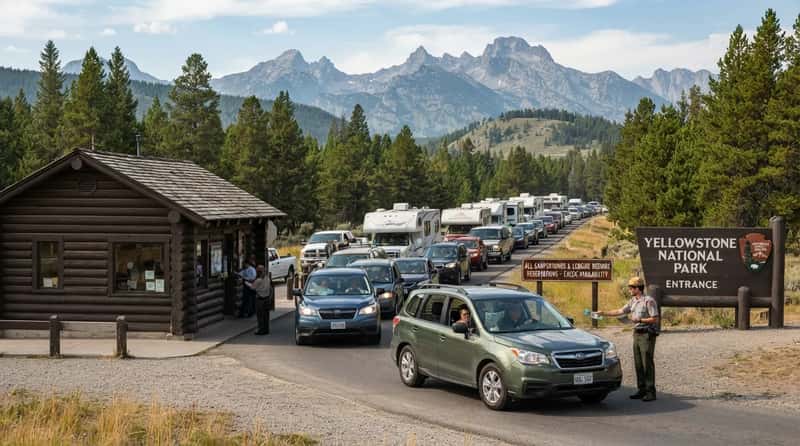
The mistake starts before anyone reaches the entrance gate. Plenty of visitors still treat a national park like a roadside attraction.
Yellowstone’s guidance says all campgrounds and lodging require a reservation and fill up well in advance. So the “let’s see what’s open” approach is a gamble, not a strategy.
Rules also change from park to park, which trips up people who memorize one set. Many parks ask for 25 yards from most wildlife, but Olympic National Park requires a minimum of 50 yards.
A distance you memorized at one park can be wrong at the next. Rangers are the ones who notice.
But being unprepared is nothing compared to what people leave behind once they arrive, starting with #21.
#21 – Leaving “Harmless” Food Scraps
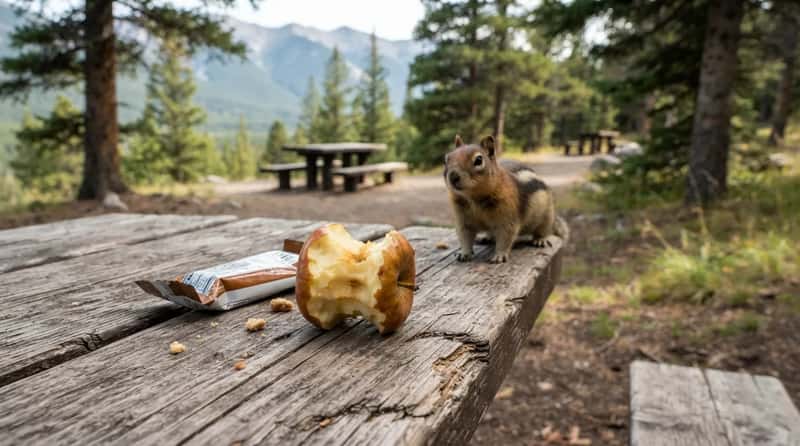
An apple core feels like the most innocent litter on earth. Park guidance treats it as a wildlife problem, not just a mess.
The truth is that animals don’t separate your trash from a meal. Animals that become dependent on human food may become aggressive toward people and have to be killed.
Smell alone can do the damage. Even the scent of an empty cooler can attract wild animals.
The picnic ends, and the animal’s trouble begins. A few seconds of convenience for you can turn into a death sentence for something wild.
Some visitors go further than leaving scraps and start rearranging the landscape, as #20 reveals.
#20 – Stacking Rock Towers for the Photo
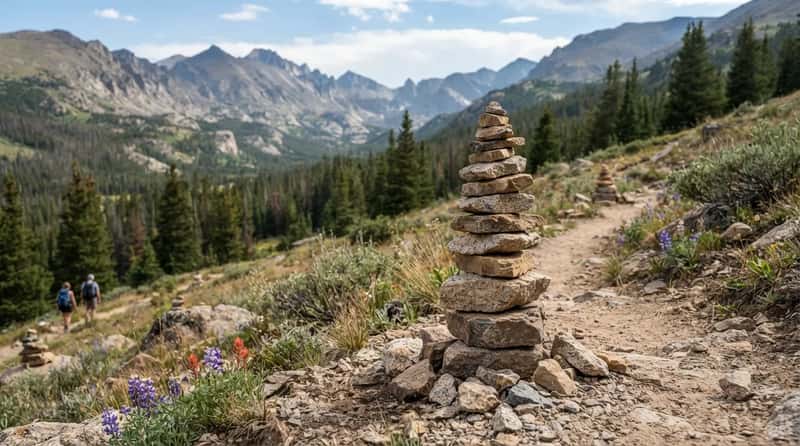
That tidy rock tower on the trail looks like art. Land managers see it very differently.
To plenty of hikers, stacking rocks is a harmless bit of fun. Many land managers argue it disturbs the ground and the small creatures living under those stones.
There’s a navigation problem too. Trail markers called cairns are placed deliberately, so random stacks can send hikers the wrong way.
The fix is simple and free. Take the photo of the natural rocks, then leave them exactly where you found them.
But stacking rocks is tame compared to what some people slip into their pockets in #19.
#19 – Pocketing “Just One” Souvenir
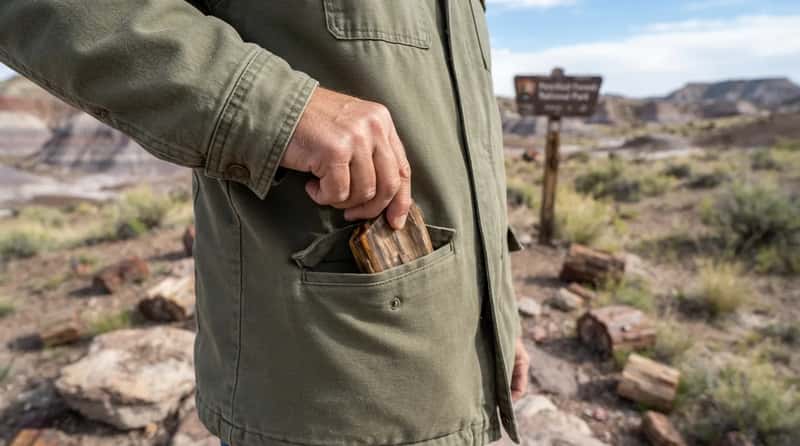
That smooth stone in your jacket is not as free as it looks. In most parks, natural objects are meant to stay put.
Rocks, plants, antlers, and fossils all count. Some parks allow small personal-use exceptions, so the truth is you have to check the local rules.
Petrified Forest National Park is known for getting stolen petrified wood back in the mail, often with notes of regret. The guilt, it turns out, often arrives after the road trip ends.
And the next habit involves someone who can’t read the rules at all, which brings us to #18.
#18 – Letting the Dog Go Where Dogs Can’t
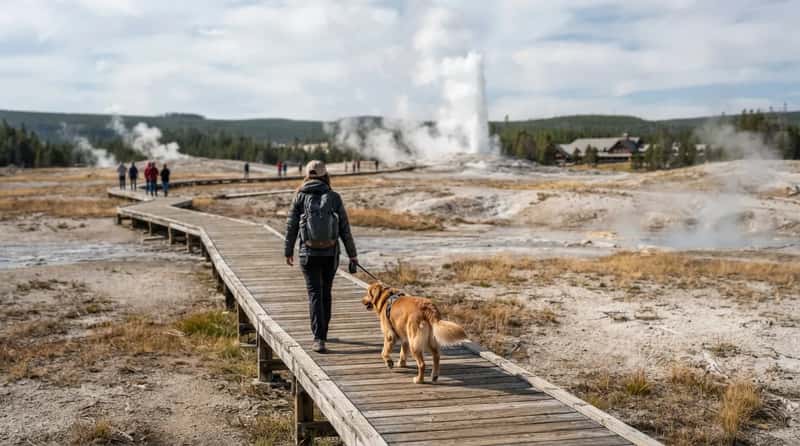
Dog owners often break park rules out of love, not malice. Rangers still have to enforce them.
Pet rules are usually stricter than in city parks. Pets are typically limited to developed areas like roads and campgrounds, and they’re generally required to be on a leash.
In Yellowstone, pets are prohibited in all thermal areas and on boardwalks. That includes the most famous boardwalks in the park.
Plenty of owners call this unfair. Park managers counter that scent and barking can disturb wildlife, even on a leash.
Fast Facts
- Pets are typically limited to developed areas like roads and campgrounds.
- A leash is generally required wherever pets are allowed.
- Yellowstone bans pets from all thermal areas and boardwalks.
- Scent and barking can disturb wildlife, even on a leash.
Dogs are one thing, but the next mistake is about what people do with their feet, and #17 is more damaging than it looks.
#17 – Cutting Switchbacks and Making New Trails
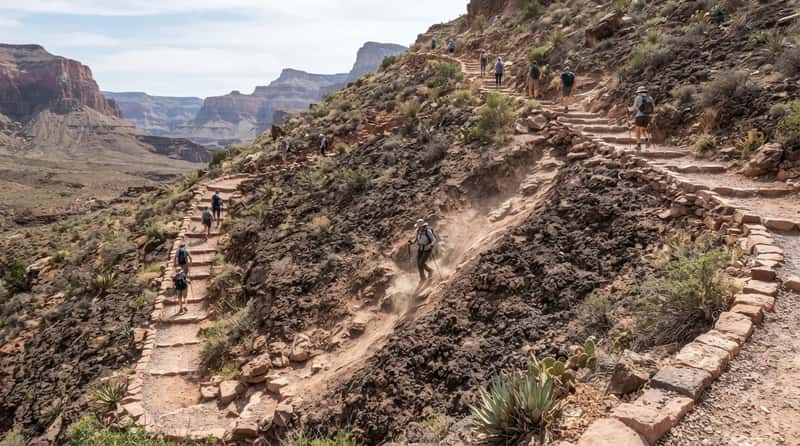
A shortcut saves thirty seconds and can cost the landscape years. Rangers see the scars every season.
Cutting a switchback channels water down the slope and starts erosion. Every new path makes the next person more likely to follow it.
In desert parks the damage is worse. The dark, bumpy soil crust that looks like dirt is actually alive, and it can take years or longer to recover from a single footprint.
Desert rangers often ask visitors to stick to trails, washes, and bare rock. That way the living ground stays intact.
Still, quiet damage is easy to ignore, and the next one is anything but quiet, as #16 shows.
#16 – Blasting Music on the Trail
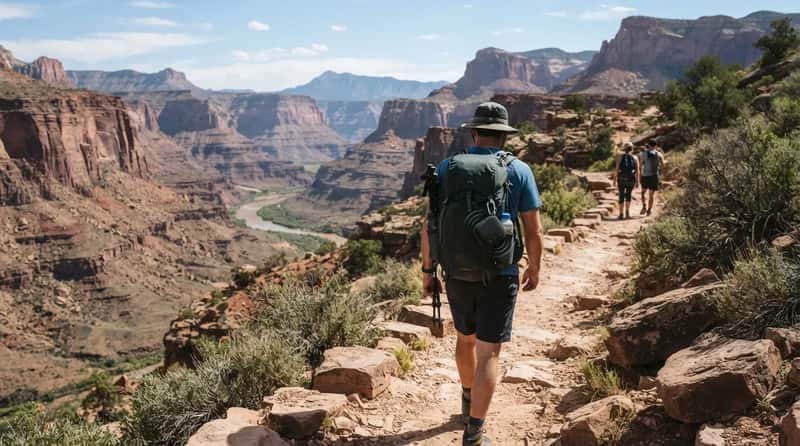
Your playlist is someone else’s ruined morning. Park managers treat natural quiet as part of the experience visitors came for.
Sound carries farther than people think, especially across open canyons and valleys. A speaker clipped to a backpack is heard by everyone within range, not just your group.
It also affects wildlife. Animals use sound to find food, avoid predators, and communicate, so constant noise makes the area less useful to them.
Headphones solve it instantly. Better yet, leave one ear free so you can hear a warning shout or approaching animal.
Loud music is annoying, but what some visitors do to the rocks themselves is worse, and #15 is permanent.
#15 – Carving Names Into Anything
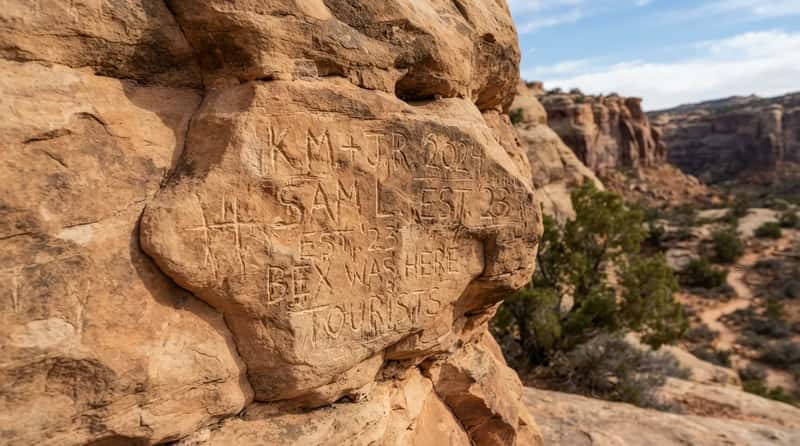
Your initials on a rock say one thing to you and another to the ranger who finds them. Graffiti in a park is vandalism, and it can be prosecuted.
Cleaning it off is slow, expensive, and sometimes impossible without damaging the surface. Sandstone, tree bark, and cave formations don’t heal.
Some visitors point to old historic carvings as proof it’s fine. The difference is that those marks are now protected as history, while new ones count as damage.
Every hour spent scrubbing a wall is an hour not spent on trail work or helping visitors. The cost lands on everyone who comes after.
But vandalism at least leaves evidence, while the next habit leaves a problem on four legs, as #14 explains.
#14 – Walking Away From Your Food
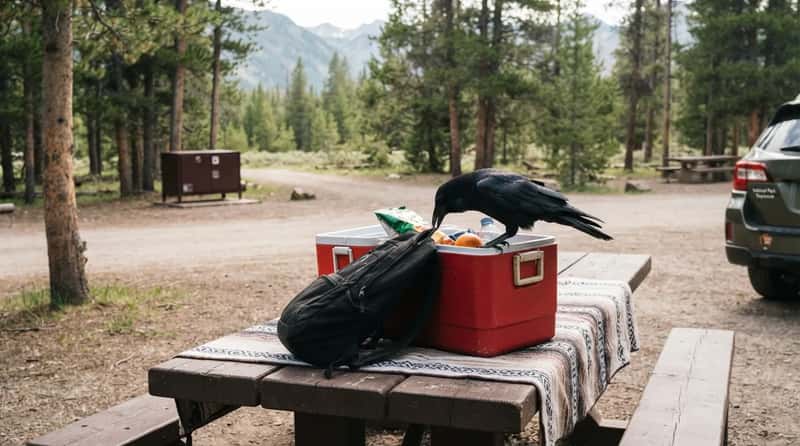
Step away from your cooler for a few minutes and something is already watching. Rangers say this is one of the most avoidable problems in the park.
Yellowstone warns visitors not to leave packs, bags, or coolers containing food unattended, even for a few minutes. Animals can learn new food sources quickly.
And it isn’t only bears. Ravens have learned to unzip or unfasten many kinds of zippers and buckles to get to food.
The advice is to store these items in vehicles or bear-proof storage lockers, if available. A picnic blanket isn’t storage.
Ravens are clever, but the next habit tries to outsmart the animals themselves, and #13 breaks the rules.
#13 – Calling Out to Animals for a Reaction
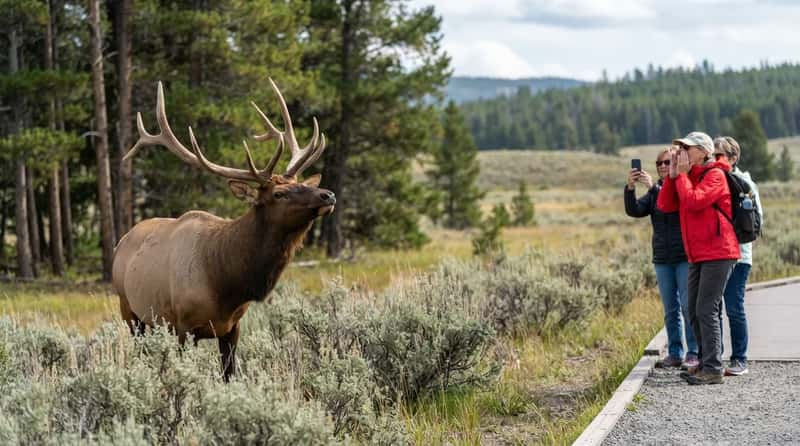
Bugling at an elk feels like harmless fun. Yellowstone-area guidance says it’s actually against the rules.
Calling to attract wildlife is illegal. That includes bugling to elk, howling to wolves, and whistling to eagles.
There’s a broader rule too. It’s illegal to willfully remain near or approach wildlife, including birds, within any distance that disturbs or displaces the animal.
In plain terms, if an animal changes what it’s doing because of you, you’ve already gone too far. The photo isn’t worth the disturbance.
Disturbing wildlife from the ground is one thing, but the next tool does it from the sky, and #12 has a steep price tag.
#12 – Flying a Drone “Just for One Shot”
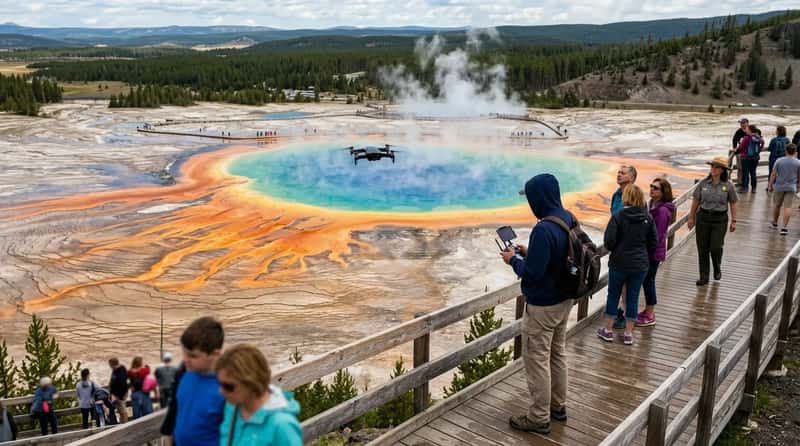
This is the mistake that makes the most enemies in a crowd. Drones are banned across national park land and waters.
The NPS has had a ban in place since June 2014. It applies to every category of drone, including sub-250 gram models.
One tourist crashed a drone into Grand Prismatic Spring and was hit with over $3,000 in fines, banned from the park for a year, and put on probation. That is one expensive photo.
Drone-industry guides say real-world fines usually land well below the maximum. They also note that rangers can confiscate equipment.
But the sky isn’t the only place people cause trouble, and #11 happens on the pavement.
#11 – Stopping Dead in the Road
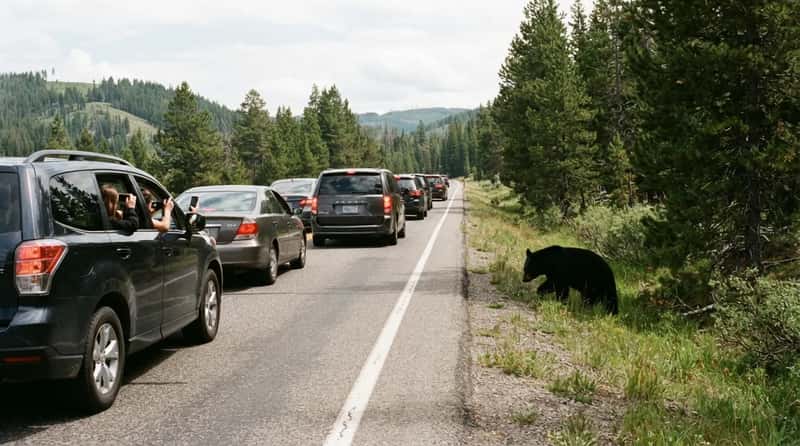
The “bear jam” is one of the most familiar scenes in a busy park. It’s also a traffic hazard.
Yellowstone asks drivers to use pullouts to watch wildlife and take photos, and not to stop in the road. When pulling over, park with all four tires fully to the right of the white line.
Grand Teton says the same thing differently. A vehicle does not make it safe to stop in a traffic lane or block an animal’s path.
At a Glance
- Use a pullout for wildlife viewing and photos.
- Park with all four tires fully right of the white line.
- Never stop in a traffic lane or block an animal’s path.
- Your car is often the safest viewing spot you have.
Turns out the car is useful, just not as a roadblock. The safest and often best view of wildlife is from inside a car.
Staying in your car is smart, but plenty of people leave it with nothing but a phone, and #10 is where that goes wrong.
#10 – Trusting Your Phone to Save You
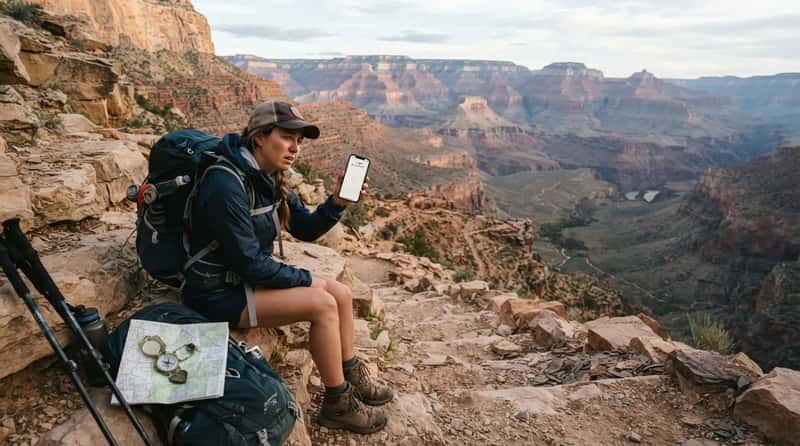
One bar of signal is not a safety plan. Rangers still respond to people who assumed their phone would handle everything.
Service varies and batteries drain fast in the cold and heat. A map that won’t load at the trailhead is worse than no map at all.
Grand Canyon rangers remind visitors to be prepared to self-rescue while on the canyon’s trails. The park’s preventive search and rescue supervisor also says hikers should prepare to travel in the dark with a good headlamp and extra batteries.
The smarter plan assumes the phone fails, then treats it as a bonus if it works. That mindset is what separates a story you tell later from a call for help.
But nothing tests that plan like the trail that tricks people the most, and #9 is famous for it.
#9 – Treating the Grand Canyon Like a Downhill Stroll
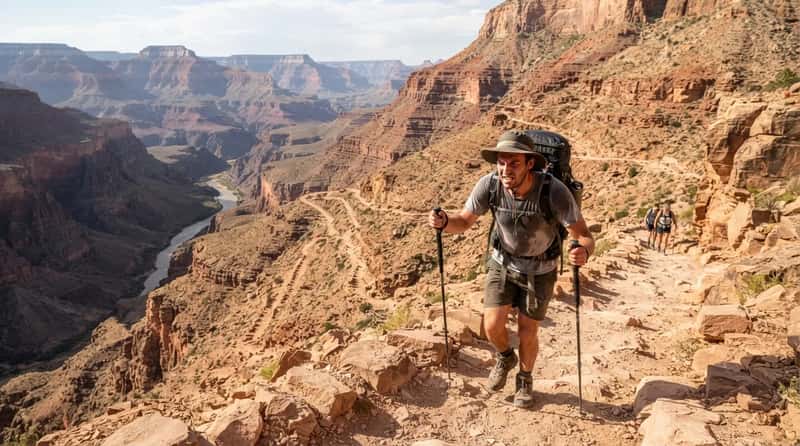
The trip down feels easy, and that’s exactly the trap. Rangers say many visitors underestimate what comes next.
The NPS says hiking to the river and back in one day is not recommended due to distance, extreme temperature changes, and an approximately 5,000-foot elevation change each way. Plenty of fit hikers still call that overcautious.
When it’s 90 degrees at the rim, it can be 120 at Phantom Ranch at the bottom, according to the park’s preventive search and rescue supervisor. The hike down doesn’t feel so bad, but the hike back up is a different story.
Going down feels like progress, so people keep walking. By the time the climb out is the only option, the heat has already taken its share.
That heat is the next problem, and #8 shows it doesn’t need a famous trail to hurt you.
#8 – Hiking Through the Hottest Hours
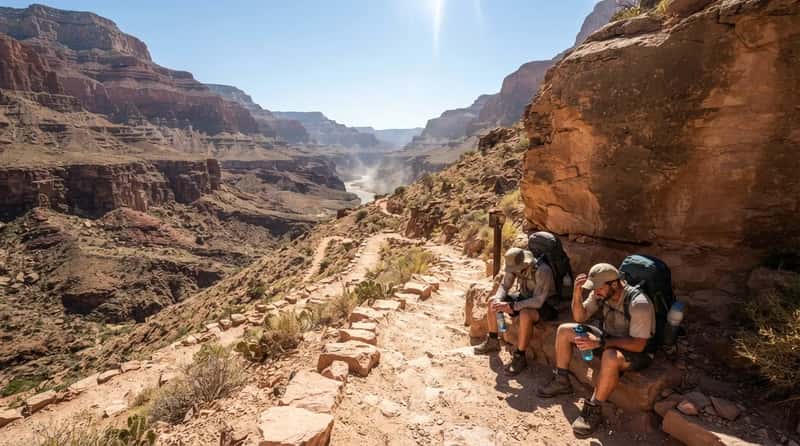
The clock matters more than the mileage. Rangers keep repeating the same two time windows.
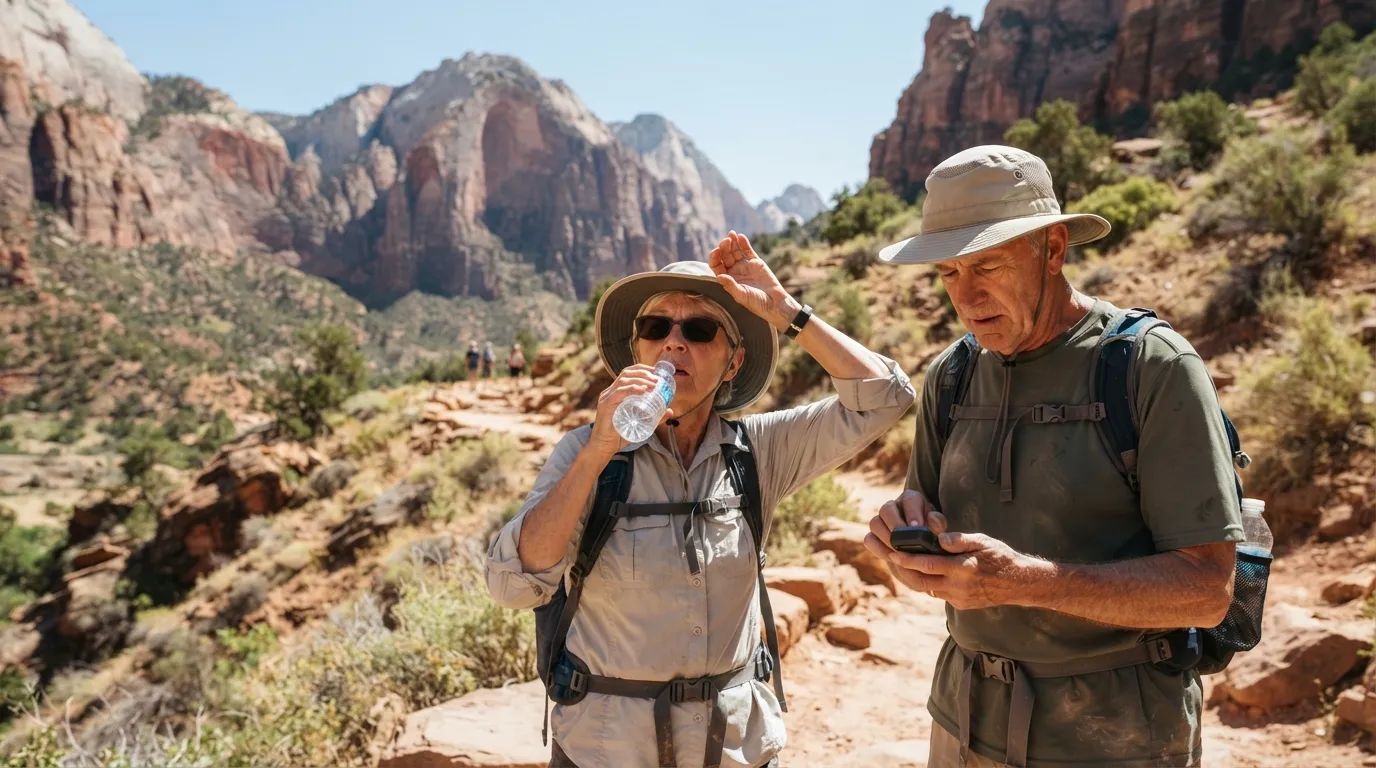
Grand Canyon’s Hike Smart advice is to start before 10:00 a.m. or after 4:00 p.m. Officials also note that lower elevations can be 20 to 25 degrees hotter than the top.
In busy summer stretches, the park’s rescue team can average one to two helicopter medical evacuations a day. That’s a big number for a place where many trips are avoidable.
Worth Knowing
- Start before 10:00 a.m. or after 4:00 p.m.
- Lower elevations can run 20 to 25 degrees hotter than the rim.
- Busy summer stretches can see one to two helicopter evacuations a day.
- Balance food and water, and drink when you’re thirsty.
There’s a twist on water too. One river runner drank an excessive quantity of water and developed hyponatremia, which caused an altered level of consciousness.
The park’s advice is to balance food and water intake and to drink when you’re thirsty.
Heat is predictable, but weather can turn on its own schedule, and #7 is the one people check least.
#7 – Ignoring the Sky in Monsoon Season
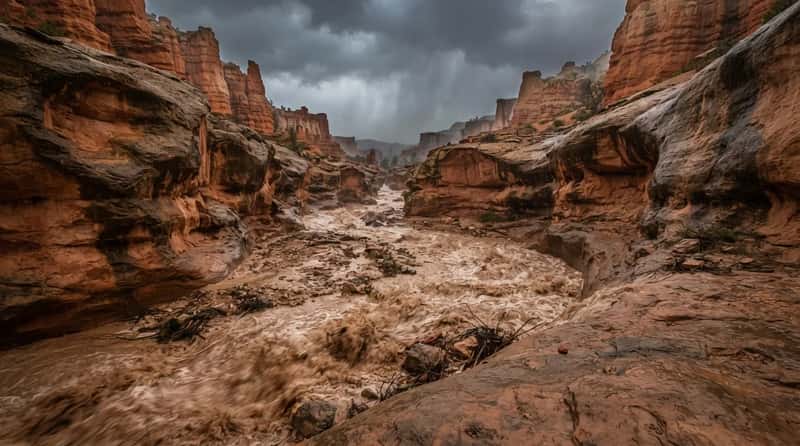
A dry canyon can become a water channel in minutes. Flash floods are one of the quietest dangers on any desert itinerary.
Monsoon storms recently triggered flash flooding in the Grand Canyon that left two people dead. Officials said 82 others were rescued, some by helicopter, from areas including Bright Angel Creek and the Phantom Ranch and Cottonwood campgrounds.
Flooding also hit elsewhere. A related report described 11 people rescued after flash flooding swept Bryce Canyon National Park in Utah.
Most people don’t realize a storm miles away can send water into a dry drainage. Check forecasts and ask a ranger before you commit to a canyon.
But weather warnings are only useful if you can also protect yourself from animals, and #6 is about what’s in your pack.
#6 – Burying Bear Spray in Your Backpack
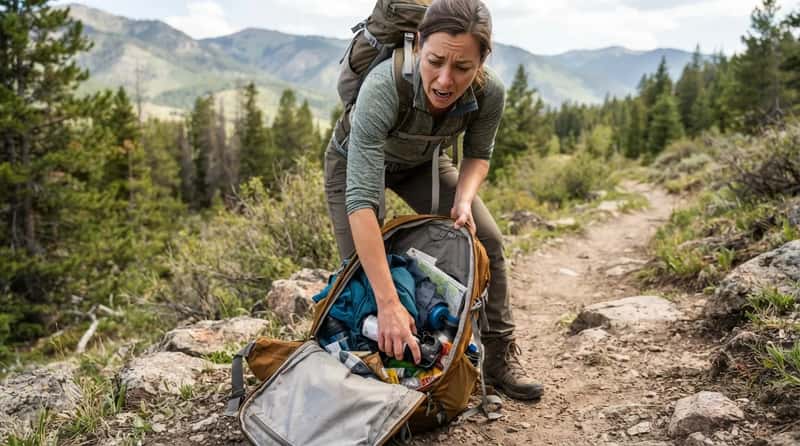
Carrying bear spray doesn’t help if you can’t reach it. Rangers say that’s where many visitors go wrong.
All of Yellowstone is bear country, and visitors are told to carry bear spray. Grand Teton guidance says to keep it on your body where you can reach it, not inside a backpack.
Carry an EPA-registered product made for deterring bear attacks. A can at the bottom of the bag is just extra weight.
Fumbling with a zipper while a bear closes the distance is not a plan. The spray only counts if it’s in your hand in seconds.
Bears are the obvious risk, but the next mistake invites animals in with a smile, and #5 is the one rangers hear excuses for constantly.
#5 – Feeding “Cute” Wildlife
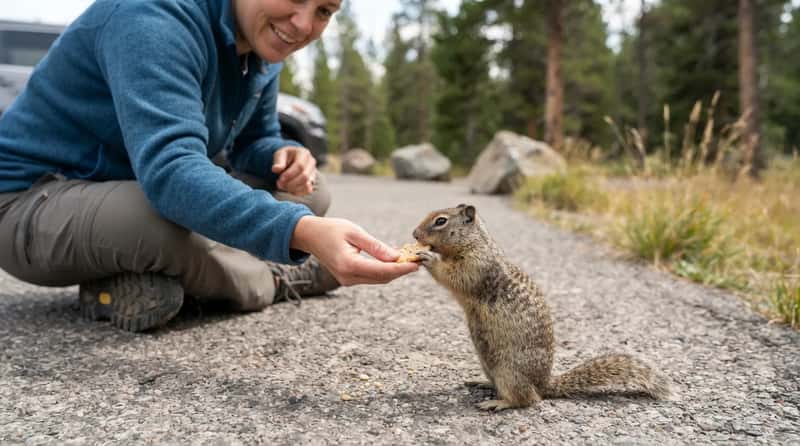
The squirrel looks hungry, and that’s how it starts. Rangers hear “it was just a cracker” all the time.
Yellowstone’s guidance says never feed wildlife, even birds and squirrels. Animals also carry diseases that can be transmitted to people.
The bigger cost is what happens next. Animals that become dependent on human food may become aggressive and have to be killed.
So the friendly handout isn’t kind at all. It can end with the animal being removed for good.
Feeding is an attempt to befriend wildlife, but the next one is an attempt to rescue it, and #4 has gone wrong before.
#4 – “Rescuing” a Baby Animal
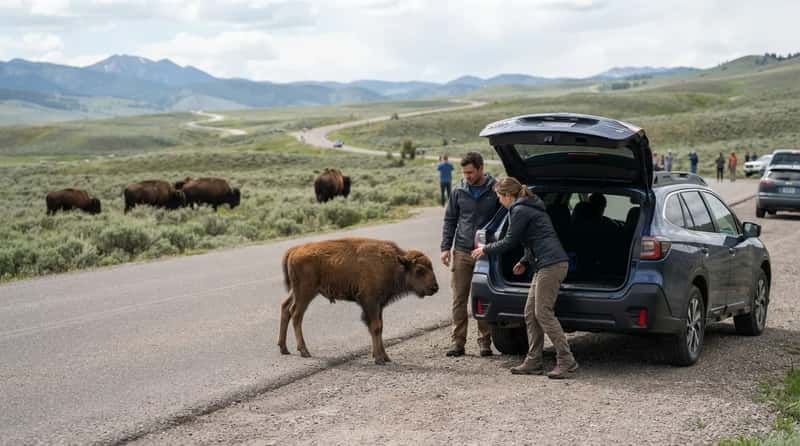
A lone baby looks abandoned, and that’s exactly what people assume. Wildlife managers warn that this is usually a mistake.
In Yellowstone’s Lamar Valley, two international visitors once put a bison calf into their vehicle. The idea was to help, but it was the wrong kind of help.
Rangers tried to reunite the calf with the herd, but it kept approaching people and cars, and it was eventually euthanized. The rescue that felt kind ended the animal’s life.
Young animals are often left alone on purpose. Elk calves may be hidden close to buildings, under or next to vehicles, and around blind corners.
And that’s nothing compared to the thing people do with water that’s hot enough to injure them, which is #3.
#3 – Testing the Water and Chasing Dropped Items
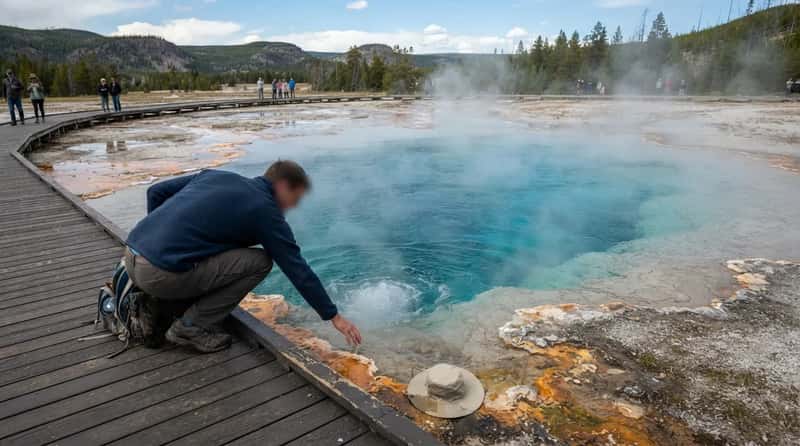
Some visitors can’t resist touching the water in a thermal feature. Safety managers know this.
Park safety managers say some visitors can’t resist testing the temperature by sticking in fingers or toes. Most people who get thermal burns feel sheepish and may not report them.
Then there’s the dropped hat. USGS advice is that if the wind takes your hat into a thermal basin, let it go.
Swimming or soaking in any thermal feature is strictly prohibited. People have died after slipping into Yellowstone’s hot springs, including one man who was looking for a place to bathe.
But as dangerous as it is to touch the water, nothing compares to the top two, starting with #2.
#2 – Walking Up to Wildlife for a Closer Shot
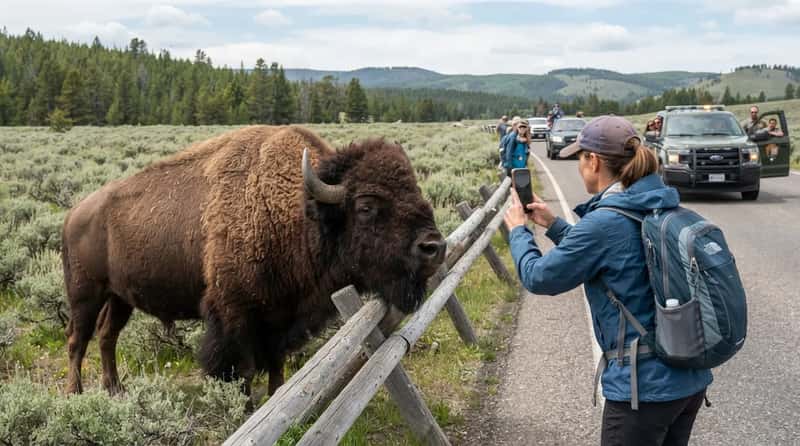
This is the habit that fills the news cycle every summer. Rangers know exactly how it ends.
A close-up with a bison makes a great story until it doesn’t. The park warns that people have been injured or killed by bears, bison, and elk.
Stay at least 100 yards from bears and wolves, and at least 25 yards from all other animals, including bison and elk. A hundred yards is about the length of a football field without the end zones.
Those distances aren’t just polite suggestions. Park regulations have the force of federal law.
Quick Compare
- Bears and wolves: at least 100 yards in Yellowstone.
- Bison, elk, and other animals: at least 25 yards.
- Olympic National Park: a 50-yard minimum from wildlife.
The animals may look calm, but even that calm can change in seconds, and there’s one more mistake that’s worse, in #1.
#1 – Stepping Off the Boardwalk
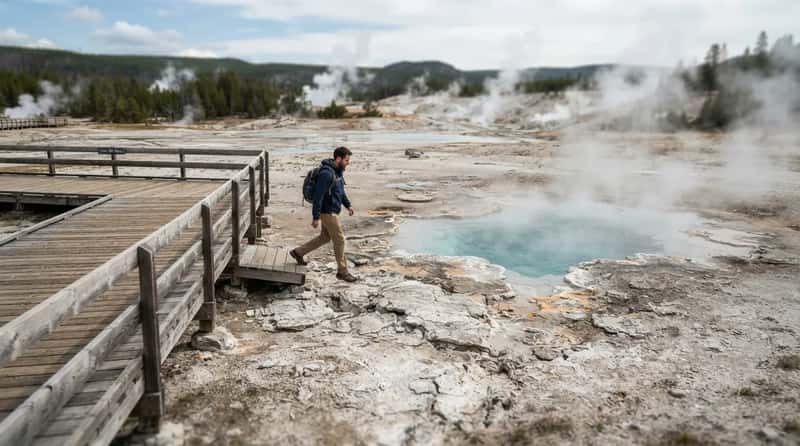
This is the mistake rangers dread most, because the consequences are the hardest to undo. It looks like a few harmless steps.
People who travel off boardwalks have been severely injured or killed by breaking through thin ground in thermal basins or falling into hot springs. Scalding water underlies most of the thin, breakable crust around hot springs.
In 2016, a 23-year-old was more than 225 yards off a boardwalk at Norris Geyser Basin when he slipped and fell in. A park spokesperson said it was not an easy thing for the rangers either.
Even a supposedly innocent jaunt off the boardwalk might mean breaking through thin crust into boiling water or superheated steam. The ground can look solid and still be a trap.
Every other mistake on this list has a second chance, but this one often doesn’t, and that’s the real truth.
The Bottom Line
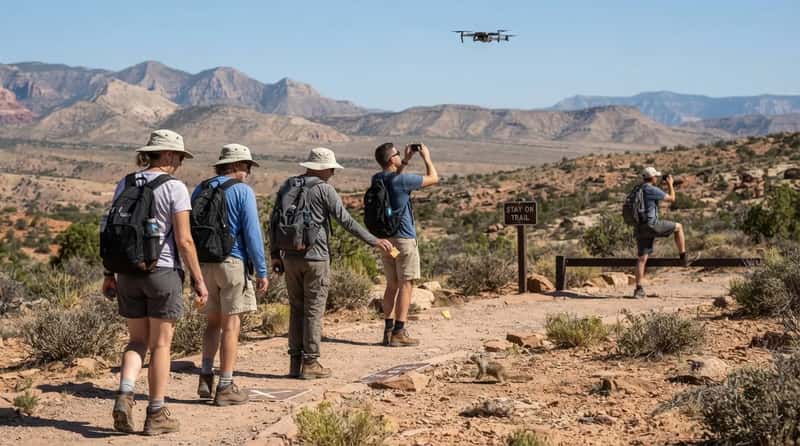
The biggest problems on this list aren’t exotic. They’re small choices like a cracker, a shortcut, a drone, or a few steps off the path.
Feeding wildlife can get animals killed, and illegal drone flights risk a $5,000 fine and six months in prison. Heat, floods, and boiling ground don’t negotiate.
The safest visitors are the ones who read the rules before they go, and follow them when nobody’s watching. Which habit on this list did you think was harmless until now?