Most people walk through airport security convinced they’re doing everything right. Shoes off, laptop out, boarding pass ready – what could possibly go wrong? TSA screened more than 904 million people in 2024 alone, and a shocking number of them got flagged, delayed, or quietly robbed because of habits they never once questioned.
The truth is, airport danger rarely looks like danger. It looks like a phone tossed in a bin, a boarding pass photo posted for likes, or a “harmless” joke muttered under your breath. Security experts, TSA officers, and cybersecurity researchers have been quietly sounding the alarm on these exact habits for years – and almost nobody listens until it’s too late.
#23 – Bouncing Between Security Lines Like It’s a Race
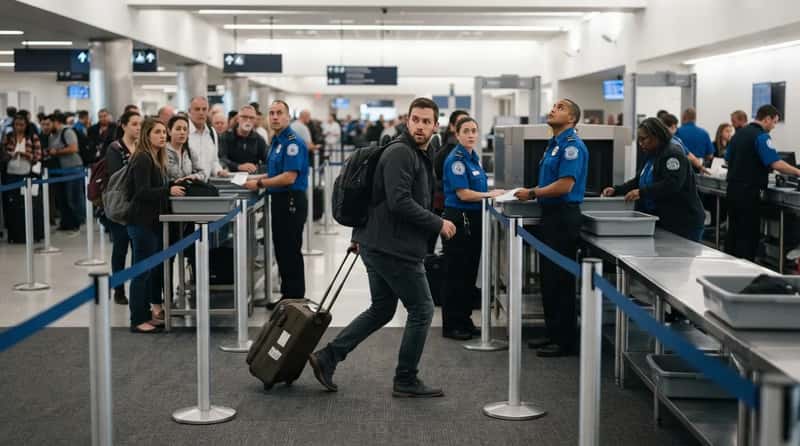
It feels like common sense: if one line is moving slower, jump to the next one. But officers are trained to watch for erratic movement through the checkpoint, and constant line-hopping reads less like impatience and more like someone trying to avoid something.
TSA staff are trained specifically to spot people who act strangely, noticing odd behaviors that may indicate a hidden agenda or nervousness. Darting between lanes, changing your mind mid-queue, or hovering near the front without committing can pull you into secondary screening you never needed. The fix is boring but effective: pick a line, stay in it, and let the process move at its own pace.
#22 – Cracking a “Bomb” Joke to Break the Tension
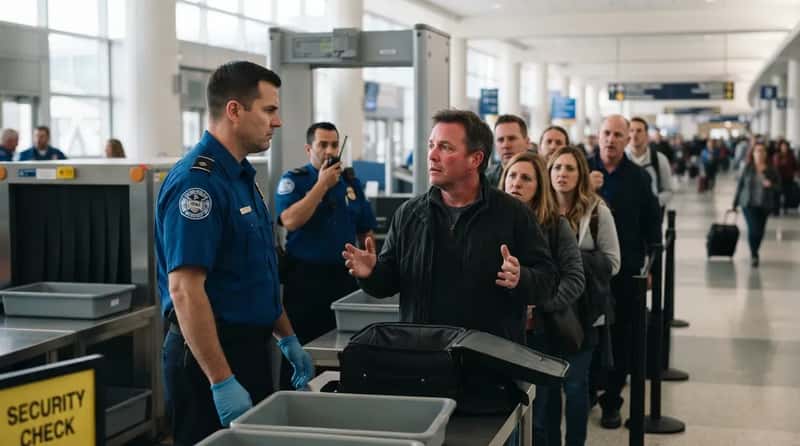
Nervous travelers joke. It’s human nature. But this is the one joke that never lands, and security experts say it’s the fastest way to turn a routine screening into a nightmare.
TSA officers have explicitly told travelers never to joke about carrying an explosive device or claim they have a bomb with them, even in jest. Airports are not required to decode your sense of humor, and the security system is designed to react first and sort out intentions later. What feels like a throwaway line to you can shut down an entire checkpoint, delay hundreds of passengers, and land you in a federal investigation.
#21 – Arguing With the Officer Instead of Just Complying
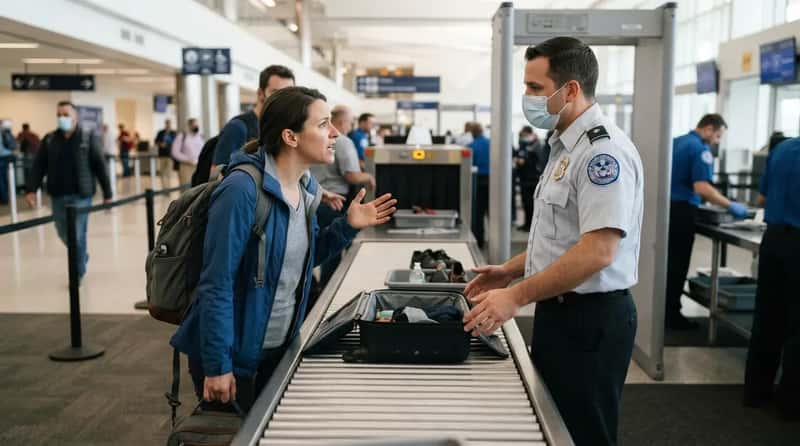
Frequent flyers know the secret that frustrated travelers never learn: fighting the checkpoint always costs you more time than it saves.
Flight attendants who pass through security constantly say the same thing. They never argue with TSA, and Southwest Airlines flight attendant Christy Betbeze says keeping your cool is essential. Raising your voice, refusing a bag check, or debating a rule with the officer in front of you doesn’t just slow you down – it flags you as someone worth a closer look. Calm compliance, even when a rule feels unfair, gets you through faster every single time.
#20 – Tossing Your Phone Loose Into the Bin
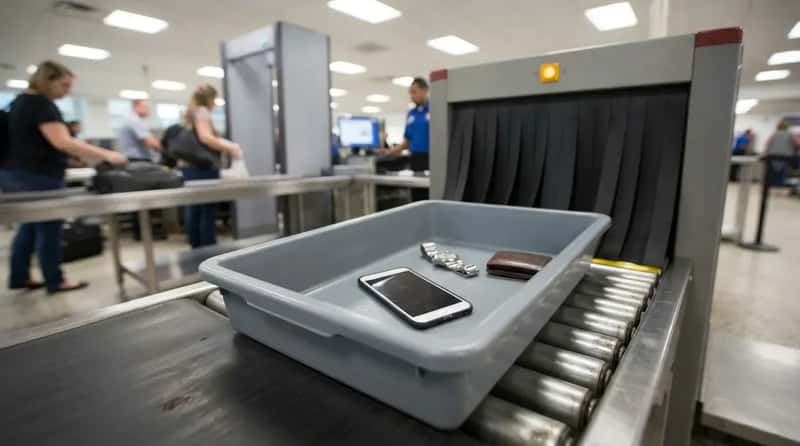
Most people think the danger at security is what’s in their bag. Experts say the bigger risk is what’s sitting exposed in an open bin, unsupervised, for anyone to grab.
A travel expert has warned that when lines back up, belongings often sit unsupervised, making it easy for anyone to walk up and swipe whatever is sitting loose in the bin. Security checkpoints are often a time when travelers are the most vulnerable to theft, because they’re briefly separated from their belongings during screening. Keep your phone in a zipped pocket until it’s your turn to place items in the bin, and grab it the instant it clears the scanner.
Worth Knowing
- Checkpoint theft spikes whenever lines back up and bins pile up unattended
- Loose phones and laptops are the most commonly grabbed items in a crowded bin
- A zipped pocket keeps small electronics secure until you’re actually at the belt
- Grab your items the moment they clear the X-ray – don’t linger to repack
#19 – Posting a Boarding Pass Selfie Before You Even Board
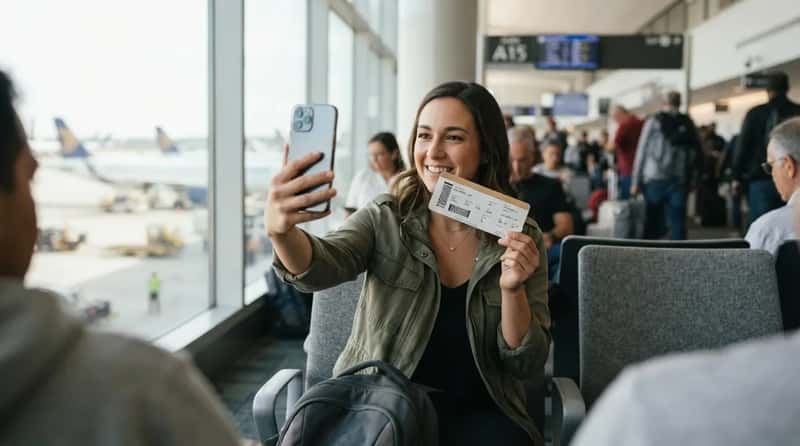
It feels like an innocent brag. But the barcode on that boarding pass is quietly one of the most exploitable pieces of paper you’ll carry all year.
A travel expert ran an experiment where he found a photo of a stranger’s boarding pass, then used the passenger name and e-ticket number to log into their Delta airlines account. It’s not a theoretical risk, either – former Australian Prime Minister Tony Abbott was hacked within an hour after posting an Instagram photo of his Qantas boarding pass. Skip the photo, or at least wait until you’re home and the flight is long over.
#18 – Charging Your Phone at Any Random USB Port
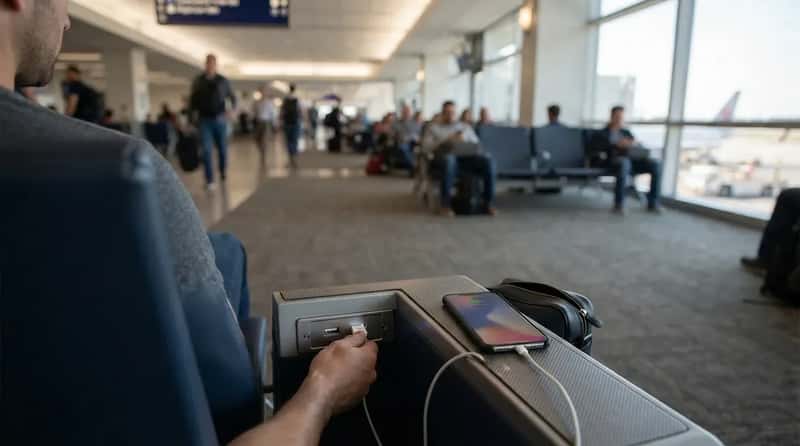
Here’s where experts genuinely disagree, which makes it one of the most debated airport habits out there. TSA itself has warned about it directly, even if the real-world danger is murkier than headlines suggest.
TSA has said, “when you’re at an airport, do not plug your phone directly into a USB port,” recommending a power brick instead. Yet cybersecurity researchers point out that despite over a decade of warnings, there are still zero documented cases of juice jacking attacks in the wild. Whether it’s an overblown scare or a quiet threat, the safest move is still the outlet, not the port.
#17 – Logging Into Your Bank App on Airport Wi-Fi
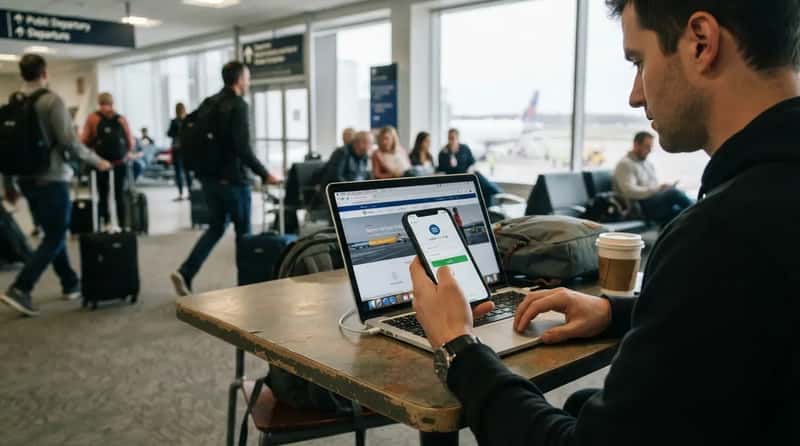
Free Wi-Fi feels like a gift after a long security line. Security experts say it’s often the most exposed network you’ll touch all trip.
Even TSA’s own cybersecurity messaging is blunt about this one: “Do not ever enter any sensitive info while using unsecure Wi-Fi,” the agency warned. Unsecured airport networks can let bad actors quietly intercept passwords, banking details, and login credentials while you scroll through your feed. Save the banking and bill-paying for a secured home network, not the terminal.
#16 – Wrapping Banned Items in Foil to “Hide” Them
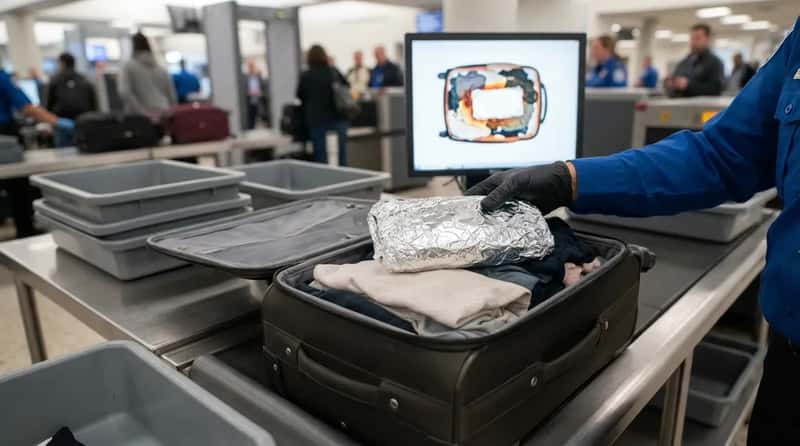
It’s an old traveler myth that refuses to die: wrap it in foil and the scanner won’t see it. Security officers say it does the exact opposite.
At two separate airports, screeners found knives and ammunition tightly wrapped in foil between clothing layers, and as officials point out, travelers sometimes assume foil hides metal, but it usually makes items stand out more on a scan. Instead of concealing the object, the dense material creates a bright, unmistakable shape that practically begs for a hand search. If anything, foil-wrapping turns a routine bag check into a guaranteed one.
#15 – Packing a “Replica” Weapon as a Joke or Training Prop
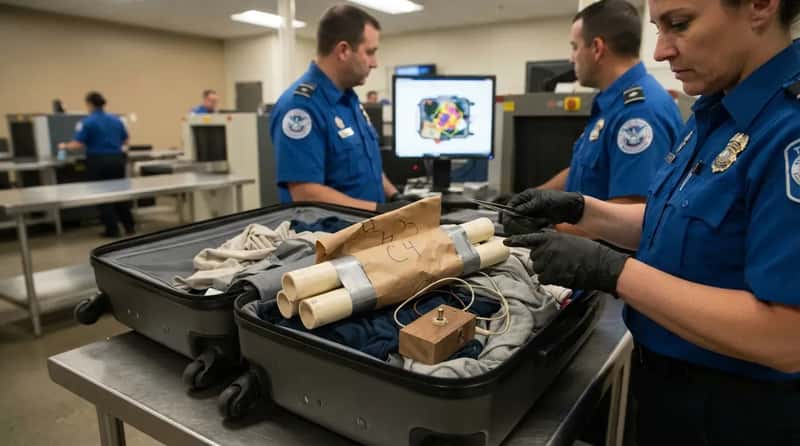
One traveler genuinely believed a fake pipe bomb was just a training aid. TSA didn’t see it that way, and neither will any officer who spots one on a scanner.
When a checked bag at Boise Airport triggered an alarm, a TSA explosives specialist found PVC pipes and wooden blocks wrapped in paper marked “C4” with wires before determining they were replicas. The rule is simple – if it could plausibly read as a weapon, it doesn’t belong in your luggage.
Our expertly trained officers take no risks when they screen a bag and see an image that could be an explosive.
TSA Federal Security Director for Idaho
#14 – Hiding Contraband Inside Shoes or Medical Braces
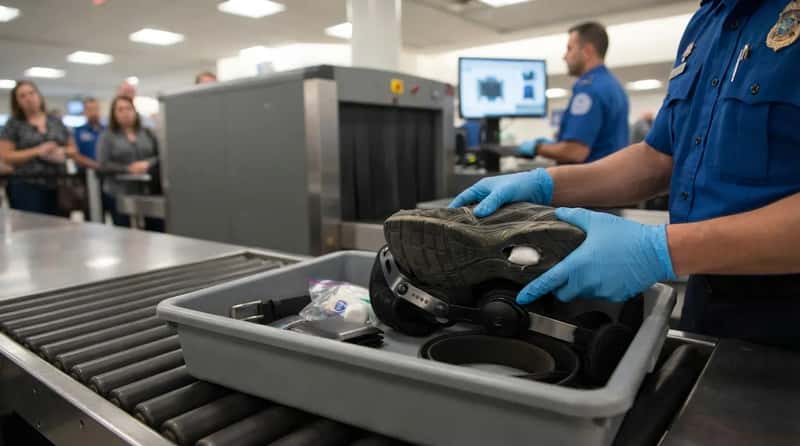
It sounds like a movie plot, but officers see this exact trick more often than you’d think, and the outcome is never in the traveler’s favor.
At one airport, screeners noticed a pair of shoes felt unusually dense in the tray, and cutting open the sole revealed concealed narcotics hidden inside the structure. At another checkpoint, a knife was found concealed in a knee brace. Medical devices and footwear aren’t automatically waved through – scanners are built to notice density and shape, not just metal.
#13 – Forgetting You Packed a Loaded Firearm
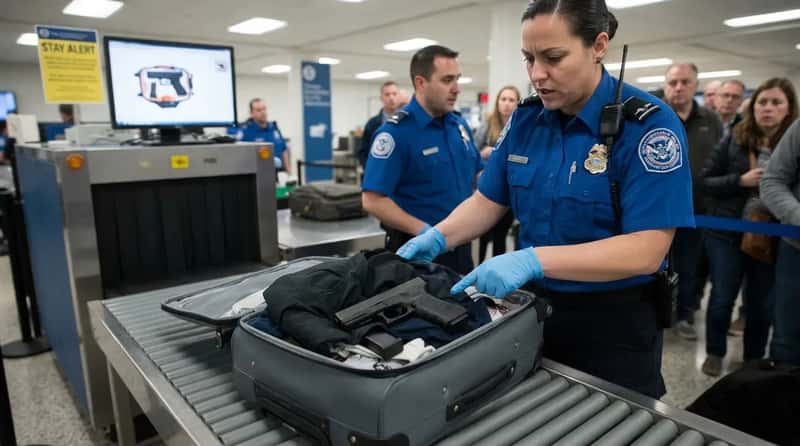
This one sounds almost impossible, yet it happens at a rate that genuinely surprises new travelers. Firearms don’t get politely overlooked – they shut down entire checkpoints.
In a single recent year, TSA seized 6,737 firearms at airport security checkpoints, with around 93 percent of these weapons loaded. A forgotten gun in a carry-on isn’t treated as a mistake – it’s treated as a security event, complete with a shutdown lane and possible criminal charges. If you own a firearm, checking your bag twice before you leave home isn’t optional.
Fast Facts
- 6,737 firearms were seized at U.S. airport checkpoints in a single recent year
- Roughly 93% of those guns were loaded at the moment they were caught
- A discovered firearm can trigger a full lane shutdown, not just a bag search
- Charges can follow even when the traveler insists it was an honest mistake
#12 – Acting Nervous or Avoiding Eye Contact With Officers
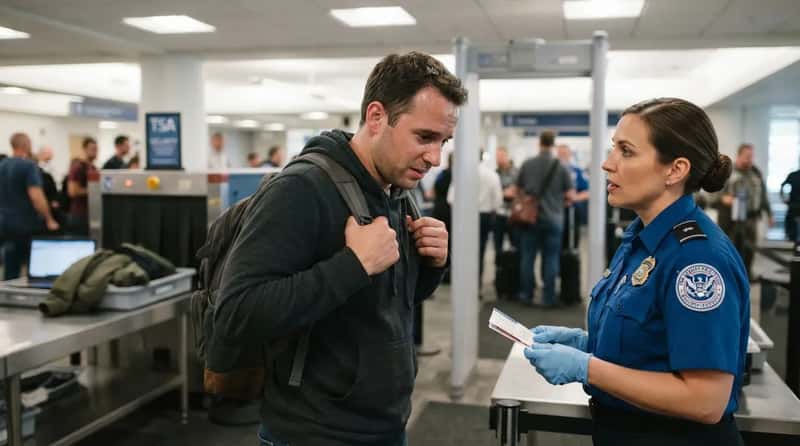
Anxiety is normal at a checkpoint. But experts say body language does more talking than most travelers realize, and officers are specifically trained to notice it.
TSA staff are trained to spot people who act strangely, and sweating, talking profusely, or avoiding eye contact all suggest a traveler may be hiding something. It doesn’t mean you’re guilty of anything – it just means you’re more likely to get a second look. The stakes at a checkpoint are genuinely high, since one bad actor slipping through can lead to hundreds of injuries or worse, which is exactly why behavior gets scrutinized as closely as baggage.
#11 – Waiting Until the Gate to Realize Your ID Isn’t Valid
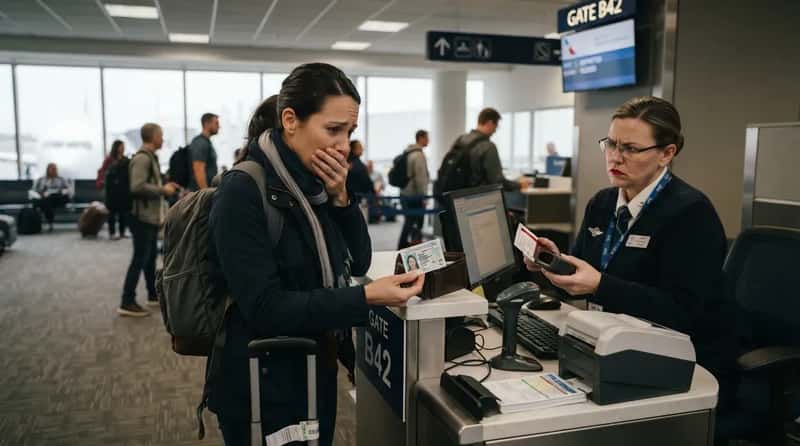
This is the mistake that quietly ruins entire trips, and it’s spiking as new identification rules take hold nationwide.
With REAL ID enforcement measures now fully implemented at TSA checkpoints nationwide, an outdated driver’s license can mean missing your flight completely. Real ID requirements kicked in weeks before Memorial Day, catching thousands of unprepared travelers off guard. Checking your ID status before you even pack your bag is the difference between a smooth trip and a canceled one.
At a Glance
- REAL ID enforcement is now fully active at every TSA checkpoint nationwide
- The rule took effect weeks before Memorial Day, ahead of peak travel season
- A standard license without the REAL ID star marking may no longer be accepted
- Passports and other TSA-approved IDs still work as backup options
#10 – Leaving a Printed Boarding Pass in the Seat Pocket
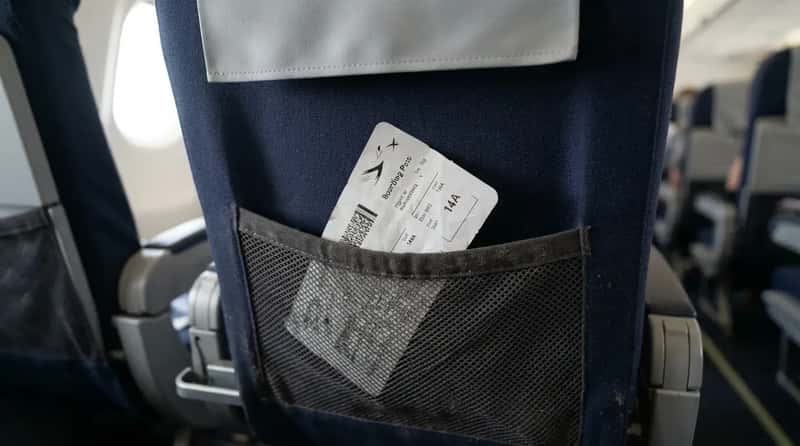
Most people forget about their boarding pass the second they sit down. Security experts say that paper slip keeps working against you long after the flight lands.
Cybersecurity researchers recommend using a mobile boarding pass to ensure no physical copies will be left behind in a plane seat pocket, boarding area, or somewhere else where scammers can easily grab it. A discarded pass with your name and confirmation number is essentially an open invitation for anyone who finds it. Take it with you, or tear it up before you toss it.
#9 – Wearing Every Piece of Metal You Own to the Airport
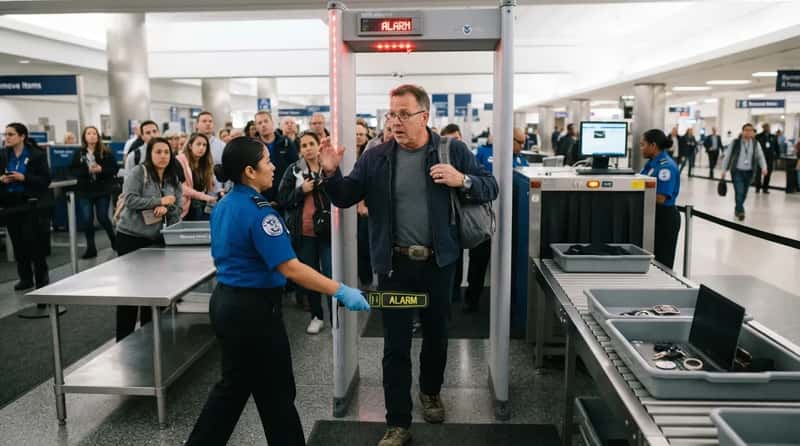
Belt buckles, watches, boots with steel shanks – some travelers wear it all and wonder why they keep getting pulled aside. Experts say it’s an entirely avoidable slowdown.
Compare that to TSA PreCheck members, who typically don’t need to remove their shoes, belts, or light jackets for screening, precisely because prepping ahead avoids the extra alarms. Every metal accessory triggers another wand pass, another pat-down, another line of people waiting behind you. Dressing light through security isn’t vanity – it’s strategy.
#8 – Trying to Sneak Oversized Liquids Through Anyway
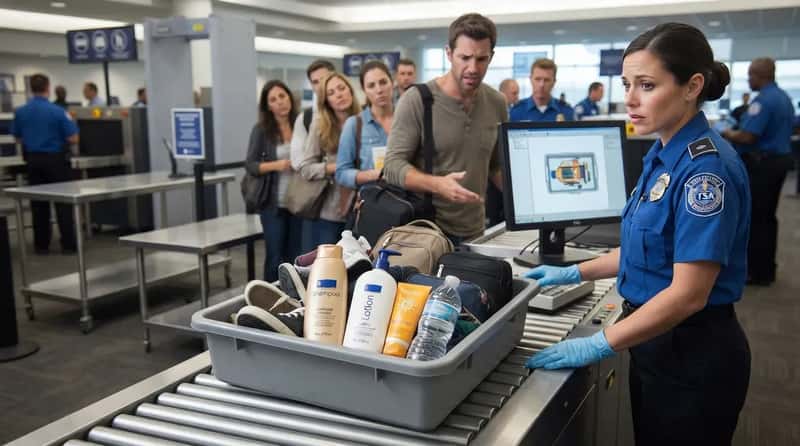
Somehow, this mistake never stops happening, year after year, no matter how many signs are posted at the checkpoint.
TSA regularly calls out this exact behavior, noting that common traveler behaviors like packing oversized liquids can cause problems at security. It’s rarely malicious – most travelers just forget the 3-1-1 rule exists. But a confiscated bottle isn’t the real cost; the real cost is the extra bag search and the line that stacks up behind you while officers sort it out.
#7 – Concealing Live Animals to Avoid Pet Fees or Rules
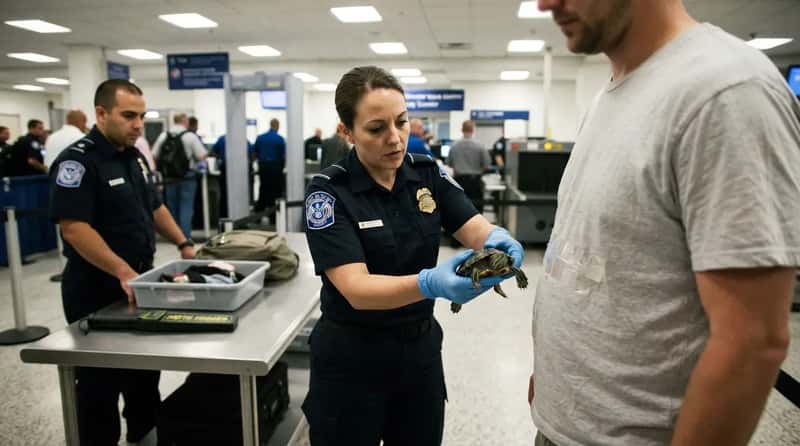
It sounds bizarre until you realize it happens at major U.S. airports every single year, and officers have gotten very good at catching it.
In one recent case, two travelers passing through Newark Liberty and Miami were stopped after scanners detected irregular shapes under their clothing, and officers discovered live turtles taped to their bodies. TSA’s own recap of the incident joked, “What the shell! If you’re traveling with animals, we’ll screen any pet as long as it’s safe to do so.” Beyond the danger to the animal, body concealment of any kind guarantees a far more invasive secondary screening.
#6 – Broadcasting Your Exact Location While You’re Away From Home
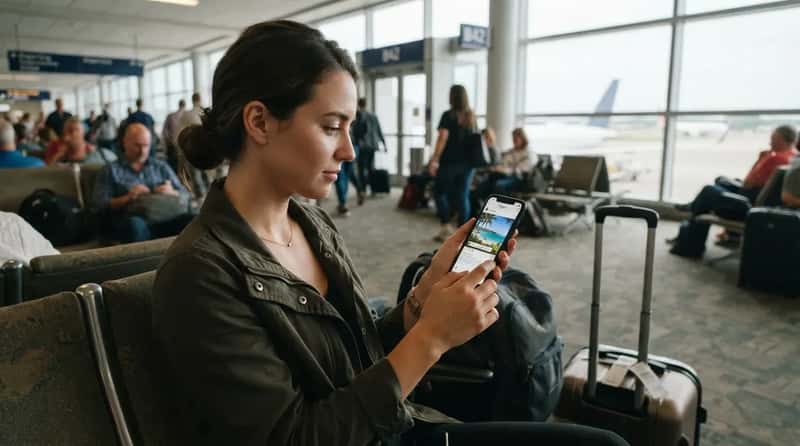
Vacation posts feel harmless in the moment. Security experts say they quietly tell criminals something far more useful than your outfit choice.
As one cybersecurity researcher put it, letting people know you’re on vacation means you’re also sharing that you’re away from home, as well as the dates you’ll be out of town, leaving your home at risk of physical security threats like break-ins. It’s not about paranoia – it’s about timing. Save the real-time posting for after you’re back, and let your followers enjoy the highlight reel a few days late.
#5 – Using a “Found” or Borrowed Charging Cable
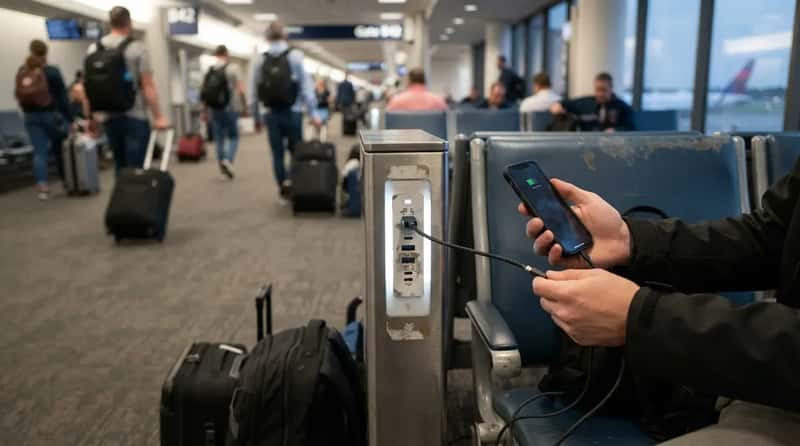
Nobody thinks twice about grabbing a spare cable from a charging kiosk or a stranger at the gate. Security researchers say this is actually the more realistic threat, not the port itself.
While attention has focused on USB ports, experts point out that attackers prefer distributing malicious cables or power adapters, since the FCC has warned about infected cables being handed out as promotional items, and these portable threats are easier to deploy and more likely to be trusted by victims. A cable is just a cable – until it’s not. Bring your own, every time, and never assume a “free” one is safe.
#4 – Packing Loose Power Banks and Batteries in Checked Bags
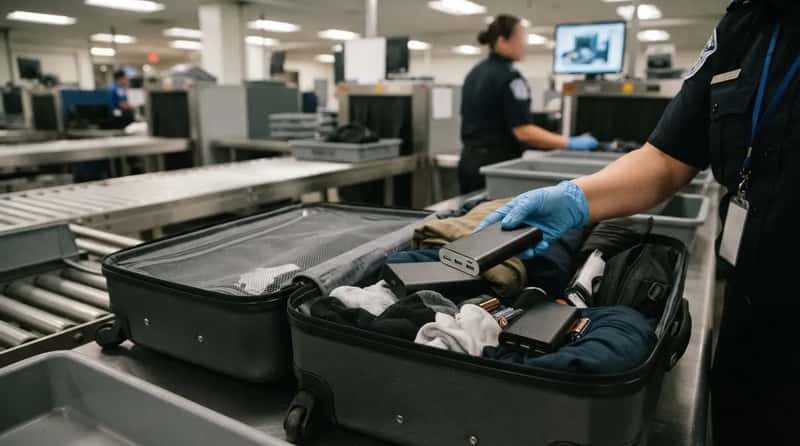
Most travelers have no idea the rules around batteries have tightened dramatically, and it’s catching seasoned flyers off guard.
A battery ban was enacted alongside REAL ID requirements as part of a year of major TSA rule changes. Loose lithium batteries and power banks are increasingly restricted from checked luggage because of fire risk in the cargo hold. If you’re still tossing a spare battery pack into your checked suitcase out of habit, that habit is now a genuine liability.
#3 – Guessing What’s Allowed Instead of Checking First
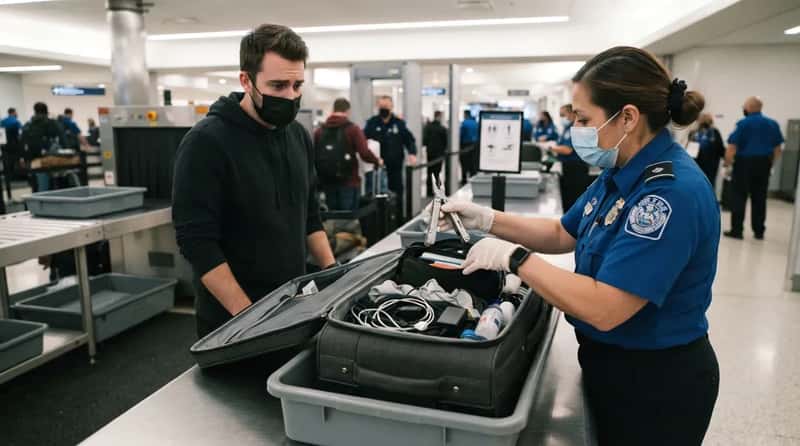
Most confiscations aren’t sneaky smuggling attempts – they’re honest guesses that went wrong. Experts say there’s a free tool sitting right there that almost nobody uses.
TSA has repeatedly called attention to its “What Can I Bring” tool, reminding passengers they can also use the MyTSA app, text “Travel” to AskTSA, or message @AskTSA on X or Facebook Messenger with packing questions. Instead of Googling half-answers the night before a flight, a 30-second check against the actual tool prevents nearly every avoidable confiscation. It’s the single easiest habit on this entire list to fix.
Quick Compare
- MyTSA app: search any item directly in the full “What Can I Bring” database
- Text option: send “Travel” to AskTSA for a fast written answer
- Social media: message @AskTSA on X or Facebook Messenger
- Website: browse the same tool from any browser before you even start packing
#2 – Trusting a “Helpful” Stranger Near the Bins
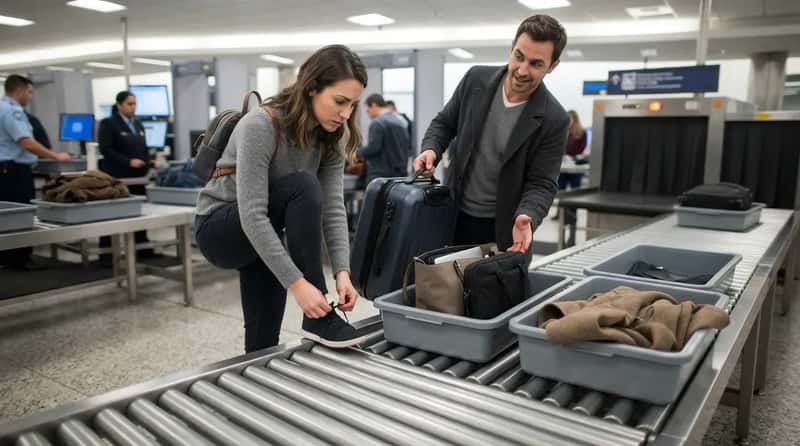
It’s one of the oldest tricks at a checkpoint, and it works because it looks like kindness, not theft.
Distraction theft thrives in exactly this environment, where travelers are the most vulnerable to theft because of distractions, stress, and brief separation from their belongings during screening. A stranger offering to “help” repack your bag or hold your laptop while you retie a shoe isn’t always dangerous – but security experts say it’s precisely the moment thieves count on. Keep your own hands on your own items, from bin to belt loop.
#1 – Walking Away From Your Bag, Even for a Second
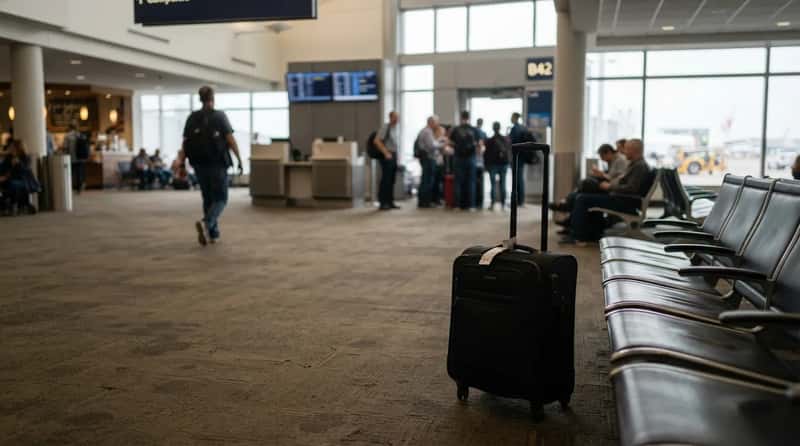
It’s the single most universal rule in every airport on earth, and it’s still the one travelers break constantly without realizing it.
An unattended bag isn’t treated as forgetful – it’s treated as an active threat until proven otherwise, capable of triggering a full checkpoint evacuation, a bomb squad response, or hours of flight delays for everyone around you. Whether you’re stepping away to grab coffee or just chasing down a wandering toddler, that bag needs a set of eyes on it at all times. Of every habit on this list, this is the one security experts say causes the most unnecessary chaos, for the smallest, most avoidable reason.
None of these habits make you a bad traveler – they make you a human one. But the gap between “harmless” and “hazardous” at an airport is thinner than most people think, and the experts who watch these checkpoints every day keep seeing the same avoidable mistakes on repeat. Small changes – a zipped pocket, a skipped joke, a boarding pass left unphotographed – quietly save more trips than any travel hack ever could.
Which one of these habits did you catch yourself doing on your last trip? Drop it in the comments – you’re probably not the only one.