Most travelers assume the free hotel breakfast they remember from five years ago is still waiting for them downstairs. It isn’t. Chains have spent the last few years trimming, swapping, and quietly retiring dishes that once felt like a guaranteed part of any stay, often without ever announcing the change.
Some of these cuts came straight out of the pandemic and simply never reversed. Others are happening right now, mid-pilot-program, as chains quietly test how little breakfast guests will tolerate before they complain. Here’s what actually disappeared, one dish at a time.
#23 – The Chef-Attended Omelet Station Nobody Waits in Line For Anymore
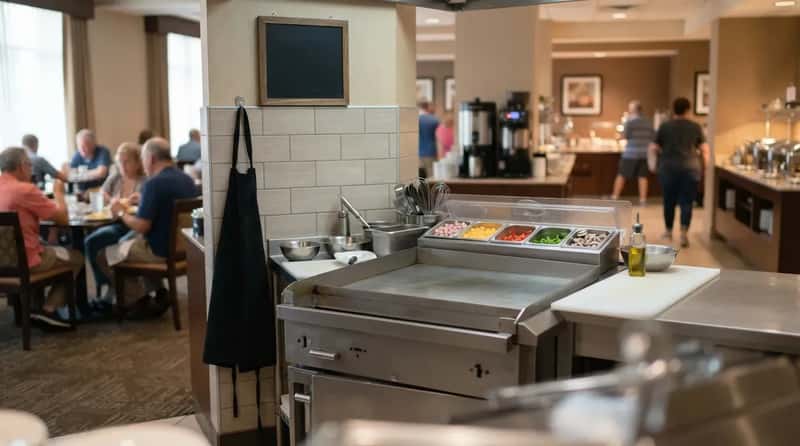
Watching a cook fold your omelet to order used to feel like a small luxury even at a mid-range hotel. That live-cooking touch has been one of the first things pulled when properties look to cut labor.
Industry guidance now actively discourages it: if a hotel offers breakfast, they’re not supposed to offer a cooked-to-order menu, with no customized eggs. That single line in an internal operations guide explains why so many stations sit empty. The omelet you remember has been replaced by something pre-portioned and reheated.
#22 – Real Butter Pats, Not the Foil-Wrapped Kind
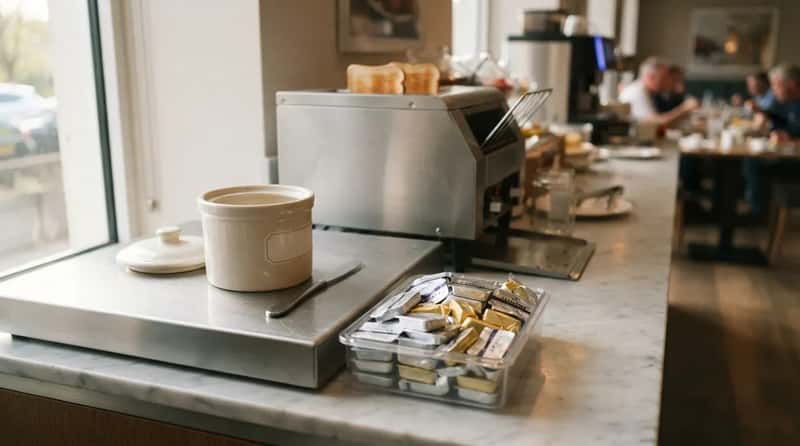
Butter used to sit in a communal dish next to the toaster, soft and ready to spread. That shared tub is now a liability nobody wants to own.
Post-2020 sanitation habits stuck around long after the emergency ended. Modern buffets increasingly incorporate touchless dispensers and individually wrapped items following heightened hygiene awareness since 2020. Butter got swapped for tiny foil packets, and it never went back. It’s a small thing, but frequent guests notice it every single morning.
#21 – Bulk Cereal Dispensers With Real Bowls
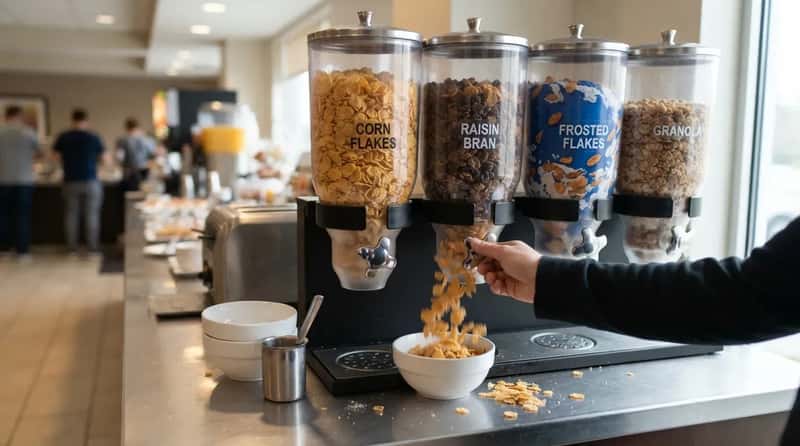
The clear plastic dispensers where you’d twist a knob and watch flakes tumble into a bowl are becoming rarer by the year.
Individually wrapped mini cereal boxes are cheaper to track, cheaper to restock, and eliminate the spillage that used to require constant cleanup. Hotels quietly made the swap for cost control as much as hygiene. Guests get less cereal per box, and refills require walking back to the front desk instead of a second scoop. It’s a downgrade dressed up as a convenience.
#20 – Fresh-Squeezed Orange Juice, Replaced by Concentrate
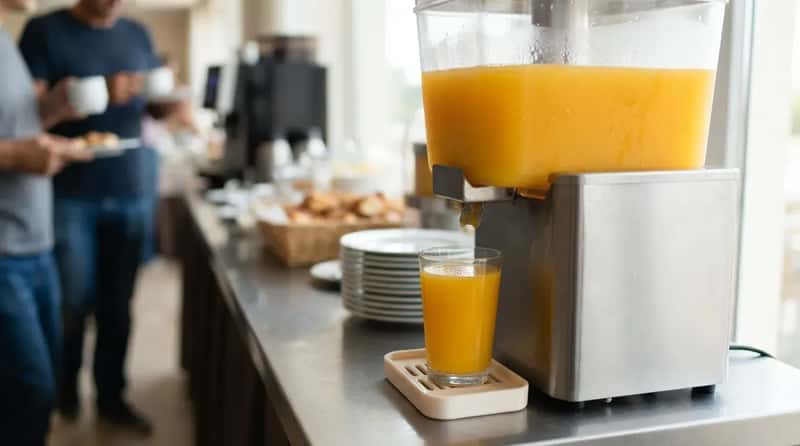
Freshly squeezed juice used to be a signature touch at higher-tier properties trying to justify a nightly rate.
Most of that juice now comes from concentrate poured into a dispenser, indistinguishable from what you’d buy in a gas station cooler. The cost difference is enormous at scale, and almost no guest complains loudly enough to change it back. The juice looks identical on the menu card but tastes nothing like what it replaced. That’s nothing compared to what happened to the coffee setup.
Quick Compare
- Fresh-squeezed OJ: Squeezed on-site, short shelf life, real citrus flavor.
- Concentrate juice: Shipped in bulk, poured from a dispenser, long shelf life.
- Cost difference: Concentrate runs a fraction of the price per gallon at scale.
#19 – The Self-Serve Coffee Carafes
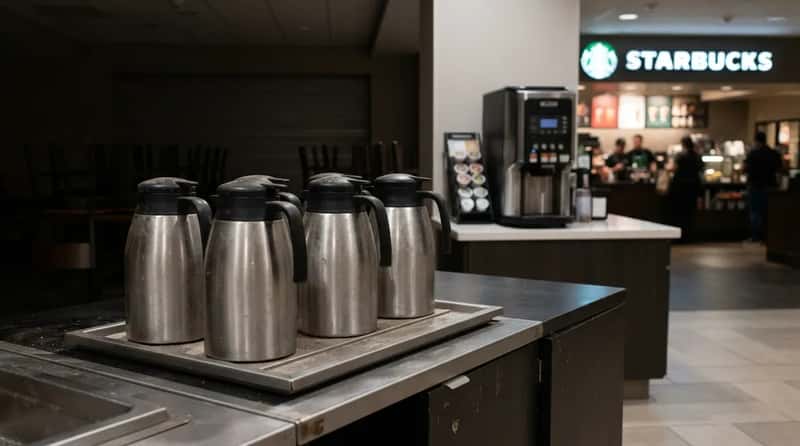
Big steel carafes you could refill endlessly used to anchor every continental breakfast room in America.
Many budget and midscale properties have shifted toward single-serve pod machines or, in larger chains, an in-lobby Starbucks kiosk instead. One hotel manager described the shift directly:
Our buffet restaurant has been dark since the onset of COVID-19.
Hotel General Manager
The property now relies primarily on its Starbucks venue to meet guest needs. The free pot of coffee became a paid transaction almost overnight.
#18 – The Full Bagel-and-Lox Spread
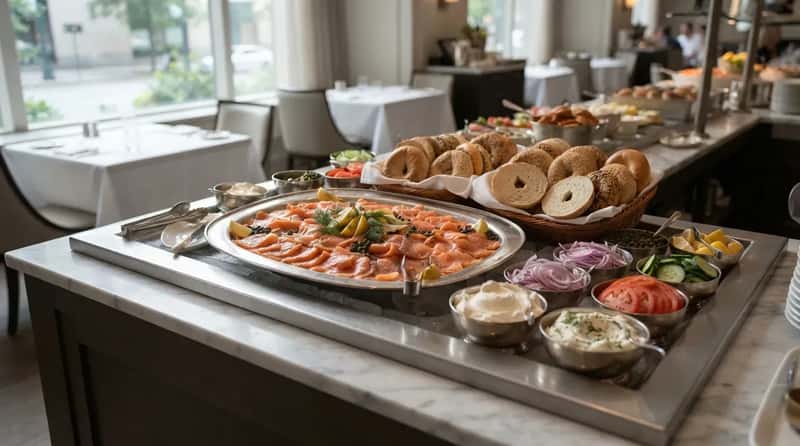
A handful of upscale hotels once offered smoked salmon, capers, and cream cheese as a genuine breakfast highlight worth planning a trip around.
That spread has quietly retreated to weekend brunch service or disappeared entirely at properties trying to trim food cost per guest. It’s the kind of dish that never gets a formal announcement; it just stops appearing one visit and never comes back. Frequent business travelers are usually the first to notice it’s gone.
#17 – Made-to-Order Pancakes, Now Pre-Griddled
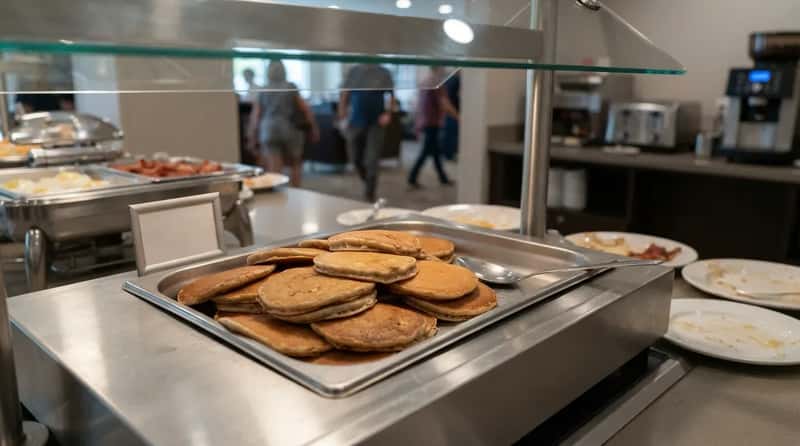
Stacks of pancakes cooked fresh on a flat-top used to be a weekend perk even at otherwise basic hotels.
Most locations have moved to pre-made pancakes reheated in a warming tray, saving staff hours during the morning rush. The texture gives it away almost immediately: rubbery edges, uneven color, and a flavor that tastes more like the freezer aisle. This swap is one of the most common complaints in hotel review sections, yet it rarely gets reversed.
#16 – The Hot Oatmeal Bar With Real Mix-Ins
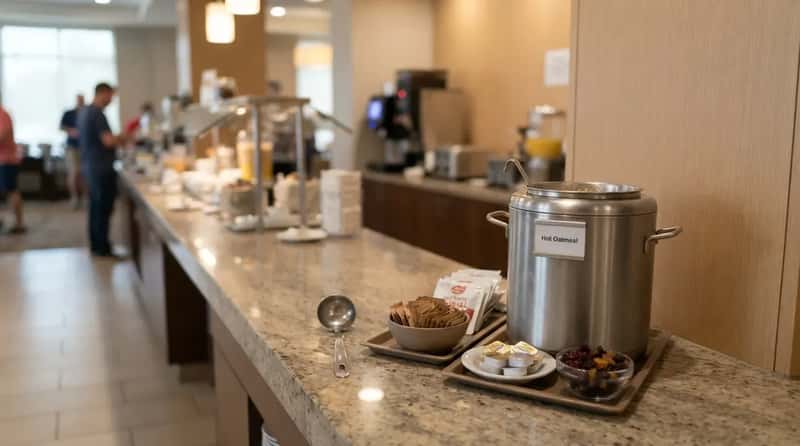
Oatmeal stations used to include brown sugar, dried fruit, nuts, and cinnamon in open bins guests could pile on freely.
Most of that has narrowed down to a single dispenser of plain instant oatmeal and a packet or two of add-ins at the counter. The variety that made the station feel special is gone, replaced by something closer to what you’d make at home from a box. It’s efficient, but it’s also unmistakably smaller than it used to be.
#15 – China Plates and Metal Silverware
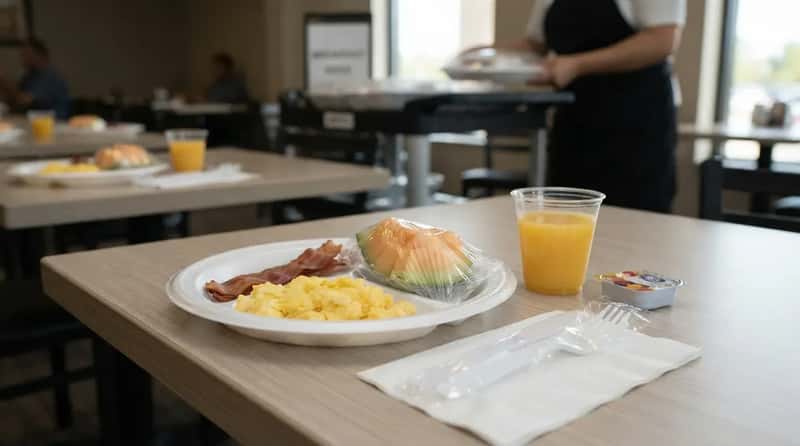
Sitting down to a real plate and fork used to be standard even at economy chains.
During the pandemic, some hotel buffets wrapped everything in plastic, including the fruit, and only servers were allowed to touch anything. Disposable plates and plasticware became the norm at many properties, and a surprising number never brought the real dishware back. It’s cheaper to throw away than to wash, and that math hasn’t changed.
#14 – The Sit-Down Breakfast Room Itself

An entire dedicated dining space with tables and chairs used to be a given at nearly every hotel, chain or independent.
Since the pandemic, properties where buffets were the bedrock of their food and beverage program have either closed those spaces or modified them with attendants building plates for guests. Some hotels never reopened the room at all, shifting fully to grab-and-go bags handed out at the front desk. The physical space to sit down and eat breakfast is disappearing faster than any single dish on the menu.
Fast Facts
- Many breakfast rooms closed in 2020 and some never reopened.
- Disposable plates and plasticware replaced china at a large share of properties.
- Grab-and-go bags at the front desk now replace sit-down seating at some chains.
- Attendant-plated service has replaced open buffet lines at others.
#13 – Fresh Fruit Platters, Now Pre-Cut Plastic Cups
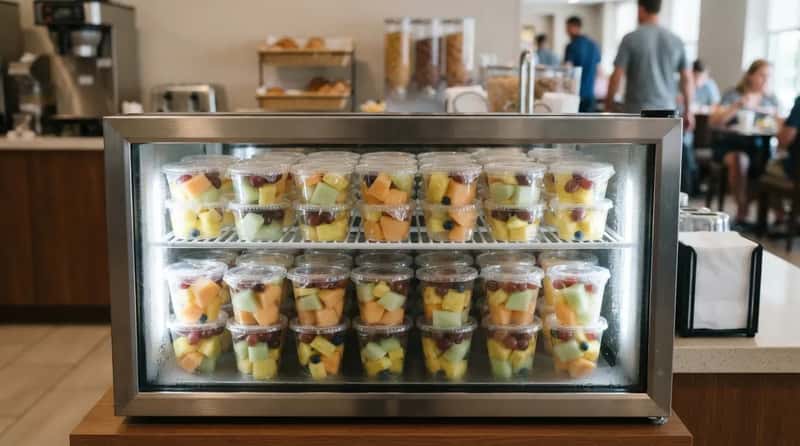
A real fruit platter with whole melon slices and berries used to feel generous compared to the sad banana bowl at cheaper motels.
Now it’s more common to find sealed plastic cups of pre-cut fruit stacked in a cooler, portioned and priced for cost control rather than presentation. The fruit itself is often lower quality since it’s processed days in advance. Guests notice the shrinkage in portion size before they notice anything else about breakfast.
#12 – Real Bacon Strips Instead of Pre-Cooked Rounds
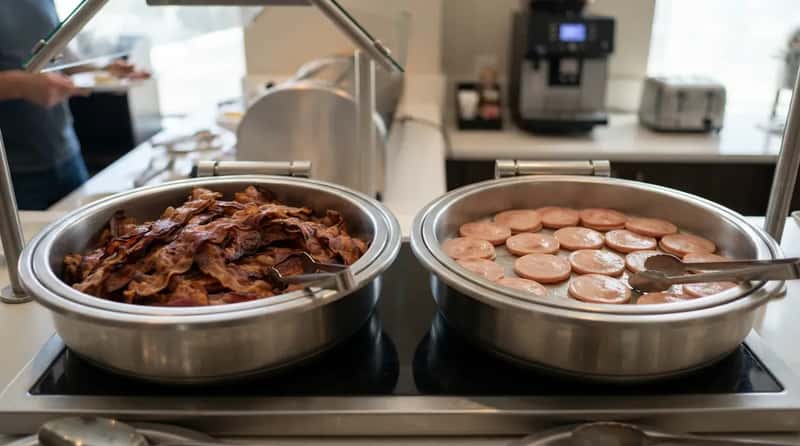
Bacon cooked fresh on a griddle used to be one of the few genuinely satisfying items on a free hotel breakfast.
Pre-cooked, microwave-reheated bacon rounds have replaced it at a large share of budget and midscale properties, chosen because they eliminate grease cleanup and cut cooking time to seconds. One hotel operator was blunt about the tradeoff: when breakfast is free, quality often suffers, with mediocre coffee, watery eggs, and frozen potatoes, calling the result “edible, but rarely memorable or value-adding.” Bacon fell into that same category.
#11 – The Full Yogurt Bar With Bulk Toppings
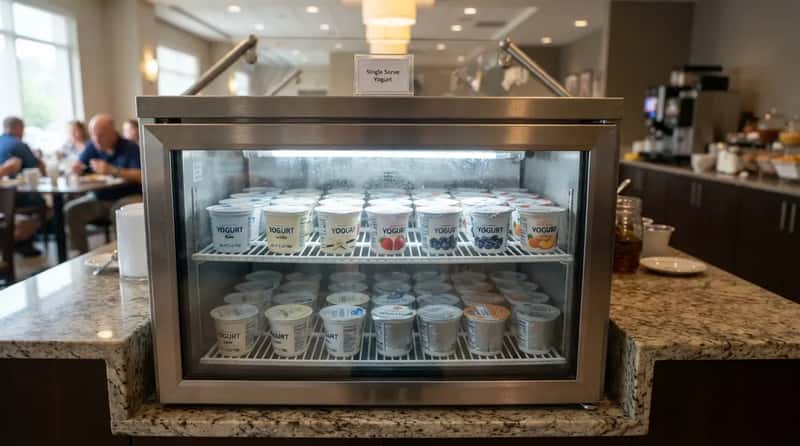
Granola bins, honey dispensers, and a tub of plain or vanilla yogurt used to let guests build their own parfait however they liked.
That open setup is increasingly replaced by single-serve yogurt cups with no toppings station at all. It’s a hygiene decision as much as a cost one, but the effect is the same: less customization, smaller portions, and a distinctly less generous feel. Frequent hotel guests describe it as the moment breakfast started feeling transactional instead of hospitable.
#10 – Biscuits and Gravy, Quietly Pulled at Chain Level
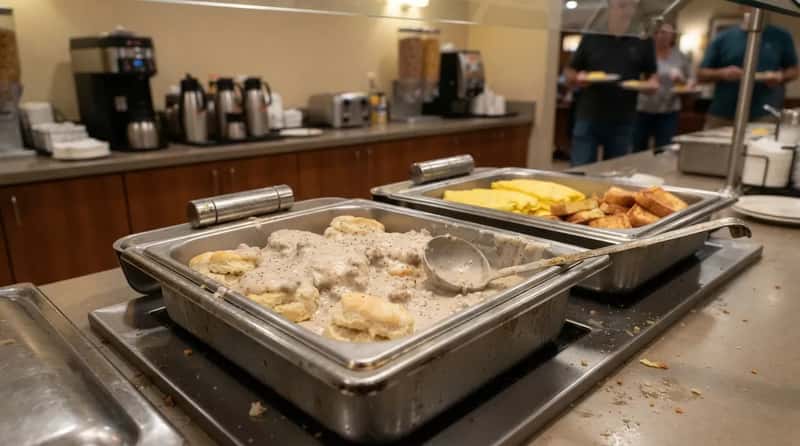
This Southern staple used to anchor hot breakfast bars at chains stretching from Georgia to Montana.
Internal operations guidance at major chains now steers properties toward simpler, standardized hot items rather than regional specialties that require more prep and cleanup. Where it still appears, it’s often grouped with French toast and premade cheese or pepper omelets rather than served as its own dedicated station. The dish still exists at some locations, but the dedicated gravy well many travelers loved is rarer than it used to be.
#9 – Chicken and Waffles at Upscale Properties
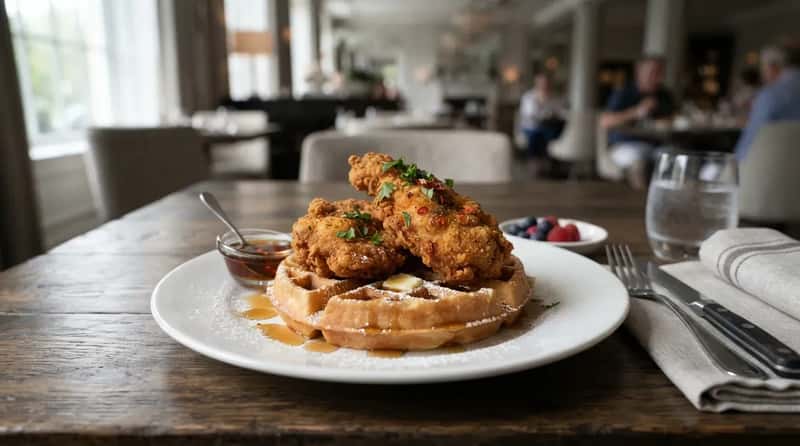
A handful of boutique and upscale hotels briefly experimented with Southern-inspired chicken and waffles as a signature breakfast item.
Most of those specialty dishes have been trimmed back as kitchens standardized menus across their portfolios to cut ingredient variety and food waste. It was never widespread to begin with, but where it existed, it’s largely gone now. Standardization, not popularity, killed this one.
#8 – The Executive Lounge Full Breakfast Buffet
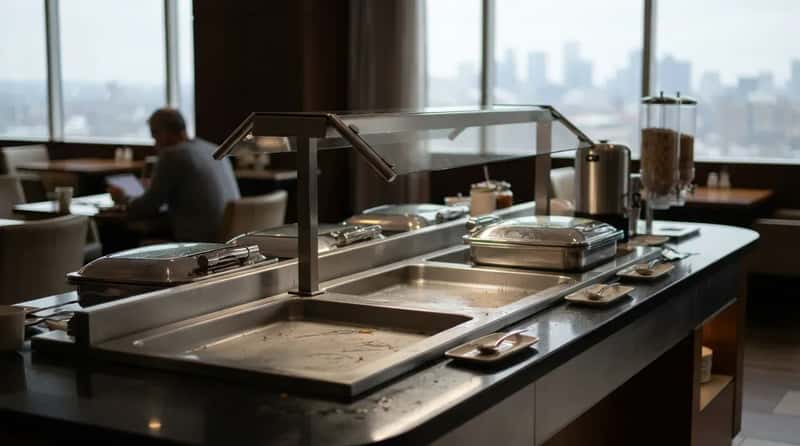
Elite loyalty members used to count on a genuine hot breakfast spread in the executive lounge, separate from the main buffet downstairs.
Hilton changed that dynamic years ago when it temporarily eliminated the complimentary continental breakfast benefit for Gold and Diamond elite members at U.S. hotels in favor of a $10 to $25 per person food and beverage credit. That “temporary” change has effectively become permanent at many properties. A free sit-down breakfast turned into a credit guests now have to spend carefully to break even.
At a Glance
- Old benefit: Complimentary continental breakfast for Gold and Diamond elites.
- New benefit: A $10 to $25 per person food and beverage credit.
- Status: Called temporary at first, still standard at many hotels years later.
#7 – Fresh-Baked Pastries Made On-Site
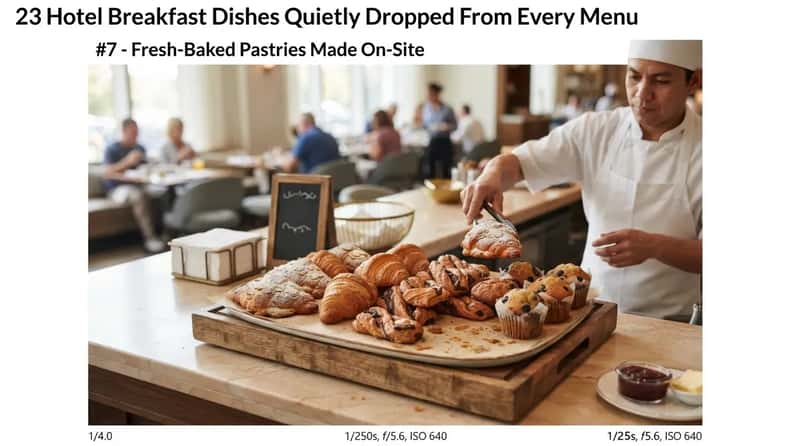
Some hotels used to bake croissants and muffins in-house each morning, filling the lobby with a smell that made the whole stay feel more premium.
Most of that has shifted to centrally produced, frozen-and-thawed pastries shipped in bulk, since maintaining an on-site bakery program is expensive at scale. The smell is gone, and so is the texture that came with genuinely fresh dough. It’s one of the quieter downgrades, but longtime guests at certain brands notice it immediately.
#6 – Marriott’s Free Cooked-to-Order Omelet
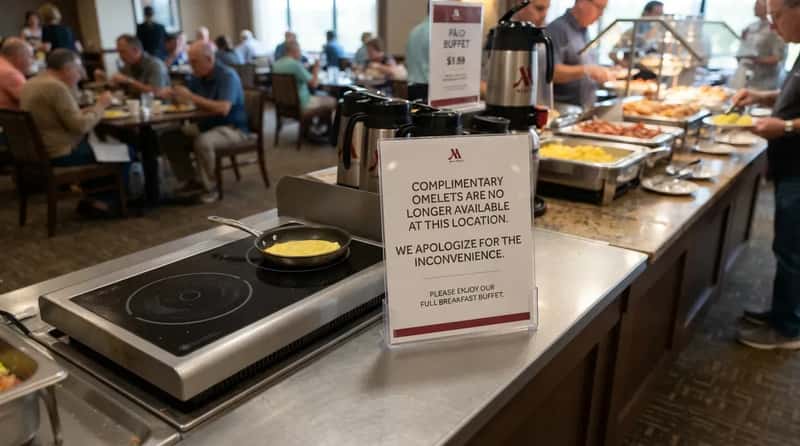
Marriott elite members have long counted on a complimentary hot breakfast that, at many properties, included a real omelet made to order.
That’s shifting in places right now. Guests have posted about free omelets disappearing from Marriott breakfast bars and being moved into the paid full breakfast buffet, though a Marriott spokesperson said this is not a company-wide policy and would reflect individual hotel decisions. Whether it’s official policy or not, the dish is disappearing property by property. That’s exactly the kind of “quiet” removal this list is built around.
#5 – Complimentary Breakfast for Marriott’s Top-Tier Loyalty Members
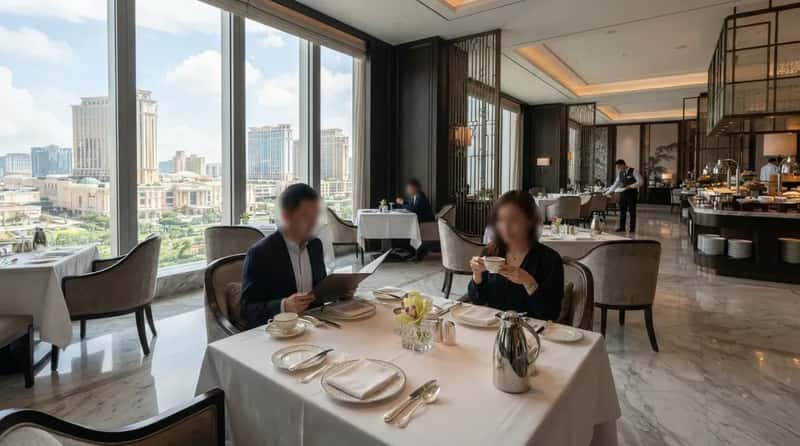
This one isn’t a single dish, but it took an entire breakfast away from some of the most loyal guests in the program.
The St. Regis Macao eliminated free breakfast for Platinum, Titanium, and Ambassador loyalty members as of March 2025 and replaced it with bonus points or discounted breakfast instead. It’s currently limited to specific overseas luxury properties, but it signals where the model is heading. Members who built their travel habits around this perk are watching it get renegotiated in real time.
#4 – Hyatt Place’s Guaranteed Free Breakfast for Every Guest
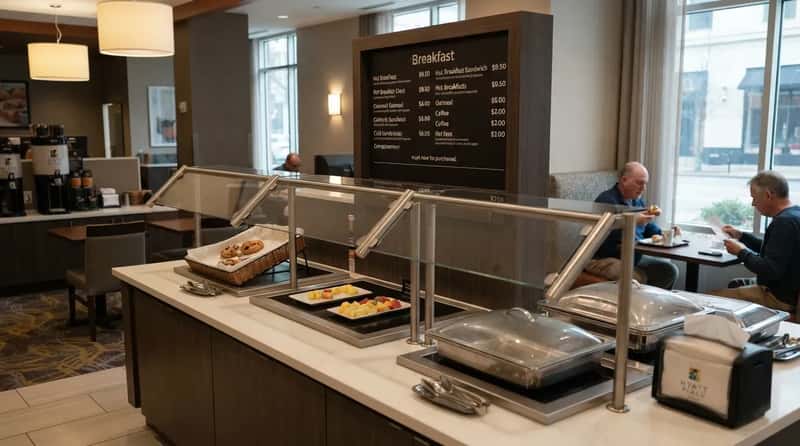
For years, walking into a Hyatt Place meant breakfast was simply included, no rate plan required.
That’s no longer guaranteed. Hyatt Place launched a pilot program at over 40 U.S. locations that eliminates automatic free breakfast for all guests, instead requiring travelers to choose between room rates that include or exclude the morning meal. A Hyatt spokesperson confirmed this in November 2024, describing it as testing rather than a permanent brand-wide shift. What used to be automatic is now something you have to opt into and pay for.
Worth Knowing
- The pilot covers more than 40 U.S. Hyatt Place locations.
- Guests now pick between a rate with breakfast included or one without.
- Hyatt confirmed the test in November 2024 and called it a pilot, not a permanent change.
#3 – Holiday Inn’s À La Carte Breakfast Menu
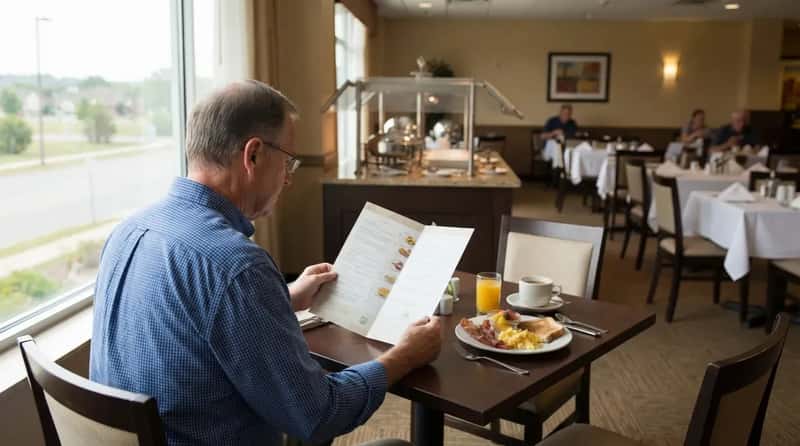
Some Holiday Inn locations used to let guests order individual items off a printed menu rather than working through a buffet line.
That format has largely been replaced. Holiday Inn, owned by IHG, has replaced its à la carte breakfast at most U.S. locations with a buffet-style morning meal, and travel expert Gary Leff shared an internal guide detailing the minimum requirements for launching it. The buffet is cheaper to staff and standardize across hundreds of properties. Choice narrowed the moment the menu did.
#2 – The 40-Item Breakfast Menus of the Early 2020s
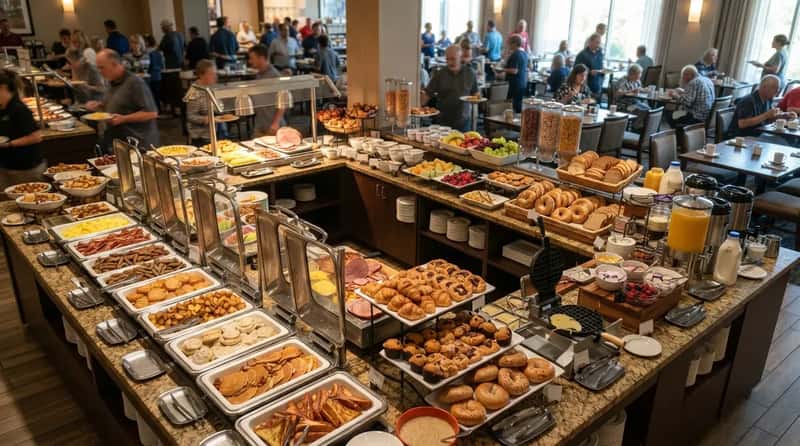
Right before the pandemic, some select-service hotels were in a genuine arms race over breakfast variety.
One hospitality executive put it plainly:
Before the pandemic, brands were going crazy and expanding breakfasts with more and more items in select-service hotels, and there were more than 40 items on the menu, becoming a financial burden to hotels.
Hospitality Industry Executive
That era is over almost everywhere. Menus have been trimmed hard, and the sprawling variety travelers got used to simply isn’t coming back at most price points.
#1 – The Guarantee That Breakfast Would Be Free at All
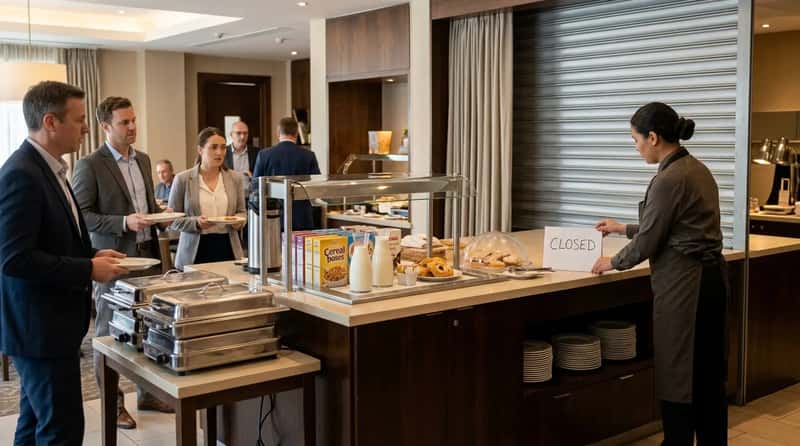
This is the biggest disappearance on the list, and it’s happening right now across the industry.
A boutique hotel operator laid out the math behind it: free breakfast can account for roughly 5% of total revenue, closer to 6 to 7% once labor is included, and many operators are asking whether it actually generates that much more in revenue or bookings, admitting that “in many cases, the answer is no.” Still, Americans clearly like their hotel breakfast, with 78% of guests who use hotel food and beverage services eating breakfast on-site, according to the 2025 J.D. Power North America Hotel Guest Satisfaction study. That tension is exactly why the “free” label itself is the one thing chains are most quietly testing removing.
None of these changes came with a press release. They happened one property, one pilot program, and one cost-cutting memo at a time, which is exactly why so many travelers keep getting surprised by them at check-in.
The pattern is consistent: labor-heavy dishes disappear first, loyalty perks get renegotiated into credits or points, and buffets get standardized down to the cheapest version corporate can approve. The free hotel breakfast isn’t gone yet, but it’s shrinking in ways most guests only notice one missing item at a time. Which one hit you hardest on your last trip? Drop it in the comments.